Grilled Salmon: Sweet-Savory Glaze with a Perfect Char

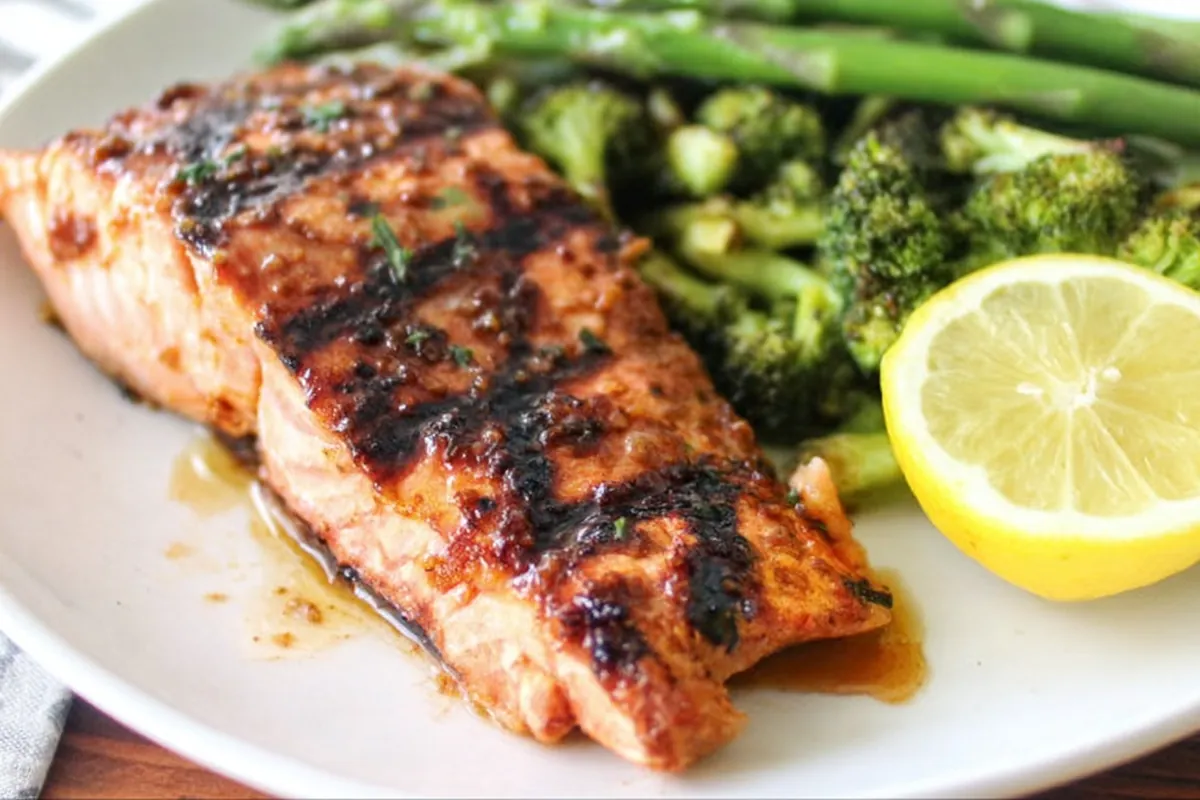
When grilled salmon is done right, it’s one of those meals that feels almost effortless but tastes like something special. The heat of the grill caramelizes a simple marinade of brown sugar, soy sauce, lemon juice, and garlic, creating a glossy glaze that clings to the fish while keeping the inside tender and juicy.
This recipe keeps things practical—just a quick marinade, a clever foil trick on the grill, and a short finishing sear that brings everything together. It’s the kind of straightforward cooking that turns a few
The Marinade That Carries the Whole Recipe
For this grilled salmon recipe, the marinade is doing most of the heavy lifting. It’s a simple mix, but each ingredient has a job. The goal is a balance between sweet, salty, and bright acidity so the fish tastes bold without being overwhelmed. When the salmon hits the grill, the sugars caramelize while the soy sauce and garlic sink deeper into the flesh. That combination gives grilled salmon its glossy, lightly sticky finish and deep savory flavor.
Another small but important detail is the texture of the marinade. The olive oil and water thin everything slightly so it coats the fish evenly instead of forming a heavy glaze too early. During the marinating time—about one to three hours—the salmon absorbs just enough flavor without becoming mushy. This balance is what keeps the fish juicy and flavorful once it cooks.

- Salmon fillets (1–3 pieces): Fresh salmon with firm flesh works best; thicker fillets hold up better on the grill.
- Brown sugar (¼ cup): Essential for caramelization and that slightly sticky grilled surface.
- Soy sauce (¼ cup): Adds depth and saltiness; it replaces the need for heavy seasoning.
- Lemon juice (2 Tbsp): Brightens the flavor and balances the sweetness of the brown sugar.
- Olive oil (¼ cup): Helps the marinade coat the fish evenly and prevents dryness.
- Water (⅛ cup): Loosens the marinade so it spreads easily and doesn’t overpower the salmon.
- Garlic (2–3 cloves, minced): Adds aromatic depth that pairs naturally with grilled seafood.
- Black pepper (1 tsp): Brings mild heat and complexity.
- Salt (2 tsp): Reinforces the savory flavor already present in the soy sauce.
If you only have light brown sugar, it works perfectly here and melts quickly into the marinade. Dark brown sugar can also be used, but it will create a deeper molasses flavor that slightly changes the profile. And if you’re using low-sodium soy sauce, you may want to add a small pinch of extra salt to keep the balance right.
A Quick Look at the Ingredients (and Why They Work)
One of the reasons grilled salmon is such a reliable dinner is that it doesn’t need a long ingredient list. Salmon naturally has rich flavor and a buttery texture, so the goal is simply to support it with a marinade that enhances rather than hides it. The sweet-savory balance in this recipe helps the fish develop a light glaze while still tasting clean and fresh.
The garlic and lemon juice keep the flavor profile bright, which makes this dish perfect for warm-weather meals. Meanwhile, the soy sauce anchors everything with a deep savory backbone. Together, these pantry ingredients create a marinade that works beautifully not only for grilled salmon but for other grilled seafood recipes as well.
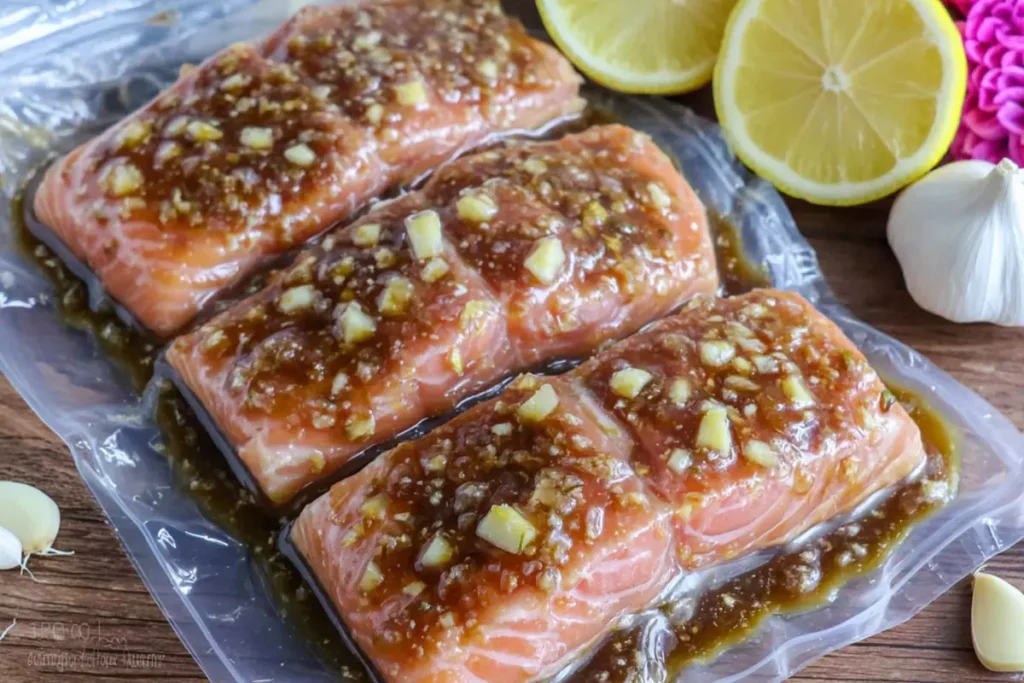
Because the marinade contains sugar, it’s important not to drown the fish in it while cooking. A thin coating is enough to build flavor and allow the salmon to caramelize properly. That controlled sweetness is what gives grilled salmon its signature contrast: tender inside, lightly charred and flavorful on the outside.
The Foil Trick That Makes Grilled Salmon Foolproof
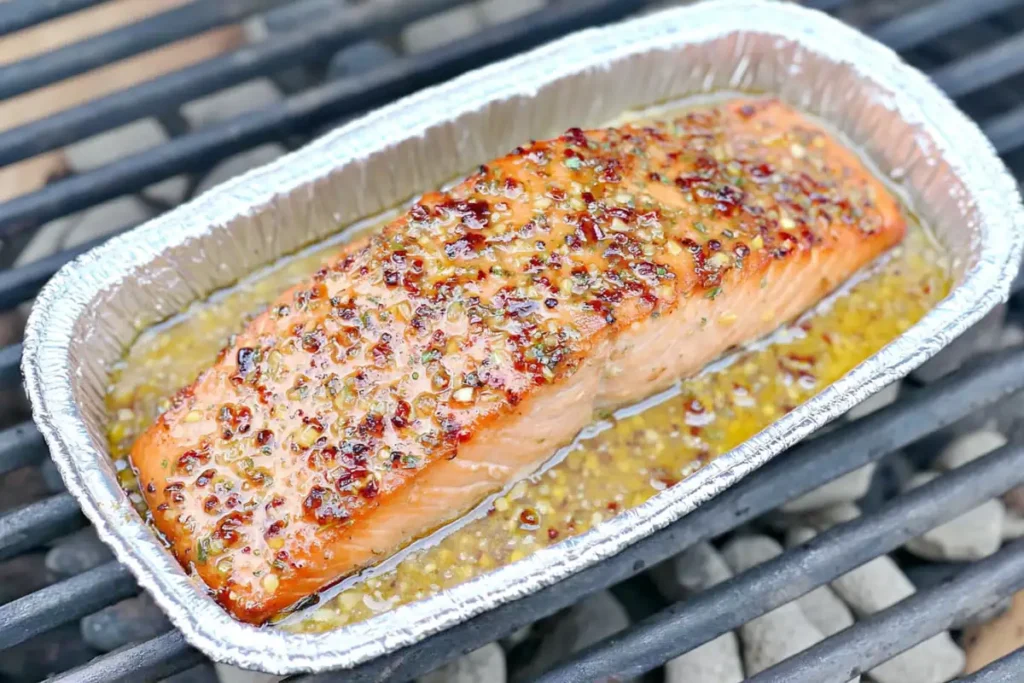
Grilling salmon can be intimidating because the fish is delicate and loves to stick to hot grates. The foil “tray” method solves that problem before it even starts. Simply shape a small sheet of aluminum foil into a shallow dish with raised edges, just enough to hold the fish and a spoonful of marinade. When the salmon sits inside that foil cradle, it cooks gently while still absorbing smoky grill flavor.
Place the salmon skin-side down in the foil dish and slide it onto a preheated grill. Once the lid closes, the grill creates a hot, enclosed environment where the marinade begins to bubble quietly around the fish. You’ll start to smell the garlic and soy sauce warming together—an early sign that the glaze is developing.
Reality check: the foil will fill with a bit of liquid from the marinade and the salmon itself. That’s completely normal. It might look like the fish is steaming rather than grilling at first, but this gentle start keeps the salmon moist while the sugars begin slowly caramelizing.
The Moment That Makes or Breaks This Grilled Salmon
After about twenty minutes on the grill, the salmon should look slightly opaque and feel firmer if you press it gently with a fork. At this stage the marinade will have thickened slightly and the fish will smell rich and savory with a hint of sweetness from the brown sugar.
This is when the final move happens. Carefully slide the salmon out of the foil and place it directly onto the grill for a quick finishing sear. You should hear a confident sizzle the moment it touches the hot grates. Within a minute or two, the surface develops light grill marks and the glaze tightens into a glossy coating.
Here’s the small miracle of salmon skin: once the fish finishes cooking, the skin usually lifts right off with almost no effort. If it resists, give it another 30 seconds on the grill. Rushing this moment can tear the fillet, but a little patience lets the skin release cleanly while leaving the tender salmon intact.
Common Grilling Mistakes (and How to Avoid Them)
One of the easiest mistakes with grilled salmon is cooking it too aggressively at the start. High direct heat right away can burn the marinade and dry out the fish before the inside cooks. The foil phase prevents that by creating a gentle, controlled environment first.
Another common issue is over-marinating. Because this recipe includes lemon juice, leaving the salmon in the marinade too long can actually soften the texture too much. An hour is perfect, and three hours is about the limit before the fish starts losing its firm bite.
Finally, keep an eye on the glaze during the finishing sear. Brown sugar caramelizes quickly, and while that creates incredible flavor, it can also burn if ignored. If the salmon starts smelling sharply sweet instead of pleasantly caramelized, move it to a slightly cooler part of the grill. The goal is a lightly charred, glossy surface—not a burnt one.
Small Tweaks That Still Work Beautifully
This recipe is simple enough that a few small adjustments can personalize it without losing what makes it good. If you don’t have brown sugar on hand, honey can step in, though the flavor will be a little brighter and the glaze slightly thinner. It still caramelizes nicely on the grill and pairs well with the lemon and soy sauce.
If soy sauce isn’t an option, tamari works as a direct substitute and keeps the same savory depth. Coconut aminos can also work in a pinch, but expect a slightly sweeter result. And while fresh garlic is ideal for aroma and flavor, a small pinch of garlic powder can rescue the marinade if that’s all you have in the pantry.
One change I would avoid is removing the sugar entirely. Without it, the marinade loses its ability to form that glossy caramelized surface that makes grilled salmon so satisfying. The fish will still cook, but the flavor balance and texture won’t be nearly as interesting.
What to Serve Alongside Fresh Grilled Salmon
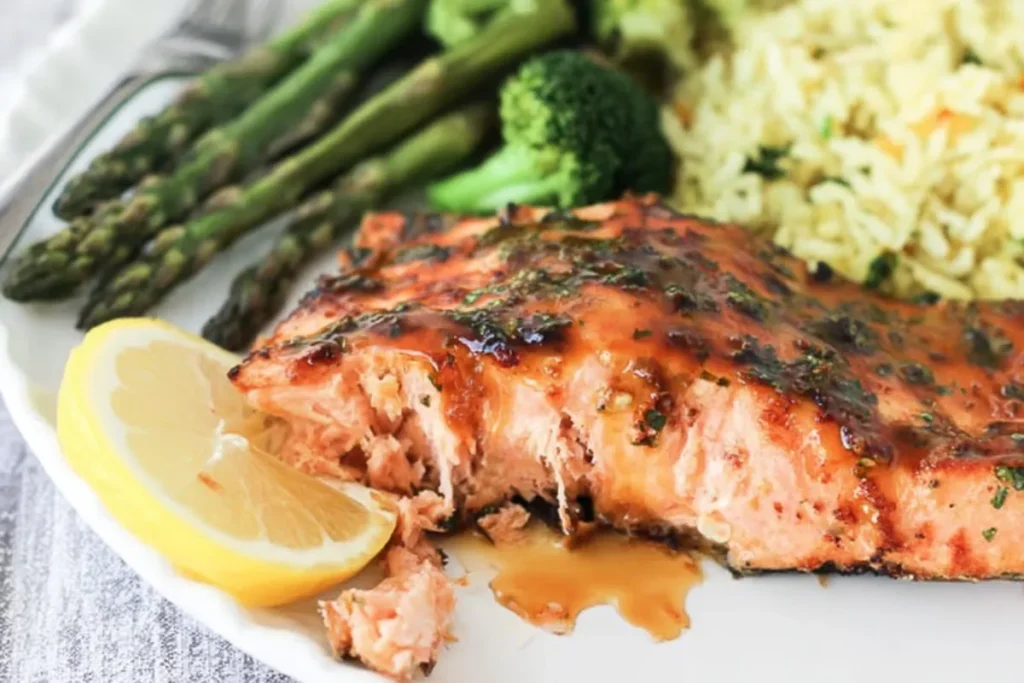
Grilled salmon has a rich, buttery texture, so it pairs best with sides that keep the plate feeling light and balanced. Something bright and fresh helps cut through the glaze and lets the salmon stay the star of the meal.
A bowl of lemon herb rice or fluffy jasmine rice works beautifully because it absorbs any extra glaze from the fish. Grilled asparagus or green beans add a crisp, slightly smoky contrast that echoes the flavor of the grill. If you want something even lighter, a simple cucumber salad with vinegar and dill brings a cool freshness that balances the sweet-savory marinade.
For summer meals, grilled corn on the cob or a chilled quinoa salad also fit perfectly. The goal is to keep the sides simple so the grilled salmon stays front and center.
A Few Final Grill-Side Notes
The biggest secret to great grilled salmon isn’t complicated technique—it’s restraint. Let the marinade do its job, keep the heat steady, and give the fish time to cook gently before finishing it with that quick sear.
If the salmon looks slightly glossy and flakes easily when touched with a fork, it’s ready. Pull it from the grill right then. Waiting “just another minute” is often what turns perfectly juicy salmon into dry fish.
And once you’ve made this recipe once or twice, it quickly becomes one of those dependable dinners you can cook almost without thinking. A fresh piece of salmon, a simple marinade, a hot grill—that’s usually all it takes to put a beautiful, flavorful meal on the table.
FAQ
How do you keep grilled salmon from sticking to the grill?
The easiest way is the foil tray method used in this recipe. Cooking the salmon in a small foil dish allows it to cook gently while still getting grill flavor, and it prevents the delicate flesh from tearing on the grates. When you finish with the quick sear at the end, the fish is already mostly cooked, so it releases from the grill much more easily.
How do you know when grilled salmon is done?
Salmon is ready when it turns opaque and flakes easily with a fork. If you gently press the top, it should feel firm but still slightly springy. Overcooked salmon becomes dry and chalky, so it’s better to pull it off the grill just as it reaches that tender, flaky stage.
How long should salmon marinate before grilling?
For this grilled salmon marinade, about one hour is perfect, though you can let it sit up to three hours for deeper flavor. Because the marinade contains lemon juice, leaving the fish much longer can start to affect the texture. The acidity slowly breaks down the fish, which can make it softer than you want.
Can I cook this salmon in the oven instead of the grill?
Yes, you can bake the salmon if grilling isn’t an option. Place the marinated fillets in a foil-lined dish and bake them in a 400°F oven until the fish flakes easily. You won’t get the same smoky flavor as grilled salmon, but the marinade still creates a flavorful glaze.
Should you grill salmon with the skin on or off?
Grilling salmon with the skin on is usually the best choice. The skin acts as a protective layer that helps the fish cook evenly and keeps it from falling apart. After cooking, the skin typically lifts right off the fillet with very little effort.
Print
Grilled Salmon
- Total Time: 30 minutes
- Yield: 3 servings 1x
Description
Juicy grilled salmon marinated in a sweet and savory blend of brown sugar, soy sauce, lemon juice, olive oil, and garlic. The marinade caramelizes beautifully on the grill, creating a glossy glaze while keeping the salmon tender and flavorful.
Ingredients
- 1–3 salmon fillets
- 1/4 cup brown sugar
- 2 tablespoons lemon juice
- 1 teaspoon black pepper
- 2 teaspoons salt
- 1/4 cup soy sauce
- 1/4 cup olive oil
- 1/8 cup water
- 2–3 cloves garlic, minced
Instructions
- Purchase the freshest salmon fillets you can find and place them in a large plastic bag.
- Add the brown sugar, lemon juice, black pepper, salt, soy sauce, olive oil, water, and minced garlic to the bag.
- Seal the bag while pressing out as much air as possible, then gently move the salmon around so the marinade coats the fish evenly.
- Let the salmon marinate in the refrigerator for at least 1 hour and up to 3 hours.
- Preheat the grill to medium heat while the salmon finishes marinating.
- Create a small tray from aluminum foil with raised edges to hold the fish and marinade.
- Place the salmon skin-side down in the foil tray and add a small amount of marinade over the top.
- Slide the foil tray onto the grill, close the lid, and cook for about 20 minutes until the fish begins to turn opaque.
- Carefully move the salmon directly onto the grill grates to sear the top.
- Grill for 1–2 minutes until the glaze caramelizes and the salmon flakes easily, then remove and serve.
Notes
- Fresh salmon produces the best flavor and texture for grilling.
- Do not marinate longer than three hours because the lemon juice can soften the fish too much.
- The foil tray helps prevent the fish from sticking to the grill and keeps the salmon moist while cooking.
- For a stronger caramelized glaze, allow the salmon to sear briefly on the grill before serving.
- Prep Time: 10 minutes
- Cook Time: 20 minutes
- Category: Dinner
- Method: Grilling
- Cuisine: American
Nutrition
- Serving Size: 1 fillet
- Calories: 420
- Sugar: 9
- Sodium: 980
- Fat: 24
- Saturated Fat: 4
- Unsaturated Fat: 18
- Trans Fat: 0
- Carbohydrates: 11
- Fiber: 0
- Protein: 36
- Cholesterol: 95