Buttery Steak Bites Garlic Herb Potatoes: Crispy Skillet Edges, Juicy Steak Centers

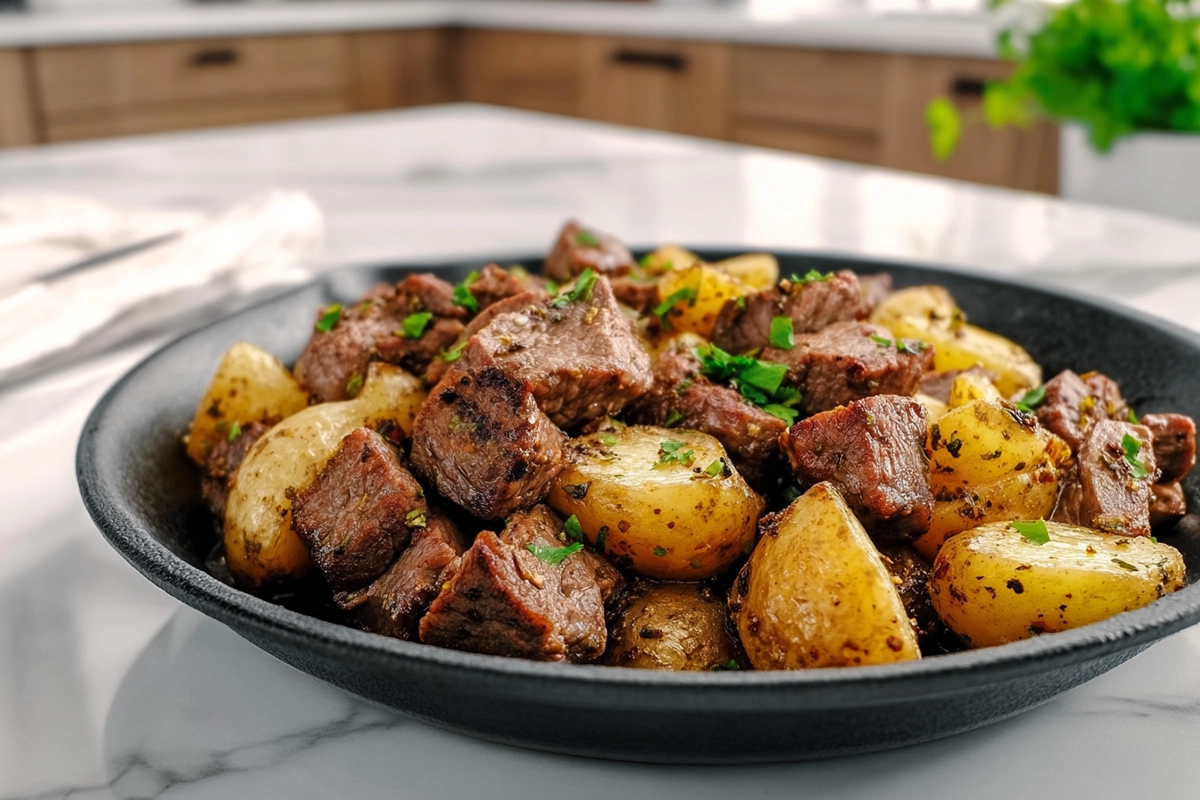
The problem with most steak-and-potatoes dinners isn’t ambition—it’s execution. The steak turns gray before it browns. The potatoes soak up oil like sponges and still manage to be bland. You end up with a pan full of food that looks hearty but tastes tired. This recipe exists to fix that exact disappointment, and it does it in under 30 minutes, with one skillet, and zero guesswork.
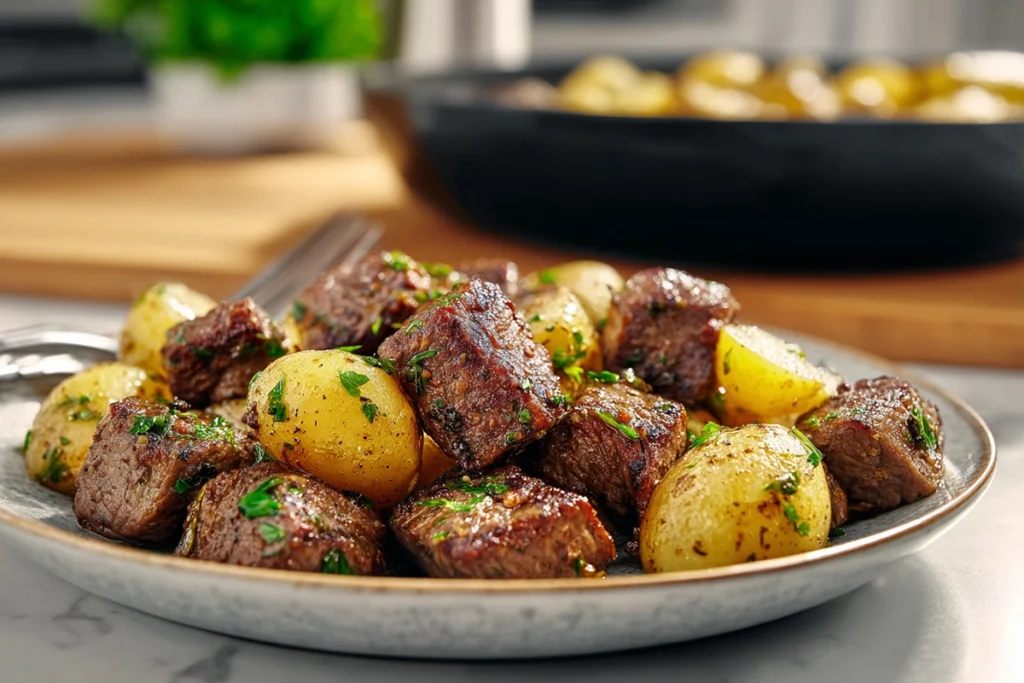
Here’s the fix: you stop trying to cook everything at once. The potatoes go in first, diced just right, so they pick up a golden crust before turning soft and buttery inside. Garlic and dried herbs bloom gently in fat instead of scorching. Then they leave the pan—temporarily—so the steak can do what steak needs to do: hit screaming-hot metal, stay still for a full minute, and build a real seared edge before it’s stirred. Butter comes in stages, not all at once, so you get brown, nutty flavor without smoke or bitterness. When everything comes back together, the pan smells like toasted garlic, herbs, and beef drippings you’ll want to swipe with bread.
This is savory, hearty skillet comfort—nothing delicate, nothing fussy. You don’t need a marinade, a sauce, or a pile of sides to make it feel complete. Just a solid pan, decent butter, the right potatoes, and the restraint to let heat do its job. From here, it’s about timing, not talent—and once you get that, this becomes one of those dinners you make on instinct, not from memory.
Potato Choices Matter More Than the Steak (Yes, Really)
If the potatoes miss, the whole pan misses. For buttery steak bites garlic herb potatoes, you want a potato that browns before it collapses and turns creamy without leaking water into the skillet. That’s why Yukon Golds are the quiet hero here. They carry enough starch to crisp on the outside while staying buttery inside, and they don’t shed moisture the way russets do. Red potatoes work almost as well, especially if that’s what you have—just expect a slightly firmer bite.
Size is strategy. Cutting the potatoes into roughly ½-inch chunks isn’t aesthetic; it’s physics. Smaller pieces burn before they soften. Bigger ones steam internally while the outside over-browns. This size lets them finish in the same time window as the steak without forcing compromises later.
- Yukon Gold or red potatoes: Creamy interiors, reliable browning, minimal water loss
- Olive oil: Handles the initial heat better than butter and protects the pan from scorching
- Salt & black pepper: Season early so the potatoes absorb flavor as they cook, not after
Butter, Garlic, and Herbs: Flavor That Doesn’t Burn
Butter is the backbone of this dish, but dumping it all in at once is how you get bitterness instead of richness. Splitting the butter is deliberate. Early butter coats the potatoes and carries the herbs; later butter finishes the steak with flavor instead of smoke. If all you have is salted butter, skip adding extra salt until the end—this dish concentrates seasoning fast.
Garlic needs protection. Minced garlic goes in with the potatoes, where the heat is moderated by moisture. Toss it into a dry, ripping-hot pan and it turns acrid in seconds. Dried oregano and rosemary work better than fresh here because they bloom slowly in fat and don’t scorch under high heat.
- Butter (divided): Early for flavor infusion, late for steak finishing
- Garlic cloves: Minced small so they perfume the fat without burning
- Dried oregano & rosemary: Stable, aromatic, and better suited to skillet heat than fresh
Steak Selection: Flavor First, Not Luxury
Sirloin earns its place here because it sears fast, stays tender when cut into chunks, and doesn’t bleed excess fat into the pan. Filet mignon works, but you’re paying for tenderness you don’t need. Ribeye brings flavor, but too much fat can interfere with browning. The goal is clean, beefy sear—not flare-ups.
Cut size matters as much as cut choice. One-inch cubes give you surface area for browning while protecting the center from overcooking. Smaller pieces cook too fast and toughen before they brown.
- Sirloin steak: Balanced tenderness and flavor without excess fat
- Alternative cuts: New York strip or T-bone work; avoid thin stir-fry cuts unless you want less crust

Why This Buttery Steak Bites Garlic Herb Potatoes Skillet Works
This recipe succeeds because it respects timing instead of fighting it. Potatoes go first because they need sustained heat. Steak goes last because it needs intensity. Separating those phases prevents the two most common failures: soggy potatoes and gray meat. Butter is staged, not rushed. Herbs bloom before heat peaks. Everything reunites at the end, already cooked properly, so the final toss is about coating—not cooking.
The result is a skillet that delivers contrast: crisp edges, juicy centers, and fat that tastes nutty instead of burnt. No sauces, no marinades, no unnecessary steps—just heat management and ingredient choices that pull their weight.
The Make-or-Break Technique: High Heat, Then Restraint
This dish lives or dies in the first minute the pan meets the food. Set your skillet over medium-high heat and let it warm until the surface looks dry and slightly shimmering. When the oil and first portion of butter go in, you should hear an immediate, confident sizzle—not a quiet melt. That sound tells you the pan is hot enough to brown instead of steam.
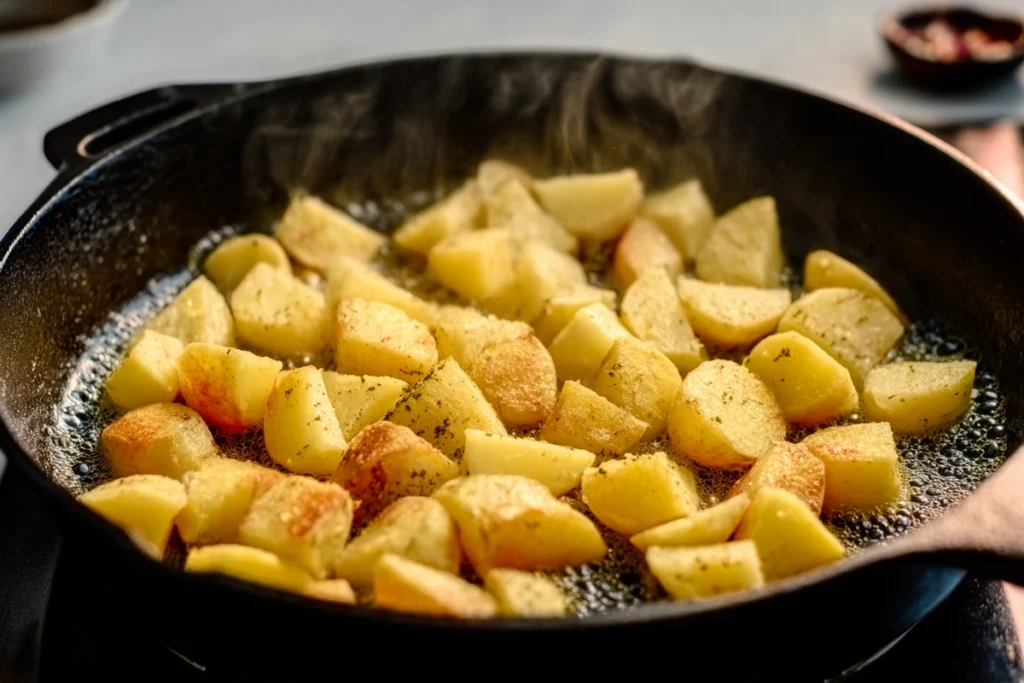
The potatoes hit first. As they spread across the pan, listen for steady crackling and watch the cut edges turn from pale to lightly golden. Stir only when you see color forming; too much movement kills browning. The smell at this stage should be clean and starchy, with garlic just starting to soften and perfume the oil—not sharp, not bitter.
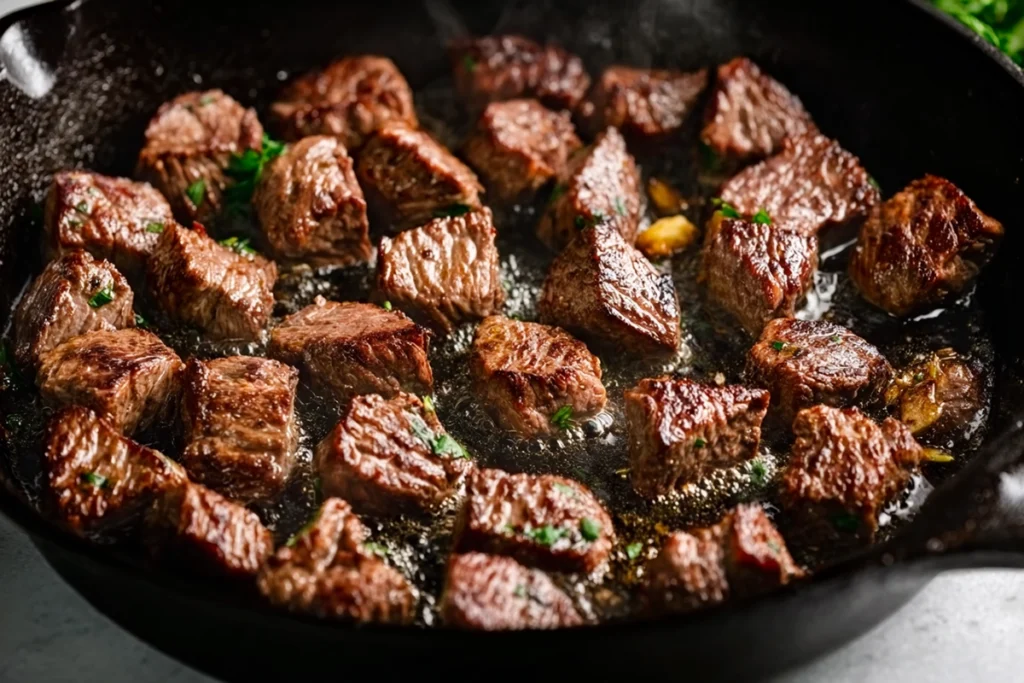
Once the potatoes are fork-tender and bronze at the edges, they come out. This pause matters. Cranking the heat higher now prepares the pan for the steak, which needs intensity, not patience. When the steak bites land in a single layer, the sound should jump in volume. Leave them alone. That silence you’re fighting is the crust forming. When the meat releases easily and smells deeply beefy, not metallic, it’s ready to turn.
Butter, Garlic, and Herbs: How Not to Burn What You’re Paying For
Butter goes back in only after the steak has seared. Drop it into the hot pan and watch it foam, then settle into a glossy layer that smells nutty instead of scorched. This is where restraint pays off. If the butter browns instantly and darkens, the heat is too high—pull the pan for a breath and reset.
As the steak finishes, the aroma should shift from raw beef to toasted butter and herbs. The meat will feel firm but springy when pressed, like the base of your thumb. Now the potatoes return, already cooked, just long enough to get coated in that garlic-herb butter without losing their crisp edges.
This final toss is brief and deliberate. You’re not cooking anymore; you’re unifying flavors. When everything glistens and the pan smells rich and savory, the buttery steak bites garlic herb potatoes are done—no sauce needed, no fixes required.
Swaps That Actually Work (and One That Doesn’t)
If you don’t have sirloin, don’t panic—but don’t grab just anything either. New York strip or T-bone work well if you trim excess surface fat so the pan doesn’t flood. Filet mignon is tender but mild; it’ll cook fast, so pull it early. What doesn’t work is thin stir-fry beef unless you accept less browning and more chew. It cooks before it sears, and this dish is built on crust.
Potato-wise, Yukon Golds and red potatoes are still the move. Sweet potatoes sound tempting, but they caramelize too fast and turn the butter sugary in a way that fights the steak. If all you have is salted butter, use it—just hold back on extra salt until the end. Parmesan sprinkled into the hot butter works because it melts and clings; shredded cheese tossed in later does not and turns greasy.
If you’ve got leftover rotisserie chicken, you can use it—but only if it’s cold. Shred it and toss it in at the very end, just long enough to warm and coat. Cooking it from raw like the steak will dry it out.
Real Ways People Actually Serve This (Not Just “With a Side Salad”)
This pan is rich, so pair it with something that cuts through butter. A sharp green salad with vinaigrette or lightly charred vegetables does real work here. If you’re leaning into comfort, scrambled or fried eggs turn this into a serious breakfast skillet without changing a thing.
For parties, skip the potatoes and serve just the steak bites hot with toothpicks. Ranch, mustard, or even plain ketchup work because the beef is already seasoned well. Leftovers reheat best in a skillet over medium heat—microwaves soften the crust and undo the whole point.
When served as a full meal, buttery steak bites garlic herb potatoes don’t need much help. They already bring protein, fat, and starch in balance. Your job is to add contrast, not competition.
Last Tip Before You Start
This is not a dish you multitask through. Have everything cut, measured, and ready before the pan heats up. Once the skillet is hot, decisions need to be fast and confident.
The reward is immediate. You’ll hear it before you taste it—the crackle of searing steak, the quiet hiss of butter foaming, the smell of garlic turning sweet instead of sharp. Make it once with intention, and it becomes one of those meals you don’t look up anymore. You just know when it’s right.
Common Questions About Buttery Steak Bites Garlic Herb Potatoes
Can I use a different cut of steak without ruining it?
Yes—but you need to match the cut to the cooking method. Sirloin works best because it sears quickly and stays tender in bite-size pieces. New York strip or T-bone also work if you trim excess surface fat so the pan doesn’t flood. Filet mignon is very tender but mild, so pull it early to avoid overcooking. Thin stir-fry beef is the one cut that causes problems; it cooks through before it browns, which means you lose the crust that makes this dish work.
Do I really need a cast-iron skillet for this recipe?
Cast iron gives you the best heat retention and browning, but a heavy-bottom stainless steel pan works just fine. What matters is heat stability. Avoid lightweight nonstick pans—they lose heat too fast when the steak hits the surface, which leads to steaming instead of searing. Whatever pan you use, it should stay hot enough to sizzle aggressively the moment the steak goes in.
Why did my steak release liquid instead of browning?
This happens when the pan isn’t hot enough or when the steak is overcrowded. The meat should hit the pan and immediately sizzle loudly. If you hear a soft hiss, the pan needs more heat. Also, the steak bites must sit in a single layer with space between them. Crowding traps steam, and steam is the enemy of browning.
Can I marinate the steak ahead of time?
Marinating isn’t necessary and isn’t recommended for this recipe. The butter, garlic, and herbs already provide plenty of flavor, and marinades add moisture that interferes with searing. If you want deeper flavor, coat the steak lightly with olive oil and dried herbs and refrigerate it uncovered overnight. This seasons the meat without compromising the crust.
How well do buttery steak bites garlic herb potatoes reheat?
They reheat best in a skillet, not a microwave. Warm them over medium heat with a small knob of butter just until heated through. The microwave softens the potato edges and turns the steak rubbery. Stored properly in an airtight container, leftovers keep well for up to four days, but the texture is best within the first two.
Print
Buttery Steak Bites Garlic Herb Potatoes
- Total Time: 20 minutes
- Yield: 5 servings 1x
Description
Crispy-edged steak bites and golden garlic herb potatoes cooked together in one skillet. A fast, hearty, buttery dinner with real sear and big flavor.
Ingredients
- 4 tablespoons butter, divided
- 1 tablespoon olive oil
- 1 pound Yukon Gold or red potatoes, cut into 1/2-inch chunks
- 4 garlic cloves, minced
- 1 teaspoon dried oregano
- 1 teaspoon dried rosemary
- 1/2 teaspoon salt
- 1/2 teaspoon black pepper
- 1 1/2 pounds sirloin steak, cut into 1-inch chunks
Instructions
- Heat a heavy skillet over medium-high heat until hot.
- Add olive oil and half of the butter; let it melt and sizzle.
- Add potatoes, garlic, oregano, rosemary, salt, and pepper; cook until golden and fork-tender, stirring only when browned.
- Remove potatoes from the skillet and set aside.
- Increase heat and add remaining butter to the pan.
- Add steak bites in a single layer and sear without moving until browned.
- Stir briefly and cook until desired doneness.
- Return potatoes to the skillet and toss just until coated and heated through.
Notes
- Sirloin works best for browning, but New York strip or T-bone can be used.
- Avoid russet potatoes, which release too much moisture.
- If potatoes brown too fast before softening, lower heat, add a splash of water, and cover briefly.
- Prep Time: 10 minutes
- Cook Time: 10 minutes
- Category: Main Course
- Method: Skillet
- Cuisine: American
Nutrition
- Serving Size: 1 serving
- Calories: 364
- Sugar: 1
- Sodium: 396
- Fat: 18
- Saturated Fat: 9
- Unsaturated Fat: 9
- Trans Fat: 0
- Carbohydrates: 17
- Fiber: 2
- Protein: 32
- Cholesterol: 107