Caprese Quick Bread: Soft Crumb, Basil Aroma, and Melty Mozzarella

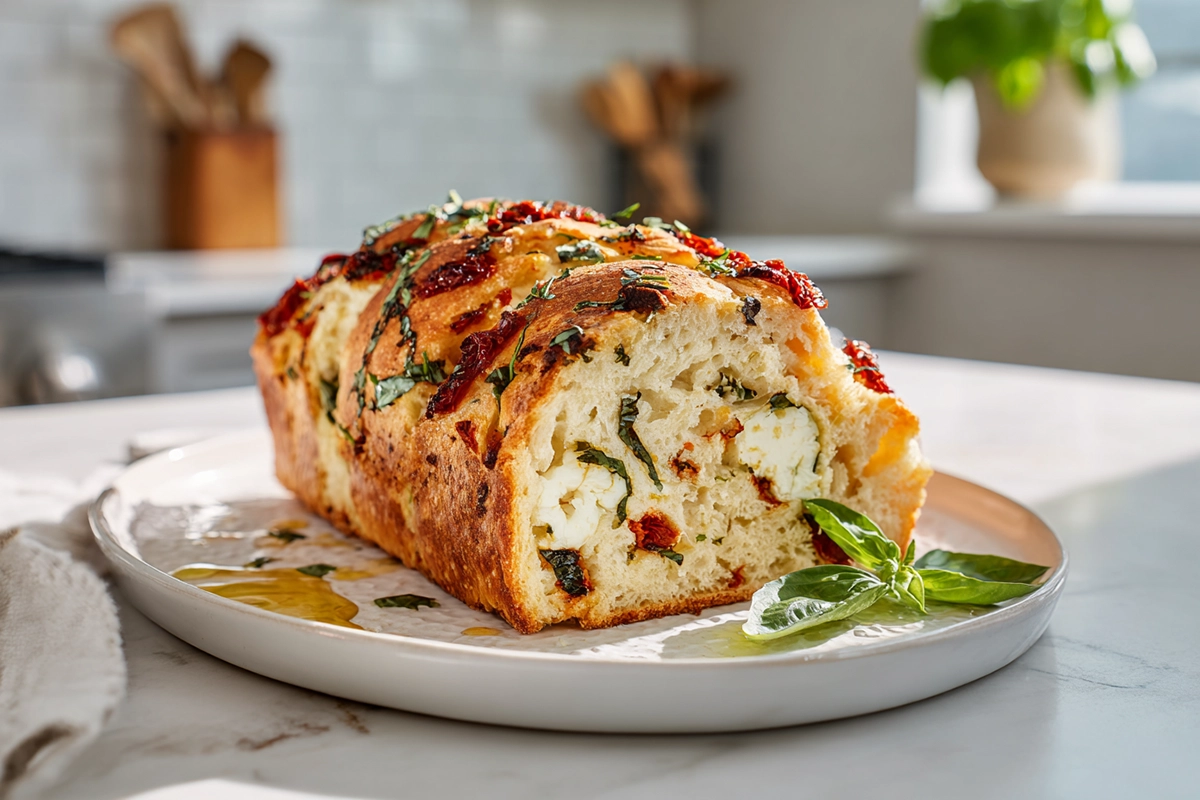
The first thing you notice isn’t the look of this bread—it’s the smell. Fresh basil warms in the oven and turns sweet, sun-dried tomatoes deepen and mellow, and there’s that slight tang from buttermilk that always promises tenderness. When the loaf finally comes out, the crust is lightly golden, but the real reward waits inside: a soft, savory crumb with pockets of melted mozzarella that stretch just enough when sliced warm.
This is the kind of bread you make when yeast feels like too much commitment, but store-bought bread feels like a missed opportunity. It comes together quickly, bakes in under an hour, and delivers flavors that feel intentional without being fussy. The mix of all-purpose wheat and bread flour gives it structure without turning it dense, while buttermilk keeps everything moist and forgiving. Nothing here is complicated—but the balance matters.
What I appreciate most about this Caprese quick bread is how practical it is. It works for a quiet lunch with soup, a slice alongside a salad, or as something warm to set on the table when people are hovering in the kitchen. It doesn’t need butter, though it won’t argue with it. It doesn’t crumble apart, and it doesn’t dry out by the next day.
Before any measuring or mixing, there’s one thing to understand about this loaf: the order and handling matter more than the ingredients themselves. Once you know where the bread gets its structure—and where it can quietly go wrong—the rest falls into place.
Table of Contents
The Quiet Balancing Act Inside Caprese Quick Bread
A good Caprese Quick Bread isn’t built on one distinctive ingredient—it’s built on restraint. This loaf works because moisture, fat, and structure are kept in check, not pushed to extremes. The goal isn’t a tall bakery-style rise or a crackly crust. The goal is a soft, sliceable interior that holds together, carries flavor evenly, and stays pleasant even after it cools.
That’s why this recipe uses a mixture of flours instead of committing to just one. Bread flour brings enough protein to support the mass of cheese and tomatoes, while plain flour keeps the crumb from turning tight or rubbery. Baking powder and baking soda work together here: one for lift, the other for balance. The buttermilk isn’t just liquid—it’s acidity, tenderness, and insurance against dryness.
The mix-ins are intentionally bold but controlled. Sun-dried tomatoes give you concentrated tomato flavor without adding water that would weigh the batter down. Fresh basil perfumes the loaf as it bakes instead of disappearing into it. Mozzarella melts into pockets rather than dissolving, which is exactly what you want in a savory quick bread meant to be sliced, not pulled apart.
- plain flour: Keeps the crumb tender and forgiving.
- Bread flour: Adds structure so the loaf doesn’t collapse under moisture.
- Buttermilk: Provides acidity for lift and a moist interior.
- Sun-dried tomatoes: Deliver flavor without excess moisture.

Choosing Ingredients Like a Home Cook, Not a Recipe Card
This is not a place for precision-for-precision’s sake. The ingredients in this loaf are everyday items, but how you choose and handle them affects the final texture more than most people expect. Fresh mozzarella should be cubed, not shredded. Shreds melt too evenly and disappear; cubes create those soft, creamy pockets that make each slice interesting. Smaller cubes distribute better and are less likely to sink.
Basil goes in fresh and unbruised. It’s there for aroma as much as taste, and it needs gentle handling to do its job. Sun-dried tomatoes should be dry-packed or well-drained—oil-packed ones can work, but they’ll soften the crumb further unless you blot them well.
For fat, grapeseed oil keeps the flavor neutral, as well as lets the basil and cheese lead. Extra-virgin olive oil is fine if that’s what you keep on hand, but expect a more assertive finish. If you don’t have buttermilk, whole milk with a splash of acidity can stand in, though the crumb will be slightly less tender.
- Fresh mozzarella: Cubed for distinct melt pockets, not shredded.
- Fresh basil: Added raw for aroma that survives baking.
- Grapeseed or olive oil: Neutral vs. assertive flavor—choose intentionally.
- Buttermilk: Key to tenderness; substitutes change texture slightly.
These choices are what keep this savory quick bread from drifting into muffin territory—and what make it reliable enough to bake again without second-guessing.
The Step That Decides Everything (Before the Pan Ever Hits the Oven)
This loaf is decided long before it bakes. Once the dry ingredients are mixed, the cheese, basil, and sun-dried tomatoes go in before the liquids, not after. Tossing them through the flour coats every piece, which keeps the mozzarella from sinking and helps the tomatoes stay suspended instead of collecting at the bottom.
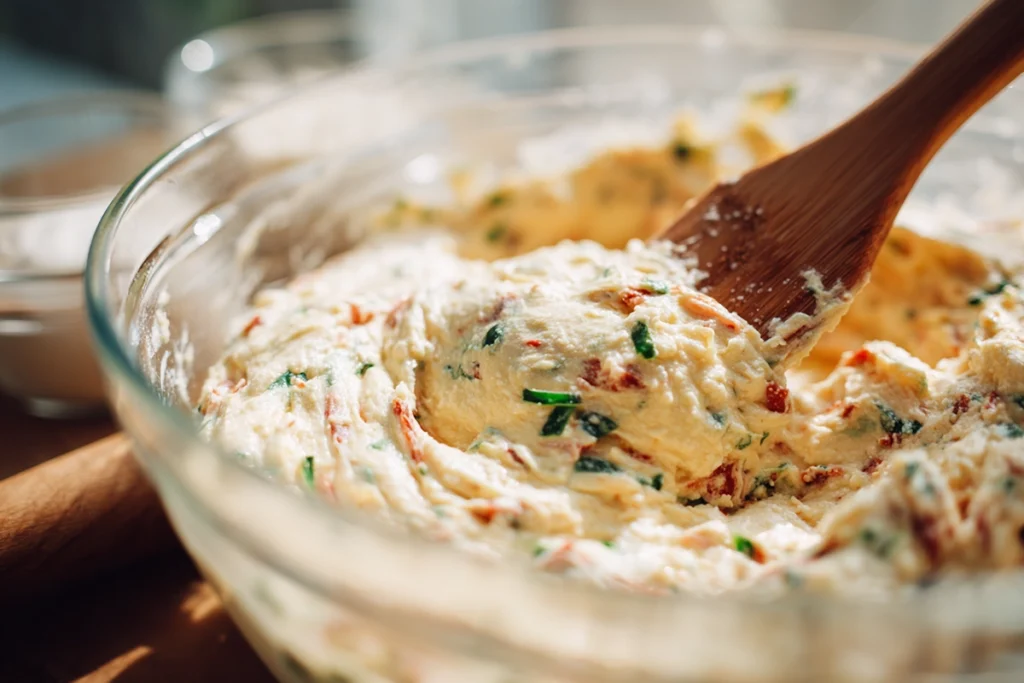
When the buttermilk mixture meets the bowl, the batter should come together thick and sticky, not pourable. Stir just until the flour disappears—no more. You’ll feel resistance in the spoon, and the surface will look slightly rough rather than smooth. If it loosens up and turns glossy, you’ve gone too far, and the crumb will tighten as it bakes.
As the batter settles into the pan, it should mound gently and need a light push to reach the corners. This is what gives the savory quick bread its sliceable structure instead of a muffin-like crumble.
Oven Truths: Doneness, Temperature, and the Lie of the Toothpick
In the oven, this bread doesn’t announce itself loudly. There’s no dramatic rise or crackle—just a slow, steady lift and a warm, herby smell that fills the kitchen about halfway through baking. The top should turn pale golden with a few darker spots where cheese sits close to the surface.
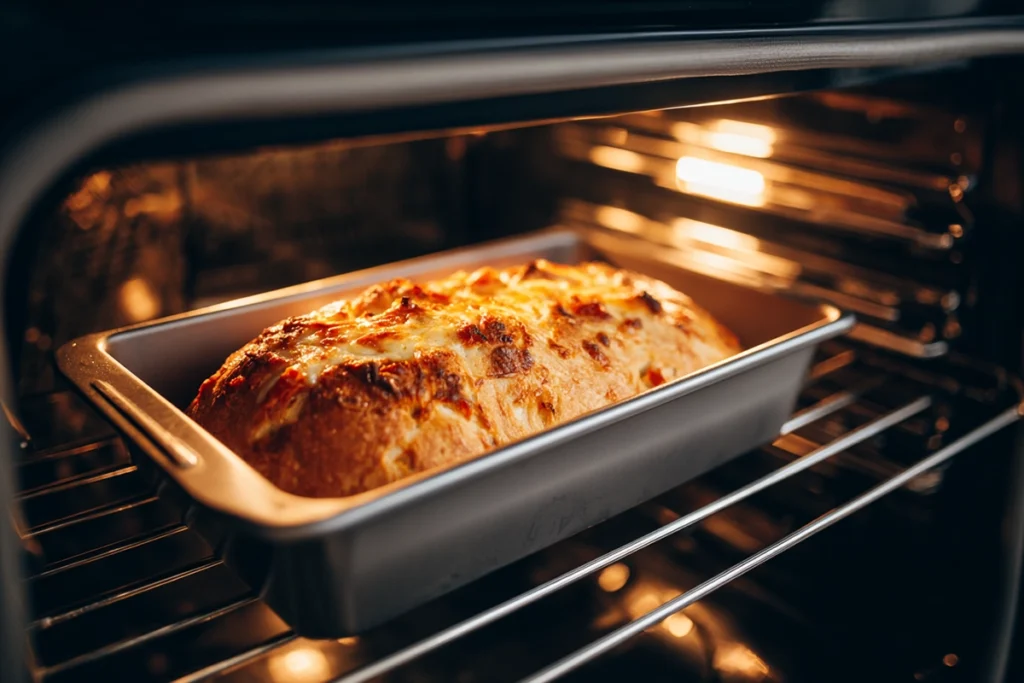
Press the center gently once it looks done. It should feel firm and spring back, not sink or wobble. A toothpick can come out clean and still lie to you here; the crumb may look set while the center is still underbaked. The most reliable sign is internal heat—when the center reaches about 200°F, the loaf is ready.
Let the bread rest before slicing. As it cools, the steam redistributes, the crumb tightens slightly, and the flavors settle. That pause is what keeps this Caprese quick bread moist instead of gummy when you cut into it.
Small Tweaks That Keep the Bread Honest
This loaf is forgiving, but it still has boundaries. If you want to adjust it, do so in ways that respect the moisture balance and structure. A handful of finely chopped olives can replace part of the sun-dried tomatoes for a sharper, saltier note, but keep the total volume the same. Swapping in shredded low-moisture mozzarella will work in a pinch, though you’ll lose the creamy pockets that make each slice interesting.
If you’re out of buttermilk, whole milk with a small splash of acidity can stand in. The crumb will be slightly less tender, but the bread will still hold together well. What doesn’t work is adding fresh tomatoes—they release too much water and leave the center damp, no matter how long you bake them. This is one of those cases where restraint protects the result.
Extra herbs beyond basil are rarely necessary. A little dried oregano can complement the flavor, but adding multiple herbs at once muddies the clean caprese profile this bread is built around.
When and How This Bread Earns Its Place on the Table
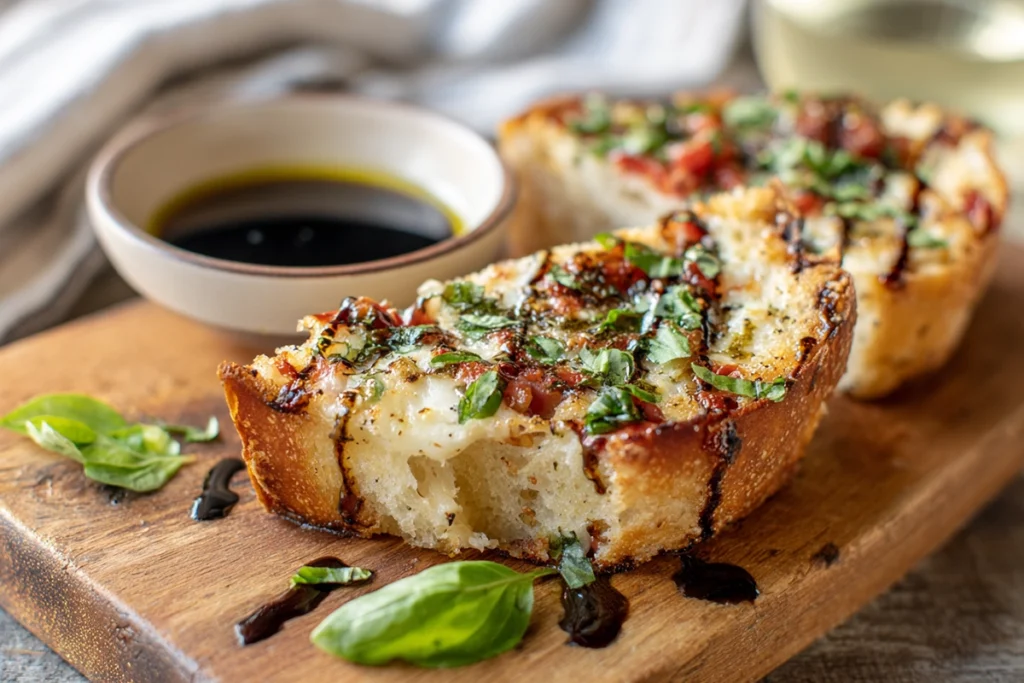
This bread shines when it’s treated as a supporting player rather than the main event. A warm slice alongside tomato soup or a brothy vegetable soup gives you contrast without competition. It’s especially good with crisp green salads dressed lightly in vinaigrette—the acidity keeps the bread from feeling heavy.
For lunch, this loaf works beautifully with a simple plate of sliced turkey or roast chicken. Toasting a slice lightly brings out the basil aroma again and firms the edges without drying the interior. If you’re serving it for brunch, keep the rest of the spread restrained—eggs, fresh fruit, and this Caprese Quick Bread are more than enough.
A Few Last Things Worth Remembering
Let the bread cool before cutting if you want clean slices. Cutting too early traps steam and turns the crumb slightly gummy. If the loaf browns too quickly in your oven, a loose tent of foil during the last stretch of baking protects the top without slowing the interior.
Store leftovers wrapped tightly at room temperature for a day, or refrigerate if your kitchen runs warm. A quick reheat brings the cheese back to life without drying the crumb.
This is the kind of recipe that earns repeat bakes because it behaves the same way every time. Once you know its limits, it stops feeling like a recipe and starts feeling like something you simply know how to make—and that’s usually when a dish becomes part of the regular rotation.
Get inspired with more delicious recipes! Follow me on Facebook and Pinterest for new cooking ideas every week.
FAQ
Why is my Caprese quick bread slightly dense in the middle?
A slightly dense center usually means the batter was mixed a bit too much or the loaf was sliced before it fully cooled. This bread should be stirred just until the flour disappears, then left to rest after baking so the crumb can finish setting. Once cooled, it should feel soft and cohesive rather than heavy.
Can I make Caprese quick bread ahead of time?
Yes, this bread holds up well when baked a day ahead. Once completely cooled, wrap it tightly and store it at room temperature for up to 24 hours. The flavors actually settle and improve slightly by the next day.
Can I freeze Caprese quick bread?
You can freeze it, but it’s best done in slices rather than as a whole loaf. Let the bread cool completely, wrap slices tightly, and freeze for up to two months. Thaw at room temperature and warm gently to bring back the texture.
Can I use fresh tomatoes instead of sun-dried tomatoes?
Fresh tomatoes aren’t recommended for this recipe. They release too much moisture during baking and can leave the center of the bread underbaked and gummy. Sun-dried tomatoes provide concentrated flavor without disrupting the structure.
Print
Caprese Quick Bread
- Total Time: 1 hour 5 minutes
- Yield: 8 servings 1x
- Diet: Vegetarian
Description
Savory Caprese quick bread with fresh basil, mozzarella, and sun-dried tomatoes. A no-yeast loaf with a soft, sliceable crumb that works beautifully with soup, salad, or brunch.
Ingredients
- 1 1/4 cups plain flour
- 1 cup bread flour
- 2 tablespoons baking powder
- 1/2 teaspoon baking soda
- 1 teaspoon salt
- 3 1/2 to 4 ounces fresh mozzarella, cubed
- 2 tablespoons fresh basil, chopped
- 1/3 cup sun-dried tomatoes, chopped
- 2 large eggs
- 2 1/2 tablespoons grapeseed oil or olive oil
- 1 1/4 cups buttermilk
Instructions
- Preheat the oven to 350°F and grease an 8×4-inch loaf pan.
- In a large bowl, mix the flours, baking powder, baking soda, and salt until evenly combined.
- Add the basil, mozzarella, and sun-dried tomatoes and toss to coat with the flour mixture.
- In a separate bowl, whisk together the eggs, oil, and buttermilk.
- Pour the wet ingredients into the dry ingredients and stir just until combined; the batter will be thick and sticky.
- Transfer the batter to the prepared loaf pan and spread evenly.
- Bake for 40–45 minutes, until the top is lightly golden and the center reaches doneness.
- Let the bread cool before slicing.
Notes
- The bread is done when the center feels firm and reaches about 200°F internally.
- If the top browns too quickly, loosely tent with foil during the last part of baking.
- Allow the loaf to cool before slicing to avoid a gummy texture.
- Prep Time: 15 minutes
- Cook Time: 50 minutes
- Category: Appetizer, Bread, Side Dish
- Method: Baked
- Cuisine: Italian-American
Nutrition
- Serving Size: 1 slice
- Calories: 230
- Sugar: 2 g
- Sodium: 280 mg
- Fat: 12 g
- Saturated Fat: 4 g
- Unsaturated Fat: 7 g
- Trans Fat: 0 g
- Carbohydrates: 22 g
- Fiber: 1 g
- Protein: 8 g
- Cholesterol: 45 mg