Cheesecake Crescent Rolls Casserole: Flaky, Creamy, Cinnamon-Sweet Comfort

The problem with most cheesecake desserts is commitment. Springform pans, water baths, cracked tops, and that sinking feeling when the center refuses to set. Sometimes you don’t want a project—you want something warm, sweet, and indulgent that hits the table fast and still feels like a real dessert. Something that smells like melted butter and cinnamon before it even cools enough to cut.
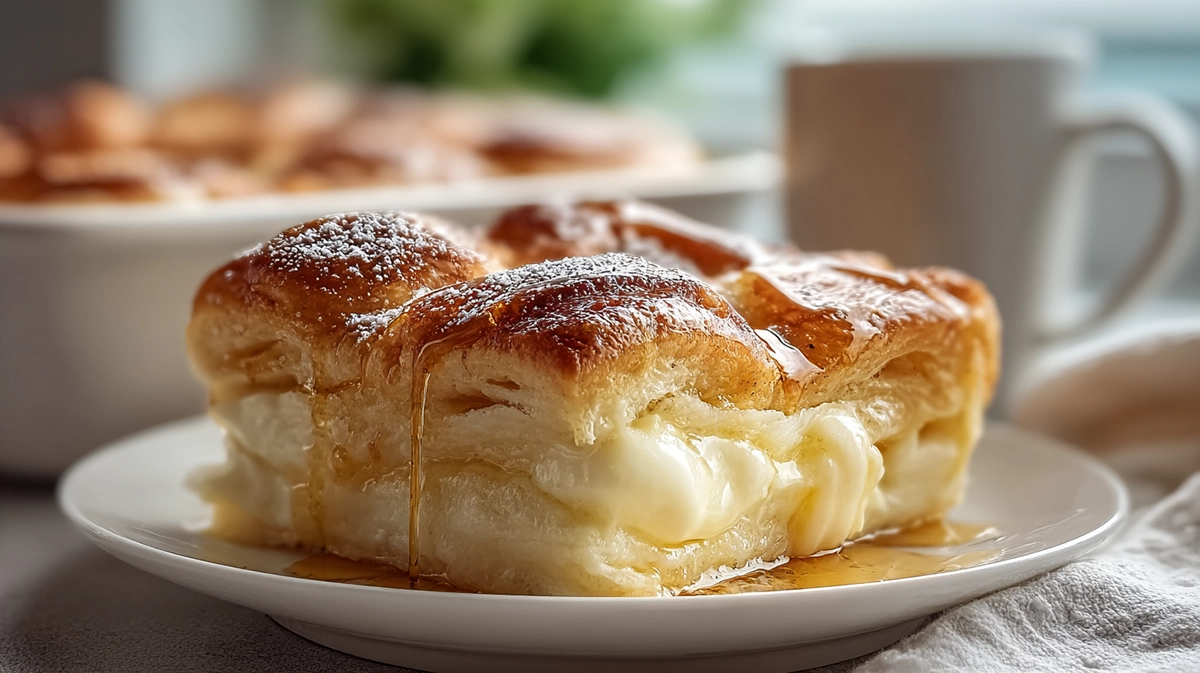
That’s where cheesecake crescent rolls casserole earns its keep. Instead of fighting gravity and oven physics, this recipe lays everything flat and lets the oven do what it does best. Flaky crescent dough bakes into a crisp, golden shell. Inside, cream cheese, sugar, and vanilla melt into a soft, custardy layer that slices clean once it rests. The buttered cinnamon-sugar topping isn’t decoration—it’s insulation, flavor, and texture all at once, giving you that crackly top without torches or tricks.
The technique is simple but intentional. The dough seams are sealed so nothing leaks. The cream cheese is properly softened so it spreads instead of tearing the base. Butter goes on before cinnamon so the sugar blooms instead of burning. This isn’t a shortcut cheesecake pretending to be fancy—it’s a different dessert altogether, built for people who want payoff without precision baking anxiety.
You don’t need special pans, mixers, or patience measured in hours. Just a baking dish, softened cream cheese, and enough restraint to let it cool before cutting. What you get is a dessert that eats like cheesecake, smells like a bakery, and fits right into real life—weeknights, potlucks, and the quiet moment when the kitchen finally cools down.
Cream Cheese Isn’t the Star Unless You Treat It Right
This dessert looks simple on paper, but the ingredient choices are doing quiet, important work. In a cheesecake crescent rolls casserole, there’s nowhere for mistakes to hide—each component has to behave. The cream cheese isn’t just for flavor; it’s the structural center. If it’s properly softened, it blends into a smooth, spreadable layer that bakes up creamy instead of grainy. Cold cream cheese fights the sugar, traps lumps, and tears the dough beneath it. Time on the counter matters more here than any gadget.
The crescent roll dough pulls double duty. It’s both crust and lid, and its laminated fat layers are what give you that bakery-style flake. This only works if the seams are sealed and the dough is treated gently—overstretching destroys the layers that create lift. Sugar is intentionally divided, not for sweetness alone, but for balance. Inside, it softens the cream cheese and rounds out tang. On top, it caramelizes with butter and cinnamon into that crackly, fragrant finish.
Butter is less about richness and more about control. It slows browning just enough to keep the cinnamon from scorching, and it helps the sugar melt evenly across the surface. Cinnamon isn’t optional flavor—it signals “dessert” before the pan even hits the table, and it needs fat beneath it to bloom instead of turning bitter.
- Refrigerated crescent roll dough: Provides flaky structure; keep it cold until use so the layers puff properly.
- Full-fat cream cheese, softened: Essential for smooth texture and clean slices; reduced-fat won’t set the same way.
- Granulated sugar (divided): Sweetens the filling and creates a caramelized top; reducing it affects texture, not just sweetness.
- Vanilla extract: Softens the tang of the cream cheese without overpowering it.
- Butter, melted: Acts as both flavor and heat buffer for the cinnamon sugar topping.
- Ground cinnamon: Needs fat beneath it to avoid burning and bitterness.

Why Cheesecake Crescent Rolls Casserole Works When Baked as a Slab
Traditional cheesecake relies on controlled moisture and slow baking to avoid cracks. This casserole sidesteps that entire problem by changing the architecture. Baking the cheesecake crescent rolls casserole as a flat slab increases surface area, which means faster, more even heat distribution. The crescent dough forms a protective barrier above and below the cream cheese layer, trapping steam just long enough for the filling to set without drying out.
The bottom layer absorbs a bit of moisture from the filling, becoming tender but not soggy, while the top layer is exposed directly to oven heat and butter. That contrast is intentional. The buttered cinnamon-sugar topping acts like a shallow glaze, melting into the dough and creating a crisp, golden finish that signals doneness long before the center overbakes.
Cooling is part of the design, not an afterthought. As the pan rests, the sugars firm up and the cream cheese tightens slightly, turning a spoon-soft center into something sliceable without losing its creamy feel. This is why the recipe works without water baths, specialty pans, or fear—by letting physics, not finesse, do the heavy lifting.
The Make-or-Break Moment: Sealing the Dough Layers
This is the point where a cheesecake crescent rolls casserole either bakes up clean and sliceable—or turns into a bubbling, leaky mess. When you unroll the first sheet of crescent dough into the baking dish, look closely at the seams. They should disappear under your fingers. Press them together gently until the dough feels continuous, almost like a single sheet of pastry rather than perforated triangles.
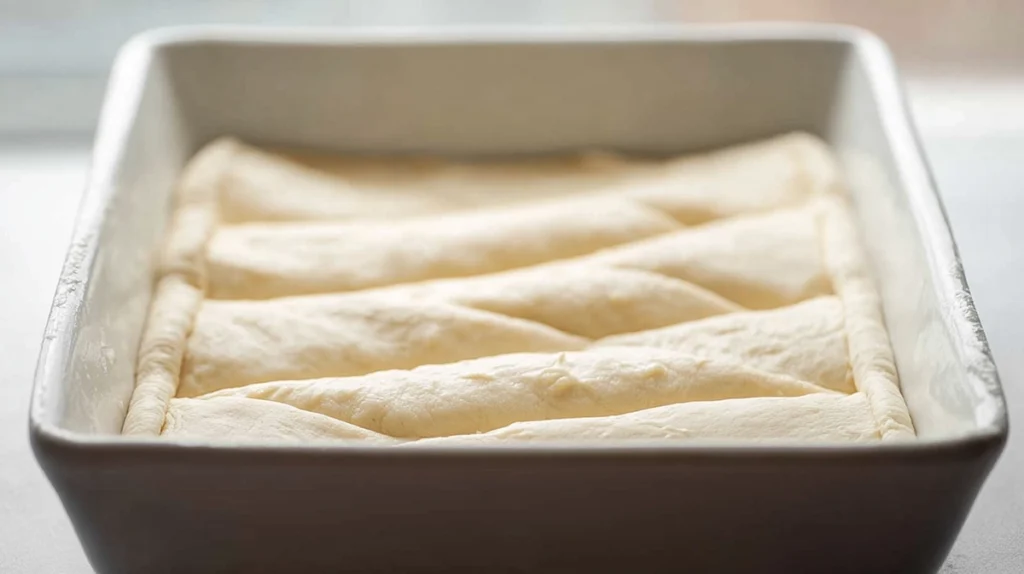
As you spread the cream cheese filling, notice the resistance. It should glide, not tug. If the dough shifts or tears, stop and smooth it back into place with your fingertips. You’re building a seal, not stretching a bedsheet. When the top layer of dough goes on, repeat the process with intention—pinch, press, and smooth until the surface looks calm and uninterrupted. Silence is a good sign here: no crackling, no tearing sounds, just soft dough settling into place.
Cinnamon Sugar on Butter: Timing Is Everything
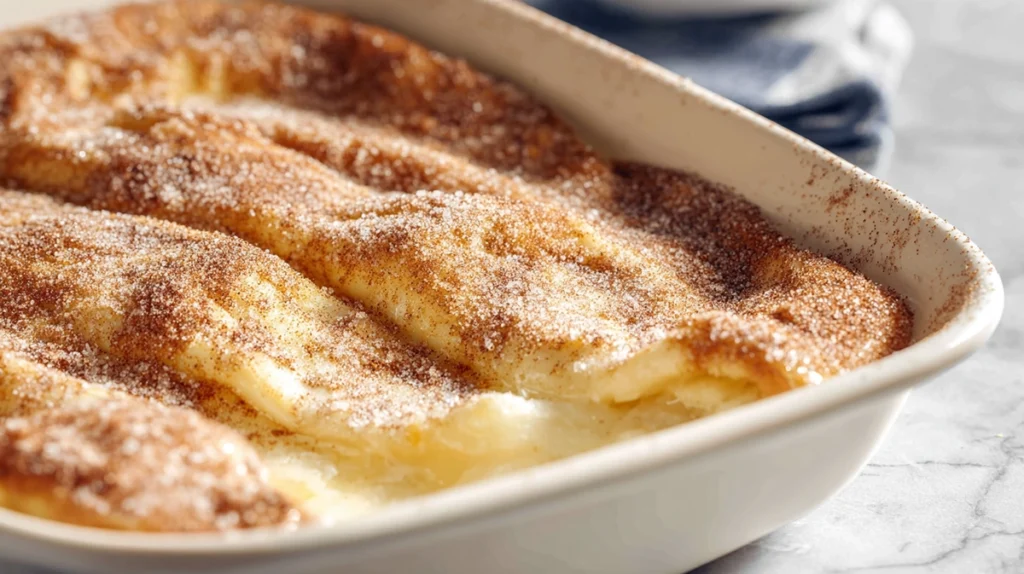
Once the casserole is assembled, the kitchen should already smell faintly of vanilla and dough warming up. That’s your cue to move quickly. Brush the melted butter across the top until the surface looks glossy and slightly rippled, like wet sand after a wave pulls back. Dry patches mean uneven browning later.
When the cinnamon-sugar mixture hits the buttered dough, you should smell spice immediately—warm, sweet, and sharp. That aroma tells you the cinnamon has something to cling to. As the casserole bakes, listen for a gentle sizzle, not aggressive popping. Near the end, the top will turn deeply golden and feel firm when lightly pressed, with a faint crackle under your fingertip. That’s the moment you want: crisp on top, soft underneath, and ready to rest before slicing.
Swaps That Actually Work (and One That Doesn’t)
If you’re short on something or cooking for a specific need, there are a few smart adjustments that won’t sabotage the dessert. Gluten-free crescent roll dough works surprisingly well here, as long as it’s rolled gently and the seams are sealed with extra care. The structure is slightly softer, but the flavor payoff is still there.
If all you have is salted butter, use it and don’t overthink it—just resist the urge to add any extra salt elsewhere. What doesn’t work is low-fat cream cheese. It looks fine going in, but it bakes up loose and chalky, and the casserole never quite sets. This is one place where full-fat earns its keep.
You might be tempted to cut back heavily on the sugar. Don’t. Reducing a tablespoon or two is fine, but aggressive cuts throw off the texture, not just the sweetness. This dessert relies on sugar to help the filling firm and the topping caramelize.
How This Dessert Actually Gets Served in Real Life
This isn’t a showpiece dessert that waits politely on a cake stand. Cheesecake crescent rolls casserole shines when it’s slightly warm, about 30 minutes out of the oven, when the top is crisp but the center is still creamy. A sharp knife wiped clean between cuts gives you tidy squares without dragging the filling.
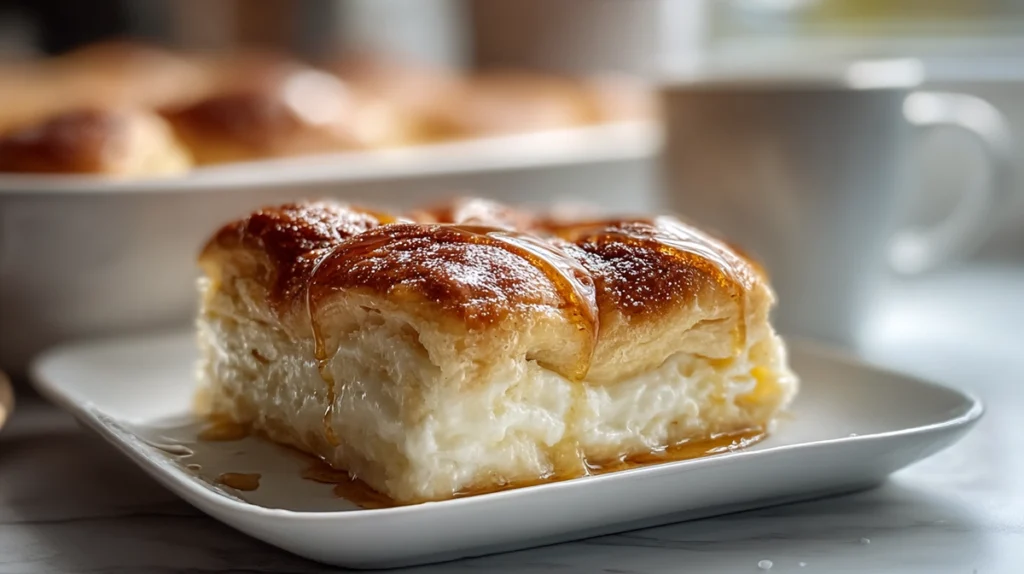
For brunch, serve it alongside strong coffee or espresso—the bitterness cuts the richness beautifully. At night, a spoonful of lightly sweetened whipped cream or a thin drizzle of honey works better than ice cream, which can overwhelm the cinnamon topping. If you’re feeding a crowd, smaller squares go a long way; this dessert is richer than it looks.
Last Things Worth Knowing Before You Walk Away
Cooling time is not optional. If you cut too soon, the center will slump, no matter how perfectly it baked. If you wait too long and refrigerate it immediately, the top loses its delicate crispness. Let it rest at room temperature first, then chill leftovers tightly covered.
This is the kind of recipe that earns repeat status because it fits real life. No special equipment, no wasted ingredients, no anxiety about cracks or collapse. Cheesecake crescent rolls casserole gives you the comfort of cheesecake with the ease of a pan bake—and once you’ve made it once, you’ll know exactly why it keeps finding its way back into the oven.
Common Questions About Cheesecake Crescent Rolls Casserole
Can I make cheesecake crescent rolls casserole ahead of time?
You can prep it a few hours ahead, but don’t bake it early if you want the best texture. Assemble the casserole completely, cover it tightly, and refrigerate for up to 6 hours. Bake it straight from the fridge, adding 3–5 extra minutes to account for the cold pan. Baking it too far in advance causes the crescent dough to lose its crispness and the filling to firm up more than intended.
Do I refrigerate leftovers or leave them covered on the counter?
Leftovers should be refrigerated once the casserole has cooled fully to room temperature. Cream cheese needs cold storage for safety, and refrigeration also helps the slices hold their shape. Cover the dish tightly or transfer slices to an airtight container to keep the dough from drying out.
Can I use reduced-fat cream cheese without ruining the texture?
Reduced-fat cream cheese will bake, but it won’t set the same way. The filling tends to stay loose and slightly grainy instead of smooth and creamy. For this recipe, full-fat cream cheese is necessary because the fat is what gives the cheesecake crescent rolls casserole its structure after cooling.
What’s the best way to reheat without drying it out?
Reheat individual slices in the microwave at 50% power for short intervals until just warm. This gentle heat keeps the filling creamy and prevents the crescent dough from turning tough. Avoid reheating in a hot oven, which dries the top before the center warms through.
Can this be frozen, or does the dough suffer?
Freezing is not recommended for the best result. The cream cheese filling freezes fine, but the crescent dough loses its flaky texture once thawed and reheated, becoming soft and slightly gummy. If you expect leftovers, refrigeration is the better option for maintaining quality.
Print
Cheesecake Crescent Rolls Casserole
Description
Cheesecake Crescent Rolls Casserole is a warm, flaky dessert with layers of crescent dough, a creamy cheesecake center, and a buttery cinnamon-sugar topping. It delivers classic cheesecake flavor without the complexity of traditional baking methods.
Ingredients
- 2 cans refrigerated crescent roll dough
- 16 ounces cream cheese, softened
- 1 cup granulated sugar, divided
- 1 teaspoon vanilla extract
- 1/4 cup butter, melted
- 1 tablespoon ground cinnamon
Instructions
- Preheat the oven to 350°F and grease a 9×13-inch baking dish.
- Press one sheet of crescent roll dough into the bottom of the dish, sealing the seams.
- Mix the softened cream cheese with sugar and vanilla until smooth, then spread evenly over the dough.
- Place the second sheet of crescent roll dough on top and seal the seams.
- Brush with melted butter and sprinkle evenly with cinnamon sugar.
- Bake until the top is golden brown and crisp.
- Cool before slicing and serving.
Notes
- Do not use low-fat cream cheese, as it will not set properly.
- Allow the casserole to cool before slicing for clean layers.
- Refrigerate leftovers once fully cooled.