Creamy Gochujang Udon Noodles for a Fast Spicy Dinner

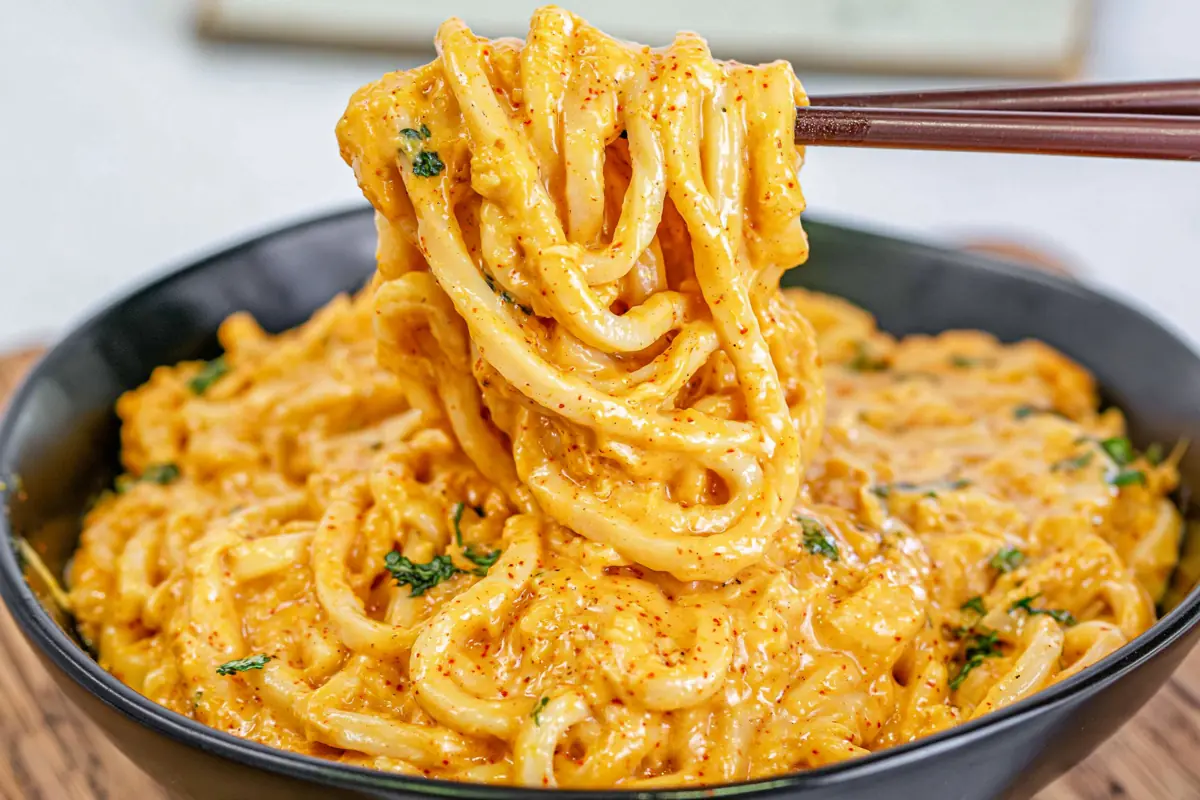
Creamy Gochujang Udon Noodles are the kind of dinner I make when I want something warm, spicy, and filling without standing at the stove for too long. The noodles are thick and chewy, the sauce clings to them nicely, and the gochujang gives the cream a deep red color with a gentle heat.
This is a fast bowl, but it doesn’t taste rushed. A little butter, garlic, shallot, and noodle water help the sauce come together in about 15 minutes.
What Gochujang Brings to These Creamy Udon Noodles
Gochujang is a Korean red chili paste with heat, saltiness, and a little sweetness all packed into one spoonful. It isn’t just spicy. It has a deep fermented flavor that makes the sauce taste like it cooked longer than it did.
For this recipe, 1 1/2 tablespoons of gochujang is enough to give the udon a bold flavor without covering up the cream, butter, garlic, and shallots. Cook it in the pan for about 30 seconds before adding the cream. That short time helps loosen the paste and takes away a little of its raw edge.

I prefer not to add too much at the beginning. Gochujang can get strong quickly, especially when the sauce reduces. You can always add a tiny bit more later, but it’s harder to fix a sauce that became too salty or too hot.
Ingredients That Make the Sauce Rich, Spicy, and Balanced
The base is simple: frozen udon noodles, unsalted butter, garlic, shallots, gochujang, heavy cream, reserved noodle water, soy sauce, and gochugaru. Each one has a job.
Frozen udon works well here because the noodles stay chewy even after being tossed in a hot sauce. Cook them according to the package, then save 1/2 cup of the noodle water before draining. That cloudy water helps the sauce loosen without making it thin.
The butter gives the sauce a rounder flavor, while garlic and shallots bring sweetness once they soften. Use medium heat so they don’t brown too fast. Burnt garlic can make the whole sauce taste sharp.
The cream smooths out the chili paste. Soy sauce adds salt, and gochugaru gives a little extra chili warmth without changing the texture much. Parmesan may sound unusual in a gochujang noodle bowl, but a small grating on top adds salty richness. Worth trying.
How to Make Creamy Gochujang Udon Noodles
Start with the noodles. Bring a pot of water to a boil and cook 2 packs of frozen udon noodles according to the package directions. They usually don’t need much time, so watch them closely. Once they loosen and turn tender, scoop out 1/2 cup of the noodle water and keep it nearby.
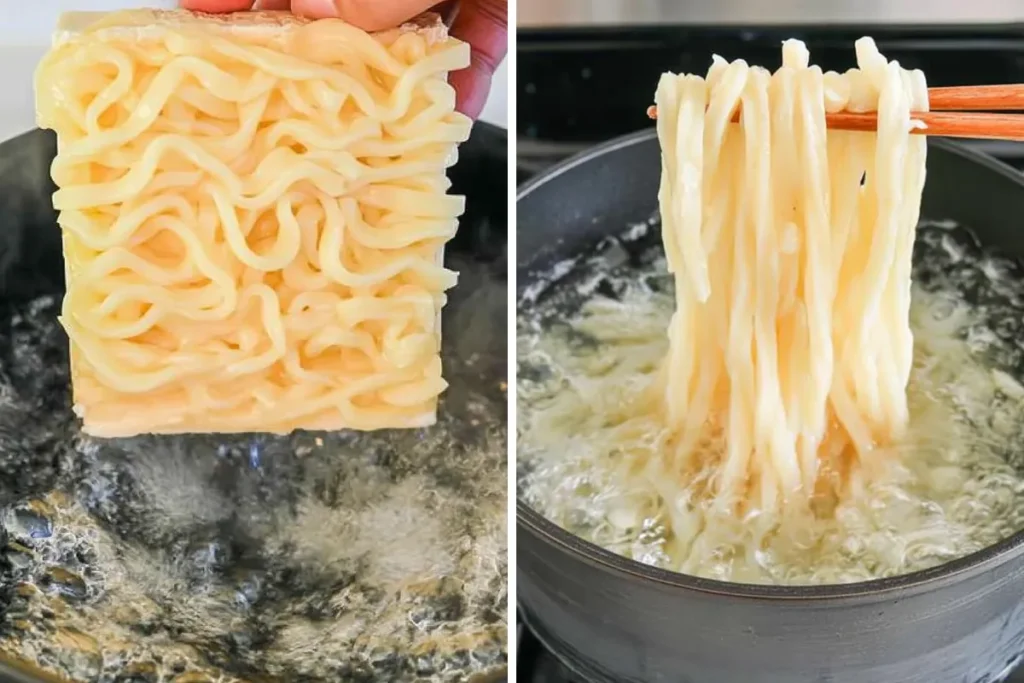
Drain the udon and rinse it under cold water. That might feel like an extra step, but it helps stop the cooking and keeps the noodles from turning too soft while you finish the sauce. Shake off the extra water so the sauce doesn’t get diluted later.
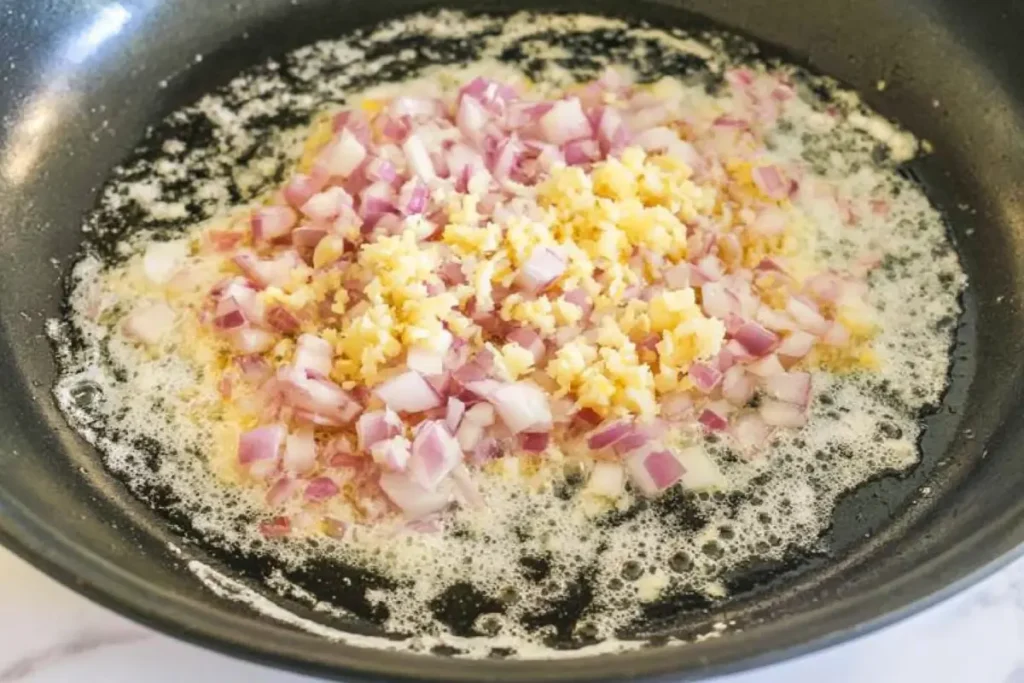
In a wide pan, melt 3 tablespoons of unsalted butter over medium heat. Add 3 cloves of minced garlic and 2 chopped shallots. Stir for a minute or two, just until they smell sweet and fragrant. Keep the heat steady. You want soft aromatics, not dark crispy bits.
Add the gochujang and stir it into the butter for about 30 seconds. It should look darker and slightly glossy. Don’t walk away here. The paste can catch on the bottom of the pan if the heat is too high.
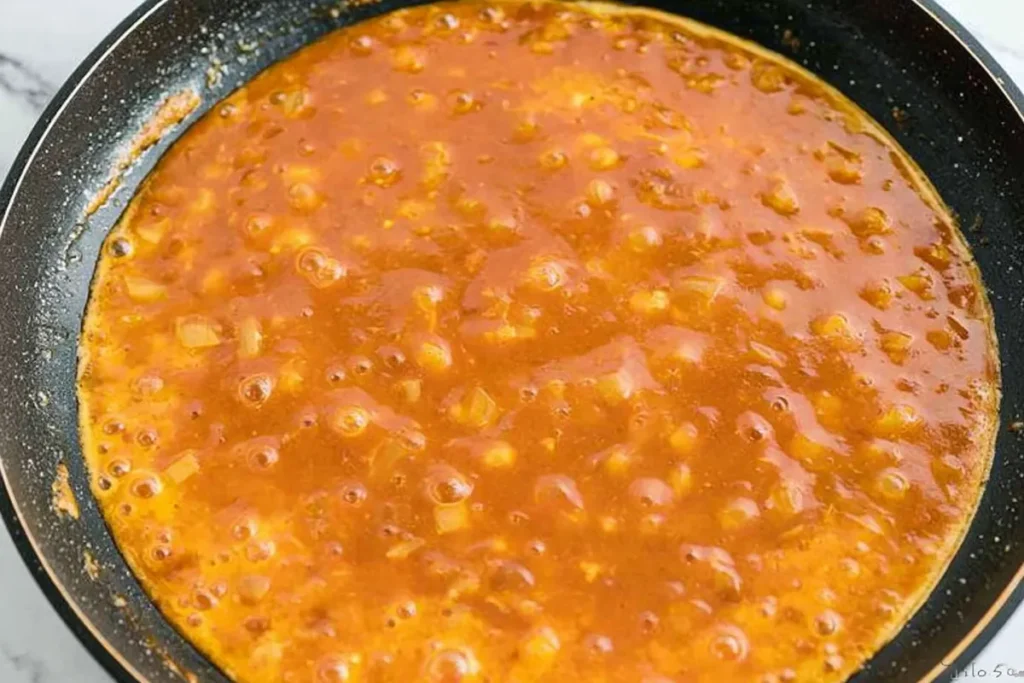
Slowly pour in 1/2 cup heavy cream and the reserved 1/2 cup noodle water, stirring as you go. Add 2 teaspoons soy sauce and 1 teaspoon gochugaru. Let the sauce simmer for a few minutes until it thickens enough to coat the back of a spoon.
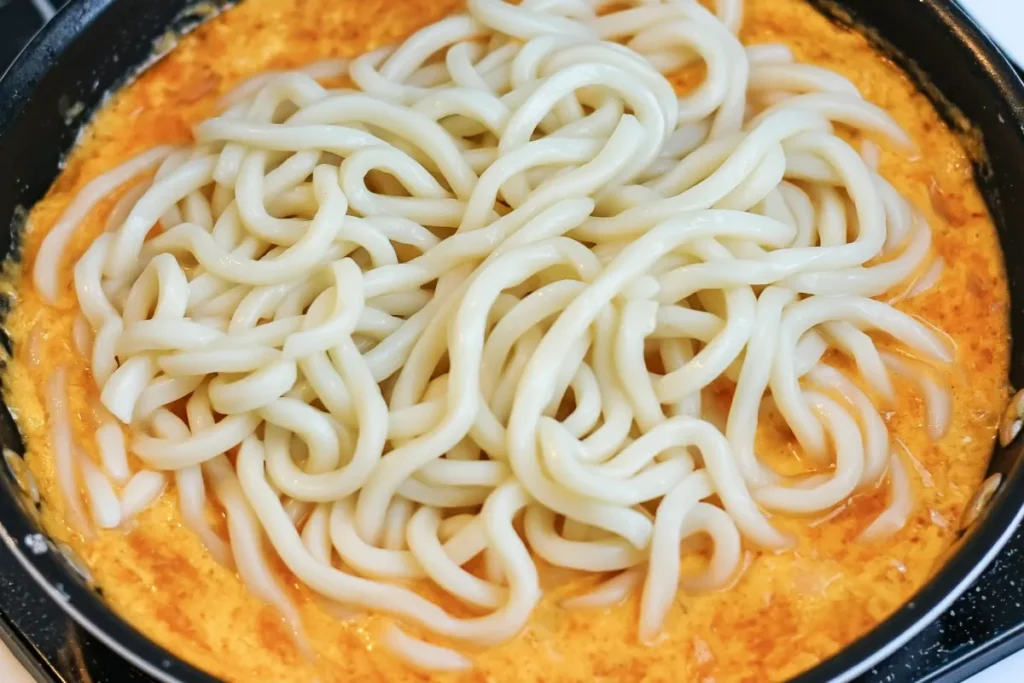
Add the cooked udon and toss everything together. The noodles should turn shiny and red-orange, with the sauce clinging to the curves. If the pan looks dry, splash in a spoonful more water. If it looks too loose, let it bubble for another minute.
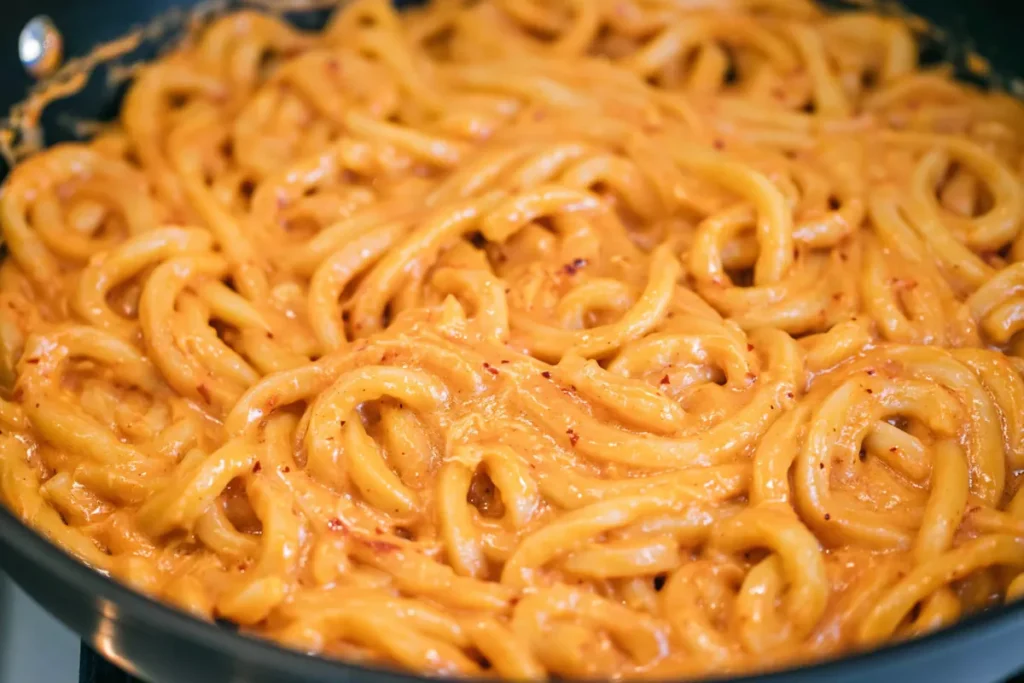
Garnishing the Bowl Before Serving
Transfer the noodles to a bowl while they’re still hot. Add grated parmesan cheese, chopped green onion, and an egg yolk if you like the sauce extra silky.
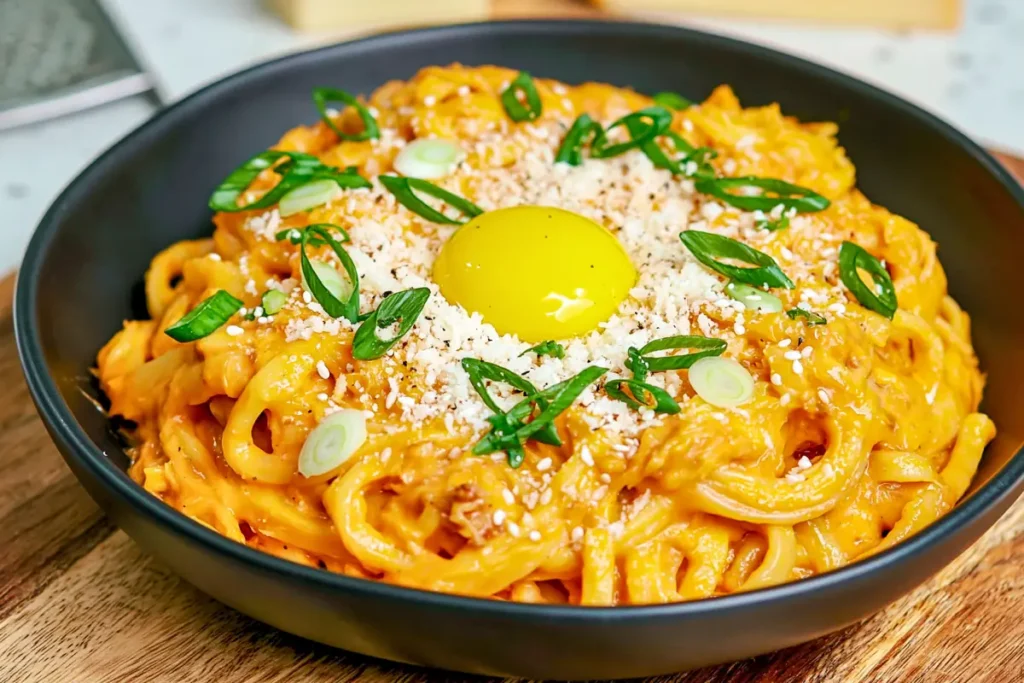
The egg yolk is optional, but it gives the noodles a richer finish once you mix it in. Use it only if you’re comfortable serving it that way. The green onion matters more than it looks. It cuts through the creamy sauce and gives each bite a little freshness.
Serve the noodles right away. Cream sauces tighten as they sit, and udon is best when it’s hot, glossy, and still bouncy.
A Quick Bowl Worth Keeping in Your Weeknight Rotation
This is the kind of recipe that helps when the day runs long and dinner needs to be quick without feeling thrown together. The whole dish comes together in about 15 minutes, and most of that time is just boiling noodles and letting the sauce simmer.
Keep an eye on the sauce texture. It should coat the noodles, not pool at the bottom like soup. If it thickens too much, a spoonful of hot water brings it back. If it tastes too rich, add extra green onion on top.
Creamy Gochujang Udon Noodles are simple enough for a tired night, but still bold enough to feel like you cooked something special. Make it once, then adjust the heat, cheese, and toppings until it feels like your own bowl. I like recipes that leave a little room for that.
Print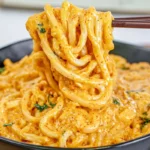
Creamy Gochujang Udon Noodles
- Total Time: 15 minutes
- Yield: 2 servings 1x
Description
Creamy Gochujang Udon Noodles are a fast, spicy, and rich weeknight dinner made with chewy udon noodles, garlic, shallots, heavy cream, gochujang, and a glossy sauce that comes together in about 15 minutes.
Ingredients
- 2 packs frozen udon noodles
- 3 tablespoons unsalted butter
- 3 cloves garlic, minced
- 2 shallots, chopped
- 1 1/2 tablespoons gochujang
- 1/2 cup heavy cream
- 1/2 cup reserved noodle water
- 2 teaspoons soy sauce
- 1 teaspoon gochugaru
- 1 green onion, chopped
- Grated parmesan cheese, for topping
- 1 egg yolk, optional
Instructions
- Bring a pot of water to a boil and cook the frozen udon noodles according to the package instructions. Reserve 1/2 cup of noodle water, then drain the noodles, rinse under cold water, and set aside.
- Melt the butter in a pan over medium heat. Add the minced garlic and chopped shallots, then sauté for 1 to 2 minutes until fragrant.
- Add the gochujang and cook for about 30 seconds, stirring it into the butter and aromatics.
- Slowly pour in the heavy cream and reserved noodle water. Add the soy sauce and gochugaru, then mix well and bring the sauce to a simmer.
- Let the sauce simmer for a few minutes until slightly thickened and glossy.
- Add the cooked udon noodles to the pan and toss until evenly coated in the creamy gochujang sauce.
- Transfer the noodles to bowls. Top with grated parmesan cheese, chopped green onion, and an egg yolk if using. Serve hot.
Notes
- If the sauce thickens too much, add a small splash of hot water or reserved noodle water to loosen it.
- Start with the listed amount of gochujang, then add more only if you want stronger heat.
- The egg yolk is optional, but it makes the sauce richer and silkier once mixed in.
- Serve right away while the noodles are hot and glossy.
- Prep Time: 5 minutes
- Cook Time: 10 minutes
- Category: Main Course
- Method: Boiling and Sautéing
- Cuisine: Korean Fusion / Asian
Nutrition
- Serving Size: 1 bowl
- Calories: 720
- Sugar: 6
- Sodium: 980
- Fat: 42
- Saturated Fat: 25
- Unsaturated Fat: 14
- Trans Fat: 0
- Carbohydrates: 78
- Fiber: 3
- Protein: 16
- Cholesterol: 175