Peach Macarons (With Real Peach Filling That Actually Tastes Like Summer)

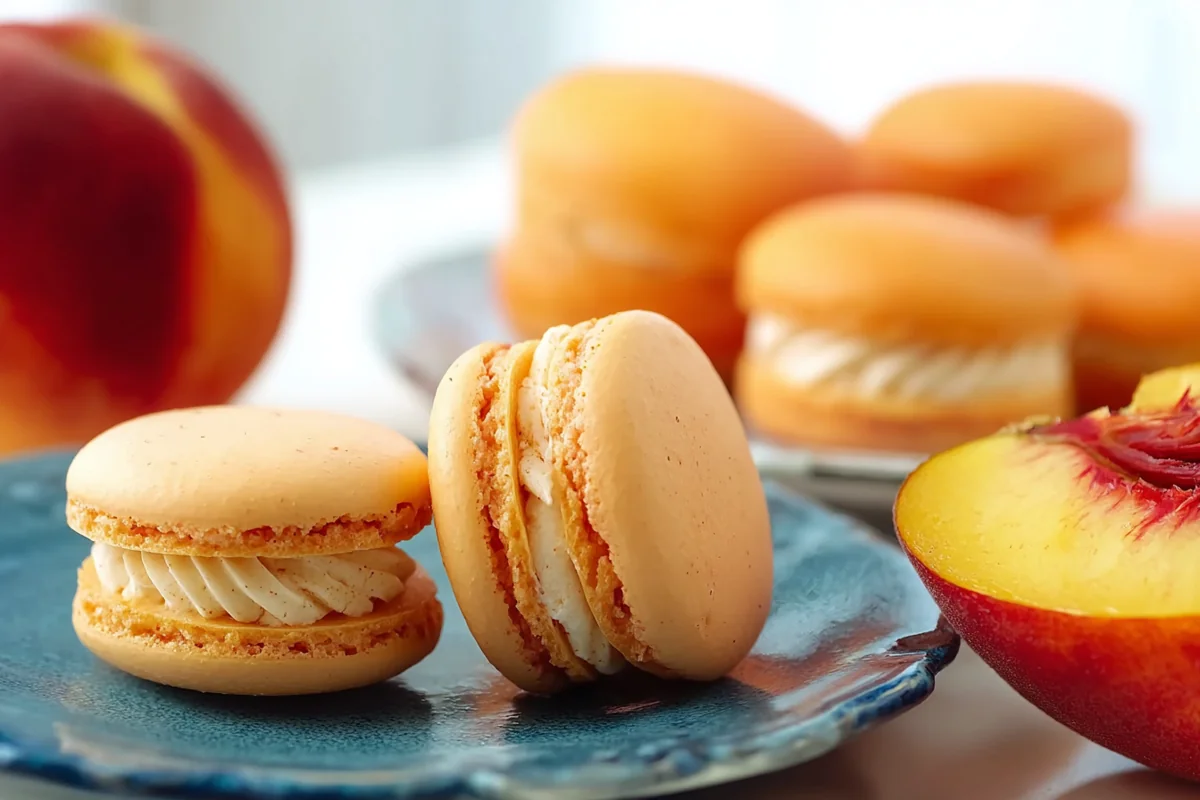
Peach macarons are one of those desserts that sound complicated but come together step by step if you slow down. What makes these stand out is the real peach puree filling, not just flavoring — it gives you that soft, slightly tangy fruit center that cuts through the sweetness.
I make these the way I learned at home: simple where possible, careful where it matters. You’ll learn how to handle fresh peaches, build a stable filling, and assemble macarons without rushing the process.
Ingredient Notes That Actually Matter
Macarons don’t need many ingredients, but each one pulls its weight. Skip shortcuts here and you’ll feel it later.
Start with egg whites. They work better when they’ve been separated a day ahead and kept in the fridge. Let them come to room temperature before whipping — they foam more easily and hold structure better.
Almond flour should be very fine. If it feels gritty, pulse it briefly and sift it with the powdered sugar. Any large bits will show up as bumps on your shells.
For the filling, fresh ripe peaches matter more than anything else. If they smell sweet at the stem, you’re in good shape. Underripe peaches won’t give you enough flavor even after cooking.
The small detail most people miss? Lemon juice. Just a little sharpness keeps the puree from tasting flat after cooking it down.
The Equipment You’ll Be Glad You Have
You can make these without fancy tools, but a few basics make life easier.
A digital scale is worth using here. Macarons aren’t forgiving with eyeballed measurements. Even being off by 10 grams can change the texture.
You’ll also want:
- Piping bags with a coupler
- A #18 tip for buttercream and #3 tip for the puree center
- A fine mesh strainer for the peach puree
- A whisk and heat-safe spatula
- Baking trays lined with parchment or silicone mats
If you’ve struggled with macarons before, an oven thermometer helps more than you’d expect. Home ovens drift — mine does.
Peeling and Macerating Peaches the Easy Way
Dropping peaches into boiling water for about 1 minute might feel unnecessary, but it saves time. Once they hit the ice bath, the skins loosen right where you cut that small “X.” They’ll peel off in strips instead of fighting you.

Cut them into small chunks and toss them with sugar and lemon juice. Then leave them alone for 30 minutes. You’ll see the juices pooling at the bottom — that’s what you want.
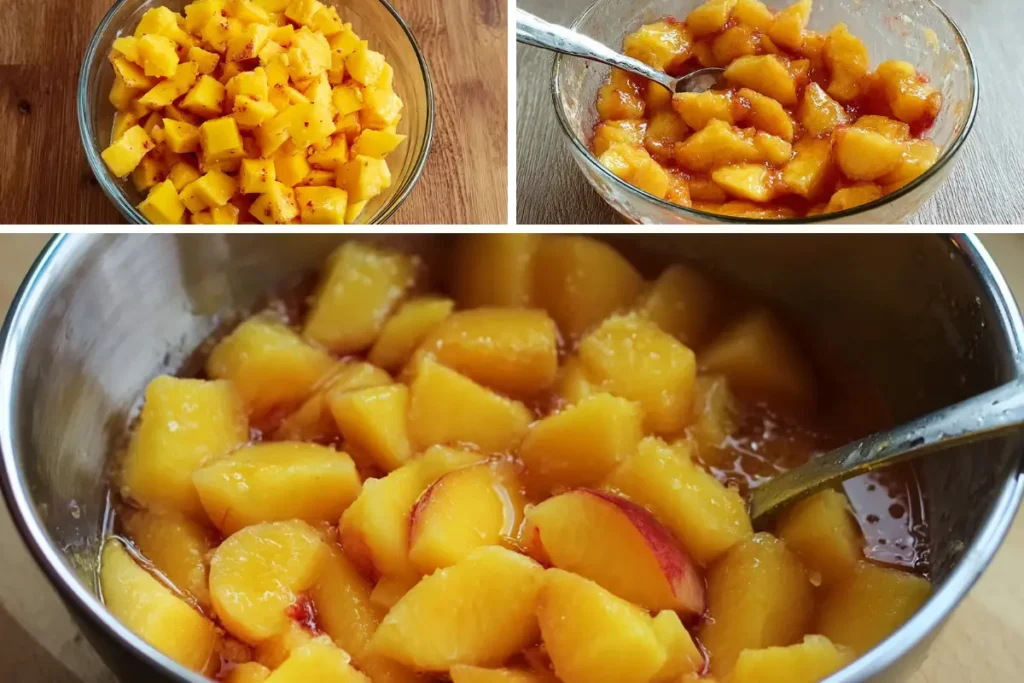
Don’t rush this step. The sugar draws out moisture and flavor. If you skip it, your puree ends up weaker and you’ll try to fix it later by overcooking.
Cooking the Peach Puree Until It’s Worth Using
Blend the macerated peaches until smooth, then strain them.
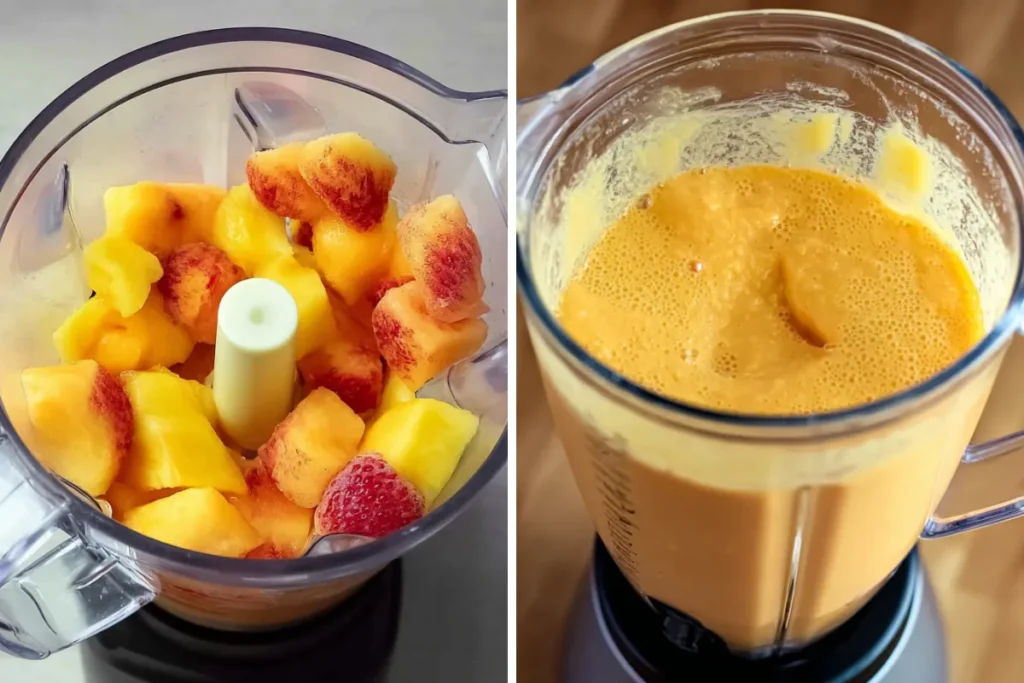
It’s a small step, but it removes those fibrous bits that can ruin the texture of your filling.
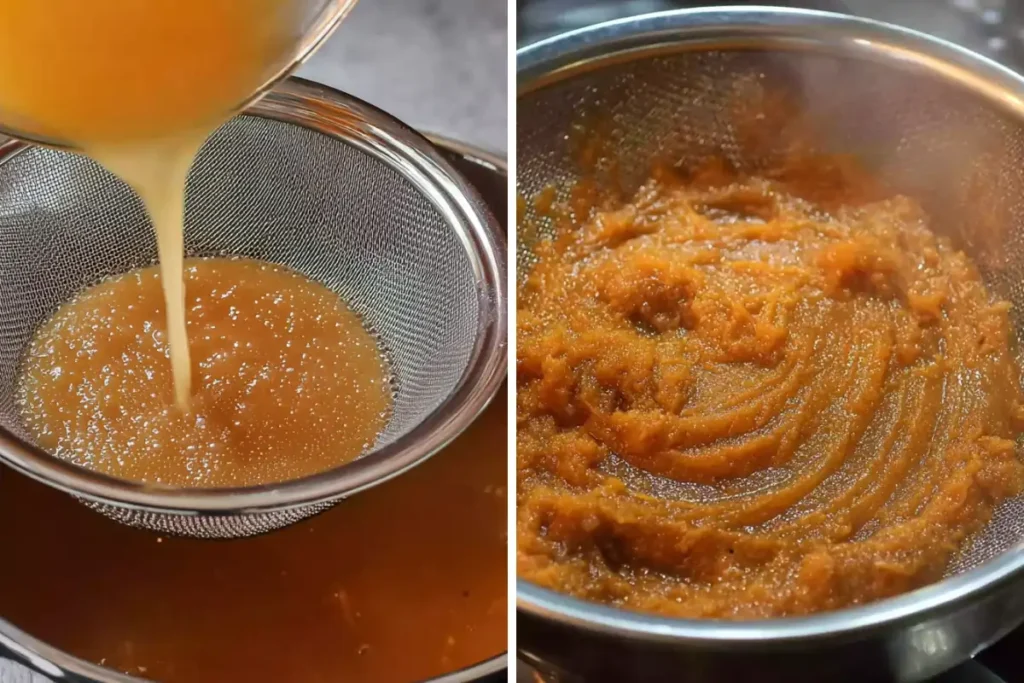
Cook the puree over medium heat for about 30 minutes, whisking often.
Add the tapioca flour early so it has time to fully dissolve. If you wait, you’ll get lumps.
Watch the consistency. You’re aiming for something thick enough to hold shape — not runny.
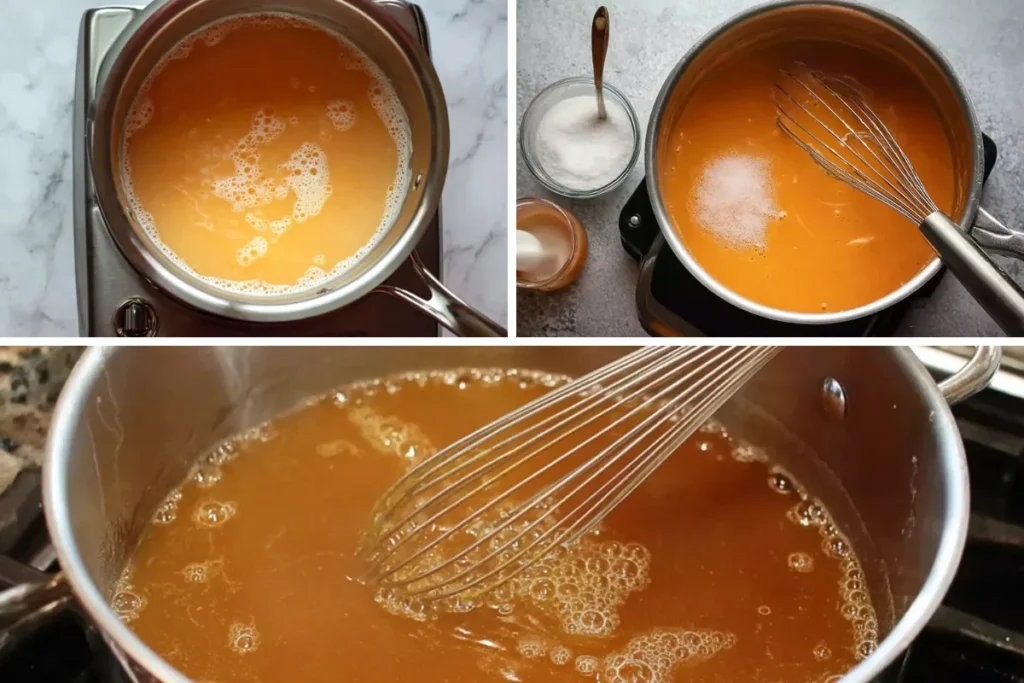
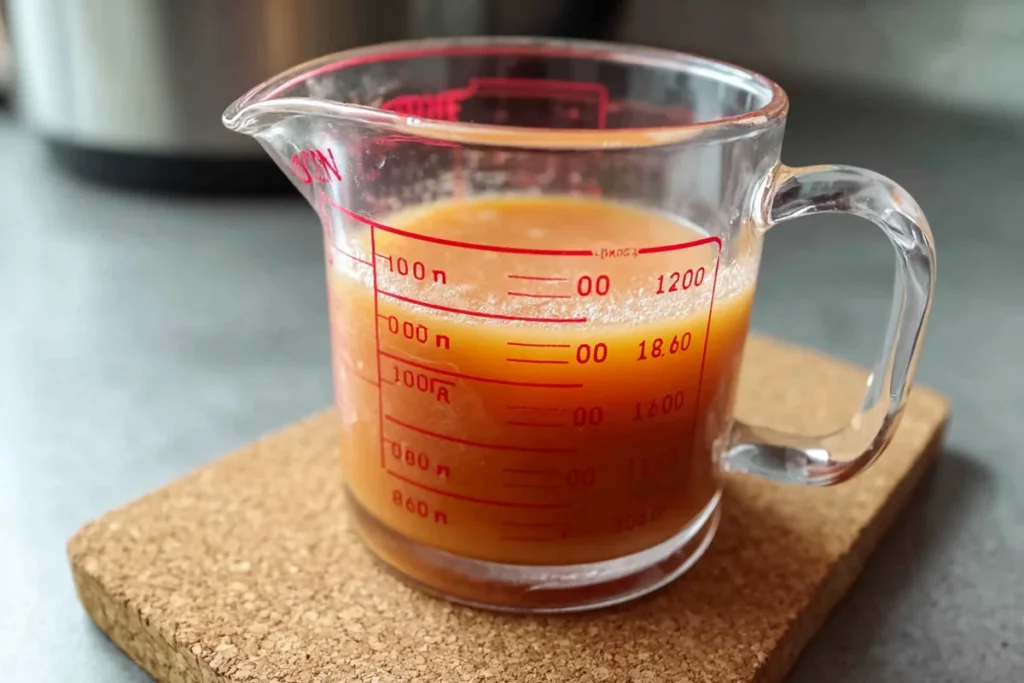
When it reduces to about 1¾ cups, you’re there.
Once it’s done, press plastic wrap directly on the surface before chilling. Otherwise, you’ll get a skin on top. Not the end of the world, but annoying.
Making the Macaron Shells Without Guesswork
This is the part that makes people nervous. It’s not hard, but it does punish rushing.
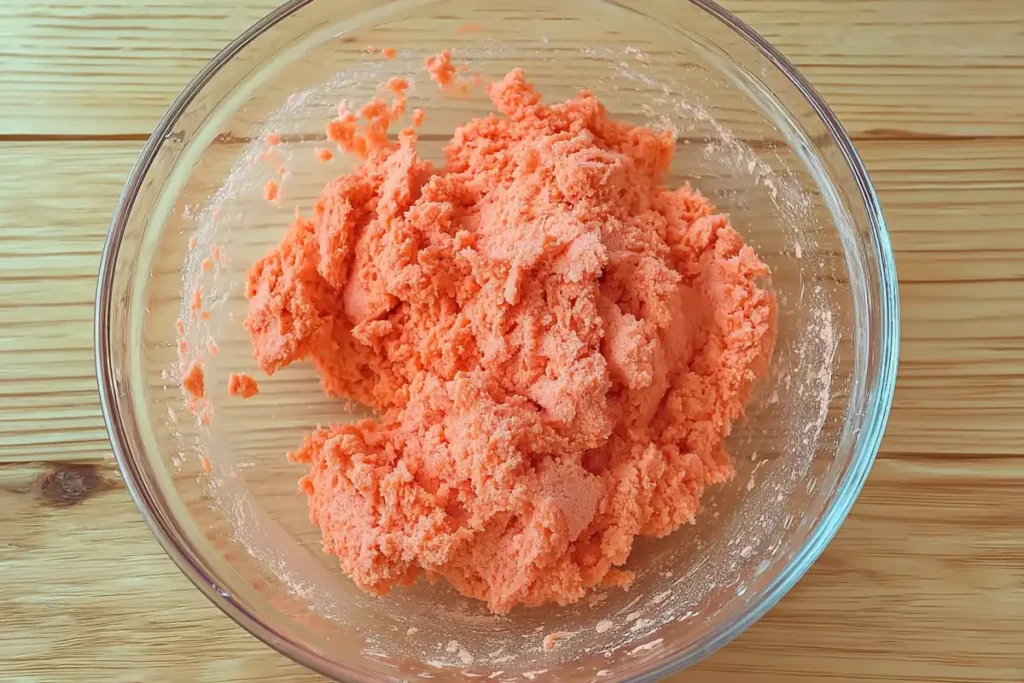
Start by whipping your egg whites with cream of tartar until they look foamy, then slowly add the granulated sugar. Keep going until you reach stiff peaks — when you lift the whisk, the tip should stand straight without folding over.
Fold in the almond flour and powdered sugar mixture gently. Not fast. Not aggressively. You’re aiming for a batter that flows slowly, like thick lava. If it drops off the spatula and disappears back into itself within about 10–15 seconds, you’re in the right zone.
Pipe your shells and let them rest until the tops feel dry. Usually 30–60 minutes, depending on humidity. Bake at 150–160°C (300–320°F) for around 14–15 minutes. They should lift cleanly off the parchment when done.
Preparing the Peach Buttercream Filling
Take your Italian meringue buttercream and mix in 50–75g of the chilled peach puree. Start on the lower end, then taste and adjust.
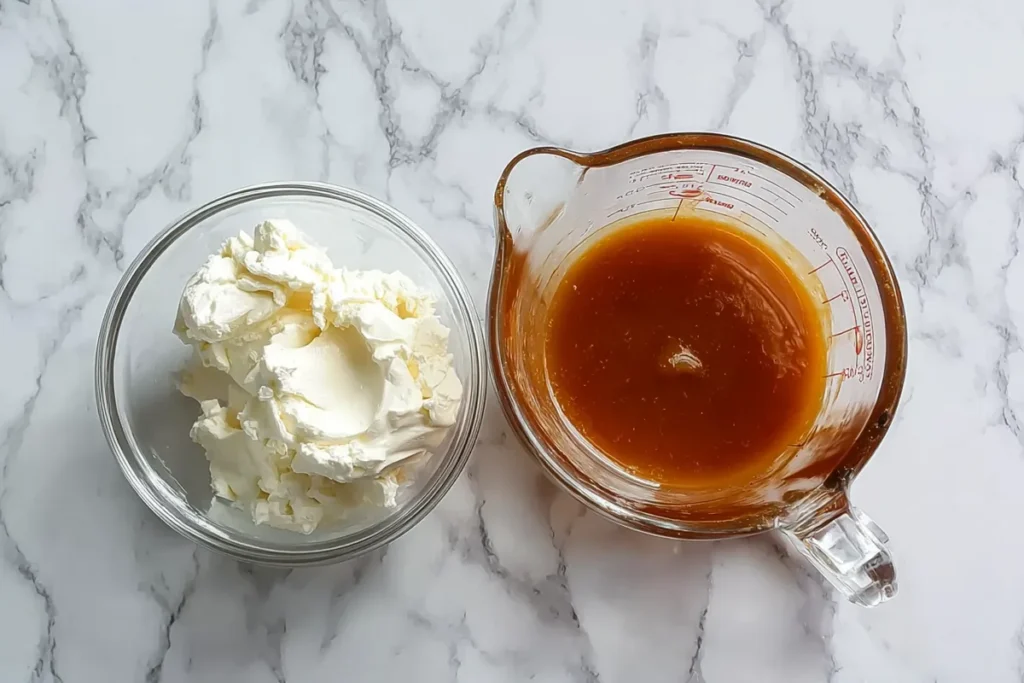
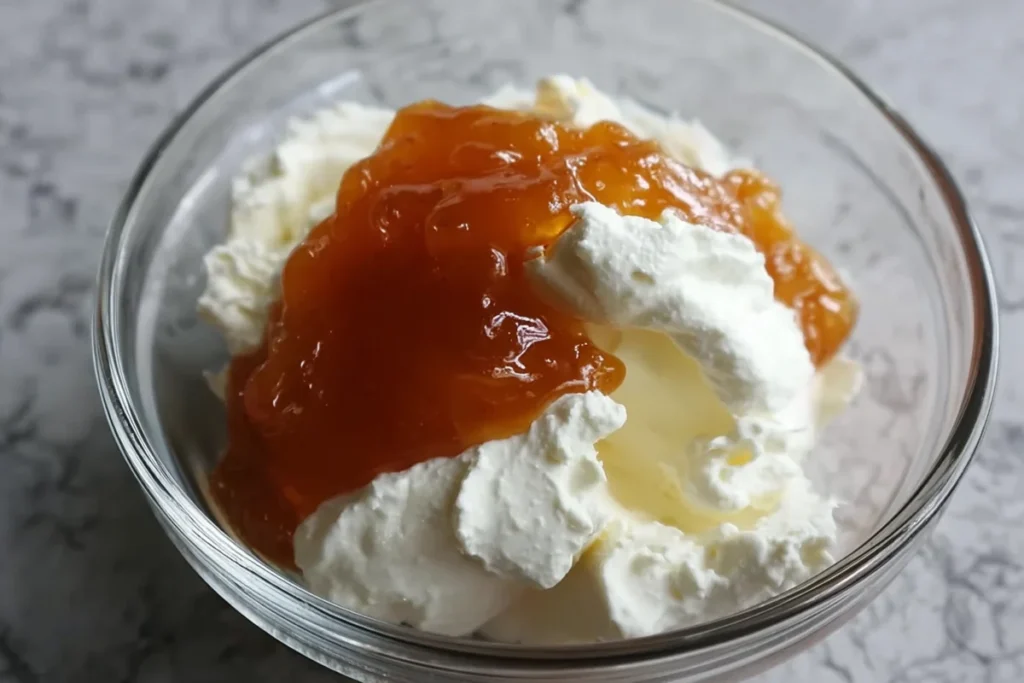
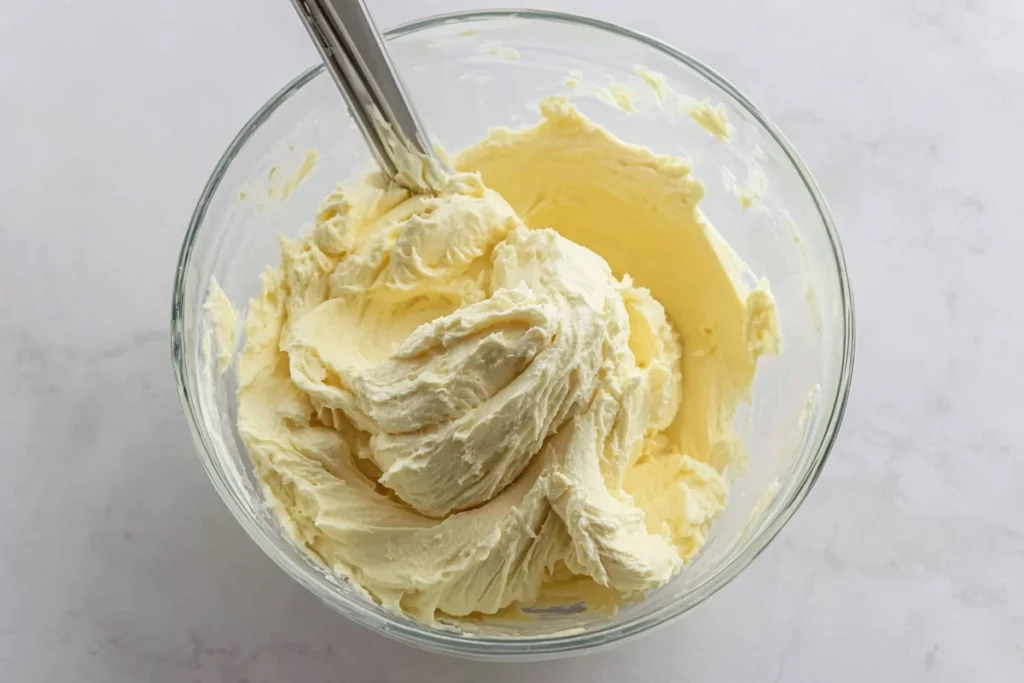
Go past that range and things can go sideways. Too much liquid makes the buttercream split. If it starts looking curdled, don’t panic — just add a bit more plain buttercream and keep mixing. It usually comes back together.
The goal here is balance. You want the buttercream to carry the peach flavor, not drown in it.
If you’re short on time, using a good peach jam works. I’ve done it. But the fresh version has a softer, cleaner taste that’s hard to replace.
Filling and Assembling Peach Macarons
Flip half your shells upside down.
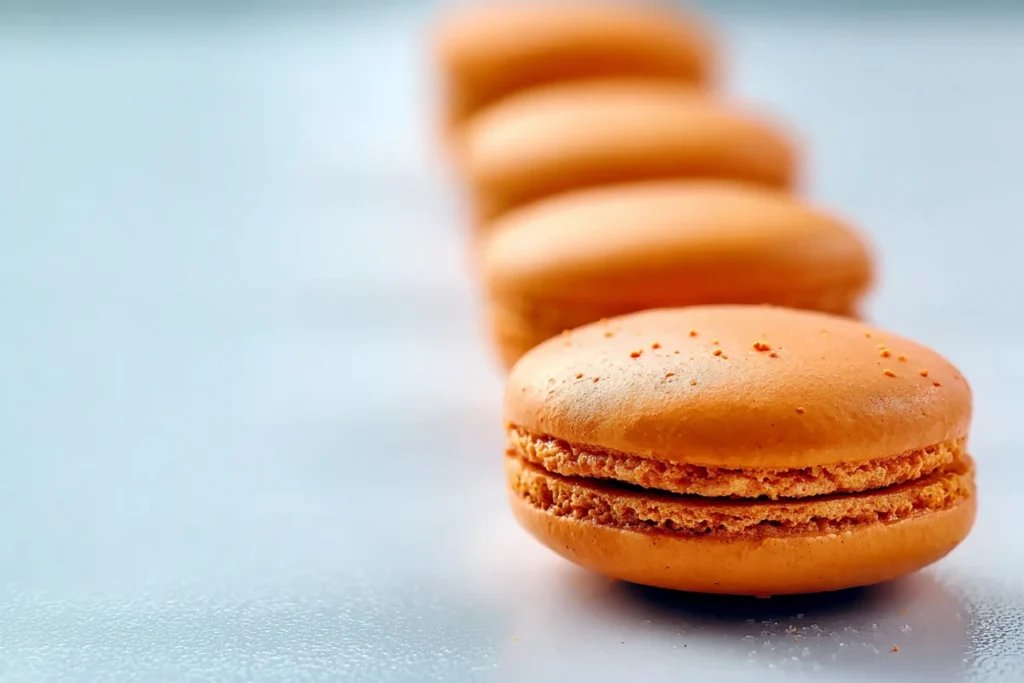
Pipe a ring of buttercream around the edge — not too thick, just enough to hold the center.
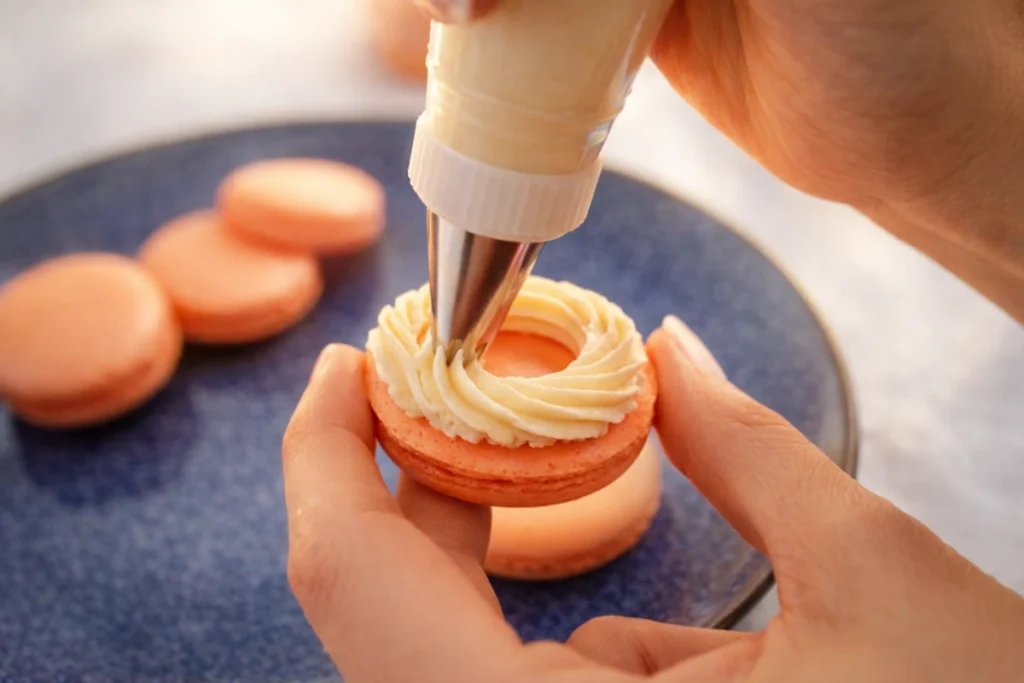
Then pipe the peach puree right in the middle. It should sit neatly inside the buttercream ring without spilling over. If it’s running, the puree needed more cooking.
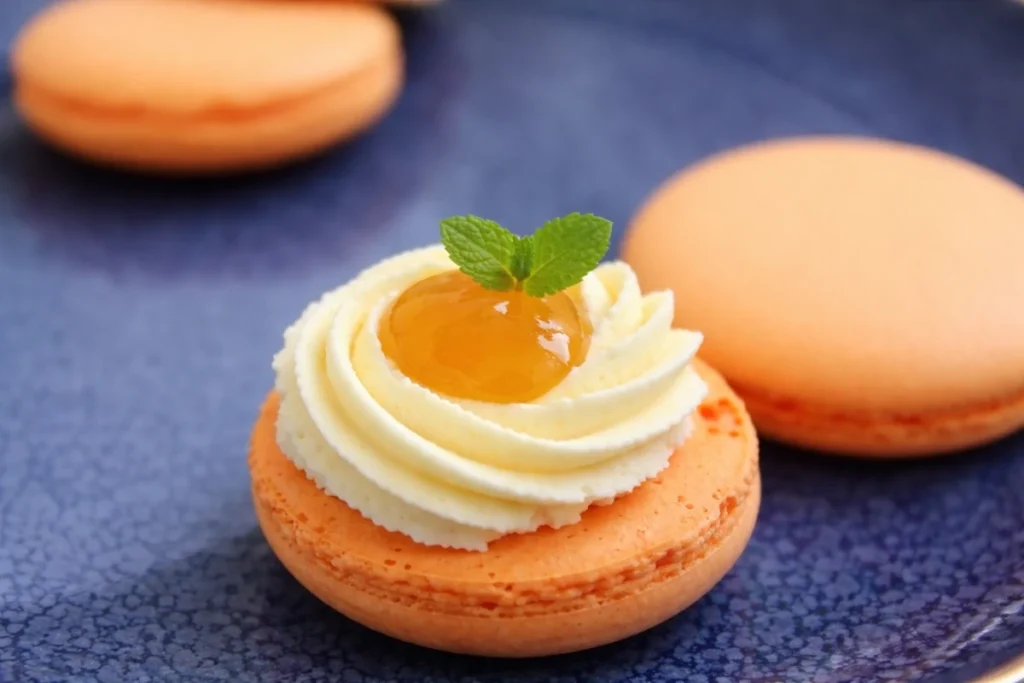
Place the top shell and press gently until the filling reaches the edges. You don’t need force here. Let the filling spread naturally.
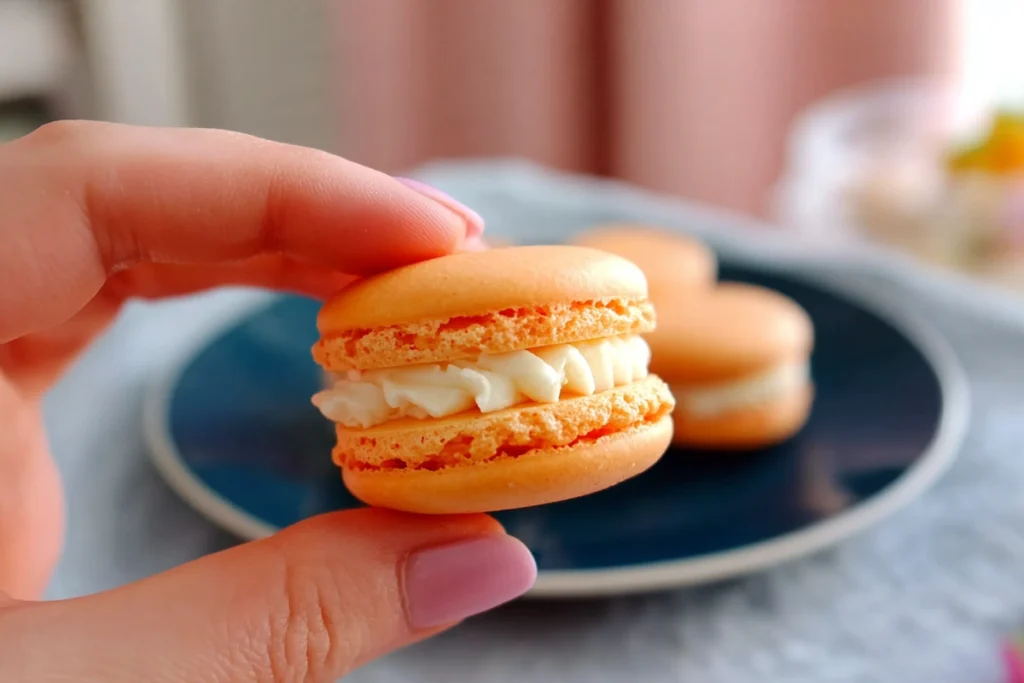
Once assembled, refrigerate the macarons in an airtight container for at least 24 hours. This step matters more than people think. The shells soften slightly, and everything settles into one bite instead of separate layers.
Macaron Tips That Save You a Batch
Weigh your ingredients. Every time. It removes half the guesswork before you even start.
Humidity can mess with drying time. If your shells aren’t forming that dry skin after an hour, give them more time instead of baking early — otherwise, they’ll crack.
If your macarons come out hollow, it’s often from overmixing or oven temperature swings. An oven thermometer helps catch that.
And don’t expect perfection on the first try. Even now, I still get a tray that’s slightly off once in a while. It’s part of it.
Questions That Come Up Every Time
Why are my macarons cracking in the oven?
Usually the shells didn’t dry enough before baking. The trapped air expands and breaks through the top.
Can I skip the fresh peach puree?
You can use peach jam, especially if it’s smooth. Just know the flavor will be sweeter and less fresh.
Why did my buttercream curdle?
Too much peach puree added at once. Add more buttercream and mix — it often fixes itself.
Do macarons have to rest after filling?
Yes. Give them at least a day. The texture improves noticeably.
When They’re Finally Ready
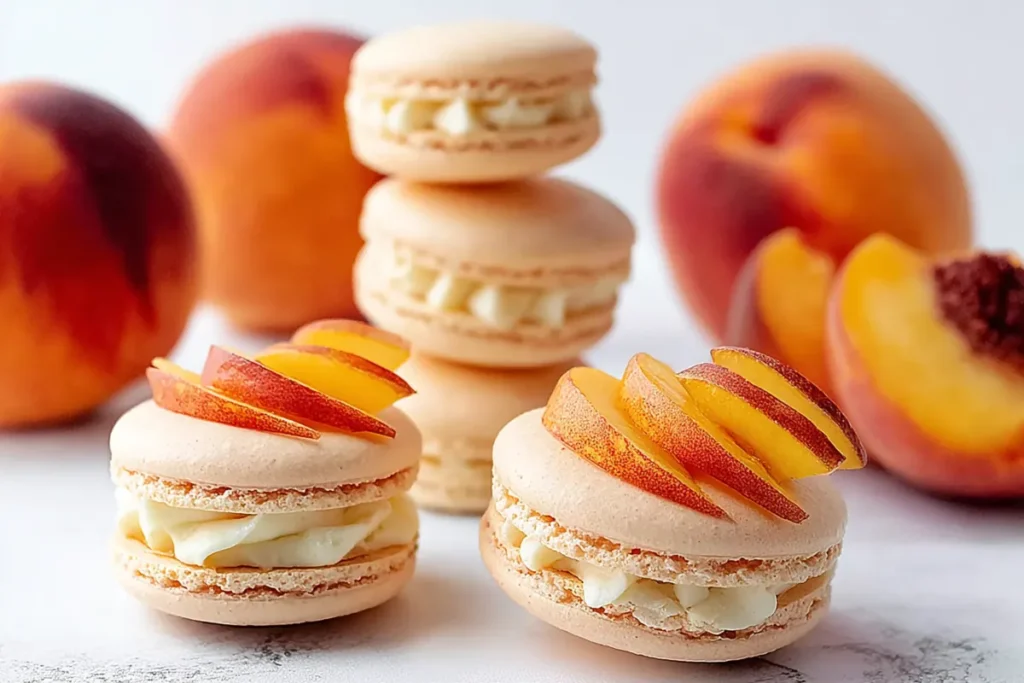
Give these peach macarons a day in the fridge, and they turn into something completely different than when you first assembled them. Softer. More balanced. The peach comes through without being sharp.
Pull up a chair. Mama always made extra.
Print
Peach Macarons
- Total Time: 3 hours
- Yield: 30 macarons 1x
Description
Peach macarons filled with real peach puree and peach buttercream, giving a fresh summer flavor with balanced sweetness and soft texture.
Ingredients
- 100g egg whites
- 110g almond flour
- 200g powdered sugar
- 60g granulated sugar
- 4 large peaches
- 1 Tbsp + 1 tsp lemon juice
- 1/2 cup granulated sugar (for peaches)
- 1.5 tsp tapioca flour
- Italian meringue buttercream
- orange gel food coloring
Instructions
- Prepare an ice bath and bring a pot of water to a boil. Score peaches with an X and blanch for 1 minute, then transfer to ice bath and peel.
- Chop peaches, mix with sugar and lemon juice, and let macerate for 30 minutes.
- Blend peaches into a smooth puree and strain through a fine mesh strainer.
- Cook puree with tapioca flour over medium heat for about 30 minutes until thickened, then chill.
- Whip egg whites with sugar to stiff peaks and fold in almond flour and powdered sugar to form macaron batter.
- Pipe macaron shells and let rest until dry, then bake at 300–320°F for 14–15 minutes.
- Mix peach puree into buttercream until smooth and balanced.
- Pipe buttercream ring on shells, fill center with peach puree, sandwich, and refrigerate for 24 hours before serving.
Notes
- Use ripe peaches for best flavor.
- Do not overmix macaron batter or shells may spread.
- Cook puree until thick to avoid runny filling.
- Add puree gradually to buttercream to prevent curdling.
- Let macarons mature in the fridge for best texture.
- Prep Time: 2 hours
- Cook Time: 15 minutes
- Category: Dessert
- Method: Baking
- Cuisine: French
Nutrition
- Serving Size: 1 macaron
- Calories: 140
- Sugar: 14
- Sodium: 20
- Fat: 6
- Saturated Fat: 2
- Unsaturated Fat: 3
- Trans Fat: 0
- Carbohydrates: 18
- Fiber: 1
- Protein: 2
- Cholesterol: 10