Peanut Butter Cups That Taste Like Home

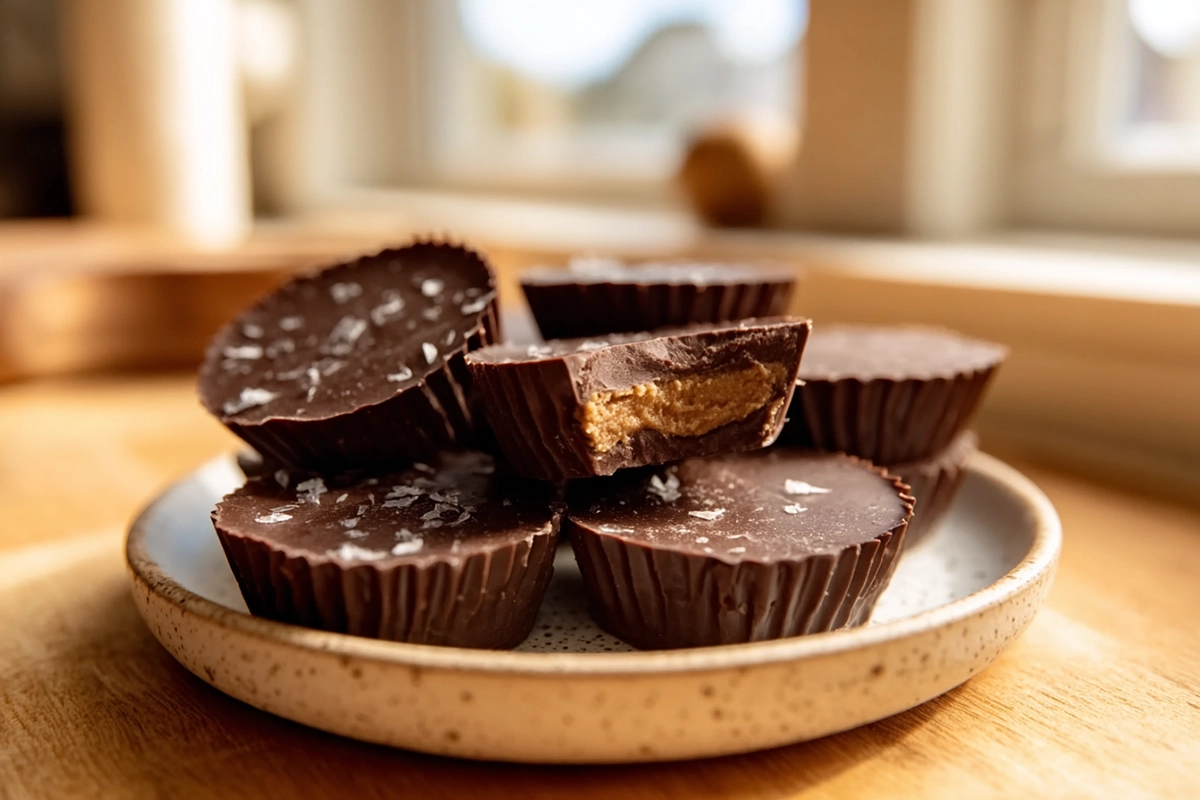
There’s something deeply comforting about peanut butter cups. Maybe it’s the way chocolate melts just enough in your fingers, or how that creamy peanut butter center feels like a little reward after a long day. For me, these always bring back memories of standing in the kitchen, sneaking spoonfuls of peanut butter while someone else melted chocolate on the stove. They’re simple, familiar, and incredibly satisfying — the kind of treat that never goes out of style.
This version is made with just three everyday ingredients and no baking at all. It’s the kind of recipe you can pull together on a quiet afternoon, a busy holiday prep day, or even late at night when the house is finally still. These peanut butter cups don’t try to be fancy. They’re just honest, sweet, and comforting in the best way.
Why These Peanut Butter Cups Always Work
This recipe works because it respects balance. Peanut butter on its own can be heavy, and chocolate on its own can feel overly sweet. When the two meet with just a bit of powdered sugar in between, something special happens. The sugar gives the filling structure without making it stiff, while the chocolate acts like a soft shell that melts easily when you bite in.
What makes this version especially reliable is that it doesn’t fight the ingredients. There’s no cooking, no tempering, no complicated ratios. You’re simply guiding familiar ingredients into their best form. That’s why these come together beautifully, even if you’ve never made candy before.
Ingredients That Matter (And Why They Do)
You only need three ingredients, but each one plays a role in how the final candy tastes and feels.
Ingredients
- ½ cup creamy peanut butter
- 3 tablespoons powdered sugar
- 1 cup chocolate, melted
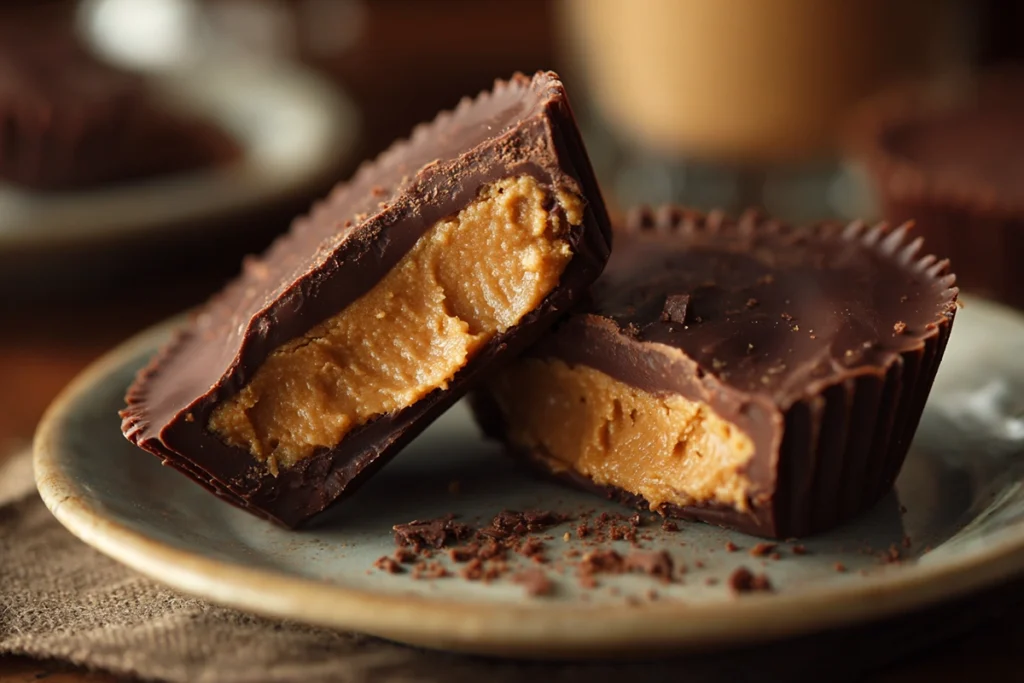
Creamy peanut butter works best here because it blends smoothly and creates a soft, almost truffle-like center. Natural peanut butter can be used, but it tends to separate and may need extra mixing or chilling.
Powdered sugar is key for structure. Granulated sugar won’t dissolve properly and will leave the filling gritty.
For the chocolate, use what you love to eat. Milk chocolate gives you that classic candy-bar feel, while semi-sweet or dark chocolate adds balance and depth. If your chocolate seems thick when melted, a small spoonful of coconut oil can help smooth it out.

Tools and Setup That Make Things Easier
You don’t need special equipment, but a few small choices make the process smoother.
A standard muffin tin with paper liners works perfectly. Silicone liners are even better if you have them, since the cups release effortlessly. A microwave-safe bowl or a small saucepan for melting the chocolate is all you need, along with a spoon or small spatula for spreading.
Before you start, it helps to clear a little fridge space. These need time to chill, and having room ready keeps things simple.
The Method, Step by Step
Start by stirring the peanut butter and powdered sugar together in a small bowl. At first, it may seem dry, but keep mixing. After a few seconds, it turns into a thick, smooth paste that holds its shape without crumbling.
Melt your chocolate gently, either in the microwave in short bursts or over low heat on the stove. Stir often and stop as soon as it’s smooth. Overheating can make chocolate grainy, so slow and steady is best.
Spoon a small amount of melted chocolate into the bottom of each lined cup. Tilt or tap the pan slightly so the chocolate spreads into an even base. This first layer doesn’t need to be thick, just enough to cover the bottom.
Next, drop a small spoonful of the peanut butter mixture into the center of each cup. Don’t press it down too much; letting it sit naturally helps create that classic layered look.
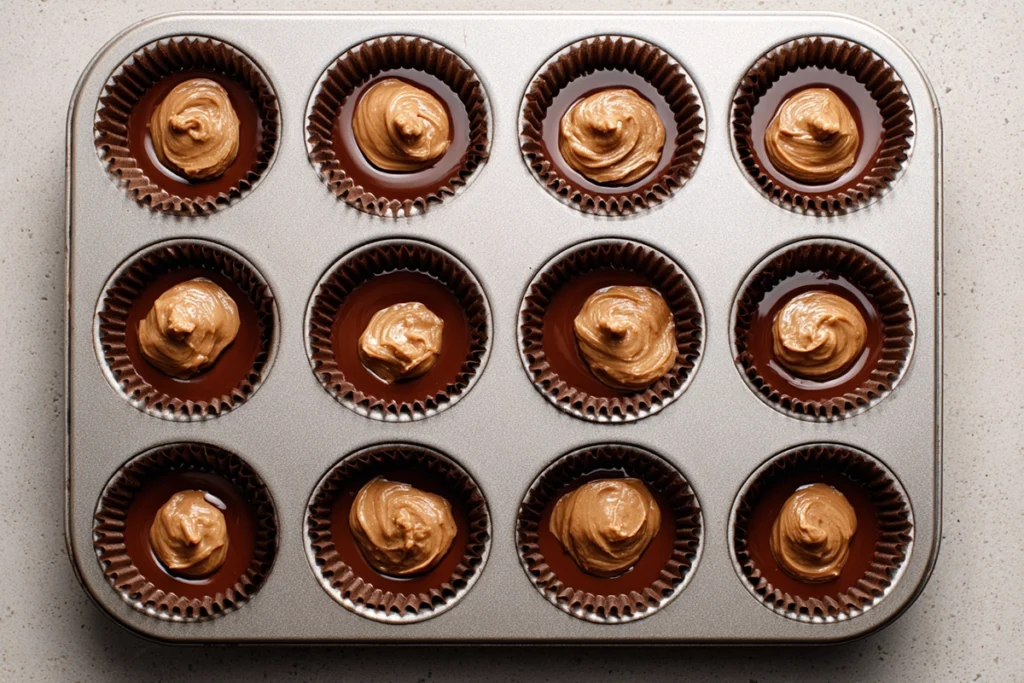
Finish by spooning more melted chocolate over the top, gently nudging it toward the edges so the peanut butter is fully sealed inside. A light tap of the pan on the counter helps smooth everything out.
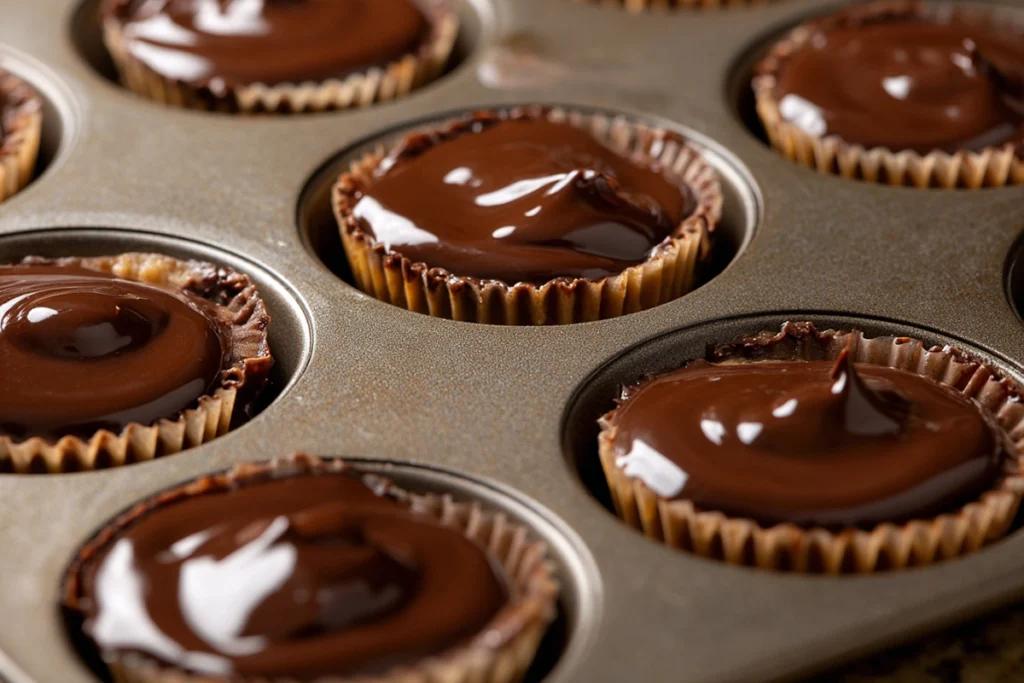
Place the tray in the refrigerator and let the cups chill until fully set. They should feel firm to the touch and lift cleanly from the liners.
Timing, Chill Time, and Doneness
These usually need about one hour in the refrigerator to fully set. If your kitchen is warm or your chocolate layer is thick, it may take a little longer.
You’ll know they’re ready when the tops look matte instead of glossy and the chocolate doesn’t give when gently pressed. If you’re in a hurry, the freezer can speed things up, but chilling in the fridge gives the best texture.
Once set, let them sit at room temperature for a minute or two before eating. That softens the chocolate just enough for the perfect bite.
Common Mistakes and Easy Fixes
If your peanut butter filling feels too soft, it usually means the peanut butter was very oily. Stir it well or add a touch more powdered sugar until it firms up.
If your chocolate looks streaky or dull, it may have overheated. This doesn’t affect flavor, but next time, melt more gently and stir often.
If the cups stick to the liners, they likely need a bit more chilling time. Silicone liners help a lot if this is a recurring issue.
Uneven layers usually come from rushing. Taking a few extra seconds to spread each layer evenly makes a noticeable difference in the final look.
Flavor Variations That Still Feel Homemade
Once you’ve made these once, it’s easy to play with the flavors.
Crunchy peanut butter adds texture and a bit of nostalgia.
A pinch of flaky salt on top brings out the sweetness beautifully.
Swirling in a little melted white chocolate creates a bakery-style look.
For extra crunch, sprinkle a few crushed pretzels or rice cereal into the peanut butter layer.
Each variation keeps the soul of the recipe while giving it a slightly different personality.
Storage, Make-Ahead, and Gifting Tips
Store your peanut butter cups in an airtight container in the refrigerator for up to one week. They also freeze beautifully and can be kept frozen for up to two months.
If you’re making these for gifting, place them in mini cupcake liners and arrange them in a small box or tin. A simple ribbon or handwritten note makes them feel extra special without much effort.
Serving Ideas and When They Shine
These are perfect as an after-dinner treat, a lunchbox surprise, or a sweet bite with coffee. They also shine on dessert trays during the holidays or as part of a homemade candy assortment.
Because they’re rich, one or two is usually just right, which makes them feel both indulgent and satisfying.
There’s something timeless about peanut butter cups made at home. They don’t ask for much, yet they give so much comfort in return. Whether you’re making them for your family, your friends, or just yourself after a long day, this little recipe has a way of feeling like home every single time.
FAQ
Can I use natural peanut butter for these peanut butter cups?
You can, but it needs a little extra care. Natural peanut butter tends to separate, so make sure it’s well stirred and slightly thick before mixing. If it feels too loose, adding a bit more powdered sugar will help it hold together.
Why did my chocolate turn dull or streaky after chilling?
That usually happens when the chocolate gets too hot while melting or cools too quickly. It’s mostly a cosmetic issue and doesn’t affect the taste. Melting gently and stirring often helps keep the chocolate smooth and glossy.
How long do homemade peanut butter cups last?
They stay fresh in the refrigerator for up to one week when stored in an airtight container. You can also freeze them for up to two months and let them sit at room temperature for a few minutes before eating.
Can I make these without cupcake liners?
Yes, but liners make removal much easier. If you skip them, lightly grease the pan and let the cups chill completely before trying to remove them. Silicone molds are the easiest option if you have them.
Why is my peanut butter filling too soft or too firm?
If it’s too soft, the peanut butter may be too oily or warm, so adding a little more powdered sugar helps. If it’s too firm, gently warming the mixture or adding a tiny bit more peanut butter will smooth it out.
Print
Peanut Butter Cups
- Total Time: 1 hour 15 minutes
- Yield: 6 peanut butter cups 1x
- Diet: Vegetarian
Description
These homemade peanut butter cups are rich, creamy, and made with just three simple ingredients. A cozy, no-bake treat that delivers classic candy flavor with a soft peanut butter center and smooth chocolate shell.
Ingredients
- ½ cup creamy peanut butter
- 3 tablespoons powdered sugar
- 1 cup chocolate, melted
Instructions
- Stir the peanut butter and powdered sugar together until smooth and thick.
- Melt the chocolate gently until smooth and pourable.
- Spoon a small amount of melted chocolate into the bottom of each lined cup.
- Add a small scoop of the peanut butter mixture to the center.
- Cover with remaining melted chocolate and smooth the tops.
- Refrigerate until fully set, then remove from liners and serve.
Notes
- Use creamy peanut butter for the smoothest texture.
- If the peanut butter is very soft, add a bit more powdered sugar.
- Chill until fully firm before removing from liners.
- Store leftovers in the refrigerator for best texture.
- Prep Time: 15 minutes
- Category: Dessert
- Method: No-Bake
- Cuisine: American
Nutrition
- Serving Size: 1 peanut butter cup
- Calories: 210
- Sugar: 16g
- Sodium: 85mg
- Fat: 14g
- Saturated Fat: 7g
- Unsaturated Fat: 6g
- Trans Fat: 0g
- Carbohydrates: 18g
- Fiber: 2g
- Protein: 5g
- Cholesterol: 5mg