Rib Eye Steak: A Juicy Weeknight Grilling Recipe

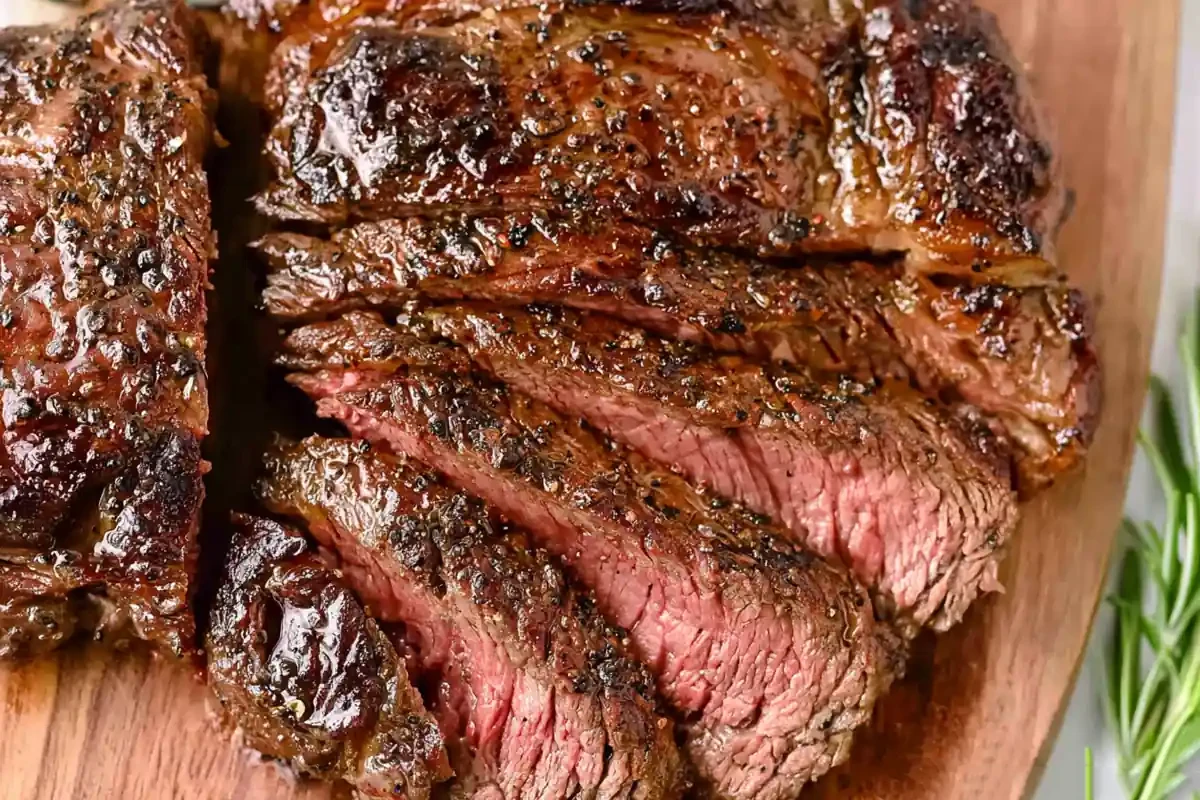
A good rib eye steak needs very little help. Its marbling melts as it cooks, giving the meat a rich flavor and keeping the center tender while the outside develops a browned crust.
This version stays simple: oil, seasoning, steady grill heat, and a little butter at the end. The timing is easy to follow, making it practical for a weeknight dinner without treating the steak like a complicated restaurant project.
What Makes Rib Eye Steak So Flavorful
Ribeye comes from the rib section of the animal, an area that produces tender meat with visible streaks of fat running through it. That fat is called marbling, and it softens as the steak cooks. You’ll notice the difference in both flavor and texture, especially around the outer edge.
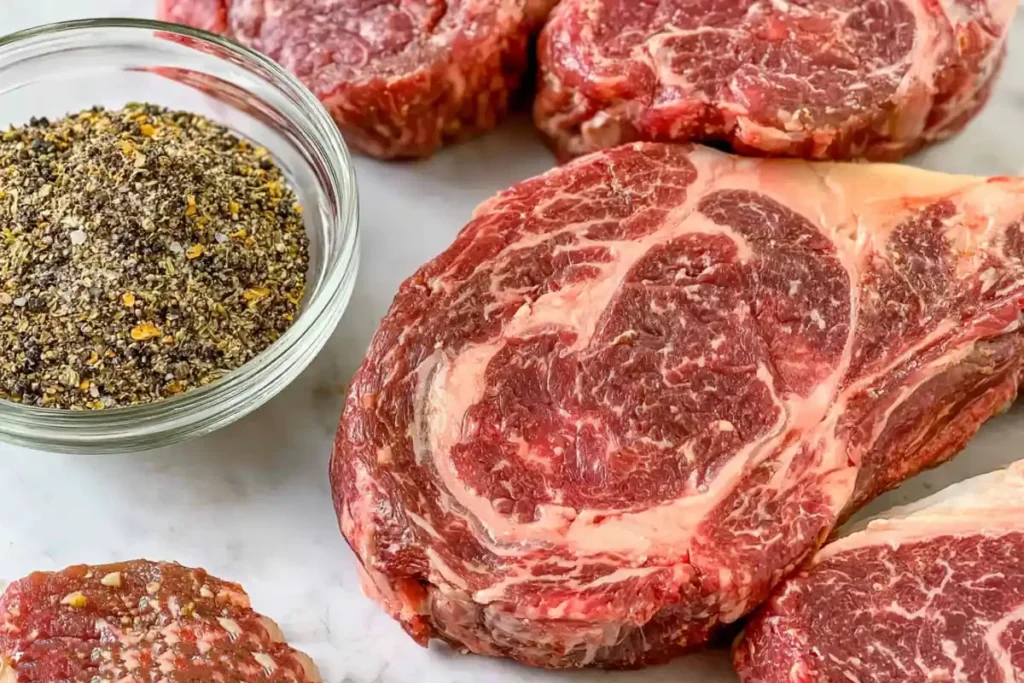
A ribeye usually contains a tender center and a curved outer section known as the cap. The cap often has heavier marbling and a softer bite. It’s the part I tend to save for last.
At the store, look for steaks with thin, even lines of white fat rather than one large lump in the middle. A steak about 1 inch thick is a good choice for this grilling method because it has time to brown before the center cooks too far.
You may also see this cut labeled rib eye, ribeye, Scotch fillet, or entrecôte. Some versions include the rib bone, while others are boneless. This recipe works best with boneless steaks of similar thickness so they finish cooking at roughly the same time.
Essential Ingredients for Grilled Rib Eye Steak
The short ingredient list is part of what makes this recipe useful. There’s nowhere for poor-quality meat or uneven seasoning to hide, so each item has a clear job.
- 2 ribeye steaks: Choose steaks about 1 inch thick with visible marbling. Similar-sized steaks are easier to cook evenly.
- 2 tablespoons olive oil or vegetable oil: A thin coating helps the seasoning stick and encourages browning. Don’t soak the steaks; they only need enough oil to lightly cover the surface.
- 1 tablespoon steak seasoning: A prepared blend works well, or use kosher salt and black pepper to taste. Season both sides and the edges.
- 2 tablespoons butter or herbed butter: Place a pat on each steak after grilling. It melts across the hot surface while the meat rests.
I prefer kosher salt because its larger grains are easier to spread evenly. Fine table salt can work, though it’s easier to add too much. Start lightly if that’s what you have.
Herbed butter adds extra flavor, but plain butter is completely fine. The steak already brings plenty of richness on its own.
Preparing the Steaks Before Grilling
Take the steaks out of the refrigerator at least 45 minutes before cooking. This takes some of the chill off the center, which helps the meat cook more evenly from edge to edge.
Keep the steaks on a clean plate while they sit. Just before grilling, pat away any surface moisture with a paper towel. A wet exterior tends to steam, while a dry surface browns more readily.
Rub both sides with the oil, then season generously. Do this shortly before the steaks go on the grill. Salt left on the surface for only a few minutes can draw out moisture without enough time for it to be absorbed again.
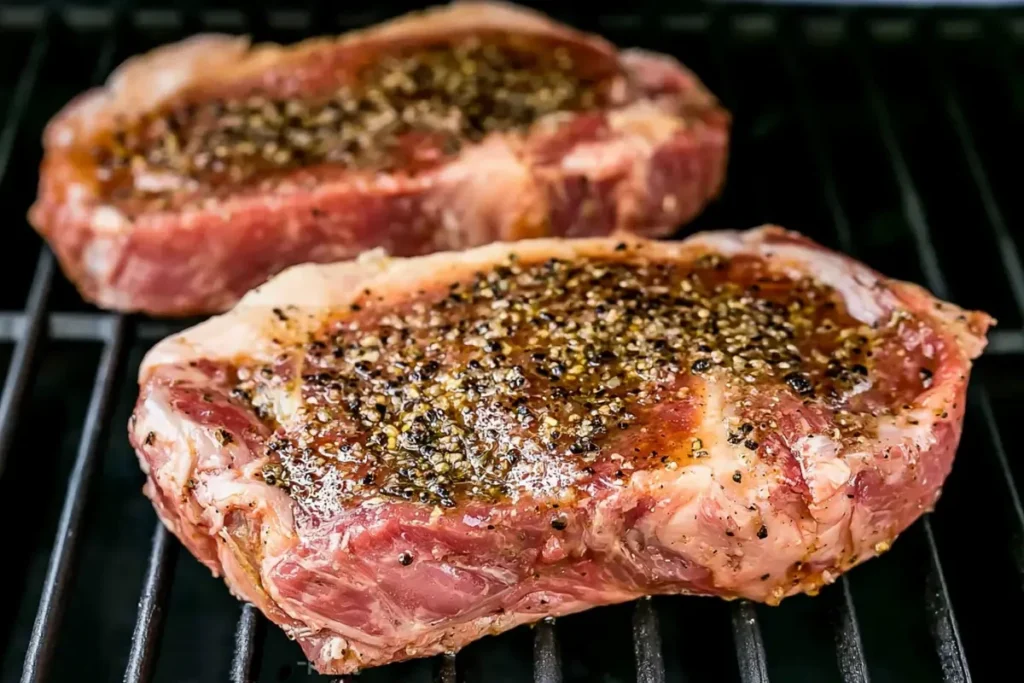
Preheat the grill to medium heat, around 375°F. Give it enough time to heat fully rather than placing the steaks on as soon as the burners are lit. A properly heated grate helps the meat release more cleanly once the crust forms.
How to Grill Rib Eye Steak
Place the seasoned steaks on the preheated grill with a little space between them. Close the lid and leave them alone for the first few minutes. Moving them too soon can tear the surface before it has browned.
For medium-rare, grill the steaks for about 5–6 minutes per side. For medium, allow approximately 6–7 minutes per side. These times are based on steaks that are about 1 inch thick and a grill holding close to 375°F.
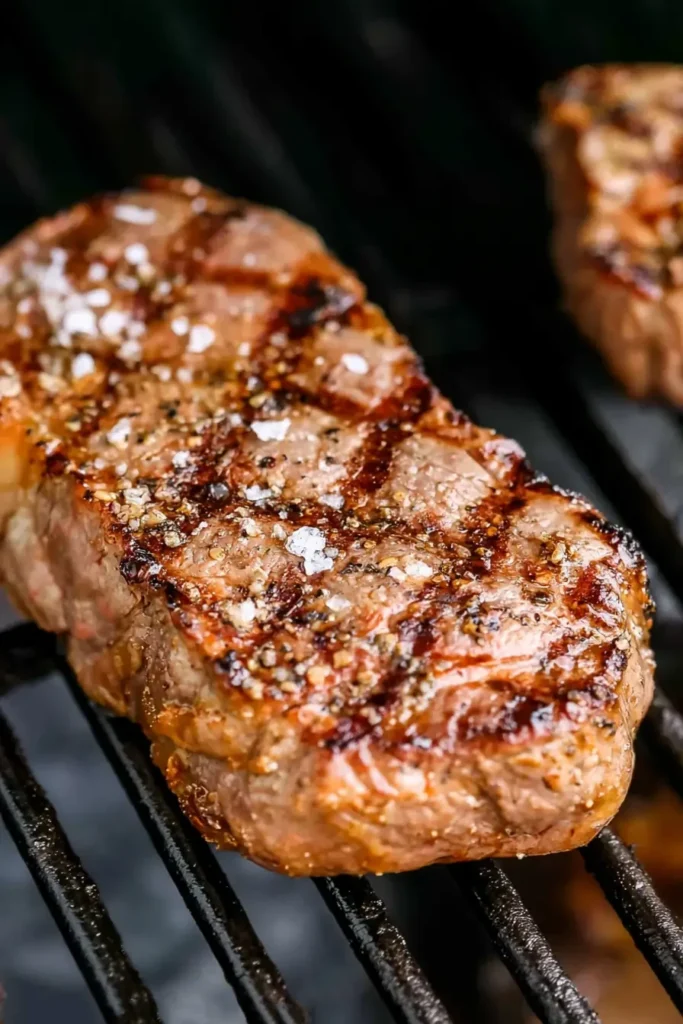
Flip each steak once using tongs. Avoid piercing the meat with a fork, since that creates openings where juices can escape. After flipping, close the lid again so the heat stays steady.
Grills don’t all cook the same way. Wind, grate material, hot spots, and steak thickness can shift the timing by a minute or two. Check the thickest part with an instant-read thermometer rather than relying only on the clock. For medium-rare, remove the steak when the center is close to 130–135°F. For medium, aim for roughly 140–145°F.
Remember that the temperature can continue to rise slightly after the steak leaves the grill. Pulling it at the lower end of your preferred range usually gives you a little room during resting.
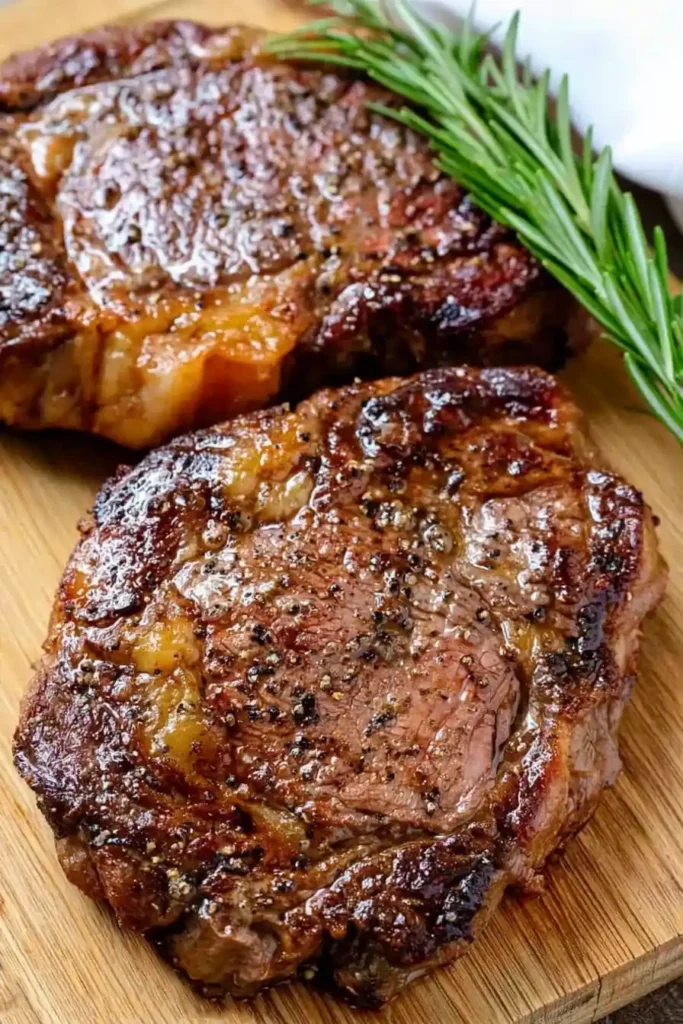
Transfer the steaks to a warm plate and place a pat of butter on each one. Loosely tent them with foil rather than wrapping them tightly. Rest for 5–10 minutes before slicing or serving. That pause gives the juices time to settle back into the meat instead of running across the plate.
Temperature, Butter, and Resting Tips
Timing gives you a useful estimate, though the thermometer tells you what’s actually happening inside the steak. Insert an instant-read thermometer through the side into the thickest part, keeping the tip away from large pockets of fat. Check quickly so the grill doesn’t lose too much heat.
For a warm red center, take the steak off near 130–135°F. A medium steak should reach about 140–145°F. Since the meat may gain a few degrees while resting, removing it near the lower end of the range helps prevent it from cooking beyond your preference.
Set each steak on a warm plate and add 1 tablespoon of butter. Loosely tent the plate with foil and leave the meat for 5–10 minutes. Don’t seal the foil tightly; trapped steam can soften the browned exterior. Resting also means fewer juices spill out when the steak is cut.
Classic Sides for a Rib Eye Steak Dinner
Ribeye is rich, so I like to serve it with something simple rather than another heavy dish. Roasted potatoes are a natural choice, especially when their crisp edges can catch the melted butter and steak juices.
Sautéed mushrooms also work well. Cook them while the steaks rest, using the same seasoning or a small spoonful of herbed butter. For something lighter, add a crisp green salad with a sharp vinaigrette. That bit of acidity cuts through the richness of the beef.
Wilted spinach, grilled vegetables, or warm bread are easy alternatives. Keep the side uncomplicated. The steak should remain the center of the plate.
A Steak Dinner Worth Making at Home
A flavorful rib eye steak doesn’t require a long marinade or complicated equipment. Start with well-marbled meat, let it lose its refrigerator chill, and keep the grill near 375°F. Those small details make the timing easier to control.
Grilled Rib Eye Steak
Ingredients
Equipment
Method
- Remove the rib eye steaks from the refrigerator at least 45 minutes before cooking to take some of the chill off the centers.
- Preheat the grill to medium heat, approximately 375°F.
- Pat the steaks dry with paper towels, rub both sides lightly with oil, and season the surfaces and edges generously.
- Place the steaks on the preheated grill with space between them, close the lid, and leave them undisturbed while the first side browns.
- Grill for 5 to 6 minutes per side for medium-rare or 6 to 7 minutes per side for medium, flipping each steak once with tongs.
- Check the thickest part with an instant-read thermometer and remove the steaks near 130°F to 135°F for medium-rare or 140°F to 145°F for medium.
- Transfer the steaks to a clean plate, top each one with 1 tablespoon of butter, and tent the plate loosely with aluminum foil.
- Rest the steaks for 5 to 10 minutes before slicing or serving.
Notes
- The cooking times are based on rib eye steaks that are about 1 inch thick and a grill holding close to 375°F.
- Grill temperatures, hot spots, wind, and steak thickness can change the cooking time, so check doneness with an instant-read thermometer.
- Tent the steaks loosely rather than wrapping them tightly so steam does not soften the browned crust.