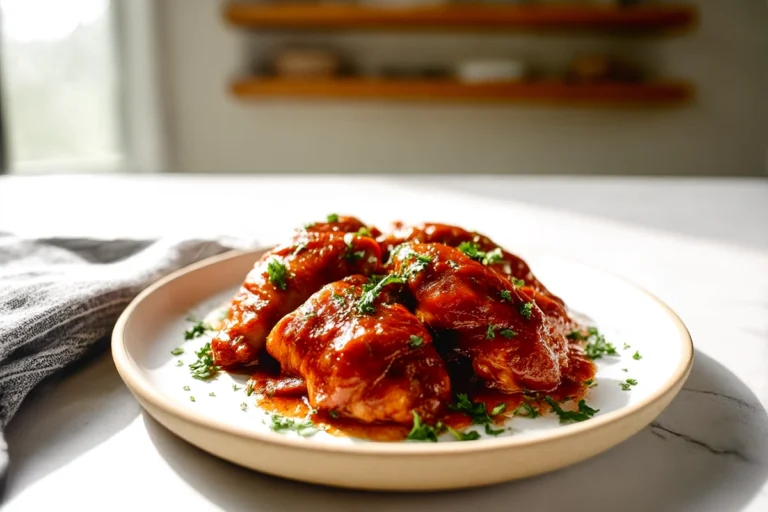
BBQ Ribs On The Grill That Turn Out Tender, Saucy, and Worth the Wait

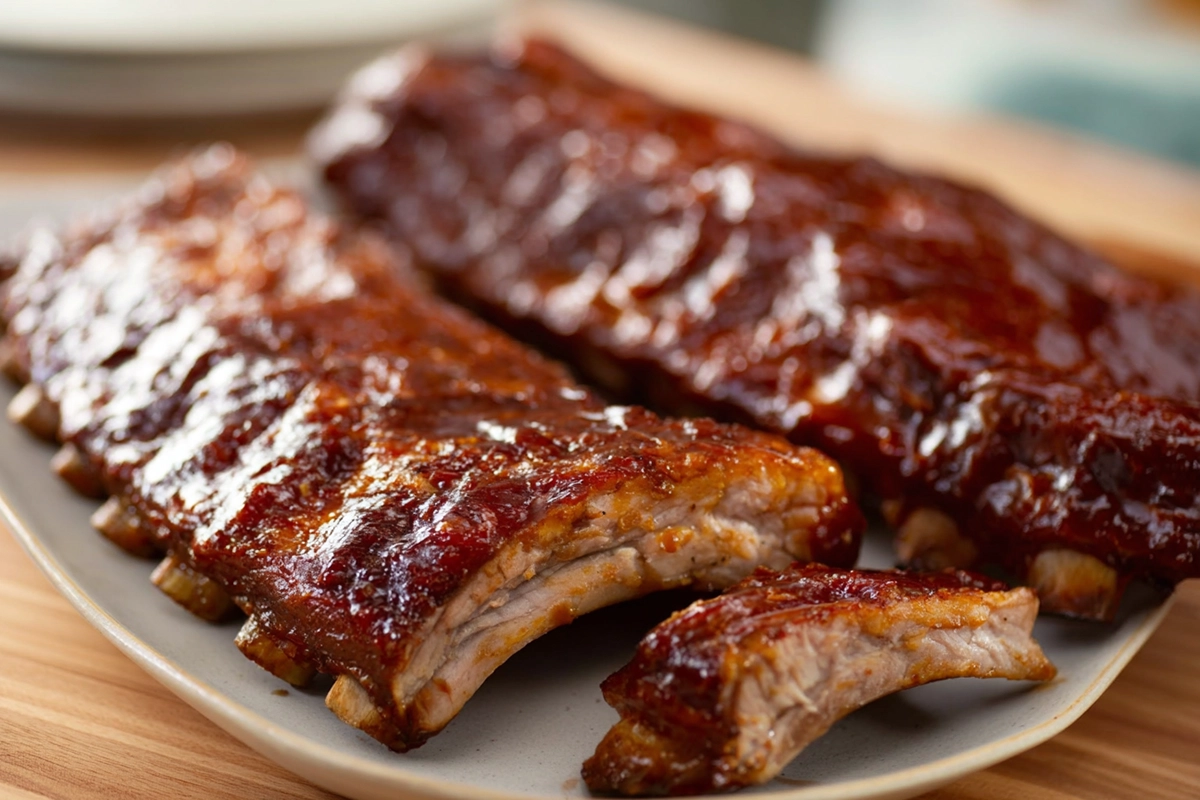
There’s something about a slow afternoon by the grill that feels like home. Maybe it’s the smell of barbecue sauce warming over low heat, or the way time seems to stretch when you know dinner is going to be worth it. BBQ Ribs On The Grill are one of those meals you don’t rush. They’re meant for weekends, backyard gatherings, and those days when you cook with intention instead of urgency.
If you’ve ever worried that grilling ribs would leave you with dry meat or burned sauce, you’re not alone. This method is gentle, forgiving, and made for real home grills. You don’t need a smoker or fancy tools—just patience, indirect heat, and a few simple techniques that make all the difference.
What You’ll Need (And Why Each Part Matters)
This recipe keeps things practical. Every ingredient has a purpose, and nothing feels extra.
For the ribs
- 1 slab baby back ribs (about 2½ to 3 pounds)
Baby back ribs are ideal for the grill because they cook evenly and become tender without an all-day smoke.
For the dry rub
- 2 teaspoons garlic salt
- 4 teaspoons garlic powder
- 2 teaspoons onion powder
- 2 teaspoons paprika
- 1½ to 3 teaspoons chili powder (adjust to taste)
The rub builds a savory base and helps form flavor deep into the meat as it cooks slowly.
For the barbecue sauce
- 1½ cups ketchup
- ½ cup Worcestershire sauce
- 2 tablespoons soy sauce
- 1 teaspoon liquid smoke
- ½ teaspoon hot sauce (more if you like heat)
- 2 tablespoons yellow mustard
- 5 tablespoons light brown sugar
- 1 teaspoon garlic powder
- 1 teaspoon onion powder
- 3 tablespoons fresh lemon juice
- 2 tablespoons pure maple syrup
- 1 teaspoon apple cider vinegar
This sauce hits that balance of sweet, tangy, and savory without overpowering the ribs.
Optional liquid for cooking
- ¼ cup beer, apple cider, or water
This adds moisture inside the foil and helps keep the ribs tender.

Setting Up the Grill for Low-and-Slow Success
The key to great grilled ribs is indirect heat. On a gas grill, turn on only one burner to low or medium and leave the others off. You’re aiming for a steady grill temperature between 225°F and 275°F. It doesn’t have to be perfect, but consistency matters more than chasing an exact number.
Close the lid and give the grill time to settle into that range. Ribs cooked over direct heat too early will scorch on the outside long before they soften inside. Indirect heat lets them gently break down and stay juicy.
Building Flavor Before the Ribs Ever Hit the Grill
Removing the membrane (don’t skip this)
Flip the ribs bone-side up and look for the thin, shiny membrane stretched across the bones. Slide a butter knife underneath, grab it with a paper towel, and pull. Removing it allows seasoning to penetrate and keeps the ribs from turning chewy.
Applying the rub the right way
Mix the rub ingredients together and divide it in half. Pat the ribs dry, then coat both sides generously. Don’t be shy here—some seasoning will mellow during the long cook. Let the ribs sit while the grill finishes heating so the rub can cling to the meat.
The Foil-Tent Method That Makes Grilled Ribs Tender
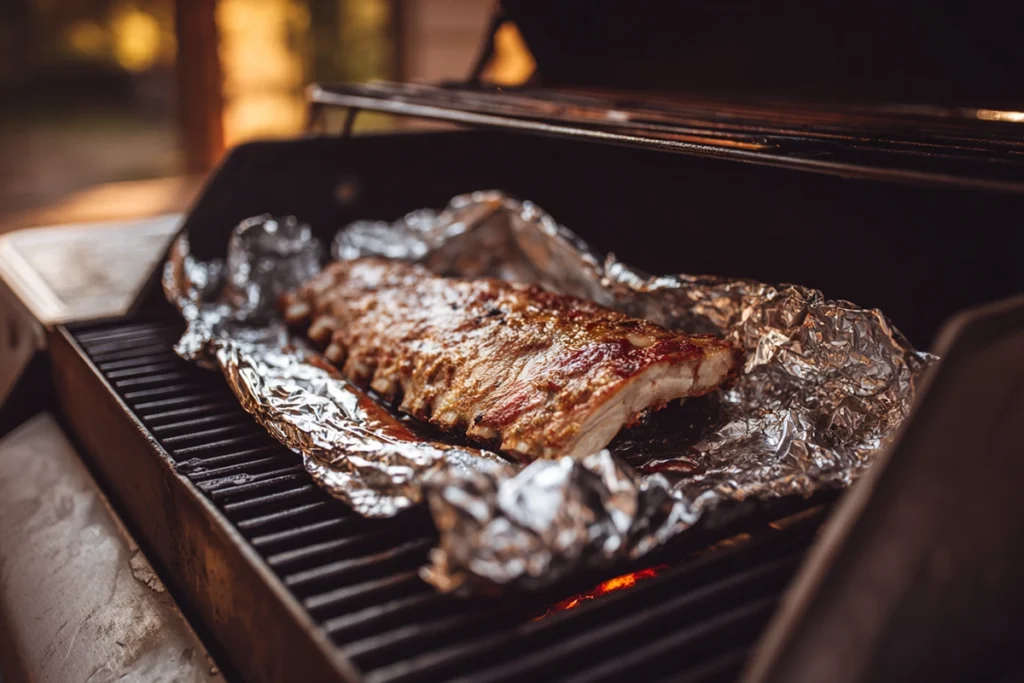
Lay the ribs on a large sheet of heavy-duty foil, bone side up. Add the optional liquid if you like, then tent the foil loosely over the ribs without letting it touch the meat. This creates a pocket that traps steam while still allowing gentle heat to circulate.
Place the foil-wrapped ribs on the unlit side of the grill. Close the lid and let them cook undisturbed for about 2 hours. During this time, the meat softens and absorbs flavor without drying out. Keep an eye on the grill temperature and adjust the lit burner if needed.
After 2 hours, carefully open the foil. The ribs should be starting to look tender and juicy. Brush a layer of barbecue sauce over the meat, flip them bone-side down, and reseal the foil. Cook for another 2 hours, still over indirect heat.
Saucing, Caramelizing, and Getting That Final Char
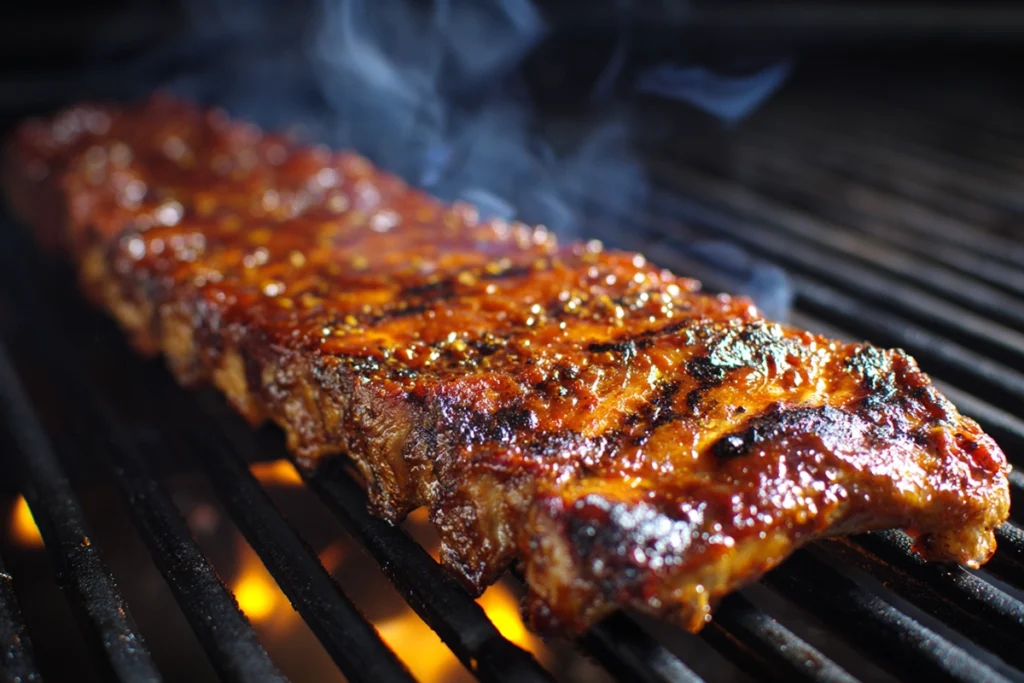
When the second foil stage is done, open the foil again and brush on more sauce. Now it’s time to build that sticky, lightly charred finish. Turn all burners on briefly to bring the grill temperature up to around 400–450°F, close the lid, and let the ribs cook for about 10 minutes. This sets the sauce without burning it.
Next, turn off the burner directly under the ribs and remove them from the foil. Place the ribs directly on the grill grates over indirect heat again. Close the lid and cook for another 5 minutes. You’ll see the edges caramelize and smell that unmistakable smoky sweetness. That’s when you know you’re close.
How to Tell When BBQ Ribs Are Truly Done
Ribs are done when they’re tender, not just hot. If you lift them with tongs, they should bend easily and start to crack slightly at the surface. The meat will have pulled back from the bones, and a toothpick should slide in with little resistance.
If you check internal temperature, you’re looking for around 195–203°F. That range means the connective tissue has broken down and the ribs will be soft and juicy.
Why This Method Works Every Time
Cooking BBQ Ribs On The Grill can feel intimidating, but this method removes the guesswork. Indirect heat prevents burning, the foil locks in moisture, and the sauce is added in stages so it flavors instead of scorches.
This is the approach you learn after a few trial runs—when you realize ribs don’t need rushing, just steady heat and attention. Once you trust the process, it becomes second nature.
Flavor Variations You Can Make Without Starting Over
If you like sweeter ribs, add an extra tablespoon of brown sugar or maple syrup to the sauce. For smokier ribs, increase the liquid smoke slightly or finish the ribs a few minutes longer uncovered.
If spice is your thing, bump up the chili powder in the rub or add extra hot sauce to the glaze. You can also skip the final saucing step and serve sauce on the side for a more dry-rub-forward rib.
Make-Ahead, Storage, and Reheating Tips
You can mix the rub and sauce up to a week ahead and store them in the refrigerator. Season the ribs the day of cooking for best texture.
Leftover ribs keep well wrapped in the fridge for up to 3 days. To reheat, wrap them in foil with a splash of water or apple cider and warm in a 300°F oven until heated through. This keeps them from drying out.
What to Serve With BBQ Ribs On The Grill
These ribs pair beautifully with classic summer sides like coleslaw, baked beans, corn on the cob, or potato salad. For something lighter, try a crisp green salad or grilled vegetables. A cold iced tea or lemonade fits right in, especially on hot days.

When you take the time to make BBQ Ribs On The Grill, you’re not just cooking dinner—you’re creating a moment. Let them rest for about 10 minutes before cutting, brush on one last layer of sauce, and serve them proudly. They’re tender, saucy, and exactly the kind of meal people remember long after the plates are cleared.
FAQ
How long does it take to cook ribs on a gas grill?
Grilling ribs low and slow usually takes about 4 to 4½ hours total. The time can vary slightly depending on your grill temperature and the size of the ribs, but patience is key for tender results.
Should ribs be wrapped in foil when grilling?
Yes, wrapping ribs in foil for most of the cook helps trap moisture and gently tenderize the meat. This step prevents the ribs from drying out and makes them much more forgiving on a home grill.
What temperature should ribs reach to be fully cooked?
Ribs are typically done when they reach an internal temperature of around 195–203°F. At this point, the meat should feel tender and pull away easily from the bones.
Why did my ribs turn out tough instead of tender?
Tough ribs are usually a sign they were cooked too fast or at too high of a heat. Ribs need time at lower temperatures for the connective tissue to break down and become tender.
Can I use store-bought barbecue sauce instead of homemade?
Absolutely. A good-quality store-bought barbecue sauce works just fine if you’re short on time. You can always warm it gently and adjust the sweetness or tang to suit your taste.
Print
BBQ Ribs On The Grill
- Total Time: 4 hours 50 minutes
- Yield: 1 slab of ribs 1x
Description
Slow-cooked BBQ ribs made right on the grill using indirect heat, a simple spice rub, and a homemade barbecue sauce. These ribs turn out tender, saucy, and full of comforting backyard flavor.
Ingredients
- 1 slab baby back ribs
- 2 teaspoons garlic salt
- 4 teaspoons garlic powder
- 2 teaspoons onion powder
- 2 teaspoons paprika
- 1 1/2 to 3 teaspoons chili powder
- 1 1/2 cups ketchup
- 1/2 cup Worcestershire sauce
- 2 tablespoons soy sauce
- 1 teaspoon liquid smoke
- 1/2 teaspoon hot sauce
- 2 tablespoons yellow mustard
- 5 tablespoons light brown sugar
- 1 teaspoon garlic powder
- 1 teaspoon onion powder
- 3 tablespoons fresh lemon juice
- 2 tablespoons pure maple syrup
- 1 teaspoon apple cider vinegar
- 1/4 cup beer, apple cider, or water
Instructions
- Preheat a gas grill for indirect heat, keeping the temperature between 225°F and 275°F.
- Remove the membrane from the back of the ribs and pat them dry.
- Mix the spice rub ingredients and season both sides of the ribs generously.
- Place the ribs bone side up on a large sheet of foil, add liquid, and tent the foil loosely.
- Set the foil-wrapped ribs on the unlit side of the grill and cook for 2 hours.
- Open the foil, brush the ribs with barbecue sauce, flip bone side down, reseal, and cook for another 2 hours.
- Unwrap the ribs, brush with more sauce, and increase grill heat briefly to caramelize the sauce.
- Move ribs to indirect heat and grill uncovered for a few minutes until lightly charred.
- Remove from the grill, rest for 10 minutes, add more sauce if desired, and serve.
Notes
- Keep grill temperature steady for best tenderness.
- Avoid adding sauce too early to prevent burning.
- Let the ribs rest before cutting to retain juices.
- Prep Time: 20 minutes
- Cook Time: 4 hours 15 minutes
- Category: Dinner
- Method: Grilling
- Cuisine: American
Nutrition
- Serving Size: 1/3 slab
- Calories: 850
- Sugar: 32g
- Sodium: 1450mg
- Fat: 58g
- Saturated Fat: 20g
- Unsaturated Fat: 34g
- Trans Fat: 0g
- Carbohydrates: 38g
- Fiber: 2g
- Protein: 48g
- Cholesterol: 165mg