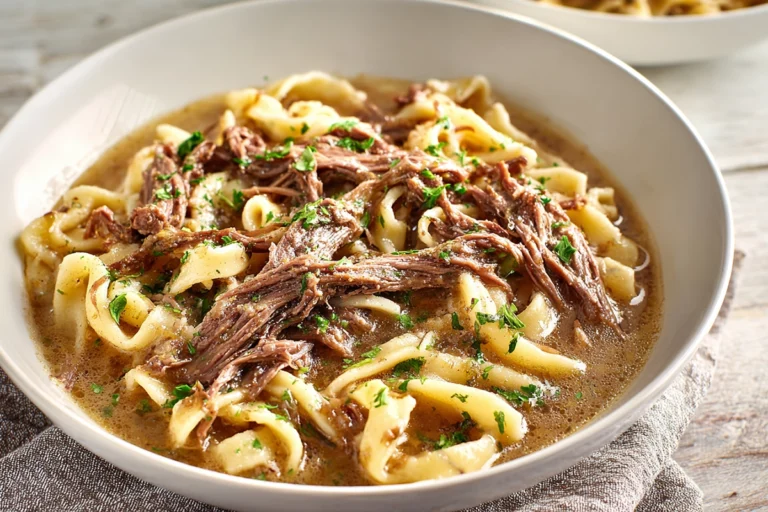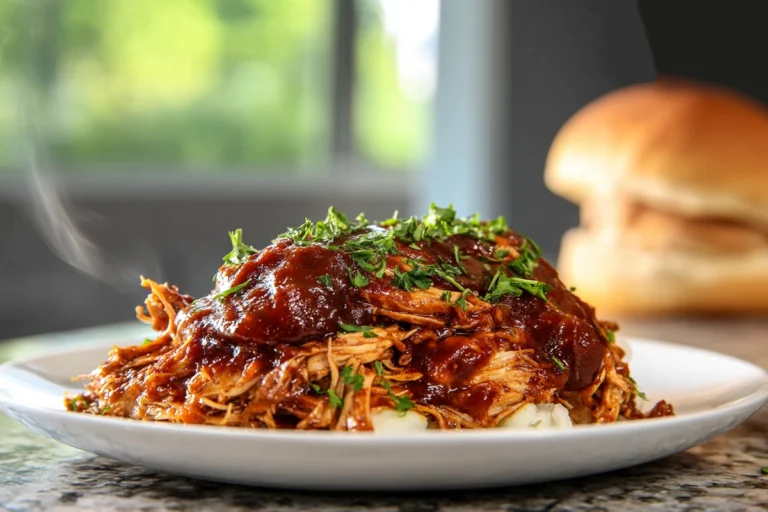

Beef Barley Soup: A Thick, Steady Bowl That Holds Its Heat

There’s a point with soups like this when the pot goes quiet. The bubbles slow, the surface settles, and what’s inside starts to feel unified instead of busy. The barley has swollen and softened, the broth has lost its sharp edges, and the vegetables no longer announce themselves one by one. That’s the moment this soup is built for. Not flashy, not delicate—just deeply steady and satisfying.
This beef barley soup works because every part pulls its weight. Pearl barley thickens the broth naturally as it cooks, giving it body without cream or flour. Cooked beef stays tender instead of tightening up, letting the soup feel hearty without turning heavy. Onions, carrots, celery, and garlic soften into the background, while tomatoes and Worcestershire quietly deepen the broth rather than brighten it. Nothing jumps out. Everything belongs.
What matters most here isn’t speed—it’s restraint. A gentle simmer gives the barley time to release its starch without breaking apart. Too much heat, and the texture goes past comforting into gluey. Too little, and the soup never quite comes together. This is the kind of pot that rewards attention, not hovering—one you check, stir, and trust.
As it cooks, the soup shifts from broth with ingredients to something closer to a meal in its own right. By the time the bay leaf comes out and the parsley goes in, you’re no longer thinking about steps or timing. You’re thinking about how long it’s been since you last had a bowl like this—and why it’s worth making again.
Table of Contents
Why Barley Changes the Rules of Beef Soup
Barley isn’t just another grain dropped into liquid—it actively reshapes the soup as it cooks. In beef barley soup, pearl barley slowly releases starch over time, thickening the broth from the inside out. This is what gives the soup its signature body without relying on cream, flour, or roux. The key is that barley needs space and patience; it absorbs liquid gradually and keeps doing so even after the heat is off. That’s why this soup feels heartier the next day and why extra broth is sometimes needed when reheating.
Pearl barley is the right choice here. Hulled barley takes too long and doesn’t soften evenly in a weeknight-friendly simmer. Quick-cooking barley breaks down too fast and turns the broth pasty. Pearl barley lands in the middle—tender, plump, and still structured.
- Pearl barley: Thickens the soup naturally while staying pleasantly chewy; avoid quick-cook varieties here.
- Beef broth (reduced sodium): Gives the barley room to absorb flavor without pushing the soup into overly salty territory.
The Quiet Power of Cooked Beef (And Why That Matters)
Using cooked beef changes the entire rhythm of this recipe. Instead of building flavor through browning and long braising, the focus shifts to protecting texture. Already-cooked beef stays tender because it isn’t forced to tighten under prolonged heat. This makes the soup dependable and repeatable—especially if you’re working with leftovers.
Because the beef isn’t contributing rendered fat or fond, the broth needs support elsewhere. That’s where tomatoes and Worcestershire step in, adding depth and savory backbone without overpowering the soup’s cozy comfort profile.
- Cooked beef: Keeps the soup hearty without turning tough; chopped or shredded both work.
- Worcestershire sauce: Replaces some of the depth you’d normally get from browning meat.
- Canned petite diced tomatoes (with juices): Add body and balance, not brightness.
Vegetables That Stay in the Background on Purpose
This isn’t a vegetable-forward soup where each bite tastes different. The onion, carrot, celery, and garlic are here to soften into the broth and support it, not compete with it. They’re cut small and cooked gently so they dissolve into the base, creating a rounded, familiar flavor that makes the soup feel complete.
Green bell pepper may seem unexpected, but in small amounts it adds a subtle sweetness and freshness that keeps the soup from tasting flat, especially after the barley thickens everything.
- Onion and garlic: Build sweetness early without browning.
- Carrots and celery: Add balance and body as they soften.
- Green bell pepper: A quiet lift that keeps the broth from feeling heavy.
Herbs, Seasoning, and the Line Between Depth and Distraction
The seasoning here is restrained by design. Dried thyme and a single bay leaf provide structure rather than aroma, letting the soup taste familiar instead of herbal. Salt and black pepper should be adjusted late, once the barley has finished absorbing liquid.
Red wine is optional, and it should stay that way. When used sparingly, it deepens the broth. When overused, it pulls the soup out of its comfort zone.
- Dried thyme and bay leaf: Background herbs that hold the soup together.
- Red wine (optional): Use lightly, or skip it entirely for a softer profile.
- Fresh parsley: Added at the end for freshness, not flavor dominance.
Together, these choices are what make beef barley soup feel dependable—thick without heaviness, savory without sharpness, and comforting enough to return to again and again.

Beef Barley Soup Is Built in Layers, Not Steps
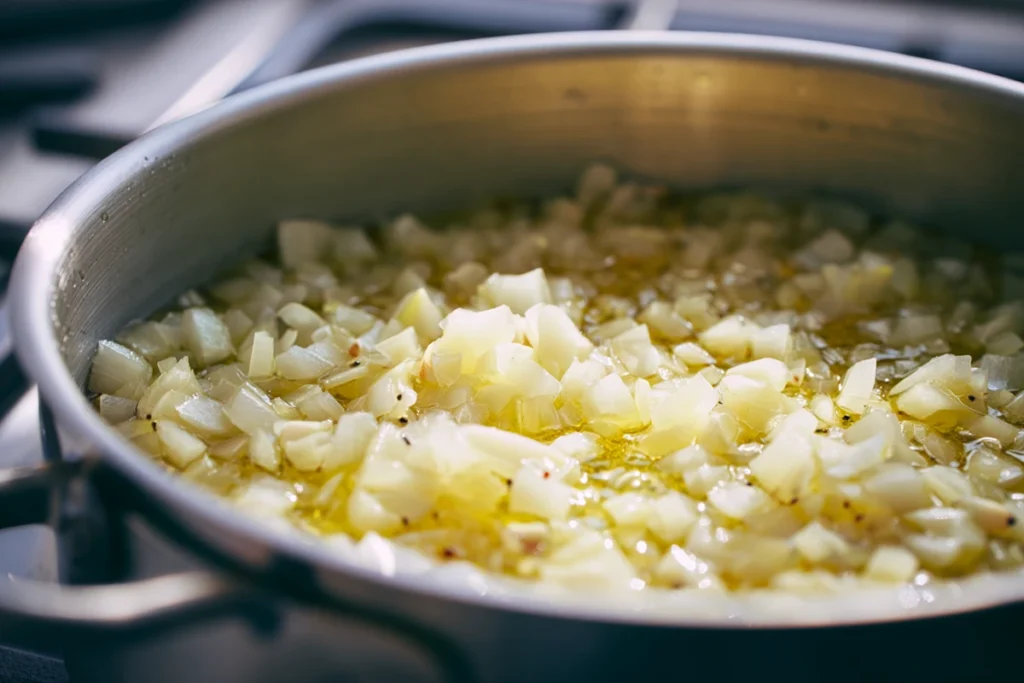
The pot should be warm before anything goes in, with olive oil loosening across the bottom instead of pooling. When the onion hits the oil, listen for a steady, gentle sizzle—not a sharp crackle. You’re looking for softness, not color. As the onion turns translucent and slumps into itself, the smell shifts from sharp to faintly sweet, which is your cue to add the garlic.
Garlic only needs a moment. Stir it just until the raw edge disappears and the aroma turns nutty and warm. At this stage, the vegetables should look glossy and relaxed, not browned. This quiet base is what keeps homemade beef barley soup tasting round instead of harsh.
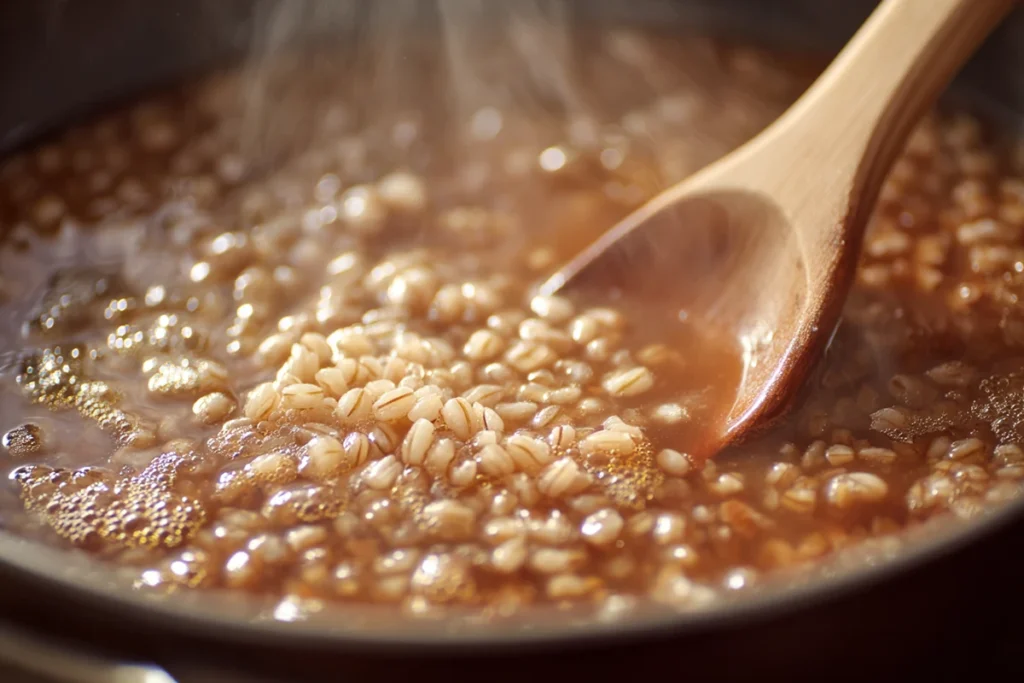
Once the broth, tomatoes, and seasonings go in, the sound changes again. A brief boil wakes everything up, but it shouldn’t last long. As soon as bubbles rise steadily, the heat comes down. The soup should settle into a slow simmer—small bubbles breaking the surface lazily, steam rising without agitation. This is where barley does its real work.
As the soup cooks, it thickens gradually. The broth goes from clear to lightly opaque, clinging to the spoon instead of running off it. When the barley is tender but still holds its shape between your fingers, the soup is ready to rest.
The One Mistake That Turns This Soup Gummy
The biggest risk with a hearty beef soup like this is impatience. Too much heat forces the barley to burst instead of soften, releasing starch all at once. You’ll hear it before you see it—the pot starts to burble aggressively, and the surface looks cloudy and unsettled.
If that happens, the texture slides fast. The soup feels heavy on the spoon and sticky on the tongue instead of smooth. To prevent it, keep the heat low enough that the soup barely moves on its own. Stir occasionally, feeling for resistance at the bottom of the pot. It should glide, not drag.
If the soup thickens too much as it sits, don’t fight it with more salt or seasoning. Add warm broth or even water a little at a time, stirring until it loosens back into a spoonable consistency. Beef barley soup is forgiving—but only if you let it move at its own pace.
Adjustments That Keep the Soup Honest
This soup is flexible, but only in ways that respect its texture. If you don’t have cooked beef on hand, a chuck roast works—but it needs time. Cut it into small pieces and simmer until fork-tender before the barley goes in. Adding barley too early with raw beef will leave you choosing between tough meat or blown-out grain.
If you’re short on pearl barley, resist the urge to swap in rice or pasta. Rice turns the broth starchy in a flat way, and pasta drinks the liquid unevenly. If you must substitute, farro is the closest match, though it stays firmer and won’t thicken the broth as much.
For a lighter version, you can skip the gravy packet and rely on the barley alone for body. The soup will be looser but still balanced. If using salted broth instead of reduced sodium, hold back on added salt until the very end—barley concentrates seasoning as it cooks.
When This Soup Shows Up Best at the Table
Beef barley soup is a full meal on its own, but what you serve with it should stay out of the way. Crusty bread with a firm chew works best, especially for dragging through the bottom of the bowl where the barley settles. Soft dinner rolls tend to dissolve instead of scooping.
If you want something fresh on the side, a simple green salad with sharp vinaigrette does the job. The acidity cuts through the richness without competing. Skip heavy sides or anything creamy—they dull the clean, savory finish of the soup.
This is also a smart make-ahead option. The flavor deepens overnight, and the texture turns even more comforting the next day. Just plan to loosen it gently when reheating.
A Few Last Things Worth Knowing
If the soup looks thinner than expected when it first comes off the heat, don’t rush to fix it. Barley continues absorbing liquid as it rests. Give it ten minutes before deciding whether it needs more body.
Always remove the bay leaf before serving. It’s done its work long before the bowl hits the table, and leaving it in only risks a bitter bite.
And if you’re freezing leftovers, portion the soup before it fully cools. It reheats more evenly that way, especially once the barley has settled.

There’s a reason beef barley soup has lasted as long as it has. It’s steady, forgiving, and deeply satisfying without trying too hard. Make it once, make it again, and let it become the kind of meal you reach for when you want something that feels familiar—and worth the time it takes.
Get inspired with more mouthwatering recipes! Follow me on Facebook and Pinterest for new cooking ideas every week.
FAQ
Can beef barley soup get too thick after it sits?
Yes, that’s completely normal. Barley keeps absorbing liquid as the soup rests, especially after it cools. When reheating, add a splash of warm beef broth or water and stir gently until it loosens back into a spoonable consistency.
Should I cook the barley before adding it to the soup?
No, pearl barley is meant to cook directly in the soup. Cooking it separately removes the starch that helps thicken the broth and gives beef barley soup its signature texture. Adding it raw allows it to absorb flavor as it cooks.
Can I freeze beef barley soup?
You can, but expect the texture to be thicker after thawing. The barley will soften more in the freezer, which is fine for a hearty soup. Reheat slowly and add liquid as needed to bring it back into balance.
What’s the best cut of beef if I’m not using leftovers?
Chuck roast is the best option because it becomes tender with simmering and adds good flavor. Cut it into small pieces and let it cook until fork-tender before adding the barley. Lean cuts tend to dry out and don’t work as well here.
Print
Beef Barley Soup
- Total Time: 110 minutes
- Yield: 6 servings 1x
- Diet: N/A
Description
A thick, cozy beef barley soup made with tender cooked beef, pearl barley, vegetables, and a rich savory broth. This is a dependable, hearty soup that eats like a full meal and gets even better as it rests.
Ingredients
- 1 tablespoon olive oil
- 1 onion, chopped
- 1 clove garlic, minced
- 2 carrots, sliced
- 1 rib celery, sliced
- 2 cups cooked beef, chopped
- 6 cups reduced sodium beef broth
- 14.5 ounces canned petite diced tomatoes with juices
- 1/2 green bell pepper, diced
- 2/3 cup pearl barley
- 1 tablespoon Worcestershire sauce
- 1/4 teaspoon dried thyme leaves
- 1 packet beef gravy mix
- 1 bay leaf
- 2 tablespoons red wine (optional)
- 2 tablespoons chopped fresh parsley
- Salt and black pepper, to taste
Instructions
- Warm the olive oil in a large pot over medium heat and add the chopped onion. Cook gently until softened and translucent, then add the garlic and stir until fragrant.
- Add the carrots, celery, cooked beef, beef broth, diced tomatoes with juices, bell pepper, pearl barley, Worcestershire sauce, thyme, gravy mix, bay leaf, and red wine if using.
- Bring the soup briefly to a boil, then reduce the heat to a low simmer. Cover and cook until the barley is tender and the broth has thickened naturally.
- Remove the bay leaf, season with salt and black pepper to taste, and finish with fresh parsley before serving.
Notes
- The soup will continue to thicken as it cools, which is normal for barley-based soups.
- Add additional warm broth or water when reheating to reach your preferred consistency.
- Always remove the bay leaf before serving to avoid bitterness.
- Prep Time: 20 minutes
- Cook Time: 90 minutes
- Category: Soup
- Method: Stovetop
- Cuisine: American
Nutrition
- Serving Size: 1 bowl
- Calories: 350
- Sugar: 4g
- Sodium: 700mg
- Fat: 12g
- Saturated Fat: 4g
- Unsaturated Fat: 7g
- Trans Fat: 0g
- Carbohydrates: 28g
- Fiber: 6g
- Protein: 28g
- Cholesterol: 70mg
What Are Our Readers Saying?
There are no reviews yet. Be the first one to write one.