
Beef Stew: Deeply Savory, Fork-Tender, and Built for Cold Evenings
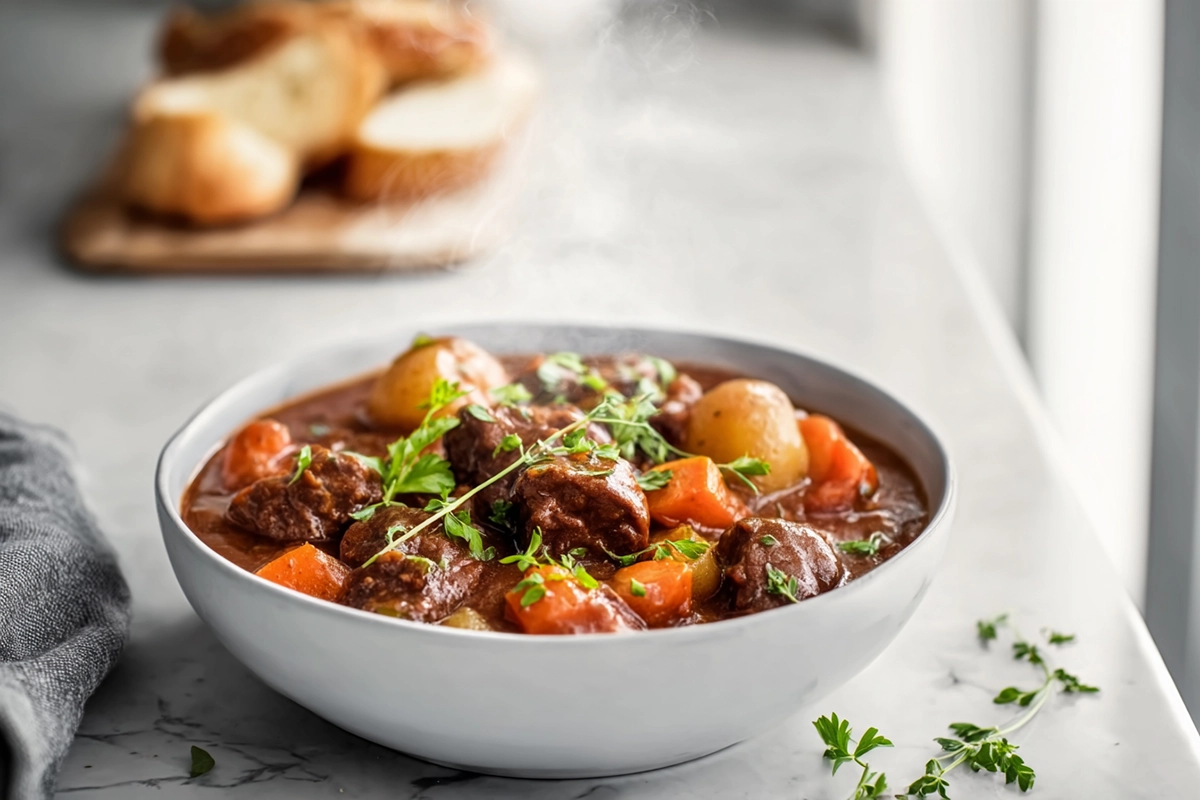
There’s a very specific moment when a pot of stew tells you it’s going to be worth the wait. The beef has taken on a dark crust, the bottom of the pot is sticky with browned bits, and the air smells faintly of toasted tomato paste and garlic before any liquid has even touched the pan. That’s when you know this isn’t going to be thin or forgettable. This is the kind of stew that coats a spoon, the kind you slow down for.
A good beef stew isn’t about piling everything into a pot and hoping time fixes it. It’s about order. Beef goes in first because it needs space and heat. Tomato paste gets cooked until it deepens in color because raw paste tastes sharp and unfinished. Wine and broth aren’t there to drown the meat — they’re there to lift what’s already been built on the bottom of the pot. Herbs stay restrained, potatoes wait their turn, and peas only show up at the very end, when the stew needs a bit of brightness.
What I like about this beef stew is how dependable it is. Chuck meat softens instead of drying out. The broth lands somewhere between rich and clean, with just enough body to cling to the vegetables. The carrots stay intact, the potatoes hold their shape, and the beef yields without falling apart. It’s hearty without being heavy, and comforting without feeling dull.
From here, the process matters more than speed. A steady simmer, a few well-timed additions, and attention to what the pot is doing — not the clock — are what carry this stew home.
Table of Contents
Why This Stew Starts With Tomato Paste, Not Tomatoes
Tomato paste shows up early in this beef stew for a reason. It isn’t there to make the stew taste like tomatoes — it’s there to add depth. When tomato paste is cooked directly in the pot, right after the vegetables soften, it darkens and loses its raw edge. That short step turns it from sharp and acidic into something rounded and savory, almost meaty in its own way. Canned tomatoes would add too much liquid and brightness here, pushing the stew toward soup territory and dulling the richness built from browning the beef.
This is one of those quiet decisions that affects everything downstream. The paste helps thicken the broth slightly, gives the wine something to cling to, and anchors the long simmer so the flavors taste integrated instead of layered on top of each other. Skip it, and the stew will still cook — it just won’t have the same backbone.
- Tomato paste: Concentrated flavor that deepens when cooked; don’t rush this step or it will taste raw later.

The Supporting Cast (And Why Each One Earned Its Spot)
Every ingredient in this pot has a job, and none of them are here for decoration. Chuck beef is non-negotiable for a classic comfort-food stew. It has enough connective tissue to break down during simmering, which is what gives you that fork-tender texture instead of dry, crumbly meat. Lean cuts may seem appealing, but they tighten up and turn stubborn long before the stew is done.
The vegetables are chosen for how they behave over time. Onion, carrot, and celery soften early and form the base of the broth, while baby potatoes wait until the beef is mostly tender so they don’t collapse. Garlic goes in briefly, just long enough to turn fragrant. Herbs stay simple and restrained — thyme and bay add structure without announcing themselves. Frozen peas come last, bringing a pop of sweetness and color when the stew needs it most.
Liquids matter just as much. Low-sodium beef broth gives you control, and red wine adds acidity that lifts the richness instead of masking it. Worcestershire quietly reinforces the beefiness without tasting like sauce. This balance is what keeps the stew hearty but not heavy, rich but still clean.
- Beef chuck stew meat: Best cut for slow simmering; breaks down into tender, juicy pieces.
- Yellow onion, carrots, celery: The aromatic base that builds the broth’s foundation.
- Garlic: Added briefly so it perfumes the stew without turning bitter.
- Low-sodium beef broth: Lets you season gradually as the stew reduces.
- Red wine: Adds acidity and depth; if omitted, use a little extra broth and season carefully.
- Worcestershire sauce: Boosts savory flavor without standing out.
- Fresh thyme and bay leaves: Subtle structure, not herbal dominance.
- Baby potatoes: Hold their shape and gently thicken the broth.
- Frozen peas: Added at the end for sweetness and contrast.
- Fresh parsley: A final lift that keeps the finished stew from tasting heavy.
This combination is what gives the beef stew its reliable, repeat-worthy character — the kind that tastes even better the next day and earns its place in regular rotation.
The One Moment That Makes or Breaks This Beef Stew
The pot needs to be hot before the beef ever touches it. When the oil goes in, it should shimmer and move easily across the bottom, not sit still. Add the beef in batches and listen for a sharp, confident sizzle — if it hisses softly, the pan is too crowded. The cubes should sit undisturbed long enough to form a deep brown crust, the kind that releases on its own when it’s ready.
As the beef browns, the smell shifts from raw meat to something nutty and savory, almost like toasted bread. Those dark bits sticking to the bottom of the pot are exactly what you want. They’re concentrated flavor, and they’re the reason this beef stew tastes rich instead of flat. Pull the beef out while it’s still firm to the touch; tenderness comes later.
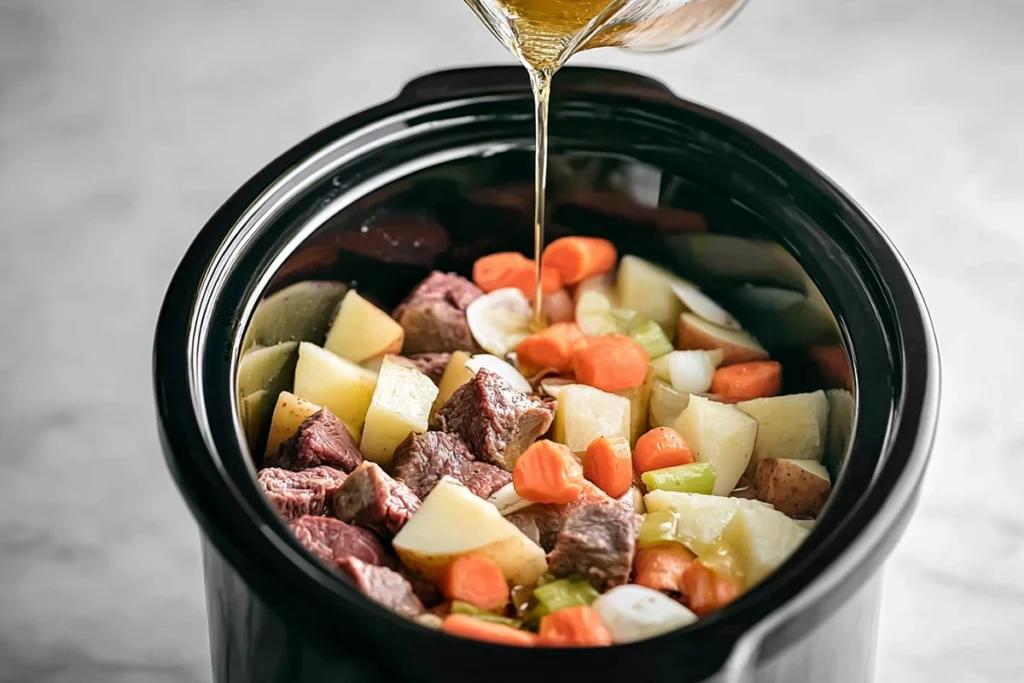
When the vegetables go in, the sound changes. The sizzle softens, and steam rises as the onions release moisture. Cook them until they look glossy and slightly slumped, then add the garlic and tomato paste. The paste should darken from bright red to brick-colored, and the smell will turn rounded and sweet instead of sharp. That’s your cue to move on.
Timing Matters More Than Temperature Here
Once the beef returns to the pot with the broth, wine, and seasonings, the goal is a steady, gentle simmer. You want small bubbles lazily breaking the surface, not a rolling boil. The stew should sound quiet, almost sleepy, with an occasional plop as a bubble escapes. This is what allows the chuck to relax and soften instead of tightening up.
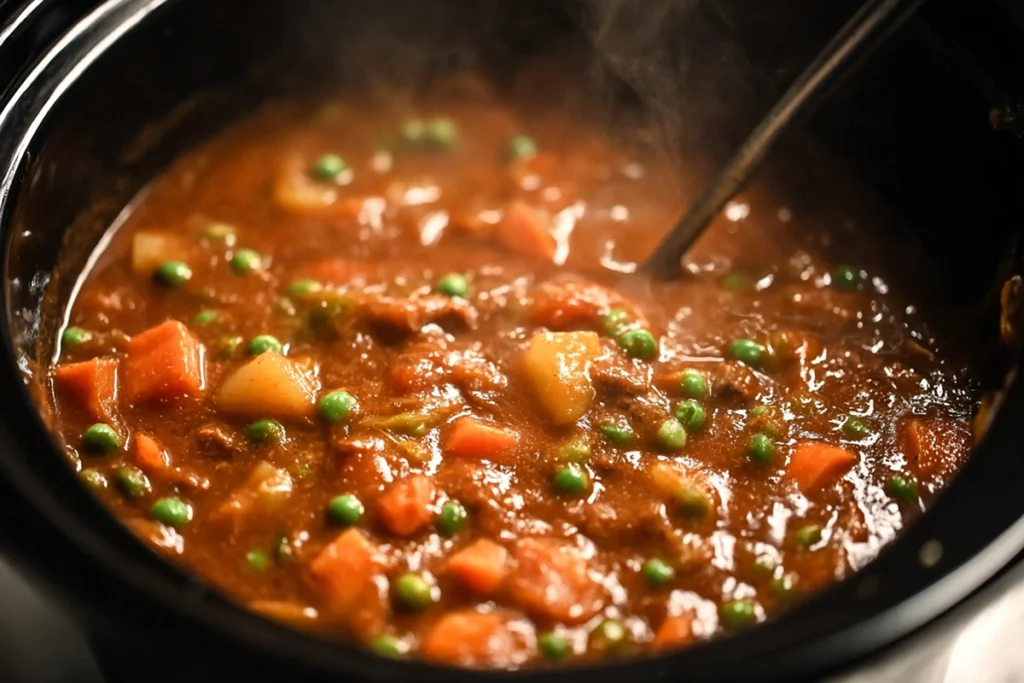
As the stew cooks, the broth thickens slightly and deepens in color. Stir occasionally, feeling for resistance at the bottom of the pot — if it drags, lower the heat. After the beef is mostly tender, the potatoes go in. They should sink easily but still feel firm when pierced, holding their shape as they finish cooking.
The final moments matter. Once the herbs are removed and the peas are stirred in, the stew should smell fresh again, not heavy. The peas only need heat, not time. This is where a hearty beef stew becomes a classic comfort food stew — cohesive, balanced, and ready to be served without fuss.
Make It Your Own (Without Undermining the Stew)
This stew is sturdy, but it’s not infinitely flexible. A few thoughtful adjustments work well; others quietly undo the balance.
If you don’t cook with wine, you can replace it with additional beef broth and a small splash of apple cider vinegar added later to restore acidity. What you don’t want is grape juice or anything sweet — sweetness flattens the savory base and pushes the stew in the wrong direction. Yukon Gold potatoes can stand in for baby potatoes if that’s what you have; just cut them into large, even pieces so they soften gradually instead of dissolving. Fresh herbs can replace dried ones here without issue, but doubling them will overwhelm the broth rather than improve it.
One substitution to avoid: lean beef cuts. Sirloin, round, or “stew meat” of unknown origin may look convenient, but they tighten under simmering heat and never relax. That swap turns a dependable pot of comfort food into a chewy disappointment.
Where This Stew Belongs at the Table
This beef stew doesn’t need much to feel complete, but it appreciates the right company. A thick slice of crusty bread or a split biscuit is there to soak up what’s left in the bowl — not just the broth, but the softened onion and tomato paste that settle at the bottom. If you want something green, keep it sharp and simple. A lightly dressed salad with vinegar-forward dressing cuts through the richness without competing.
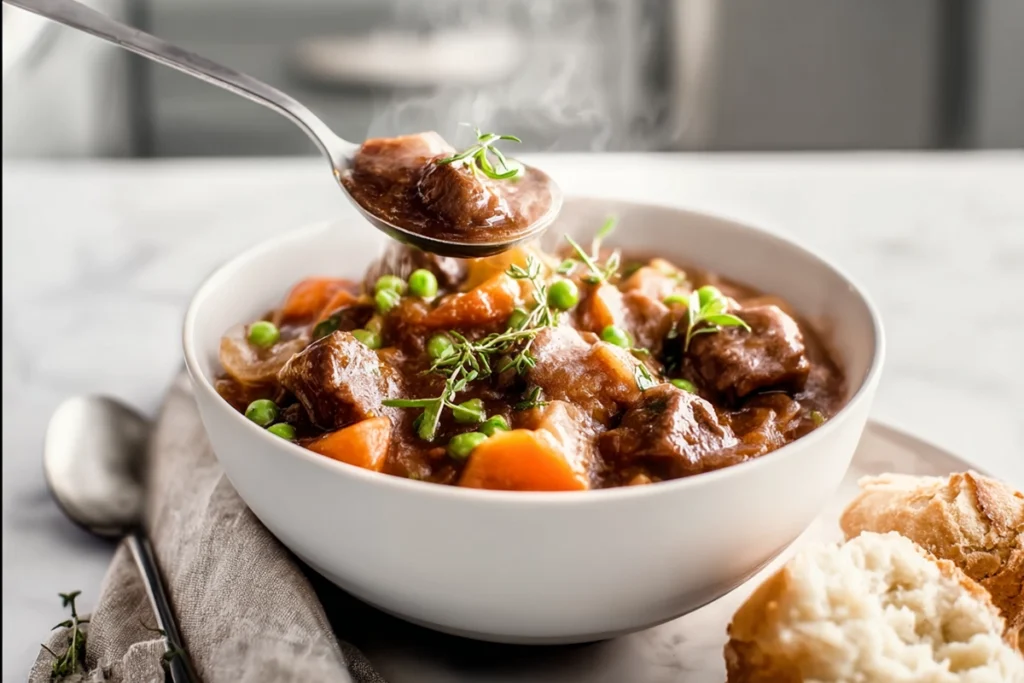
This is also a stew that improves with time. Served the next day, the flavors knit together and the broth thickens slightly, making it an ideal make-ahead dinner for busy evenings or quiet weekends. Reheat gently, just until steaming, and stop there.
A Few Final Things Worth Remembering
If there’s one habit worth carrying forward from this recipe, it’s patience. Beef stew rewards steady heat, restrained seasoning, and the confidence to let the pot do its work. Once you’ve made it this way a few times, you’ll start recognizing the cues — the smell when the paste is ready, the sound of the right simmer, the feel of beef that’s finally given in.
That’s when a classic beef stew stops being just a recipe and starts becoming one of those meals you trust. The kind you come back to when the weather turns cold, the day runs long, and the kitchen needs to feel like home again.
Get inspired with more mouthwatering recipes! Follow me on Facebook and Pinterest for new cooking ideas every week.
FAQ
Why is my beef stew meat still tough after simmering?
Beef stew meat can stay tough if the heat was too high or the stew didn’t simmer long enough. Chuck needs gentle, steady heat so the connective tissue has time to break down. If the meat isn’t tender yet, lower the heat and keep simmering until it yields easily.
Can I make beef stew without wine?
Yes, you can make beef stew without wine, but you’ll want to replace the acidity it provides. Use extra beef broth and add a small splash of apple cider vinegar near the end of cooking. This keeps the flavor balanced without making the stew taste sharp.
Is it normal for beef stew broth to thicken as it cools?
Yes, that’s completely normal. As beef stew cools, the gelatin released from the chuck firms up slightly, giving the broth more body. When reheated gently, it will loosen back into a rich, spoon-coating consistency.
Can I make this beef stew ahead of time?
Beef stew is actually better when made ahead. After resting overnight, the flavors settle and deepen, and the texture improves. Reheat slowly over low heat to avoid tightening the meat or breaking the broth.
Print
Slow Cooker Beef Stew
- Total Time: 1 hour 35 minutes
- Yield: 6 servings 1x
- Diet: Halal
Description
A classic, dependable beef stew made with chuck roast, vegetables, and a rich, savory broth. Fork-tender beef, balanced flavor, and real comfort food results every time.
Ingredients
- 1 tablespoon vegetable oil
- 2 pounds beef chuck stew meat, cut into 1-inch cubes
- 1 medium yellow onion, chopped
- 2 carrots, peeled and sliced
- 2 celery stalks, chopped
- Kosher salt
- Freshly ground black pepper
- 3 cloves garlic, finely chopped
- 1/4 cup tomato paste
- 6 cups low-sodium beef broth
- 1 cup red wine
- 1 tablespoon Worcestershire sauce
- 2 fresh thyme sprigs
- 2 bay leaves
- 1 pound baby potatoes, halved
- 1 cup frozen peas
- 1/4 cup chopped fresh parsley
Instructions
- Heat oil in a large Dutch oven until shimmering, then brown the beef in batches until deeply crusted on all sides. Transfer beef to a plate.
- Add onion, carrots, and celery to the pot and cook until softened and glossy. Stir in garlic and tomato paste and cook until the paste darkens and smells sweet.
- Return beef to the pot, add beef broth, red wine, Worcestershire sauce, thyme, and bay leaves. Bring to a boil, then reduce to a gentle simmer.
- Cover and simmer until the beef begins to turn tender, maintaining low, steady heat.
- Add potatoes and continue simmering until both beef and potatoes are tender.
- Remove thyme and bay leaves, stir in peas, and cook just until heated through.
- Season to taste with salt and pepper and finish with chopped parsley before serving.
Notes
- Use chuck roast for best texture; lean cuts will turn tough.
- Keep the simmer gentle to allow the beef to become tender.
- This stew improves in flavor after resting overnight and reheats well.
- Prep Time: 20 minutes
- Cook Time: 1 hour 15 minutes
- Category: Dinner
- Method: Simmering
- Cuisine: American
Nutrition
- Serving Size: 1 bowl
- Calories: 480
- Sugar: 6
- Sodium: 780
- Fat: 28
- Saturated Fat: 11
- Unsaturated Fat: 15
- Trans Fat: 0
- Carbohydrates: 26
- Fiber: 4
- Protein: 38
- Cholesterol: 120
What Are Our Readers Saying?
There are no reviews yet. Be the first one to write one.