Broccoli Cheddar Soup: Rich, Cozy, and Never Grainy

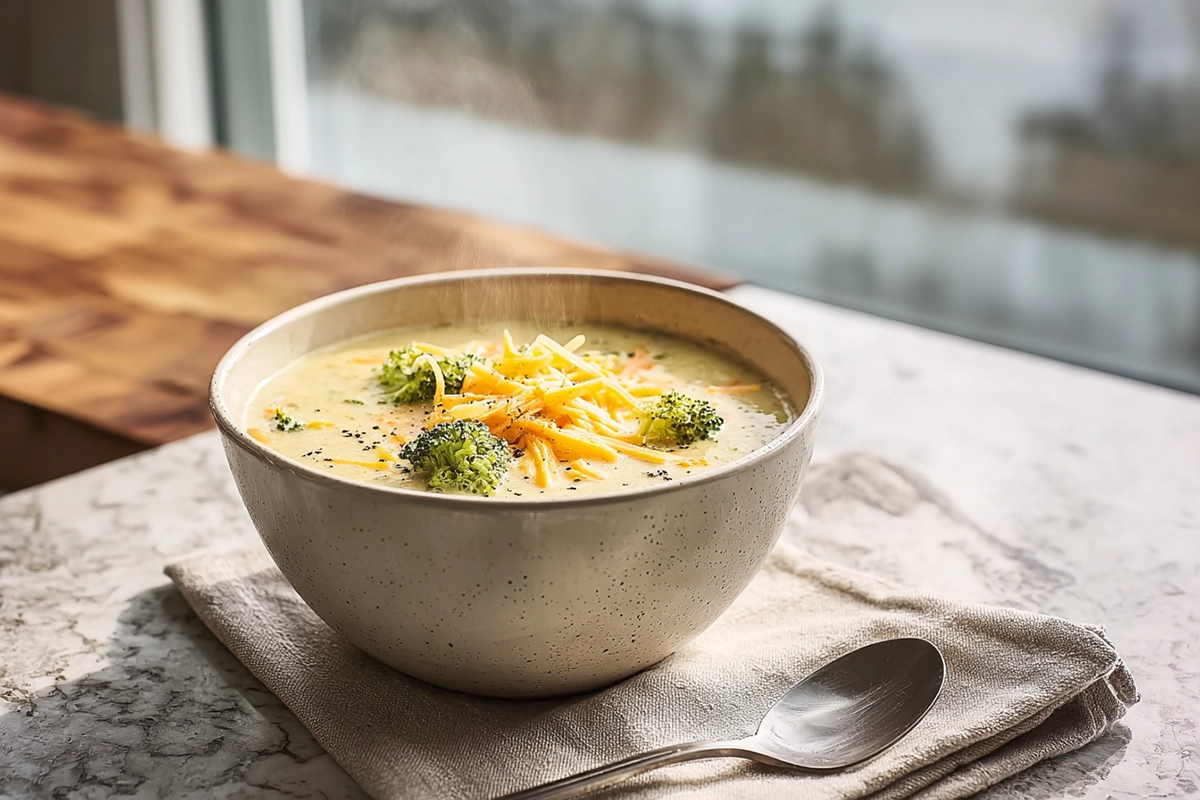
There’s a very specific moment when this soup tells you it’s going to be good. The butter has melted, the onion has gone soft and translucent, and the garlic hits the heat just long enough to smell toasted, not sharp. The pot is quiet, steady. Nothing rushed. This is the point where broccoli cheddar soup either turns into something comforting and dependable—or something thick, grainy, and forgettable.
What makes this version work isn’t extra cream or tricks pulled from a restaurant kitchen. It’s attention. The flour is cooked just until it loses its raw edge. The milk is added slowly so it blends instead of clumping. The broth, broccoli, and carrot simmer gently, softening without dulling their flavor. Every step builds toward a soup that feels settled instead of heavy.
The cheese comes last, and it matters. Cheddar has a habit of separating when it’s pushed too hard, too fast. Here, it melts gradually, folding into the soup instead of fighting it. A small spoon of Dijon doesn’t announce itself, but it keeps the whole bowl from tasting flat. You don’t notice it until it’s missing.
This is the kind of soup that works on a cold weeknight, served with crusty bread or a handful of croutons, eaten slowly enough to notice the texture. It’s vegetarian comfort food that doesn’t feel like a compromise.
What follows isn’t a rigid script—it’s the order and timing that make this soup reliable every time you make it.
Table of Contents
Why This Broccoli Cheddar Soup Uses Mustard (And Why You Shouldn’t Skip It)
This Broccoli Cheddar Soup leans on a quiet balance trick. Cheddar is rich and sharp, milk and butter are soft and round, and vegetables—especially broccoli—can fade into the background if nothing pulls them forward. Dijon mustard does that job without announcing itself. You don’t taste mustard in the finished soup; what you taste is a sharper, more complete cheese flavor that doesn’t feel heavy halfway through the bowl.
This matters even more in a vegetarian comfort soup, where there’s no meat broth to carry depth. The mustard acts like seasoning rather than flavoring, tightening everything up so the cheese tastes intentional instead of dull.
- Dijon mustard: A small amount sharpens the cheddar and prevents the soup from tasting flat. Yellow mustard is too acidic here and will push the balance off.
While we’re here, salt and pepper do more than “season.” Salt draws sweetness from the onion and carrot early on, and black pepper gives just enough bite to keep the dairy from tasting sleepy.
- Sea salt: Added early so it dissolves fully into the base.
- Freshly ground black pepper: Softer heat than pre-ground, which can taste dusty in creamy soups.
Broccoli Texture Is a Choice, Not an Accident
This soup isn’t meant to be puréed smooth. The goal is tender broccoli that still holds its shape, suspended in a creamy, cheese-forward base. That’s why chopped florets work better than finely minced broccoli—they soften without disappearing.
Carrot plays a supporting role here, not for color alone. Its natural sweetness offsets the sharpness of cheddar and keeps the soup from leaning bitter once the broccoli cooks through.
- Broccoli florets: Chopped, not pulverized, so the soup has texture instead of feeling starchy.
- Carrot: Adds sweetness and balance; skipping it makes the cheese taste harsher.
The dairy choices matter just as much. Whole milk gives body without tipping into heaviness. Unsweetened almond milk works if needed, but it will produce a slightly thinner soup and a milder finish—acceptable, just different.
- Whole milk or unsweetened almond milk: Whole milk delivers the classic creamy result; almond milk keeps it lighter but less rich.
Cheddar should be sharp enough to stand up to the vegetables. Mild cheddar melts easily but disappears into the background, turning this into a generic cheese soup instead of a true broccoli cheddar soup.
- Sharp cheddar cheese: Shredded fresh for smoother melting and stronger flavor.
- Unsalted butter: Gives control over seasoning; if using salted butter, ease up on the added salt later.
These ingredients aren’t complicated, but each one earns its place. The soup works because nothing is doing too much—and nothing is doing nothing.

The Make-or-Break Moment Happens Before the Broccoli Goes In
Everything about this broccoli cheddar soup is decided in the first few minutes at the stove. The butter should melt quietly, then begin to foam as it coats the bottom of the pot. When the chopped onion goes in, you’re listening for a soft sizzle—not a sharp crackle—and watching for the pieces to turn glossy and translucent rather than brown. The smell at this stage should be sweet and buttery, not toasted.
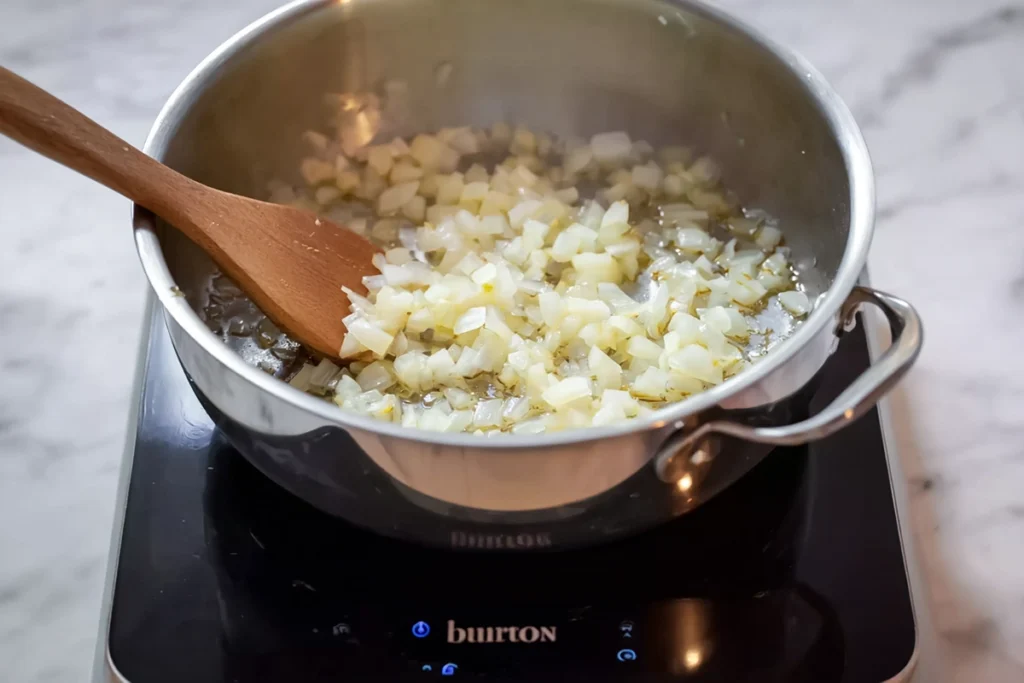
When the garlic hits the pot, it only needs a brief moment. As soon as you smell that warm, nutty garlic aroma, the flour goes in. Stir continuously until the mixture looks like wet sand and takes on a pale golden color. If it smells raw, it needs another minute; if it smells nutty and warm, you’re exactly where you want to be.
Milk is added slowly here, and you’ll feel the resistance change as the roux loosens. At first it thickens fast, then relaxes into a smooth, pourable base. This is the foundation that keeps a creamy broccoli cheddar soup from turning pasty later on.
Bringing the Vegetables to Tender, Not Tired
Once the broth, broccoli, carrot, and Dijon mustard are in the pot, the heat drops to a gentle simmer. You should see small bubbles lazily breaking the surface, not a rolling boil. Boiling is loud and aggressive; simmering is quiet and steady, and that’s what keeps the broccoli green instead of army dull.
As it cooks, the smell shifts from dairy-forward to softly vegetal, with the carrot adding a subtle sweetness. The broccoli is ready when a fork slides in easily but the florets still hold their shape. If they’re falling apart, they’ve gone too far.
This stage is about patience, not speed. Rushing it turns this vegetarian comfort soup muddy instead of clean.
Cheese Last, Heat Low: Where Broccoli Cheddar Soup Either Wins or Loses
Before adding the cheese, the heat should be low enough that the soup barely moves. If it’s bubbling, it’s too hot. Cheddar doesn’t like high heat—it tightens and separates instead of melting smoothly.
Add the shredded cheese a handful at a time, stirring gently after each addition. You’re looking for it to disappear into the soup, not clump or sink. The texture should feel silky on the spoon, coating the back without stretching or breaking.
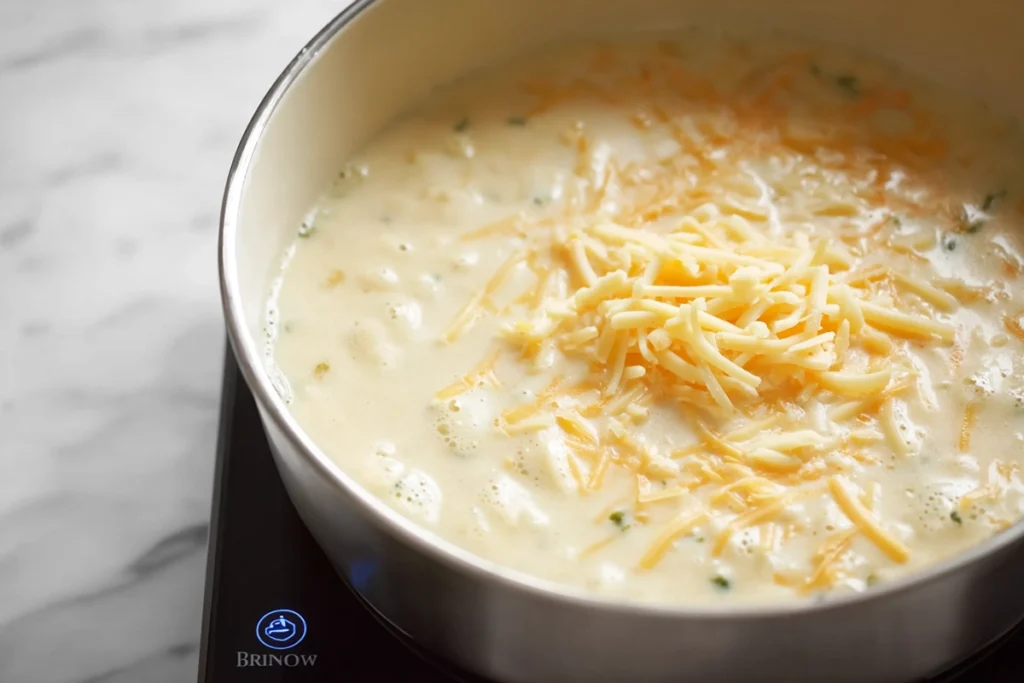
When it’s right, the soup smells rich and sharp, with no oily sheen on top. That’s the sign the cheese is fully integrated—and the moment to stop stirring and start serving.
Small Changes That Still Respect the Soup
This soup is balanced, so changes should be small and deliberate. Whole milk gives the most reliable texture, but unsweetened almond milk works if dairy needs to stay light—expect a slightly thinner body and a softer cheese flavor. If you go this route, keep the heat especially low when adding the cheddar, since almond milk separates more easily.
Sharp cheddar is doing most of the heavy lifting here. If you only have medium cheddar, the soup will still work, but it will taste quieter. Adding extra cheese won’t fix that; it just makes the texture heavier. A better adjustment is a touch more Dijon, which sharpens what’s already there without overpowering the broccoli.
If you want a smoother soup, you can blend a small portion—about a cup—after the vegetables are tender, then stir it back in. Fully blending the pot turns this into a cheese purée and dulls the vegetable flavor, so it’s not recommended.
How to Serve It So It Feels Like a Meal
Broccoli Cheddar Soup is rich enough to stand on its own, but it shines when paired with something crisp or sturdy. Thick-cut, crusty bread gives you something to drag through the bowl, soaking up the cheese without falling apart. Homemade croutons add contrast and keep each bite from feeling too soft.

If you’re serving this as part of a larger spread, keep the sides simple. A lightly dressed green salad cuts the richness better than anything heavy or sweet. For lunch, a small sandwich with sharp flavors—like mustard or pickles—balances the creamy soup without competing with it.
This is also a good make-ahead soup for weeknights. It reheats gently on low heat, stirred often, until just warm.
A Few Last Things Worth Remembering
Most problems with this soup come from heat that’s too high or rushing the cheese. If it ever looks oily or grainy, take it off the heat immediately and stir slowly—sometimes that’s enough to bring it back together.
Season at the end, not the beginning. Cheddar brings salt with it, and it’s easier to add than to fix.
Broccoli Cheddar Soup is at its best when it’s treated calmly. Steady heat, small adjustments, and a little patience turn simple ingredients into something you’ll want to make again the next time the kitchen feels quiet and cold.
Get inspired with more mouthwatering recipes! Follow me on Facebook and Pinterest for new cooking ideas every week.
FAQ
Why did my broccoli cheddar soup turn grainy?
Graininess usually means the soup got too hot when the cheese was added. Cheddar tightens and separates under high heat, so it’s important to lower the heat and add the cheese gradually. If it happens, taking the pot off the heat and stirring slowly can sometimes bring it back together.
Can I make broccoli cheddar soup ahead of time?
Yes, this soup can be made ahead, but it reheats best gently. Warm it over low heat, stirring often, and stop as soon as it’s hot. Boiling during reheating is the most common reason the texture changes.
Can I freeze broccoli cheddar soup?
Freezing isn’t ideal for this soup because the dairy and cheese tend to separate when thawed. If you do freeze it, expect the texture to be less smooth after reheating. This soup is best enjoyed fresh or within a few days from the refrigerator.
Can I use pre-shredded cheese instead of shredding my own?
Pre-shredded cheese will work, but it doesn’t melt as smoothly because it’s coated with anti-caking agents. For the creamiest broccoli cheddar soup, freshly shredded cheddar gives the best texture and flavor. If you use pre-shredded, add it extra slowly and keep the heat very low.
Is it normal for broccoli cheddar soup to thicken as it cools?
Yes, thickening as it cools is completely normal. The flour and cheese continue to set as the soup rests. When reheating, a small splash of milk or broth will loosen it back to the right consistency.
Print
Broccoli Cheddar Soup
- Total Time: 30 minutes
- Yield: 4 servings 1x
- Diet: Vegetarian
Description
Creamy, rich broccoli cheddar soup made with tender broccoli, sharp cheddar cheese, and a smooth, comforting base. A dependable vegetarian comfort soup that stays silky and never grainy.
Ingredients
- 4 tablespoons unsalted butter
- 1 medium yellow onion, chopped
- 1/2 teaspoon sea salt
- Freshly ground black pepper
- 3 garlic cloves, chopped
- 1/4 cup all-purpose flour
- 2 cups whole milk or unsweetened almond milk
- 2 cups vegetable broth
- 3 cups chopped broccoli florets
- 1 large carrot, julienned or finely chopped
- 1/2 teaspoon Dijon mustard
- 8 ounces sharp cheddar cheese, freshly shredded
- Homemade croutons, optional for serving
Instructions
- Melt the butter in a large pot over medium heat until foaming, then add the onion, salt, and black pepper and cook until the onion turns soft and translucent.
- Stir in the garlic and cook briefly until fragrant, then add the flour and cook, stirring, until lightly golden and smooth.
- Slowly whisk in the milk until the mixture loosens into a smooth base.
- Add the vegetable broth, broccoli, carrot, and Dijon mustard and bring to a gentle simmer.
- Cook until the broccoli is tender but still holds its shape.
- Lower the heat and add the shredded cheddar a handful at a time, stirring gently until fully melted and creamy.
- Season to taste and serve warm with croutons if desired.
Notes
- Keep the heat low when adding the cheese to prevent grainy texture.
- Freshly shredded cheddar melts more smoothly than pre-shredded cheese.
- The soup will thicken slightly as it cools and can be loosened with milk or broth when reheating.
- Prep Time: 10 minutes
- Cook Time: 20 minutes
- Category: Soup
- Method: Stovetop
- Cuisine: American
Nutrition
- Serving Size: 1 bowl
- Calories: 350
- Sugar: 5
- Sodium: 700
- Fat: 22
- Saturated Fat: 12
- Unsaturated Fat: 8
- Trans Fat: 0
- Carbohydrates: 18
- Fiber: 3
- Protein: 15
- Cholesterol: 55