Buffalo Chicken Egg Rolls: Shatter-Crisp Outside, Creamy Heat Inside

The problem with most buffalo chicken snacks is always the same: all heat, no control. Either the filling leaks out and burns in the oil, or the wrapper turns limp before the plate even hits the table. You want crunch you can hear, heat that doesn’t bully your taste buds, and a center that stays creamy instead of dry and stringy. Takeout rarely gets that balance right. These do.
This recipe fixes the usual mess by treating buffalo chicken like a filling that needs structure, not just flavor. Cream cheese isn’t here to be trendy—it’s the glue that keeps shredded chicken, sharp cheddar, ranch, and buffalo sauce locked together. The sauce itself is mellowed with butter and Worcestershire, so the heat builds instead of slapping you on the tongue. And the rolling technique matters more than the seasoning: off-center filling, properly sealed wrappers, and oil that’s hot enough to crisp without scorching. That’s how you get egg rolls that fry up golden and stay sealed.
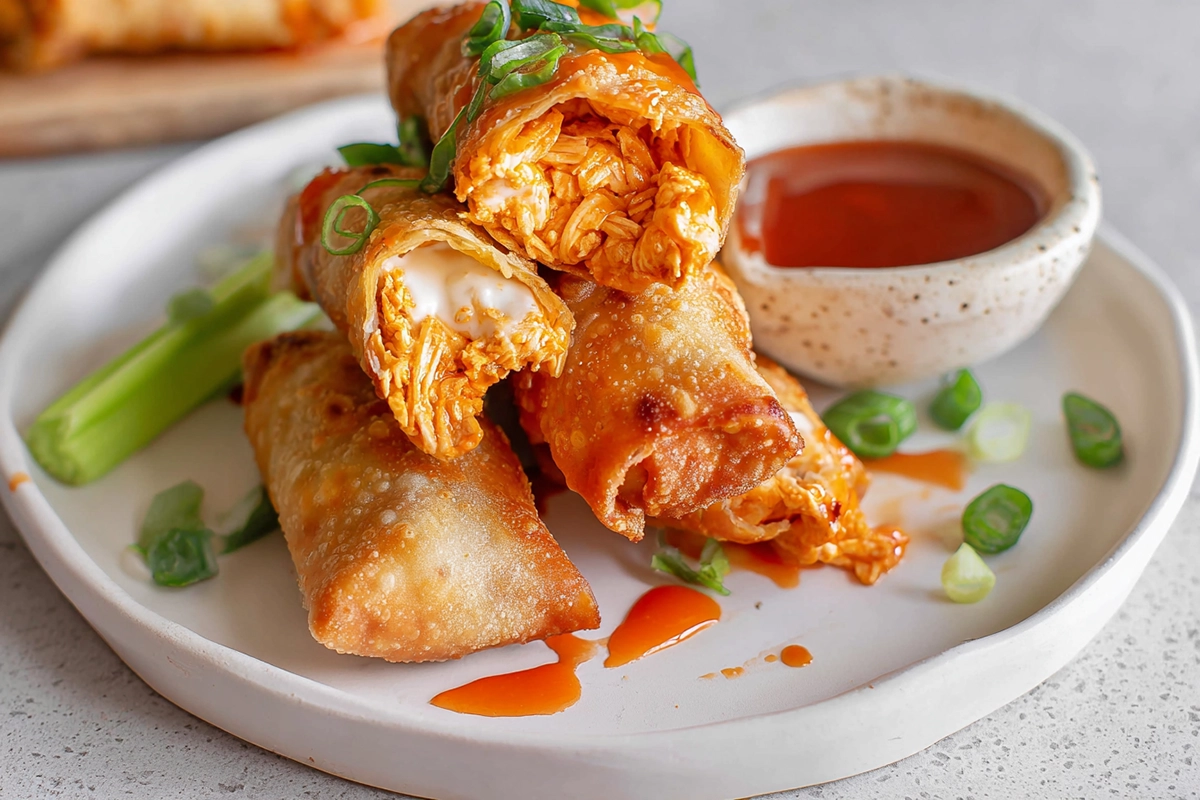
The payoff shows up fast. You hear the crackle when the wrapper hits the oil. You smell buttered hot sauce warming instead of burning. When you bite in, the shell shatters, then gives way to a creamy, tangy center that cools itself just enough to make you reach for another one—exactly why kids love them and adults don’t roll their eyes at the spice.
You don’t need fancy equipment or restaurant tricks. A bowl, a knife, a pan of oil, and a little restraint while frying. Get those right, and these buffalo chicken egg rolls stop being party food and start becoming the thing everyone asks you to make again.
Table of Contents
Why These Buffalo Chicken Egg Rolls Work (And Others Don’t)
Most buffalo chicken egg rolls fail because the filling behaves like a loose salad instead of a unified core. This version is built to stay put. Every ingredient has a job beyond flavor, and together they create a filling that melts, stretches, and stays sealed while frying. That balance is what keeps these buffalo chicken egg rolls crispy on the outside and creamy inside, instead of greasy or hollow.
Shredded cooked chicken is the backbone here. Rotisserie chicken works especially well because it’s already seasoned and stays moist after frying, but any fully cooked chicken breast is fine as long as it’s shredded, not chopped. Shreds tangle together, which helps the filling hold its shape instead of crumbling. Cream cheese is the quiet hero—it softens the heat, binds the mixture, and prevents the cheddar from breaking and leaking into the oil. Ranch dressing isn’t just for dipping; mixed into the filling, it cools the buffalo sauce and adds fat, which keeps the chicken from drying out.
Sharp cheddar matters more than people think. Mild cheese disappears under buffalo sauce, while sharp cheddar punches through with flavor and melts smoothly without turning oily. Green onions bring freshness and a little crunch, which keeps the filling from tasting flat or heavy. Garlic or onion powder is optional, but when used lightly, it rounds out the savory notes without turning the filling aggressive.
- Cooked shredded chicken: Shredded holds together better than diced and stays moist during frying.
- Cream cheese: Acts as a binder and heat buffer; low-fat versions won’t melt the same way.
- Sharp cheddar cheese: Strong flavor that survives frying; mild cheese gets lost.
- Ranch dressing: Softens spice and adds fat for a smoother interior.
- Buffalo sauce: Provides heat and tang; add gradually to control spice.
- Green onions: Fresh contrast that keeps the filling lively.
- Egg roll wrappers: Thicker than spring roll wrappers, so they crisp without tearing.

Buffalo Sauce Control: Heat That Builds, Not Burns
Buffalo sauce can easily overpower everything else if it’s treated like a topping instead of a component. The key is dilution and timing. Butter isn’t just there for richness—it tempers the acidity of the hot sauce and carries the spice evenly through the filling. Worcestershire adds depth without sweetness, and a restrained hand with cayenne keeps the heat clean instead of harsh.
What matters most is when the sauce meets the chicken. Tossing warm sauce with shredded chicken allows it to coat evenly and soak in just enough without breaking the fibers down. That’s why these buffalo chicken egg rolls taste balanced instead of sharp. If you’re using a very salty hot sauce, ease up on added salt later. And if your buffalo sauce is already butter-heavy, you can scale back slightly on the cream cheese without losing structure.
The result is a filling that delivers buffalo flavor in layers: tang first, warmth second, and richness all the way through—exactly what keeps these egg rolls kid-friendly without boring the adults.
Rolling Without Blowouts: The Only Part That Can Ruin Everything
Building the Filling So It Behaves
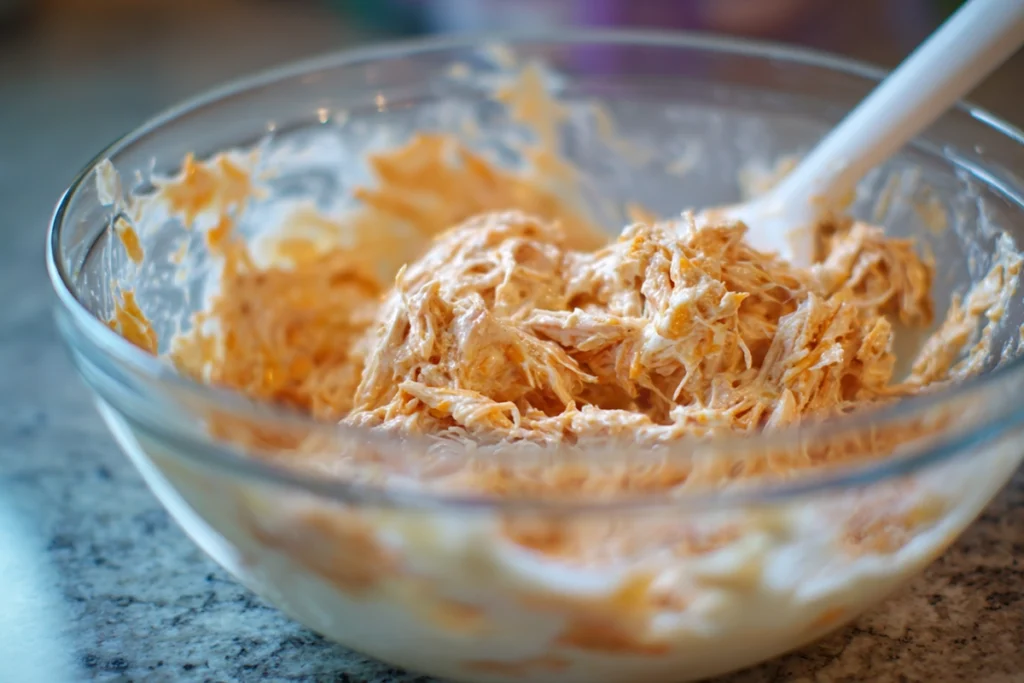
Before you even touch a wrapper, pay attention to the filling. It should look cohesive, not loose—like a thick, scoopable spread rather than a salad. When you stir it, the chicken strands should cling to each other, glossy from the cream cheese and buffalo sauce. If it smells sharp or vinegary instead of buttery and tangy, you’ve gone too heavy on hot sauce.
Wrapping With Intention, Not Speed
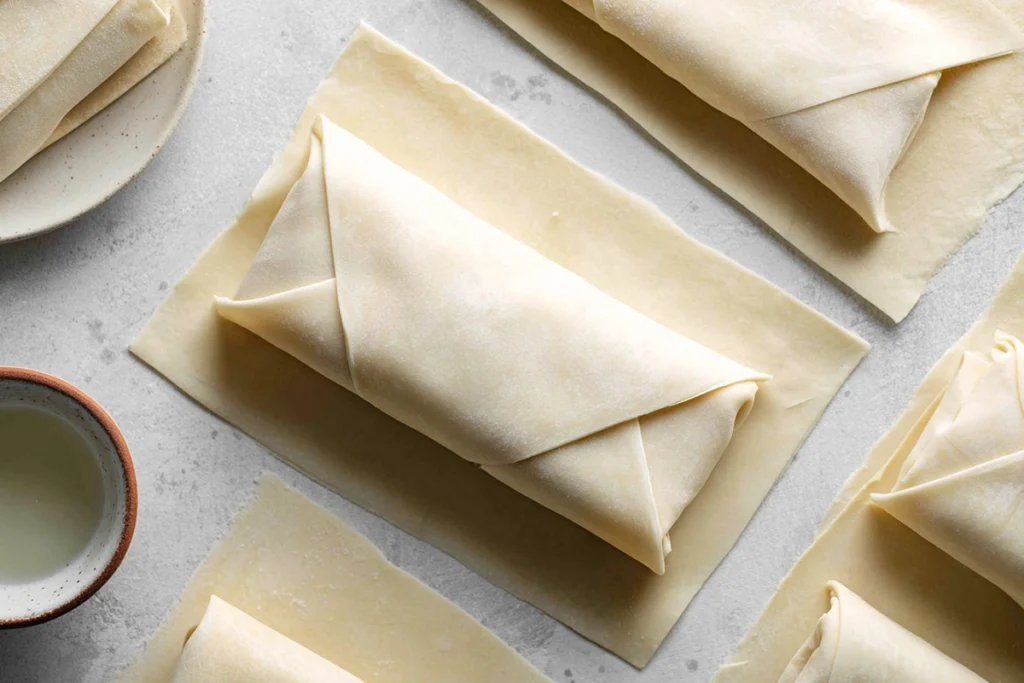
Lay the egg roll wrapper flat and keep the filling slightly off-center. When you fold, you should feel gentle resistance—not tearing, not slack—almost like folding a thick envelope. Brushing the edges with water is about tackiness, not soaking; the wrapper should feel sticky, not wet. If it slides instead of grips, dab off excess moisture and try again.
The Seal Test
Once rolled, lightly press the seam with your fingers. It should hold without springing open, like dough that’s been properly pinched. If the roll feels overstuffed or bulging at the center, set it aside and re-roll—this is where leaks are born.
Frying for Golden, Not Greasy
Reading the Oil
Heat your oil to medium or medium-low and trust your senses over the dial. When an egg roll hits the pan, you want an immediate, confident sizzle—not a violent crackle and not a weak hiss. The sound should be steady and even, telling you the wrapper is frying through instead of blistering on the surface.
Watching the Color Change
As the buffalo chicken egg rolls fry, the wrappers will shift from pale and matte to blistered and lightly golden. This takes patience. If they brown too fast, the inside wrapper stays chewy and undercooked. You’re looking for a deep, even gold that creeps slowly across the surface.
Smell and Touch Before You Pull
The smell will change first—from raw wrapper to something nutty and toasted. When you lift one with tongs, it should feel firm and structured, not floppy. Set them on paper towels and listen closely; a quiet crackle as they rest means excess oil is draining and the crust is setting.
Master these two moments—the roll and the fry—and buffalo chicken egg rolls stop being risky party food and start coming out crisp, sealed, and confident every single time.
Swaps That Actually Work (and One That Doesn’t)
If you’re staring at leftover rotisserie chicken in the fridge, this is exactly where it belongs. Shred it cold so it stays in strands, then let the cream cheese warm it back up as you mix. Blue cheese dressing can replace ranch if that’s your house rule, but use less—blue cheese is louder and can take over fast. Mozzarella will melt, but it won’t bring the bite that sharp cheddar does, so expect a softer, flatter flavor if you go that route.
Here’s the line you don’t want to cross: baking instead of frying. It sounds responsible, but it robs the wrappers of that blistered crunch and dries the filling before the exterior sets. Air-frying can work in a pinch, but only if you brush the rolls generously with oil and accept a slightly less shattering crust. These are buffalo chicken egg rolls—they’re meant to crack when you bite them.
When and How to Serve These Without a Mess
These shine when they’re hot and freshly drained, when the wrappers are still audibly crisp. Serve them as finger food with yogurt ranch or extra buffalo sauce on the side, plus celery and carrots not as garnish, but as relief between bites. The crunch and freshness keep the richness from piling up.
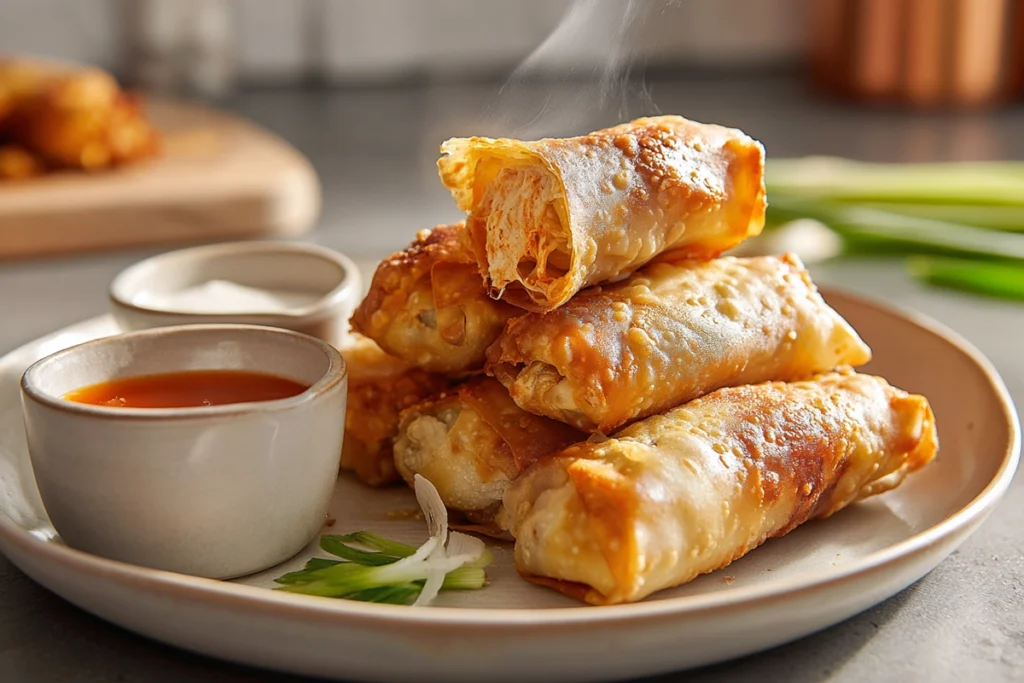
They’re perfect on a game-day spread where everything else leans heavy, or as a fun dinner with a simple green salad dressed sharply to cut the fat. If you’re feeding kids, slice a few egg rolls in half so the steam escapes and the filling cools faster—less mess, fewer burned tongues.
Last Tip Before You Start
Don’t rush the frying oil and don’t overcrowd the pan. Buffalo chicken egg rolls need space to fry evenly, or they steam each other into softness. Fry in calm batches, listen for that steady sizzle, and let the paper towels do their job before serving.
These are the kind of snacks that disappear while you’re still plating. Once you hear that first crunch and see the creamy center hold together instead of spilling out, you’ll understand why this recipe earns a permanent spot in the rotation.
Get inspired with more mouthwatering recipes! Follow me on Facebook and Pinterest for new cooking ideas every week.
Common Questions About Buffalo Chicken Egg Rolls
Can I bake or air-fry these and still get crunch?
Baking is not a good substitute here because the wrappers dry out before they blister, leaving you with a tough shell and a warm-but-soft interior. Air-frying works better than baking, but only if you brush the buffalo chicken egg rolls generously with oil on all sides and cook them in a single layer. Even then, expect a crisp exterior, not the deep, shattering crunch you get from frying. If crunch is the goal, frying is the method that actually delivers.
What’s the best chicken to use—rotisserie or home-cooked?
Rotisserie chicken is ideal because it’s already seasoned and stays moist when reheated in hot oil. Shred it cold so the strands stay intact, then let the cream cheese and buffalo sauce bring everything together. If you’re using home-cooked chicken breast, make sure it’s not overcooked to begin with; dry chicken will stay dry no matter how much sauce you add.
How spicy are these for kids, really?
The heat level is moderate because the buffalo sauce is balanced with butter, ranch, and cream cheese. The spice comes through as warmth, not burn. If you’re cooking for sensitive eaters, reduce the buffalo sauce slightly and skip the extra cayenne in the sauce. The flavor will still read as “buffalo,” just gentler.
Can I make them ahead and fry later?
You can assemble the egg rolls a few hours ahead, but stop before frying. Store them covered in the refrigerator so the wrappers don’t dry out. Fry them straight from cold; don’t let them sit at room temperature or the seals can loosen. Fried buffalo chicken egg rolls do not hold well, so cook them close to serving time for the best texture.
Why did my egg rolls split open while frying?
Splitting almost always comes from overfilling or poor sealing. The filling expands slightly as it heats, and if the wrapper is stretched too tight or not sealed with enough water, it will burst. Keep the filling modest, place it off-center, and make sure the seam feels tacky and secure before the roll goes into the oil.
Print
Buffalo Chicken Egg Rolls
- Total Time: 45 minutes
- Yield: 15 egg rolls 1x
Description
Crispy buffalo chicken egg rolls with a creamy, tangy filling made from shredded chicken, cream cheese, sharp cheddar, ranch, and buttery buffalo sauce. Kid-friendly heat with serious crunch.
Ingredients
- 1 pound cooked chicken breast or rotisserie chicken, shredded
- 1/2 cup buffalo sauce
- 1/4 cup ranch dressing
- Green onions, thinly sliced
- 8 oz cream cheese, softened
- 8 oz sharp cheddar cheese, shredded
- Pinch of garlic powder or onion powder (optional)
- 16 oz egg roll wrappers
- Vegetable oil, for frying
- Salt and pepper, to taste
- Optional for serving: yogurt ranch, extra buffalo sauce, celery, carrots, parsley
Instructions
- Prepare the buffalo sauce by gently heating hot sauce, butter, Worcestershire, cayenne, salt, and pepper until melted and combined.
- In a large bowl, mix shredded chicken with buffalo sauce, ranch, green onions, cream cheese, cheddar, and seasonings until cohesive.
- Place filling slightly off-center on each egg roll wrapper, brush edges with water, and roll tightly to seal.
- Heat oil to medium or medium-low and fry egg rolls in batches until golden and crisp on all sides.
- Drain briefly on paper towels and serve hot with dipping sauces and vegetables.
Notes
- Do not overfill the wrappers or they may split while frying.
- Maintain moderate oil temperature for even browning.
- These egg rolls are best served fresh and hot.
- Prep Time: 15 minutes
- Cook Time: 30 minutes
- Category: Appetizer
- Method: Frying
- Cuisine: American
Nutrition
- Serving Size: 1 egg roll
- Calories: 109
- Sugar: 1
- Sodium: 769
- Fat: 11
- Saturated Fat: 7
- Unsaturated Fat: 3.5
- Trans Fat: 0.2
- Carbohydrates: 1
- Fiber: 0.05
- Protein: 1
- Cholesterol: 32