Caramel Apple Cheesecake Bars: Cold-Creamy, Crumbly, and Built for Fall

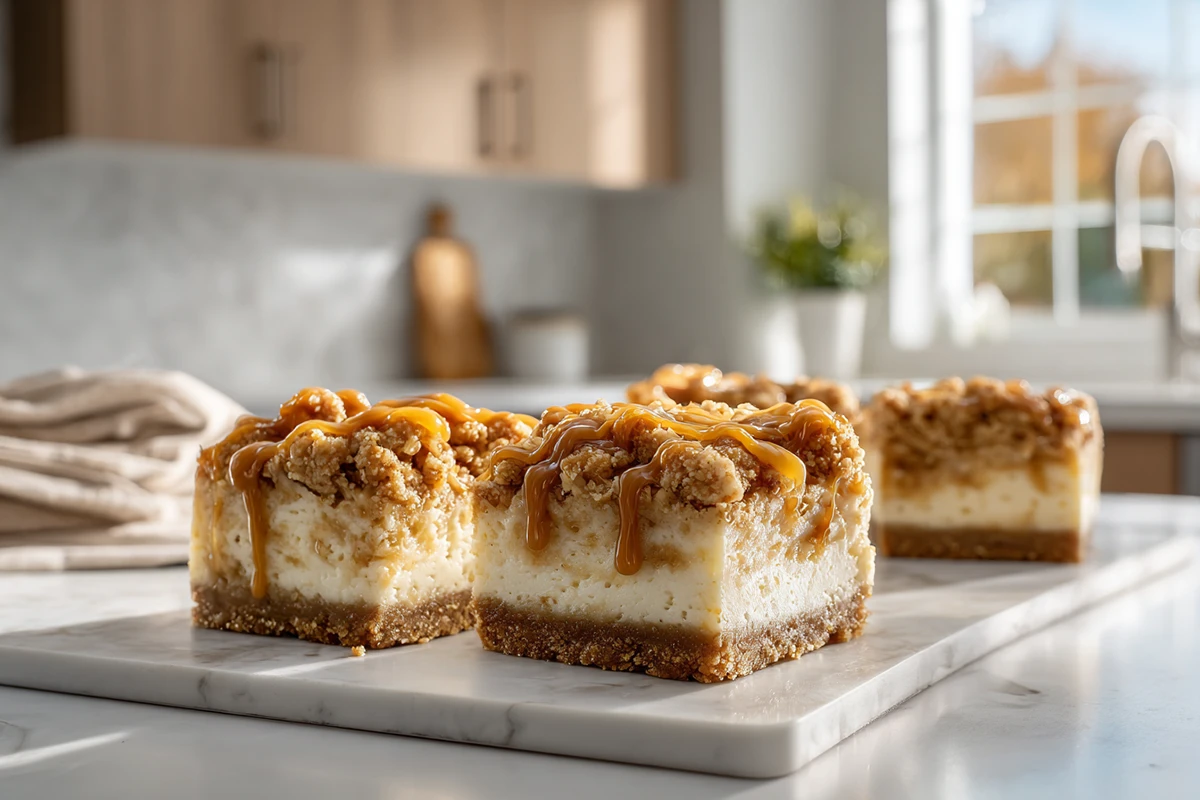
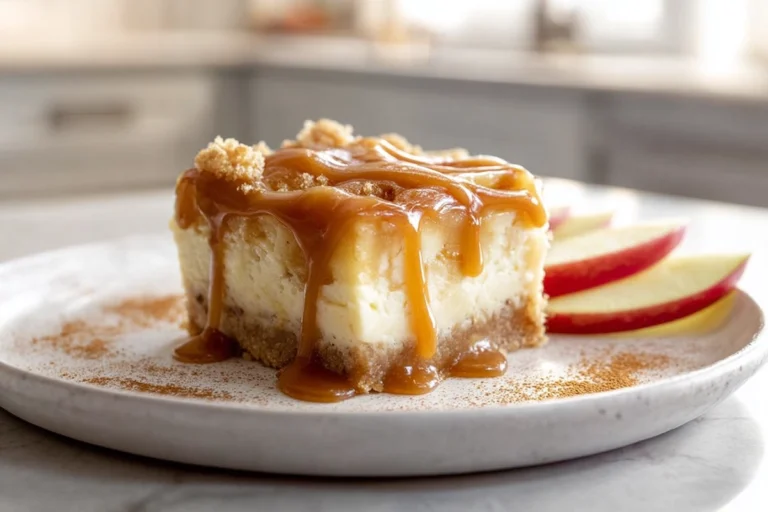
Some desserts don’t need explaining. One look at a pan of these bars—shortbread pressed firm at the bottom, a thick cheesecake layer holding its shape, apples softened just enough, streusel browned and crisp on top—and you already know how the bite is going to land. Cool and creamy first. Then warm spice. Then butter and sugar snapping back at the end. These are the kinds of textures that make people stop mid-conversation.
What makes caramel apple cheesecake bars work isn’t novelty. It’s restraint. The crust is sturdy, not sweet for sweetness’ sake. The cheesecake layer is thick and clean, not whipped or airy. The apples are finely chopped so they melt into the filling instead of sliding off when sliced. Even the streusel knows its place—crumbly, oat-studded, and dry enough to stay distinct after baking. Nothing here is decorative. Every layer has a job.
This is also the kind of dessert that forgives a busy schedule. It bakes in a single pan, slices clean once chilled, and actually improves after a night in the refrigerator. It’s the bar you bring when you want something familiar but solid, something that feels like fall without leaning on gimmicks. Coffee on the counter. Plates stacked nearby. No rush to serve it warm, because this one shines cold.
Before touching a bowl or turning on the mixer, it helps to understand why the order matters—why the crust goes in hot, why the cheesecake goes on warm, and why patience at the end is part of the recipe. That’s where this dessert earns its reliability.
Table of Contents
Why This Crust Isn’t Just a Base (And Why Shortbread Wins)
The crust in these caramel apple cheesecake bars isn’t filler—it’s structural. A shortbread-style base gives you something firm enough to support a thick cheesecake layer without turning hard or dry once chilled. All-purpose flour is the right choice here; higher-protein flours create chew where you want tenderness. Brown sugar does more than sweeten—it brings moisture and a deeper, almost caramel note that keeps the crust from tasting flat after refrigeration. Softened butter matters too. It blends evenly into the flour so the crust bakes up cohesive instead of sandy or greasy.
- All-purpose flour: Balanced structure without toughness.
- Brown sugar: Moisture and depth that white sugar can’t provide.
- Butter (softened): Creates a compact, sliceable crust rather than a crumbly one.
The Cheesecake Layer That Holds Its Shape
This cheesecake layer is intentionally thick and restrained. Full-fat cream cheese is non-negotiable; reduced-fat versions release water and soften the set. The sugar level is modest so the filling stays clean and tangy, especially against sweet apples and streusel. Eggs are added one at a time for a smooth emulsion, not air. This isn’t a whipped cheesecake—it’s meant to chill firm and cut clean.
- Cream cheese (full-fat): Ensures a dense, stable set.
- Granulated sugar: Sweetens without overpowering the apples.
- Eggs: Bind the filling so it slices, not slumps.
- Vanilla extract: Rounds out dairy richness without stealing focus.
Substitution note: If your cream cheese is even slightly cold, it won’t blend smoothly. Softening fully prevents lumps that never bake out.
Apples, Spices, and the Thin Line Between Cozy and Watery
Granny Smith apples are chosen for function, not tradition. Their firmness and acidity keep the apple layer distinct after baking instead of dissolving into sauce. Finely chopping the apples helps them cook evenly and sit flat on the cheesecake layer. Cinnamon and nutmeg are used sparingly—enough to read as fall, not enough to mask the fruit or fight the cheesecake.
- Granny Smith apples: Hold texture and balance sweetness.
- Cinnamon: Warmth without bitterness.
- Nutmeg: Depth in small doses; too much overwhelms fast.
- Sugar: Draws out just enough moisture to soften the apples.
Streusel That Stays Crumbly, Not Doughy
This streusel is built for contrast. Brown sugar brings chew, oats add texture, and flour keeps everything from melting into the apples below. Butter is worked in by hand so it stays uneven—those irregular pieces are what bake into crisp pockets instead of a solid lid. A food processor breaks the oats down too far, which is why this topping keeps its shape.
- Brown sugar: Sweetness with structure.
- Quick oats: Texture insurance.
- All-purpose flour: Prevents greasy collapse.
- Butter (softened): Creates crumbs, not paste.
Together, these layers explain why this dessert works as a fall dessert fusion—rich cheesecake, spiced apples, and a crisp finish that holds up from the first slice to the last.

The One Bake-Time Decision That Makes or Breaks Caramel Apple Cheesecake Bars
The oven should already be fully hot before anything goes in. A properly heated oven gives the crust a fast start, which is what keeps it from turning soft later. When the shortbread base comes out, the edges should look lightly golden and feel dry to the touch, not pale or greasy. That warmth matters—pouring the cheesecake filling over a warm crust helps the layers bond instead of separating after chilling.
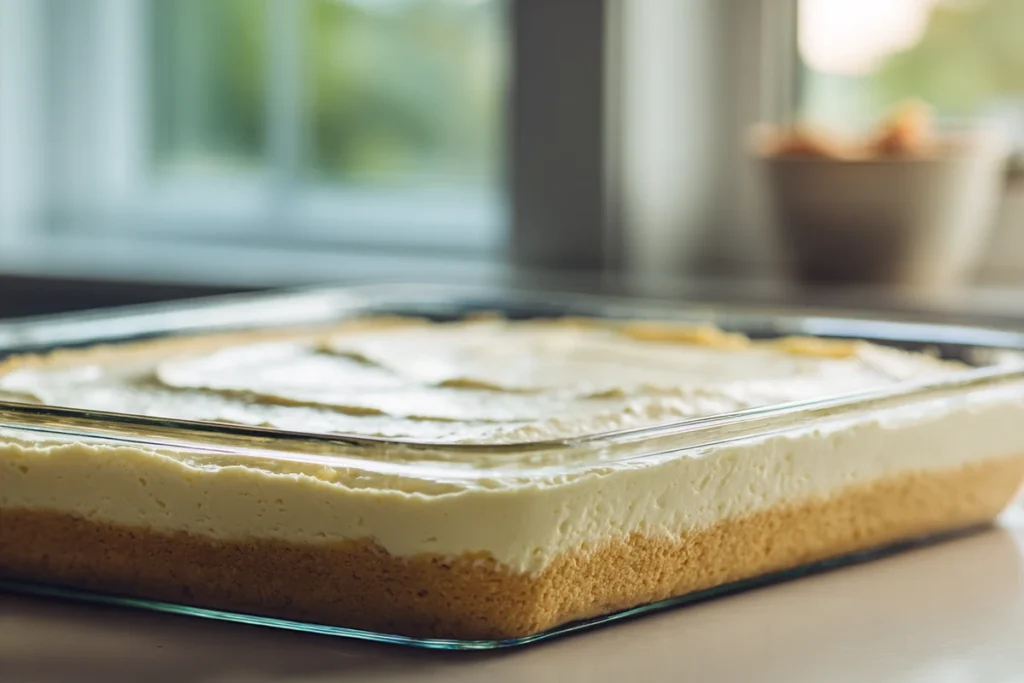
Once the pan goes back in, resist the urge to chase color. Cheesecake doesn’t announce itself loudly. Near the end of baking, the center should look set but still faintly jiggly, like gelatin rather than liquid. If the top starts to puff or crack, it’s already gone too far.
Building the Layers Without Losing Their Identit
The cheesecake filling should spread easily, settling into an even layer without tapping the pan aggressively. If you hear air popping loudly against the counter, that’s too much force and too much trapped air. The surface should look smooth and glossy, not foamy.
When the apples go on, scatter them gently instead of piling. You want coverage without pressure. As they bake, the apples soften and release steam, and you’ll smell cinnamon warming rather than burning. That aroma is your signal that the spice balance is right.
Streusel Placement and Oven Awareness
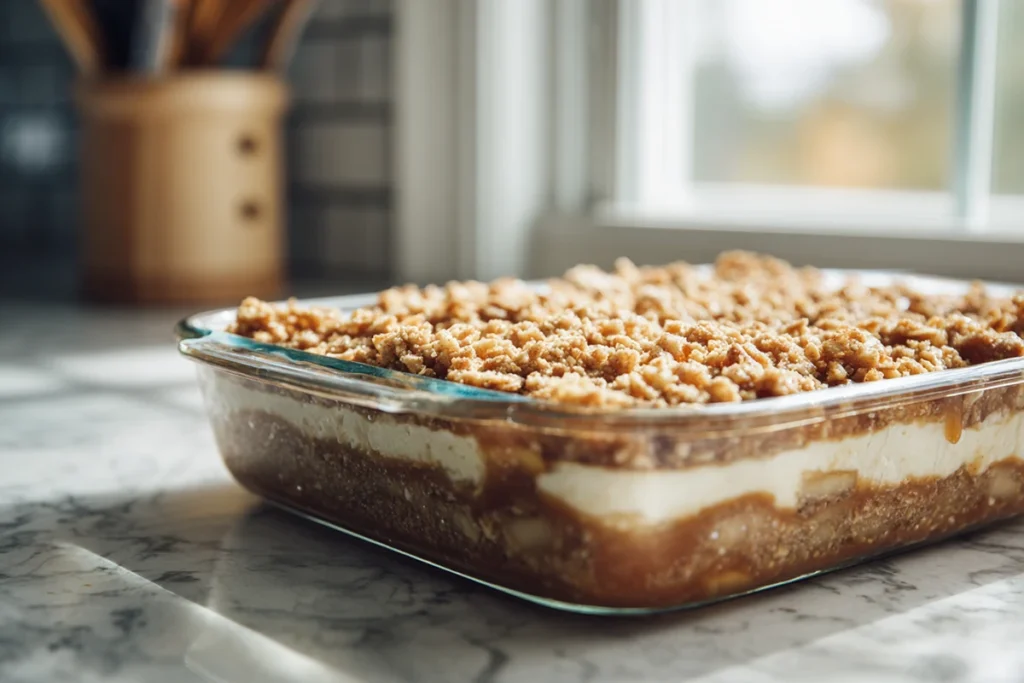
The streusel should fall in loose, uneven clumps. If it looks sandy or paste-like in the bowl, it was overmixed. As it bakes, listen for the quiet crackle that happens as butter melts and sugar caramelizes—this is what gives these apple cheesecake bars their contrast.
Halfway through baking, the top should look dry and lightly bronzed, not wet or sinking. The oats will darken before the cheesecake sets; that’s normal. What you’re watching for is structure, not color alone.
Cooling Isn’t Optional—It’s Part of the Method
When the pan comes out, the bars will still be soft underneath the surface. Letting them cool at room temperature allows the cheesecake to finish setting gently. You’ll notice the edges pulling slightly from the pan as they cool—that’s a good sign.
Only after that rest should the pan move to the refrigerator. Once fully chilled, the texture becomes dense and clean, the layers lock together, and the dessert turns into what it’s meant to be: a true fall dessert fusion that slices neatly and holds its shape.
Make-It-Your-Own Without Breaking the Bars
These bars are fairly forgiving, but a few adjustments work better than others. If you prefer a deeper caramel note, you can swirl a small amount of caramel topping into the cheesecake layer before adding the apples—but keep it light. Too much caramel softens the set and blurs the layers. A mix of Granny Smith and Honeycrisp apples can work if you like a slightly sweeter bite, but avoid softer apples like Red Delicious; they collapse and turn watery during baking.
If you only have salted butter on hand, it’s usable across the crust and streusel as-is—just don’t add extra salt elsewhere. What doesn’t work well is reducing the cream cheese or swapping in low-fat versions. That change thins the filling and turns what should be clean slices into a soft spoon dessert, which defeats the point of bars.
When and How These Bars Fit on the Tabl
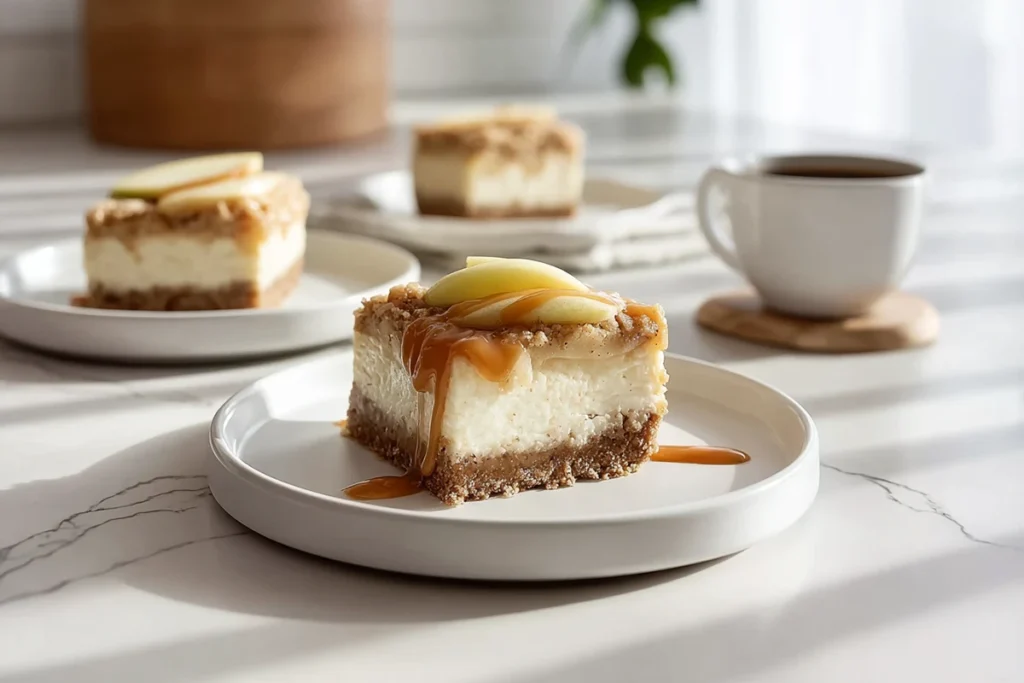
These bars are at their best served cold, straight from the refrigerator. That chill firms the cheesecake and sharpens the contrast between layers. For casual gatherings, slice them small; they’re rich, and a modest square goes a long way. If you’re serving them after a heavy meal, pairing them with plain coffee or unsweetened black tea keeps the sweetness balanced.
For fall baking spreads or holiday trays, caramel apple cheesecake bars hold their own next to lighter cookies or spiced cakes. They also travel well once chilled, which makes them a dependable choice for potlucks, bake sales, or make-ahead hosting.
A Few Last Things Worth Knowing
Don’t rush the cooling phase. Cutting too early is the fastest way to undo all the structure you built in the oven. If you’re drizzling caramel, do it after the bars are fully chilled so it sits on top instead of soaking in. And when storing, keep them covered—cheesecake absorbs refrigerator odors faster than most desserts.
These are the kinds of bars that reward patience and repeat baking. Once you make them once, the rhythm sticks. The layers behave, the slices come clean, and the pan empties faster than you expect. That’s usually the sign a recipe belongs in regular rotation.
Get inspired with more mouthwatering recipes! Follow me on Facebook and Pinterest for new cooking ideas every week.
FAQ
Can I make caramel apple cheesecake bars ahead of time?
Yes, and they’re actually better that way. These bars need time to chill so the cheesecake layer fully sets and the slices come out clean. Making them a day ahead gives the flavors time to settle and improves the overall texture.
Why did my cheesecake layer crack or puff while baking?
That usually means the bars baked a little too long or at too high a temperature. Cheesecake should set gently, with the center still slightly jiggly when it comes out. Small cracks won’t affect the taste, but they’re a sign the oven heat was a bit aggressive.
Can I freeze caramel apple cheesecake bars?
Yes, these bars freeze very well. Chill them completely first, then wrap tightly to prevent freezer odors. Thaw overnight in the refrigerator so the cheesecake stays smooth instead of weeping moisture.
Do these bars need to be served cold?
For the best texture, yes. When cold, the cheesecake layer firms up and the layers stay distinct when sliced. Serving them warm makes the filling soft and harder to cut cleanly.
Can I use a different type of apple?
Granny Smith apples work best because they hold their shape and balance the sweetness. Slightly firmer apples like Honeycrisp can work, but softer varieties tend to break down and release too much liquid during baking.
Print
Caramel Apple Cheesecake Bars
- Total Time: 50 minutes
- Yield: 24 bars 1x
Description
Rich caramel apple cheesecake bars with a buttery shortbread crust, thick creamy cheesecake layer, spiced apples, and a crisp oat streusel topping. Designed to chill firm, slice clean, and hold up for make-ahead baking.
Ingredients
- 2 cups all-purpose flour
- 1/2 cup brown sugar
- 1 cup butter, softened
- 3 packages cream cheese, softened
- 3/4 cup granulated sugar
- 3 large eggs
- 1 1/2 teaspoons vanilla extract
- 3 Granny Smith apples, peeled and finely chopped
- 2 tablespoons sugar
- 1/2 teaspoon ground cinnamon
- 1/4 teaspoon ground nutmeg
- 1 cup brown sugar
- 1 cup all-purpose flour
- 1/2 cup quick-cooking oats
- 1/2 cup butter, softened
- 1/2 cup caramel topping
Instructions
- Preheat the oven to 350°F and prepare a 9×13-inch baking dish with foil or parchment.
- Mix flour and brown sugar, cut in softened butter, and press firmly into the pan to form the crust.
- Bake the crust until lightly golden, then remove from the oven while still warm.
- Beat cream cheese with sugar until smooth, then add eggs one at a time and vanilla.
- Spread the cheesecake mixture evenly over the warm crust.
- Toss chopped apples with sugar, cinnamon, and nutmeg, then scatter evenly over the cheesecake.
- Combine streusel ingredients by hand until crumbly and sprinkle over the apples.
- Bake until the filling is set and the top is lightly browned.
- Cool completely at room temperature, then refrigerate until fully chilled.
- Drizzle with caramel topping, slice into bars, and serve cold.
Notes
- Use full-fat cream cheese for best texture.
- Allow bars to chill completely before slicing for clean edges.
- Store covered in the refrigerator up to 5 days or freeze up to 4 months.
- Prep Time: 10 minutes
- Cook Time: 40 minutes
- Category: Dessert
- Method: Baking
- Cuisine: American
Nutrition
- Serving Size: 1 bar
- Calories: 320
- Sugar: 24
- Sodium: 210
- Fat: 20
- Saturated Fat: 12
- Unsaturated Fat: 7
- Trans Fat: 0
- Carbohydrates: 34
- Fiber: 2
- Protein: 4
- Cholesterol: 75