
Cheesesteak Tortellini: Creamy, Beefy, and Built to Cling
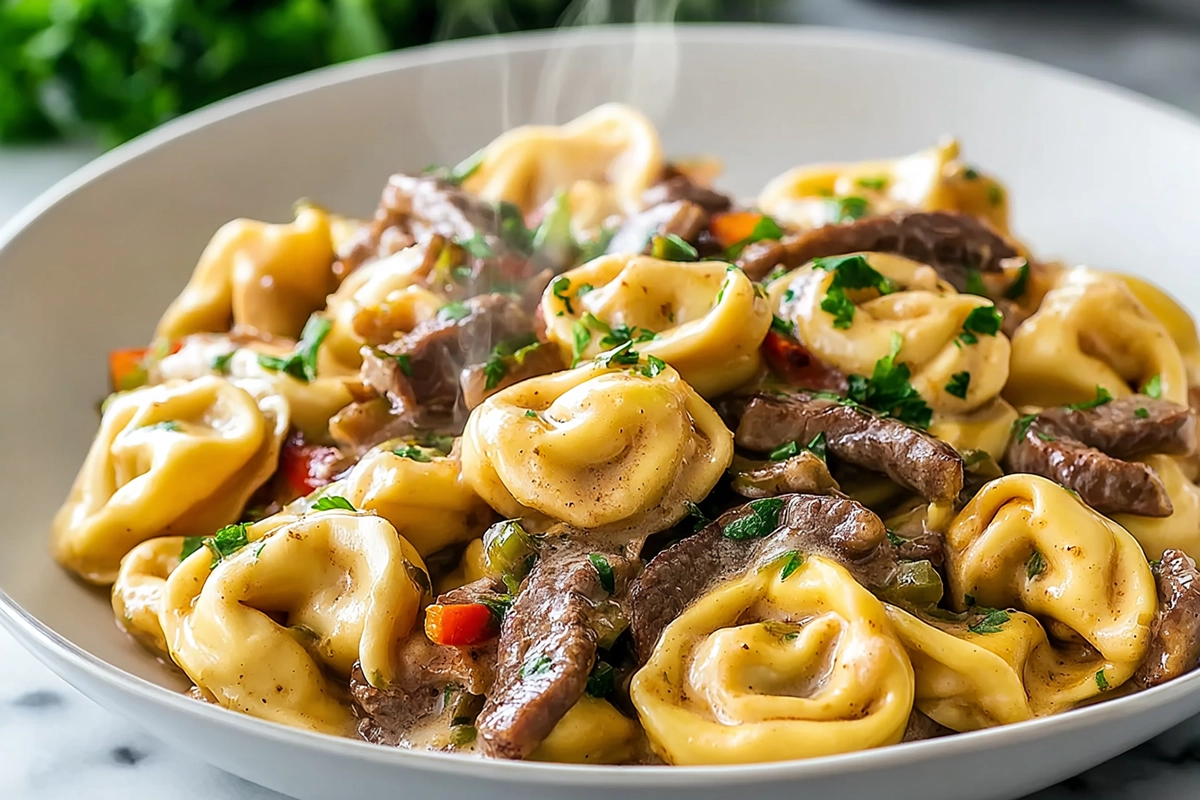
Dry pasta dinners are a special kind of disappointment. You twirl, you lift, and the sauce slides right off—leaving bare noodles and a puddle you chase around the plate with bread. Cheesesteak cravings don’t forgive that kind of failure. They want browned beef, sweet onion depth, and cheese that pulls and coats instead of breaking or disappearing. This recipe exists to fix all of it in one pan.
The trick is restraint where most recipes push motion. The beef goes into a screaming-hot skillet and you don’t touch it. Not yet. That quiet, undisturbed moment is where the flavor forms—deep browning on the underside, onions softening in the rendered fat, salt and pepper doing their work without interference. From there, chicken stock and a spoon of Dijon scrape up every savory bit, milk smooths the edges, and two cheeses do two different jobs: provolone brings the flavor; American brings the melt. Together, they make a sauce that stays glossy and forgiving.
Then comes the smart swap. Tortellini—already filled, already tender—locks the sauce inside and out. No hoagie roll required, though you’ll want one nearby to swipe the pan clean. A short rest off the heat finishes the job, letting everything tighten just enough to cling.
You don’t need a parade of tools or a long simmer. You need a hot pan, decent timing, and the confidence to leave the beef alone when it matters. The payoff is immediate—and there won’t be a drop left behind.
Table of Contents
Why Cheesesteak Tortellini Works Better Than a Hoagie Roll
A traditional cheesesteak lives and dies by bread. Too soft and it collapses; too crusty and it shreds your gums before the second bite. Cheesesteak tortellini sidesteps that entire problem by letting pasta do the heavy lifting. Tortellini brings two advantages a roll never can: built-in structure and surface starch. That starch is critical—it gives the cheese sauce something to cling to, so it coats instead of sliding off and pooling at the bottom of the bowl.
There’s also a pacing advantage. Pasta absorbs flavor gradually, which means the beefy, onion-rich sauce doesn’t have to be aggressively thickened. It settles into the folds of the tortellini while staying loose enough to feel luxurious. This is why the dish tastes rich without feeling heavy or greasy. You’re getting the essence of a Philly cheesesteak—savory beef, mellow sweetness from onions, and molten cheese—without relying on bread to mask flaws. If the sauce is right, the pasta proves it.
The Cheese Situation: Provolone, American, and Why Both Matter
Cheese is the backbone here, but no single cheese can do everything this recipe asks of it. Provolone brings the sharp, slightly tangy flavor people expect from a cheesesteak, but on its own it can tighten and separate when melted into a sauce. American or Cooper cheese fills that gap. It melts smoothly, emulsifies easily with milk and stock, and keeps the sauce glossy instead of grainy.
The beef matters just as much. Thinly shaved steak cooks fast and browns deeply without drying out, which keeps the final dish meaty rather than chewy. Onions aren’t a background player—they soften and sweeten in the rendered beef fat, rounding out the sharpness of the cheese. Dijon mustard doesn’t announce itself, but it quietly sharpens the sauce and helps stabilize the emulsion. Chicken stock adds savory depth without weighing things down the way cream would.
- Thinly shaved beef steak: Fast browning, tender texture; thicker cuts won’t melt into the sauce the same way.
- Provolone cheese: Provides classic cheesesteak flavor; use sliced, not aged, for smoother melting.
- American or Cooper cheese: Insurance against broken sauce; if you skip it, expect a looser, less stable finish.
- Cheese tortellini: Acts as both pasta and filling, trapping sauce inside each bite for maximum payoff.

Browning the Beef Without Touching It (Yes, Really)
The First Contact
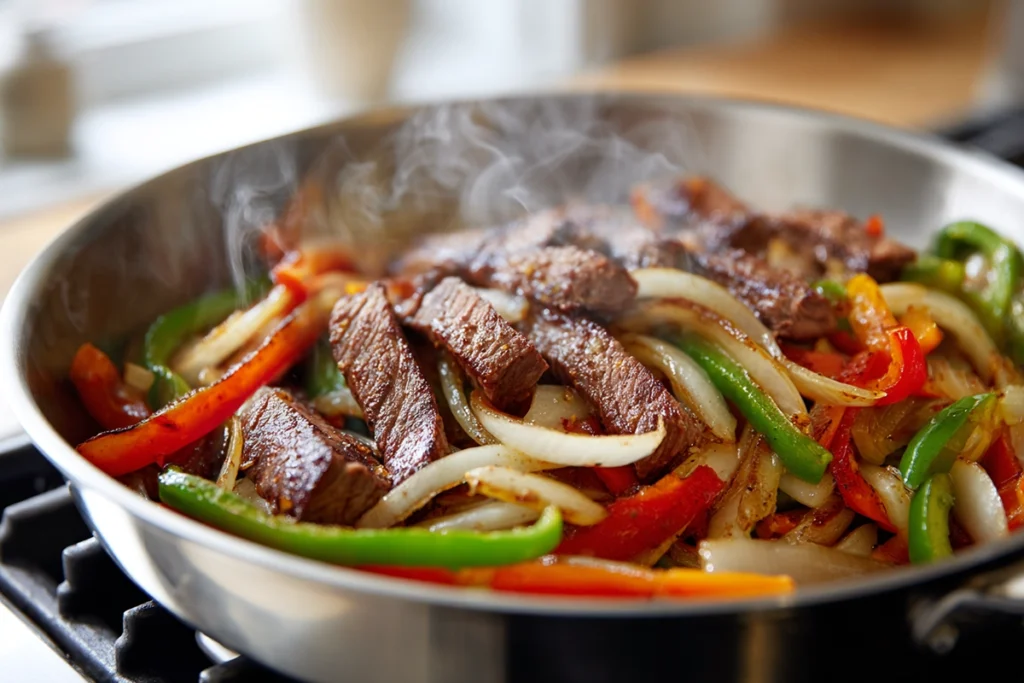
Set the pan over medium-high heat and give it time—real time—to get hot. When the oil hits, it should shimmer and move fast, not sit there looking sleepy. Scatter the shaved beef and onions across the surface and listen for an aggressive sizzle; that sound tells you the pan is hot enough to build flavor instead of steaming the meat.
The Wait
Now walk your hands back. The beef should smell toasty and savory after a few minutes, not sulfurous or boiled. Peek underneath with a slotted spoon—what you want is deep brown patches, not pale gray. This is the moment that gives cheesesteak tortellini its backbone, so resist stirring until the underside has clearly browned.
Onions, Garlic, and Timing That Keeps Things Savory (Not Bitter)
Building the Base
Once the beef is browned, stirring becomes your friend. Break the meat into bite-size pieces and let the onions soften until they look translucent and glossy, soaking up rendered fat. The smell should shift from raw onion bite to something sweeter and rounder.
The Garlic Window
Garlic goes in last and fast. Stir constantly and trust your nose—when it smells nutty and fragrant, almost toasted, it’s ready. If it smells sharp or acrid, you’ve gone too far. This stage only takes seconds, but it determines whether the final sauce tastes rich or harsh.
When the Tortellini Goes In (And Why Al Dente Isn’t Optional)
Creating the Sauce
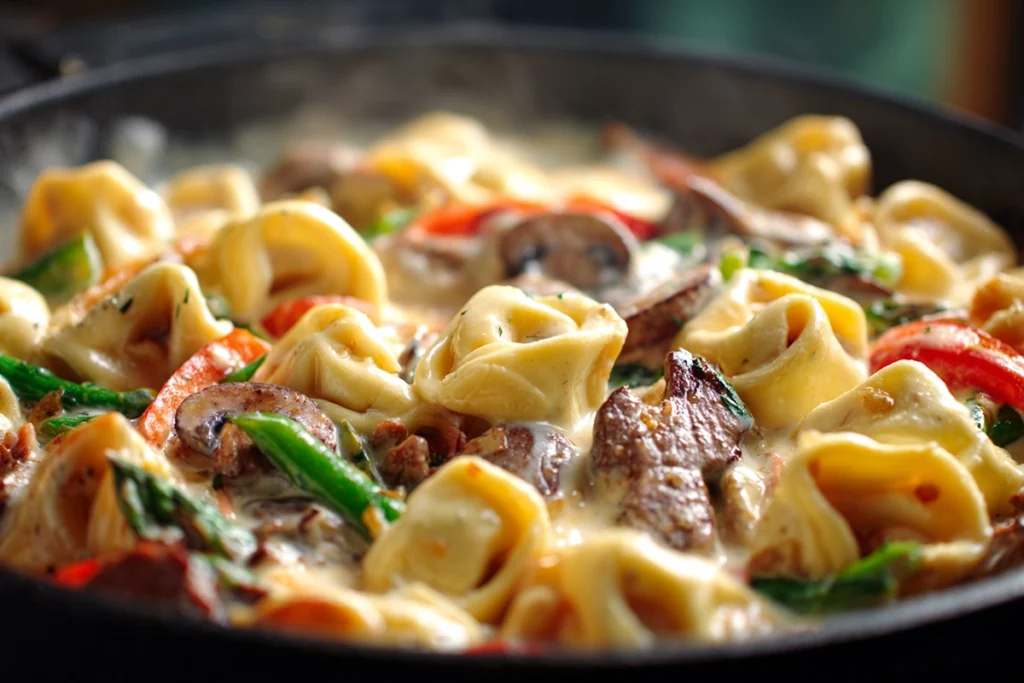
Pour in the chicken stock and Dijon, scraping the bottom of the pan until you feel the stuck bits release. That gritty resistance turning smooth is flavor being rescued. When the milk and cheeses melt in, the sauce should look glossy and cohesive, not oily or grainy.
Finishing Gently
Fold in the cooked tortellini and notice how the sauce thickens slightly as it clings to the pasta’s surface. Kill the heat, cover the pan, and let it rest. When you uncover it, the cheesesteak tortellini should feel cohesive when stirred—saucy but structured, with cheese stretching softly instead of breaking.
Fixes, Swaps, and Mistakes to Avoid
If you’re working with what’s already in the fridge, a few smart swaps keep this dish solid. Leftover rotisserie chicken can stand in for the beef—but shred it cold and add it only when the sauce is finished so it warms gently without tightening. If shaved steak isn’t available, sirloin works best; slice it thin against the grain and freeze it briefly first so it behaves like shaved beef in the pan.
Cheese substitutions are where things get risky. You can use all provolone, but expect a looser, less stable sauce—still tasty, just less glossy. What doesn’t work is skipping the American-style cheese entirely and replacing it with mozzarella or cheddar. They melt, but they don’t emulsify, and you’ll end up with oil separation instead of sauce. Also worth saying plainly: baking this instead of finishing it on the stovetop ruins the texture. The sauce will break, the pasta will swell, and the beef dries out. Don’t do it.
Serving This Like You Meant It
Cheesesteak tortellini is rich by design, so serve it with intention. A crisp, bitter salad—think romaine with a sharp vinaigrette—cuts through the cheese without competing. Roasted broccoli or broccolini works the same way, especially if you keep the seasoning simple and let the vegetable bitterness do its job.
Bread isn’t mandatory, but it’s useful. A soft hoagie roll or a torn chunk of Italian bread earns its place here, strictly for swiping the pan clean. Finish each bowl with fresh parsley, not for color alone, but because that green, grassy hit keeps the last bites from feeling heavy.
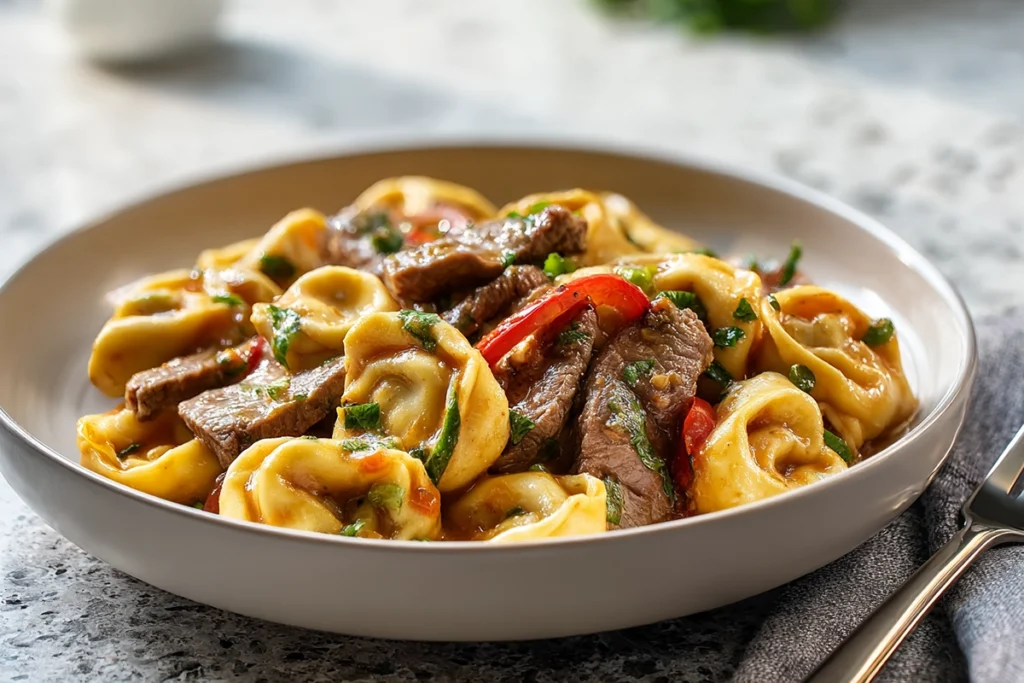
This is the kind of dinner that feels indulgent without being fussy. Cheesesteak tortellini doesn’t ask for special equipment or perfect timing—just a hot pan, decent cheese, and the confidence to stop stirring when it matters. Make it once, pay attention to what you hear and smell, and it’ll cook itself the next time.
Get inspired with more mouthwatering recipes! Follow me on Facebook and Pinterest for new cooking ideas every week.
Common Questions About Cheesesteak Tortellini
Can I make cheesesteak tortellini ahead of time?
I wouldn’t recommend fully cooking it in advance because the sauce tightens as it cools and can separate when reheated. What does work is prepping components: cook and drain the tortellini, shred the cheese, and slice the beef ahead of time. When you’re ready to eat, the actual cooking comes together fast and the sauce stays smooth and glossy.
What’s the best steak to use if I can’t find shaved beef?
Sirloin is the best backup. Trim excess fat, slice it thin against the grain, then freeze it for about an hour before cutting. That brief chill firms the meat so you can get ultra-thin slices that brown quickly instead of turning chewy. Avoid tougher cuts like flank or round—they don’t soften enough in this quick cook.
Can I use all provolone instead of American cheese?
You can, but expect a looser and slightly less stable sauce. American (or Cooper) cheese contains emulsifiers that keep the milk and fat from separating. If you skip it entirely, stir the provolone in gradually over low heat and stop cooking as soon as it melts to minimize graininess.
How do I keep the cheese sauce from breaking?
Heat control is everything. Once the milk and cheese go in, keep the burner at medium or lower and stir steadily. If the sauce looks oily, pull the pan off the heat and stir—it will usually come back together as it cools slightly. High heat is the fastest way to ruin a cheese sauce.
Is cheesesteak tortellini freezer-friendly?
Freezing isn’t a good idea here. Dairy-based sauces separate when thawed, and the tortellini absorbs moisture and turns mushy. This dish is at its best fresh or reheated gently from the fridge within a day, using low heat and a splash of milk to loosen the sauce.
Print
Cheesesteak Tortellini
- Total Time: 40 minutes
- Yield: 4 servings 1x
- Diet: N/A
Description
A rich, hearty cheesesteak tortellini that combines browned shaved beef, sweet onions, and a creamy provolone cheese sauce that clings to every bite of pasta.
Ingredients
- 1 tablespoon neutral oil
- 1 lb thinly shaved beef steak
- 1 onion, diced
- 2 cloves garlic, minced
- 1 teaspoon kosher salt
- 1/2 teaspoon black pepper
- 1 cup chicken stock
- 1 tablespoon Dijon mustard
- 1/2 cup milk
- 8 ounces provolone cheese, torn
- 4 ounces American or Cooper cheese, torn
- 1 pound cheese tortellini, cooked al dente
- Fresh parsley
Instructions
- Heat a skillet over medium-high heat and add oil
- Add shaved beef and onions and cook undisturbed until browned
- Stir and cook until beef is no longer pink
- Add garlic and cook briefly until fragrant
- Deglaze with chicken stock and Dijon mustard
- Stir in milk and cheeses until melted and smooth
- Fold in cooked tortellini
- Remove from heat, cover briefly, then stir and serve with parsley
Notes
- Use shaved beef or thinly sliced sirloin
- Do not stir beef early to allow proper browning
- Keep heat moderate when melting cheese to prevent sauce breaking
- Prep Time: 15 minutes
- Cook Time: 25 minutes
- Category: Dinner
- Method: Skillet
- Cuisine: American
Nutrition
- Serving Size: 1 bowl
- Calories: 720
- Sugar: 6 g
- Sodium: 980 mg
- Fat: 42 g
- Saturated Fat: 21 g
- Unsaturated Fat: 18 g
- Trans Fat: 0 g
- Carbohydrates: 45 g
- Fiber: 4 g
- Protein: 38 g
- Cholesterol: 135 mg
What Are Our Readers Saying?
There are no reviews yet. Be the first one to write one.