Chicken Cobbler: Creamy Pot Pie Comfort Without the Crust Stress

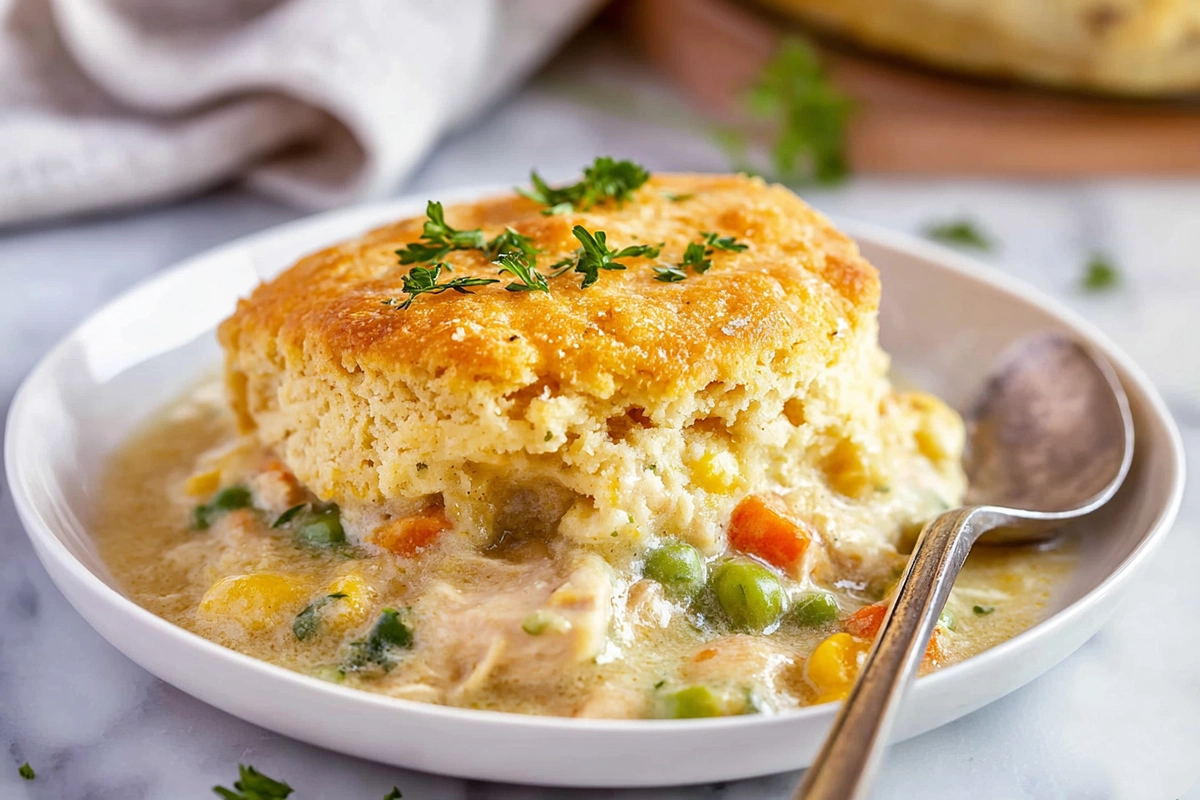
The oven does most of the work on this one. Butter melts into the bottom of the pan, chicken warms through, frozen vegetables release just enough steam, and a biscuit layer rises into something soft in the middle and deeply golden around the edges. What comes out looks humble, but the first scoop tells the truth: creamy, savory, and sturdy enough to feed a table without falling apart.
This Chicken Cobbler sits right in that sweet spot between a casserole and a pot pie. You get the same cozy payoff—tender chicken, vegetables suspended in a rich sauce—but without rolling dough, sealing edges, or worrying about a soggy bottom. Everything goes into the dish in layers, and those layers matter. There’s a reason you don’t stir. There’s a reason the vegetables stay frozen. There’s a reason the biscuit batter goes in when it looks a little too loose. This is simple food, but it’s not careless food.
What I like most about this recipe is how dependable it is. It uses rotisserie chicken because it already knows how to behave in the oven. It leans on a biscuit mix that’s designed to rise without babysitting. The cream of chicken soup and stock work together to build a sauce that thickens as it bakes, not before. Every part has a job, and nothing is there by accident.
This is the kind of dish you make when you want dinner to show up the way you planned—warm, filling, and ready to be spooned out after a short rest on the counter.
Table of Contents
A Biscuit Mix Doing a Job It Wasn’t Designed For
This Chicken Cobbler works because the biscuit layer behaves less like bread and more like a soft lid that bakes itself from the bottom up. That’s why a packaged biscuit mix makes sense here. It already contains fat, leavening, and salt in proportions that tolerate steam and moisture without turning dense. When it hits the hot pan and warm filling, it sets around the edges while staying tender underneath—something scratch dough often struggles to do in this format.
The milk matters just as much as the mix. It needs to be loose enough to pour and spread without encouragement, because gravity—not stirring—is what places it where it needs to be. A thicker batter bakes up dry on top and undercooked beneath. This is one of those moments where trusting the texture, not your instinct, pays off.
- Cheddar Bay Biscuit Mix: Chosen for its seasoning and reliable rise; skipping the seasoning packet flattens the whole dish.
- Milk: Creates a pourable batter that settles evenly; lower-fat milk works, but very thick dairy throws off the bake.
What Actually Goes in the Dish (And What You Can’t Mess With)
Every layer in this casserole has a job, and changing the wrong one breaks the chain. Butter goes in first, not for richness alone, but to protect the bottom of the dish and keep the biscuit layer from welding itself to the pan. As it melts in the oven, it also jump-starts browning before anything else is added.
Rotisserie chicken is doing quiet but important work here. It’s already seasoned, already cooked, and far more forgiving than raw chicken when baked under a thick topping. Frozen vegetables stay frozen on purpose—they release moisture slowly, helping regulate the sauce instead of flooding it all at once.
The sauce itself isn’t built on flour or guesswork. Cream of chicken soup brings structure, while chicken stock thins it just enough to seep downward and hydrate the biscuit layer from below. That balance is what gives this easy chicken casserole its creamy consistency without turning soupy.
- Butter: Creates a protective base and encourages browning; salted is fine, but don’t add extra salt later.
- Rotisserie Chicken: Holds its texture through baking better than raw or leftover roast chicken.
- Frozen Mixed Vegetables: Added straight from the freezer to control moisture and timing.
- Cream of Chicken Soup: Provides body and seasoning; low-sodium works if your stock is well seasoned.
- Chicken Stock: Loosens the sauce so it spreads and bakes evenly instead of sitting heavy.
This is comfort food cooking, but it’s precise comfort—each choice is there to make the final scoop creamy, cohesive, and dependable every single time.

The “Do Not Stir” Rule (And Why It’s the Whole Point)
This Chicken Cobbler only works if the layers are allowed to stay exactly where they land. Once the butter melts in the hot dish, it should shimmer and smell faintly nutty, not browned. When the chicken hits that butter, you’ll hear a soft sizzle—not loud frying, just enough sound to tell you the pan is doing its job.
The frozen vegetables go on next, straight from the bag. They should look frosty and stiff, not thawed or wet. That cold layer slows things down just enough so the biscuit batter can settle instead of sinking.
When you pour the biscuit mixture over the top, spread it gently until it covers most of the surface. It will look thin and a little uneven. That’s correct. The soup-and-stock mixture goes last, poured slowly so it blankets the batter without disturbing it. At no point should you stir. Stirring turns this into a heavy bake instead of the creamy, layered easy chicken casserole it’s meant to be.

Reading the Oven: When Chicken Cobbler Is Done (and When It’s Lying)
As the cobbler bakes, the kitchen starts to smell like toasted biscuits and warm chicken stock, with a buttery richness underneath. About halfway through, the edges should be visibly bubbling, not boiling hard but moving steadily. The top will rise unevenly, forming golden peaks and softer valleys.
By the end of baking, the surface should be deeply golden brown, especially around the corners. Give the pan a gentle shake. The center should wobble just slightly, like set custard, while the edges stay firm. If the whole dish ripples, it needs more time. If it feels stiff and dry, it’s gone too far.

Once out of the oven, let it stand. The bubbling sound will quiet, the sauce will thicken, and the biscuit layer will finish setting underneath. That short rest is what turns a loose bake into a scoopable, pot-pie-style comfort dish that actually holds together on the plate.
Fixes and Smart Swaps That Keep the Cobbler Intact
This recipe is forgiving, but only in specific ways. The safest variation is working with what you already have without disturbing the structure. If your rotisserie chicken is heavily seasoned or lemon-forward, balance it by using a lower-sodium chicken stock so the sauce doesn’t tip salty. Leftover roasted chicken works too, but shred it cold and keep the pieces chunky so they don’t disappear into the filling.
Vegetable swaps are fine as long as they behave like frozen mixed vegetables. Frozen peas, carrots, or corn can replace the blend one-for-one. Avoid fresh vegetables unless they’re blanched first; raw carrots or broccoli release water too slowly and leave the center loose. This is one place where “fresh is better” backfires.
If you don’t have Cheddar Bay biscuit mix, another seasoned biscuit mix will work, but skip plain baking mix unless you’re willing to accept a flatter, blander top. Do not try to replace the biscuit layer with pie dough or crescent rolls. They block steam instead of absorbing it, and the dish turns greasy underneath.
How This Chicken Cobbler Is Best Served
This Chicken Cobbler is rich and filling, so it pairs best with something crisp or acidic. A simple green salad with a sharp vinaigrette cuts through the creaminess and keeps the plate balanced. Steamed green beans with a squeeze of lemon work for the same reason, especially on a weeknight.
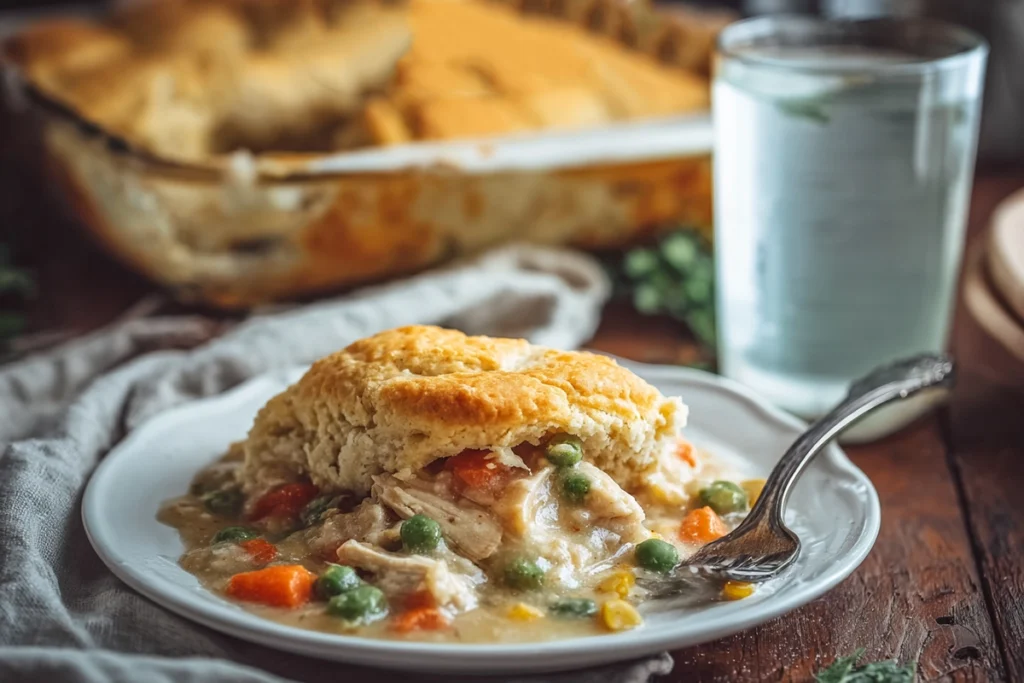
For a more comforting spread, serve it with sliced tomatoes and a little black pepper or a quick cucumber salad. The cool crunch resets your palate between bites. If you’re feeding a crowd, this easy chicken casserole holds well on the table for a good 20 minutes without losing structure, making it practical for family-style serving.
A Few Final Things Worth Remembering
This dish rewards restraint. Don’t stir. Don’t rush the bake. Don’t skip the short rest at the end, even when the top looks ready and the kitchen smells like butter and biscuits. That pause is what turns a bubbling pan into something that scoops cleanly and lands on the plate the way you expect.
Chicken Cobbler is the kind of recipe you keep not because it’s clever, but because it’s reliable. It shows up warm, feeds people without drama, and tastes like the familiar comfort of a pot pie without the extra work. Make it once, pay attention, and it becomes one of those dinners you reach for when you want the house to feel settled again.
Get inspired with more mouthwatering recipes! Follow me on Facebook and Pinterest for new cooking ideas every week.
FAQ
Why is my Chicken Cobbler still a little jiggly in the center?
A slight jiggle in the very center is normal when it first comes out of the oven. The sauce continues to thicken as it rests, and the biscuit layer finishes setting underneath. If the whole pan ripples when shaken, it needs a few more minutes of baking.
Can I make Chicken Cobbler ahead of time?
Chicken Cobbler is best baked fresh, but you can assemble the layers a few hours ahead and refrigerate the dish. Let it sit at room temperature for about 20 minutes before baking so the butter and batter aren’t ice cold. Baking straight from the fridge can throw off the timing and texture.
Why can’t I stir the layers together?
Stirring breaks the structure that makes this dish work. The biscuit batter needs to sit between the filling and the sauce so it can steam and bake properly. Mixing everything turns the cobbler dense and gummy instead of creamy and layered.
Can I use fresh vegetables instead of frozen?
Fresh vegetables usually don’t work well unless they’re blanched first. Raw vegetables release moisture too slowly and can leave the center undercooked. Frozen vegetables release liquid at the right pace for this casserole-style bake.
How do I store and reheat leftovers?
Store leftover Chicken Cobbler covered in the refrigerator for up to three days. Reheat in the oven or toaster oven so the biscuit top stays tender instead of soggy. The microwave works in a pinch, but the texture will be softer.
Print
Chicken Cobbler
- Total Time: 55 minutes
- Yield: 8 servings 1x
- Diet: N/A
Description
A creamy, biscuit-topped chicken cobbler that delivers classic pot pie comfort without the stress of rolling crust. Built in layers and baked until golden and scoopable, this is dependable, family-style comfort food.
Ingredients
- 1/2 cup butter
- 4 cups rotisserie chicken, shredded
- 1 (15-ounce) bag frozen mixed vegetables
- 1 (11.36-ounce) package Cheddar Bay biscuit mix (including seasoning packet)
- 2 cups milk
- 1 (10.5-ounce) can cream of chicken soup
- 2 cups chicken stock
- 2 tablespoons fresh parsley (optional)
Instructions
- Preheat the oven to 375°F and place the butter in a 9×13-inch baking dish. Set the dish in the oven until the butter is fully melted and shimmering.
- Remove the dish and spread the shredded chicken evenly over the melted butter, followed by the frozen vegetables straight from the freezer.
- In a bowl, whisk together the biscuit mix, seasoning packet, and milk until smooth, then gently pour it over the chicken and vegetables without stirring.
- Whisk the cream of chicken soup and chicken stock until smooth and pour evenly over the biscuit layer, again without stirring.
- Bake uncovered until the top is deeply golden and the center is only slightly jiggly, about 45 minutes.
- Remove from the oven, sprinkle with parsley if using, and let rest for 10 minutes before serving.
Notes
- Do not stir the layers at any stage or the texture will become dense.
- Let the cobbler rest before serving so the sauce can thicken and set properly.
- For best texture, reheat leftovers in the oven rather than the microwave.
- Prep Time: 10 minutes
- Cook Time: 45 minutes
- Category: Dinner
- Method: Baking
- Cuisine: American
Nutrition
- Serving Size: 1 serving
- Calories: 555
- Sugar: 6
- Sodium: 1200
- Fat: 32
- Saturated Fat: 16
- Unsaturated Fat: 14
- Trans Fat: 0
- Carbohydrates: 50
- Fiber: 3
- Protein: 17
- Cholesterol: 95