Chicken Fajita Rice Casserole: Crispy Corners, Juicy Thighs, No Pre-Cooked Rice

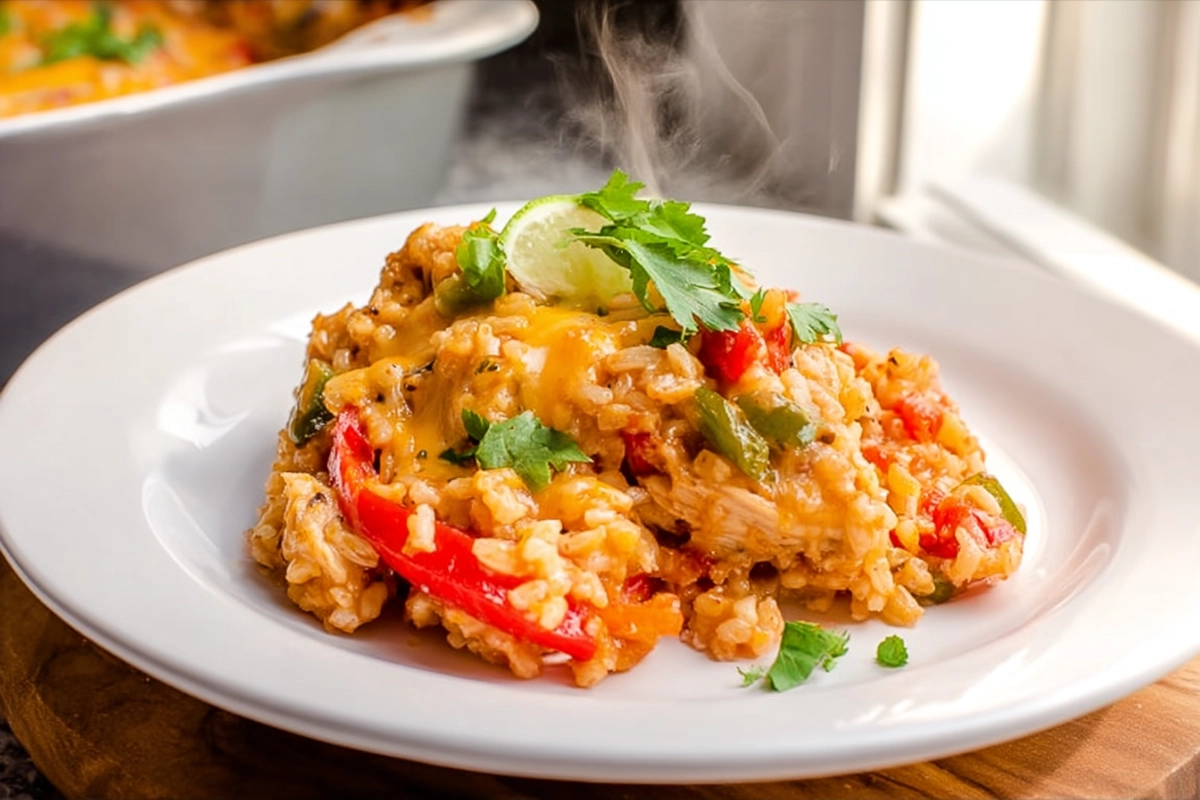
The usual problem with baked chicken-and-rice casseroles is right there in the pan: dry chicken on top, gummy rice underneath, and a flavor that tastes like it gave up halfway through cooking. You want fajita comfort—warm spice, soft peppers, something hearty enough to feel like dinner—not another beige compromise that needs hot sauce to survive.
This chicken fajita rice casserole fixes the whole mess by refusing to overcomplicate anything. The rice goes in raw. No boiling, no draining, no second pot cluttering the sink. Butter melts directly into the grains with cumin, coriander, salt, and black pepper, building flavor before the oven even has a chance to work. Chicken thighs—not breasts—sit on top with onion and capsicum, coated in fajita spice so their juices drip down as they bake. Covered at first, the dish steams itself into tenderness. Then it gets stirred, sealed again, and left alone long enough for the rice to drink deeply and the edges to turn just a little toasty.
This is the kind of recipe that rewards patience, not fussing. One baking dish. One foil cover. Forty minutes to let steam do the heavy lifting, another stretch to let everything settle into place. By the time it comes out, the rice is plush, the chicken stays juicy, and the peppers have softened without collapsing into mush.
You don’t need special equipment or last-minute heroics—just a hot oven, a proper stir at the right moment, and the confidence to let a simple dish do what it’s designed to do.
Table of Contents
Uncooked Rice in the Oven—Why This Works (and When It Doesn’t)
The backbone of this chicken fajita rice casserole is the decision to bake the rice from raw. That only works if the rice absorbs liquid at a predictable pace and doesn’t burst open or turn starchy under long heat. Easy-cook long-grain white rice is partially parboiled before packaging, which means it softens steadily in the oven without releasing excess starch. The butter melts into the grains early, coating them just enough to slow absorption so the rice cooks through instead of collapsing.
This balance is fragile. Swap in brown rice and you’ll end up with crunchy centers unless you extend the cooking time and add more liquid. Use jasmine, and the perfume is lovely—but the grains soften too fast and go mushy before the chicken is done. This dish isn’t about flexibility; it’s about controlled absorption and steam management inside a covered pan.
- Easy-cook long-grain white rice: Designed to hydrate evenly during a long bake; standard long-grain can work, but parboiled is safer.
- Butter: Coats the rice lightly, improving texture and carrying spice flavor through the dish.
- Water: Just enough to create steam without turning the casserole soupy.

Chicken Thighs, Not Breasts—Here’s the Reason
This casserole bakes for well over an hour, which immediately rules out chicken breast. Thigh meat contains more fat and connective tissue, both of which protect it from drying out under prolonged heat. As the thighs cook, they release juices that drip into the rice below, seasoning it far more effectively than broth alone ever could.
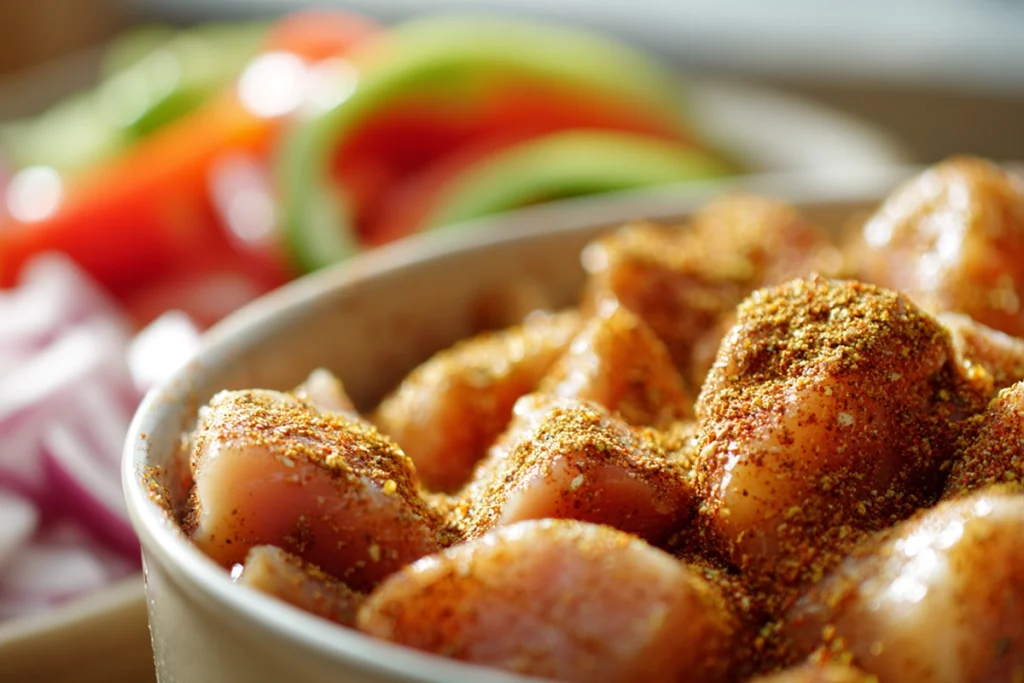
Cut size matters more than people think. Two-centimeter pieces strike the balance between surface area and moisture retention: small enough to season evenly with the spice mix, large enough to stay juicy through the second bake. Breast meat can technically be used, but you’d need to shorten the cook time—and then the rice won’t be ready.
- Chicken thigh fillets: Stay tender and flavorful during long oven cooking.
- Vegetable oil (for greasing): Prevents sticking and protects the bottom rice layer from scorching.
The Spice Packet Question (and How to Make It Taste Homemade)
Using a fajita spice mix isn’t a shortcut—it’s a calibration tool. The blend already balances cumin, coriander, salt, and mild heat in proportions that work with chicken and peppers. What it lacks is freshness, which is why the recipe layers in ground cumin and coriander directly with the rice, blooming them in butter before the chicken ever goes in. That base spice travels upward as steam, seasoning the entire casserole.
If you’re tempted to replace the packet with a homemade blend, be cautious. Too much paprika or chili powder will overpower the rice and turn bitter during the long bake. This dish wants warmth, not aggression.
- Old El Paso™ Fajita Spice Mix: Provides consistent seasoning without guesswork.
- Ground cumin & ground coriander: Reinforce the spice profile and add depth beneath the chicken.
- Black pepper & salt: Sharpens flavor; reduce added salt slightly if your spice mix is salty.
- Onion: Softens into the rice, adding sweetness and body.
- Red & green capsicum: Hold their shape during baking and contribute moisture without watering the dish down.
- Fresh coriander (at the end): Adds aroma and contrast; heat dulls it, so it belongs at the finish, not in the bake.
Foil On, Foil Off, Then Stir: The Make-or-Break Moment
This chicken fajita rice casserole lives or dies in the first forty minutes. Once the dish goes into a hot oven, covered tightly with foil, you’re not baking yet—you’re steaming. You shouldn’t hear much at this stage, just a faint, steady hiss as the water heats and the butter melts down into the rice. When you crack the oven door, the smell is muted but warm: cumin and coriander blooming, not roasted.
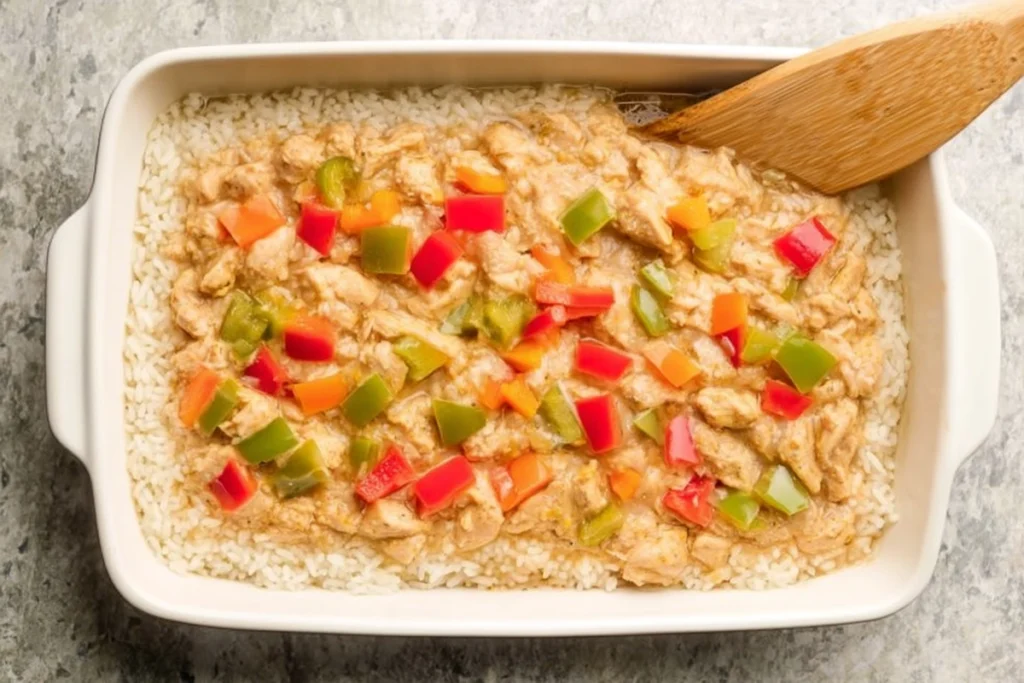
At the forty-minute mark, pull the dish out and remove the foil. What you’re looking for is rice that’s swollen and opaque around the edges but still wet in the center, with chicken pieces sitting on top like islands. This is when you stir—thoroughly. Scrape the bottom and corners, folding the chicken and vegetables down into the rice so every grain gets re-wet. The mixture should feel loose but not soupy, like a thick risotto before it tightens.
Cover it again and return it to the oven. Now the sound changes slightly—more active, a gentle bubbling under the foil. During this second bake, the rice finishes absorbing liquid and the chicken firms up. When it’s ready, most of the liquid is gone, the surface looks plush rather than glossy, and the spoon drags through with resistance instead of sloshing.
Reading Doneness Without Guessing
When you remove the foil at the end, trust your senses more than the clock. The rice should feel tender when pressed between your fingers, not chalky or brittle. The chicken pieces should feel springy, not soft and slick, and the peppers will look collapsed but still brightly colored, not greyed out.
Give everything one final stir and listen—there should be a faint crackle from the bottom as steam escapes, a sign the rice has set and the base is lightly toasted. Finish with fresh coriander while the dish is still hot; you’ll smell its citrusy edge immediately as it hits the steam. At that point, the casserole doesn’t need rest or rescue—it’s ready to be eaten straight from the dish, exactly as intended.
Fixes for the Three Most Common Complaints
If you’re trying to stretch what’s already in your fridge, this dish is forgiving—but only within reason. If you have salted butter, use it and simply ease back on the added salt later; the spice mix already carries plenty. Want more vegetables? Stir in frozen peas or corn about twenty minutes before the end of cooking, when the rice is mostly tender. They warm through without releasing extra water, which keeps the texture intact.
There are swaps that don’t work, and it’s worth being blunt about them. Brown rice needs more liquid and more time; if you use it here without adjusting, you’ll get crunchy centers and overcooked chicken. Chicken breast can be used in a pinch, but it should be cut larger and checked early—otherwise it dries out before the rice finishes. This is one of those casseroles where respecting the structure saves dinner.
How We Actually Eat This Chicken Fajita Rice Casserole
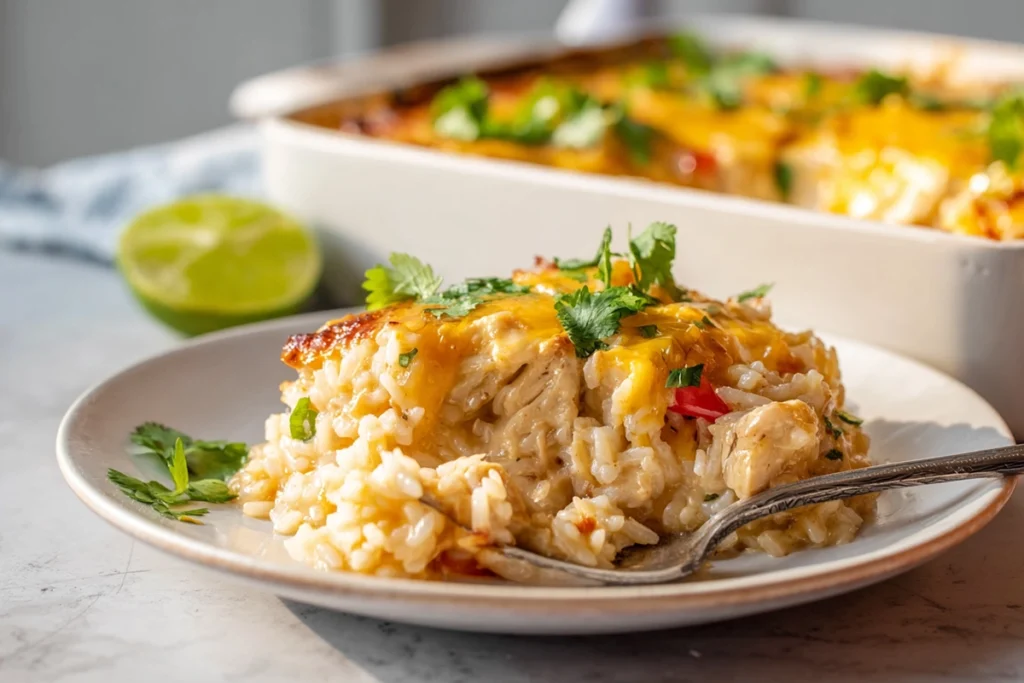
This chicken fajita rice casserole is rich and savory, so it likes contrast. Heated black beans—plain, drained, and rinsed—are the simplest side and do real work cutting the starch. A squeeze of lime over the plate wakes everything up without turning it into something new.
Leftovers are where this dish shines. Cold from the fridge, the rice firms up, making it perfect for stuffing into tortilla boats or pockets and reheating in a dry pan until the edges crisp. It’s also sturdy enough to pack for lunch without turning soggy, which isn’t something most rice casseroles can promise.
Last Tip Before You Start
This isn’t a casserole to hover over. Once it’s covered and, in the oven, trust the process and resist the urge to peek too often—you’ll only let the steam escape. Stir when you’re told, season thoughtfully, and let the oven do the heavy lifting. When it comes out bubbling and fragrant, you’ll have a dish that tastes intentional, filling, and far better than its low-effort reputation suggests.
Get inspired with more mouthwatering recipes! Follow me on Facebook and Pinterest for new cooking ideas every week.
Common Questions About Chicken Fajita Rice Casserole
Can I use brown rice instead of white?
I don’t recommend it for this recipe. Brown rice needs more liquid and a much longer cooking time, and by the time it softens, the chicken thighs will be overcooked and stringy. This chicken fajita rice casserole is designed around easy-cook long-grain white rice because it absorbs liquid at a steady, predictable pace in the oven. If brown rice is non-negotiable, you must increase the water and expect a different texture—but it will no longer behave like the dish described in this guide.
Do I really need to stir halfway through?
Yes, and skipping it is the fastest way to ruin the pan. The mid-bake stir redistributes moisture so the rice in the center finishes cooking instead of staying crunchy while the edges overcook. When you stir, you’re folding the chicken juices and spice back into the rice, which is what gives the final dish its even seasoning and tender texture. Without that stir, you’ll end up with dry patches and wet pockets in the same bite.
What size baking dish works best for even cooking?
Use a large rectangular baking dish that allows the rice to sit in a relatively even layer—not piled thick in the center. If the dish is too small and deep, the rice cooks unevenly and the liquid struggles to circulate as steam. If it’s too wide and shallow, the liquid evaporates too fast and the rice dries out. Aim for a dish where the rice layer is spread comfortably, with room for the chicken to sit on top without crowding.
How spicy is this, and how do I turn up the heat without wrecking balance?
As written, it’s mild—warm rather than hot. The fajita spice mix provides depth, not fire. If you want more heat, add it in a controlled way: a pinch of chili flakes or a small amount of fresh chili stirred in with the chicken works because it infuses gradually during baking. Don’t overload the spice mix or dump hot sauce into the dish; both will overpower the rice and turn bitter after a long oven bake.
Can I freeze leftovers, or will the rice turn mushy?
You can freeze it, but only once it has cooled completely. Rice that’s frozen while still warm releases steam inside the container, which is what causes mushy texture later. Portion the leftovers, seal them tightly, and reheat gently so the rice warms through without breaking down. The texture will soften slightly, but the flavors hold up well.
Print
chicken fajita rice casserole
- Total Time: 1 hour 45 minutes
- Yield: 6 servings 1x
- Diet: Halal
Description
A hearty chicken fajita rice casserole made with raw rice, juicy chicken thighs, peppers, and warm spices baked together in one dish with no pre-cooking.
Ingredients
- Vegetable oil, for greasing
- 200 g easy-cook long-grain white rice
- 30 g butter, diced
- 1 teaspoon ground cumin
- 1 teaspoon ground coriander
- 1/4 teaspoon salt
- 1 teaspoon freshly ground black pepper
- 600 g chicken thigh fillets, cut into 2 cm pieces
- 1 onion, finely chopped
- 1 red capsicum, deseeded and diced
- 1 green capsicum, deseeded and diced
- 1 sachet fajita spice mix
- 2 tablespoons freshly chopped coriander
Instructions
- Preheat the oven and grease a large rectangular baking dish. Spread the rice evenly in the dish and stir in water, butter, cumin, coriander, salt, and black pepper.
- Mix the chicken, onion, capsicum, and fajita spice mix, then spoon evenly over the rice. Cover tightly with foil and bake.
- Remove the dish from the oven, stir thoroughly to redistribute moisture, then cover again and return to the oven.
- Continue baking until the rice is tender, the liquid is absorbed, and the chicken is cooked through. Stir well and garnish with fresh coriander before serving.
Notes
- Use easy-cook long-grain rice for best texture.
- Stirring halfway through cooking is essential for even doneness.
- Frozen peas or corn can be added during the last 20 minutes if desired.
- Prep Time: 15 minutes
- Cook Time: 1 hour 30 minutes
- Category: Main Course
- Method: Baking
- Cuisine: American
Nutrition
- Serving Size: 1 serving
- Calories: 480
- Sugar: 4
- Sodium: 820
- Fat: 22
- Saturated Fat: 9
- Unsaturated Fat: 11
- Trans Fat: 0
- Carbohydrates: 42
- Fiber: 3
- Protein: 30
- Cholesterol: 115