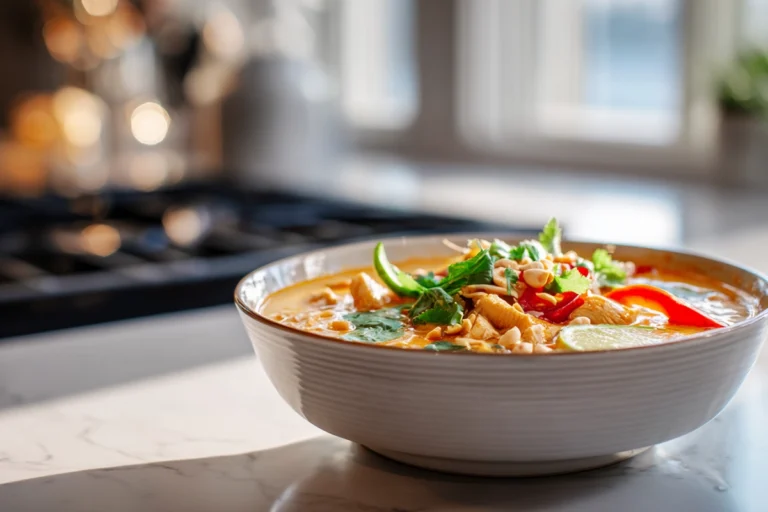

Chicken Gnocchi Soup: Creamy Comfort With Pillowy Bites

Some soups warm you up. This one settles you down.
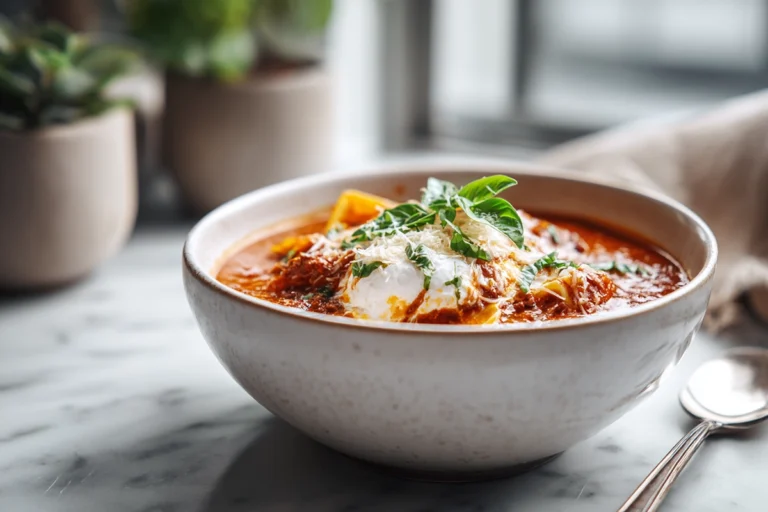
There’s a specific moment when chicken gnocchi soup is right: the broth coats the spoon instead of running off it, the gnocchi feel soft without turning heavy, and the kitchen smells faintly of sautéed onion, garlic, and thyme blooming in warm olive oil. It’s not thick like a chowder and not thin like a broth—it sits right in the middle, the kind of soup you eat slowly because it feels complete.
This recipe is built around that balance. Cooked chicken keeps things practical and weeknight-friendly. Half-and-half adds richness without crossing into heaviness. Potato gnocchi bring substance, but only if they’re treated gently and added at the right time. Even the spinach matters here, stirred in at the end so it wilts just enough to cut through the creaminess instead of disappearing into it.
What I like about this soup is that it doesn’t ask you to babysit it for an hour or rely on tricks to feel satisfying. The steps are simple, but the order matters. Aromatics go in first so the base tastes rounded instead of flat. The broth is seasoned before the gnocchi ever hit the pot. Dairy waits until the heat is calm. Miss one of those details, and the soup still works—but it won’t be the one you make again.
This is the kind of chicken gnocchi soup that fits into real evenings: thirty minutes, one pot, and a result that feels like more effort than it actually took. From here, it’s about timing, heat, and knowing when to stop stirring and serve while everything is still exactly where it should be.
Table of Contents
Half-and-Half vs Heavy Cream: Choosing Creaminess on Purpose
The creamy base in this chicken gnocchi soup isn’t meant to shout. It’s there to soften the broth, carry the thyme, and give the gnocchi something gentle to settle into. Half-and-half does that job cleanly. It thickens just enough when heated slowly and keeps the soup from feeling dense or tiring halfway through the bowl.
Heavy cream can be used, but it changes the personality of the soup. The texture becomes richer, the margin for error gets smaller, and reheating takes more care. If you go that route, replacing only one cup of the half-and-half keeps the balance intact. Full swaps push this soup closer to a chowder, which isn’t what makes the Olive Garden–style version so comforting.
What matters most isn’t the dairy itself—it’s when and how gently it’s introduced. Cream belongs at the end, once the gnocchi are tender and the heat has settled.
- Half-and-half: Creates a smooth, spoon-coating broth without heaviness
- Heavy cream (optional): Use sparingly for extra richness; too much dulls the other flavors
The Quiet Role of Aromatics (And Why They Matter Here)
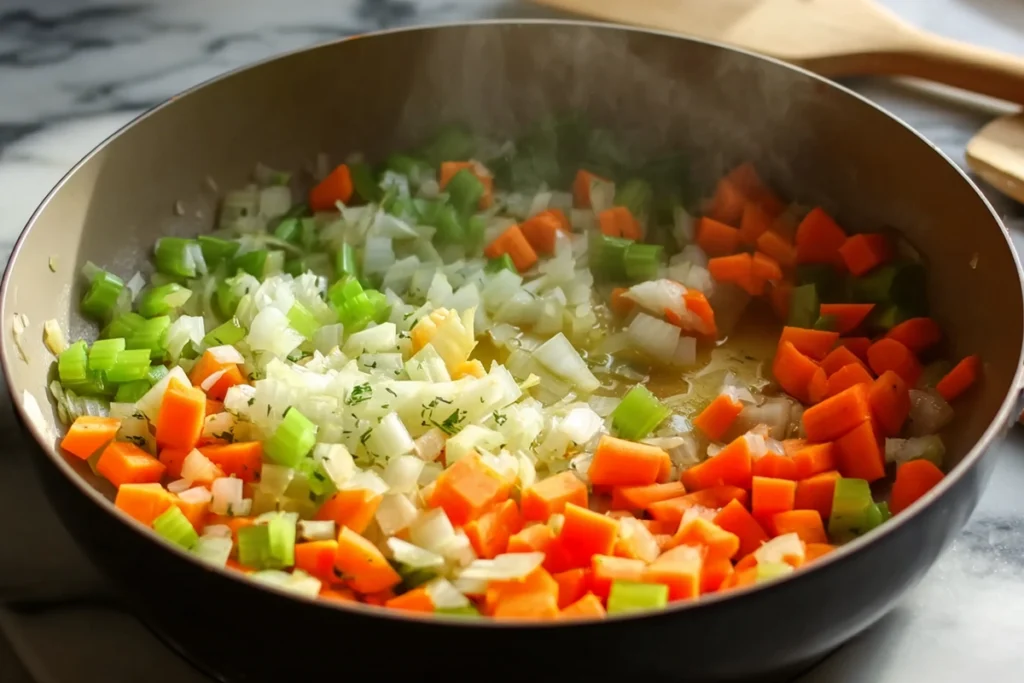
This soup doesn’t rely on long simmering to build flavor, so the aromatics have to pull their weight early. Onion, celery, carrots, and garlic form the backbone, not the background. A short sauté in olive oil softens their edges and brings out a light sweetness that balances the cream later.
Garlic is kept modest on purpose. Too much turns sharp once dairy enters the pot. Thyme is the connective tissue—it ties chicken, broth, and cream together without announcing itself. Skip or rush this stage, and the soup tastes pale no matter how much salt you add later.
- White onion: Builds sweetness and depth without overpowering
- Celery & carrots: Add structure and gentle sweetness to the base
- Garlic: Enough for warmth, not bite
- Dried thyme: Bridges savory chicken and creamy broth
Chicken Gnocchi Soup Ingredients That Actually Pull Their Weight
Every ingredient here has a job, and none are filler. Using cooked chicken keeps the timing realistic and prevents the meat from tightening up in the broth. Low-sodium chicken broth isn’t optional—it gives you control, especially once the gnocchi and dairy are in play.
Potato gnocchi are the heart of this soup. They thicken the broth naturally as they cook, which is why no flour or roux is needed. Spinach comes in last, not for bulk but for contrast. It adds a clean, green note that keeps this cozy comfort soup from feeling heavy.
- Cooked chicken breast: Tender, reliable, and weeknight-friendly
- Low-sodium chicken broth: Allows proper seasoning without overshooting
- Potato gnocchi: Soft, pillowy texture that lightly thickens the soup
- Fresh spinach: Added at the end to balance richness
- Olive oil: Neutral fat that supports the aromatics without competing
These choices are what keep the soup dependable—the kind you can make again without second-guessing, knowing each ingredient is doing exactly what it’s supposed to do.

The 10-Minute Window That Makes or Breaks This Soup
This soup moves fast once the broth is hot, so attention matters more than speed. After the aromatics soften, the pot should smell gently savory—onion and garlic mellowed, not sharp. When the chicken broth goes in, you want an active simmer that hums quietly, not a rolling boil that splashes up the sides. That steady heat gives the broth time to pick up flavor before anything starchy touches it.
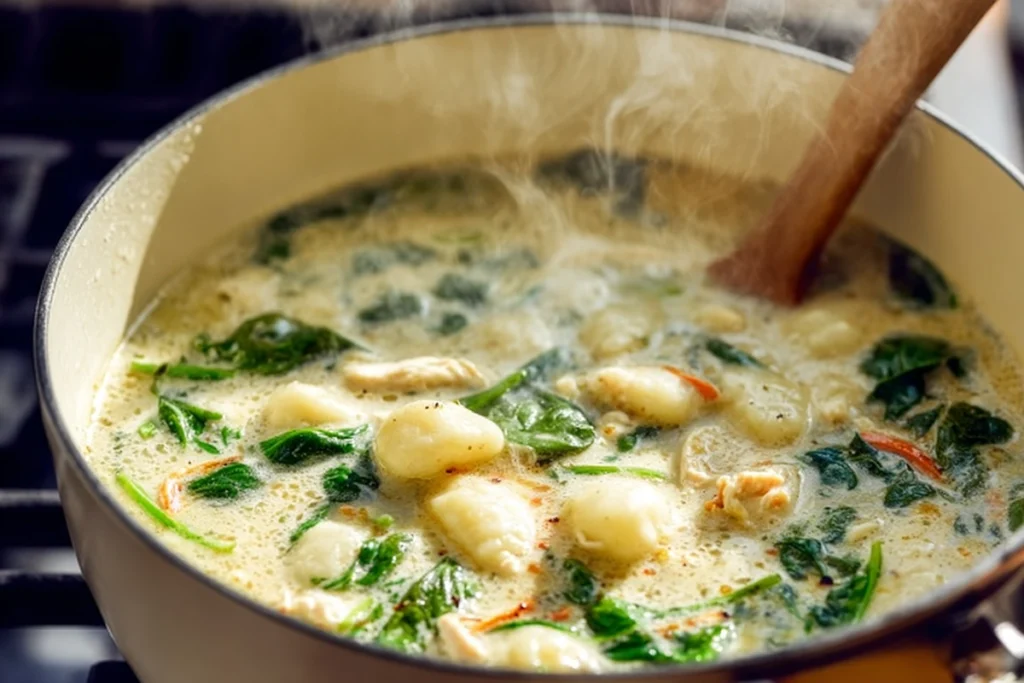
Gnocchi come next, and this is where restraint pays off. Drop them in and stir just enough to keep them from sticking, then step back. Within a few minutes they’ll rise to the surface, swollen and pale, their edges soft instead of chalky. That’s your cue that they’re nearly done, not that they need more time.
Letting the Gnocchi Cook Without Turning Gummy
Potato gnocchi don’t like rough handling. Once they float, the soup should sound calm—no hard bubbling, no aggressive stirring. Too much movement breaks them down and releases starch, thickening the broth past that silky point this creamy chicken gnocchi soup is known for.
At the right moment, the gnocchi will feel tender if pressed gently with a spoon, but they’ll still hold their shape. This is when the heat should be lowered. The soup is finished cooking, even if it doesn’t look finished yet.
Adding Dairy Without Breaking the Broth
Half-and-half goes in only after the pot has settled into a gentle simmer. You should see steam rise and smell warm thyme and chicken, but hear almost nothing. Pour slowly and stir lightly, just enough to blend, watching the broth turn from translucent to softly opaque.
If the soup starts to hiss or bubble sharply at this point, the heat is too high. Pull it back immediately. A calm pot keeps the dairy smooth and gives you that restaurant-style texture people expect from an Olive Garden chicken gnocchi soup copycat.
Finishing Touches That Keep the Soup Light
Spinach is last, always. Drop it in by the handful and watch it collapse almost instantly, bright green streaks cutting through the cream. Stir once or twice, then stop. The leaves should look just wilted, not cooked down into threads.
At this point, the soup should smell balanced—savory chicken, soft herbs, a faint dairy sweetness. Taste, adjust salt and pepper if needed, and serve while everything still feels relaxed. This is one of those soups that rewards good timing more than extra effort.
Making It Your Own Without Losing the Soup
This soup is forgiving, but not endlessly flexible. A few smart changes work well, especially when they respect the balance between cream, starch, and broth. If you’re using leftover rotisserie chicken, shred it while it’s cold so the pieces stay clean, then add it when the broth is already hot. It warms through without tightening or shredding into the soup.
Dairy swaps need more care. Whole milk can stand in for half-and-half in a pinch, but the broth will be thinner and less cohesive. If you go that route, keep the heat especially low and don’t expect the same silky finish. Full cream replacements are best done partially, not all at once. Replacing one cup adds richness without pushing the soup into chowder territory.
Gnocchi substitutions are where things fall apart. Shelf-stable potato gnocchi are essential here. Cauliflower gnocchi or gluten-free versions tend to break down and cloud the broth, changing both texture and flavor. If that’s all you have, it’s better to choose a different soup than force it into this one.
How This Soup Fits on the Table
This is a bowl-forward meal. Chicken gnocchi soup is filling enough to stand on its own, especially when the gnocchi are at their best. A piece of crusty bread or a simple dinner roll gives you something to drag through the bottom of the bowl, catching the last of the creamy broth without adding heaviness.
If you want contrast, keep it sharp and light. A small green salad with a lemon-forward vinaigrette cuts the richness cleanly. Avoid anything sweet or heavily dressed—it dulls the quiet savory notes that make this soup comforting rather than overwhelming.
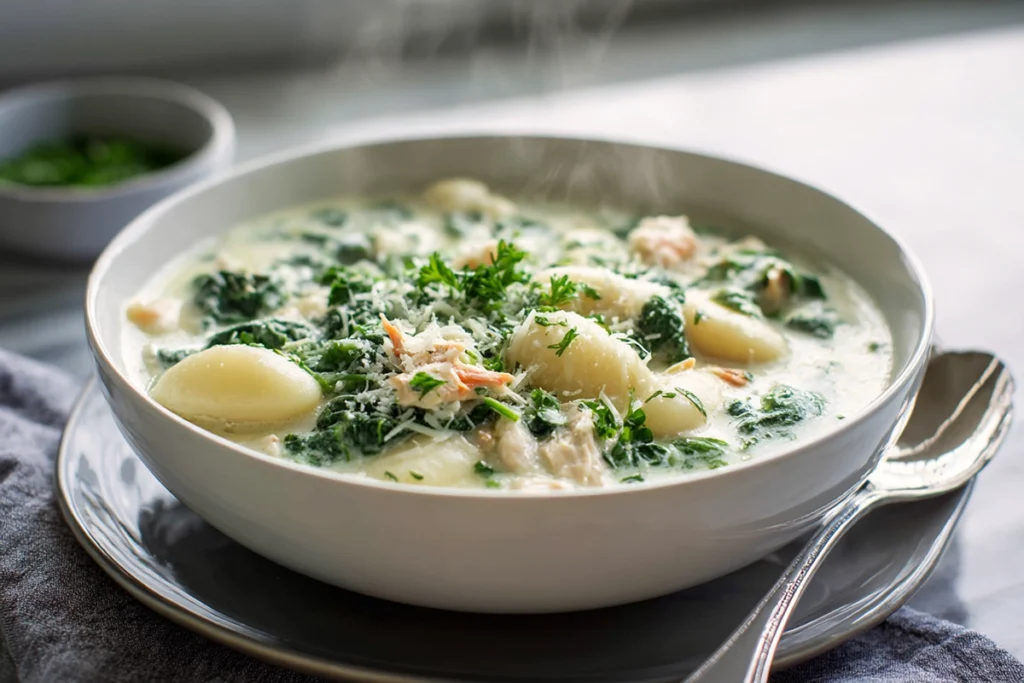
This soup is best served immediately. If it sits too long, the gnocchi continue absorbing liquid, and the texture shifts. Ladle it while the broth is still loose and the spinach bright.
When to Stop Tweaking and Just Serve
One of the easiest mistakes with creamy soups is overcorrecting at the end. If the broth tastes good, stop adjusting. More salt won’t make it deeper, and more cream won’t make it cozier. The right version of this soup feels calm, not heavy, and finished without needing garnish or extra fuss.
If you plan to reheat leftovers, do it gently and add a splash of warm broth to loosen things up. Avoid boiling—it’s the fastest way to lose that smooth texture you worked for.
This chicken gnocchi soup is the kind of recipe that earns its place by being dependable. It doesn’t ask for perfection, just attention. Make it once with care, and it becomes one of those meals you return to on evenings when comfort matters more than novelty.
Get inspired with more mouthwatering recipes! Follow me on Facebook and Pinterest for new cooking ideas every week.
FAQ
Can I make chicken gnocchi soup ahead of time?
You can make it a few hours ahead, but it’s best close to serving. Gnocchi continue absorbing liquid as they sit, which thickens the soup more than intended. If you do make it ahead, add a splash of warm chicken broth when reheating to loosen it back up.
Why did my gnocchi turn mushy in the soup?
Gnocchi usually turn mushy from overcooking or boiling too hard. Once they float and feel tender, they’re done and should not be stirred aggressively. Keeping the soup at a gentle simmer instead of a rolling boil makes a big difference.
Can I use rotisserie chicken instead of cooked chicken breast?
Yes, rotisserie chicken works very well here. Shred or dice it while it’s cold, then add it once the broth is hot so it warms through without drying out. This is a great shortcut for busy nights.
Is it normal for chicken gnocchi soup to thicken as it sits?
Yes, that’s completely normal. Potato gnocchi releases starch and keeps absorbing liquid over time, which naturally thickens the soup. A small amount of broth stirred in before serving will bring it back to the right consistency.
Can I freeze chicken gnocchi soup?
Freezing isn’t recommended for this soup. The dairy can separate and the gnocchi lose their soft, pillowy texture once thawed. This is one of those soups that’s best enjoyed fresh or within a day or two from the fridge.
Print
Creamy Chicken Gnocchi Soup
- Total Time: 30 minutes
- Yield: 4 servings 1x
Description
Creamy chicken gnocchi soup made with tender chicken, soft potato gnocchi, spinach, and a silky broth. A cozy, dependable soup that comes together quickly and feels like true comfort food.
Ingredients
- 3–4 boneless skinless chicken breasts, cooked and diced
- 1 tablespoon olive oil
- 1 stalk celery, chopped
- 1/2 white onion, diced
- 2 teaspoons minced garlic
- 1/2 cup shredded carrots
- 4 cups low sodium chicken broth
- Salt and black pepper, to taste
- 1 teaspoon dried thyme
- 16 ounces potato gnocchi
- 2 cups half-and-half
- 1 cup fresh spinach, roughly chopped
Instructions
- Heat olive oil in a large pot over medium heat and add the onion, celery, carrots, and garlic. Cook until the vegetables soften and smell gently savory.
- Pour in the chicken broth, add the cooked chicken, thyme, salt, and pepper, and bring the soup to a steady simmer.
- Add the potato gnocchi and cook gently until they float and feel tender, stirring only as needed to prevent sticking.
- Lower the heat and slowly stir in the half-and-half, keeping the soup at a gentle simmer.
- Add the spinach and cook just until wilted, then taste and adjust seasoning before serving.
Notes
- For extra richness, replace one cup of the half-and-half with heavy cream.
- Avoid boiling after adding dairy to prevent separation.
- This soup thickens as it sits; add a splash of warm broth when reheating.
- Prep Time: 10 minutes
- Cook Time: 20 minutes
- Category: Soup
- Method: Stovetop
- Cuisine: American
Nutrition
- Serving Size: 1 bowl
- Calories: 420
- Sugar: 6
- Sodium: 980
- Fat: 22
- Saturated Fat: 12
- Unsaturated Fat: 8
- Trans Fat: 0
- Carbohydrates: 32
- Fiber: 3
- Protein: 28
- Cholesterol: 110
What Are Our Readers Saying?
There are no reviews yet. Be the first one to write one.