Chicken Mole Recipe: Smoky, Saucy, and Deeply Satisfying

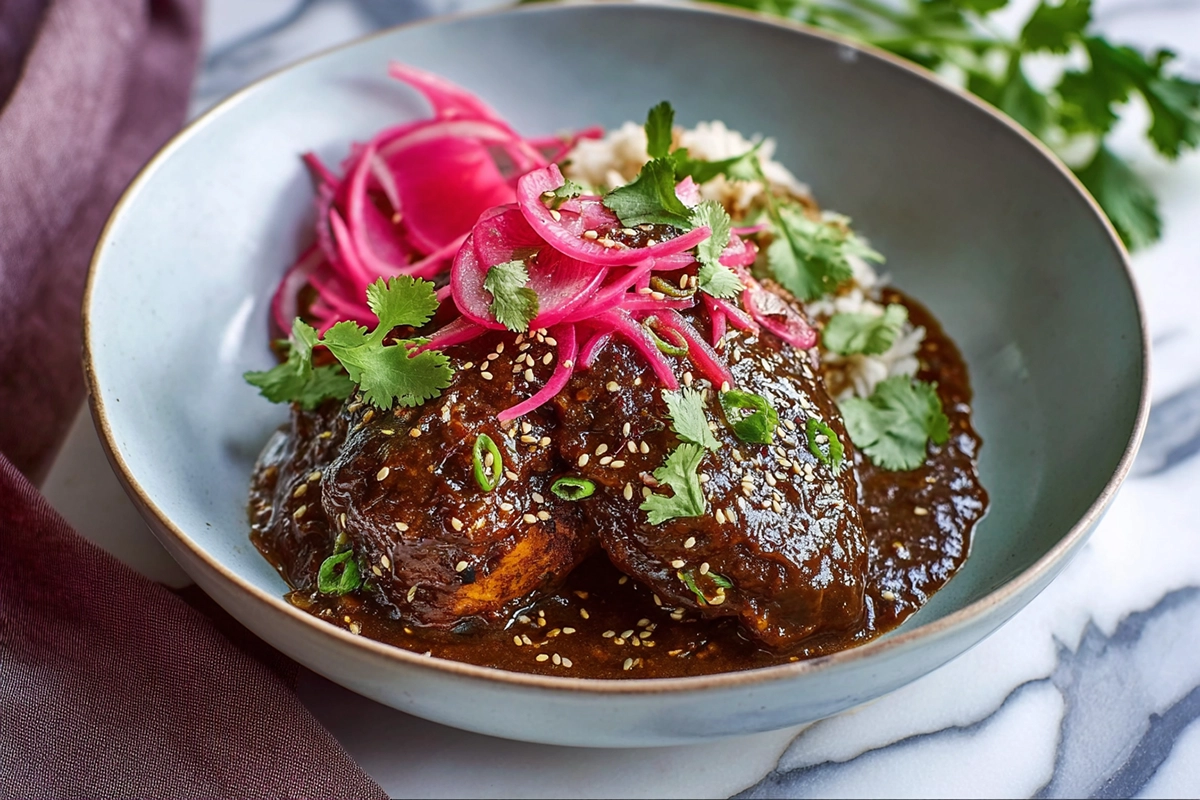
Dry chicken ruins more dinners than bad seasoning ever could. You go in expecting richness and end up with stringy meat swimming in a sauce that tastes flat, bitter, or weirdly sweet. Mole, especially, gets this wrong all the time—too thick, too thin, scorched at the bottom, or cloying with chocolate when it should be dark and savory. This chicken mole recipe exists to fix that. It delivers thighs that pull apart with a fork and a sauce that coats every bite like velvet, not paste.
The difference here isn’t a mystery ingredient or a culinary flex. It’s timing and restraint. The chicken gets seasoned properly—by weight, not vibes—then seared hard enough to build flavor before the mole ever touches the pan. The mole negro itself is already complex: smoky dried chiles, nuts, warm spices, and just a hint of chocolate. Once it hits the oven with the chicken and a splash of broth, it loosens, absorbs rendered fat, and turns glossy instead of grainy. Holding back a little sauce at the end gives you control—touching up instead of drowning.
This isn’t a stovetop babysitting situation. You need a heavy pan that can go from burner to oven, a hot surface for searing, and the patience to let heat do its job. The rest is straightforward. The payoff is unmistakable: dark sauce clinging to chicken, pickled onions cutting through the richness, and a plate that feels like a real Oaxacan-inspired feast without turning your kitchen into a project.
Why This Chicken Mole Recipe Lives or Dies on the Sauce
Mole negro isn’t a background element here—it’s the backbone. In this chicken mole recipe, the sauce isn’t something you splash on at the end; it’s already layered, cooked, and balanced before it ever meets the chicken. That matters because once mole goes into the oven, it stops being adjustable. The fat rendered from the thighs softens bitterness, the broth loosens the paste, and the sauce thickens by absorption rather than reduction. If the mole is too sweet, too thin, or overly spicy at the start, baking will only lock those flaws in.

This recipe assumes you’re working with a fully developed mole negro sauce made from dried chiles, nuts, seeds, spices, and a restrained touch of chocolate. That complexity is why the rest of the ingredient list stays disciplined. No extra sugar. No tomatoes. No cream. The goal is depth without distraction. One strategic move—saving a small portion of mole for finishing—gives you control at the end, letting you refresh the sauce’s aroma and sheen without overcooking it.
- Mole Negro Sauce: Pre-made and fully cooked; this isn’t the place for shortcuts or raw blended sauces. If it’s thick like paste, that’s correct—it will loosen in the oven.
- Chicken Broth or Stock: Added sparingly to help the mole flow and prevent scorching; water works in a pinch but flattens the final sauce.
- Pickled Onions (for serving): Acid isn’t optional here—it sharpens the sauce and keeps the richness from overwhelming your palate.
Spice-Rubbing the Chicken Like You Mean It
The chicken does real work in this dish—it’s not just a vehicle for sauce. Boneless, skinless thighs are essential because they carry enough fat to stand up to mole’s intensity without drying out. The spice rub isn’t decorative; it seasons the meat internally and builds a flavor bridge between the chicken and the sauce. Cumin and coriander echo the earthy notes in the mole, chili powder reinforces the chile backbone, and cinnamon quietly supports the warmth already present in the sauce without tipping it into sweetness.
Salt is measured by weight for a reason. Undersalt the chicken and the mole tastes muddy. Oversalt it and the sauce turns harsh. Searing after seasoning locks those spices into the surface, creating a savory crust that holds up during baking instead of dissolving into the sauce.
- Chicken Thighs (boneless, skinless): Dark meat stays tender and absorbs sauce without shredding into fibers; breasts dry out before the mole finishes.
- Cumin & Coriander: Earthy and citrusy notes that mirror traditional mole flavors instead of competing with them.
- Cinnamon: Used lightly to support the mole’s warmth; too much reads as dessert.
- Olive Oil: Just enough to conduct heat during searing—this is about browning, not frying.
Searing First, Baking Second: The Non-Negotiable Technique
Start with a heavy, oven-safe pan and real heat. When the chicken hits the oil, you want an immediate, confident sizzle—not a timid hiss. Visually, the surface should go from pale to deeply golden, with the spices darkening but not burning; if you smell bitterness instead of warm cumin and toasted chili, the pan is too hot. Touch the chicken with tongs—once it releases easily, the crust has set and it’s ready to turn.
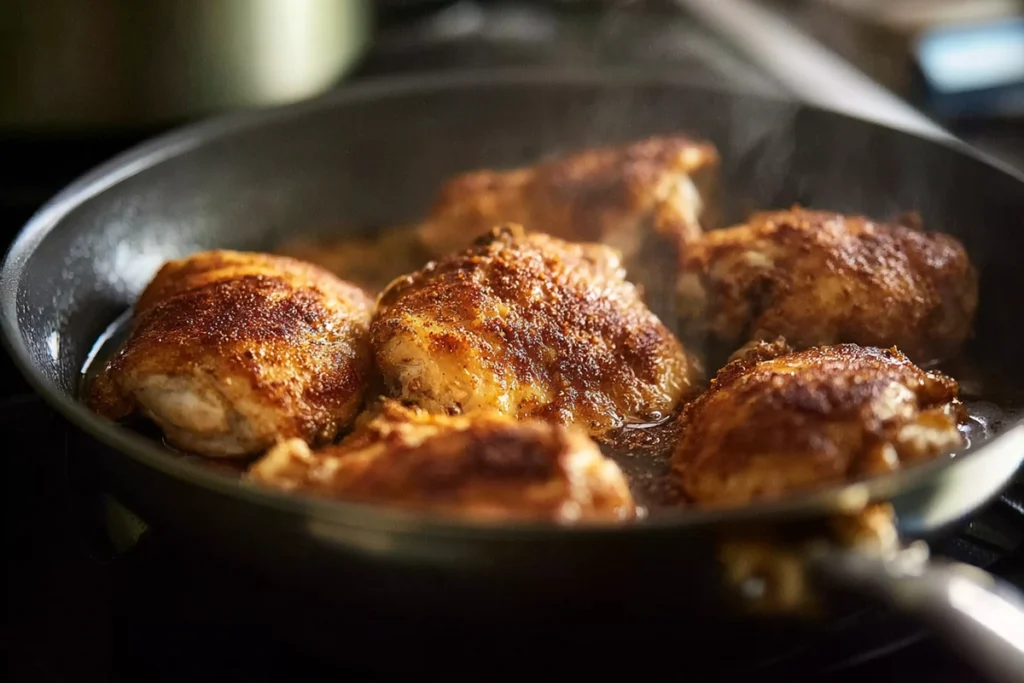
After both sides are bronzed, the sound changes. The aggressive sizzle softens as you add the broth, and the pan smells rounder, less sharp. That’s your cue to introduce the mole. Spoon it in, then give the pan a gentle shake so the sauce slips under and around the thighs without scraping off the crust you just built. Cover tightly and move it to the oven, where steady heat finishes what the stovetop started—cooking the chicken through while protecting the sauce from scorching.
The Sauce Looks Like Too Much—Until It Isn’t
At first glance, the pan will look flooded, and that’s correct. As the chicken mole recipe bakes, the sauce thickens not by boiling away, but by clinging—absorbing rendered fat and moisture from the chicken. Halfway through, listen: there should be a soft, lazy bubble under the lid, not a rolling boil. When you open the oven, the sauce should look glossy and slightly looser than you want; it tightens as it rests.
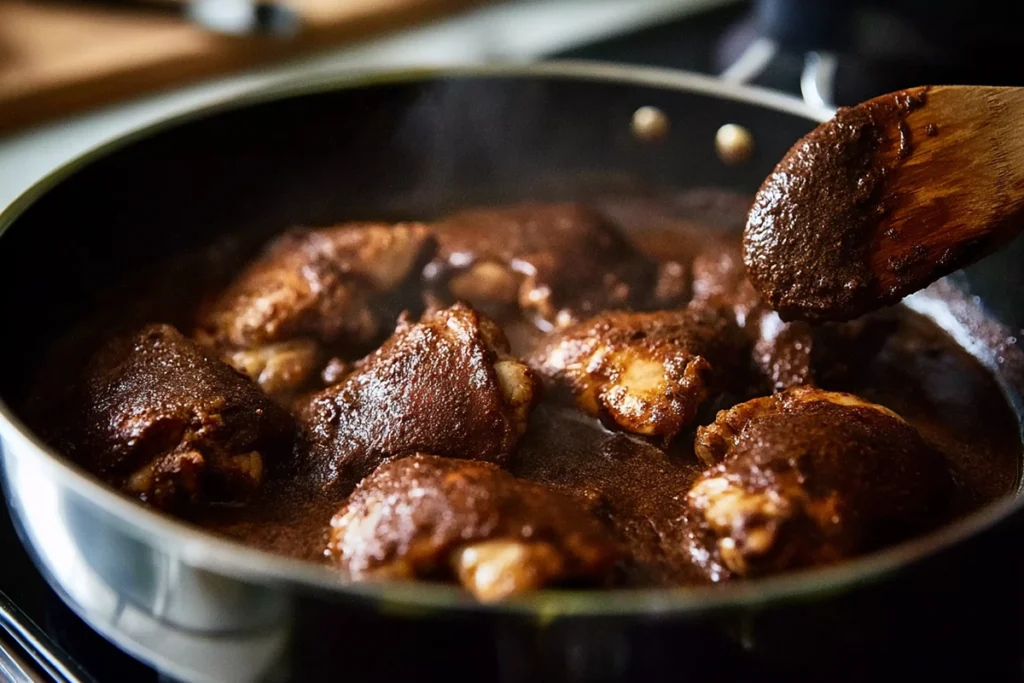
Test the chicken with a fork. It should pull apart with almost no resistance, the fibers separating cleanly rather than shredding dry. If you’re keeping the thighs whole, brush on a little of the reserved mole at the end—the aroma blooms instantly, darker and more fragrant. If you’re shredding for tacos, fold the meat back into the sauce while it’s still hot so it drinks up flavor instead of sitting beside it.
Swaps That Actually Work (and One That Doesn’t)
If you’re short on time, leftover rotisserie chicken can step in—but only with care. Shred it cold, fold it gently into warmed mole sauce, and stop there. Don’t bake it again or you’ll cook the life out of it. This works best for tacos or bowls, not for a plated thigh situation.
Chicken breasts technically function, but they’re unforgiving. If you use them, pull the pan from the oven the moment they hit doneness and keep extra sauce on hand to compensate for the lack of fat. What doesn’t work at all is trying to “lighten” this dish by cutting the mole with cream or tomatoes. That flattens the flavor and turns something bold into something confused. Mole is already balanced—trust it.
Serving This in the Real World (Plates, Bowls, or Tacos)
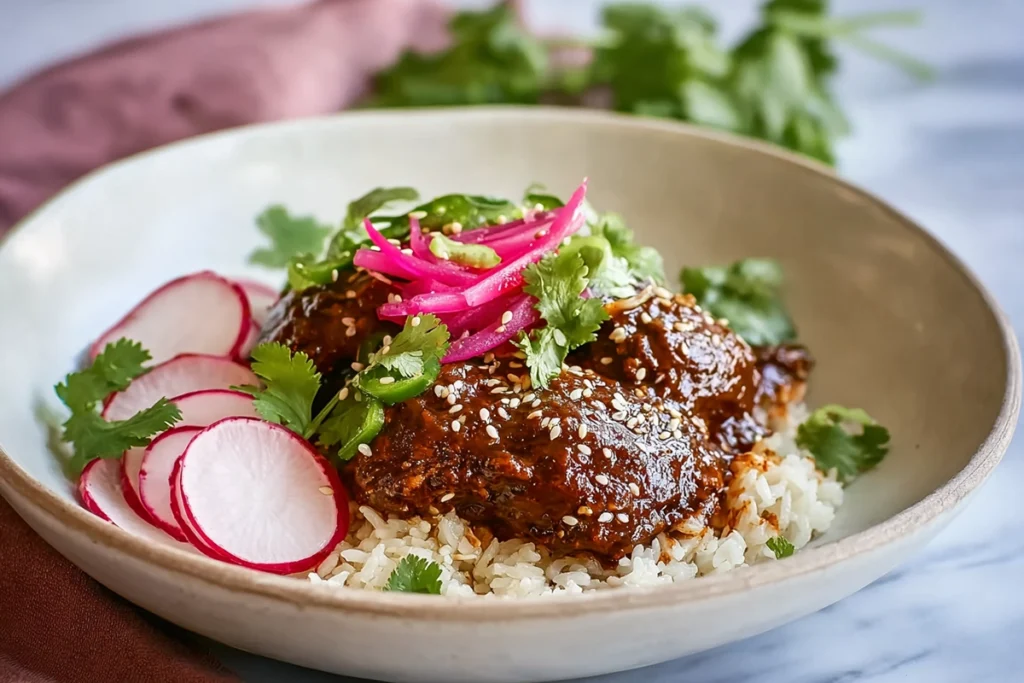
This dish shines when you give it contrast. Spoon the chicken and sauce over Mexican rice so the grains soak up what the chicken doesn’t. The rice shouldn’t be decorative—it’s there to absorb richness. Pickled onions are non-negotiable; their sharpness resets your palate between bites.
For tacos, lightly shred the chicken and keep the tortillas simple. Warm corn tortillas, chicken mole, pickled onions, a few radish slices, and cilantro are enough. No cheese, no crema—those mute the sauce. If you’re serving guests, bring the pan to the table and finish with sesame seeds and herbs right before serving so the aroma hits first.
One Last Thing Before You Walk Away
If the sauce looks perfect straight out of the oven, wait five minutes before adjusting. Mole tightens as it rests, and that pause often fixes what you think is “too loose.” If it still needs help, that reserved spoonful of sauce is your safety net.
This chicken mole recipe isn’t about showing off—it’s about getting depth without waste and confidence without fuss. Make it once with attention, and it becomes the kind of dish you return to when you want something that feels generous, grounding, and absolutely worth the time.
Common Questions About Chicken Mole Recipe
Can I make the mole sauce ahead without losing depth?
Yes—and you should if you want an easier cooking day. Mole negro actually improves after a rest because the dried chiles, spices, and nuts settle into each other. Make the sauce up to four days ahead and store it airtight in the fridge. When you reheat it for this chicken mole recipe, warm it gently until smooth before adding it to the pan so it doesn’t scorch or seize.
What happens if I use less mole—will the chicken dry out?
Using less mole won’t dry out the chicken, but it will leave you with uneven flavor. Notice how this recipe adds broth before the mole: that liquid protects the meat during baking. If you truly want a lighter coating, still add enough sauce to surround the thighs, then serve extra rice or vegetables alongside instead of cutting the sauce too aggressively.
Is this dish spicy or just deeply flavored?
This is a deeply flavored dish, not a burn-your-mouth spicy one. Mole negro leans smoky, earthy, and slightly bitter-sweet from dried chiles and chocolate, not heat-forward. If your finished dish tastes spicy, it usually means the mole was reduced too hard or the pan ran too hot before baking, concentrating the chiles instead of letting them mellow.
Can I freeze chicken already cooked in mole sauce?
Freezing works well if you do it correctly. Cool the chicken completely in its sauce, portion it with enough mole to keep the meat submerged, and freeze airtight. When reheating, thaw overnight in the fridge and warm slowly on the stovetop or in the oven, adding a splash of broth if the sauce tightens too much.
Why does my mole taste bitter after baking—and how do I fix it?
Bitterness almost always comes from heat, not ingredients. Either the mole was added to a pan that was too hot, or it baked uncovered and reduced too fast. To fix it, stir in a small amount of reserved mole sauce or a splash of broth and let it rest five minutes. Resting softens sharp edges far better than adding sugar.
Print
Chicken Mole Recipe
- Total Time: 1 hour 30 minutes
- Yield: 4–6 servings 1x
Description
A flavorful chicken mole made with rich mole negro sauce—smoky, nutty, and deeply savory with a subtle hint of chocolate. Inspired by Oaxacan-style mole and finished in the oven for tender, sauce-coated chicken.
Ingredients
- One batch mole negro sauce
- One batch pickled onions
- 2 1/2 to 3 pounds boneless skinless chicken thighs
- 2 1/2 teaspoons salt
- 1 teaspoon cumin
- 1 teaspoon coriander
- 1 teaspoon chili powder
- 1/2 teaspoon cinnamon
- 2 tablespoons olive oil
- 1/2 cup broth or stock
Instructions
- Prepare the pickled onions and refrigerate until ready to serve.
- Make the mole negro sauce ahead of time if needed and set aside.
- Preheat the oven to 375°F.
- Mix the salt, cumin, coriander, chili powder, and cinnamon together and season the chicken evenly on all sides.
- Heat olive oil in a large oven-safe skillet or Dutch oven over medium-high heat and sear the chicken until golden on both sides.
- Add the broth to the pan, then spoon in the mole sauce, reserving a small amount for finishing.
- Cover the pan and transfer to the oven. Bake until the chicken reaches 165°F and is fork-tender, about 20 minutes.
- Leave the chicken whole or lightly shred, then finish with reserved mole sauce, sesame seeds, and cilantro before serving.
Notes
- Leftover mole sauce will keep up to 4 days in the refrigerator.
- Extra mole sauce can be frozen for later use.
- Leftover mole is excellent stirred into chili or spooned over roasted vegetables.
- Prep Time: 30 minutes
- Cook Time: 1 hour
- Category: Main Course
- Method: Baking
- Cuisine: Mexican
Nutrition
- Serving Size: 6 ounces chicken with sauce
- Calories: 469
- Sugar: 3
- Sodium: 1572
- Fat: 20.8
- Saturated Fat: 4.5
- Unsaturated Fat: 16.3
- Trans Fat: 0
- Carbohydrates: 33
- Fiber: 5.9
- Protein: 38.9
- Cholesterol: 160.1