Rotisserie Chicken Alfredo: Glossy Sauce, No Grain, Weeknight Rich

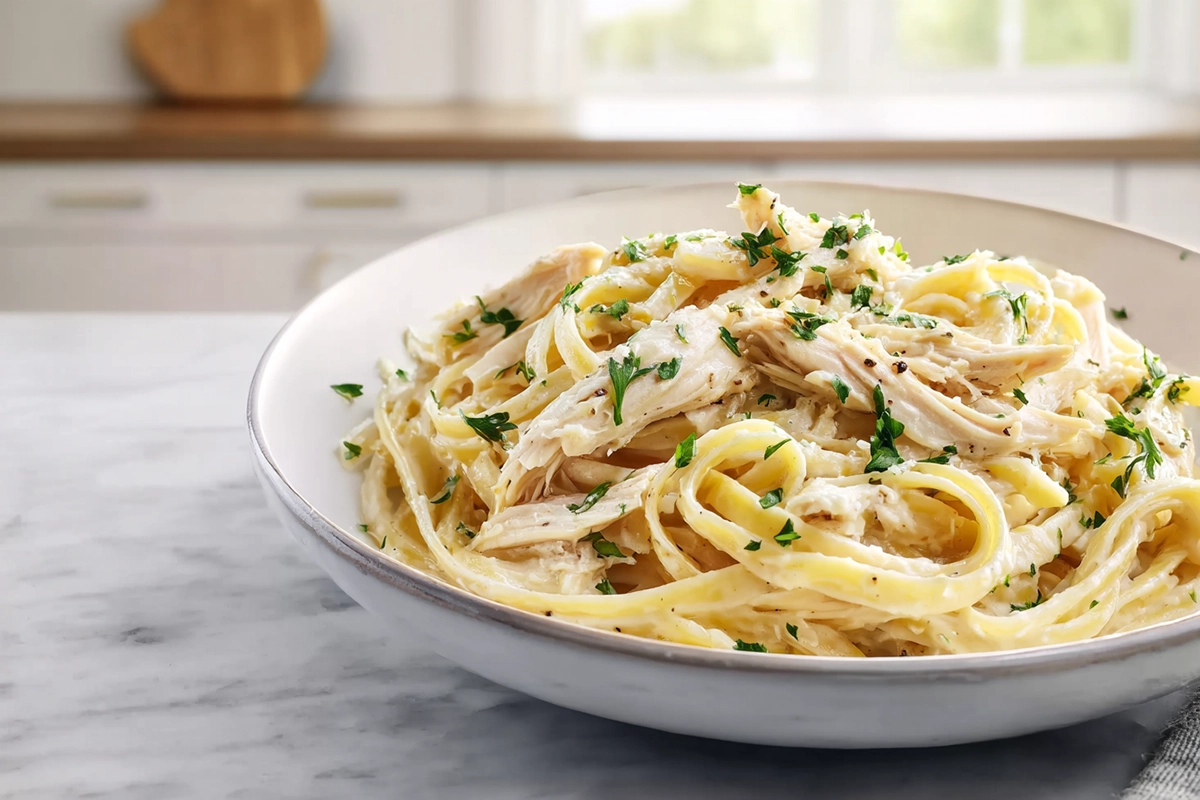
The problem with most chicken Alfredo isn’t the chicken—it’s the sauce. Too thick and it turns pasty. Too hot and it breaks into oily sadness. Too rushed and the cheese seizes, leaving you with something closer to glue than dinner. This is how you end up staring at a pan of expensive dairy, wondering why takeout suddenly feels smarter.
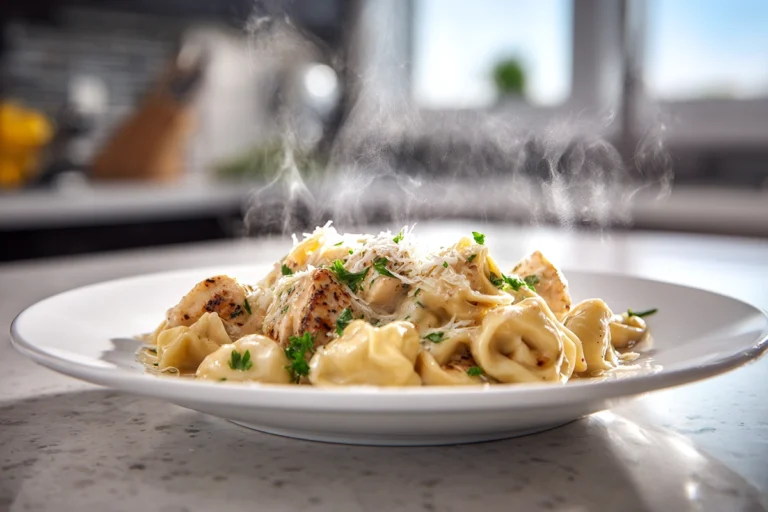
This rotisserie chicken Alfredo fixes all of that by refusing to fight the ingredients. The chicken is already cooked, which means the cream stays clean and sweet instead of picking up scorched flavors. The sauce never boils—just a slow, controlled simmer where butter melts into cream and a whisper of nutmeg keeps the richness from tasting flat. Parmesan goes in last, off aggressive heat, melting into the pasta instead of clumping against it. And when the sauce tightens a little too much? Pasta water loosens it back into that glossy, restaurant-style cling that coats every strand of fettuccine.
This isn’t a “shortcut” Alfredo. It’s a smarter one. The rotisserie chicken warms gently in the finished sauce instead of drying out in a pan. The texture stays silky because starch—not more cream—does the heavy lifting. The result is a bowl that smells like warm butter and dairy, tastes deeply savory, and eats rich without feeling heavy.
You don’t need a blender, a roux, or a second pan parade. Just a pot of well-salted water, a saucepan that never gets too hot, real Parmesan, and the patience to stir instead of rush. The salad on the side? Peppery arugula, lemon, and olive oil—there to cut through the cream and reset your palate for the next bite.
Why Rotisserie Chicken Is the Smart Shortcut (Not a Compromise)
This rotisserie chicken alfredo doesn’t rely on shortcuts to save time—it uses them to protect texture. Fully cooked rotisserie chicken slides into the sauce at the end, which means the cream never has to deal with raw protein or high heat. That matters. Raw chicken demands aggressive cooking, and aggressive cooking is how cream splits and cheese turns grainy. Shredding the chicken instead of chopping it gives you more surface area, so it warms through quickly and actually holds onto the sauce instead of sinking to the bottom like filler.
Fettuccine is doing real work here too. Its flat, wide shape gives the sauce something to cling to, which is essential when you’re building a creamy Alfredo without flour or a roux. Long strands also help distribute the cheese evenly as you toss, reducing the risk of clumps. If you swap pasta shapes, stick with something substantial—thin noodles won’t carry this sauce.
- Rotisserie Chicken: Pre-cooked and gently reheated, it keeps the sauce clean and the meat juicy. If you’re using leftover cooked chicken, shred it finely so it warms without drying out.
- Fettuccine: Wide strands hold onto cream and cheese; thinner pasta will feel slick instead of coated.
- Unsalted Butter: Gives you control over seasoning. If you only have salted butter, ease up on the added salt later.

The Alfredo Sauce Moment That Makes or Breaks This Chicken Alfredo Recipe
Classic Alfredo is an emulsion, not a gravy. Heavy cream and butter form the base, but it’s the slow heat and constant stirring that keep them unified instead of greasy. Nutmeg might seem subtle, but it rounds out the dairy and keeps the sauce from tasting one-note. Skip it, and the richness feels blunt rather than luxurious.
Parmesan is the final structural element. It thickens the sauce as it melts, but only if it’s added gently. High heat tightens the proteins in cheese, causing it to clump and separate. That’s why the sauce should already be warm and slightly thickened before the cheese ever hits the pan. Pasta water steps in as a pressure valve—its starch loosens the sauce without diluting flavor, letting you dial in the exact consistency you want.
- Heavy Cream: The fat content stabilizes the sauce; half-and-half is more likely to break under heat.
- Parmesan Cheese: Freshly grated melts smoothly; pre-shredded cheese resists melting because of anti-caking agents.
- Pasta Water: Starchy and hot, it thins the sauce while keeping it cohesive instead of watery.
The Alfredo Sauce Moment That Makes or Breaks This Chicken Alfredo Recipe
Bringing Cream to the Edge—Not Over It
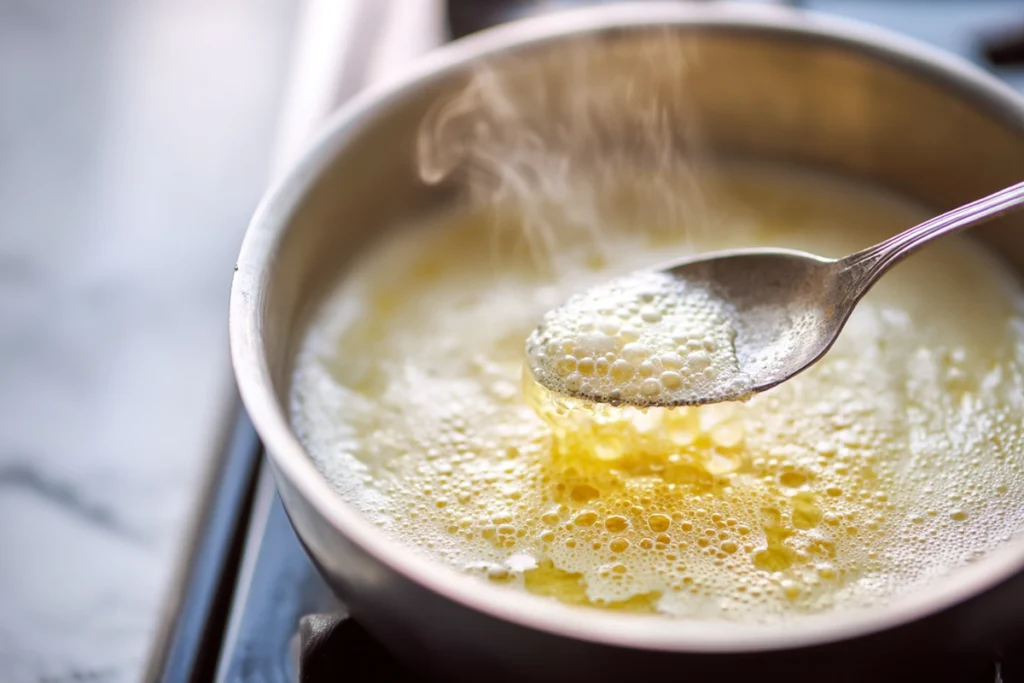
Set the pan over medium-low heat and listen closely. You want a quiet murmur, not a boil—tiny bubbles nudging the surface like champagne, never rolling. As the butter melts into the cream, the smell shifts from plain dairy to warm and rounded; that’s the nutmeg waking up. Drag a spoon through the sauce and lift it—when it coats the back and your finger leaves a clean line, you’re there.
Adding Cheese Without Turning It Gritty
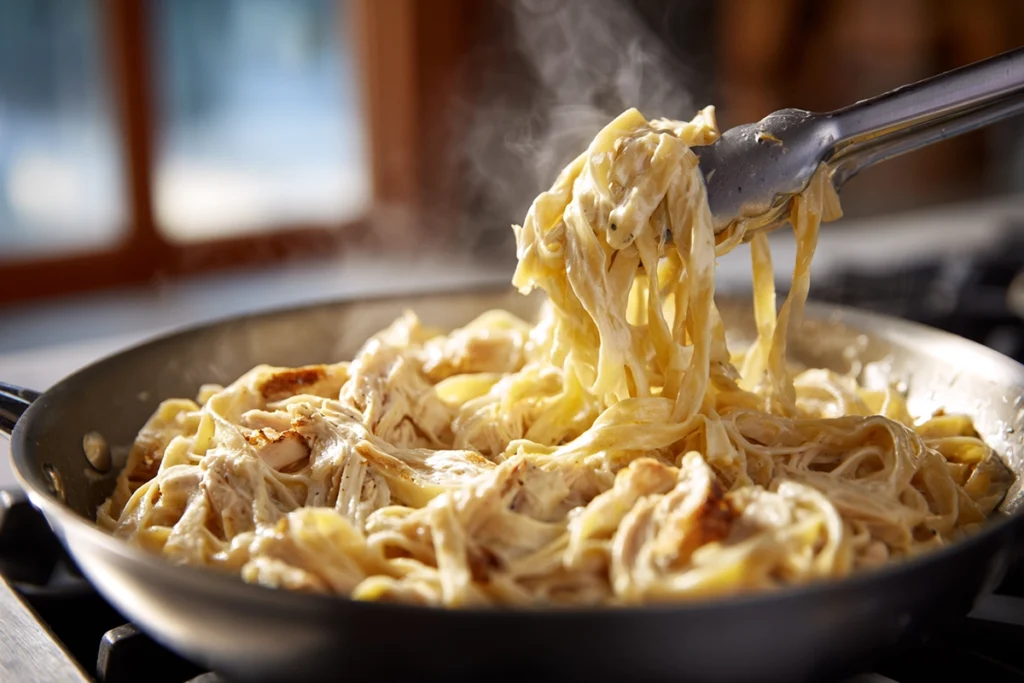
Kill any aggressive heat before the cheese goes in. Sprinkle the Parmesan gradually while tossing; you should hear a soft shush, not a sizzle. Watch the sauce turn from glossy to velvety as the cheese melts—if it tightens too fast or looks pebbly, the pan was too hot. Keep it moving with tongs so every strand gets coated instead of clumped.
Warming the Chicken, Not Cooking It Again
Slide the shredded rotisserie chicken into the sauce and stir just until it’s heated through. You’re looking for steam and a gentle perfume of roast chicken, not browning. Press a piece between your fingers—it should feel plump and springy, never dry. This is the moment the rotisserie chicken alfredo becomes cohesive, not crowded.
Pasta Water Is Not Optional (Here’s How to Use It Without Guessing)
Catch the Starch at the Right Time
Scoop the pasta water while it’s cloudy and hot—this is liquid gold. When the sauce looks thick enough to cling but not flow, drizzle in a small splash and toss. You’ll see it loosen, then tighten again as starch binds fat and cheese back together.
Reading the Sauce as You Toss
Lift a forkful and let it fall back into the pot. If it ribbons and settles slowly, you’ve nailed it. If it drops in a lump, add another small pour of pasta water; if it looks soupy, keep tossing over low heat until it hugs the noodles again.
Knowing When to Stop
Trust your senses over measurements. The finished sauce should glide, not pool, and leave a glossy trail on the pasta. When it smells rich but clean—cream forward, Parmesan savory, no sharp dairy edge—turn off the heat and let it rest for a breath before serving.
Swaps That Actually Work (and One That Doesn’t)
This recipe is forgiving, but not infinitely flexible. If you’re out of fettuccine, linguine works without changing the eating experience much—still wide enough to carry the sauce. Penne will do in a pinch, but expect more sauce left behind in the bowl. For cheese, stick to Parmesan. Pecorino Romano is sharper and saltier; it can work, but cut it with a little extra pasta water to keep things balanced.
Half-and-half is the most common temptation, and it’s also the most common mistake. It can work, but only if you keep the heat very low and accept a slightly thinner sauce. Milk alone is a hard no—it breaks before it thickens and leaves you chasing texture that never arrives. As for the chicken, leftover cooked chicken is fine if it’s still moist, but shred it cold and add it gently. Re-cooking diced chicken will dry it out fast.
One thing not to do: don’t bake this. The sauce tightens, the cheese seizes, and what was silky becomes stiff and oily.
The Peppery Arugula Salad That Saves the Whole Dinner
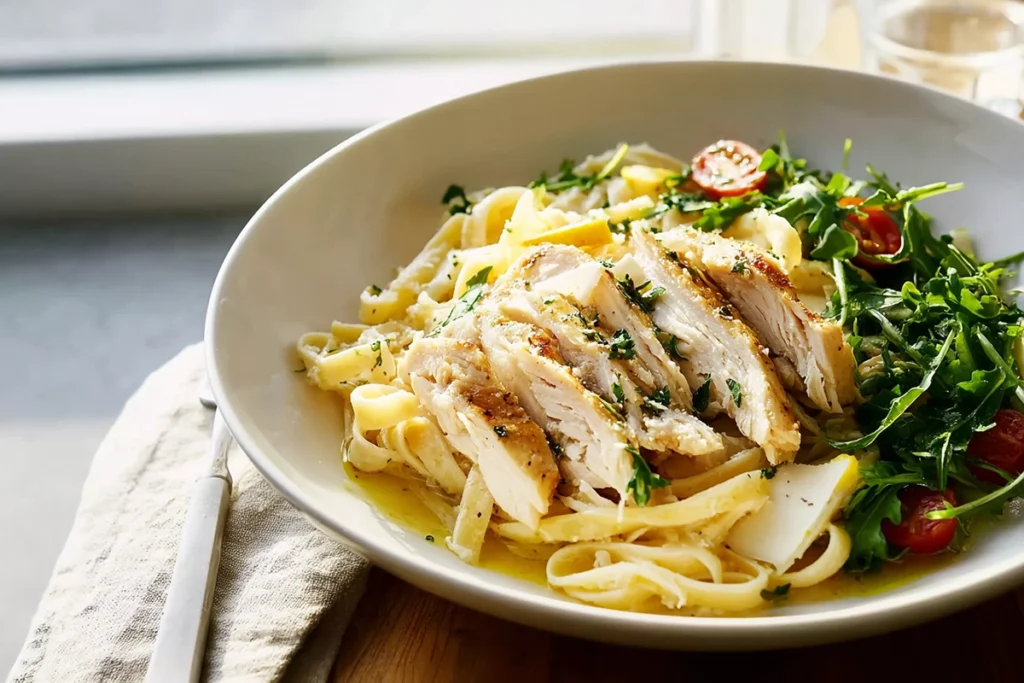
This rotisserie chicken alfredo is rich by design, which is exactly why it wants something sharp and fresh next to it. The arugula salad isn’t decorative—it’s functional. Peppery greens, juicy tomatoes, and lemon cut straight through the cream, resetting your palate between bites.
Serve the pasta hot and the salad cold. A drizzle of good olive oil and a squeeze of lemon are enough; anything heavier fights the Alfredo instead of helping it. If you’re feeding a crowd, add a basket of crusty bread—not for the pasta, but for the plate. That last swipe of sauce is worth it.
Real-World Fixes When Things Go Sideways
If the sauce tightens while sitting, don’t panic. Warm it gently and loosen with a splash of water or cream, stirring slowly until it relaxes. If leftovers seem dry the next day, reheat low and slow on the stove—never the microwave—until the sauce smooths back out.
Taste before serving. Alfredo dulls quickly if it needs salt, and a small pinch at the end makes everything taste intentional again.
This is the kind of dinner that feels indulgent without being fussy. It rewards paying attention, not extra effort. Once you make it this way—slow heat, real cheese, smart shortcuts—you’ll stop chasing restaurant Alfredo and start trusting your own pan.
Common Questions About Rotisserie Chicken Alfredo
Can I make this ahead without the sauce separating?
I wouldn’t recommend fully assembling it ahead of time. Alfredo sauce tightens and loses its silky texture as it cools, especially once the cheese sets. If you need a head start, cook the pasta and make the sauce separately, then store them apart. Rewarm the sauce gently on the stove, loosen it with a splash of water or cream, and only then toss with the pasta and chicken right before serving.
What’s the best pasta if I don’t have fettuccine?
Stick with a long, sturdy pasta. Linguine is the closest substitute and behaves almost the same in the sauce. Tagliatelle also works well. Avoid thin noodles like spaghetti—they get slick instead of coated—and skip short shapes unless you’re okay with sauce pooling at the bottom of the bowl.
Can I use half-and-half instead of heavy cream?
Yes, but only with care. Half-and-half has less fat, so it’s more likely to break if overheated. Keep the heat very low and don’t rush the simmer. Expect a slightly looser sauce and plan to rely more heavily on pasta water to help it cling.
Why does my Alfredo taste bland even with Parmesan?
Alfredo dulls quickly if it’s under-salted. Parmesan adds savoriness, not seasoning. Taste the sauce after the cheese melts and add salt until the flavors snap into focus. Also make sure your pasta water was well-salted—bland noodles will mute the entire dish, even in a rich rotisserie chicken alfredo.
How do I reheat leftovers without ruining the sauce?
Reheat slowly on the stove over low heat. Add a small splash of water or cream and stir gently until the sauce loosens and turns glossy again. Never microwave—it overheats the cheese unevenly and causes the sauce to split.
Print
Rotisserie Chicken Alfredo
- Total Time: 25 minutes
- Yield: 4 to 6 servings 1x
Description
Rotisserie chicken alfredo with a silky, glossy cream sauce made from butter, heavy cream, and real Parmesan. This easy weeknight pasta uses smart shortcuts to deliver rich flavor without breaking the sauce.
Ingredients
- 1/4 cup unsalted butter
- 2 cups heavy cream
- 1/2 teaspoon kosher salt
- 1/2 teaspoon freshly ground black pepper
- 1/4 teaspoon ground nutmeg
- 12 ounces fettuccine
- 2 cups shredded rotisserie chicken
- 1 cup grated Parmesan cheese
- 1 cup reserved pasta water
- Fresh parsley, for garnish
- 4 cups baby arugula
- 1 cup grape tomatoes, halved
- 1/2 cup pistachios
- Extra virgin olive oil, for drizzling
- Fresh lemon juice, for drizzling
- Coarse salt, optional
- Thin strips Parmesan cheese
Instructions
- Bring a large pot of generously salted water to a boil.
- In a saucepan over medium-low heat, melt the butter with the cream, salt, black pepper, and nutmeg until gently simmering and slightly thickened.
- Cook the fettuccine until al dente, reserving 1 cup of pasta water before draining.
- Return pasta to the pot and add the Alfredo sauce and shredded rotisserie chicken over low heat.
- Toss gently while adding Parmesan cheese until the sauce turns silky and coats the pasta.
- Add reserved pasta water as needed to loosen the sauce.
- Toss arugula, tomatoes, and pistachios with olive oil, lemon juice, and salt.
- Serve pasta hot with salad on the side.
Notes
- Use freshly grated Parmesan for best melting.
- Do not boil the cream sauce or it may separate.
- Reheat leftovers gently on the stovetop with a splash of water or cream.
- Prep Time: 5 minutes
- Cook Time: 20 minutes
- Category: Dinner
- Method: Stovetop
- Cuisine: American
Nutrition
- Serving Size: 1 serving
- Calories: 720
- Sugar: 6
- Sodium: 820
- Fat: 46
- Saturated Fat: 27
- Unsaturated Fat: 17
- Trans Fat: 0
- Carbohydrates: 48
- Fiber: 3
- Protein: 33
- Cholesterol: 165