Chicken with Buttered Noodles: A Skillet Dinner That Feels Like Home

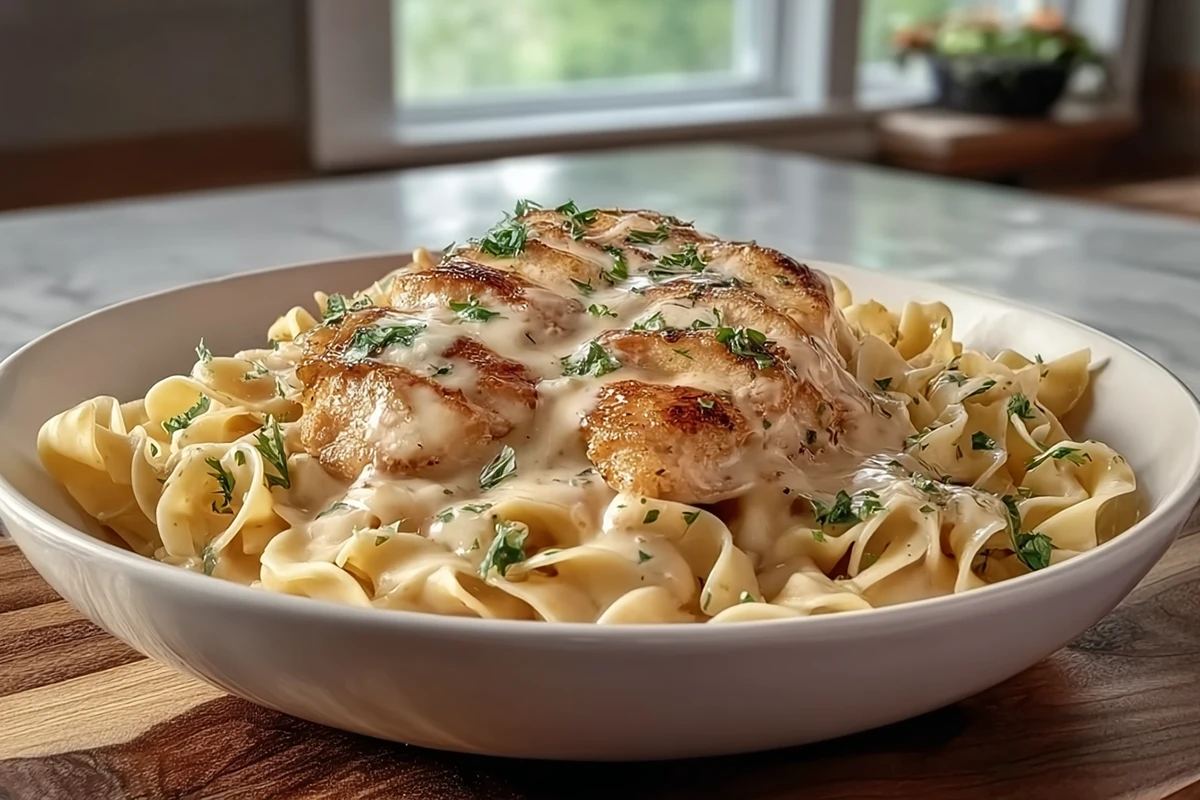
There’s a particular smell that tells you dinner is going to be worth sitting down for. It’s the soundless sizzle of chicken hitting a hot skillet, followed by butter melting into the browned bits, then garlic warming just enough to turn sweet instead of sharp. Add a pinch of thyme and oregano, and suddenly the kitchen smells steady and familiar—like something you’ve made before, even if you haven’t.
This is the kind of meal that doesn’t ask for much but gives plenty back. Tender chicken, cooked until it’s properly golden, rests in a simple cream sauce that’s built from the pan itself—chicken broth loosening the flavor, cream rounding the edges, mushrooms adding depth without stealing the show. Nothing flashy. Nothing extra. Just ingredients doing exactly what they’re supposed to do, in the right order, at the right heat.
The noodles matter more than they seem. Buttered, salted, and left alone, they act as a quiet base for everything else. They catch the sauce without drowning in it. They keep the dish grounded. This is why chicken with buttered noodles works so well as a family dinner—it feels complete without feeling heavy, comforting without being fussy.
What follows isn’t a race through steps or a list to skim and forget. It’s a look at where this dish succeeds or fails depending on timing, temperature, and a few small decisions that make a big difference. Once those are clear, the cooking becomes simple—and repeatable, which is exactly the point.
Table of Contents
The Ingredients That Earn Their Spot in the Pan
This is one of those dishes where every ingredient has a job, and none of them are here for decoration. Chicken with buttered noodles works because the flavors build naturally in the skillet, not because anything is hiding behind excess seasoning or complicated techniques. The goal is balance—rich without being heavy, familiar without being flat.
The chicken breasts are pounded to an even thickness for a reason. Even meat cooks evenly, which means you get proper browning without dry edges or undercooked centers. This matters more than the cut itself. Boneless, skinless breasts stay neutral and let the sauce do the talking, which is exactly what you want in an easy chicken dinner like this.
Olive oil starts the process because it can handle higher heat without burning. Butter comes later, once the chicken is out of the pan, so it melts into the mushrooms instead of scorching. Mushrooms bring depth and a little earthiness, but only if you let them release their moisture before moving on. Rushing them leaves the sauce thin and dull.
Chicken broth lifts the browned bits from the pan and gives the sauce structure, while heavy cream softens everything without turning it into a full cream bomb. Dried thyme and oregano keep the flavor grounded and familiar—classic American comfort food territory—without overpowering the dish.
- Boneless skinless chicken breasts: Pound evenly so browning and doneness line up
- Olive oil: High-heat friendly for proper searing
- Unsalted butter: Added later for control and clean flavor
- Mushrooms: Provide depth once properly browned
- Chicken broth: Builds sauce from the pan itself
- Heavy cream: Rounds the sauce without making it heavy
- Garlic, thyme, oregano: Simple herbs that support, not dominate
If you only have salted butter, skip adding extra salt until the end. This sauce doesn’t forgive overseasoning.
Buttered Noodles: Quiet Support, Not a Side Dish
The noodles in this dish aren’t meant to compete with the chicken—they’re meant to carry it. Buttered noodles work here because they stay simple. No cream, no cheese mixed in, no distractions. They catch the sauce, hold onto it just enough, and make every bite feel complete without stealing attention.
Egg noodles are ideal because they’re tender but sturdy, with just enough surface texture to grab the sauce. Cook them until just tender, not soft. Overcooked noodles collapse under the sauce and turn the dish heavy fast. Butter goes on while the noodles are hot so it melts cleanly and coats evenly. Salt matters here more than people think—it’s what keeps the noodles from tasting like an afterthought.
Parmesan stays optional and finishes the dish at the table. A light shower adds sharpness and depth, but the noodles should still taste like butter first. That restraint is what keeps this meal squarely in comfort-food territory instead of drifting into something heavier than it needs to be.
- Egg noodles: Tender but structured enough to hold sauce
- Butter: Added hot so it coats, not clumps
- Salt: Essential for keeping the noodles from fading into the background
- Parmesan (optional): A finishing touch, not a base flavor
This is the kind of setup that makes the whole plate feel intentional. Simple, steady, and worth repeating.

The One Step That Decides Everything: Browning the Chicken Properly
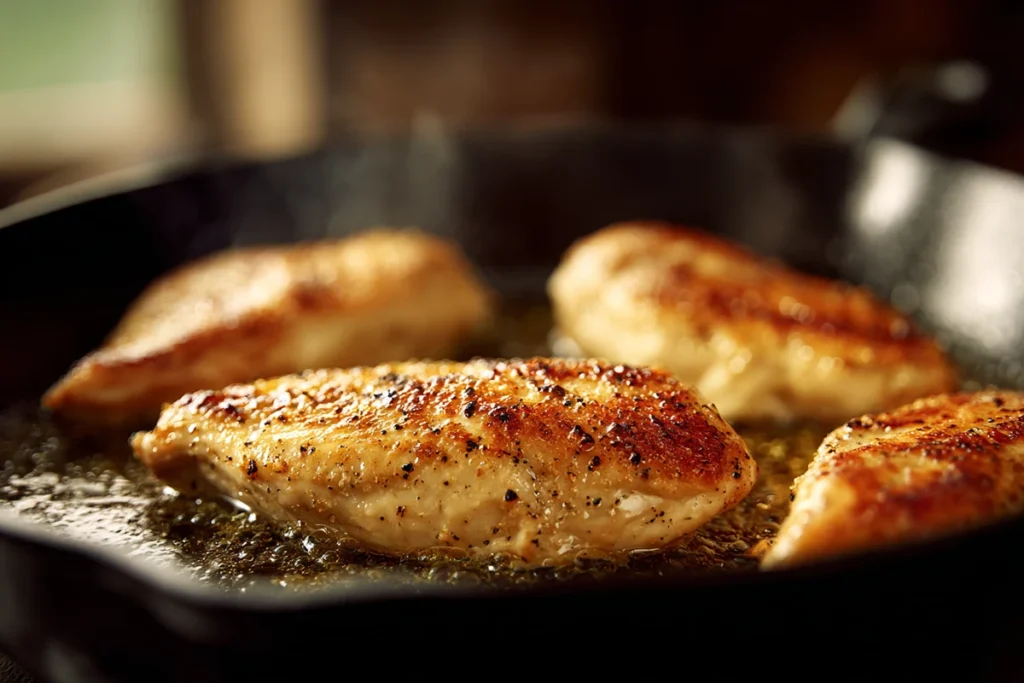
This dish lives or dies in the first few minutes at the skillet. When the chicken hits hot olive oil, you should hear a confident sizzle—not a weak hiss. That sound tells you the pan is hot enough to build color instead of steaming the meat. Leave the chicken alone until the edges turn golden and release naturally; if it sticks, it isn’t ready yet.
Visually, you’re looking for a deep, even browning across the surface, not pale spots or scorched patches. The chicken should feel firm when pressed, like the base of your thumb, but still spring back slightly. Pull it out as soon as it’s cooked through. Overcooking here turns a comforting chicken dinner into something dry before the sauce ever gets a chance to help.
What the Mushrooms Are Doing (And Why Butter Comes Second)
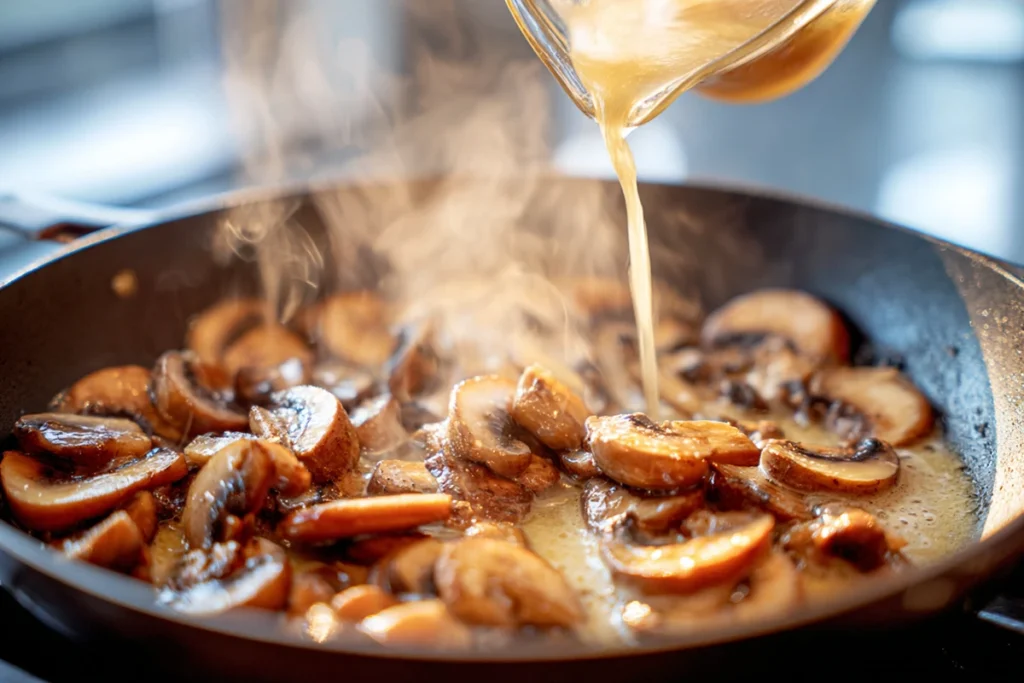
Once the chicken is out, the skillet should look a little rough—that’s good. Melt the butter over medium heat and add the mushrooms, spreading them out so they actually touch the pan. At first they’ll squeak and release moisture, and the sound will be more of a gentle hiss than a sizzle.
Keep cooking until that moisture cooks off and the mushrooms start to brown. You’ll smell a nutty, savory aroma as the butter and mushrooms come together. Only then does the garlic go in. When it smells warm and slightly sweet—not sharp—you’re exactly where you need to be.
Chicken with Buttered Noodles Works Because the Sauce Knows Its Place
Deglazing is where the sauce earns its depth. Pour in the chicken broth and listen as it loosens the browned bits from the pan, turning them into flavor instead of waste. Let it simmer until the liquid reduces and the smell shifts from thin and brothy to rich and savory.
When the cream goes in, the sauce should look silky, not thick. A gentle simmer is all you want—no boiling. The texture should lightly coat the back of a spoon, leaving a clean line when you run your finger through it. This restraint is what keeps chicken with buttered noodles firmly in American comfort food territory instead of drifting into heavy, overdone cream sauce.
Bringing the Chicken Back Without Ruining It
Return the chicken to the skillet only long enough to warm through. You’re not cooking it again—you’re letting it soak up just enough sauce to stay juicy. The smell at this point should be buttery, herby, and calm, not sharp or overly rich.
The sauce should cling to the chicken and pool lightly around it, not drown it. If it feels too thick, a small splash of broth brings it back into balance. This is how an easy chicken dinner stays dependable instead of fussy.
Buttered Noodles: Timing Matters More Than Technique
The noodles should be cooked and ready before the sauce finishes. When tossed with butter while still hot, they should look glossy and separate easily, not clump. You want them tender but with enough structure to hold up under the sauce.
When everything comes together, the noodles act as a base, not a sponge. They should cradle the chicken and sauce, not swallow it. That balance is what makes this dish feel settled and complete when it hits the table.
Swaps That Hold Up (And One That Doesn’t)
This recipe is forgiving in a few places, but not all of them. If you have leftover rotisserie chicken, shred it while it’s cold and add it only at the end, just long enough to warm through in the sauce. It won’t brown the same way, but it still works for a fast weeknight version.
Chicken thighs can be used, but they change the character of the dish. They bring more richness and need a little longer in the pan, which can tip the sauce heavier if you’re not careful. If you go this route, trim excess fat and keep the simmer gentle.
If you’re out of heavy cream, half-and-half can step in, but expect a thinner sauce and stop short of boiling—it will break if pushed too hard. Milk, on the other hand, doesn’t hold up here and leaves the sauce flat and watery. That’s one swap that quietly ruins the balance.
Skip baking this dish altogether. You’ll lose the browned bits, the controlled reduction, and most of the flavor that makes it worth repeating.
How This Shows Up on the Table
This is a skillet-to-table kind of meal. Serve the chicken nestled over the buttered noodles, spooning just enough sauce over the top to coat without flooding the plate. A small handful of chopped parsley adds freshness, and grated Parmesan is best offered at the table so everyone can decide how sharp they want the finish.
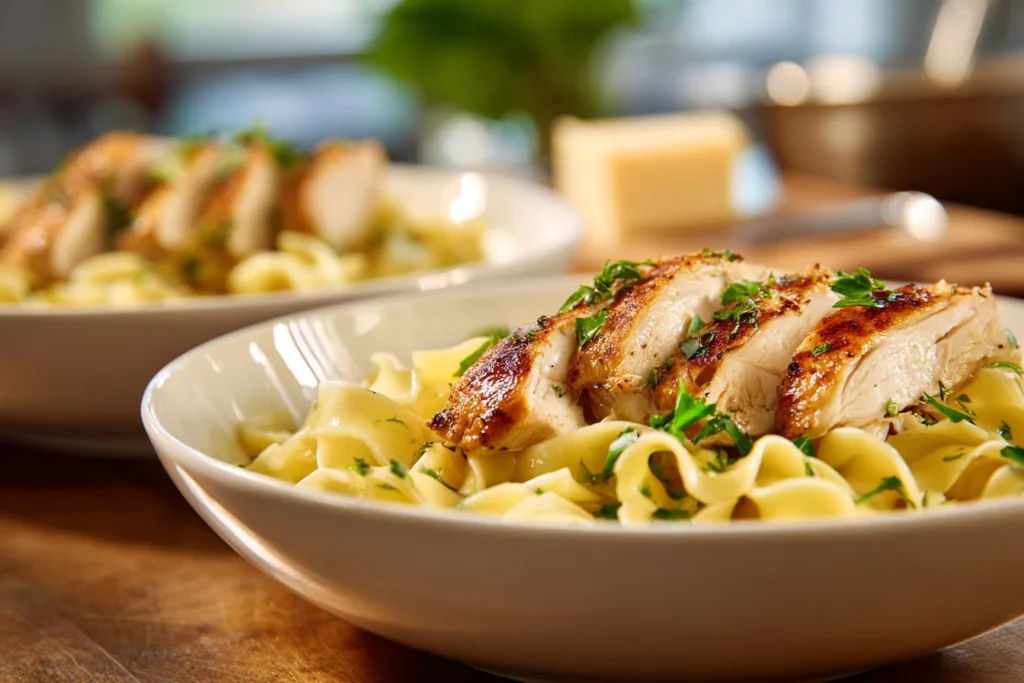
Chicken with buttered noodles pairs best with something crisp and simple. A green salad with a light vinaigrette cuts the richness without competing. Steamed green beans or broccoli work for the same reason—clean, familiar, and not demanding attention.
If you’re serving this for a family dinner, keep it unfussy. Warm bowls, extra noodles on the side, and plenty of sauce in the skillet invite seconds without ceremony.
When Things Go Sideways (And How to Recover)
If the sauce tightens too much, a splash of warm chicken broth brings it back without dulling the flavor. Avoid adding cream at this stage—it softens the sauce but muddies it. If the chicken feels dry, let it rest in the sauce off the heat for a minute or two; gentle warmth does more than more cooking ever will.
Taste before adding salt at the end, especially if you used Parmesan or salted butter. This dish rewards restraint.
There’s a reason meal like this stick around. Chicken with buttered noodles doesn’t chase trends or try to impress—it just shows up, steady and dependable, the way a good dinner should. Cook it once, then cook it again, and you’ll start to feel where it asks for your attention and where it doesn’t. That’s when it becomes yours.
Get inspired with more mouthwatering recipes! Follow me on Facebook and Pinterest for new cooking ideas every week.
FAQ
Can I make chicken with buttered noodles ahead of time?
You can make it a few hours ahead, but it’s best served fresh. If you do make it early, keep the chicken and sauce together and store the noodles separately so they don’t soak up too much liquid. Reheat gently on the stove with a small splash of chicken broth to loosen the sauce.
Why did my sauce turn out thin?
A thin sauce usually means it didn’t simmer long enough after adding the chicken broth or cream. The sauce needs a few quiet minutes to reduce so the flavors concentrate and the texture tightens. If it’s still thin, keep it at a gentle simmer and give it another minute or two before adjusting anything else.
Can I use a different type of pasta instead of egg noodles?
Yes, but the texture will change. Egg noodles work best because they’re tender and slightly absorbent without turning heavy. If you use something like fettuccine or rotini, cook it just to al dente and expect the dish to feel a little less classic but still comforting.
Is it normal for the chicken to finish cooking in the sauce?
Yes, and that’s actually the goal. The chicken should be mostly cooked when it comes out of the pan, then finish gently warming through in the sauce. This keeps it juicy and helps it absorb flavor without drying out.
Print
Chicken with Buttered Noodles
- Total Time: 30 minutes
- Yield: 4 servings 1x
- Diet: Halal
Description
Chicken with buttered noodles is a classic American comfort food made with tender pan-seared chicken, a light cream sauce, and simple buttered egg noodles. It’s a dependable, cozy dinner that works just as well for busy weeknights as it does for relaxed family meals.
Ingredients
- 4 boneless skinless chicken breasts, pounded to even thickness
- Salt and pepper, to taste
- 2 tablespoons olive oil
- 1 tablespoon unsalted butter
- 8 ounces mushrooms, sliced
- 2 cloves garlic, minced
- 1 teaspoon dried thyme
- 1/2 teaspoon dried oregano
- 1 cup chicken broth
- 1 cup heavy cream
- 8 ounces egg noodles
- 2 tablespoons butter
- Fresh parsley, chopped, for garnish
- Grated Parmesan cheese, for garnish
Instructions
- Season the chicken breasts evenly with salt and pepper.
- Heat olive oil in a large skillet over medium-high heat and add the chicken, cooking until golden brown on both sides and cooked through, then remove from the pan.
- Lower the heat to medium, add butter, and cook the mushrooms until they release moisture and begin to brown.
- Add garlic, thyme, and oregano and cook briefly until fragrant.
- Pour in the chicken broth to deglaze the pan, scraping up any browned bits, and simmer until reduced.
- Stir in the heavy cream and gently simmer until the sauce lightly thickens.
- Return the chicken to the skillet and warm through in the sauce.
- Cook the egg noodles separately until just tender, then toss with butter and salt.
- Serve the chicken and sauce over the buttered noodles and garnish with parsley and Parmesan.
Notes
- Pound the chicken evenly to ensure proper browning and even cooking.
- Avoid boiling the sauce after adding cream to prevent separation.
- If the sauce thickens too much, loosen it with a splash of warm chicken broth.
- Serve immediately for the best texture.
- Prep Time: 10 minutes
- Cook Time: 20 minutes
- Category: Main Course
- Method: Skillet
- Cuisine: American
Nutrition
- Serving Size: 1 plate
- Calories: 620
- Sugar: 5
- Sodium: 820
- Fat: 38
- Saturated Fat: 18
- Unsaturated Fat: 17
- Trans Fat: 0
- Carbohydrates: 34
- Fiber: 2
- Protein: 42
- Cholesterol: 155