Creamy Garlic Butter Steak Pasta: A Silky, Sear-First Dinner That Beats Takeout

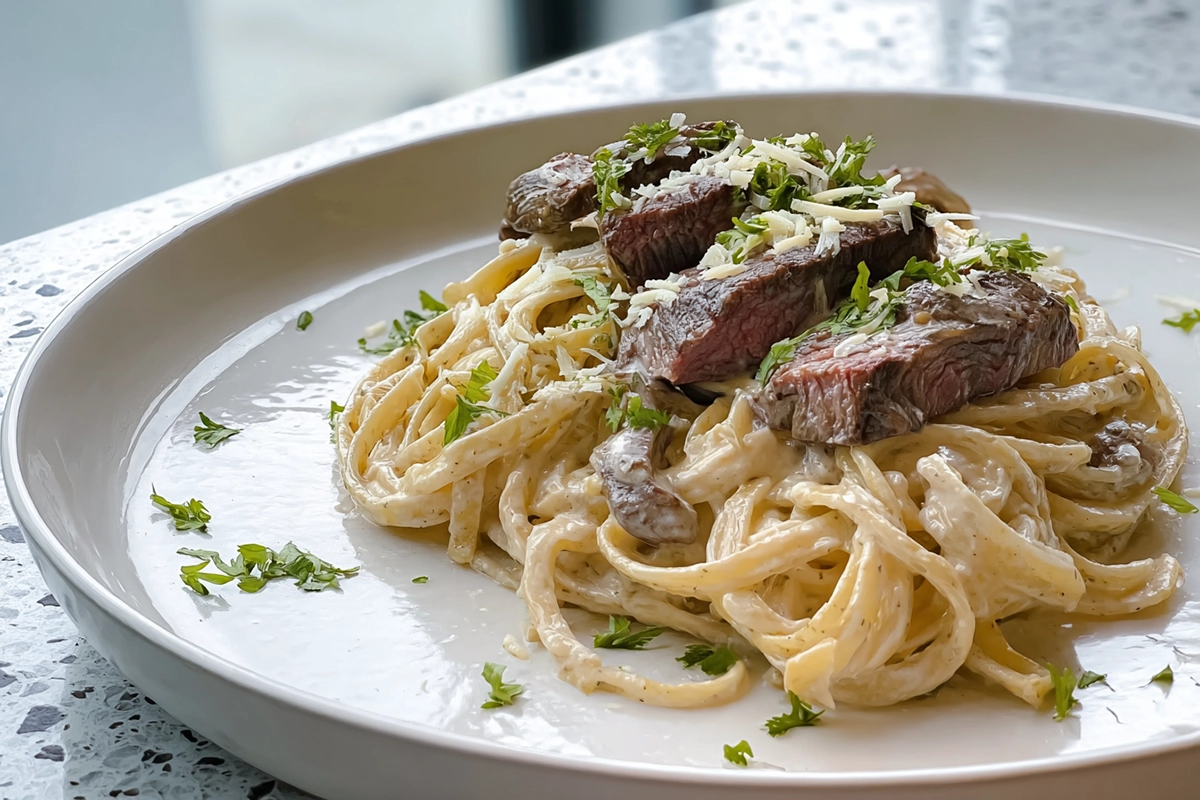
The problem with most steak pasta dinners is simple: the steak turns gray, the sauce turns thin, and somewhere along the way you wonder why you didn’t just order delivery. You want richness without greasiness, creaminess without heaviness, and steak that still tastes like steak—not something simmered into submission. This dish fixes all of that, fast.
The solution starts with respect for heat. The steak hits a hot skillet first—no sauce, no distractions—until it forms a dark, savory crust that smells like browned butter and beef fat. Those caramelized bits stay in the pan, where butter melts into them, garlic softens without burning, and tomato paste cooks just long enough to lose its sharp edge and gain depth. Heavy cream comes in last, not to drown the flavors but to carry them, turning the pan drippings into a smooth, garlic-forward sauce that clings to every twist of fusilli. A pinch of smoked paprika adds warmth without shouting, and Parmesan tightens everything into something spoon-coating and glossy.
This is a 30-minute dinner built around timing, not tricks. One skillet, one pot of pasta, and a short list of ingredients doing exactly what they’re supposed to do. The steak rests while the sauce comes together. The pasta finishes in the cream so it absorbs flavor instead of floating in it. At the end, sliced steak goes on top—juicy, pink, unapologetic.
You don’t need special equipment or chef instincts here. Just a hot pan, a little patience, and the confidence to let butter, garlic, and cream do what they’ve always done best.
Table of Contents
Why This Creamy Garlic Butter Steak Pasta Uses Tomato Paste on Purpose
This dish doesn’t lean on a long ingredient list—it leans on function. Every component is here to do a specific job, and if one is missing or swapped poorly, the whole thing feels flat. The steak brings richness, but it’s the supporting cast that turns it into a cohesive pasta instead of beef sitting on noodles.
- Striploin steak: This cut hits the sweet spot—tender enough to sear quickly, fatty enough to stay juicy. Ribeye can work, but it renders more fat and can overwhelm the sauce. Leaner cuts dry out before the pasta is ready.
- Butter + oil: Oil gets the pan hot without burning; butter comes in later for flavor. If you only have salted butter, ease up on seasoning the sauce at the end.
- Onion and garlic: Onion provides sweetness and body once softened; garlic is there for aroma, not aggression. It’s added after the butter melts so it perfumes the fat instead of scorching.
- Tomato paste: This is the quiet powerhouse. It doesn’t make the sauce taste “tomatoey.” Cooked briefly in fat, it adds depth, color, and umami—essential for balancing cream and steak.
- Heavy cream: This is non-negotiable. Milk or half-and-half won’t emulsify the same way and will leave you with a thin, forgettable sauce.
- Smoked paprika & garlic powder: Paprika adds warmth and subtle smoke; garlic powder fills in the background where fresh garlic can’t reach.
- Fusilli pasta: The spirals trap sauce. Long noodles let it slide right off.
- Parmesan: Adds salt and structure. Pre-shredded won’t melt smoothly—grate it fresh.
- Optional flour slurry: Not a crutch—just insurance if your cream is thinner than expected.

Building a Cream Sauce That Clings (Not One That Slides Off the Pasta)
The core idea behind this recipe is control. Cream sauces fail when they’re rushed or diluted, and steak pasta fails when everything is thrown together at once. Here, the order matters.
First comes concentration. The fond left behind from searing the steak isn’t just flavor—it’s structure. Butter melts into it, onion softens in it, and tomato paste binds to it, creating a base that’s already thick before cream ever hits the pan. That’s why this Creamy Garlic Butter Steak Pasta tastes rich without feeling heavy.
Second comes emulsification. Heavy cream works because its fat content allows it to absorb the flavors already in the skillet instead of separating. Simmered gently, it thickens naturally. The flour slurry exists only as a backup—used sparingly and off heat so it tightens the sauce without turning it gluey.
Finally, the pasta finishes in the sauce. Fusilli releases starch as it simmers, tightening everything just enough so the sauce coats instead of pools. Parmesan goes in last, reinforcing that structure and locking everything together.
This isn’t restaurant magic. It’s sequencing. Get that right, and the dish does the rest.
Searing the Steak Without Steaming It (The Make-or-Break Move)
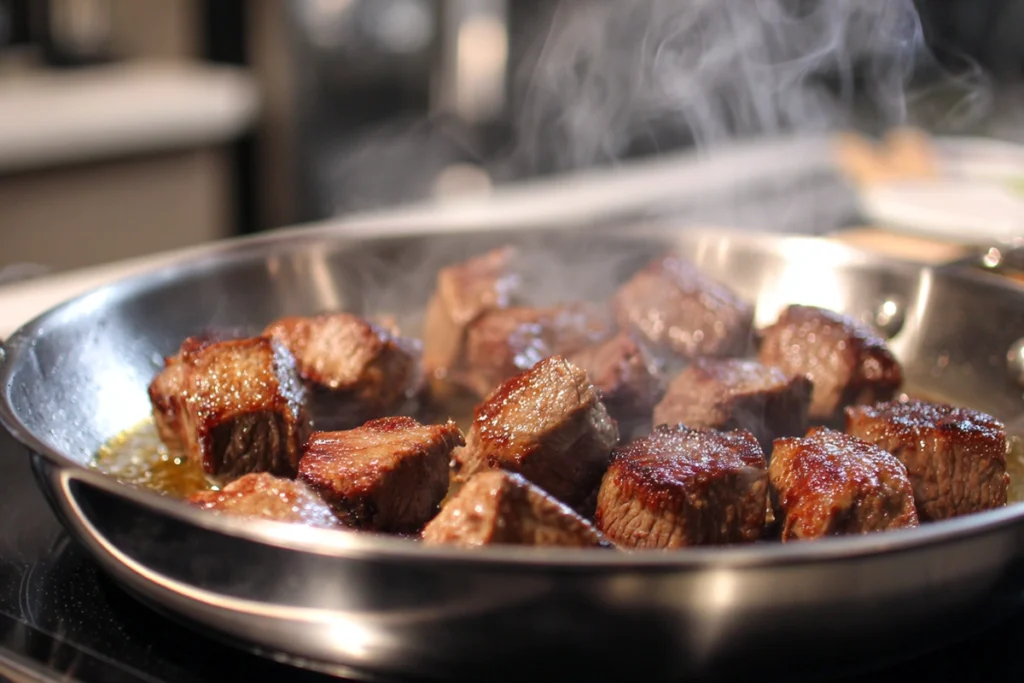
Start with the steak out of the fridge. Cold meat hits a hot pan and panics—moisture releases, steam forms, and the crust never happens. When the striploin feels cool but not icy to the touch, season it generously and heat the oil until it shimmers and just begins to smoke.
When the steak goes down, listen. You want a sharp, confident sizzle—not a weak hiss. The surface should immediately grab the pan, and within a couple of minutes you’ll see the edges turn deep brown with a faint crust creeping up the sides. Resist moving it; when it’s ready, it releases easily. Flip once, sear the other side, then lift it out and let it rest. The smell at this point should be rich and beefy, almost nutty—those browned bits left behind are flavor you’re about to use.
Building a Cream Sauce That Clings (Not One That Slides Off the Pasta)
Lower the heat before anything else goes in. Drop in the butter and watch it melt into the fond, turning the pan glossy as you scrape up every browned bit. When the onion hits, you should hear a gentle sizzle and smell sweetness within a minute—not sharpness. The garlic follows briefly; the moment you smell toasted garlic, you’re ready for the next move.
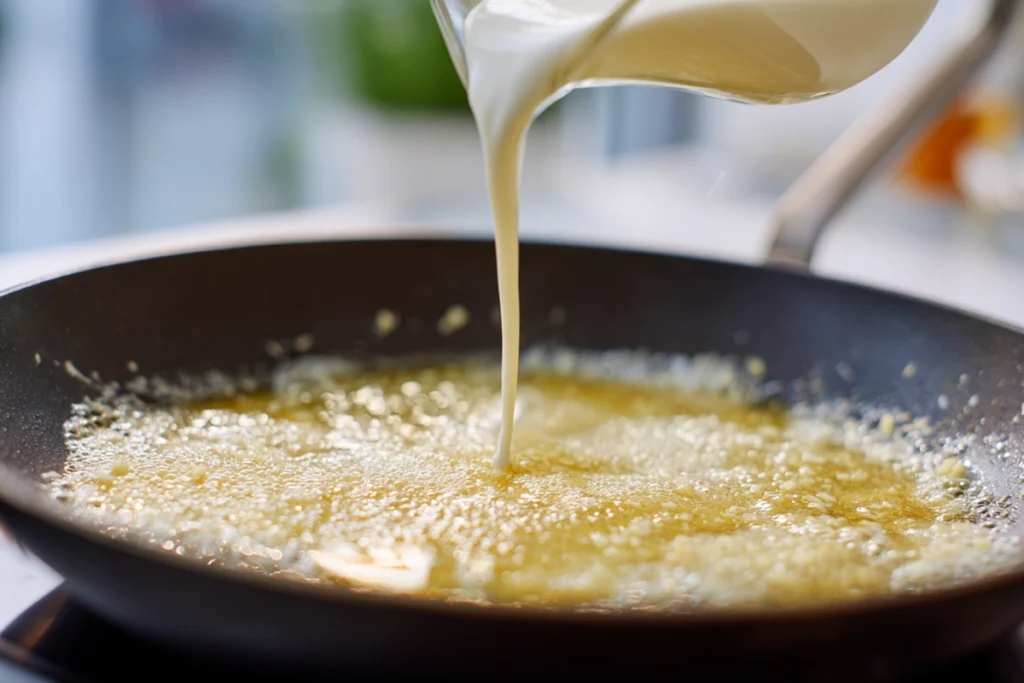
Tomato paste goes in and looks thick and brick-red at first. Stir it until it darkens slightly and smells savory rather than acidic—that’s the cue it’s ready. Pour in the cream slowly; it should bubble lazily, not boil. If it looks loose, this is where the flour slurry steps in—off heat, stirred gently until the sauce coats the back of a spoon.
Now fold in the al dente fusilli. As it simmers, the sauce tightens and clings, wrapping each spiral instead of pooling underneath. When you stir, it should feel silky and resistant, not soupy. Finish with Parmesan and parsley, then slice the rested steak and lay it on top. At this point, the Creamy Garlic Butter Steak Pasta should smell like butter, garlic, and warm cream—cozy, rich, and unmistakably done.
Swaps That Actually Work (and One That Doesn’t)
If you’re working with what’s already in the fridge, there’s some flexibility here—but not unlimited freedom. Steak is the star, but it doesn’t have to be precious. Striploin is ideal, but sirloin works if you slice it thin after resting. Ribeye is fine too, though it will render more fat and make the sauce richer than intended. I’d avoid anything ultra-lean; it dries out before the sauce is ready.
Leftover cooked protein can be smartly repurposed. If you’ve got leftover steak, slice it cold and warm it gently on top of the pasta at the end—don’t simmer it in the sauce or it’ll toughen. Rotisserie chicken also works in a pinch: shred it cold, then fold it in right before serving so it absorbs heat without overcooking.
Pasta-wise, short shapes with ridges are your friend. Penne or rotini are fine stand-ins for fusilli. Long noodles like spaghetti technically work, but the sauce slides off instead of clinging. One swap that doesn’t work: replacing heavy cream with milk or half-and-half. The sauce won’t thicken properly and tastes flat, no matter how much cheese you add.
How to Serve This on a Real Weeknight (Not a Styled Photo Shoot)
This is a bowl-first kind of dinner. Serve it hot, in wide bowls that keep the sauce warm and pooled around the pasta instead of spreading thin. Keep the steak slices on top so everyone gets the texture contrast—tender beef against creamy pasta—right up until the last bite.

Because the Creamy Garlic Butter Steak Pasta is rich, pair it with something sharp and fresh. A simple arugula salad with lemon and olive oil cuts the cream beautifully. Roasted broccolini or green beans with a squeeze of lemon do the same job without competing for attention. Skip heavy sides—garlic bread is tempting, but it tips the meal into too much of a good thing.
Last Tips Before You Shut the Stove Off
This dish rewards restraint. Don’t rush the sear, don’t boil the cream, and don’t drown it in cheese. Taste as you go, especially before adding salt at the end—Parmesan brings plenty on its own.
If you end up with leftovers, reheat gently on the stove with a splash of cream or water. Microwave heat turns steak rubbery fast.
This is the kind of dinner that feels indulgent without being wasteful, impressive without being stressful. Once you’ve made it once, you’ll stop looking at steak and pasta as separate ideas—and start seeing them as one very good plan.
Get inspired with more mouthwatering recipes! Follow me on Facebook and Pinterest for new cooking ideas every week.
Common Questions About Creamy Garlic Butter Steak Pasta
Can I use a different cut of steak without ruining the dish?
Yes—but choose carefully. Striploin works best because it sears quickly and stays juicy. Sirloin is the safest alternative if sliced thin after resting. Ribeye is usable but richer; it releases more fat, which can make the sauce heavier than intended. Avoid very lean cuts like eye of round—they cook unevenly and turn tough before the pasta is ready.
What pasta shapes work if I don’t have fusilli?
Use short, textured pasta that traps sauce. Penne, rotini, or cavatappi all work because their ridges hold the cream sauce instead of letting it slide off. Long noodles like spaghetti technically function, but the sauce won’t cling the same way and the dish loses its intended texture balance.
Can this be made ahead, or does the sauce break?
This dish is best cooked and served fresh. Cream sauces tighten as they cool, and reheating too aggressively can cause separation. If you need to prep ahead, sear the steak and refrigerate it separately, then make the sauce fresh and warm the steak gently on top just before serving. That preserves both texture and flavor.
Is there a lighter substitute for heavy cream that still works?
No direct substitute will behave the same way. Heavy cream is essential because its fat content stabilizes the sauce. Milk or half-and-half will stay thin and taste diluted, even with extra cheese. If you want a lighter portion, reduce the amount you serve—not the cream itself.
How do I reheat leftovers without turning the steak tough?
Reheat gently on the stove over low heat. Add a splash of cream or water to loosen the sauce, and stir slowly until warmed through. If possible, remove the steak first and add it back at the end so it heats without overcooking. High microwave heat is the fastest way to ruin leftover Creamy Garlic Butter Steak Pasta.
Print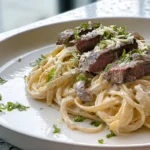
creamy garlic butter steak pasta
- Total Time: 30 minutes
- Yield: 4 servings 1x
- Diet: Halal
Description
Creamy garlic butter steak pasta made with tender seared striploin, a silky garlic-tomato cream sauce, and fusilli that holds every drop. Cozy, rich comfort food ready in 30 minutes.
Ingredients
- 2 tablespoons oil
- Striploin steak
- 2 tablespoons butter
- 1 onion, diced
- 4 garlic cloves, minced
- 3 tablespoons tomato paste
- 2 cups heavy cream
- 1 teaspoon garlic powder
- 1 teaspoon smoked paprika
- 1 tablespoon flour mixed with 1/3 cup water (optional slurry)
- 12 oz fusilli pasta, cooked al dente
- 1/4 cup chopped parsley
- 1/2 cup shredded Parmesan
- Salt and black pepper to taste
Instructions
- Bring steak to room temperature and season generously with salt and pepper.
- Heat oil in a large skillet over medium-high heat until shimmering and lightly smoking.
- Sear the steak in a single layer until a deep crust forms on both sides, then remove and let rest.
- Lower heat and add butter, scraping up all browned bits from the pan.
- Add diced onion and cook until softened and fragrant.
- Stir in garlic briefly until aromatic but not browned.
- Add tomato paste, garlic powder, and smoked paprika and cook until deepened in color.
- Pour in heavy cream and simmer gently until slightly thickened.
- If needed, stir in flour slurry off heat to tighten the sauce.
- Add cooked fusilli and simmer until sauce clings to pasta.
- Remove from heat and stir in Parmesan and parsley.
- Slice steak and serve on top of the pasta.
Notes
- Use heavy cream for proper sauce texture; milk will not thicken correctly.
- Slice steak after resting to keep it juicy.
- Reheat leftovers gently with a splash of cream or water.
- Prep Time: 5 minutes
- Cook Time: 25 minutes
- Category: Main Course
- Method: Skillet
- Cuisine: American
Nutrition
- Serving Size: 1 bowl
- Calories: 720
- Sugar: 6
- Sodium: 780
- Fat: 42
- Saturated Fat: 22
- Unsaturated Fat: 17
- Trans Fat: 1
- Carbohydrates: 52
- Fiber: 3
- Protein: 38
- Cholesterol: 155