Candied Pecans: Shiny, Crunchy, and Done Before Your Coffee Gets Cold

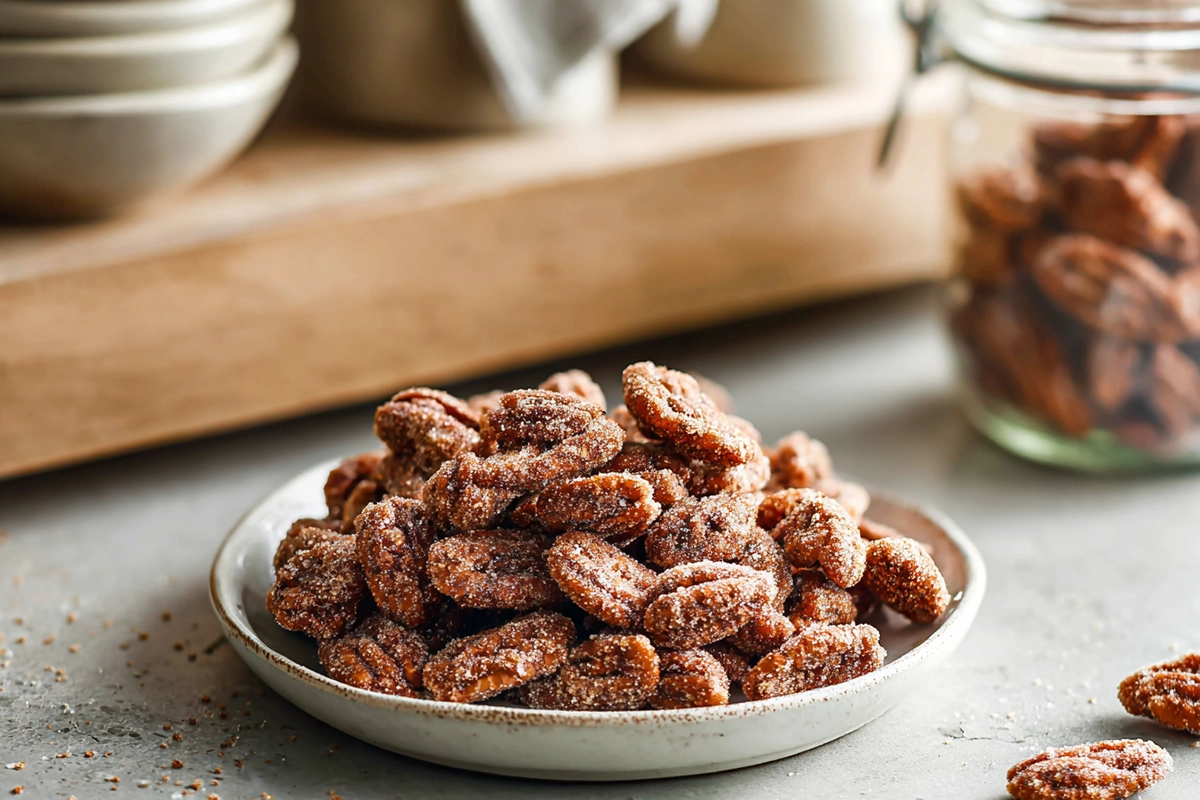
The problem with most candied pecans is patience. They ask you to heat the oven, wait forever, and then hover like a nervous parent while sugar decides whether it’s going to caramelize or turn into bitter rubble. And by the time they’re done, the craving has passed. You wanted something crunchy, glossy, and sweet-salty now, not in forty-five minutes.
This recipe fixes that impatience. It’s a stovetop move—ten minutes flat—where brown sugar melts directly into a bubbling glaze, wraps itself around pecan halves, and turns shiny right in the pan. No baking sheets preheating, no “check at the 12-minute mark,” no guessing. The smell hits first: warm cinnamon, caramelized sugar, toasted nuts. Then the sound—the faint crackle as the coating tightens. This is candying with feedback, and it’s why the skillet wins every time.
The trick isn’t fancy ingredients; it’s control. A splash of water keeps the sugar loose just long enough to coat every pecan. Constant stirring keeps the glaze glossy instead of grainy. If you want it, orange zest cuts the sweetness. A pinch of cayenne wakes everything up without turning it spicy. Salt lands last and makes the whole thing addictive.
You don’t need special equipment or a candy thermometer. Just a skillet, a spoon, and the willingness to stand there for three focused minutes while sugar does what sugar does best. By the time these hit parchment to cool, you’ll already be picking at the edges—and honestly, that’s the point.
Brown Sugar, Water, and the Fine Line Between Glossy and Grainy
Candied pecans succeed or fail on sugar behavior, not nut quality. Brown sugar is the backbone here because its molasses content brings moisture and acidity—two things that help sugar melt smoothly instead of seizing into crystals. The brief addition of water isn’t about dilution; it’s about control. Water dissolves the sugar evenly at the start, buying you time to coat the nuts before the glaze tightens. As heat drives the water off, what’s left is a shiny, clingy shell that hardens as it cools. Skip the water and the sugar can scorch before it ever coats. Add too much and you’ll boil instead of glaze.
Salt belongs in the sugar phase, not sprinkled after. Dissolved salt sharpens sweetness and keeps candied pecans from tasting flat or one-note. If you’re sensitive to salty-sweet, pull it back slightly—but don’t remove it entirely. The glaze needs contrast to taste finished.
- Pecan halves: Halves expose more surface area, which means more glaze adhesion and better crunch per bite. Pieces cook unevenly and burn faster.
- Brown sugar: Provides caramel depth and a smoother melt than white sugar. Light or dark both work; darker brings more molasses.
- Water: A small amount keeps the sugar fluid long enough to coat every nut. Add more only if the glaze turns grainy too fast.
- Fine sea salt: Dissolves cleanly into the glaze; coarse salt won’t distribute evenly.

Cinnamon, Vanilla, Orange Zest, and a Pinch of Heat (Optional, but Smart)
Spices in candied pecans should read as warmth, not bakery overload. Cinnamon does the heavy lifting, but at a restrained level—it deepens the caramel instead of screaming “dessert.” Vanilla extract rounds out the sharp edges of cooked sugar, making the glaze taste fuller without adding sweetness. Think of it as a volume knob, not a flavor spotlight.
Orange zest is optional, but strategic. Its oils cut through the richness and keep the nuts from tasting heavy, especially if you’re serving them with savory food like salads or cheese. Cayenne works the same way in smaller doses. You shouldn’t taste heat; you should feel the sweetness wake up. If you skip cayenne, nothing breaks. If you add too much, everything does.
- Ground cinnamon: Adds warmth and aroma; more than the recipe calls for tips into bitterness once cooked.
- Vanilla extract: Softens caramel notes and balances the sugar. If using imitation vanilla, expect a harsher finish.
- Orange zest (optional): Brightens and lightens the glaze; use fresh zest only—dried won’t release oils.
- Cayenne pepper (optional): A pinch enhances sweetness through contrast. If you want heat, this isn’t the recipe for it.
The 10-Minute Skillet Method That Makes or Breaks Candied Pecans
When Sugar Turns From Sand to Sauce
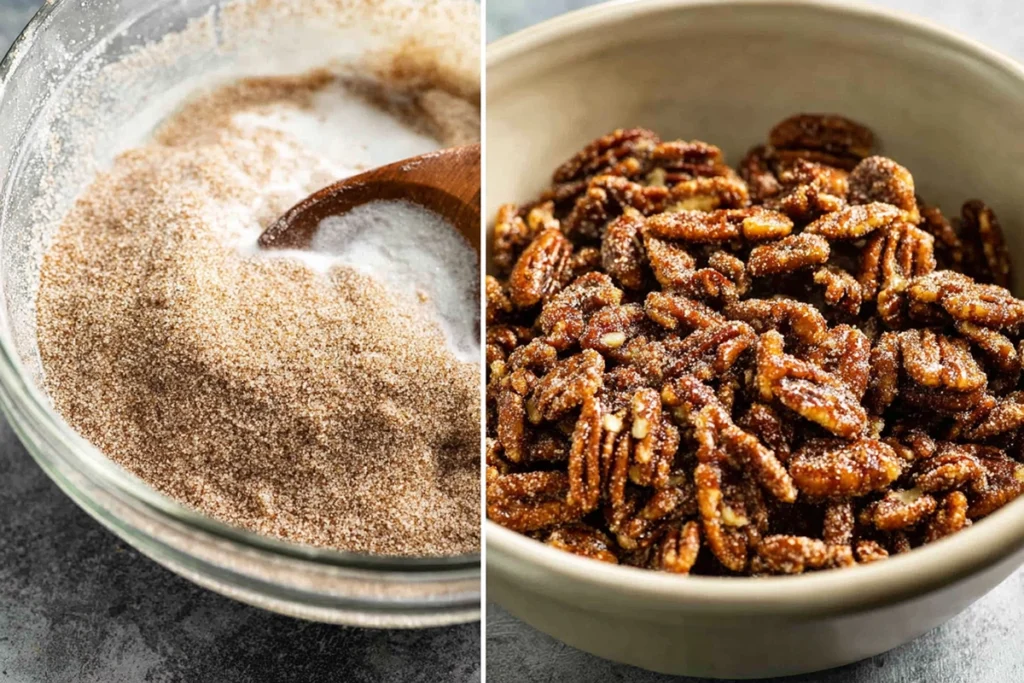
Start with a cold skillet and medium heat. As the brown sugar, water, cinnamon, salt, and vanilla warm up, they’ll look gritty and stubborn—then suddenly relax. You’re watching for the moment the sugar fully melts and turns into a loose, bubbling sauce. It should sound like a gentle simmer, not a violent boil, and smell like warm caramel with a hint of spice, not anything sharp or burnt.
Coating the Nuts Without Burning the Sugar
Once the sauce is fluid and glossy, add the pecans all at once. The sound should deepen into a soft crackle as the nuts hit the heat. Stir constantly—no pauses—until every pecan looks shiny and lacquered. Visually, the glaze tightens from syrupy to clingy, wrapping the nuts instead of pooling in the pan. If it suddenly looks dry or sandy, that’s your cue to splash in a teaspoon of water and keep moving; the sugar will re-melt and smooth back out.
Knowing When Candied Pecans Are Done
You’ll smell toasted nuts before you see deep color. That’s your warning sign to stay alert. The pecans should darken slightly and feel heavier in the spoon, like they’re wearing a shell. Stop while they’re still glossy; they harden as they cool, not in the pan.
Cooling Is Not Passive — It’s Where the Crunch Happens
Spreading for Snap, Not Clumps
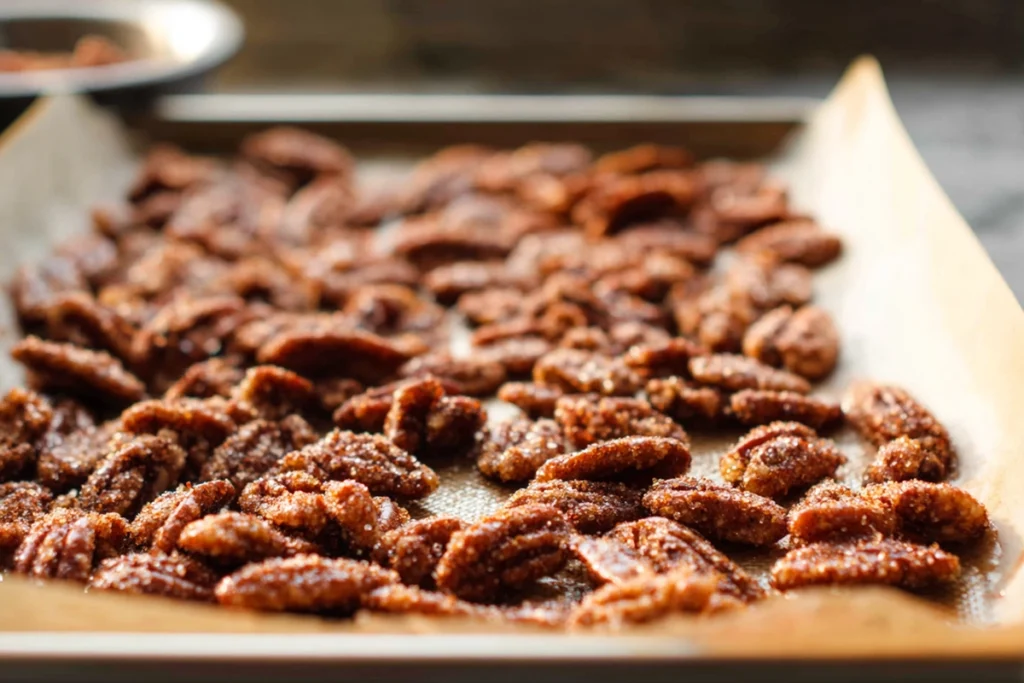
The moment the candied pecans leave the skillet, spread them out on parchment or a silicone mat. You should hear a faint tick-tick as the sugar contracts and sets. If they’re piled up, steam gets trapped and the coating stays tacky. Laid flat, the glaze firms into a brittle shell with a clean snap.
Touch-Test Before Storage
Let them cool completely before touching—warm sugar lies. When ready, the surface should feel dry and crisp, not sticky. Break apart any clusters while they’re just barely warm; once fully set, they’ll need force instead of fingers. This cooling stage is what turns shiny nuts into true candied pecans, not just sweet ones.
Swaps That Actually Work (and One That Doesn’t)
If you don’t have pecans, this stovetop method still earns its keep. Walnuts behave almost the same way and come out slightly more bitter, which actually works if you’re serving them with cheese. Cashews candy faster and turn buttery-sweet, but you’ll need to pull them off the heat sooner—they go from perfect to scorched fast. Almonds technically work, but they don’t grab the glaze as well unless they’re sliced, and even then the payoff isn’t as good.
Sugar is the line you shouldn’t cross. Brown sugar is non-negotiable here. White sugar melts too aggressively and gives you a hard, glassy coating instead of that mellow, caramelized shell that makes candied pecans addictive. If all you have is salted nuts, skip or sharply reduce the added salt; otherwise the balance tips too far and you’ll taste it in the finish.
Where These Candied Pecans Actually Belong (Beyond Snacking)
These shine where something crunchy needs to cut through richness. Toss them warm over a bitter green salad with vinaigrette—they mellow sharp greens instantly. Chop them and scatter over roasted squash or sweet potatoes to add texture without more fat. On a cheese board, they’re best next to sharp cheddar or blue cheese, where the sweetness has something to push against.
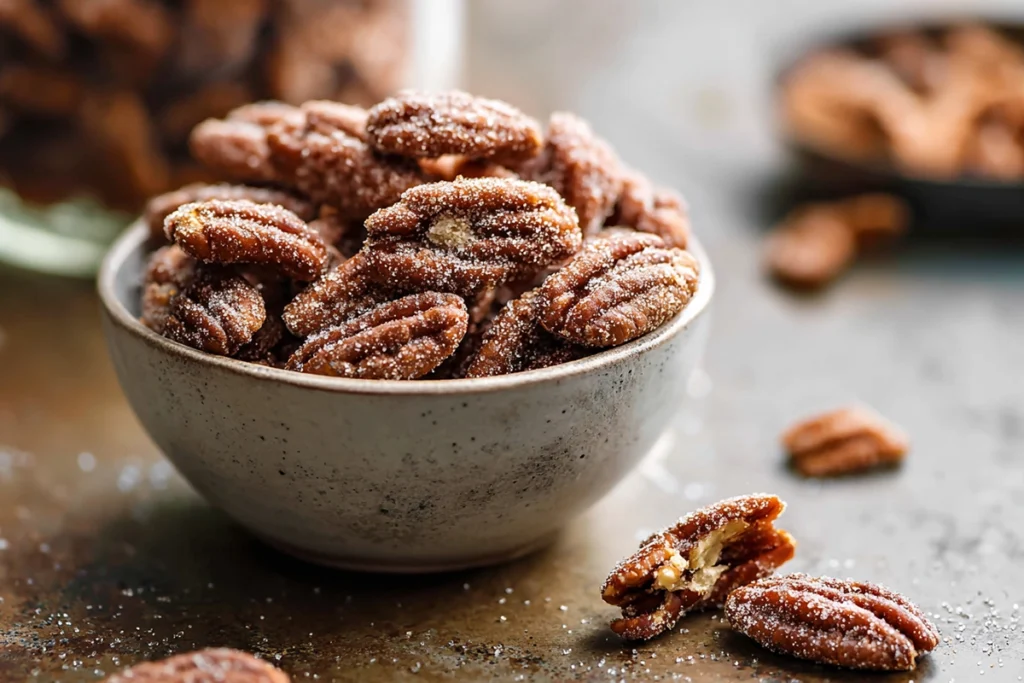
For dessert, keep it restrained. A small handful over vanilla ice cream or yogurt beats burying them in brownies. They’re also a quiet upgrade to oatmeal or granola when you want crunch without baking a whole tray of something.
Common Candied Pecan Problems (and the Fixes That Actually Work)
If your candied pecans cool down sticky, don’t panic. Spread them on a baking sheet and slide them into a 325°F oven for a few minutes—the heat drives off excess moisture and hardens the coating. If they taste burnt, there’s no saving them; sugar bitterness doesn’t mellow with time. Uneven coating usually means the glaze tightened too fast, which is why a teaspoon of water at the right moment matters more than exact timing.
Candied pecans are one of those small kitchen wins that punch above their weight. Ten minutes, one pan, no waste, and suddenly salads feel intentional and snacks feel finished. Once you make them this way, the oven version starts to feel like unnecessary work—and that’s a shortcut worth keeping.
Common Questions About Candied Pecans
Can I make candied pecans without cinnamon?
You can, but you need to replace the warmth it provides or the glaze will taste flat. Skip the cinnamon and lean on vanilla alone for a cleaner caramel flavor, or add orange zest to bring back brightness. What you shouldn’t do is simply remove the spice and change nothing else—the sugar will still candy, but the finished pecans will taste one-dimensional.
Why did my sugar crystallize instead of turning glossy?
Crystallization happens when the sugar loses moisture too quickly or isn’t stirred enough while melting. In this recipe, the fix is immediate: add a teaspoon or two of water and keep stirring over medium heat until the glaze relaxes and smooths out. Once sugar burns, it’s done for—but crystallized sugar can almost always be rescued if you catch it early.
Can I use walnuts or cashews with this same method?
Yes, and this stovetop technique works especially well for both. Walnuts will taste slightly more bitter, which is great for salads and cheese boards. Cashews cook faster and brown quickly, so pull them off the heat sooner than pecans. What doesn’t work well here are whole almonds—they’re too dense and don’t coat evenly without slicing.
How long do candied pecans really last at room temperature?
Stored completely cooled in an airtight container, candied pecans keep their crunch for about one week at room temperature. Refrigeration stretches that to a few weeks, but condensation can soften the coating if the container isn’t sealed tightly. Freezing works best for long storage; thaw them uncovered so moisture doesn’t collect on the sugar shell.
Can candied pecans be frozen without losing crunch?
Freezing actually preserves crunch better than the fridge. Spread the cooled candied pecans in a single layer to freeze, then transfer them to a sealed container. When ready to use, let them thaw at room temperature without a lid. If they feel slightly tacky, a few minutes in a low oven will restore their snap
Print
candied pecans
- Total Time: 10 minutes
- Yield: 2 cups 1x
Description
Shiny, crunchy candied pecans made fast on the stovetop. This quick skillet method delivers a glossy caramel coating with warm cinnamon and vanilla—no oven required.
Ingredients
- 2 cups pecan halves (170 g)
- 6 tablespoons brown sugar
- 1 1/2 teaspoons ground cinnamon
- 1/2 teaspoon fine sea salt
- 1/2 teaspoon vanilla extract
- 1 1/2 tablespoons water
- 2 teaspoons orange zest (optional)
- Pinch cayenne pepper (optional)
Instructions
- Line a baking sheet with parchment paper or a silicone mat for cooling.
- Combine brown sugar, cinnamon, salt, vanilla, water, orange zest, and cayenne in a skillet over medium heat and stir until the sugar melts into a bubbling glaze.
- Add the pecans and stir constantly until all nuts are evenly coated and glossy, about 2 to 3 minutes.
- Transfer pecans to the prepared baking sheet, spread into a single layer, and let cool completely before breaking apart.
Notes
- If the glaze turns grainy before coating the nuts, add 1 to 2 teaspoons of water and keep stirring until smooth.
- If pecans are sticky after cooling, bake at 325°F for 5 to 10 minutes to harden the coating.
- Store cooled candied pecans in an airtight container.
- Prep Time: 5 minutes
- Cook Time: 5 minutes
- Category: Snack
- Method: Stovetop
- Cuisine: American
Nutrition
- Serving Size: 1/4 cup
- Calories: 176
- Sugar: 8
- Sodium: 147
- Fat: 15
- Saturated Fat: 1
- Unsaturated Fat: 14
- Trans Fat: 0
- Carbohydrates: 10
- Fiber: 2
- Protein: 2
- Cholesterol: 0