Epic Charcuterie Table for a Colorful Party Spread

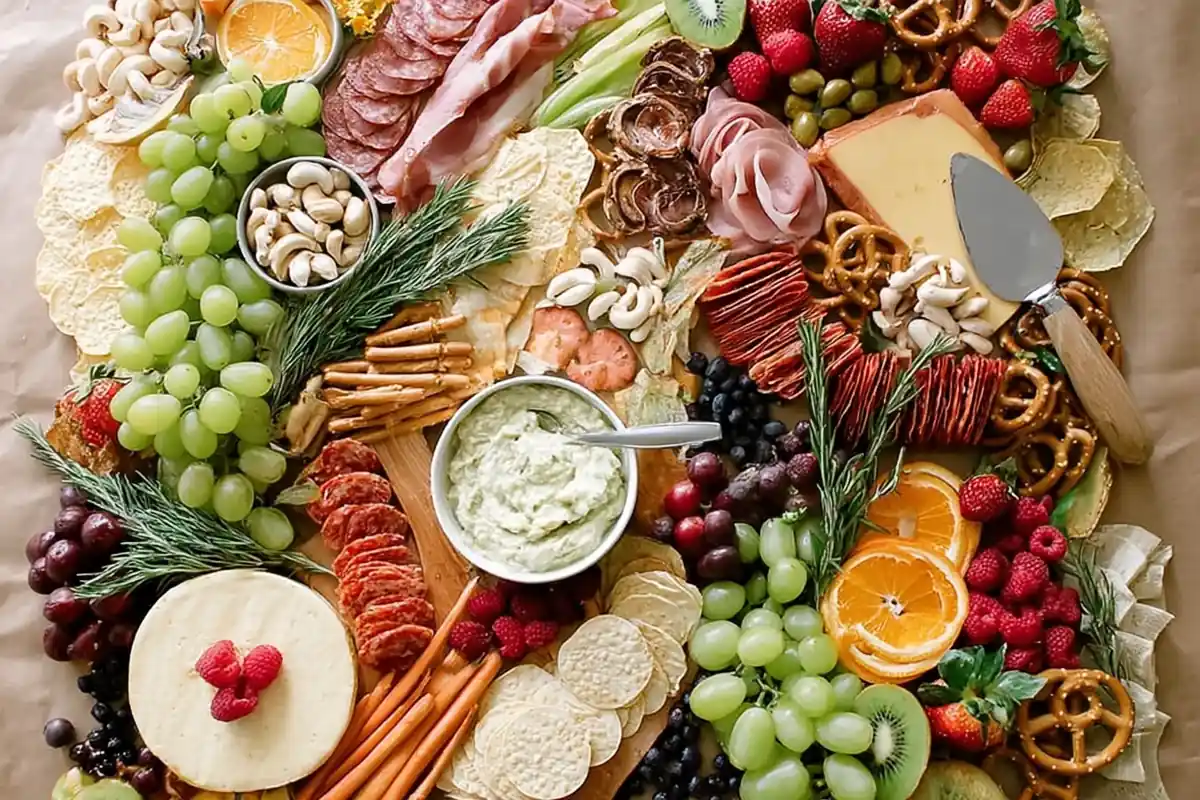
An Epic Charcuterie Table is one of my favorite ways to feed people without standing over the stove while everyone else is laughing in the next room. It’s colorful, generous, and easy to adjust for the crowd in front of you.
I like this kind of spread because it feels relaxed. A little cheese here, a row of strawberries there, bread tucked beside the meats — nothing too stiff. Just a table that says, “Come closer and grab what you like.”
Start with a Colorful Idea
Before you buy a single block of cheese, think about the feeling you want from the table. Not a strict theme, necessarily. Just a direction.
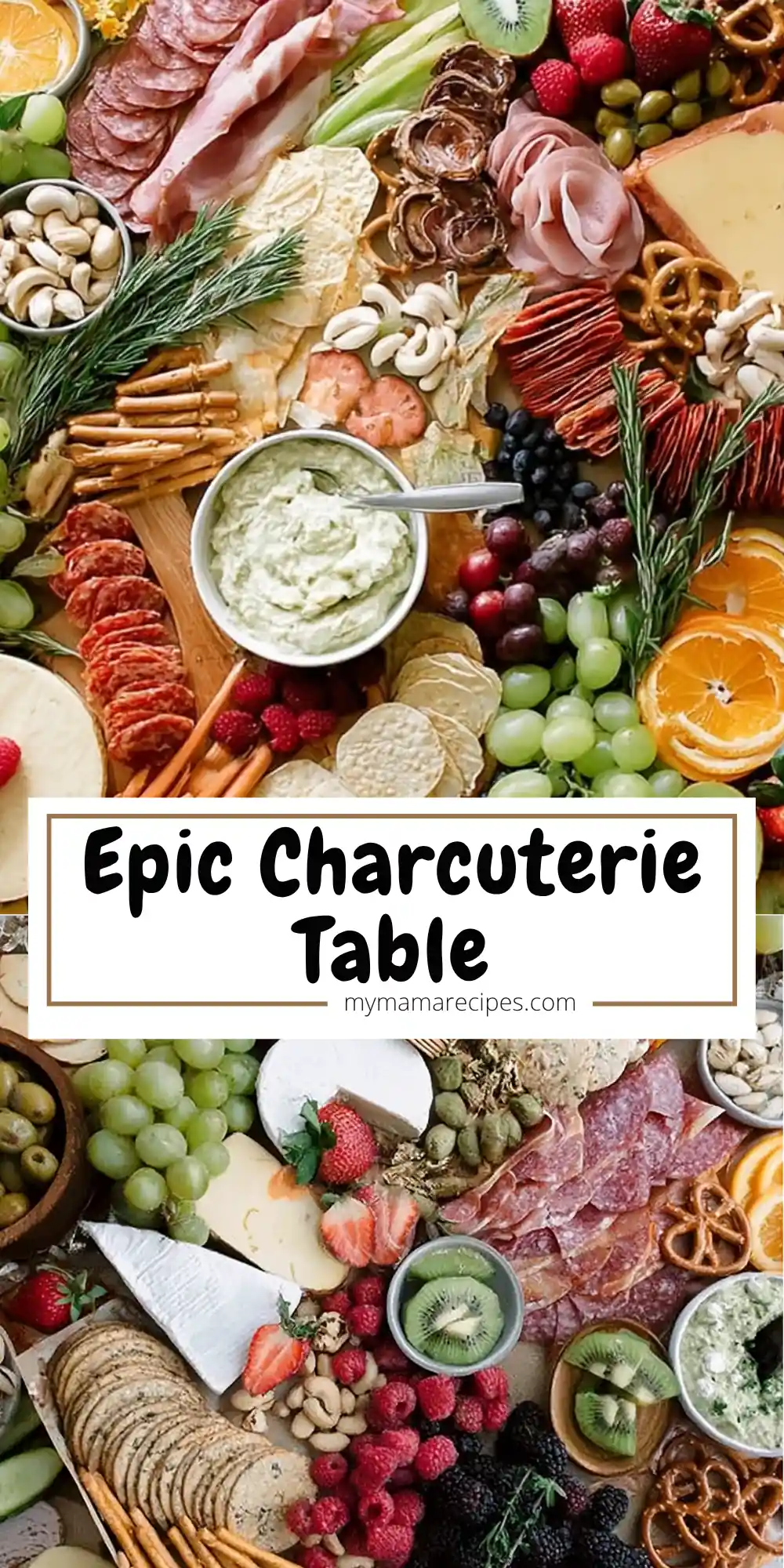
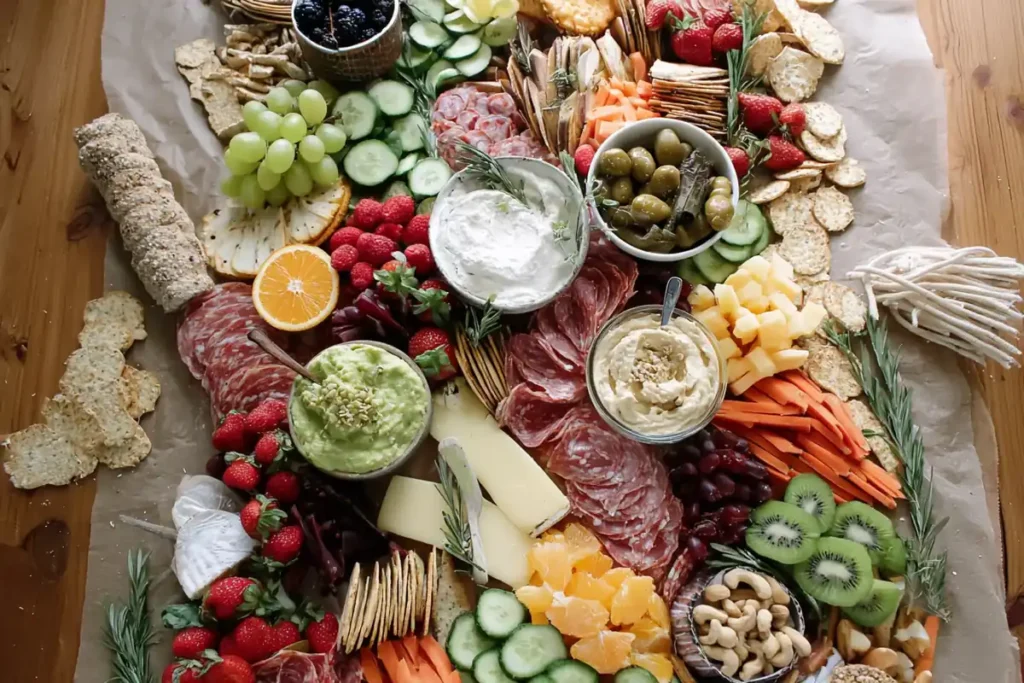
For holidays, color makes the planning easier: black and orange for Halloween, greens and reds for Christmas, soft pastels for spring. But my favorite version is the simple bright one — strawberries, grapes, kiwi, mandarins, green apples, and all the little things that make the table look alive.
Pinterest can help when your brain is blank. Save a few ideas, then close the app before you start comparing too much. This should still feel like your table, not a copy of someone else’s. Mama never measured a party spread with a ruler, and honestly, neither should we.
Choose the Right Table and Cover It Well
Pick the spot before you start arranging food. An Epic Charcuterie Table becomes the place people gather, so it needs room around it. If guests have to squeeze past chairs or reach over candles, it’ll feel awkward fast.
For a full table, I like using butcher paper or craft paper as the base. It protects the surface, keeps cleanup simple, and gives the whole spread that rustic, family-kitchen look. Tape the corners underneath if the paper slides around. Small thing, big difference.
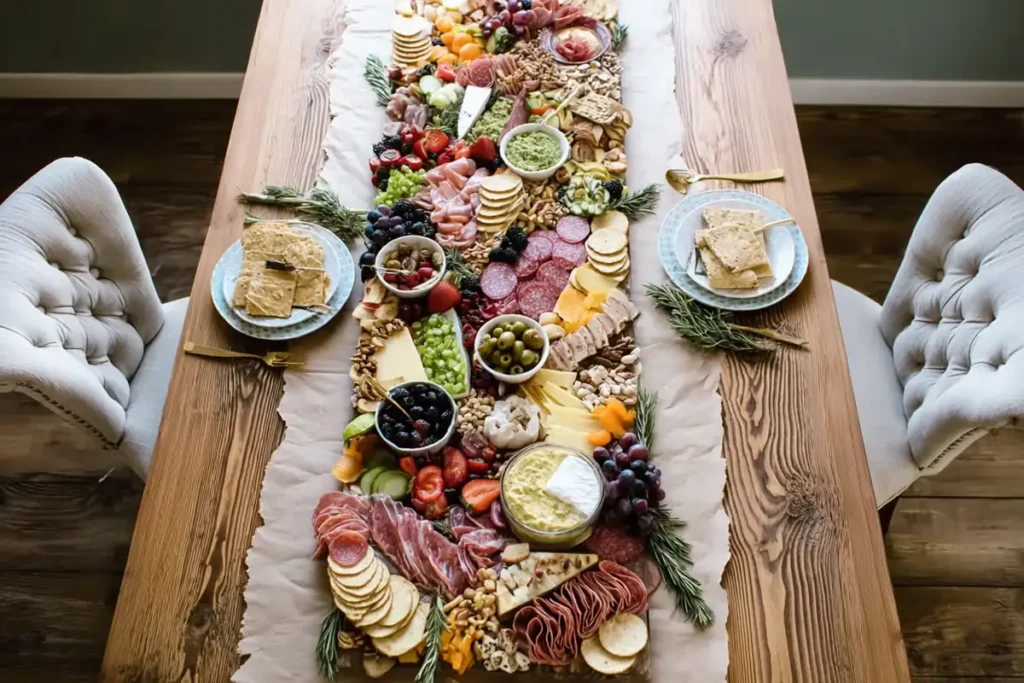
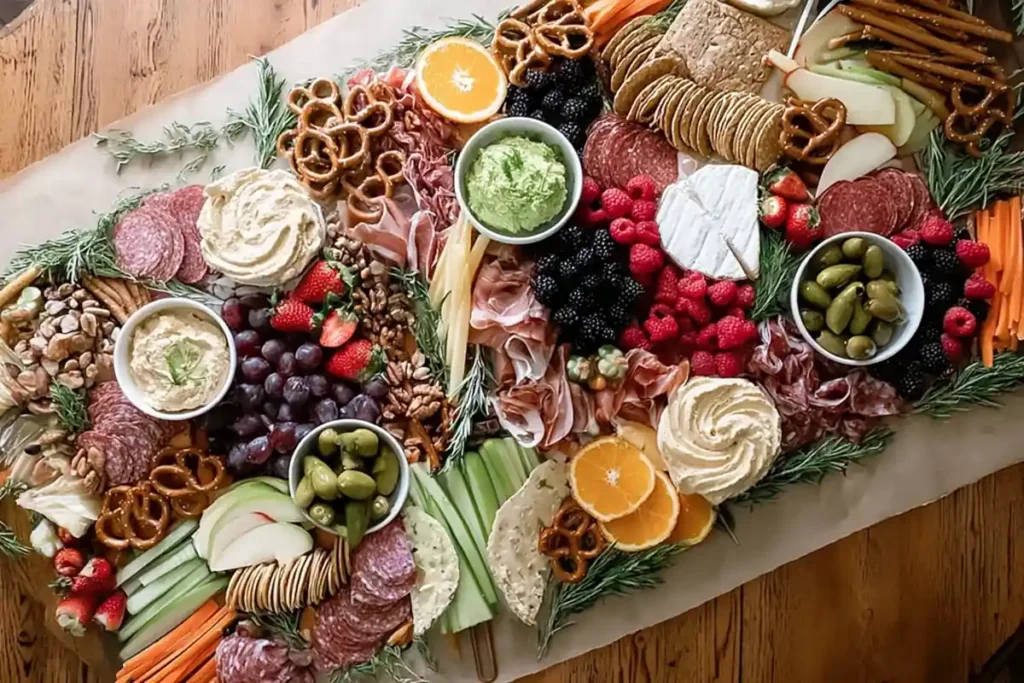
Set out a few small wooden boards, accent plates, and bowls before the food comes out. Anything wet — olives, pickles, guacamole, hummus, spinach dip, jams — belongs in a bowl with a spoon. Wetter foods can stain or soften the paper, and nobody wants hummus slowly traveling across the table.
What to Put on an Epic Charcuterie Table
The good part? You don’t need one exact shopping list. You need variety. I usually think in groups: cheese, meat, crunchy things, fresh color, salty bites, sweets, and dips. That keeps the table balanced without making the shopping complicated.
For cheese, mix soft and firm textures. Brie, burrata, goat cheese, manchego, cheddar, blue cheese, smoked gouda, and Parmigiano all work well. Manchego is one I reach for often because it slices cleanly and has enough flavor without taking over the whole table.
Meats should be sliced ahead and kept cold until you’re ready to assemble. Prosciutto, dried cured salami, pepperoni, and pre-sliced variety packs save time. I prefer pre-cut meats for a table like this because the slices are even, easy to fold, and one less job when guests are almost at the door.
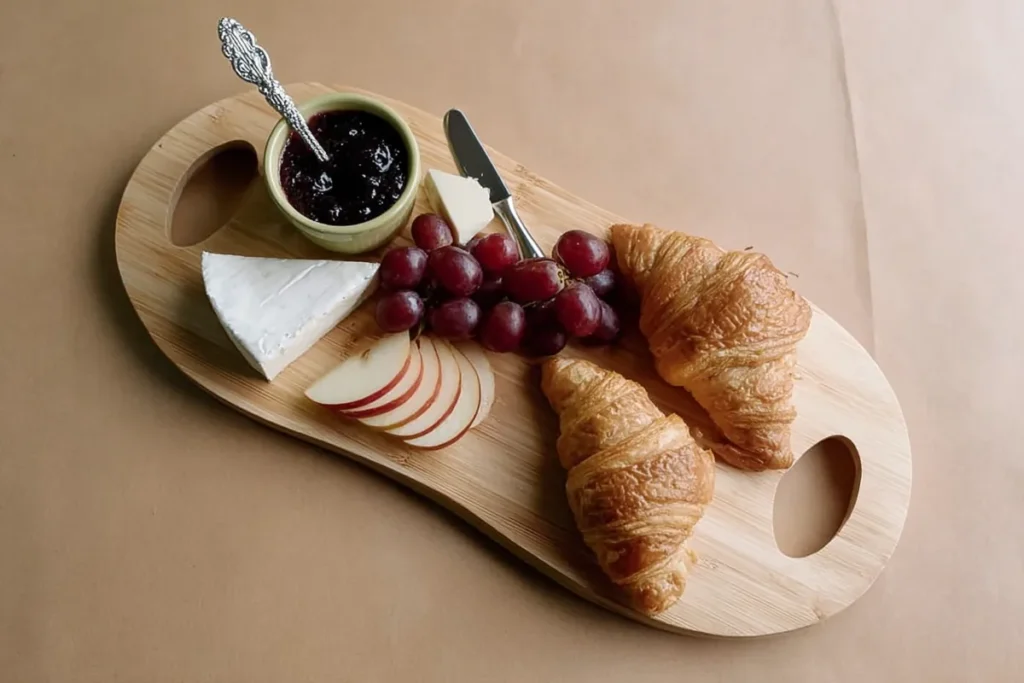
Then come the fillers that make people linger. Add crackers, tortilla chips, artisan bread, mini croissants, breadsticks, or baguette slices. Mini croissants disappear fast, so place them where people can grab them easily. For color, bring in strawberries, raspberries, oranges, mandarins, kiwi, green apples, and grapes. Cut a few fruits in half so the inside color shows.
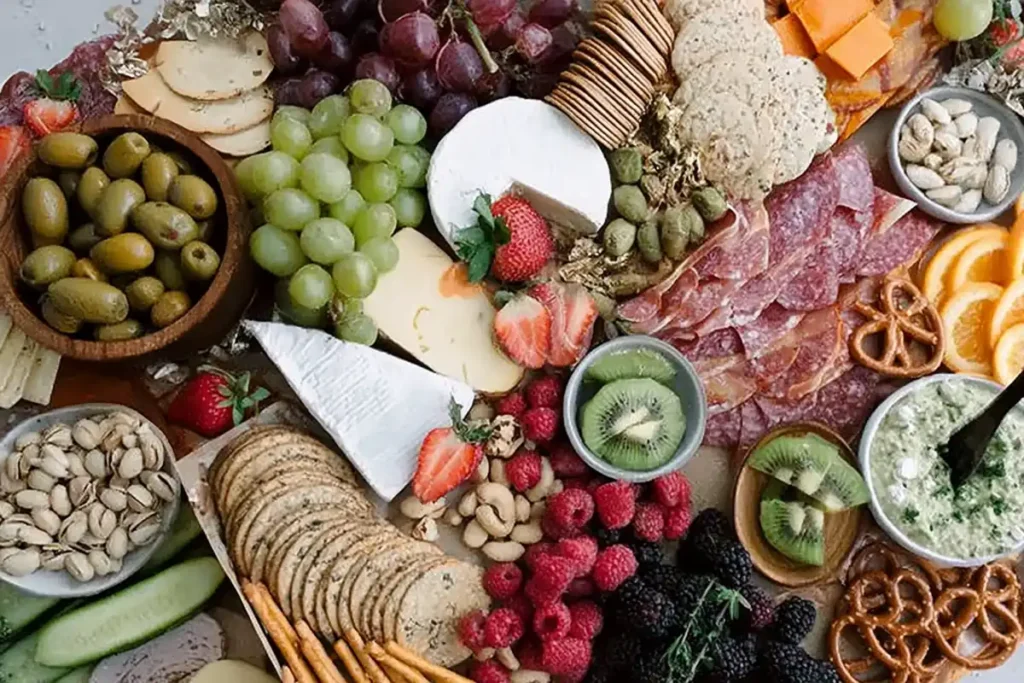
Don’t skip the salty and sweet corners. Olives, pickles, cucumbers, celery sticks, carrots, cherry tomatoes, cashews, almonds, pistachios, dried apricots, figs, dried mango, and chocolate-covered açaí berries all help the table feel full. Just check for nut allergies before setting nuts out, especially if kids will be wandering by and grabbing bites.
Build the Table Around Anchor Items
Start with the bowls and boards. They’re the bones of the table. Once those are placed, everything else has a place to land.
I like to scatter bowls across the table instead of lining them up in one area. Put hummus near vegetables, jam near cheese, olives near meats, and dips where crackers or bread can reach them. Keep at least 6 to 8 inches between larger bowls if you have the space, because you’ll need room to tuck food around them.
Next, place the bigger cheeses. A round of brie, a wedge of blue cheese, or a small bowl of burrata gives the table height and shape. Cut a few slices from firm cheeses before serving so guests don’t feel like they’re the first person messing up the table. That tiny invitation matters.
Wooden boards help certain foods stand out. Strawberries in a neat row on a small board, sliced manchego stacked slightly off-center, breadsticks in a loose bundle — simple, but it gives the spread structure without making it look fussy.
Add Meats, Crackers, and Bread with Shape
Once the anchors are down, bring in the meats, crackers, and bread. This is where the table starts looking generous instead of scattered.
Fold prosciutto loosely so it has movement, stack salami in small piles, and tuck pepperoni into open spaces near cheese. I don’t like putting all the meat in one corner. It makes guests crowd one side of the table, and the rest starts looking forgotten.
Crackers and bread need a little order. Line breadsticks in one direction, curve crackers around a bowl, or make a soft wave with baguette slices. Random crackers can make the table look messy fast. A simple row looks cleaner, and people can pick from it without knocking half the pile over.
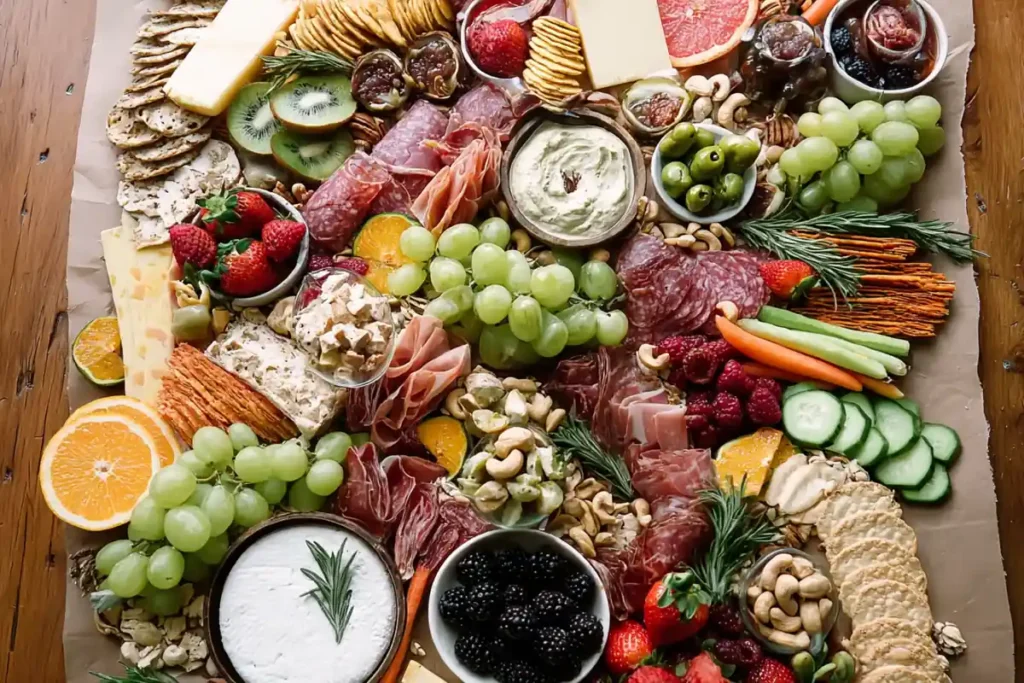
Keep softer bread, like mini croissants, away from wet dips unless the dip is in a deep bowl. They soak up moisture quickly. Worth watching.
Fill the Gaps with Color and Texture
The gaps are where the table comes to life. Start with the brighter fruits first because they guide the eye. Strawberries, raspberries, mandarins, kiwi, grapes, and green apples bring the kind of color that makes people stop and look before they grab a plate.
Try not to place the same colors right beside each other. Red strawberries next to red raspberries can look flat, even though both taste good. Put green grapes near orange slices, or kiwi near pale cheese. Cut oranges, kiwi, and a few strawberries in half for that fresh, juicy look.
Vegetables help balance all the rich cheese and meats. Add cucumbers, celery sticks, carrots, and cherry tomatoes in small groups so they feel intentional. Then use nuts, dried fruit, figs, dried mango, and chocolate-covered açaí berries to fill the tiny spaces left behind.
Don’t pour nuts directly over everything. Keep them in little pockets, especially if allergies are a concern. A small bowl for pistachios or almonds is safer and easier for guests to avoid if needed.
Finish with Simple Garnishes
At the end, step back for a minute. You’ll see the empty spots better from a little distance.
A few rosemary sprigs can make the whole table feel finished without making it look decorated for a photo shoot. Tuck them near cheeses, beside bowls, or along the paper where the table needs a little softness. Use just enough to add texture. Too much rosemary can start looking like a wreath project.
Fresh greenery works best when it looks casual. A sprig here, another one there. That’s it.
I also like checking the edges of the table before guests arrive. Push loose crackers back into line, wipe any dip from bowl rims, and make sure spoons are facing outward. Those little fixes make the spread easier to use, not just prettier.
Portion and Prep Tips Before Guests Arrive
For a mixed appetizer spread, plan around 3 to 4 ounces of cheese per person and 2 to 3 ounces of cured meat per person. Add another 2 to 3 ounces total of crackers, bread, fruit, and nuts per person, then adjust based on your crowd. Some groups lean hard into cheese. Others empty the fruit first.
Prep as much as you can before the table is built. Wash and dry fruit, slice firm cheeses, cut vegetables, and open packages. Keep meats refrigerated until close to serving so they stay fresh. I usually build the table about 20 to 30 minutes before guests arrive, depending on the size.
Wet ingredients need spoons. Cheese needs small knives. If you’re serving sticky jam, give it its own spoon instead of hoping people use the cheese knife. They won’t. And honestly, I don’t blame them when the table is busy.
One more practical thing: don’t overload the table at the start. Keep a backup plate of crackers, fruit, and meat in the kitchen. Refilling a section after an hour looks better than watching everything slowly collapse into crumbs.
Make the Table Feel Like Yours
Here’s the part I care about most: don’t make the table so polished that nobody wants to touch it.
An Epic Charcuterie Table should feel inviting, not like a display case. If you want more fruit than meat, do that. If your family loves mini croissants, give them a bigger spot. If the kids are coming, tuck a few extra crackers and mild cheeses where they can reach them safely.
The basic idea is balance, not rules. A little salty, a little sweet, something creamy, something crunchy, and enough color to make the whole table feel alive. That’s the kind of spread people remember.
A Table Made for Gathering
This is one of those no-cook recipes that feels bigger than the work it takes. You cover the table, place the bowls, add the cheese and meats, then fill the gaps until it looks generous.
And when everyone gathers around, reaching for grapes, bread, olives, and one more slice of manchego, the table has done its job. Pull up a chair. Mama always made extra.
Epic Charcuterie Table
Ingredients
Method
- Find inspiration and decide on a color palette or style for your charcuterie table.
- Choose a large table and cover it with butcher or craft paper for easy cleanup.
- Place small boards and bowls across the table for dips, olives, and spreads.
- Arrange cheeses around the table, slicing some pieces ahead of time for easy serving.
- Add cured meats by folding or stacking them in small groups near cheeses.
- Place crackers, breadsticks, croissants, and sliced bread in neat rows or curves.
- Fill empty spaces with fruits, vegetables, nuts, and dried snacks for color and texture.
- Add dips like hummus, guacamole, and spinach dip in bowls with serving spoons.
- Finish with small garnishes like rosemary sprigs for a fresh, natural look.
- Serve immediately and refill sections as needed during the gathering.
Notes
- Prepare and slice fruits, vegetables, and cheeses ahead of time to save effort.
- Keep meats refrigerated until just before serving for freshness.
- Use bowls for wet items to prevent soaking the paper surface.
- Avoid placing the same colors together to keep the table visually balanced.
- Check for nut allergies before adding mixed nuts.
- Refill the table gradually instead of overloading it at the beginning.