French Onion Meatballs: Bubbling Gruyère, Jammy Onions, and a Spoon-Dragging Gravy

Dry meatballs are a special kind of disappointment. You cut one open, hoping for juices, and instead you get a crumbly, gray interior that tastes like it gave up halfway through cooking. French onion soup cravings aren’t much better—either you babysit onions for an hour or you settle for something thin and flat. This recipe fixes both problems in one pan, with meatballs that stay tender and a sauce that smells like onions melting into butter and wine until they turn dark, sweet, and almost sticky.
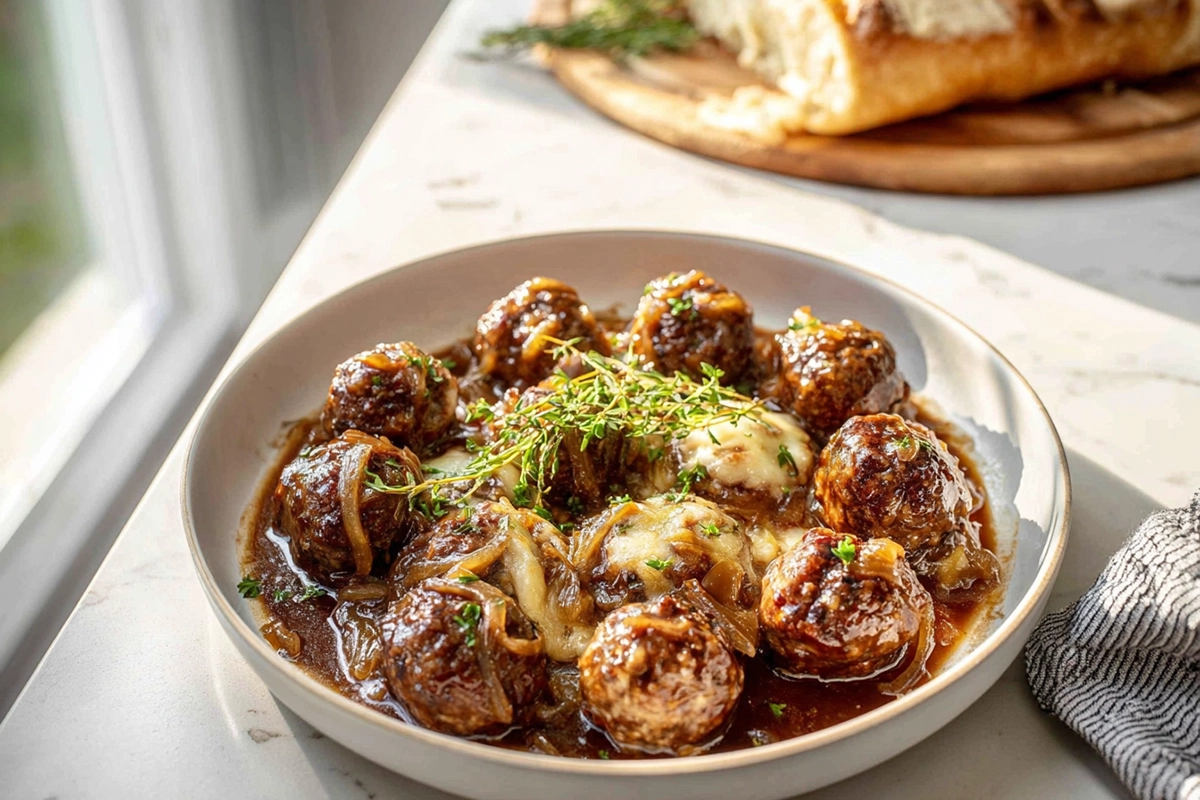
The trick is letting each part do its job before they ever meet. The meatballs are baked—not fried—so they cook through gently and keep their shape. Meanwhile, yellow onions go slow in butter until they collapse into themselves, picking up thyme and black pepper, then get thickened with flour and loosened with white wine and beef broth. That’s not “onion gravy.” That’s French onion soup energy, concentrated. When the meatballs drop into that sauce and get buried under grated Gruyère, the broiler finishes the story: bubbling edges, browned spots, and a skillet that smells like a steakhouse collided with a soup bistro.
You don’t need special equipment or chef tricks here. A heavy skillet, patience with the onions, and a willingness to let the cheese blister instead of staying polite. What you get is a dinner that eats like comfort food but tastes deliberate—something you drag bread through, not something you rush past.
Table of Contents
Why French Onion Meatballs Work (It’s All About the Onions)
French onion meatballs live or die by how the onions behave. This isn’t background flavor—it’s the backbone. Yellow onions are doing the heavy lifting here because they have the right balance of sugar and sulfur. As they cook down slowly in butter, those sugars caramelize while the sharpness fades, leaving something deeply savory and faintly sweet. Red onions get muddy, sweet onions go cloying, and white onions never quite soften emotionally or structurally. Thyme steps in quietly, reinforcing the savory edge without turning the sauce herbal. Garlic stays restrained on purpose; too much would shout over the onions instead of backing them up.
Gruyère is chosen for melt behavior, not trendiness. It melts smoothly, browns under the broiler, and brings salt and nuttiness that echo the onions instead of masking them. Mozzarella would stretch and weep. Cheddar would split. Gruyère behaves. The wine and broth combination is equally intentional: wine lifts the sweetness and scrapes up fond, broth anchors the sauce in beefy depth. A final hit of balsamic or sherry vinegar tightens everything right at the end, sharpening flavors that would otherwise feel heavy.
- Yellow onions: High natural sugar content gives sweetness without needing shortcuts.
- Fresh thyme: Adds structure to the sweetness; dried thyme would taste dusty here.
- Gruyère cheese: Melts cleanly and browns without turning oily under the broiler.
- Dry white wine: Deglazes and balances; if you skip it, use extra broth and expect less lift.
- Balsamic or sherry vinegar: Not optional—this is what keeps the sauce from tasting flat.
Building Tender Meatballs That Don’t Fight the Sauce
The meatballs in French onion meatballs are engineered to absorb sauce, not compete with it. That’s why the binder matters more than the seasoning. Panko soaked with milk creates a loose internal structure that stays soft even after baking and broiling. Dry breadcrumbs would steal moisture from the beef and tighten the texture. The egg provides cohesion, but it’s deliberately kept to one—any more and the meatballs turn springy instead of tender.
Ground beef brings richness, but it needs restraint elsewhere. Worcestershire sauce adds glutamates that reinforce the beefiness already present in the broth and onions, meaning you don’t need aggressive seasoning. Baking the meatballs instead of frying keeps excess fat out of the sauce, which matters when you’re finishing under a broiler. Too much rendered fat would break the gravy and leave greasy pools around the edges instead of a spoon-coating finish.
- Ground beef: Provides richness; leaner blends dry out, fattier ones make the sauce greasy.
- Panko breadcrumbs + milk: Create a soft, absorbent interior; dairy-free milk works, but water does not.
- Egg: Binds gently; more would make the texture rubbery.
- Worcestershire sauce: Adds savory depth without competing with the onions.
- Kosher salt & black pepper: Layered in stages to season meat and sauce independently.

Caramelization Is the Whole Game—Rush This and You Lose
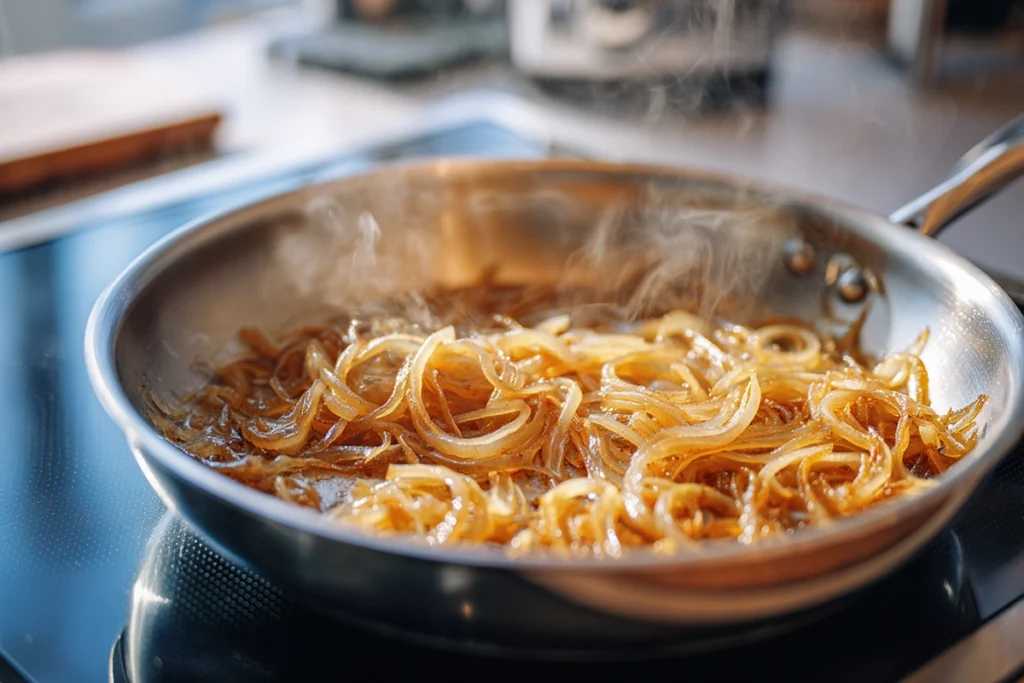
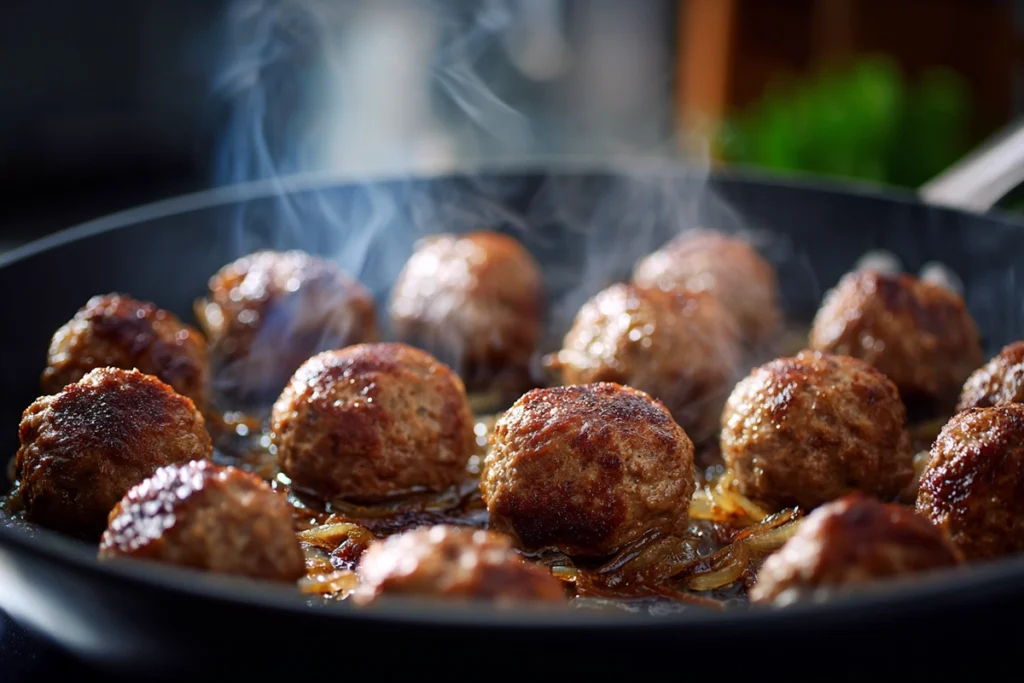
Start with the onions, because everything else waits on them. When they first hit the butter, they’ll hiss softly and release a sharp, almost sulfurous smell—this is normal and temporary. Stir often at the beginning, then slow down; you’re looking for the moment when the onions collapse, turn glossy, and shift from pale yellow to a deep golden brown. The smell changes too: sharp becomes sweet, almost like toasted bread with sugar on top. If they start browning hard on the edges or smelling acrid, the heat is too high—pull it back and let time do the work.
When the flour goes in, the pan should look dry for a second, with a light film forming on the bottom. That’s what you want. As soon as the wine hits, listen for a quick, confident sizzle and scrape—those browned bits dissolving are pure flavor. The sauce is ready for the meatballs when it coats the back of a spoon and you can drag a finger through it, leaving a clean line that doesn’t immediately flood back.
Building Tender Meatballs That Don’t Fight the Sauce
The meatball mixture should feel loose and cool in your hands, not dense or sticky. As you mix, stop the second everything looks evenly combined—overworking shows up later as tight, dry meatballs. When shaped, they should hold together easily but still feel soft, like pressing into a pillow rather than clay.
In the oven, you’re not looking for dark crust. You want lightly browned bottoms and a gentle beefy aroma, not sizzling fat. When pressed lightly, the meatballs should feel springy but not firm, and juices should stay inside instead of bubbling out onto the pan. That’s your signal they’re ready to meet the sauce.
Broiler Timing: Melted, Bubbling, Not Greasy
Once the French onion meatballs are nestled into the sauce and buried under Gruyère, everything happens fast. Under the broiler, the cheese should bubble loudly at the edges within a minute, sending up a nutty, toasted aroma. Watch for browned spots, not an even tan—those darker freckles mean flavor without oil separation.
Pull the pan when the cheese is fully melted and just starting to blister. If the surface looks oily or the sauce is boiling violently, it’s gone too far. Done right, the sauce stays thick and glossy, the meatballs stay juicy, and the cheese stretches slightly when you scoop—exactly what this dish promises.
Swaps That Actually Work (and One That Doesn’t)
If you’re short on Gruyère, Swiss is the closest stand-in—it melts cleanly and keeps that nutty backbone. Provolone works in a pinch, but keep it to whole-milk and expect a milder finish. Breadcrumb-wise, plain panko matters; seasoned crumbs push this dish toward meatloaf territory, which fights the French onion profile. If you’re out of milk, half-and-half works fine, but skip water—it robs the meatballs of tenderness.
Wine is optional, but not replaceable with more broth one-for-one. If you don’t cook with alcohol, use a splash of apple cider vinegar diluted with broth to mimic acidity, then taste carefully. Ground beef really is the right call here; turkey or chicken dries out and tastes thin once broiled. If you must change meats, a beef-pork blend works—but go leaner than you think or the sauce turns greasy fast.
How to Serve This Without Overthinking It
French onion meatballs beg for something that soaks up sauce without stealing attention. Crusty bread is the obvious move—torn, not sliced—so you can drag it through the skillet and catch pockets of onion gravy and melted cheese. Mashed potatoes turn this into a full comfort dinner, especially if they’re lightly salted and not overly buttery. Buttered egg noodles work too, but keep them plain; the sauce is doing the talking.
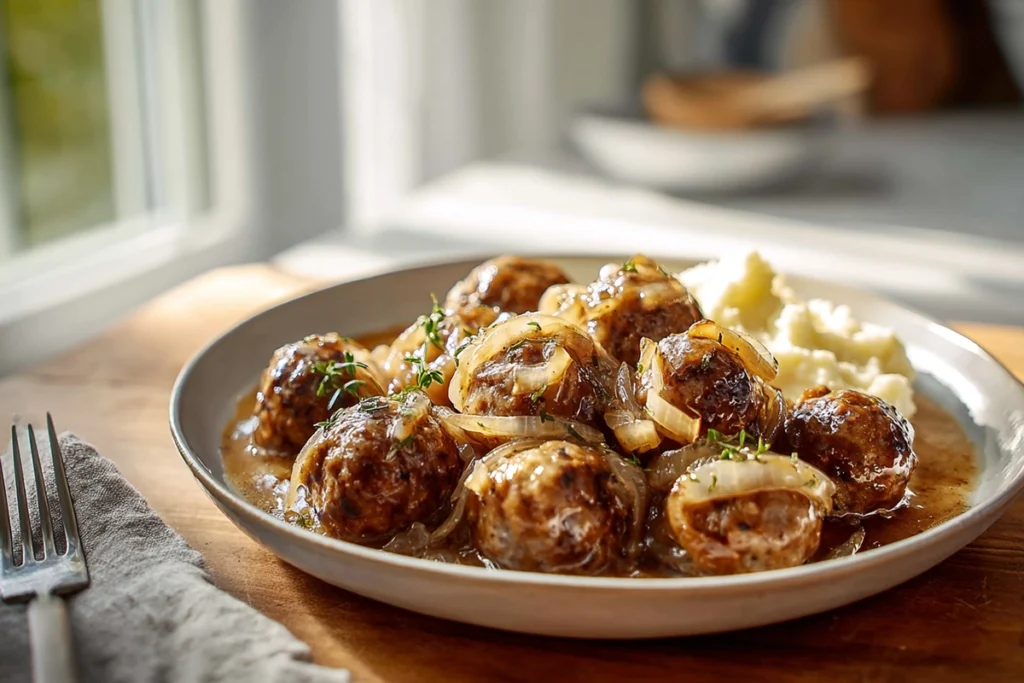
For balance, pair this with something sharp and cold. A simple arugula salad with lemon cuts through the richness better than anything creamy ever could. If you’re serving guests, put the skillet on the table and let people help themselves—it stays hot and looks impressive without extra work.
One Last Thing Before You Start
This dish rewards patience more than precision. Don’t rush the onions, don’t overmix the meat, and don’t walk away once the broiler’s on. French onion meatballs are at their best when the sauce is thick, the cheese is blistered, and the kitchen smells like beef, butter, and toasted onions all at once. Make it once, and you’ll start craving it on cold nights—right around the time soup stops feeling like enough.
Get inspired with more mouthwatering recipes! Follow me on Facebook and Pinterest for new cooking ideas every week.
Common Questions About French Onion Meatballs
Can I make these ahead without ruining the texture?
You can, but only if you stop at the right point. Bake the meatballs and fully caramelize the onions, then build the sauce up to the broth stage and stop before simmering it thick or adding vinegar. Combine everything, cool completely, and refrigerate up to two days. When reheating, bring the skillet back to a gentle simmer to thicken the sauce, add the vinegar, then broil with the cheese right before serving so the meatballs stay tender and the Gruyère melts cleanly.
What’s the best wine to use if I don’t drink white wine?
Use dry white wine if you can—it adds acidity without sweetness. If alcohol is off the table, replace the wine with extra beef broth plus a small splash of balsamic or sherry vinegar added early, not just at the end. This keeps the sauce from tasting flat and preserves the balance that makes French onion meatballs taste rich instead of heavy.
Can I swap ground beef for another meat successfully?
Ground beef works best because it stays juicy through baking and broiling. A beef-and-pork blend is acceptable if it’s not overly fatty. Avoid ground turkey or chicken—they dry out under the broiler and don’t stand up to the onion gravy. If you use leaner meat, the sauce will taste thinner and the meatballs won’t absorb flavor the same way.
How do I keep the cheese from turning oily under the broiler?
Use freshly grated Gruyère and broil on the upper rack, not directly under the flame. Pull the skillet as soon as the cheese melts and develops browned spots. If the sauce is boiling aggressively or oil pools appear on the surface, it’s gone too far. Proper timing keeps the cheese bubbly and cohesive instead of greasy.
Is this freezer-friendly, or better eaten fresh?
This dish is best fresh or within two days from the fridge. Freezing breaks the sauce and dulls the onion flavor, and reheated cheese loses its texture. If you must freeze something, freeze the baked meatballs alone. Rebuild the sauce fresh and broil with cheese when you’re ready to serve.
Print
French Onion Meatballs
- Total Time: 1 hour 50 minutes
- Yield: 4–6 servings 1x
Description
Tender baked beef meatballs simmered in a rich French onion gravy, finished under the broiler with bubbling Gruyère cheese. Deeply savory, cozy comfort food with real onion flavor.
Ingredients
- 2 pounds yellow onions, thinly sliced
- 1 small bunch fresh thyme
- 2 cloves garlic, minced
- 6 ounces Gruyère cheese, divided and grated
- 1/2 cup panko breadcrumbs
- 1/2 cup whole or 2% milk
- 1 large egg
- 2 teaspoons Worcestershire sauce
- 2 1/2 teaspoons kosher salt, divided
- 3/4 teaspoon freshly ground black pepper, divided
- 1 1/2 pounds ground beef
- 2 tablespoons unsalted butter
- 2 tablespoons all-purpose flour
- 1/2 cup dry white wine
- 1 (14.5-ounce) can beef broth
- 1 teaspoon balsamic or sherry vinegar
- Crusty bread, for serving (optional)
Instructions
- Bake the meatballs until lightly browned and just cooked through.
- Slowly caramelize the onions in butter until deep golden and jammy.
- Stir flour into the onions, then deglaze with white wine.
- Add beef broth and simmer until the sauce thickens.
- Season with vinegar, salt, and pepper.
- Add meatballs to the sauce, top with Gruyère, and broil until bubbly and browned.
Notes
- Make Ahead: Bake meatballs and caramelize onions, then stop the sauce before simmering thick. Combine and refrigerate up to 2 days. Finish cooking and broil before serving.
- Storage: Refrigerate leftovers in an airtight container for up to 2 days.
- Prep Time: 50 minutes
- Cook Time: 1 hour
- Category: Dinner
- Method: Baking, Broiling
- Cuisine: American
Nutrition
- Serving Size: 1 serving
- Calories: 620
- Sugar: 10
- Sodium: 900
- Fat: 45
- Saturated Fat: 20
- Unsaturated Fat: 20
- Trans Fat: 0
- Carbohydrates: 25
- Fiber: 3
- Protein: 40
- Cholesterol: 140