
French Onion Meatloaf: Deeply Savory, Cheese-Topped Comfort That Slices Clean
The first thing you notice isn’t the meatloaf. It’s the onions. Butter melting into the pan, onions slowly collapsing from sharp and pale into something darker, softer, and almost jam-like. The smell shifts as they cook — from bite to sweetness to that unmistakable depth that feels closer to a French bistro than a weeknight kitchen. That’s where this dish really begins.
This isn’t meatloaf dressed up with a little cheese and a fancy name. It’s built around the same idea as French onion soup: time, patience, and letting onions do most of the talking. Half of them disappear into the meat itself, bringing moisture and savoriness without turning the loaf loose. The rest simmer down with beef broth into a spoonable onion sauce that finishes the plate instead of sitting beside it. Gruyère goes on top, not mixed in, so it melts into a golden layer without weakening the slice.
What I like about this French Onion Meatloaf is that it solves problems home cooks don’t always realize they’re having. Dry meatloaf. Bland centers. Slices that crumble before they reach the plate. This version holds together, stays juicy, and tastes intentional — like every part belongs there.
The process matters here, especially the onions. Take your time with them, and the rest of the recipe falls into place. Rush them, and nothing quite lines up. In the sections that follow, I’ll walk through where the flavor is built, where things can go wrong, and how to get a meatloaf that tastes rich without feeling heavy.
Table of Contents
The Ingredients That Carry the Flavor (And the Ones That Keep It Together)
French Onion Meatloaf works because each ingredient has a job beyond just being there. This isn’t a long list, but it’s a deliberate one. The balance here is between richness and structure — too much of one and the loaf either dries out or falls apart.
- Ground beef: A higher-fat grind matters. Lean beef cooks up tight and crumbly, while fattier beef stays juicy and carries the onion flavor all the way through.
- Eggs: These aren’t for moisture — they’re for structure. They give the loaf enough cohesion to slice clean once rested.
- Breadcrumbs: Think of these as shock absorbers. They soak up onion juices and melted fat so the meat stays tender instead of greasy.
- Worcestershire sauce: This is background depth, not a main flavor. It reinforces savoriness without pulling the meatloaf toward sweetness.
- Dried thyme: Used sparingly, it echoes classic French onion flavors without overpowering the beef.
- Salt and black pepper: Season confidently. The onions dilute seasoning as they cook, so timid seasoning leads to bland results.
If you only have salted breadcrumbs or a salty broth, pull back slightly on added salt later. Balance matters more than precision here.

Why Onions Aren’t Just an Add-In Here
Onions aren’t mixed in raw or quickly sautéed for this recipe. They’re cooked down slowly because caramelization changes their role entirely. Raw onions release water and sharpness; caramelized onions contribute sweetness, umami, and body.
- Large yellow onions: Yellow onions hit the right middle ground — sweet enough when cooked, sturdy enough to hold texture.
- Butter and olive oil: Butter brings flavor; oil keeps it from burning during the long cook.
- Garlic: Added late so it softens without turning bitter.
Half of the onions go into the meat mixture to season it from the inside. The rest are reserved to become the sauce, which means every bite tastes connected, not layered.
Cheese, Broth, and the Supporting Cast
These ingredients finish the dish rather than define it, but skipping or swapping them carelessly changes the outcome.
- Gruyère cheese: Nutty, melty, and restrained. It browns beautifully on top without turning oily. Swiss can work in a pinch, but avoid anything pre-shredded.
- Beef broth: This isn’t for moisture — it’s for concentration. Simmering it with the onions creates a sauce instead of a gravy.
Together, these choices are what give French Onion Meatloaf its identity: familiar comfort food with a deeper, more deliberate flavor profile.
The Caramelized Onion Phase That Decides Everything
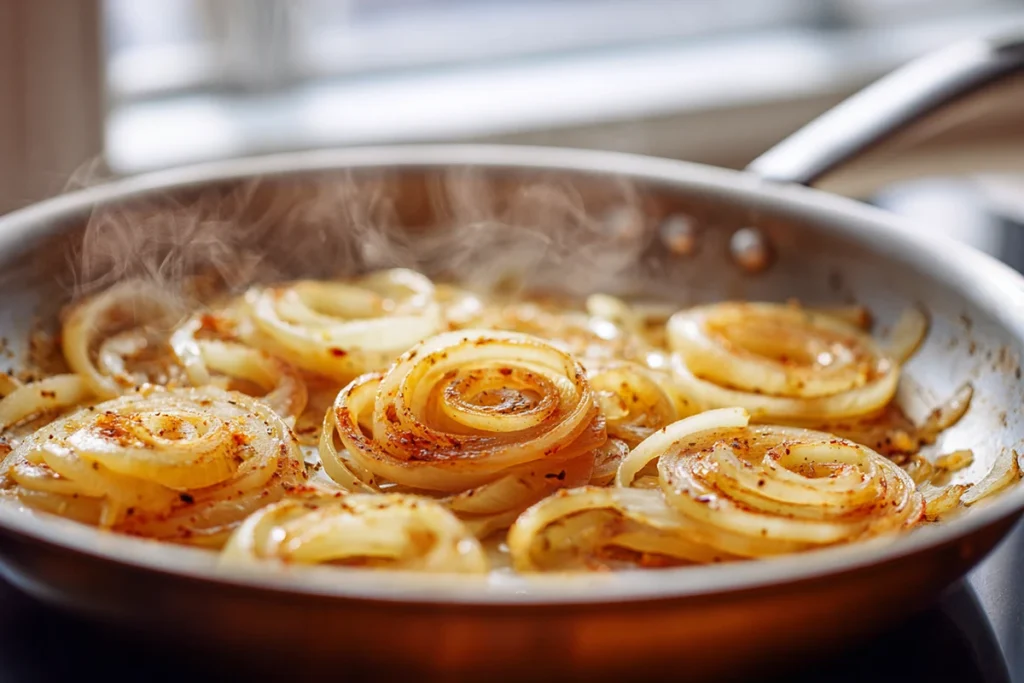
This recipe starts in a skillet, not a bowl. Butter and olive oil should melt together quietly before the onions go in — you want a steady sizzle, not a harsh hiss. At first, the onions will look crowded and pale, releasing steam more than sound. After ten minutes, the smell shifts from sharp to sweet, and by the end they’ll be deeply golden, soft enough to drape over a spoon, with browned bits forming on the pan.
This stage can’t be rushed. If the onions are still stiff or blond, they’ll taste raw later and leak moisture into the loaf. When they’re ready, the pan smells rich and savory, almost brothy, even before any liquid is added. The garlic goes in at the end, just until you smell it bloom — no browning, no bitterness.
Bringing the Meat Together Without Packing It Tight
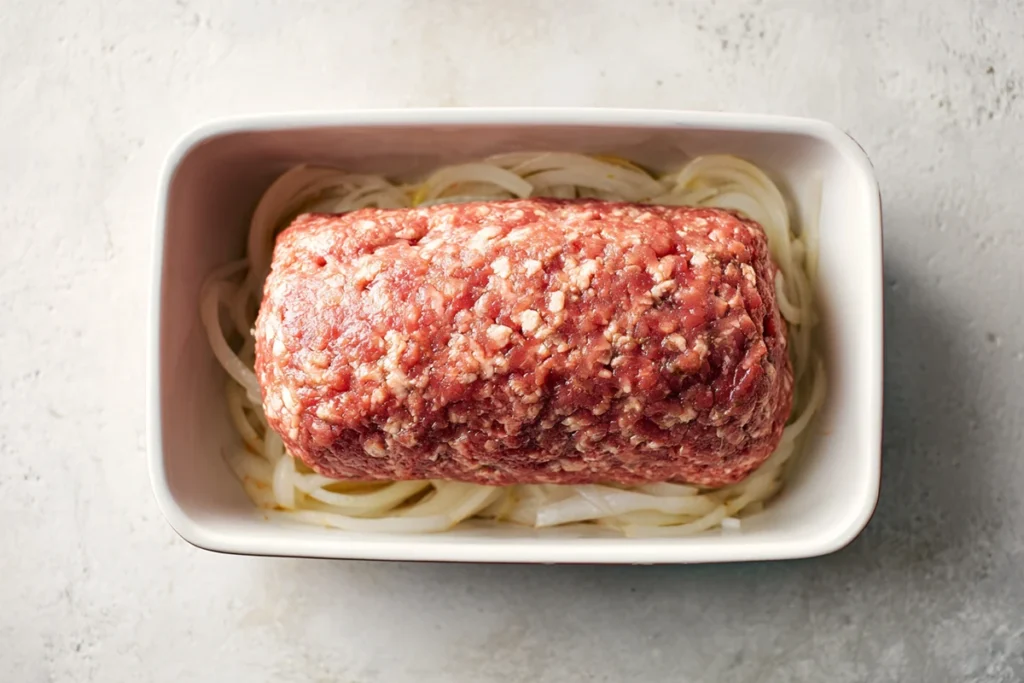
Once the onions cool slightly, they’re folded into the meat mixture gently, using your hands rather than a spoon. The mixture should feel cool, loose, and slightly sticky — not dense. If you squeeze a handful, it should hold its shape but release easily, like soft clay.
This is where many French onion meatloaf recipes go wrong. Overworking the meat tightens the proteins, leading to a firm, dry slice. Stop mixing as soon as everything looks evenly distributed. The loaf should be shaped with light pressure, just enough to give it structure before it goes into the oven.
What to Look for While the Meatloaf Bakes
As it cooks, the kitchen starts to smell like roasted beef and thyme, not onions anymore — that’s your cue that the meat is doing its job. The surface should darken evenly, with juices bubbling quietly around the edges, not violently boiling.
When pressed lightly, the loaf should feel firm but spring back slightly. If it feels squishy, it needs more time. If it feels rigid, it’s already past its best moment. Pull it once it’s just cooked through and let it rest; the juices will redistribute instead of spilling out onto the pan.
Turning the Remaining Onions Into a Proper Sauce
While the meatloaf rests, the reserved onions go back over heat with beef broth. You’ll hear a steady simmer, not a rolling boil. As the liquid reduces, the sauce thickens naturally, coating the back of a spoon without turning gluey.
This isn’t gravy — it’s an extension of the onions themselves. The flavor should taste concentrated, savory, and balanced, with no raw broth edge left behind. If it smells flat, give it another minute.
Finishing With Cheese, Not Burying It
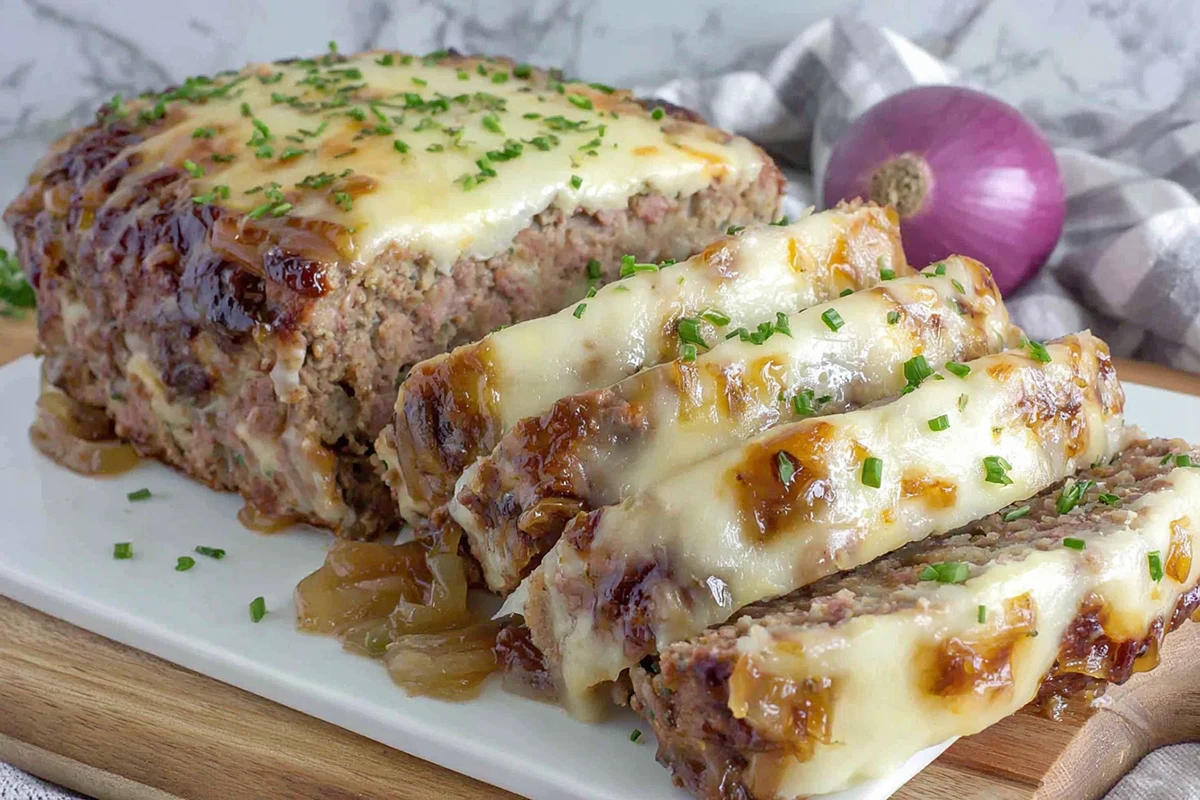
The Gruyère goes on last, once the loaf has rested and the surface has settled. Under the broiler, it melts into a bubbling, lightly blistered layer that smells nutty and rich. Watch closely here — the difference between golden and scorched is less than a minute.
Once sliced, the meatloaf should hold clean edges, the sauce pooling naturally around it. This is the moment where the whole dish comes together: caramelized onion meatloaf texture, French onion flavors, and a finish that feels deliberate rather than decorative.
Common French Onion Meatloaf Mistakes (And a Few Smart Adjustments)
If you’re tempted to tweak this recipe, a little restraint goes a long way. Swapping the ground beef for a leaner blend sounds sensible, but it usually leads to a drier loaf that relies too heavily on the sauce to recover. If you do go lean, compensate with an extra splash of beef broth mixed into the meat so it stays tender.
Gruyère is worth seeking out, but if it’s unavailable, a block of Swiss cheese grated fresh will behave similarly. Avoid mozzarella or mild cheddar here — they melt fast but flatten the flavor and release more oil than you want. Breadcrumbs can be replaced with panko if that’s what’s on hand, but expect a slightly looser texture unless they’re pressed gently into the mixture.
One thing not to change: the onion process. Using raw or quickly sautéed onions will water out the meat and mute the flavor. If time is tight, choose a different dinner. This dish depends on patience.
How I Serve This When I Want It to Feel Like a Meal
French Onion Meatloaf is rich by design, so what’s on the plate beside it matters. I serve it in thick slices with the onion sauce spooned over the top, not underneath — that way each bite stays balanced instead of soggy.
Creamy mashed potatoes work best here, soaking up the sauce without competing. If you want contrast, green beans sautéed with a little butter and salt cut through the richness cleanly. A simple side salad with sharp vinaigrette does the same job when the meal needs lightening.
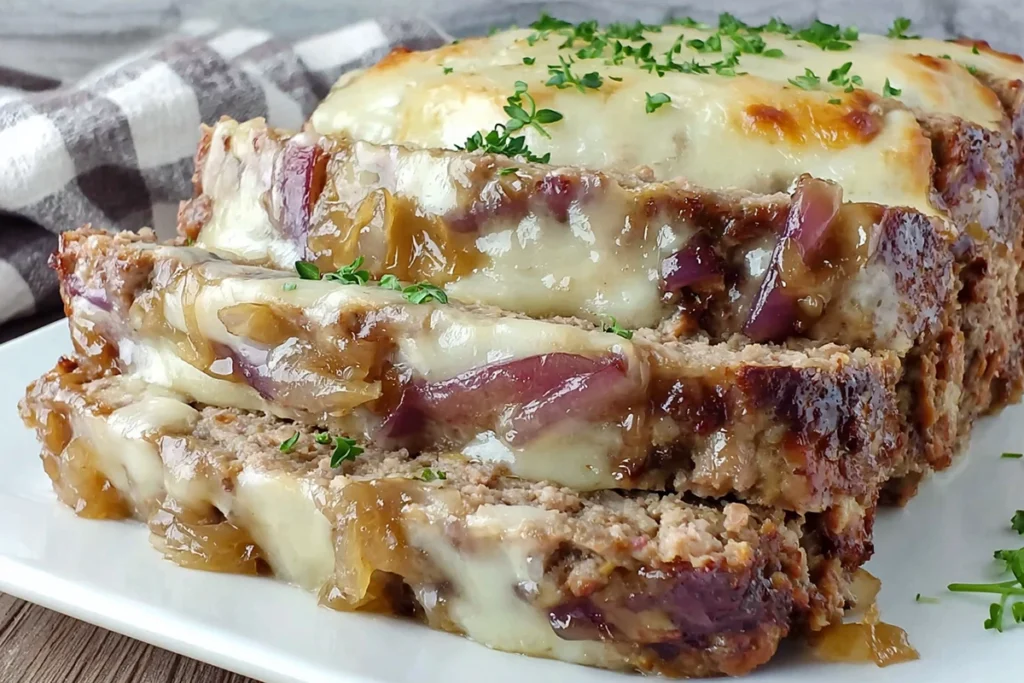
Leftovers reheat best sliced and covered, with a spoonful of sauce added before warming. It makes a surprisingly good sandwich the next day, especially on toasted bread where the cheese firms back up slightly.
Why This One Is Worth Repeating
This French Onion Meatloaf isn’t flashy, and it isn’t meant to be. It’s the kind of recipe that earns trust by working the same way every time, as long as you respect the onions and don’t rush the process. When you slow down and let the flavors build naturally, the result feels both familiar and a little special — the kind of comfort food that holds its place in your rotation instead of passing through once.
Cook it once, take notes, and cook it again. That’s how dishes like this become keepers.
Get inspired with more mouthwatering recipes! Follow me on Facebook and Pinterest for new cooking ideas every week.
FAQ
Can I make French onion meatloaf ahead of time?
Yes, you can fully assemble the meatloaf and refrigerate it, covered, for up to 24 hours before baking. Let it sit at room temperature for about 20 minutes before it goes into the oven so it cooks evenly. The onion sauce is best made fresh, but the onions themselves can be caramelized a day ahead.
Why is my meatloaf falling apart when I slice it?
This usually means it was sliced too soon or the mixture was a bit underbound. Meatloaf needs a short rest after baking so the juices settle and the structure firms up. If it still crumbles, check that the eggs and breadcrumbs were fully incorporated next time.
Can I freeze French onion meatloaf?
Yes, it freezes well once baked and cooled. Wrap individual slices tightly and freeze for up to three months. Thaw overnight in the refrigerator and reheat gently with a little extra onion sauce to keep it moist.
What can I use instead of Gruyère cheese?
Swiss cheese is the closest substitute and works well in both flavor and melt. Avoid mozzarella or very sharp cheddar, as they change the texture and don’t match the French onion profile as cleanly.
Print
French Onion Meatloaf
- Total Time: 1 hour 10 minutes
- Yield: 6 servings 1x
Description
A deeply savory French onion meatloaf made with caramelized onions, Gruyère cheese, and a rich onion sauce. Designed to stay juicy, slice clean, and deliver classic comfort with a French twist.
Ingredients
- 2 lbs ground beef
- 2 large onions, thinly sliced
- 2 eggs
- 1/2 cup breadcrumbs
- 2 tbsp butter
- 1 tbsp olive oil
- 2 cloves garlic, minced
- 1 tbsp Worcestershire sauce
- 1 tsp dried thyme
- 1 cup beef broth
- 1/2 cup Gruyère cheese, grated
- Salt
- Black pepper
Instructions
- Slowly caramelize the onions in butter and olive oil until deeply golden and soft, then add garlic briefly until fragrant.
- Gently combine ground beef, eggs, breadcrumbs, Worcestershire sauce, thyme, salt, pepper, and half of the caramelized onions.
- Shape the mixture lightly into a loaf and bake until just cooked through and firm but springy.
- Simmer the remaining onions with beef broth until reduced into a rich onion sauce.
- Top the baked meatloaf with Gruyère and broil until melted and lightly golden, then rest before slicing and serving with the sauce.
Notes
- Do not rush the onions; proper caramelization is essential for flavor.
- Avoid overmixing the meat mixture to keep the texture tender.
- Let the meatloaf rest before slicing so it holds together cleanly.
- Prep Time: 20 minutes
- Cook Time: 50 minutes
- Category: Comfort Food
- Method: Baking
- Cuisine: American, French
Nutrition
- Serving Size: 1 slice
- Calories: 480
- Sugar: 6
- Sodium: 780
- Fat: 32
- Saturated Fat: 14
- Unsaturated Fat: 16
- Trans Fat: 1
- Carbohydrates: 18
- Fiber: 2
- Protein: 32
- Cholesterol: 155
What Are Our Readers Saying?
There are no reviews yet. Be the first one to write one.