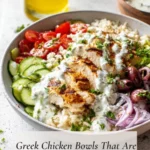
Greek Chicken Bowls: Juicy Citrus Chicken with Cool, Crunchy Contrast

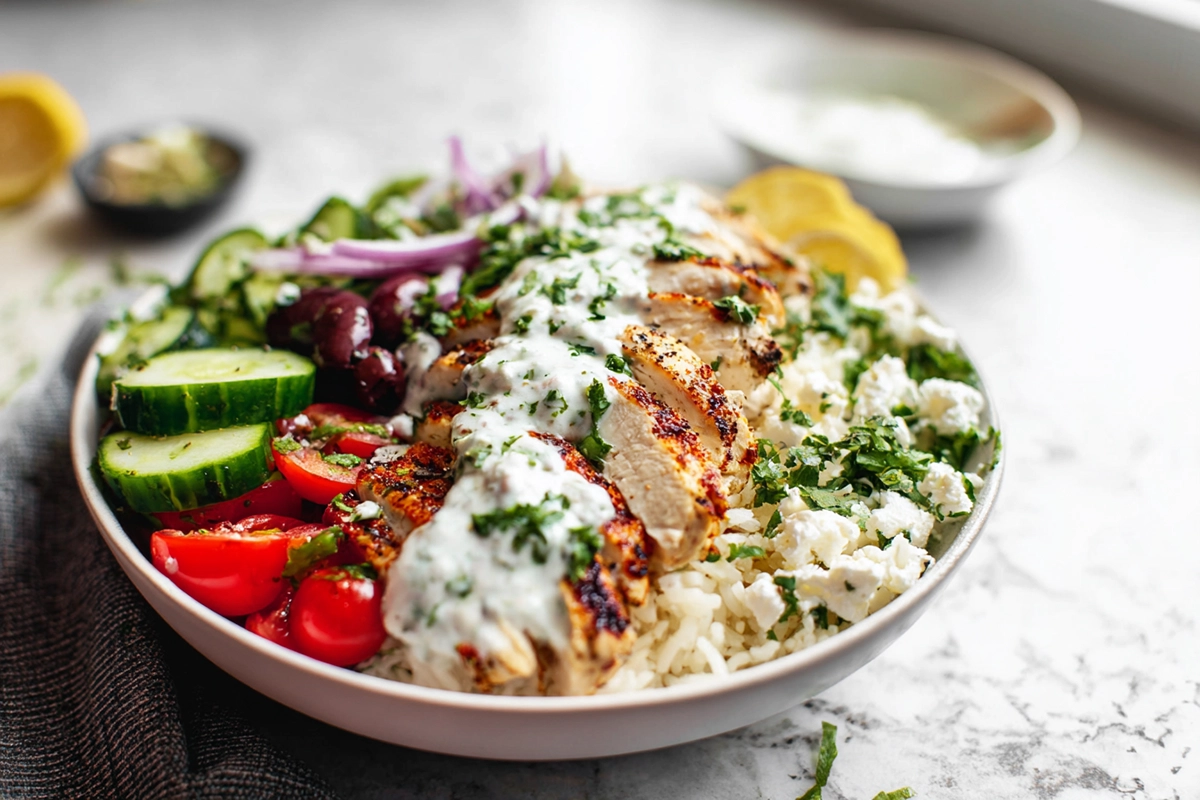
Dry chicken is the silent killer of “healthy” dinners. You start with good intentions, end with rubbery protein, and drown it in sauce hoping no one notices. These Greek chicken bowls fix that problem at the source. The chicken stays juicy, not because of magic, but because the marinade actually does something—and because the cooking method respects it. Add cold, garlicky tzatziki and crisp vegetables, and suddenly this isn’t a compromise meal. It’s the thing you want.
What makes this recipe work is restraint paired with precision. Lemon zest brings sharp, floral citrus without soaking the meat. Honey doesn’t sweeten the bowl—it balances the acid and helps the chicken brown instead of steam. Dried oregano and basil bloom in olive oil and cling to the surface, giving you flavor in every slice instead of a muddled background note. And the chicken gets pounded thin, which sounds aggressive but saves it from overcooking. Whether you use an air fryer or a skillet, the goal is the same: fast heat, even cooking, and a short rest before slicing so the juices stay put.
Around that chicken, everything plays a role. Warm rice or quinoa absorbs the drippings. Romaine keeps the bowl crisp and upright. Tomatoes and cucumber cool things down. The tzatziki—thick, cold, and bright with dill—cuts through the heat like a reset button.
You don’t need special equipment or obscure ingredients. You need attention in a few key moments, a bowl that respects contrast, and a refusal to accept dry chicken as inevitable.
Table of Contents
Why These Greek Chicken Bowls Don’t Taste Flat (It’s the Marinade Math)
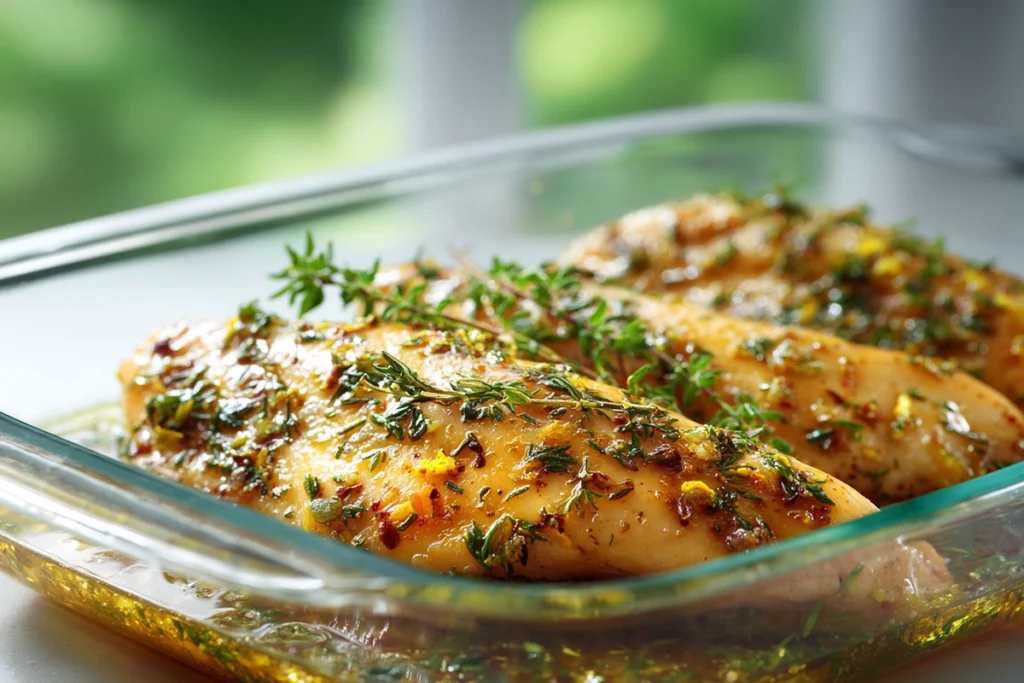
The backbone of these Greek chicken bowls is a marinade that’s doing real chemical work, not just coating the surface and hoping for the best. Olive oil carries fat-soluble flavors from the herbs and garlic powder, while lemon zest delivers sharp citrus aroma without flooding the meat with acid. That distinction matters: too much liquid acid tightens proteins and pushes moisture out. Zest gives brightness without toughness. Lemon juice is still there, but in a controlled amount, buffered by honey. The honey isn’t here to make things sweet—it rounds the acid and encourages browning so the chicken doesn’t come out pale and sad, especially in an air fryer.
The dried herbs are intentional. Dried oregano and basil release their flavor slowly into oil and stand up to heat far better than fresh, which would burn or disappear. Garlic powder spreads evenly through the marinade, avoiding raw garlic hotspots that can turn bitter. Red pepper flakes add a low hum of heat that keeps the bowl from reading as bland once it’s paired with rice and yogurt.
- Chicken breasts: Small breasts cook evenly; pounding them thin matters more than size for juiciness.
- Lemon zest + lemon juice: Zest for aroma, juice for controlled acidity—don’t swap one for the other.
- Honey: Balances acid and promotes browning; maple syrup works, sugar does not.
- Dried oregano & basil: Better heat stability than fresh for this application.
- Olive oil: Flavor carrier and moisture insurance; neutral oils flatten the profile.
Tzatziki Isn’t a Sauce, It’s a Temperature Reset
This bowl only works if the tzatziki is thick, cold, and clean. Greek yogurt brings fat and protein, which soften the sharp edges of lemon and garlic while giving the sauce enough body to cling instead of run. Grated cucumber adds freshness, but only if its water is removed; otherwise, it dilutes everything you just worked for. Dill supplies a grassy, cooling note that makes the warm chicken taste brighter by contrast. This isn’t garnish—it’s structural.
The strategy here is temperature and texture control. Warm grains absorb flavor and anchor the bowl. Crisp vegetables keep it from feeling heavy. The tzatziki cuts through the richness of the chicken and olive oil, resetting your palate between bites so nothing feels monotonous.
- Greek yogurt: Thick by design; regular yogurt will thin out and break the balance.
- Grated cucumber: Must be squeezed dry or the sauce turns watery fast.
- Fresh dill: Non-negotiable for clarity; dried dill tastes dusty here.
- Garlic (minced): Use restraint—this should cool the bowl, not dominate it.
- Olive oil & lemon juice: Emulsify richness and brightness without overwhelming the yogurt.
These sections aren’t about variety or flair—they’re about making sure every component earns its place so the final bowl tastes intentional, not assembled.

Pound It Thin or Regret It Later: The Chicken Step That Controls Everything
Flattening for Even Heat
Lay the chicken out and pound it until it’s about half an inch thick, paying attention to how it spreads under the mallet. You’re looking for uniformity, not aggression—the surface should look even, not torn. When it’s right, the meat feels supple and relaxed instead of stiff. This is what lets heat move through the chicken evenly instead of scorching the outside while the center lags behind.
Marinating With Intention
Once the chicken hits the marinade, it should look glossy and lightly coated, not swimming. As it rests, the smell shifts from sharp lemon to something rounder and herbal as the oil pulls flavor into the surface. Thirty minutes is enough to change the chicken; longer deepens flavor but doesn’t replace proper thickness. If it smells harsh or overly sour, you’ve gone too far on acid or time.
Air Fryer vs. Skillet: Two Paths, One Rule You Can’t Break
The Air Fryer Route
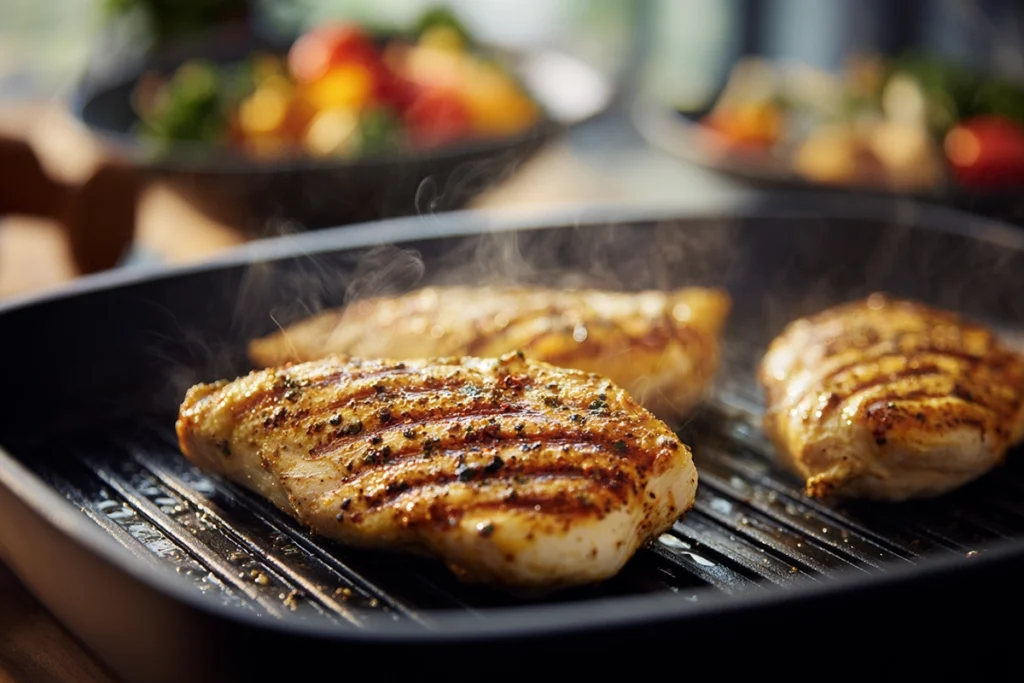
When the chicken goes into a preheated air fryer, you should hear an immediate, confident sizzle—not a weak hiss. The surface dries quickly, turning lightly golden while the interior stays juicy. Halfway through, flip it and look for faint browning along the edges. When it’s done, the chicken feels firm but springy, like the base of your thumb when you press it.
The Skillet Route
In a skillet over medium-low heat, the chicken should sizzle steadily the moment it hits the pan. If it smells sweet and herbal, you’re perfect; if it smells sharp or burnt, your heat is too high and the honey is scorching. Let the first side cook until it releases easily and shows deep golden patches before turning. The second side finishes faster—trust your nose and touch more than the clock.
The Rest That Makes Greek Chicken Bowls Work
No matter which method you use, pull the chicken off the heat and let it rest. You’ll see juices redistribute instead of spilling out when sliced. This pause is what keeps Greek chicken bowls from tasting dry once they hit warm grains and cool tzatziki. Skip it, and everything else has to work harder to hide the mistake.
Smart Swaps That Still Respect the Recipe (and One That Doesn’t)
If you’ve got boneless chicken thighs instead of breasts, use them without hesitation. Thighs stay juicy even if you miss the perfect pull time by a minute, and they take the lemon-honey marinade beautifully—just expect a slightly richer bite. Leftover rotisserie chicken also works in a pinch: shred it cold, warm it gently in a skillet with a spoon of olive oil and lemon juice, then stop. Don’t try to “re-cook” it or it dries out fast.
Grains are flexible, but only if you treat them right. Quinoa is fine, but cook it in chicken broth and finish it with lemon juice and herbs like the notes suggest, or it will taste flat next to the chicken. Cauliflower rice technically works, but only if you roast it first; steaming turns the bowl watery and sad.
One swap that doesn’t work: skipping the marinade and seasoning the chicken at the end. You’ll get cooked chicken, sure—but you won’t get Greek chicken bowls that taste cohesive.
Building the Bowl So Every Bite Tastes Intentional
Start with warm rice or quinoa so it absorbs whatever juices the chicken gives off. That warmth matters—it carries flavor upward instead of letting everything slide around cold and disconnected. Layer the romaine next so it stays crisp but doesn’t wilt, followed by tomatoes, cucumber, and red onion for crunch and bite.
Slice the chicken across the grain and lay it on top while it’s still warm. Spoon the tzatziki on last so it stays cold and creamy, then finish with a light drizzle of olive oil and lemon juice if you want extra brightness. These bowls are complete on their own, but they pair especially well with something crisp on the side—think roasted potatoes or warm pita—to soak up whatever’s left behind.
Last Tip Before You Call It Done
Taste one assembled bowl before serving the rest. If it feels dull, it usually needs acid, not salt. A quick squeeze of lemon wakes everything up.
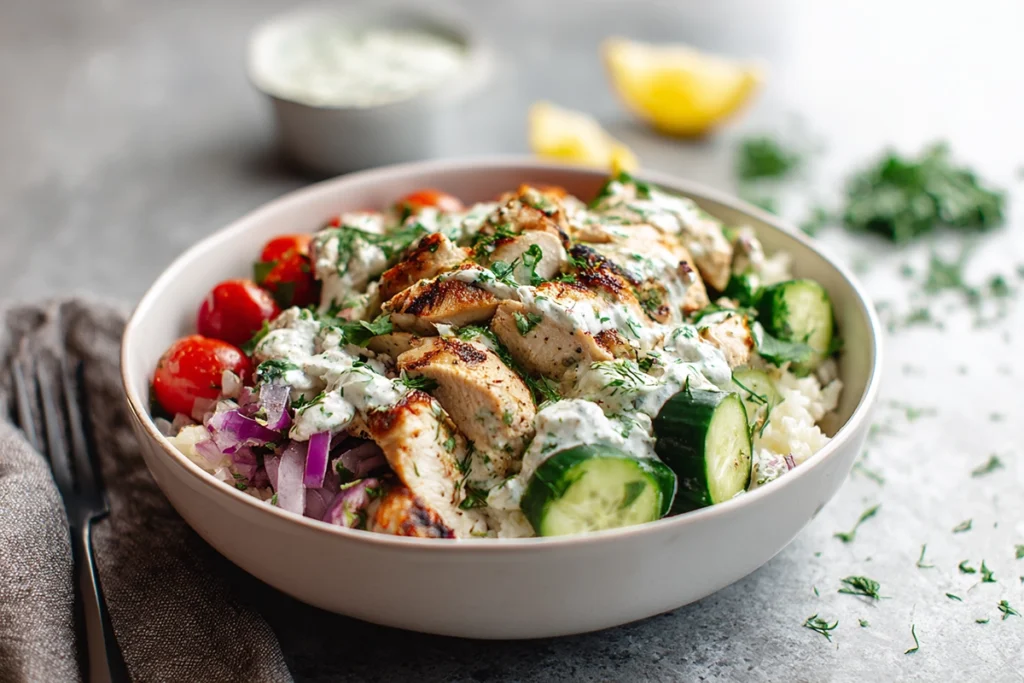
Greek chicken bowls are the kind of meal that reward paying attention once, then feed you well all week. They hold up for meal prep, they don’t get soggy if you keep the components separate, and they never feel like leftovers you’re forcing yourself to eat. Make them once with intention, and they’ll earn a regular spot in your rotation.
Get inspired with more mouthwatering recipes! Follow me on Facebook and Pinterest for new cooking ideas every week.
Common Questions About Greek Chicken Bowls
Can I meal-prep Greek chicken bowls without them getting soggy?
You can, but only if you keep the components separate. Store the chicken, grains, chopped vegetables, and tzatziki in individual containers. Assemble just before eating so the romaine stays crisp and the tzatziki stays thick. If you build the bowls ahead of time with sauce already on them, the lettuce wilts and the grains absorb too much moisture, turning the whole thing limp by day two.
How long can the marinated chicken sit safely in the fridge?
The chicken is best cooked within 24 hours of marinating. After that, the lemon juice starts to change the texture, making the meat slightly mealy instead of juicy. Thirty minutes gives you flavor; overnight gives you depth; beyond a day gives you diminishing returns. If you know you won’t cook it soon, freeze the chicken directly in the marinade instead.
What’s the best rice substitute if I want lower carbs?
Roasted cauliflower rice is the only swap that holds up here. Roast it at high heat until dry and lightly browned so it doesn’t steam under the chicken. Steamed or microwaved cauliflower releases water and dilutes everything else in the bowl. If you want something heartier, quinoa cooked in broth with lemon is a better option than plain white rice.
Can I grill the chicken instead of air frying or pan-searing?
Grilling works well if you keep the heat medium and oil the grates aggressively. The honey in the marinade can cause sticking and flare-ups over high heat, so don’t rush it. Grill until the chicken releases easily and shows defined grill marks, then pull it as soon as it hits temperature. Let it rest before slicing, just like you would indoors.
Why does my tzatziki taste bland even when I follow the recipe?
Most bland tzatziki comes down to water dilution or under-seasoning. If the grated cucumber isn’t squeezed dry, it waters down the yogurt and mutes the lemon, garlic, and dill. Taste the sauce cold, not at room temperature—cold dulls salt perception. Adjust with a small pinch of salt and a few drops of lemon juice until it tastes bright and clean.
Print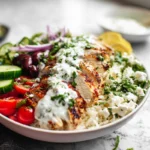
Greek Chicken Bowls
- Total Time: 1 hour 40 minutes
- Yield: 4 bowls 1x
- Diet: Halal
Description
These Greek chicken bowls combine juicy lemon-herb marinated chicken with warm rice or quinoa, crisp vegetables, and cool homemade tzatziki for a balanced, fresh meal that works just as well for weeknight dinners as it does for meal prep.
Ingredients
- 4 small chicken breasts (about 1 1/4 pounds)
- 1/4 cup olive oil
- 1 tablespoon lemon zest
- 2 tablespoons lemon juice
- 2 tablespoons honey
- 1 teaspoon garlic powder
- 1 1/2 teaspoons dried oregano
- 1 1/2 teaspoons dried basil
- 1 teaspoon salt
- 1/4 teaspoon black pepper
- 1/2 teaspoon red pepper flakes
- 2 cups cooked rice or quinoa
- 2 cups halved grape or cherry tomatoes
- 2 cups diced or chopped cucumber
- 4 cups shredded romaine lettuce
- 1 cup sliced red onion
- 1/2 cup feta cheese
- 1 cup plain Greek yogurt
- 1/2 cup grated cucumber
- 1 tablespoon lemon juice (tzatziki)
- 1 tablespoon olive oil (tzatziki)
- 1 teaspoon minced garlic
- 1/4 teaspoon salt
- 1 tablespoon fresh chopped dill
Instructions
- Whisk together the olive oil, lemon zest, lemon juice, honey, garlic powder, dried oregano, dried basil, salt, black pepper, and red pepper flakes.
- Pound the chicken breasts to about 1/2-inch thickness and coat evenly with the marinade.
- Marinate the chicken for at least 30 minutes and up to 24 hours in the refrigerator.
- Combine the Greek yogurt, grated cucumber, lemon juice, olive oil, minced garlic, salt, and fresh dill to make the tzatziki and refrigerate until needed.
- Cook the rice or quinoa and prepare the vegetables.
- Air fry the chicken at 380°F until cooked through and golden, or pan-sear in a skillet over medium-low heat until the internal temperature reaches 165°F.
- Let the chicken rest for 5 minutes, then slice.
- Assemble the bowls with warm grains, vegetables, sliced chicken, and tzatziki.
Notes
- Cook the rice or quinoa in chicken broth for more flavor.
- Finish grains with lemon juice, salt, pepper, and fresh herbs if desired.
- Store components separately for best meal prep results.
- Prep Time: 20 minutes
- Cook Time: 20 minutes
- Category: Main Dish
- Method: Air Fryer, Skillet
- Cuisine: Greek
Nutrition
- Serving Size: 1 bowl
- Calories: 603
- Sugar: 11
- Sodium: 900
- Fat: 27
- Saturated Fat: 6
- Unsaturated Fat: 20
- Trans Fat: 0
- Carbohydrates: 38
- Fiber: 2
- Protein: 40
- Cholesterol: 110