Ground Beef Philly Cheesesteaks: Crispy Edges, Juicy Centers, Zero Fuss


There’s a very specific moment when this dish comes together. The beef has browned just enough to pick up those dark, savory bits in the pan. The onions and green peppers soften and lose their sharpness. Then the garlic hits the heat, and suddenly the kitchen smells like toasted bread, butter, and something deeply comforting. That’s the payoff this recipe is built around — not tradition for tradition’s sake, but flavor that makes sense for a real home kitchen.
Using ground beef instead of sliced steak isn’t a shortcut here. It’s a choice. Ground beef cooks fast, takes seasoning evenly, and settles into the bread instead of sliding out the back of the sandwich. When handled right, it stays loose and juicy, not packed or heavy like a burger. The result is a filling that tastes rich without being greasy and feels right for a baked cheesesteak, not just a skillet one.
This recipe leans into small details that matter. The beef is browned first, then drained and seasoned again so it doesn’t taste flat. The vegetables are diced, not sliced, so they soften instead of crunching. Mozzarella melts into the filling instead of sitting on top. And the garlic butter isn’t decoration — it seeps into the bread and ties everything together in the oven.
If you’ve ever made cheesesteak-style sandwiches that turned out dry, bland, or oddly heavy, this version fixes those problems by slowing down where it counts and simplifying everywhere else. These ground beef Philly cheesesteaks are hearty, dependable, and built for repetition — the kind of dinner that disappears fast and gets requested again before the pan cools.
Table of Contents
The Beef Choice That Keeps These Sandwiches Juicy
Ground beef is the backbone of this recipe, and it needs enough fat to stay loose after baking. An 80/20 blend cooks up flavorful without turning greasy, especially once it’s browned, drained, and seasoned a second time. Leaner beef tightens as it cooks and can leave the filling dry once it hits the oven, which is the fastest way to make baked sandwiches feel heavy instead of hearty. This choice is a big reason these ground beef Philly cheesesteaks taste like a proper sandwich instead of a meatloaf on bread.
- Ground beef (80/20): Enough fat for flavor and moisture without pooling in the pan
- Worcestershire sauce: Adds depth and savory backbone without making the filling taste “saucy.”
- Ground mustard: Quite sharp, which balances the richness rather than announcing itself
The Vegetable Cut That Melts Instead of Crunches
Onions and green peppers belong here, but how they’re cut matters more than people think. Dicing instead of slicing lets them soften quickly and fold into the beef rather than sitting on top of it. Large slices tend to stay crunchy and can push the filling out of the bun when baked. This smaller cut keeps every bite balanced and helps the sandwiches hold together.
- White onion (diced): Softens evenly and adds sweetness without a stringy texture
- Green bell pepper (diced): Classic flavor, but cut small so it blends instead of dominating
Choosing Cheese That Pulls, Not Pools
Mozzarella isn’t traditional, but it works better for this baked setup than provolone or American. It melts smoothly into the beef mixture and creates that gentle stretch without releasing excess grease. Stronger cheeses can overpower the filling or separate during baking, leaving oily spots instead of cohesion.
- Shredded mozzarella: Melts cleanly and binds the filling without stealing focus
Garlic Butter Isn’t Optional — It’s Structural
The butter topping isn’t there for shine. Melted butter carries garlic into the bread and protects the buns from drying out in the oven. Mixing the garlic into the butter instead of the beef keeps the flavor bright and aromatic rather than muted. If you only have salted butter, it still works — just be mindful of the salt in the meat.
- Butter (melted): Moisture and richness that soak into the buns as they bake
- Garlic (minced): Split use matters — some for the beef, more for the butter topping
The Bread That Holds Without Turning Soggy
Mini sub buns are sized just right for this filling. They stand upright, hold their shape, and bake evenly without collapsing. Larger hoagies can work, but they require more filling and longer bake time, which can throw off the balance.
- Mini sub buns: Sturdy enough for stuffing, soft enough to absorb garlic butter
Together, these choices keep the filling cohesive, the bread tender, and the flavor focused — the quiet decisions that make this recipe repeatable instead of fussy.

The Browning Moment That Decides Everything
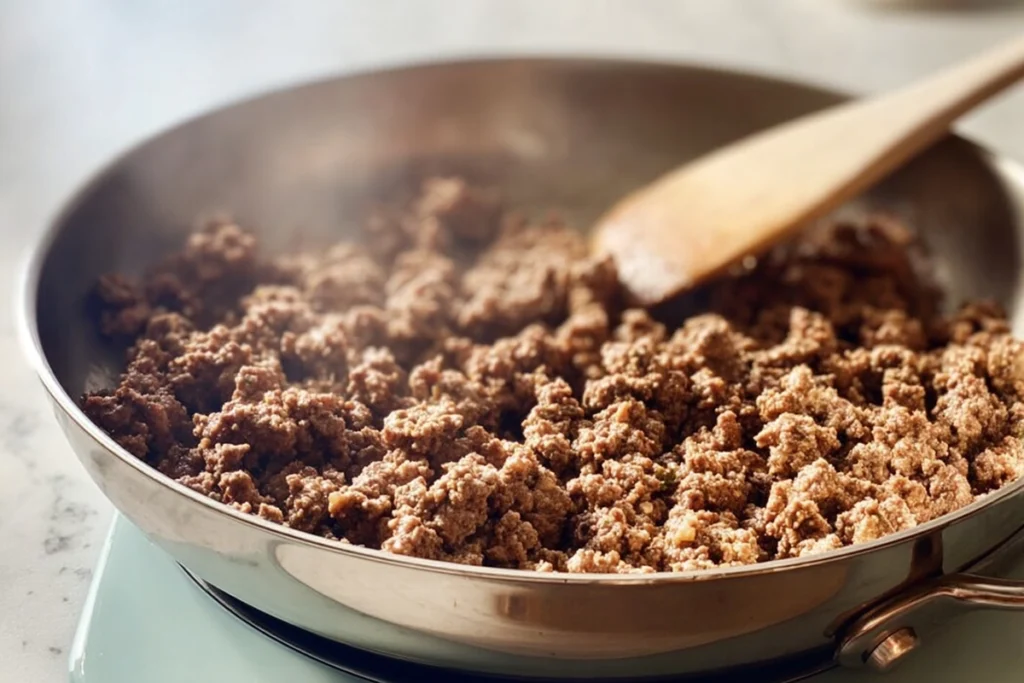
The pan needs to be hot enough that the beef sizzles aggressively the second it hits the surface, not quietly steams. Spread the ground beef out and leave it alone for a moment — you’re looking for browned edges and a deeper color before you break it up. When it’s ready, the smell shifts from raw meat to something richer and almost nutty, and the fat begins to pool slightly around the edges. That’s when you pull it off, drain it, and reset the pan; this pause is what keeps the filling from tasting boiled later.
Why This Filling Is Built in Two Stages
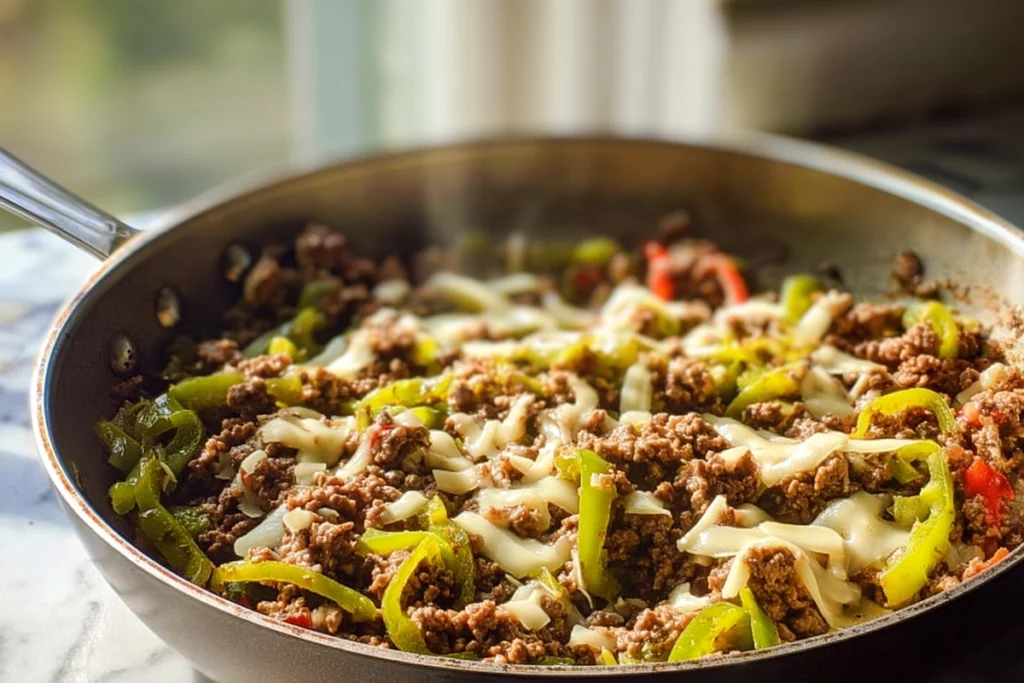
Once the beef goes back into the pan, everything else moves quickly. The diced onions and green peppers should soften until they look glossy and slightly translucent, not limp or browned. You’ll hear a steady, gentle sizzle instead of sharp popping — that’s the vegetables releasing moisture and settling into the meat. Worcestershire sauce and ground mustard disappear into the mixture, and the aroma becomes savory and rounded, the kind that smells finished even before it technically is. This is where ground beef sandwiches either stay juicy or dry out later, so stop cooking as soon as the vegetables are tender.
Stuffing the Buns Without Crushing Them
Set the buns upright so they hold their shape, then spoon the filling in loosely instead of packing it down. The mixture should mound slightly and feel soft to the touch, not compressed. When the mozzarella goes on, it should just cover the top — enough to melt and pull, not enough to seal the bread shut. This balance is what keeps these baked cheesesteaks from eating like heavy sliders.
Garlic Butter Is the Final Signal
When the butter is fully melted and the garlic is stirred in, it should smell sharp and fragrant, not cooked or mellow. Pour it slowly over the tops so it runs down into the bread instead of pooling in the dish. In the oven, you’ll hear faint sizzling and smell toasted garlic and warm butter within a few minutes — that’s your cue, everything is working. Pull the pan while the bread is crisp at the edges but still soft underneath, and you’ll have an easy cheesesteak that holds together without drying out.
This method keeps the process simple, but every phase has a purpose — and skipping any one of them shows up on the plate.
Smart Swaps That Still Respect the Sandwich
This recipe is flexible, but only in ways that keep the texture right. Ground turkey or ground chicken can stand in for the beef if you’re working with leftovers or a lighter preference, but they need a little help. Use meat with some fat, season a touch more aggressively, and stop cooking earlier than you think — lean poultry tightens fast and dries out if you chase browning too hard. If you’re using pre-cooked chicken, shred it cold and fold it into the softened onions and peppers just long enough to warm through. Cooking it from raw, like the beef, will strip it of moisture.
Cheese is another place people like to experiment. Mozzarella works because it melts cleanly and binds the filling. Provolone can be used if you want a sharper edge, but keep the layer thin or it will overpower the meat. Avoid American cheese slices here; they melt too quickly in the oven and can leave the buns greasy instead of cohesive.
How to Serve These Without Overcomplicating Dinner
These sandwiches are rich and filling, so the best pairings bring contrast. A crisp green salad with a sharp vinaigrette cuts through the butter and cheese without competing for attention. Roasted broccoli or green beans work well if you want something warm, especially when cooked until lightly blistered and seasoned simply. For casual nights, kettle chips or oven fries are more than enough.
If you’re serving a crowd, these ground beef Philly cheesesteaks hold well for a short window and can be kept warm in the oven without drying out. Just cover them loosely with foil so the bread stays soft while the cheese remains melted.

A Few Last Things Worth Knowing
Packing the filling too tightly into the buns is the most common mistake. It seems helpful at the moment, but it prevents heat from moving through the sandwich and leaves the center heavy. Another easy misstep is overbaking — the goal is crisp edges and soft centers, not crunchy bread. Pull them as soon as the cheese has melted and the tops look lightly golden.
These sandwiches aren’t meant to impress with precision or polish. They’re meant to show up hot, smell like garlic and butter, and disappear fast. Once you’ve made them once, they become the kind of meal you keep in your back pocket — dependable, comforting, and easy to repeat on nights when everyone’s hungry and nobody wants anything complicated.
Get inspired with more mouthwatering recipes! Follow me on Facebook and Pinterest for new cooking ideas every week.
FAQ
Can I make ground beef Philly cheesesteaks ahead of time?
You can prepare the beef and vegetable filling earlier in the day and store it in the refrigerator once cooled. When you’re ready to eat, reheat the filling gently, stuff the buns, add cheese and garlic butter, then bake. Assembling and baking right before serving gives the best texture.
Why does my filling sometimes turn dry after baking?
This usually means the beef was cooked too long on the stove before going into the oven. Ground beef continues to lose moisture as it bakes, so it should come off the heat while it’s still juicy and loose. Using an 80/20 blend also helps prevent dryness.
Can I use a different cheese and still get good results?
Mozzarella works best for this baked method because it melts smoothly without releasing excess grease. Provolone can be used if you prefer a sharper flavor, but keep the layer light so it doesn’t overpower the filling. American cheese slices tend to melt too fast and can make the bread greasy.
How do I reheat leftover ground beef Philly cheesesteaks?
For the best texture, reheat them in the oven or air fryer at 375°F until warmed through, and the bread is lightly crisp again. The microwave works in a pinch, but the buns will soften and lose their edges. Leftovers are best eaten within three days.
Print
Ground Beef Philly Cheesesteaks
- Total Time: 19 minutes
- Yield: 8 sandwiches 1x
- Diet: N/A
Description
Juicy ground beef Philly cheesesteaks baked with diced onions and green peppers, topped with melted mozzarella and garlic butter, are perfect for quick weeknight dinners.
Ingredients
8 mini sub buns
1 pound ground beef (80/20)
1/2 medium white onion, diced
1/2 green bell pepper, diced
1 tablespoon Worcestershire sauce
1/2 teaspoon salt
1/2 teaspoon black pepper
1/2 teaspoon ground mustard
4 ounces shredded mozzarella cheese
5 tablespoons butter, melted
3 garlic cloves, minced
Instructions
-
Heat a sauté pan on medium/high heat. Add the ground beef and cook until browned, 6–8 minutes.
-
Dice the onion and green pepper while the beef cooks.
-
Remove the beef and drain. Wipe the pan and return the beef.
-
Add diced peppers, onions, Worcestershire sauce, salt, pepper, ground mustard, and 1 clove garlic. Cook 4–5 minutes until softened.
-
Preheat the oven to 375°F. Spray a baking dish and place mini subs cut side up.
-
Stuff the buns with the beef mixture evenly and sprinkle with mozzarella cheese.
-
Melt the butter with the remaining minced garlic and drizzle over each sandwich.
-
Bake the sandwiches for 8 minutes until cheese is melted and tops are lightly golden.
Notes
Can substitute ground beef with ground turkey or chicken, adjust seasoning and cooking time.
Store covered in the refrigerator up to 3 days and reheat in the oven or microwave.
Do not overfill buns to maintain proper texture.
- Prep Time: 5 minutes
- Cook Time: 14 minutes
- Category: Main Course
- Method: Baking
- Cuisine: American
Nutrition
- Serving Size: 1 sandwich
- Calories: 450
- Sugar: 5 g
- Sodium: 720 mg
- Fat: 30 g
- Saturated Fat: 12 g
- Unsaturated Fat: 15 g
- Trans Fat: 3 g
- Carbohydrates: 35 g
- Fiber: 3 g
- Protein: 28 g
- Cholesterol: 90 mg