
Ground Turkey Teriyaki Stir Fry: Glossy Sauce, Clean Heat, No Takeout Needed
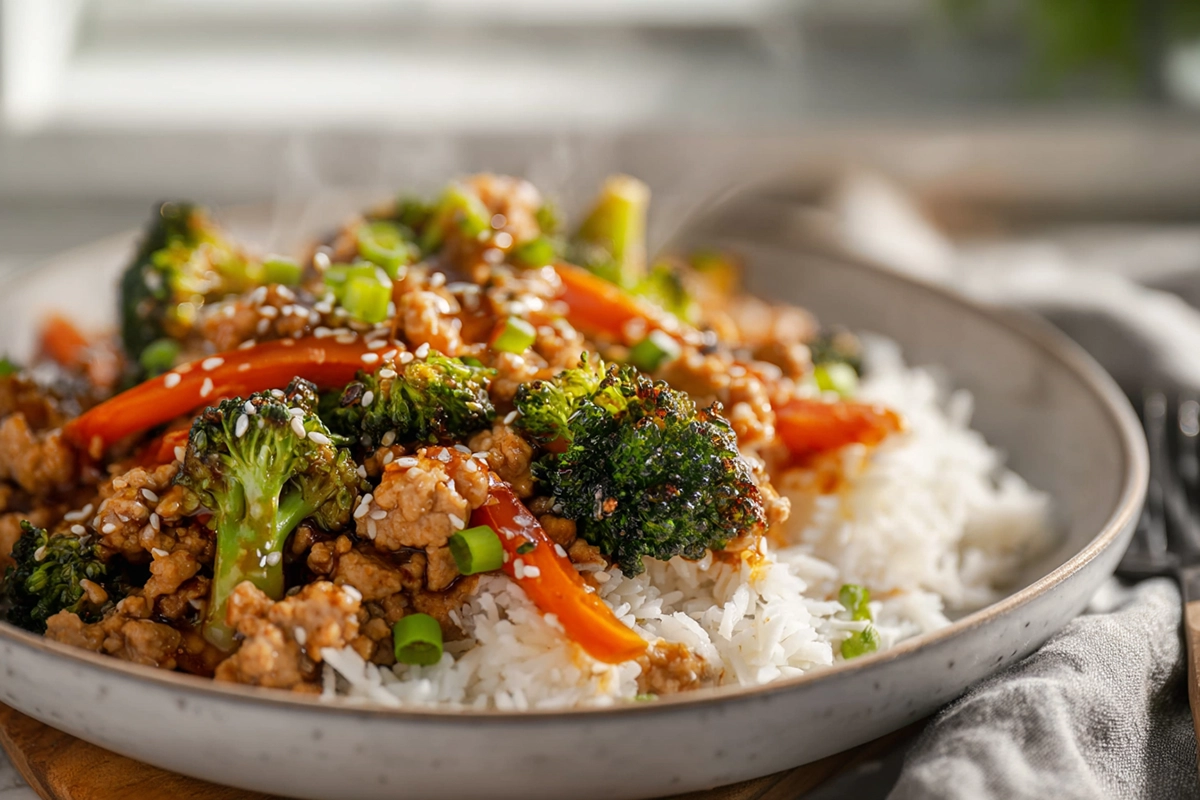
There are nights when dinner needs to show up fast—but still feel like food you meant to cook. The pan hits medium-high heat, oil loosens, and ground turkey goes in untouched for a minute or two. Garlic and ginger follow, sharp at first, then round and warm. When the teriyaki sauce finally meets the skillet, it tightens into a glossy coat that clings instead of puddling. That’s the moment you know this isn’t another rushed stir-fry that eats like leftovers while you’re still cooking.
This recipe works because it respects timing. Ground turkey browns before it breaks apart, building flavor early instead of steaming itself pale. Frozen vegetables aren’t a compromise here—they’re part of the plan, releasing moisture under a covered pan, then firming back up once the sauce goes in. Soy sauce, mirin, and sake bring depth without heaviness, while brown sugar smooths the edges instead of making things sweet. Cornstarch does its job quietly, thickening the sauce just enough to coat rice without turning sticky.
Ground Turkey Teriyaki Stir Fry is the kind of meal that earns a spot in the regular rotation. It uses what’s practical—pre-cooked rice, one skillet, ingredients that behave predictably—and still delivers that savory, slightly smoky payoff you want at the end of a long day. In the sections ahead, I’ll walk through the few moments that matter most, why they matter, and how small choices in heat and order make this dish reliable every single time.
Table of Contents
What Makes This Teriyaki Sauce Work Without Tasting Flat
This sauce is built for speed, but it doesn’t cut corners on balance. The reason it works in a fast skillet like this is because every liquid pulls its weight. Soy sauce brings salt and depth, but on its own it would be sharp and one-note. Mirin softens that edge with gentle sweetness and acidity, while sake thins the sauce just enough so it reduces instead of turning syrupy. Brown sugar doesn’t make the dish sweet—it rounds everything out once heat hits the pan.
Garlic and fresh ginger matter more here than in longer-cooked dishes. Because this Ground Turkey Teriyaki Stir Fry comes together quickly, you taste them clearly. Minced garlic perfumes the oil the moment it hits heat, while grated ginger adds a clean, peppery warmth that keeps the sauce from feeling heavy. Cornstarch is mixed directly into the sauce on purpose. That way, it thickens evenly the second it hits the skillet, giving you that glossy finish that clings to meat and vegetables instead of sliding off into the rice.
- Soy sauce: The backbone; low-sodium works if that’s what you keep, but don’t dilute further.
- Mirin: Adds sweetness and acidity in one move; if it’s missing, the sauce loses balance.
- Sake: Keeps the sauce light and cookable; water works in a pinch, but you’ll lose depth.
- Brown sugar: Softens salt and sharpness, not a dessert-level sweetness.
- Cornstarch: Mixed cold so the sauce tightens smoothly, not in clumps.
The Ingredients That Actually Matter (And the Ones That Just Fill Space)
Ground turkey is the reason this dish works on a weeknight. It cooks quickly, browns fast, and absorbs flavor instead of fighting it. Let it sit in the pan before breaking it up—those first few minutes build savory depth that sliced meat can’t deliver in the same time frame. A small diced onion goes in early to soften and sweeten, giving the turkey something aromatic to cook against instead of just heat.
Frozen stir-fry vegetables are not a shortcut here—they’re a strategy. They release steam under the lid, helping everything cook evenly, then firm back up once uncovered and sauced. Fresh vegetables can work, but they demand more attention and timing. Cooked jasmine rice keeps the dish grounded and familiar, soaking up the teriyaki sauce without competing for flavor. Sesame seeds and green onions aren’t decoration; they finish the dish with nuttiness and freshness that keep it from tasting flat after the first bite.
- Ground turkey: Lean but still forgiving; browns cleanly and carries the sauce well.
- Onion: Builds sweetness early and prevents the turkey from tasting bland.
- Frozen stir-fry vegetables: Consistent texture and moisture control in a fast cook.
- Cooked jasmine rice: Neutral, fragrant, and ideal for soaking up sauce.
- Sesame seeds & green onions: Final contrast—nutty, fresh, and necessary.
This combination is what gives the dish its quick, savory, Asian-inspired rhythm without turning it into takeout imitation.

The Only Moment You Can Mess This Up (And How to Avoid It)
The skillet needs to be properly hot before anything goes in. When the oil hits the pan, it should shimmer and move easily, not sit dull and still. Add the ground turkey and leave it alone at first—no stirring, no breaking it up. You’re listening for a steady, confident sizzle and watching for the underside to turn lightly golden before you touch it.
If you start crumbling too early, the turkey releases moisture and steams itself gray. When it’s ready, it will resist the spatula slightly and break into chunks instead of shreds. That early browning is what gives this Ground Turkey Teriyaki Stir Fry its savory backbone, even though it cooks quickly.

Managing Moisture Without Losing Texture
Once the turkey is broken up and the diced onion goes in, the smell shifts almost immediately. The sharpness of raw onion softens, and the pan smells warmer and sweeter. This is when the frozen stir-fry vegetables join the skillet. You’ll hear the sizzle quiet down as the vegetables release steam—that’s expected.
Covering the pan briefly lets everything cook evenly without scorching. When you lift the lid, the vegetables should look bright and tender, not limp. Any moisture left in the pan should be bubbling, not pooling. This is the balance point that keeps a teriyaki stir fry from turning watery.
When the Sauce Hits the Pan, Everything Moves Fast
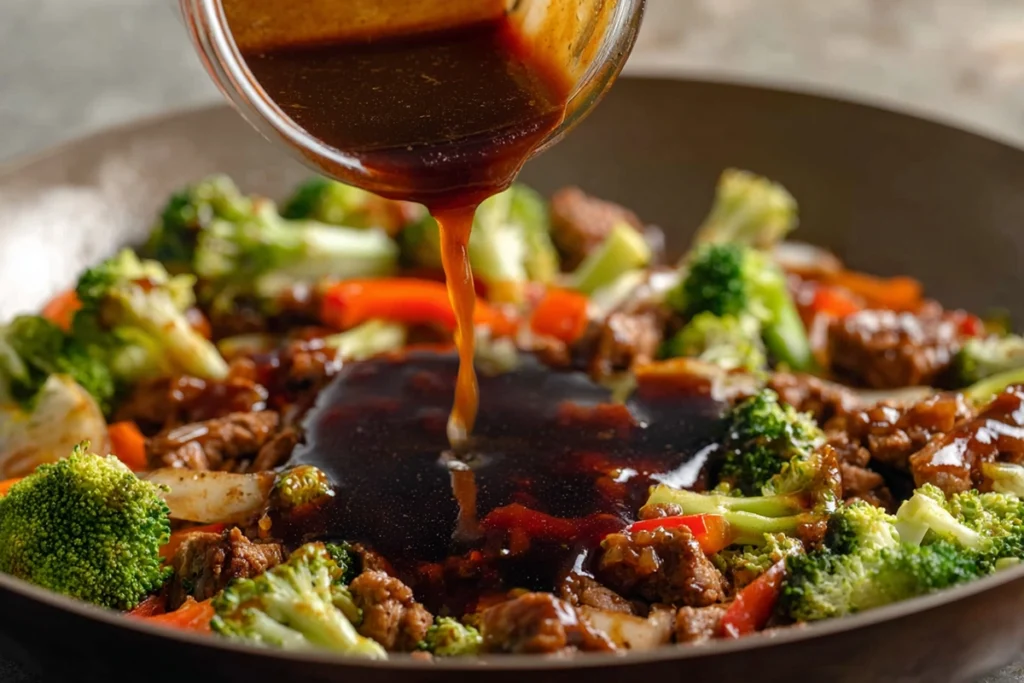
As soon as the teriyaki sauce goes in, the sound changes again. The bubbling tightens, turning from loose simmering to a sharper, faster pop. Stir gently but continuously, scraping the bottom of the pan so the sauce coats everything evenly instead of settling in one spot.
You’ll know it’s ready when the sauce turns glossy and clings to the turkey and vegetables instead of dripping off. The smell should be savory and slightly sweet, with ginger coming through cleanly. At this stage, the dish is finished—overcooking here dulls the flavors instead of improving them.
Finishing for Balance, Not Decoration
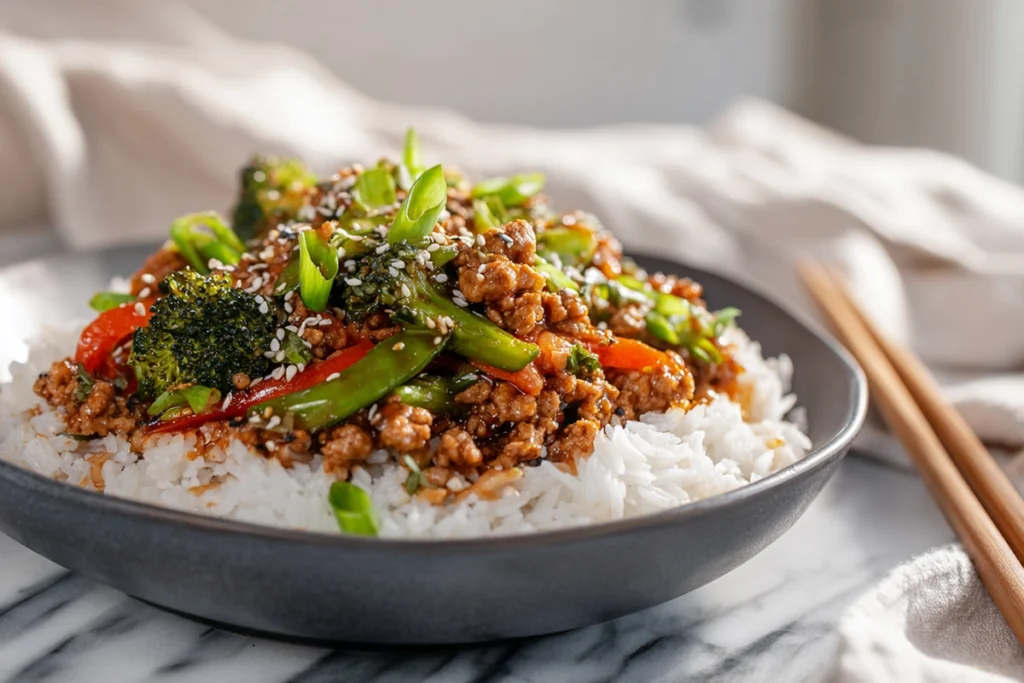
Spoon the stir fry over warm jasmine rice while everything is still steaming. The rice should absorb some of the sauce immediately, turning glossy around the edges. A sprinkle of toasted sesame seeds adds a nutty aroma, and sliced green onions bring a fresh bite that cuts through the richness.
This final contrast is what keeps an Asian-inspired stir fry like this from tasting heavy after a few bites. When done right, every forkful tastes balanced—savory, warm, and clean—without needing anything else added at the table.
Small Adjustments That Change the Whole Dish
This recipe is flexible, but only in ways that respect how fast it cooks. If you have leftover rotisserie chicken, shred it cold and add it after the vegetables have steamed and the lid comes off. You’re reheating it in the sauce, not cooking it, which keeps the meat tender instead of stringy. Udon noodles work well too—stir fully cooked noodles directly into the sauce just until they loosen and turn glossy. Any longer and they soak up too much liquid.
Fresh vegetables are fine if that’s what’s in the fridge, but they need attention. Slice them thin and expect a longer uncovered cook so excess moisture can cook off. Skip starchy vegetables like potatoes or carrots cut too thick—they won’t soften in time and will throw off the balance. Baking or oven-finishing this dish doesn’t work; the sauce needs direct heat to thicken properly and will stay thin in the oven.
How I’d Serve This on a Real Weeknight
Spoon the stir fry over hot jasmine rice while everything is still steaming so the grains absorb some of the sauce right away. For a lighter plate, serve it over a smaller bed of rice and add something crisp on the side, like quick cucumber slices or a simple slaw with rice vinegar. The freshness keeps the teriyaki from tasting heavy.
This also works well as a packed lunch. The flavors settle overnight, and the sauce holds up when reheated gently. If you’re feeding a crowd, set the rice and stir fry out separately and let everyone build their own bowl—it stretches the meal without feeling skimpy.
A Few Things Worth Remembering
Resist the urge to keep cooking once the sauce has thickened. That glossy finish is a short window, and going past it dulls the flavor. If the pan ever looks watery, turn the heat up and stir—don’t add more cornstarch. And if the dish tastes a little sharp at the end, a pinch of brown sugar will fix it faster than more soy sauce.
Ground Turkey Teriyaki Stir Fry is the kind of recipe that earns its place because it behaves the same way every time. It’s fast without feeling rushed, savory without being heavy, and dependable in the way weeknight dinners need to be. Make it once, pay attention to the timing, and it becomes the sort of meal you reach for on autopilot—still confident it’ll come out right.
Get inspired with more mouthwatering recipes! Follow me on Facebook and Pinterest for new cooking ideas every week.
FAQ
Why is my ground turkey teriyaki stir fry watery?
This usually means the turkey was broken up too early or the vegetables released moisture without enough heat to cook it off. Make sure the pan is hot and let the turkey brown before stirring, then uncover the pan and let excess liquid bubble away before adding the sauce.
Can I make ground turkey teriyaki stir fry ahead of time?
Yes, this recipe holds up well for meal prep. Store it separately from the rice if possible, then reheat gently so the sauce loosens without drying out the turkey.
What can I use if I don’t have mirin or sake?
If you’re missing one of them, the dish will still work but the flavor will be less rounded. A small splash of water can replace sake for thinning, and a pinch of brown sugar helps compensate for missing mirin, but avoid adding extra soy sauce or the dish will taste too salty.
Is it normal for the sauce to thicken very quickly?
Yes, that’s expected. Because the cornstarch is mixed into the sauce ahead of time, it activates almost immediately once it hits heat. As soon as the sauce looks glossy and coats the turkey, it’s ready to serve.
Can I use fresh vegetables instead of frozen?
You can, but they need to be sliced thin and cooked uncovered a bit longer so moisture can evaporate. Thicker or starchy vegetables won’t soften fast enough and can throw off the texture of the stir fry.
Print
Ground Turkey Teriyaki Stir Fry
- Total Time: 25 minutes
- Yield: 5 servings 1x
- Diet: Halal
Description
A fast, savory ground turkey teriyaki stir fry with a glossy homemade sauce, frozen vegetables, and jasmine rice. Built for busy weeknights and reliable results.
Ingredients
- 1 pound ground turkey
- 1/3 cup soy sauce
- 1/4 cup mirin
- 1/4 cup sake
- 2 tablespoons brown sugar
- 1 teaspoon cornstarch
- 3 cloves garlic, minced
- 1 teaspoon fresh ginger, grated
- 2 teaspoons cooking oil
- 1 small onion, diced
- 2 cups frozen stir fry vegetables
- 2 1/2 cups cooked jasmine rice
- 1 teaspoon toasted sesame seeds
- 1/4 cup sliced green onions
Instructions
- Heat a skillet over medium-high heat and add the oil. When the oil shimmers, add the ground turkey and let it brown undisturbed until lightly golden on the bottom.
- Break the turkey into chunks and add the diced onion. Cook until the onion softens and the turkey is mostly cooked through.
- Add the frozen stir fry vegetables, cover the pan briefly, and let the vegetables steam until tender.
- Uncover the pan and pour in the prepared teriyaki sauce. Stir gently as the sauce bubbles and thickens, coating the turkey and vegetables.
- Remove from heat once the sauce is glossy and clings to the ingredients. Serve immediately over cooked jasmine rice and finish with sesame seeds and green onions.
Notes
- Let the turkey brown before breaking it up to build flavor.
- If the sauce thickens too fast, remove the pan from heat and stir.
- Udon noodles can be substituted for rice by stirring them directly into the sauce just until heated.
- Prep Time: 15 minutes
- Cook Time: 10 minutes
- Category: Dinner
- Method: Stir-Fry
- Cuisine: Asian-inspired
Nutrition
- Serving Size: 1 bowl
- Calories: 445
- Sugar: 10
- Sodium: 980
- Fat: 23
- Saturated Fat: 5
- Unsaturated Fat: 15
- Trans Fat: 0
- Carbohydrates: 29
- Fiber: 4
- Protein: 28
- Cholesterol: 95
What Are Our Readers Saying?
There are no reviews yet. Be the first one to write one.