
Black Bean and Rice Enchiladas: Hearty, Saucy Comfort That Actually Fills You Up
There’s a certain moment in the kitchen when you know a dish is going to work. The onions have softened just enough, the garlic has lost its sharp edge, and the rice is turning glossy as it toasts in the pan. It smells warm and savory, not loud, not rushed. That’s where these enchiladas begin — not in the oven, but right there, when the base is built correctly.
Black bean and rice enchiladas solve a very real problem. You want something filling. You want comfort. But you don’t want a plate that leaves you hungry an hour later or a recipe that feels like a compromise. This one isn’t pretending to be light. It’s honest food: rice cooked in salsa and broth so every grain carries flavor, black beans that stay intact instead of disappearing into mush, and chorizo — soy or regular — adding just enough richness to make the whole pan feel complete.
What matters here isn’t fancy technique. It’s timing. Toasting the rice before adding liquid. Letting it simmer until it’s tender but still structured. Finishing with lime and cilantro when the heat is off, so they stay bright instead of bitter. These small choices are what turn a pot of rice and beans into a filling that can stand up to baking.
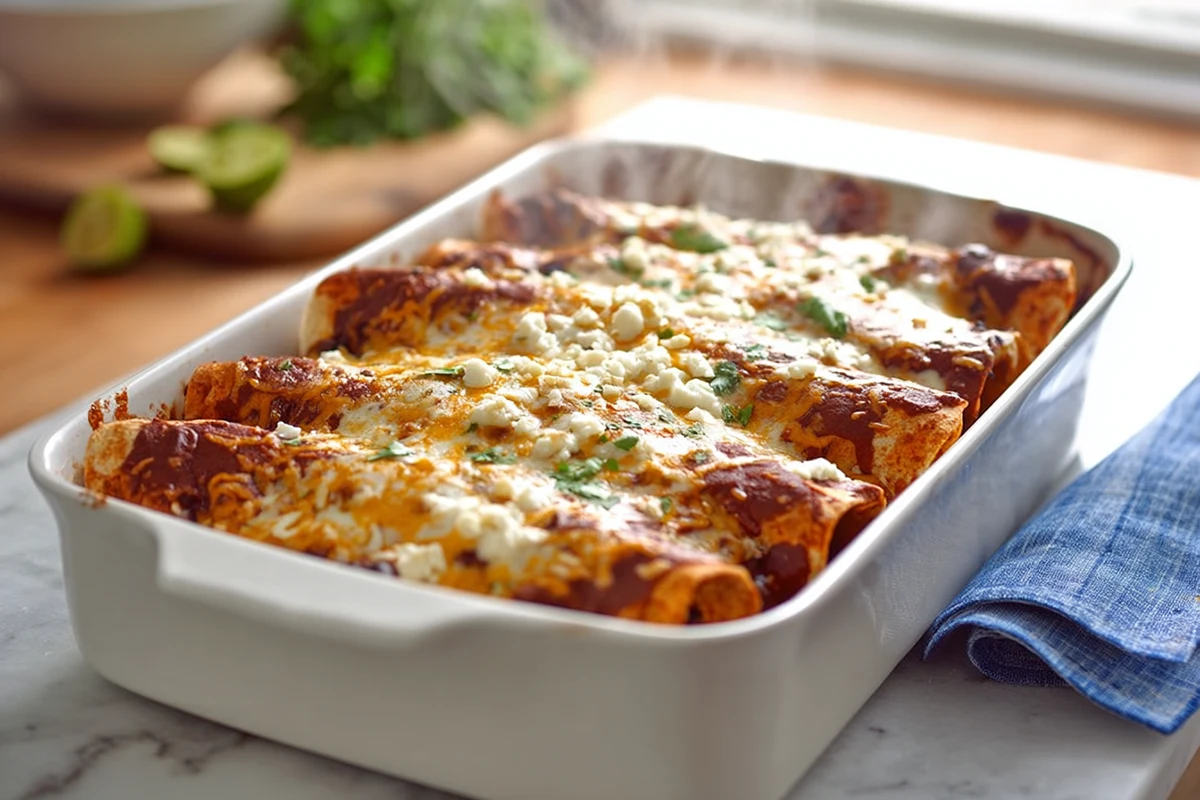
Once that part is right, everything else falls into place. Warm tortillas slide through enchilada sauce, the filling holds together, the cheese melts instead of leaking, and the pan comes out bubbling and soft at the edges. This is food meant to be made once and eaten more than once — the kind you’re glad to have waiting in the fridge.
Table of Contents
Why These Ingredients Pull More Weight Than They Look Like
The backbone of Black Bean and Rice Enchiladas isn’t spice or cheese — it’s balance. This filling has to be sturdy enough to survive baking, rich enough to feel comforting, and flexible enough to stretch across multiple meals. Every ingredient here earns its place by doing more than one job, whether that’s building flavor early or protecting texture later.
Brown rice is doing the heavy lifting. It absorbs liquid slowly and keeps its shape, which matters when the enchiladas spend time in the oven. White rice cooks faster, but it tends to collapse once it’s rolled and baked. Cooking the rice directly in salsa and broth instead of water means the seasoning is built in, not sprinkled on afterward. That’s the difference between enchiladas that taste cohesive and ones that taste assembled.
Black beans add protein and bulk, but more importantly, they add contrast. When folded in after the rice is fully cooked, they stay intact and give the filling some bite. This matters in a tender beef recipe-style comfort dish like this — you want something to chew against the soft tortillas and melted cheese.
Chorizo, whether soy or regular, brings fat and spice that beans and rice alone can’t. Soy chorizo keeps the dish firmly plant-based while still delivering richness. If using pork chorizo, draining excess fat is non-negotiable; too much grease will make the enchiladas heavy instead of hearty. This is one of those slow-cooked beef logic moments applied to a vegetarian-friendly dish: control the fat, control the final texture.
The enchilada sauce isn’t just a topping. Warming it before dipping the tortillas prevents tearing and helps the tortillas soften instead of crack. Skipping this step is the fastest way to end up with dry edges and split rolls — a common mistake in buttery beef and onions–style baked dishes where moisture matters.
- Brown rice: Holds structure during baking; white rice turns soft and muddy.
- Salsa + broth: Season the rice from the inside instead of relying on surface flavor.
- Black beans: Added after cooking to preserve texture.
- Chorizo (soy or pork): Adds richness and spice; drain pork chorizo well.
- Enchilada sauce: Warmed to protect tortillas and keep everything saucy.
- Cheese: Melts into the filling and seals the rolls; don’t overdo it or the enchiladas leak.
The Filling Is the Meal, Not the Tortilla
These enchiladas work because the filling can stand on its own. You could eat it straight from the pan and be satisfied — that’s the test. The tortillas are there to hold, not to rescue bland food. This is why the rice is cooked fully before assembly and why the lime and cilantro are stirred in off heat. Acid and herbs brighten the whole dish without turning bitter or flat.
If you’re short on time later in the week, this filling becomes a safety net. It reheats cleanly, freezes well, and can be rolled into tortillas as needed. That flexibility is intentional. This isn’t a one-night-only dinner; it’s the kind of food you build once and rely on, the same way home cooks lean on dependable tender beef recipe staples that always show up when needed.
The success of these Black Bean and Rice Enchiladas doesn’t come from excess. It comes from choosing ingredients that behave well under heat, reward patience, and make leftovers something to look forward to.

The Step Everyone Rushes (and Regrets Later): Building the Rice Filling
This dish lives or dies in the pan, before the oven ever comes on. When the olive oil hits the skillet and the onion and garlic go in, you’re listening for a steady sizzle — not silence, not scorching. The onions should turn soft and glossy, and the garlic should smell toasted and sweet, never sharp. Once the rice is stirred in, it should sound dry and slightly crackly as it toasts, picking up oil and aromatics.
When the salsa and broth are added, the pan should bubble immediately. That quick boil matters; it tells you the rice is starting strong instead of slowly absorbing liquid and turning gummy. As it simmers, the surface goes from loose and soupy to thick and cohesive, and the smell shifts from tomato-forward to warm and cumin-heavy. When the rice is tender but still holds its shape, that’s when the black beans and chorizo go in — you’re warming them through, not cooking them down.
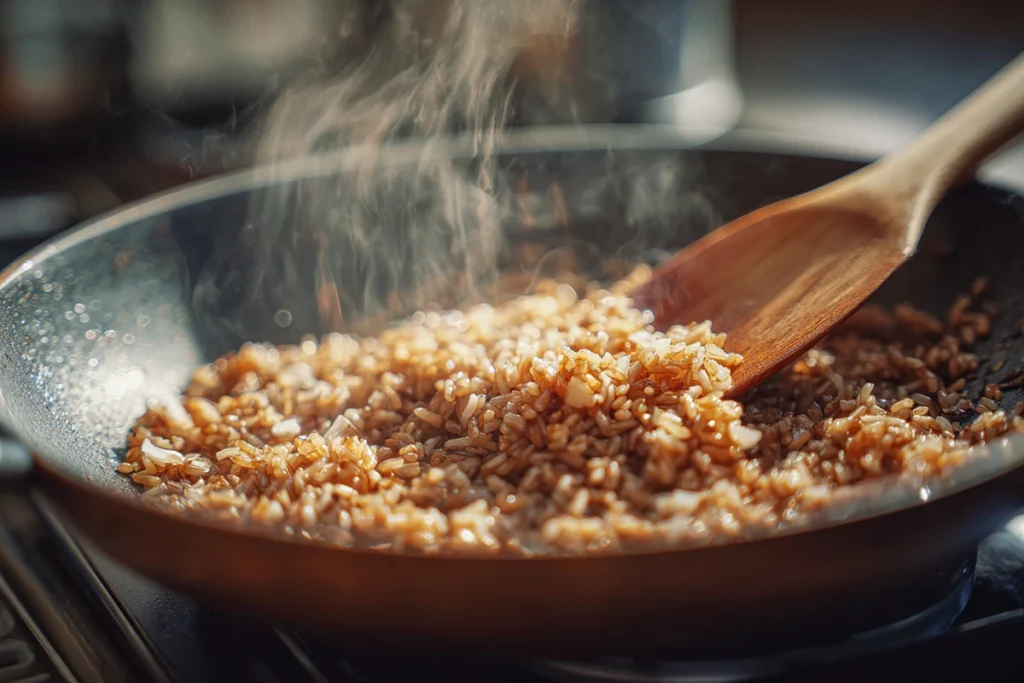
Tomatoes, cilantro, and lime come last, off the heat. You should smell the citrus right away, clean and bright, cutting through the richness. The filling should be spoonable, not wet, and sturdy enough to mound without spreading. If you’d eat this straight from the pan, you’re on the right track for these black bean enchiladas.
Sauce-Soaked Tortillas: The Difference Between Cozy and Cardboard
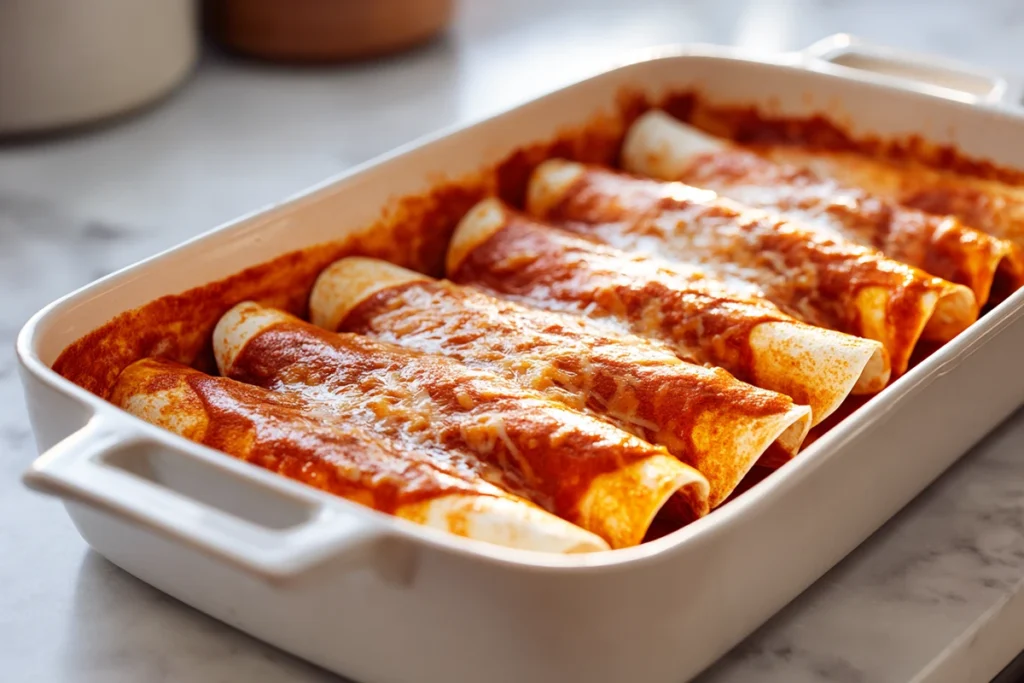
Enchilada sauce should be warm enough to steam lightly, never boiling. When a tortilla hits the sauce, it should relax immediately, turning pliable instead of stiff. If it cracks or resists, the sauce is too cool or the tortilla needs another second. You’re coating, not drowning — a quick pass through both sides is enough.
As you roll, the tortilla should feel soft and elastic under your fingers, not fragile. The filling sits snugly without forcing the seam, and when placed seam-side down, it should stay put without springing open. Listen closely as the pan fills; the quiet thud of each roll settling into sauce is what you want, not a splash.
Once topped, the sauce should gently blanket every exposed edge. Bare corners dry out fast in the oven. As these bake, you’ll hear a faint bubble around the edges and smell the sauce deepen, almost smoky, as the cheese melts. That’s the payoff moment — the kind of plant-based comfort food that eats rich and satisfying, without relying on excess.
Smart Swaps That Still Respect the Dish
This recipe is forgiving, but only if the changes make sense. If you’re keeping things fully plant-based, soy chorizo works beautifully and doesn’t need draining. Cook it until it smells toasted and slightly smoky, then fold it in once the rice is tender. If you’re using regular chorizo, drain the fat thoroughly — excess grease will soak into the tortillas and dull the flavor instead of adding richness.
Short on brown rice? White rice can work in a pinch, but it needs a closer eye. Pull it off the heat as soon as it’s tender and still separate; overcooked white rice turns the filling soft and pasty once baked. For a vegetable-forward twist, sautéed bell peppers or fajita-style onions can be folded into the finished filling, but keep them tender-crisp. Mushy vegetables collapse into the rice and muddy the texture.
Cheese is one place not to get creative. Shredded melting cheeses work because they bind the enchiladas as they bake. Crumbly cheeses belong on top after baking, not inside. And while flour, corn, or whole wheat tortillas all work, tortillas that are very thin or low-carb tend to split — they don’t soften enough in the sauce and aren’t worth the frustration.
How to Serve Them So They Feel Complete
These enchiladas come out rich and filling, so what you add on top should lighten, not compete. Fresh cilantro, sliced avocado, or a spoonful of guacamole add creaminess without heaviness. Queso fresco brings salt and contrast; sour cream cools the spice and smooths the sauce. A squeeze of lime right before serving wakes everything up.
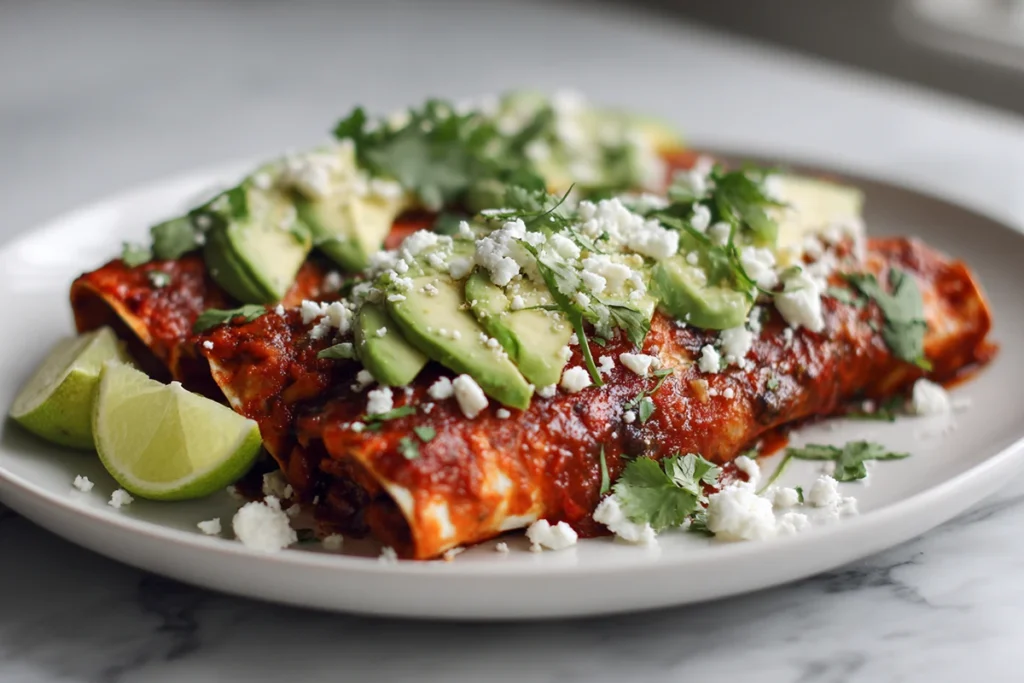
If you’re serving these Black Bean and Rice Enchiladas as part of a larger meal, keep the sides simple. A crunchy cabbage slaw or sliced radishes cut through the softness of the tortillas. If you’re feeding a crowd, set out toppings family-style and let everyone build their own plate — these enchiladas hold heat well and don’t suffer while waiting.
They also reheat better than most casseroles. Cover them and warm gently, adding a splash of extra enchilada sauce if needed. The flavors deepen overnight, making leftovers something to look forward to, not settle for.
A Few Last Things That Make Them Better Every Time
Don’t rush assembly. Warm tortillas, warm sauce, and room-temperature filling roll cleaner and bake more evenly. Resist the urge to overfill; a modest scoop keeps the enchiladas intact and evenly coated. And always sauce the bottom of the pan — scraping baked-on rice is a chore you don’t need.
These Black Bean and Rice Enchiladas are the kind of recipe you make once and quietly rely on afterward. They’re hearty without being heavy, flexible without falling apart, and dependable in the way good home cooking should be. If you find yourself making extra filling just to have on hand, that’s not an accident — that’s the recipe doing its job.
Get inspired with more mouthwatering recipes! Follow me on Facebook and Pinterest for new cooking ideas every week.
FAQ
Can I make black bean and rice enchiladas ahead of time?
Yes, this recipe works very well as a make-ahead meal. You can prepare the filling up to two days in advance and store it in the refrigerator, then assemble and bake when you’re ready. You can also assemble the enchiladas fully, cover tightly, and refrigerate them for up to 24 hours before baking.
Why did my enchiladas turn out dry?
Dry enchiladas usually mean there wasn’t enough sauce protecting the tortillas. Make sure the bottom of the baking dish is coated with sauce and that every tortilla is dipped before filling. If your oven runs hot, covering the dish loosely with foil for part of the bake can also help.
Can I freeze black bean and rice enchiladas?
Yes, these enchiladas freeze well once assembled. Freeze them unbaked, tightly wrapped, for up to two months. When ready to cook, thaw overnight in the refrigerator and bake as directed, adding a little extra sauce if they look dry.
Is it okay to leave out the chorizo?
It is, but the filling will be milder and slightly less rich. If you skip the chorizo, consider adding a bit more olive oil or extra seasoning to keep the filling from tasting flat. The beans and rice will still make the enchiladas hearty and satisfying.
Print
Black Bean and Rice Enchiladas
- Total Time: 1 hour 10 minutes
- Yield: 12 enchiladas 1x
- Diet: Low Calorie
Description
Hearty black bean and rice enchiladas baked in rich enchilada sauce. This comforting, budget-friendly dinner is filling, reliable, and perfect for make-ahead meals.
Ingredients
- Olive oil
- Garlic, minced
- Yellow onion, diced
- Brown rice
- Salsa
- Vegetable broth
- Ground cumin
- Chili powder
- Salt
- Black beans
- Chorizo or soy chorizo
- Tomato
- Fresh cilantro
- Lime juice
- Enchilada sauce
- Shredded cheese
- Tortillas
Instructions
- Cook the onion and garlic in olive oil until soft and fragrant, then toast the rice until glossy.
- Add salsa, broth, cumin, chili powder, and salt and simmer until the rice is tender and cohesive.
- Stir in black beans and cooked chorizo, then finish with tomato, cilantro, and lime juice off the heat.
- Warm the enchilada sauce and coat the bottom of a baking dish.
- Dip tortillas in warm sauce, fill with rice mixture and cheese, roll, and place seam-side down.
- Top with remaining sauce and cheese and bake until bubbly and lightly golden.
Notes
- Brown rice holds its structure better than white rice during baking.
- Drain excess fat if using pork chorizo to avoid greasy enchiladas.
- The filling can be made ahead and stored for several days.
- Prep Time: 10 minutes
- Cook Time: 1 hour
- Category: Dinner
- Method: Baking
- Cuisine: Mexican-Inspired
Nutrition
- Serving Size: 2 enchiladas
- Calories: 420
- Sugar: 6
- Sodium: 820
- Fat: 18
- Saturated Fat: 7
- Unsaturated Fat: 10
- Trans Fat: 0
- Carbohydrates: 48
- Fiber: 10
- Protein: 16
- Cholesterol: 30
What Are Our Readers Saying?
There are no reviews yet. Be the first one to write one.