
Hibachi Steak Bowls – A Flavor-Packed Japanese-Inspired Dinner You’ll Crave
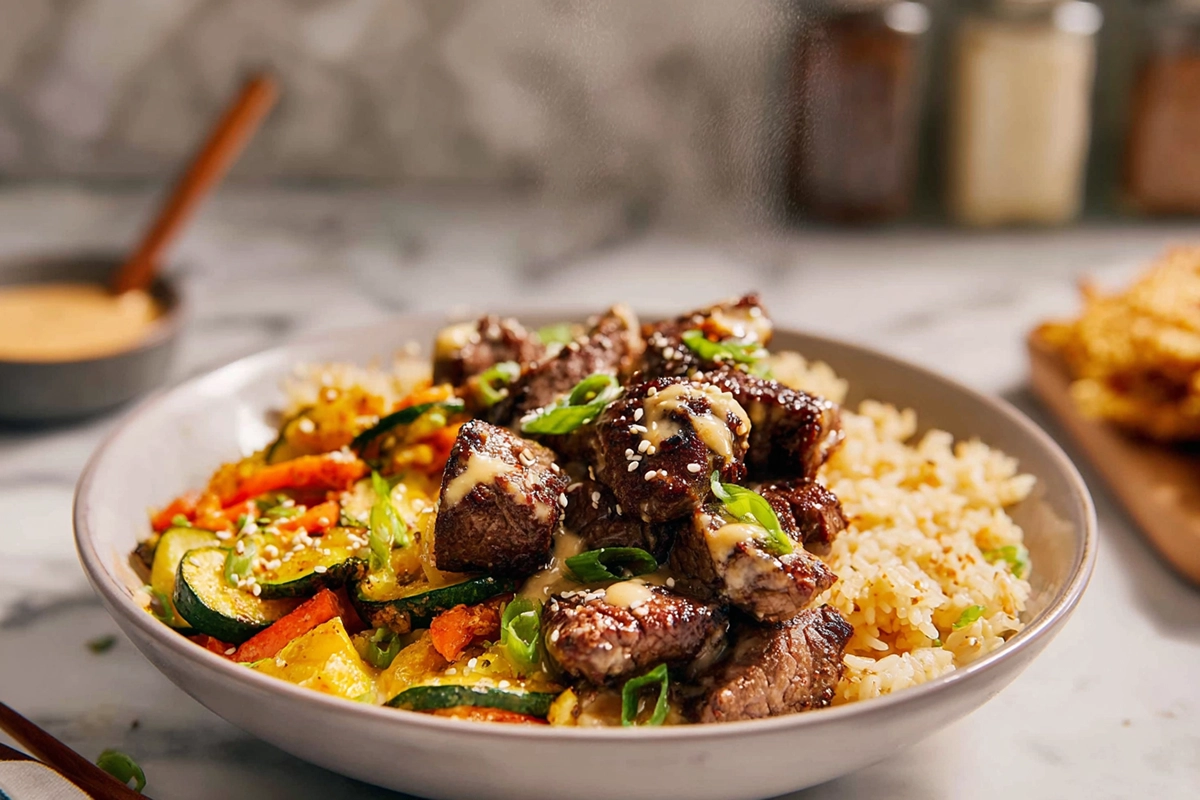
There’s something magical about sitting around a sizzling grill, the smell of garlic butter, soy sauce, and seared steak filling the air. That’s the feeling you can recreate at home with Hibachi Steak Bowls — a restaurant-style experience that’s easier than you think. If you’ve ever wished you could bring the taste of a Japanese steakhouse into your kitchen without the performance, this is your chance. These hearty, flavor-loaded bowls deliver all the umami you love with tender steak, buttery fried rice, and crisp vegetables, all in one satisfying bite.
Making Hibachi Steak Bowls at home gives you full control over the ingredients and flavor. You can adjust the seasoning, play with the sauce, or even swap in your favorite veggies. Plus, it’s the kind of meal that feels indulgent but still balanced — perfect for weeknight dinners or meal prep days when you want something exciting but not complicated.
Table of Contents
What Are Hibachi Steak Bowls?
Hibachi cooking originated in Japan, traditionally referring to grilling over an open flame, but in the U.S., it’s evolved into a flat-top cooking style made famous by Japanese steakhouses. At home, you can mimic that sizzling magic using a simple skillet or griddle. The key is high heat, fresh ingredients, and quick cooking to lock in flavor.
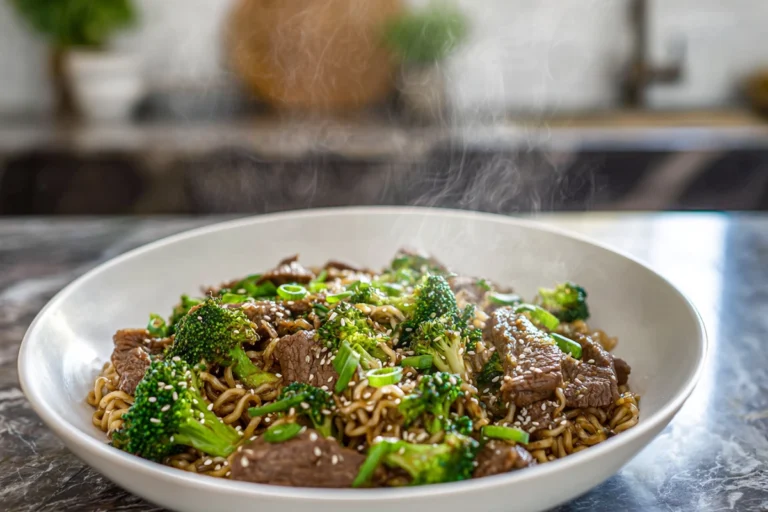
A typical bowl includes marinated steak cooked to perfection, buttery fried rice, sautéed vegetables like zucchini, onions, and mushrooms, and a drizzle of creamy yum yum sauce or tangy hibachi sauce. Each bite hits that balance of savory, sweet, and smoky — it’s comfort food with a gourmet edge.
Key Ingredients and Flavor Profile
To nail that restaurant-level taste, you’ll need a few pantry staples and some fresh produce. Here’s what goes into a great Hibachi Steak Bowl:
For the Steak:
- 1 pound sirloin or New York strip steak, cut into bite-size cubes
- 3 tablespoons soy sauce
- 1 tablespoon sesame oil
- 1 tablespoon butter
- 2 cloves garlic, minced
- ½ teaspoon ground ginger
- Salt and black pepper to taste

For the Vegetables:
- 1 zucchini, sliced into half-moons
- 1 small onion, diced
- 1 cup mushrooms, sliced
- 1 large carrot, julienned
For the Fried Rice Base:
- 3 cups cooked day-old jasmine rice
- 2 tablespoons butter
- 2 eggs, lightly beaten
- 2 tablespoons soy sauce
- 1 tablespoon sesame oil
- 2 green onions, chopped
Optional Sauces:
- Yum yum sauce or spicy mayo
- Teriyaki or garlic butter drizzle
The flavor base of this dish is built around soy sauce, butter, sesame oil, and garlic. That combination creates the signature hibachi taste — smoky, savory, and deeply satisfying. The use of day-old rice ensures a fluffy, non-sticky texture, and the steak’s quick sear keeps it tender inside while slightly crisp on the edges.
How to Make Hibachi Steak Bowls
Prep and Marinate the Steak
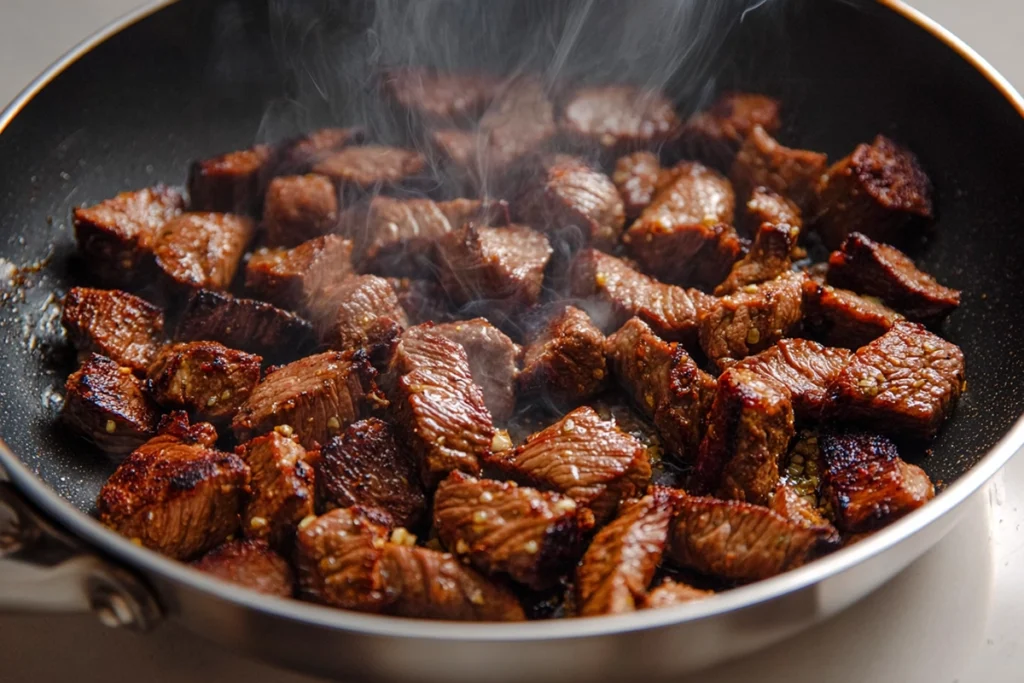
Start by patting your steak dry, then mix soy sauce, sesame oil, garlic, and ginger in a bowl. Toss in the steak pieces and let them soak up the flavor for at least 20 minutes. A short marination time is enough since the heat of the skillet will intensify every bit of seasoning.
Cook the Fried Rice
In a large skillet, melt butter over medium-high heat. Add the eggs and scramble them just until set, then remove them from the pan. Add more butter, toss in your cold rice, and stir-fry it until each grain is coated and heated through. Stir in soy sauce, sesame oil, and green onions, then fold the scrambled eggs back in. You’ll know it’s perfect when the rice smells toasty and slightly nutty.
Sauté the Vegetables
In the same pan, add a touch more butter and cook the onion, zucchini, mushrooms, and carrots until they’re tender-crisp. The goal is to keep them bright and a little crunchy, not mushy. Season lightly with salt and pepper.
Sear the Steak
Turn the heat up and add the marinated steak. Let it sear undisturbed for about 1–2 minutes per side to get that golden crust, then toss it gently until browned all over. For a restaurant-like finish, add a pat of butter at the end and let it melt over the steak.
Assemble the Bowl
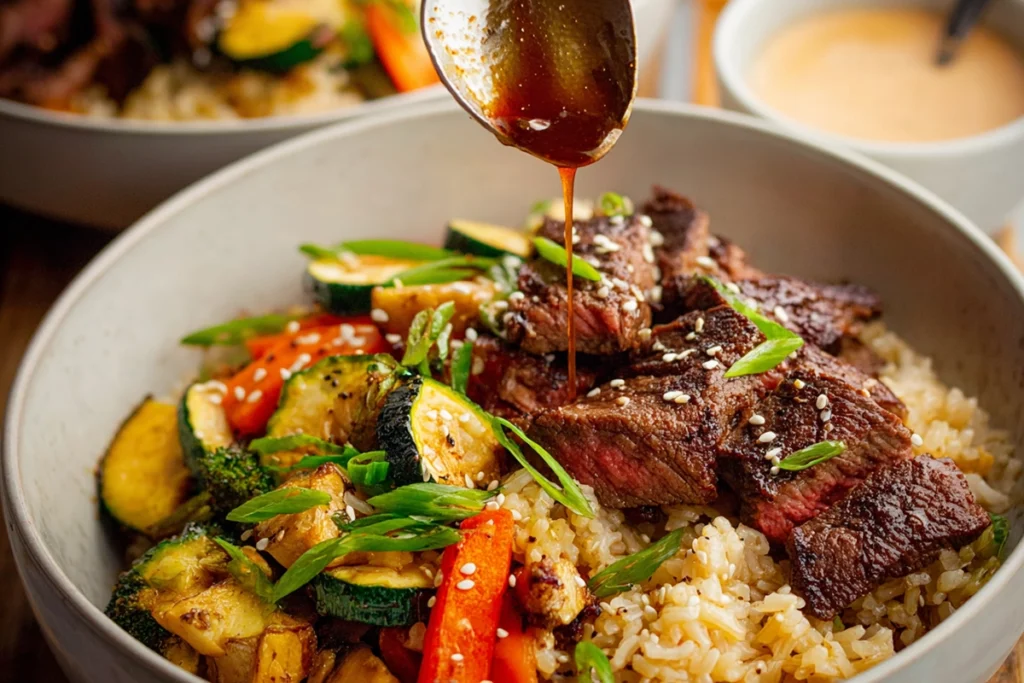
Spoon a generous serving of fried rice into your bowl, top it with sautéed vegetables, then pile on the juicy steak. Finish with a drizzle of your favorite sauce — yum yum for creamy sweetness or garlic butter for bold flavor. Sprinkle with sesame seeds and green onions for that finishing touch.
Dietary Variations and Substitutions
One of the best things about Hibachi Steak Bowls is how flexible they are. You can easily tweak the ingredients to suit your dietary needs without losing the essence of the dish.
Vegan or Vegetarian: Swap the steak for tofu, tempeh, or seared portobello mushrooms. Use vegan butter and plant-based soy sauce, and skip the eggs in the fried rice or replace them with scrambled tofu.
Gluten-Free: Replace soy sauce with tamari or coconut aminos. Double-check any store-bought sauces for hidden gluten, especially yum yum sauce or teriyaki glaze.
Low-Calorie or Low-Carb: Use cauliflower rice or zucchini noodles instead of jasmine rice. Go light on the butter and sauce to keep it lean while maintaining the flavor with herbs and garlic.
Halal: Choose halal-certified beef and make sure your soy sauce and butter are compliant. The cooking method stays exactly the same, so you’ll still get that hibachi-style flavor.
These swaps prove you don’t have to sacrifice taste to meet your dietary goals. The key lies in balancing the seasoning and cooking each component properly so the flavors stay vibrant.
Variations and Serving Ideas
Once you’ve mastered the base version, you can have fun experimenting. Try making hibachi chicken, shrimp, or even a surf-and-turf version with steak and shrimp together. If you’re planning ahead, this recipe doubles perfectly for meal prep — just store each component separately so the rice doesn’t get soggy.
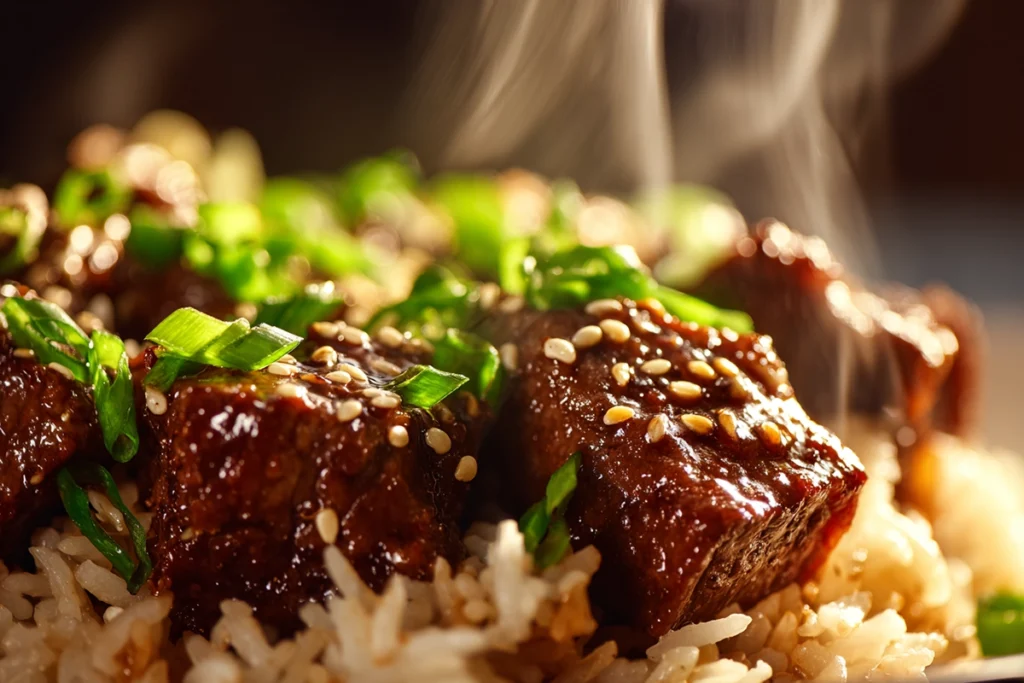
You can also switch up the vegetables based on what’s in your fridge. Bell peppers, broccoli, and snap peas all work beautifully. For a twist, top your bowl with spicy mayo or drizzle it with teriyaki sauce for extra shine. If you want a lower-sodium version, opt for unsalted butter and reduced-sodium soy sauce.
For family dinners, serve everything buffet-style so everyone can build their own bowl — it’s interactive and keeps even picky eaters happy.
Storage, Meal Prep, and Reheating Tips
If you’re prepping ahead, let everything cool before storing. Keep the steak, rice, and vegetables in separate airtight containers. They’ll last about 3 to 4 days in the fridge. To reheat, warm the steak and veggies in a hot skillet for a few minutes, and microwave or stir-fry the rice separately. This keeps each element tasting freshly made instead of mushy or dry.
These bowls also freeze surprisingly well — just leave out the sauce until serving time. When reheating, add a splash of water or soy sauce to bring back moisture and flavor.
If you’re looking for a satisfying meal that feels like a restaurant treat but fits perfectly into a weeknight routine, Hibachi Steak Bowls are the answer. They’re easy to customize, quick to cook, and loaded with bold, comforting flavors. Once you try this homemade version, you’ll wonder why you ever waited for a reservation to enjoy it.
FAQ
What kind of steak works best for Hibachi Steak Bowls?
You’ll get the best flavor and texture using a tender cut like sirloin, ribeye, or New York strip. These cuts cook quickly over high heat, giving you that golden sear without becoming tough.
Can I make Hibachi Steak Bowls without a grill or griddle?
Absolutely. A heavy-bottomed skillet or cast-iron pan works perfectly. The key is to preheat it well and avoid crowding the pan so the steak sears instead of steams.
How do I make the rice taste like restaurant hibachi rice?
Use day-old jasmine rice and cook it in butter with soy sauce and sesame oil. The slight dryness of day-old rice helps it crisp up and absorb flavor without turning mushy.
Can I meal prep Hibachi Steak Bowls?
Yes, these bowls are great for meal prep. Store the steak, vegetables, and rice in separate containers, then combine them when reheating for a fresh, balanced flavor every time.
What sauces go best with Hibachi Steak Bowls?
Yum yum sauce is the classic choice, but garlic butter, spicy mayo, or teriyaki glaze also complement the flavors perfectly depending on your preference.
Get inspired with more mouthwatering recipes! Follow me on Facebook, Pinterest, and subscribe to YouTube for new cooking ideas every week.
Print
Hibachi Steak Bowls
- Total Time: 45 minutes
- Yield: 4 servings 1x
Description
A restaurant-quality Japanese-style meal made at home with tender steak, buttery fried rice, and sautéed vegetables — flavorful, balanced, and satisfying.
Ingredients
- 1 pound sirloin or New York strip steak, cut into bite-size cubes
- 3 tablespoons soy sauce
- 1 tablespoon sesame oil
- 1 tablespoon butter
- 2 cloves garlic, minced
- 1/2 teaspoon ground ginger
- Salt and black pepper to taste
- 1 zucchini, sliced into half-moons
- 1 small onion, diced
- 1 cup mushrooms, sliced
- 1 large carrot, julienned
- 3 cups cooked day-old jasmine rice
- 2 tablespoons butter
- 2 eggs, lightly beaten
- 2 tablespoons soy sauce
- 1 tablespoon sesame oil
- 2 green onions, chopped
- Yum yum sauce or teriyaki drizzle (optional)
Instructions
- Pat the steak dry and marinate it with soy sauce, sesame oil, garlic, and ginger for 20 minutes.
- In a skillet, melt butter and scramble the eggs. Remove them and set aside.
- Add more butter and stir-fry the rice with soy sauce, sesame oil, and green onions. Return eggs and mix well.
- In the same pan, sauté zucchini, onions, mushrooms, and carrots until tender-crisp.
- Sear the steak on high heat for 1–2 minutes per side until browned and juicy.
- Assemble the bowl with rice, vegetables, and steak, and top with your favorite sauce and garnish.
Notes
- Use day-old rice for the best texture.
- Avoid overcrowding the pan when searing the steak.
- Store components separately for meal prep to maintain freshness.
- Prep Time: 20 minutes
- Cook Time: 25 minutes
- Category: Main Course
- Method: Stovetop
- Cuisine: Japanese-American
Nutrition
- Serving Size: 1 bowl
- Calories: 750
- Sugar: 8
- Sodium: 980
- Fat: 42
- Saturated Fat: 14
- Unsaturated Fat: 24
- Trans Fat: 0
- Carbohydrates: 48
- Fiber: 3
- Protein: 45
- Cholesterol: 210
What Are Our Readers Saying?
There are no reviews yet. Be the first one to write one.