Homemade Chicken Soup: Deep Broth, Tender Chicken, No Guesswork

Some recipes announce themselves the moment they’re right. This one does it quietly. It starts when chicken skin hits hot oil and stays put long enough to turn properly golden. Not pale. Not steamed. Golden in the way that leaves browned bits on the bottom of the pot and a faint, savory haze in the air that tells you the broth is already halfway there. Before any vegetables go in. Before the stock even warms. That early step decides whether your soup tastes rounded and comforting or thin and forgettable.
What makes this Homemade Chicken Soup work isn’t a long ingredient list or an all-day simmer. It’s restraint. Bone-in, skin-on chicken for flavor and body. Store-bought stock is improved rather than replaced. Herbs that stay in the background. Vegetables that keep just enough structure so the soup still feels alive by the time it hits the bowl. Every choice is there to protect the broth and the chicken, in that order.
This is the kind of soup that holds together because the timing makes sense. White meat comes out before it dries. Dark meat stays in long enough to give back what it has. The vegetables wait their turn instead of getting tired early. Nothing is rushed, and nothing is unnecessary.
What follows isn’t a performance recipe. It’s a practical one. The kind you make when you want something steady, nourishing, and familiar — and you want it to work the same way every time. The process matters here, but it’s a calm process, built around paying attention to heat, color, and when to leave things alone.
Table of Contents
The Ingredient Shortlist (And What Each One Is Pulling Its Weight For)
This Homemade Chicken Soup is built on a short list for a reason. When there aren’t many ingredients, each one has to earn its place. Nothing here is decorative. Everything is doing real work in the pot, especially for the broth.
The chicken is the foundation, and using a mix of bone-in, skin-on pieces matters more than people think. The bones release gelatin that gives the soup body, while the skin contributes fat that carries flavor through the broth. A combination of breasts and thighs strikes the balance between tenderness and depth. All white meat will cook too quickly and leave the soup thin; all dark meat can feel heavy and muddy.
Store-bought chicken stock is the quiet helper here. Instead of replacing it with a homemade stock project, it’s reinforced. Diluting it slightly with water prevents salt overload while still allowing the browned chicken and aromatics to deepen it naturally. Low-sodium stock gives you control; if yours is already seasoned, plan to be conservative with salt later.
Herbs stay restrained. Thyme and bay leaf add structure without announcing themselves, which is exactly what you want in a classic comfort soup. Parsley waits until the end, where its freshness lifts the broth instead of disappearing into it.
The vegetables are traditional for a reason. Onion, carrot, and celery support the broth without distracting from it. Thin slicing keeps their texture gentle and ensures they cook evenly without turning soft and dull.
- Bone-in, skin-on chicken (breasts and thighs): Builds both flavor and texture; skinless cuts won’t deliver the same broth.
- Low-sodium chicken stock + water: Strengthens flavor without tipping into saltiness.
- Thyme sprigs & bay leaf: Background aroma, not herbal soup.
- Onion, carrot, celery: Classic balance; sliced thin for clean texture.
- Fresh parsley: Added at the end for brightness, not garnish theater.

Why Browning the Chicken Changes Everything
This soup doesn’t rely on time to develop flavor; it relies on heat used correctly. Browning the chicken before any liquid goes into the pot is the single most important decision in the recipe. It’s not about color for appearance’s sake. It’s about creating concentrated flavor that dissolves into the broth later.
When skin-on chicken is left undisturbed in hot oil, the fat renders and the surface caramelizes. That reaction leaves browned bits on the bottom of the pot — and those bits are flavor. Once stock and water are added, they loosen and melt into the liquid, giving the soup depth that simmering alone can’t achieve in a short window.
Skipping this step turns the soup into something flatter, closer to boiled chicken with vegetables. Taking the time to brown properly is what allows a relatively quick cook to still feel rich and complete. It’s also why this recipe holds up so well the next day: the flavor is built in layers, not rushed at the end.
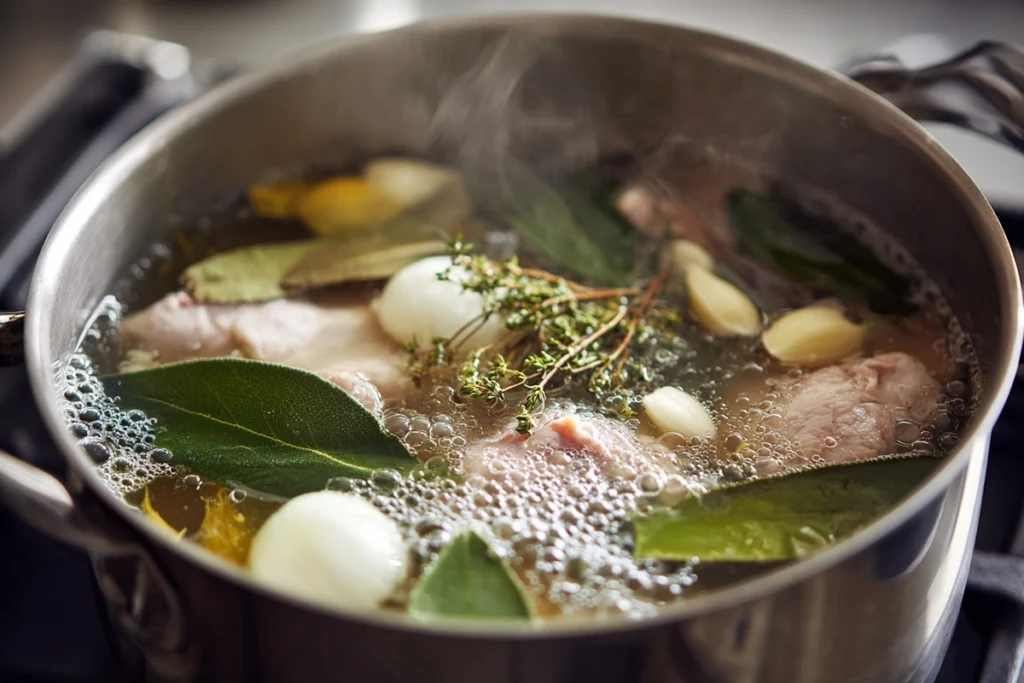
If there’s one concept to keep in mind before cooking, it’s this — the broth starts forming before the broth exists.
Why Browning the Chicken Changes Everything
This is where the flavor of the entire pot is decided. When the chicken goes into hot oil, it should sizzle sharply, not hiss or steam. If it sounds quiet, the pan isn’t ready. Leave the pieces alone long enough for the skin to turn deeply golden, with crisp edges and a rendered look — not patchy, not pale. You’ll smell something closer to roasted poultry than boiled meat, and that’s exactly the point.
As the chicken browns, look at the bottom of the pot. Those dark, sticky bits forming underneath aren’t burning — they’re concentrated flavor. This is what separates a forgettable chicken soup recipe from one that tastes settled and full-bodied. When the stock and water hit the pot later, those browned bits should release easily with a wooden spoon, dissolving into the broth and tinting it a warm, natural gold.
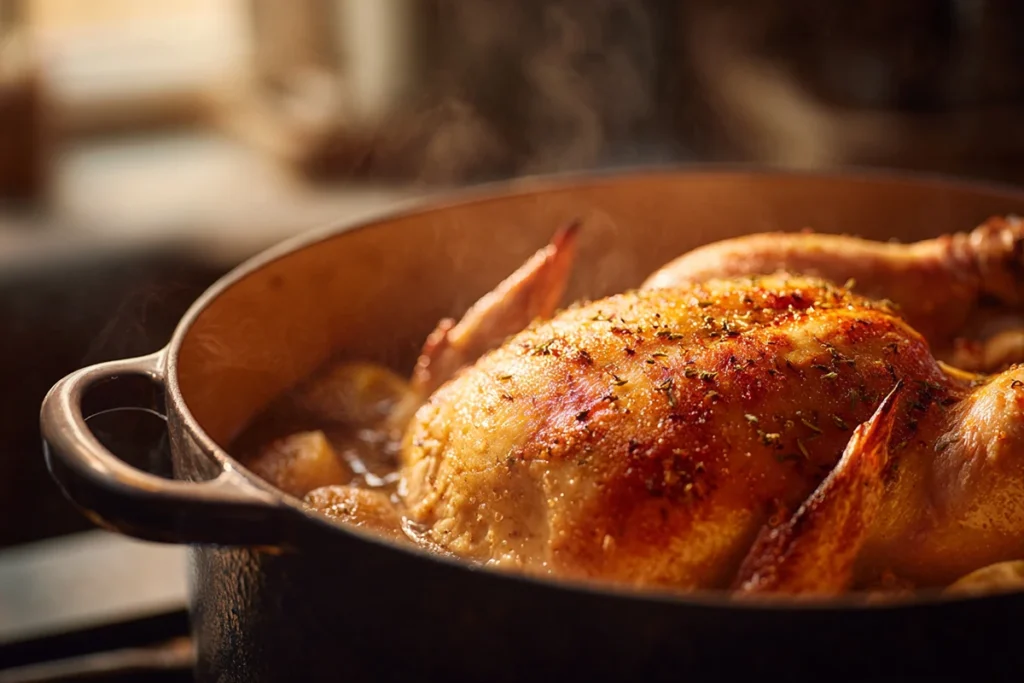
If you rush this phase or move the chicken too early, you don’t just lose color — you lose depth. Browning isn’t optional here; it’s the foundation everything else rests on.
The Quiet Timing Trick That Makes Homemade Chicken Soup Work
Once the liquid is added and the pot comes to a gentle simmer, the work becomes quieter but more precise. The sound you want is a low, steady murmur — a few lazy bubbles breaking the surface. Anything more aggressive will tighten the meat and cloud the broth. The smell should shift from roasted to savory and clean, with thyme and bay leaf just noticeable in the background.
White meat cooks faster than dark meat, and treating them the same is the most common mistake. When the chicken breasts feel firm but still springy to the touch and the broth smells rounded, they’re ready to come out. The darker pieces stay behind, slowly giving up richness while the broth deepens. This staggered timing keeps the chicken tender and the soup balanced.
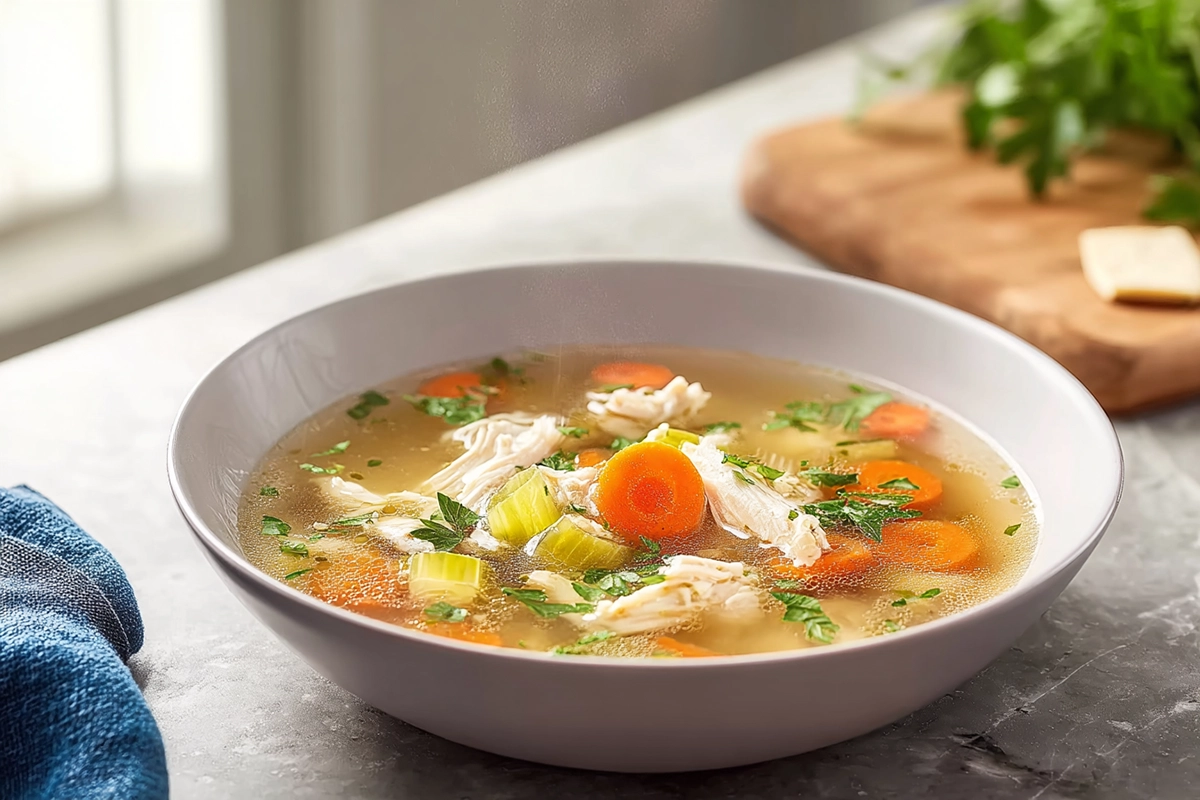
Vegetables wait until the end for a reason. When the onion turns translucent, the carrots brighten, and the celery softens without collapsing, the soup feels alive instead of tired. That’s the moment everything comes back together — shredded chicken stirred in, steam rising, the broth tasting like something that’s been cared for, not rushed.
This is classic comfort food, but it’s built on attention. Get the heat right, listen to the pot, and let the timing do the work for you.
Common Soup Problems (And the Adjustments That Actually Work)
This soup holds up well as written, but there are a few changes that make sense when you’re working with what’s on hand. If you have leftover rotisserie chicken, add it cold and shredded near the end, just long enough to warm through. Skip browning in that case and expect a lighter broth — still comforting, but less layered. To compensate, give the soup a few extra minutes with the thyme and bay leaf before adding the vegetables.
If your stock is already well seasoned or salted, reduce the initial salt on the chicken and finish seasoning only after everything is back in the pot. Chicken soup gets saltier as it sits, and this one is meant to stay balanced even on day two. Avoid using boneless, skinless chicken exclusively; it cooks too fast and leaves the broth thin. If that’s all you have, add a small splash of water at the start and don’t expect the same body.
What doesn’t work is overloading the pot. Adding noodles, rice, or extra vegetables directly to the soup turns it starchy and dull by the next day. If you want additions, cook them separately and add them to individual bowls instead.
How This Homemade Chicken Soup Fits Into Real Life
This Homemade Chicken Soup is meant to be served simply. A thick slice of toasted bread or a soft dinner roll is enough to soak up the broth without competing with it. If you want something fresher on the side, a crisp green salad with a sharp vinaigrette helps reset the palate between spoonfuls.
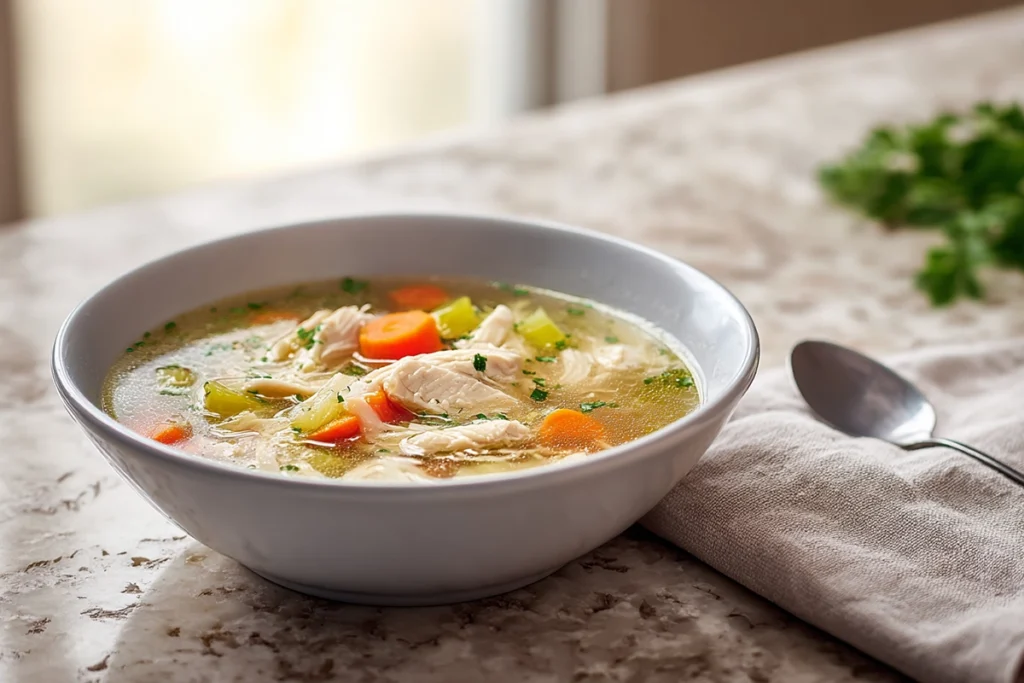
For heartier meals, serve the soup as a first course before roasted chicken or a simple baked pasta. Its clean, savory broth sets the tone without filling everyone up too fast. When reheating, warm it gently over medium-low heat until steam rises and the broth smells full again — not boiling, not rushed.
This soup also travels well. Pack it for a friend, portion it for the freezer, or keep it in the fridge for the kind of dinner that doesn’t require a decision.
When to Leave It Alone
The hardest part of this recipe is knowing when to stop adjusting. If the broth tastes clean and savory, resist the urge to keep tinkering. Too much pepper muddies the finish. Too many herbs drown out the chicken. This is a soup that rewards restraint.
Let it be what it is: steady, familiar, and dependable.
Good soup doesn’t need explaining at the table. When it’s done right, it speaks for itself. This is the kind you make once, remember how it felt to cook, and come back to whenever you need something that holds you together for a little while.
Get inspired with more mouthwatering recipes! Follow me on Facebook and Pinterest for new cooking ideas every week.
FAQ
Why is my chicken soup cloudy instead of clear?
A slightly cloudy broth is normal and doesn’t mean anything went wrong. It usually happens if the soup simmers a bit too hard or is stirred frequently while cooking. The flavor will still be good, and once the chicken and vegetables are added back in, the difference is mostly visual.
Can I make homemade chicken soup with only chicken breasts?
You can, but the soup will be lighter and less rich. Chicken breasts cook quickly and don’t contribute much gelatin to the broth, which is where body and depth come from. If breasts are all you have, keep the simmer gentle and expect a cleaner, simpler result.
Is it okay if my soup tastes better the next day?
Yes, that’s exactly what should happen. As the soup rests, the flavors settle and the broth becomes more cohesive. Just reheat it gently so the chicken stays tender and the broth doesn’t lose its balance.
Can I add noodles or rice to this soup?
You can, but it’s best to cook them separately and add them to individual bowls. Adding starch directly to the pot will thicken the broth and can make leftovers feel heavy. Keeping them separate lets the soup stay clean and flexible.
How long does homemade chicken soup last in the fridge?
Stored in an airtight container, it keeps well for up to five days. The broth may thicken slightly as it chills, which is normal and a sign of good body. When reheated, it will loosen back up.
Print
Homemade Chicken Soup
- Total Time: 90 minutes
- Yield: 6–8 servings 1x
Description
A steady, comforting homemade chicken soup with deep golden broth, tender shredded chicken, and simple vegetables. Built on technique, timing, and restraint for reliable results every time.
Ingredients
- 2 tablespoons vegetable oil
- 2 pounds bone-in, skin-on chicken pieces (mix of breasts and thighs)
- 4 teaspoons kosher salt, divided
- 8 cups low-sodium chicken stock
- 2 cups water
- 2 sprigs fresh thyme
- 1 bay leaf
- 1 small yellow onion, coarsely chopped
- 2 celery stalks, thinly sliced
- 1 large carrot, thinly sliced
- 1 teaspoon freshly ground black pepper
- 1/4 cup finely chopped fresh parsley
Instructions
- Heat oil in a large, heavy pot over medium-high heat and season the chicken with part of the salt.
- Brown the chicken skin-side down until deeply golden, then turn and brown the other side without moving it too early.
- Add chicken stock, water, thyme, and bay leaf, scraping the browned bits from the bottom of the pot.
- Bring to a gentle simmer and cook until the chicken breasts are just cooked through, then remove them to rest.
- Continue simmering the dark meat to deepen the broth, then remove and shred all the chicken.
- Discard herbs and add onion, celery, and carrot, simmering until just tender.
- Return the shredded chicken to the pot, season with remaining salt and pepper, and warm through before serving.
Notes
- For best flavor, keep the simmer gentle rather than boiling.
- If using salted stock, reduce the initial salt and season at the end.
- Store leftovers in an airtight container in the refrigerator for up to five days.
- Reheat gently to preserve texture and flavor.
- Prep Time: 15 minutes
- Cook Time: 75 minutes
- Category: Soup
- Method: Simmering
- Cuisine: American
Nutrition
- Serving Size: 1 bowl
- Calories: 260
- Sugar: 4
- Sodium: 720
- Fat: 12
- Saturated Fat: 3
- Unsaturated Fat: 8
- Trans Fat: 0
- Carbohydrates: 10
- Fiber: 2
- Protein: 26
- Cholesterol: 95