Seafood Ramen with Shrimp and Vegetables in 20 Minutes

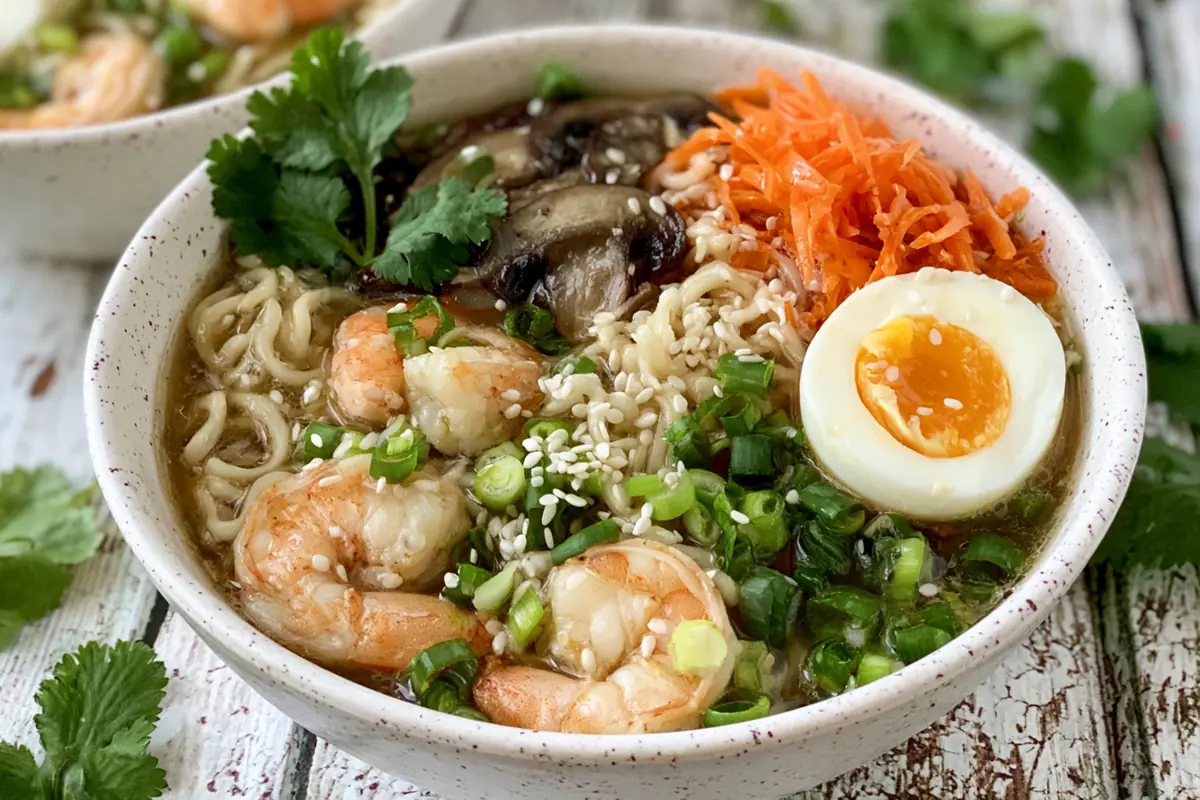
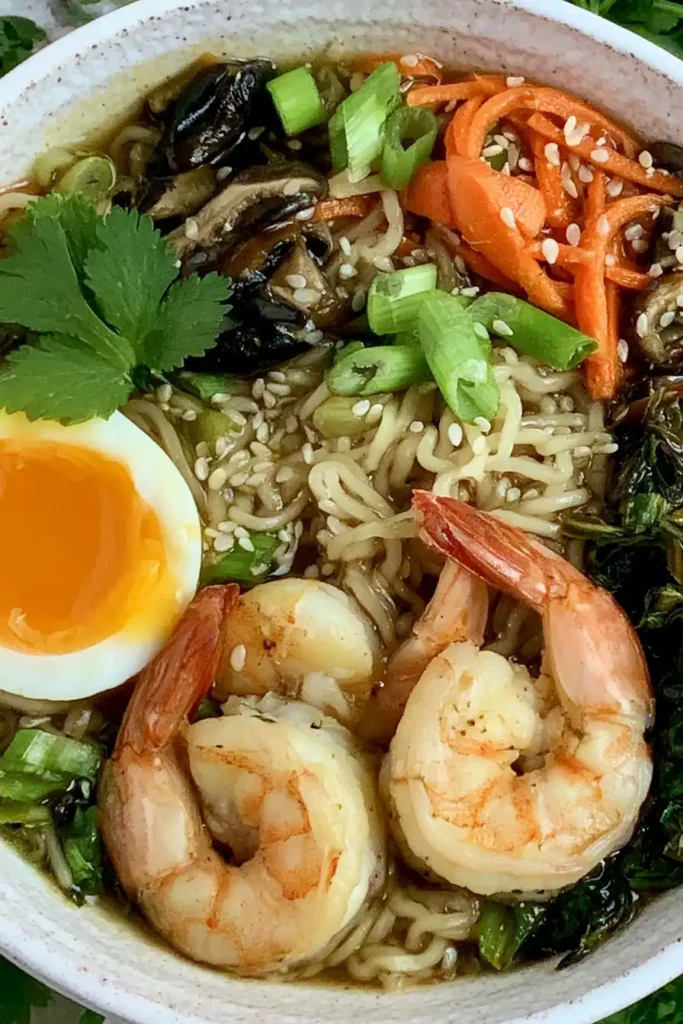
A good bowl of seafood ramen should taste rich without taking all evening to make. This version combines tender shrimp, mushrooms, bok choy, and quick-cooking noodles in a warm broth seasoned with miso, soy sauce, sesame oil, and a little sambal oelek.
Everything cooks in one pot, and the whole meal is ready in about 20 minutes. The main thing to watch is timing: the shrimp and noodles go in last so neither becomes overcooked.
A Japanese-Inspired Ramen Made for Busy Evenings
Traditional ramen can involve broth that simmers for hours, carefully prepared toppings, and regional cooking styles. This isn’t that kind of recipe. It’s my quick, Japanese-inspired version for evenings when you want a warming bowl without turning dinner into a full-day project.
The broth still has depth. White miso, low-sodium soy sauce, toasted sesame oil, garlic, and sambal oelek give it a savory base with gentle heat. Mushrooms and onion cook first, so their flavor has time to settle into the broth before the noodles arrive.
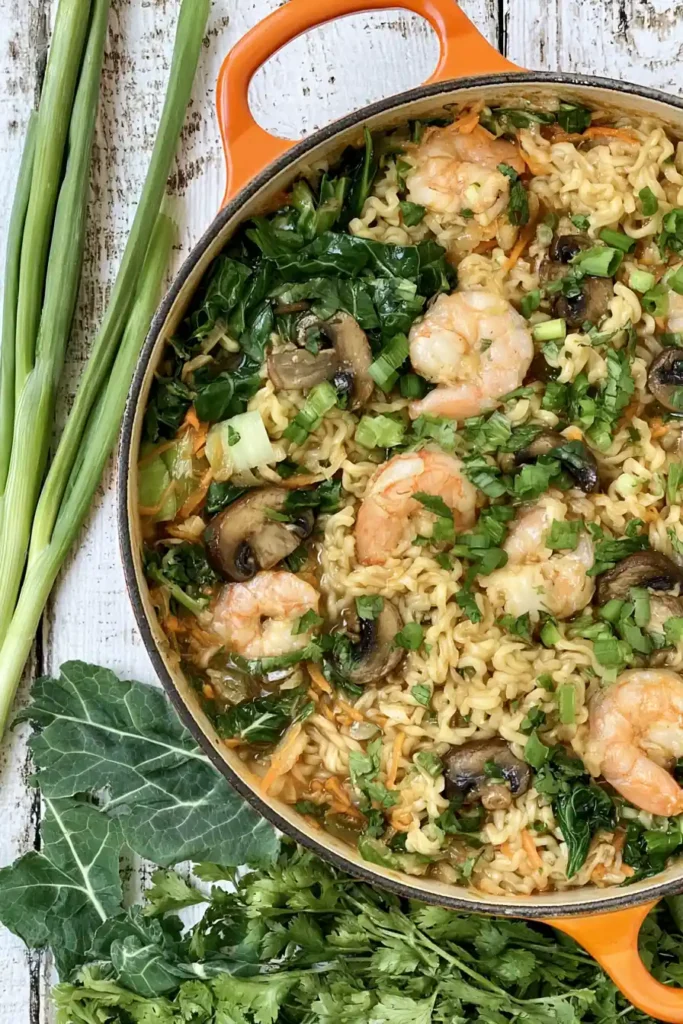
Everything happens in one Dutch oven or large pot. That means less washing up, which matters on a weeknight. From the first chopped vegetable to the finished bowl, the recipe takes about 20 minutes.
The shrimp also make this feel more substantial than a plain packet of noodles. Add a soft-boiled egg, sesame seeds, or chopped herbs at the table if you have them. They’re optional. The ramen is satisfying on its own.
Key Ingredients for Seafood Ramen and Simple Substitutions
The broth begins with olive oil and toasted sesame oil. Olive oil handles the sautéing, while sesame oil adds a nutty aroma. Toasted sesame oil can taste strong, so the measured 2 teaspoons are enough. Adding much more can cover the miso and shrimp.
Baby bella mushrooms give the broth an earthy flavor and a slightly meaty texture. Cremini, white button, or sliced shiitake mushrooms also work. Cut them evenly so they soften at roughly the same speed.
Onion, carrots, and garlic form the vegetable base. Matchstick-cut carrots are useful here because they cook quickly and stay slightly firm. Thick carrot slices may still be hard when the noodles are ready.
Building the Savory Broth
The main seasonings are white miso, sambal oelek, low-sodium soy sauce, and chicken broth. White miso is mild and a little sweet, which suits seafood without overpowering it.
Stir the miso into the liquid rather than leaving it against the hot bottom of the pot. Miso can catch and scorch if it sits directly on the metal. Once the broth is added, whisk or stir until no large clumps remain.
Sambal oelek adds chile heat and a little acidity. For a gentler bowl, start with ½ to 1 teaspoon instead of the full 2 teaspoons. You can add more after tasting the broth.
Choosing Shrimp, Noodles, and Vegetables
Use large raw shrimp that have been peeled and deveined. Fresh or properly thawed frozen shrimp both work. Pat them dry before adding them so excess water doesn’t weaken the broth.
Instant ramen noodles cook in about 3 minutes, which matches the shrimp cooking time. Discard the seasoning packets because the homemade broth already has enough flavor.
Bok choy softens quickly and keeps a little bite. Spinach can replace it, though spinach needs only about 30 seconds in the hot broth. Shredded cabbage is another practical option and may need 2–3 minutes.
Variations, Storage, and Cooking Tips
Start by heating the olive oil and sesame oil over medium heat. Add the mushrooms and onion, then cook for 2–3 minutes. The mushrooms should begin releasing moisture, and the onion should lose its raw edge.
Add the carrots and garlic for another 2 minutes. Garlic cooks fast. If it starts turning dark before the broth goes in, lower the heat. Burnt garlic can make the whole pot taste bitter.
Once the miso, sambal oelek, soy sauce, and chicken broth are added, raise the heat and bring everything to a gentle simmer. Let it cook for 5–10 minutes. A hard boil isn’t needed; a steady simmer gives the vegetables and seasonings time to flavor the broth.
Add the bok choy first and cook it for 1 minute. Then add the shrimp and ramen noodles together. Stir gently so the noodles separate without breaking apart.
The shrimp should become opaque and curl into a loose C-shape after about 3 minutes. A tightly curled shrimp is often overcooked. Take the pot off the heat as soon as the noodles are tender and the shrimp are cooked through.
Seafood and Spice Variations
Part of the shrimp can be replaced with small scallops or bite-size pieces of firm white fish. Add firm fish about 3–4 minutes before serving. Small scallops may need only 2–3 minutes, depending on their size.
For more heat, add extra sambal oelek after the broth has simmered. Taste first. Soy sauce, miso, and chile paste all bring strong flavors, and it’s easier to add seasoning than correct an overly salty or spicy broth.
Storing Leftover Ramen
Ramen noodles keep absorbing liquid after cooking. For the best texture, separate leftover noodles from the broth before refrigerating when possible.
Store the broth, vegetables, and shrimp in an airtight container for up to 2 days. Reheat them gently over medium-low heat. Avoid boiling the shrimp again, since that can make them firm and rubbery.
If the noodles have already been stored in the broth, expect them to be softer. Add a small splash of chicken broth or water while reheating to loosen the mixture.
Nutritional Merits and Dietary Adaptations
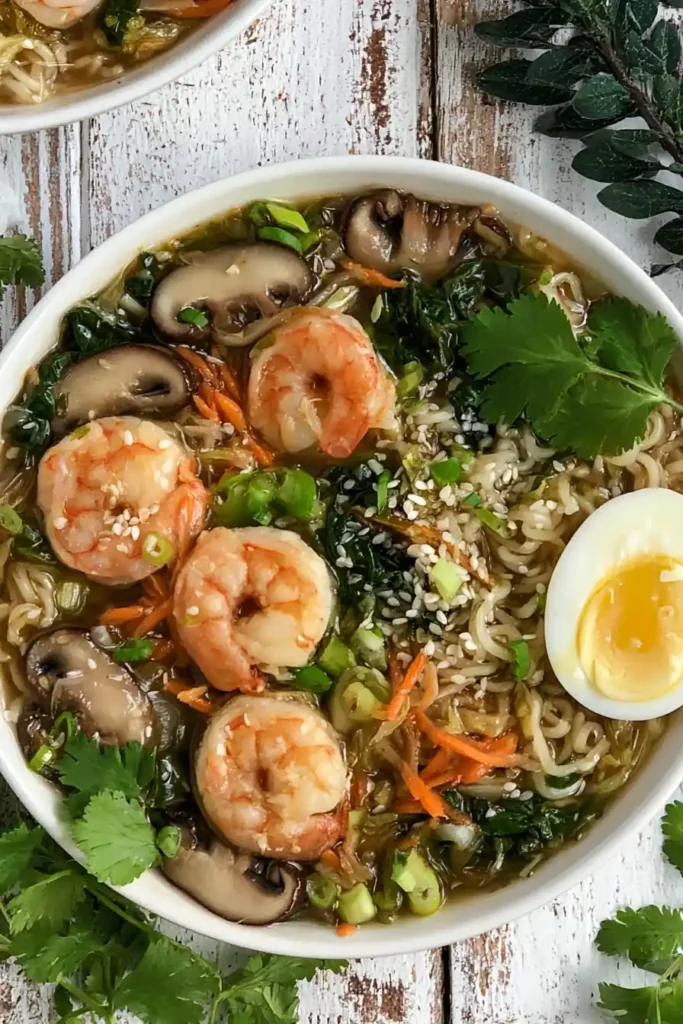
This seafood ramen includes shrimp, mushrooms, carrots, and bok choy in one bowl. Shrimp provides protein, while the vegetables add texture, color, and variety without requiring extra side dishes.
Using low-sodium chicken broth and low-sodium soy sauce gives you more control over the salt level. Miso and sambal oelek still contain sodium, so taste the broth before adding anything extra.
The recipe is dairy-free as written, provided the ramen noodles and packaged condiments contain no hidden dairy ingredients. Labels vary by brand, so it’s worth checking.
For a gluten-free version, use certified gluten-free noodles and replace soy sauce with gluten-free tamari. Check the labels on the miso, chicken broth, and sambal oelek as well, since manufacturing ingredients can differ.
Frequently Asked Questions About Seafood Ramen
Can I use a different type of noodle?
Yes. Rice noodles, soba, or another quick-cooking noodle can work, but check the package timing before adding them. Some noodles absorb more broth than instant ramen, so you may need a little extra liquid.
What other vegetables can I add?
Quick-cooking vegetables work best. Try spinach, snow peas, sliced bell pepper, shredded cabbage, or bean sprouts. Add firmer vegetables earlier and delicate greens during the final minute.
How can I make the broth less spicy?
Reduce the sambal oelek to 1/2 teaspoon or leave it out completely. You can serve extra chile paste on the side so each person adjusts their own bowl.
How do I keep the shrimp from overcooking?
Add raw shrimp during the final 3 minutes of cooking. Remove the pot from the heat once the shrimp turn opaque and curl into a loose C-shape.
A Warm Bowl Ready in Twenty Minutes
This seafood ramen works because each ingredient goes into the pot at the right moment. Give the broth time to simmer, then save the noodles and shrimp for the final few minutes.
Serve it straight away while the broth is hot and the noodles still have some bite. It’s a simple weeknight meal, though the miso, sesame oil, and fresh vegetables make it taste like you spent much longer at the stove.
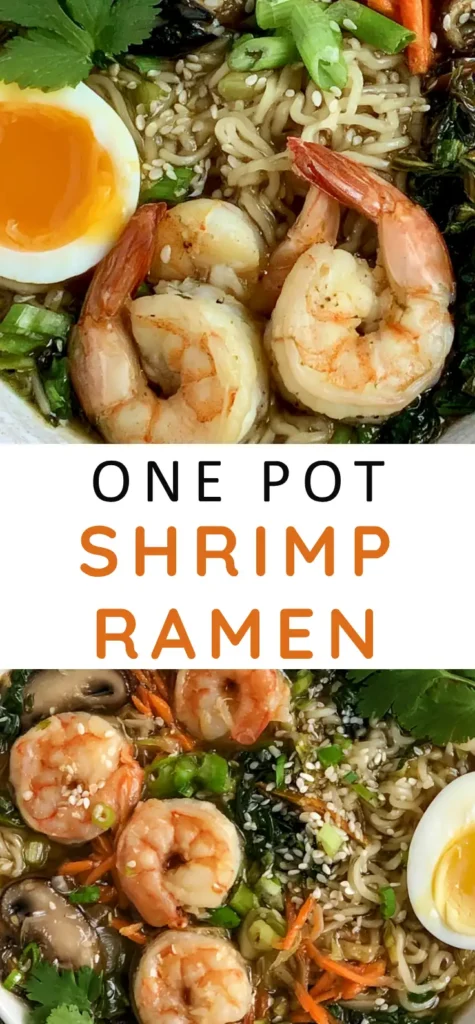
Seafood Ramen with Shrimp and Vegetables
Ingredients
Equipment
Method
- Heat the olive oil and toasted sesame oil in a large Dutch oven or stockpot over medium heat.
- Add the sliced mushrooms and onion, then cook for 2 to 3 minutes until the mushrooms begin releasing moisture and the onion starts to soften.
- Stir in the matchstick carrots and minced garlic, then cook for another 2 minutes without allowing the garlic to brown.
- Add the white miso, sambal oelek, soy sauce, and chicken broth, stirring until the miso is fully dispersed.
- Increase the heat to medium-high, bring the broth to a gentle simmer, and cook for 5 to 10 minutes so the flavors can deepen.
- Add the chopped bok choy and cook for 1 minute.
- Add the raw shrimp and instant ramen noodles, then stir gently to separate the noodles.
- Cook for about 3 minutes, until the noodles are tender and the shrimp are opaque and curled into a loose C-shape.
- Remove the pot from the heat and serve the ramen hot with fresh herbs, soft-boiled egg, or sesame seeds if desired.
Notes
- For a milder broth, reduce the sambal oelek to 1/2 to 1 teaspoon or omit it.
- Do not overcook the shrimp; remove the pot from the heat as soon as they turn opaque and curl loosely.
- For the best leftover texture, store the noodles separately from the broth and refrigerate for up to 2 days.
- For a gluten-free version, use certified gluten-free noodles and gluten-free tamari, and verify that the miso, broth, and sambal oelek are gluten-free.