Knoephla Soup: Creamy Dumplings and Cold-Weather Comfort

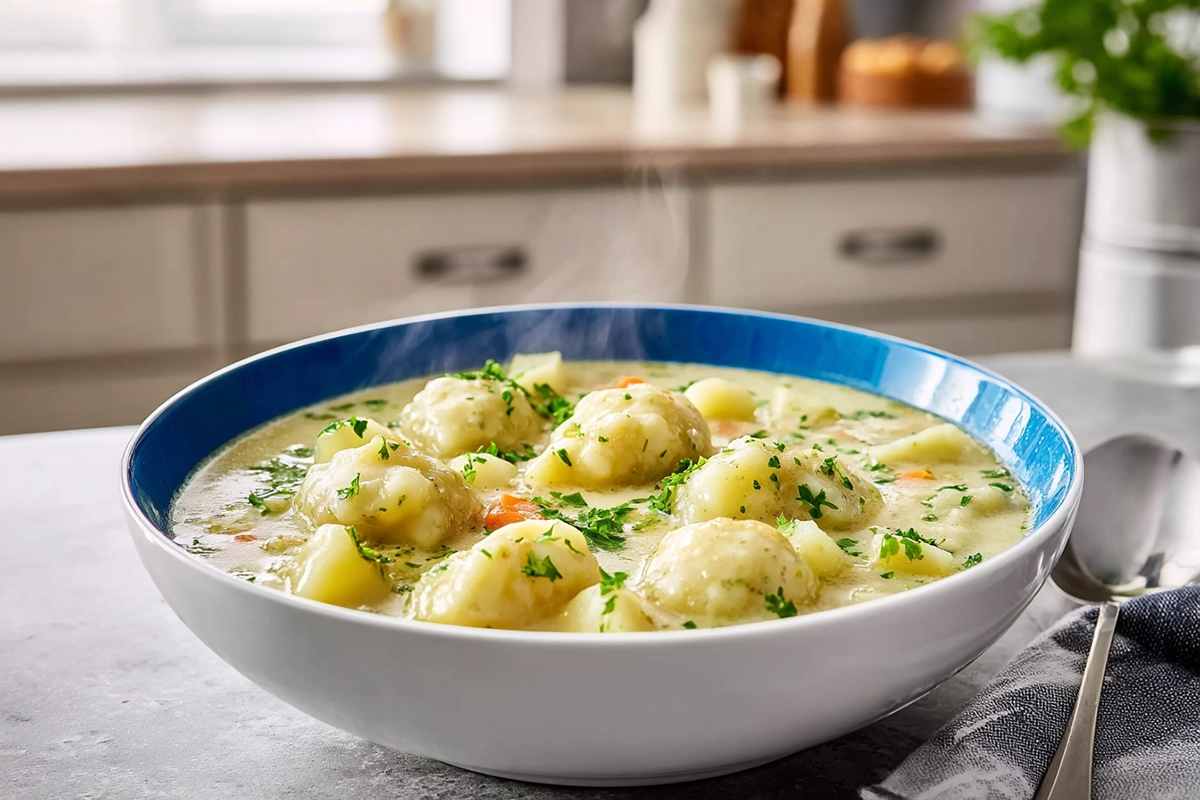
When a soup is done right, it doesn’t announce itself loudly. It settles into the bowl thick and steady, steam carrying the scent of butter-softened vegetables and simmered chicken stock. The surface barely moves, except where tender dumplings rise and sink, telling you this is something meant to be eaten slowly. Knoephla Soup belongs to that category of food that warms you before the first spoonful reaches your mouth.
This is the kind of soup that earned its place in Midwest kitchens for a reason. Potatoes cook down just enough to give body without turning the pot cloudy. A simple butter-and-flour base quietly does its job in the background. And the dumplings—soft, pale, and just chewy enough—turn what could have been an ordinary vegetable soup into a meal that feels complete. Nothing flashy, nothing unnecessary. Every step has a purpose.
What makes Knoephla Soup special isn’t complexity, but restraint. The order matters. The timing matters. Adding stock too fast, rushing the dumplings, or pouring in cream before the heat is right can undo the balance. When it’s handled patiently, the result is a soup that’s creamy without being heavy and filling without being dull—a bowl you finish and immediately think about making again.
This recipe walks through that process the way it actually happens at the stove. From building a stable base, to shaping dumplings that cook evenly, to knowing the exact moment the cream belongs in the pot, this is about getting the texture right—because with a soup like this, texture is everything.
Table of Contents
The Ingredients That Actually Matter (And the Ones That Don’t Need Drama)
Knoephla Soup doesn’t rely on rare ingredients or clever swaps. What makes it work is how a few everyday staples behave together once heat and time are involved. This is a soup built on restraint. Each ingredient has a clear job, and when one pulls too much weight, the balance tips fast. Think structure first, richness second.
Potatoes matter more than they get credit for here. You want them to soften and release just enough starch to give the soup body, without breaking down into grainy paste. Chicken stock should taste clean and supportive, not aggressively seasoned, because it has to carry dumplings and cream without fighting them. And the butter–flour base isn’t about thickness on its own—it’s insurance, keeping the finished soup creamy instead of watery once the dumplings go in.
The dumpling ingredients are equally practical. This dough isn’t meant to be light like pasta or flaky like pastry. It should roll easily, cut cleanly, and hold together when dropped into simmering liquid. That’s why simplicity matters here more than precision.
- Butter: Unsalted is best so you control the salt later; if using salted, hold back on seasoning until the end.
- Celery and carrots: These soften into the background and add quiet sweetness without turning the soup vegetal.
- All-purpose flour: This is doing double duty—supporting the base and forming tender dumplings. Bread flour will make them too chewy.
- Potatoes: Medium-starch varieties hold their shape while still thickening the broth naturally.
- Chicken stock: A mild, well-balanced stock keeps the soup from tasting heavy once cream is added.
- Heavy whipping cream: Added last, it rounds everything out without splitting when the heat is right.
- Eggs and milk (for dumplings): These provide structure and tenderness; skipping either changes the texture more than you’d expect.
This is old-fashioned comfort food logic. Knoephla Soup works because nothing is trying to impress—everything is trying to cooperate.

Why the Dumplings Decide Everything (And Why You Make Them Midway)
The dumplings are the hinge point of Knoephla Soup, and they behave best when they’re not rushed. The dough should come together soft and slightly tacky, not stiff—when you press it with your thumb, it should spring back slowly instead of snapping. As you roll it out by hand, it should glide against the counter with just a dusting of flour, feeling closer to fresh pasta than bread dough.
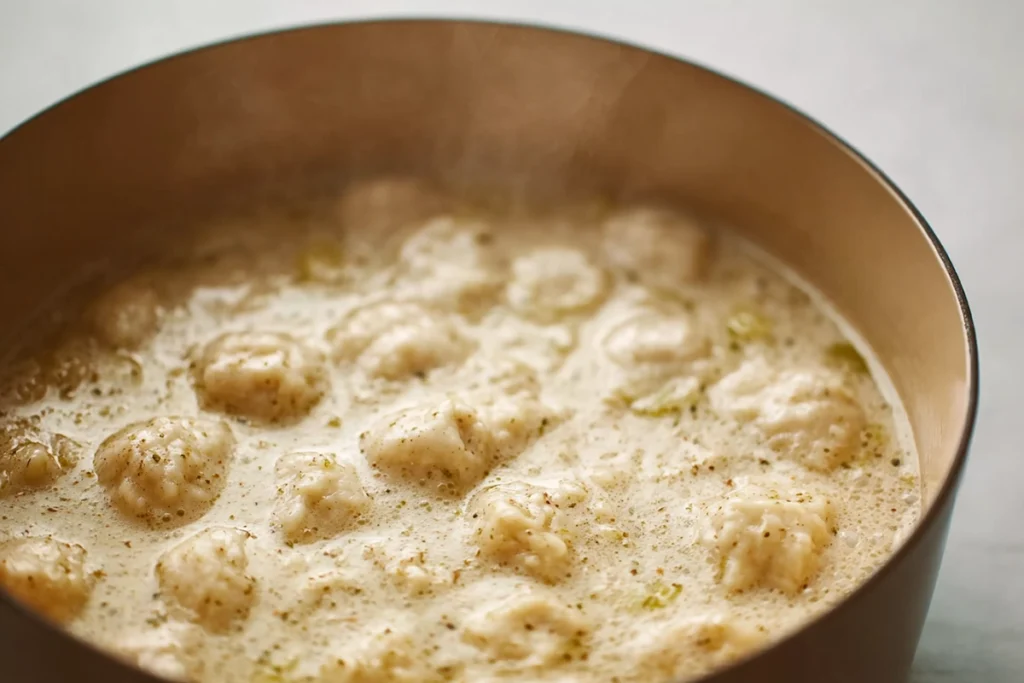
Cutting them evenly matters more than people expect. Each piece should feel light in your fingers, not dense, and when they hit the simmering soup, you’ll hear a gentle plop rather than a heavy drop. The pot should be quietly bubbling at this point—active enough to cook the dumplings through, but calm enough that they don’t tear apart or toughen. Within minutes, they’ll swell slightly and float, turning this from a vegetable soup into the kind of hearty dumpling soup that defines old-fashioned Midwest cooking.
Building the Base Without Turning It Into Glue
The base of this soup starts quietly. Butter melts low and slow, coating the bottom of the pot until it smells faintly nutty but never browned. When the carrots and celery go in, they should soften with a soft sizzle, releasing a sweet, savory aroma without taking on color. If they start to fry, the heat is too high.
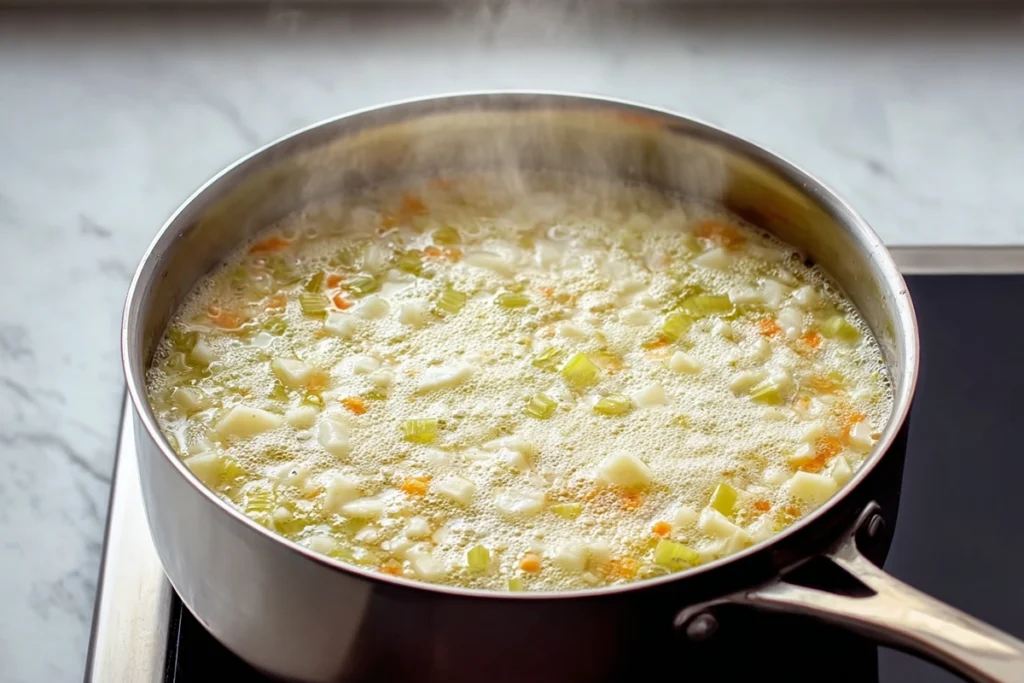
Flour gets stirred in while everything is still gentle. The mixture should look thick and glossy, clinging to the vegetables instead of clumping. Adding a small splash of chicken stock at this stage loosens the paste smoothly—no lumps, no raw flour smell—before the rest of the stock follows. As the potatoes simmer, the soup gradually thickens on its own, the surface turning slightly creamy even before the cream appears. This slow build is what keeps Knoephla Soup rich but balanced, never pasty.
Knowing the Exact Moment the Cream Belongs in the Pot
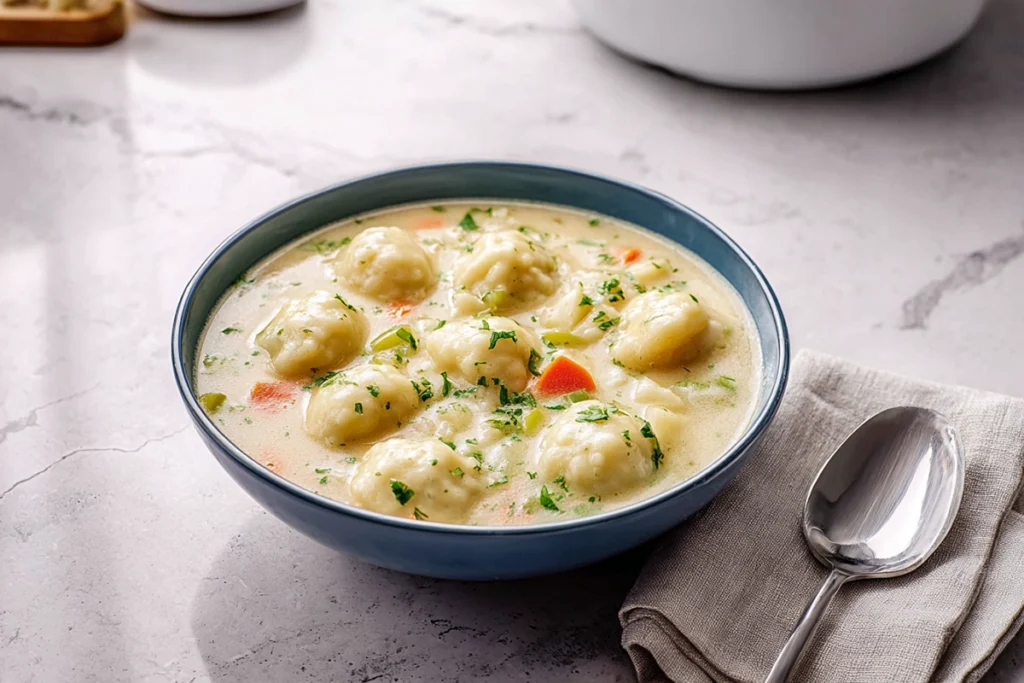
Cream is the final adjustment, not a building block. Once the potatoes are tender enough to yield easily when pressed against the side of the pot, and the dumplings feel set but soft between your fingers, the heat should come off. The soup will be steaming, not boiling, and the surface will move lazily.
When the cream is stirred in, the color shifts immediately paler, smoother, more unified. You’ll notice the smell change too, becoming rounder and warmer instead of sharp. This is the moment the soup settles into itself, transforming from a German soup rooted in practicality into something unmistakably comforting and complete.
When This Soup Needs to Bend Without Breaking
Knoephla Soup is forgiving, but only within reason. Small, thoughtful changes work best when they respect the balance between broth, potatoes, and dumplings. If you have leftover rotisserie chicken, shred it cold and stir it in right after the dumplings finish cooking. The meat warms through gently without tightening or clouding the soup. Avoid adding raw chicken at the beginning—it overwhelms the base and turns the soup into something heavier than it’s meant to be.
If heavy cream feels like too much for your schedule or pantry, half-and-half can work in a pinch, but expect a thinner finish and a slightly flatter mouthfeel. Whole milk isn’t a good substitute here; it dilutes the soup without giving anything back. For the dumplings, stick with all-purpose flour. Swapping in whole wheat or bread flour makes them dense and distracts from the soft, comforting texture that defines this dish.
How Knoephla Soup Is Meant to Be Served
This soup wants space. Wide bowls give the dumplings room and keep the potatoes from piling up into a single heavy mass. Serve it hot, not scorching, so the cream stays smooth and the flavors feel rounded instead of sharp.
A slice of dark rye or a simple crusty loaf works best alongside it, offering something sturdy to swipe through the bottom of the bowl. If you want contrast, a small plate of vinegar-forward pickles or a mustardy slaw cuts through the richness without competing. Knoephla Soup doesn’t need much else—it’s meant to be the center of the table, not a supporting act.
A Few Final Things Worth Remembering
This is not a soup to rush or multitask heavily through. Let the pot simmer gently. Trust the visual cues. When the dumplings float and the broth turns creamy on its own, you’re on the right track. If something feels off, it usually means the heat was too high or the timing got skipped.
Knoephla Soup is one of those recipes that improves your instincts the more often you make it. Each pot teaches you something small—how thick is thick enough, how tender is just right. That’s the kind of cooking that stays with you, long after the bowl is empty.
Get inspired with more mouthwatering recipes! Follow me on Facebook and Pinterest for new cooking ideas every week.
FAQ
Why did my dumplings turn out dense or chewy?
Dense dumplings usually mean the dough was overworked or made with the wrong flour. Knoephla dumpling dough should be mixed just until combined and feel soft, not tight. Using all-purpose flour and handling it gently keeps the dumplings tender once they cook in the soup.
Is Knoephla Soup supposed to be thick or more brothy?
Knoephla Soup should land somewhere in between. The broth is lightly thickened from the flour base and potatoes, but it should still flow easily around the dumplings. If it feels spoon-standing thick, it likely simmered too hard or too long.
Can I make Knoephla Soup ahead of time?
You can make it a few hours ahead, but it’s best the same day. As it sits, the dumplings continue to absorb liquid and the soup thickens. When reheating, add a small splash of chicken stock and warm it gently to bring it back to the right consistency.
Can Knoephla Soup be frozen?
Freezing isn’t ideal for this soup. The cream can separate and the dumplings tend to turn spongy once thawed. If you want to plan ahead, make the soup base without cream or dumplings, freeze that, and finish it fresh later.
Why is my soup bland even though I followed the recipe?
This usually comes down to seasoning timing. Potatoes and dumplings absorb salt as they cook, so the soup often needs a final adjustment at the end. Taste it after the dumplings are fully cooked and add salt gradually until the flavors come together.
Print
Knoephla Soup
- Total Time: 1 hour
- Yield: 8 bowls 1x
Description
If you need a delicious, comforting, creamy dumpling soup, Knoephla Soup is right up your alley. This old-fashioned Midwest favorite combines tender potatoes, soft dumplings, and a gently thickened broth finished with cream for a soup that feels deeply satisfying and dependable.
Ingredients
- Butter
- Celery
- Carrots
- All-purpose flour
- Potatoes
- Chicken stock
- Salt
- Heavy whipping cream
- Eggs
- Milk
Instructions
- Melt the butter gently in a large pot over low heat until fully melted but not browned.
- Add the chopped carrots and celery and cook slowly until softened and aromatic.
- Stir in the flour to coat the vegetables and create a smooth paste.
- Add a small amount of chicken stock and stir until the mixture loosens smoothly, then add the remaining stock.
- Add the chopped potatoes and simmer gently until the potatoes are tender.
- While the soup simmers, mix the dumpling ingredients into a soft dough and roll into ropes.
- Cut the dough into even pieces and set aside.
- Once the potatoes are tender, season the soup lightly with salt.
- Add the dumplings to the gently simmering soup and cook until they float and feel tender.
- Remove the pot from heat, stir in the cream, and serve hot.
Notes
- Do not let the soup boil hard once the dumplings are added.
- Add the cream off heat to prevent curdling.
- Adjust salt only after the dumplings are fully cooked.
- Prep Time: 20 minutes
- Cook Time: 40 minutes
- Category: Soup
- Method: Boil
- Cuisine: German
Nutrition
- Serving Size: 1 bowl
- Calories: 350
- Sugar: 6
- Sodium: 900
- Fat: 18
- Saturated Fat: 10
- Unsaturated Fat: 7
- Trans Fat: 0
- Carbohydrates: 35
- Fiber: 4
- Protein: 10
- Cholesterol: 60