Mediterranean Steak Bowl: Cool Hummus, Hot Steak, and the Balance That Makes It Dinner

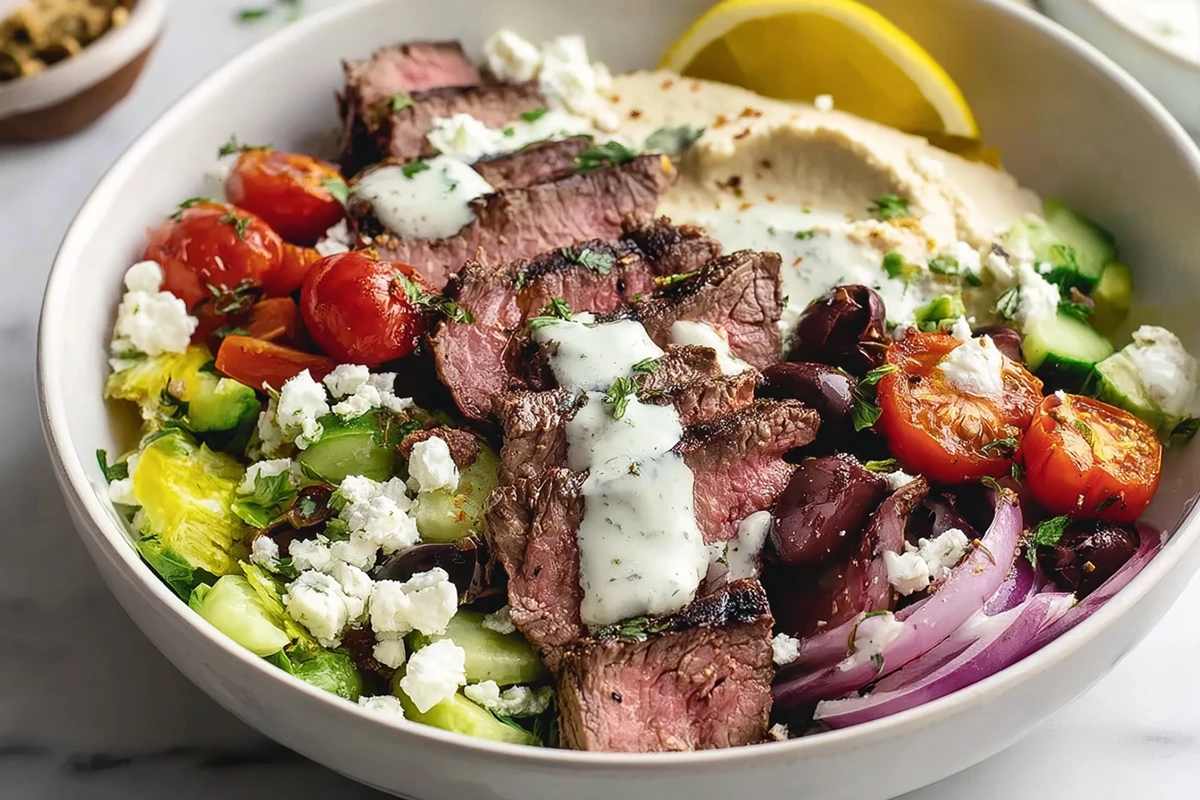
A good bowl earns its place by contrast. Warm, freshly grilled steak sliced thin and rested just long enough to stay juicy. Tomatoes blistered until their skins wrinkle and their sweetness concentrates. Cold, garlicky hummus sitting off to the side, not melted, not drowned. This Mediterranean steak bowl works because every bite lands somewhere different—creamy, charred, crisp, salty, bright. It eats like real food, not a checklist of “healthy” components stacked on top of each other.
What I like about this kind of meal is that it doesn’t rely on tricks. There’s no grain hiding underneath to carry the dish, no heavy sauce trying to smooth over mistakes. The steak has to be cooked right. The vegetables need enough heat to change, not just warm through. The yogurt dressing has to be sharp and restrained, doing its job quietly instead of announcing itself. When those parts line up, the bowl feels fresh without feeling light, satisfying without feeling heavy.
This is the kind of recipe that fits real life. It works for a weeknight when you want something clean and dependable, and it holds up when you’re cooking for other people and want the table to feel generous. Most of the prep happens before the grill is hot. Most of the flavor comes from timing and restraint, not extra ingredients.
Before anything gets chopped or mixed, the focus is on the order of operations—what needs high heat, what needs patience, and what’s better left cold until the end. Once that’s clear, the rest of the bowl falls into place naturally.
Table of Contents
Mediterranean Steak Bowls Are Built in Layers, Not Tossed
This Mediterranean steak bowl only works if each component keeps its role. Nothing here is filler. The greens provide structure, the steak brings weight, and the cold elements create contrast against the heat of the grill. When everything is treated as a layer instead of a mix-in, the bowl eats clean and intentional instead of muddled.
Romaine is doing quiet work here. It’s crisp, sturdy, and holds up under warm toppings without wilting instantly, which matters when grilled steak and vegetables are involved. Cucumbers add snap and moisture, not flavor weight. Kalamata olives and feta act more like seasoning than toppings — too much of either will flatten the bowl into salt.
Hummus is not a sauce in this context. It’s a creamy anchor that cools the bite and rounds out the char from the grill. Keeping it thick and undisturbed is what separates a composed bowl from a dressed salad.
- Romaine lettuce: Crisp enough to hold warm steak without collapsing; softer greens won’t last.
- Cucumber: Brings crunch and freshness without competing for attention.
- Kalamata olives: Salty and briny; use restraint so they don’t dominate.
- Feta cheese: Sharp and crumbly, meant to punctuate, not blanket.
- Garlic hummus: Cold, creamy contrast — keep it thick, not spread thin.
The Steak Choice Sets the Tone of the Whole Bowl
Steak is the backbone here, and not every cut behaves the same once sliced thin. Flank steak is ideal because it takes on char quickly and slices beautifully against the grain after resting. Sirloin works if that’s what you have, though it benefits from careful cooking to stay tender. New York strip is richer and slightly heavier, but still fits the bowl if sliced modestly.
What matters more than the cut is restraint. This isn’t a steakhouse portion dropped on greens. The bowl works because the steak is present in every bite, not because it overwhelms everything else.
- Flank steak: Lean, flavorful, and forgiving when sliced properly.
- Sirloin or NY strip: Acceptable swaps, but slice thinner and watch doneness closely.
- Neutral oil: Helps achieve a clean sear without masking the meat’s flavor.
Why Grilled Tomatoes and Onions Matter More Than You Think
Raw tomatoes would water this bowl down. Raw onions would sharpen it too aggressively. Grilling both changes their role entirely. Tomatoes blister and concentrate, becoming sweet and jammy instead of acidic. Red onions soften and mellow, losing their bite and gaining depth.
Skewering isn’t about presentation — it’s control. It keeps the vegetables from slipping through the grates and ensures they cook evenly without burning before they soften.
- Cherry or grape tomatoes: Their natural sugar caramelizes quickly over high heat.
- Red onion: Thick cuts prevent burning before tenderness.
- Skewers: Functional, not decorative — they manage cook time.
The Yogurt Dressing Is a Support Act, Not the Star
This dressing is meant to sharpen the bowl, not coat it. Yogurt keeps it light and tangy, while lemon and garlic bring focus. Dried oregano and dill work well here because the yogurt gives them time to bloom, especially if the dressing rests before serving.
Fresh mint at the end lifts everything without turning the bowl into a salad. If fresh mint isn’t available, dried works — just use less. Overdoing it shifts the bowl away from savory and into herbal territory.
- Plain yogurt: Thick enough to cling lightly without drowning the bowl.
- Lemon juice: Brightens the steak and balances the hummus.
- Garlic and dried herbs: Quiet depth that improves with time.
- Fresh or dried mint: Optional, but adds lift when used sparingly.
This ingredient lineup isn’t about variety for its own sake. Each choice supports the idea of fresh, wholesome Mediterranean fuel — food that feels clean, grounded, and satisfying without trying too hard.

The One Moment That Decides the Whole Bowl: Grilling the Steak Correctly
The grill needs to be genuinely hot before the steak ever touches it. You’re listening for an aggressive sizzle the second the meat hits the grates — not a polite hiss. If it smells faint or watery, the heat isn’t there yet. High heat creates the crust quickly, which protects the inside from drying out.
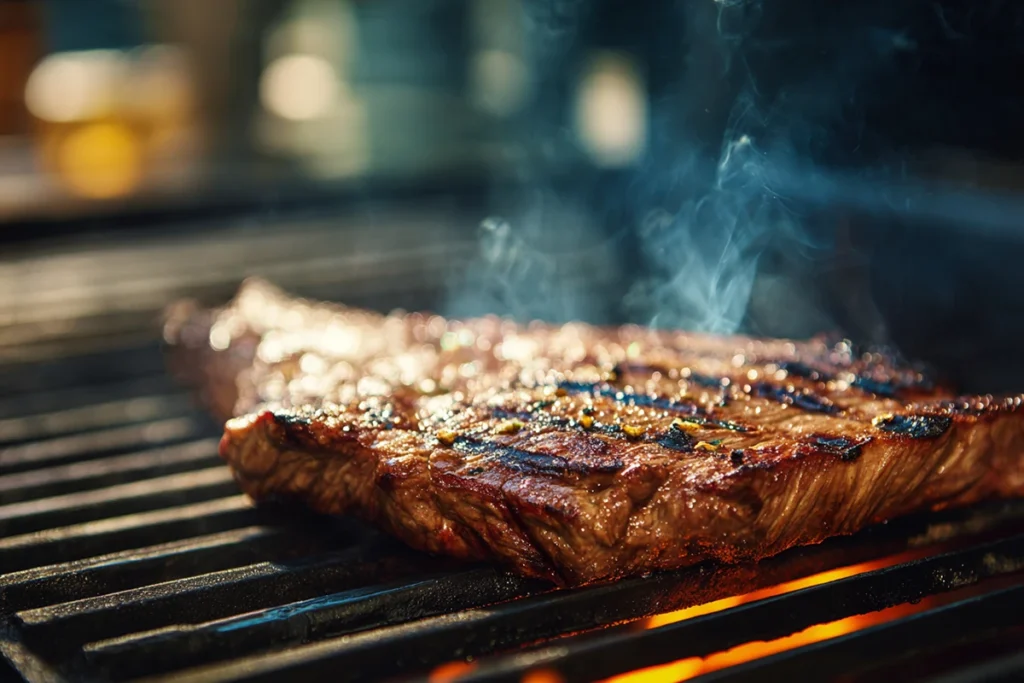
Once the steak is on, leave it alone. Moving it too early tears the surface and steals the sear you’re trying to build. When it releases easily and the underside looks deeply browned, flip it and let the second side do the same work. The steak should feel springy but not stiff when pressed, similar to the base of your thumb.
Resting isn’t optional here. As the steak sits, you’ll see juices bead on the surface and slowly settle back in. Slice too soon and they spill onto the board instead of staying in the meat. Slice thinly against the grain and the steak becomes tender enough to anchor the entire bowl without chewing fatigue — exactly what a healthy steak bowl needs.
Why Grilled Tomatoes and Onions Change the Bowl Entirely
The vegetables go on the grill while the steak cooks, not after. Tomatoes should blister until their skins wrinkle and split, releasing a sweet, almost jammy aroma. You’ll hear them pop lightly as they heat, a sign their sugars are concentrating instead of steaming away.
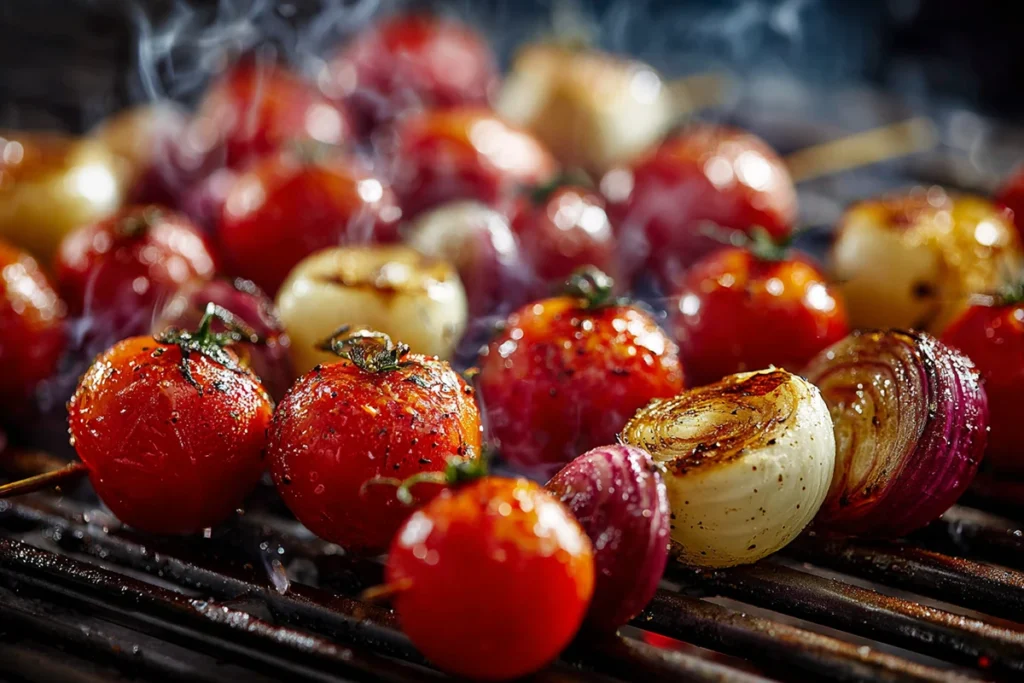
Red onions soften when they’re cooked properly. The sharp bite fades, replaced by a mellow sweetness that smells faintly caramelized. If they’re burning before they soften, the pieces are too small or the grill is running too hot.
Pull the vegetables when they’re tender but still holding their shape. Mushy vegetables flatten the texture of the bowl, while properly grilled ones add warmth and depth that balance the cold hummus and crisp romaine in this Mediterranean-style bowl recipe.
Building the Bowl While the Steak Rests
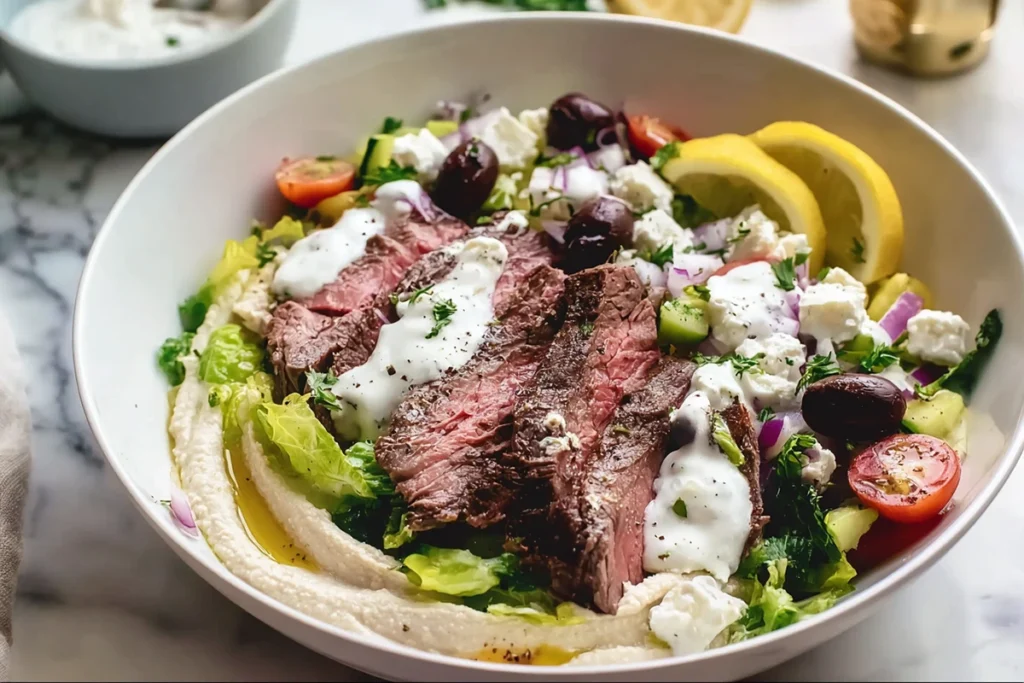
Assembly happens while the steak is resting, not after. Start with romaine so it stays crisp under the warm toppings. Add cucumbers next for crunch, then spoon the hummus in thick dollops rather than spreading it — it should stay cool and creamy.
Lay the sliced steak across the bowl while it’s still warm. The contrast between hot meat and cold hummus is where the bowl comes alive. Finish with grilled vegetables, olives, and feta, letting them fall naturally rather than piling everything in the center.
The yogurt dressing comes last and light. When you drizzle it, it should cling gently instead of pooling. The smell should be fresh and lemony, not garlicky or sharp. Done right, every bite tastes balanced — fresh, savory, and satisfying without feeling heavy.
Knowing When to Stop Adjusting
The instinct to keep tweaking is strong, but this bowl rewards restraint. If the steak is juicy, the vegetables are blistered, and the dressing is lightly applied, the bowl is finished. Over-handling at this stage dulls the contrast you worked to build.
Trust the process. This isn’t a bowl meant to be mixed or reheated aggressively. It’s meant to be eaten while temperatures still vary and textures stay distinct — the reason this recipe keeps finding its way back onto the table.
Make It Yours Without Breaking the Bowl
This bowl is flexible, but only within reason. The structure matters. If you need to swap the steak, stick with cuts that behave well when sliced thin. Sirloin works if it’s cooked carefully and sliced across the grain. New York strip is richer and a little heavier, but it holds up as long as portions stay modest. Flank remains the cleanest option for balance.
If grilling isn’t possible, a cast-iron skillet is the only indoor substitute worth using. It needs to be ripping hot and lightly oiled. Anything lower and slower will gray the steak and drain the life out of the bowl. Baking or broiling the steak flattens the texture and should be avoided.
For the dressing, plain Greek-style yogurt can replace regular yogurt if you thin it slightly with lemon juice. Skip low-fat yogurt — it turns chalky and dulls the herbs. If fresh mint isn’t available, dried mint works, but use less than you think. Too much pushes the bowl into toothpaste territory.
This isn’t a place to pile on extras. Roasted sweet potatoes, rice, or quinoa may sound helpful, but they turn a sharp Mediterranean-style bowl into something heavy and unfocused.
How to Serve It So It Still Feels Fresh
This bowl is best served assembled, not mixed. Shallow bowls or wide plates keep the ingredients visible and prevent everything from collapsing into a salad. Serve the yogurt dressing on the side if feeding a crowd; some people want just enough to coat, others want a little extra tang.
If you’re serving this as part of a larger spread, keep the sides simple and purposeful. Warm pita or flatbread is enough to scoop hummus and catch dressing without competing. A plate of sliced citrus or a tomato-cucumber salad dressed lightly with lemon cuts through the richness of the steak.
or leftovers, store each component separately. Reheat the steak gently and keep the hummus, greens, and dressing cold. Reassembled properly, the bowl still eats like a fresh Mediterranean steak bowl, not yesterday’s lunch.
A Few Last Things That Make a Difference
Don’t overdress. The yogurt dressing is there to sharpen, not coat. If you see pooling at the bottom of the bowl, you’ve gone too far.
Don’t rush the rest time on the steak. Ten minutes feels long, but it’s what keeps the meat juicy once sliced thin.
And don’t overbuild. This bowl works because each ingredient has space to do its job.
This is the kind of meal that earns repeat status. It’s clean, grounded, and satisfying without trying to be impressive. When the grill is hot, the components are treated with restraint, and the bowl is assembled with intention, it becomes one of those recipes you come back to — not because it’s trendy, but because it works.
Get inspired with more mouthwatering recipes! Follow me on Facebook and Pinterest for new cooking ideas every week.
FAQ
What cut of steak works best for a Mediterranean steak bowl?
Flank steak is the best choice because it cooks quickly, develops good char, and stays tender when sliced against the grain. Sirloin or New York strip can also work, but they should be sliced thinner and cooked carefully so they don’t overpower the bowl.
Can I make this Mediterranean steak bowl without a grill?
Yes, a hot cast-iron skillet is the best alternative if you don’t have a grill. The pan needs to be very hot so the steak sears properly; low heat will leave it gray and chewy. Avoid baking or broiling, as both flatten the texture of the steak.
Why did my steak turn out chewy?
Chewy steak usually means it was either overcooked or sliced with the grain instead of against it. Letting the steak rest before slicing also matters, because it keeps the juices inside the meat instead of on the cutting board.
Can I make the components ahead of time?
You can prep most of the ingredients in advance, including the yogurt dressing, chopped vegetables, and hummus. The steak is best cooked fresh, but leftovers can be gently reheated and added back to the bowl without fully losing their texture.
Print
Mediterranean Steak Bowl
- Total Time: 45 minutes
- Yield: 4 servings 1x
- Diet: Dairy-Free
Description
A balanced Mediterranean steak bowl with juicy grilled steak, cool hummus, crisp romaine, blistered tomatoes, and a light herbed yogurt dressing. Fresh, satisfying, and built for real home kitchens.
Ingredients
- 1 lb flank steak
- Cherry or grape tomatoes
- Red onion
- Romaine lettuce
- Cucumber
- Kalamata olives
- Garlic hummus
- Feta cheese
- Plain yogurt
- Olive oil
- Lemon juice
- Garlic
- Dried oregano
- Dried dill
- Fresh or dried mint
- Salt and black pepper
Instructions
- Preheat the grill until very hot and ready for high-heat cooking.
- Season the steak with salt and pepper and grill until deeply seared on both sides.
- Grill tomatoes and red onion until blistered and softened.
- Remove steak and allow it to rest before slicing thinly against the grain.
- Whisk together yogurt, olive oil, lemon juice, garlic, herbs, and salt to make the dressing.
- Assemble bowls with romaine, cucumber, hummus, sliced steak, grilled vegetables, olives, and feta.
- Drizzle lightly with yogurt dressing and serve immediately.
Notes
- Flank steak works best when sliced thinly against the grain.
- Do not overdress the bowl; the yogurt dressing should lightly coat.
- Store components separately if preparing ahead.
- Prep Time: 20 minutes
- Cook Time: 20 minutes
- Category: Dinner
- Method: Grilling
- Cuisine: Mediterranean
Nutrition
- Serving Size: 1 bowl
- Calories: 520
- Sugar: 8
- Sodium: 780
- Fat: 30
- Saturated Fat: 10
- Unsaturated Fat: 18
- Trans Fat: 0
- Carbohydrates: 28
- Fiber: 6
- Protein: 38
- Cholesterol: 95