Old Fashioned Beef Stew: Spoon-Tender Beef and a Broth That Clings

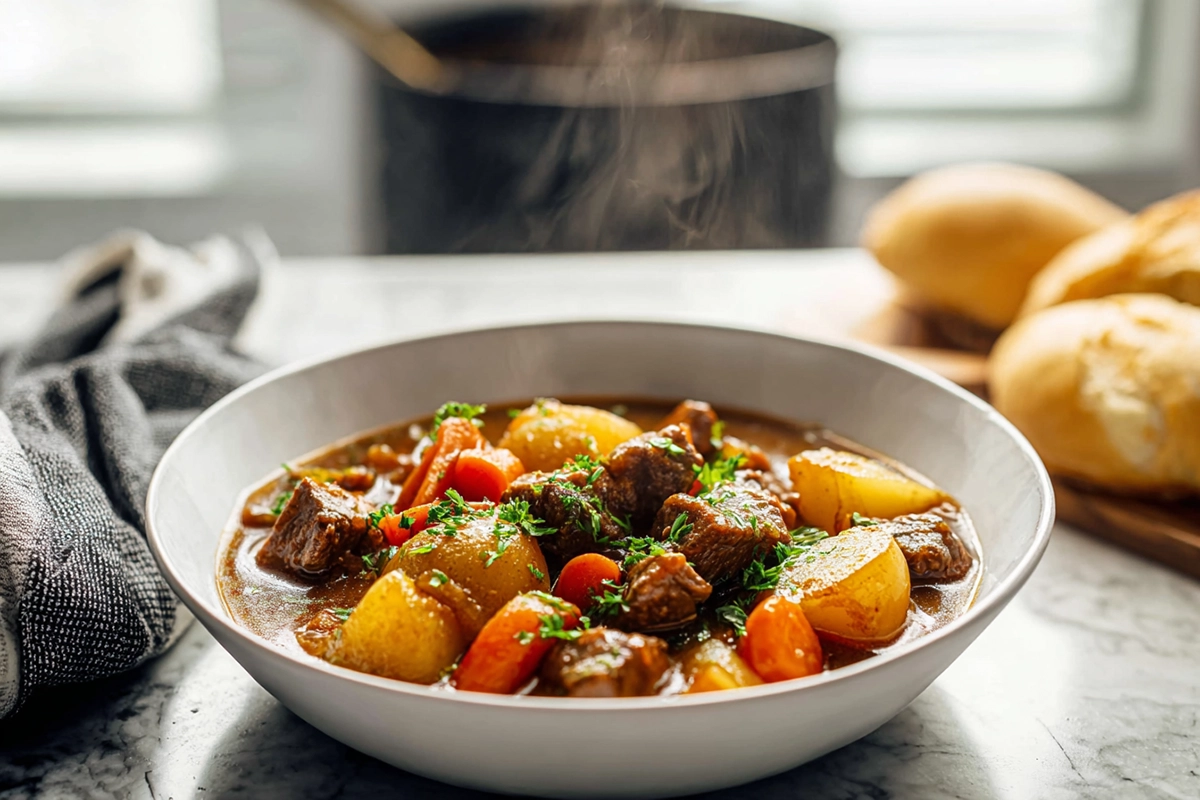
There’s a moment in a good stew when the spoon tells you everything. It slides through without resistance, comes back coated, and carries a piece of beef that yields before your teeth do. That’s the payoff this pot is built for. Not flashy. Not rushed. Just steady heat turning chuck roast into something soft and generous, while potatoes and carrots hold their shape and the broth settles into a rich, glossy finish.
This Old Fashioned Beef Stew leans on quiet workhorses to get there. Cornstarch isn’t just a last-minute thickener; it’s part of the browning, helping the meat develop a surface that actually holds onto flavor. Tomato paste cooks until it darkens, adding depth without turning the stew acidic. Worcestershire brings savory backbone, and a pinch of sugar smooths the edges so the beef tastes fuller, not sweet. Even the allspice stays in the background, doing its job without announcing itself.
The order matters. The heat matters. The time matters—but not in the way most recipes make it sound. This stew doesn’t ask for constant attention; it asks for patience at the right moments. Sear until the pot smells faintly of toasted meat and garlic. Simmer until the broth tightens and the beef relaxes. Thicken only when everything else is already where it should be.
What follows is a process built for real kitchens: clear decisions, steady timing, and a result that tastes even better the next day.
Table of Contents
Why Old Fashioned Beef Stew Tastes Deeper on Day Two
This stew is built for staying power. The flavor doesn’t peak the moment it comes off the heat—it settles, tightens, and rounds out as it rests. That’s because the backbone comes from layered savory ingredients that need time to mingle. Tomato paste is cooked down early so it loses its sharp edge and turns slightly sweet and earthy. Worcestershire sauce adds depth rather than tang, reinforcing the beef instead of competing with it. A small amount of sugar doesn’t sweeten the stew; it smooths bitterness and lets the meat taste fuller. Even the dried herbs are chosen for restraint, blooming slowly during the simmer and becoming more cohesive after a night in the fridge. This is why Old Fashioned Beef Stew often tastes richer the next day, with a broth that feels unified rather than busy.
- Beef stew meat (chuck roast): Chuck breaks down slowly and rewards patience with tenderness; lean cuts won’t give you the same result.
- Tomato paste: Adds body and depth once cooked; raw paste will taste metallic.
- Worcestershire sauce: Anchors the broth with umami; soy sauce can work in a pinch but will shift the flavor profile.
- Granulated sugar: A balancing tool, not a sweetener—skip it only if your broth is already naturally sweet.
- Dried basil, oregano, parsley, paprika, allspice: Background players that create warmth without turning the stew herbal.

Vegetables That Hold Their Shape Without Turning Hard
The vegetables here are chosen as much for structure as for flavor. Red potatoes are waxy enough to stay intact through a long simmer, soaking up broth without dissolving. Pearl onions soften gently and keep their shape, giving you pockets of sweetness rather than onion threads. Carrots and celery go in early on purpose; they surrender some of their bite, enriching the broth while still offering texture by the end. This balance is what separates a hearty beef with vegetables from a muddy stew.
- Red potatoes: Waxy and reliable; russets will thicken the broth but break apart too easily.
- Pearl onions: Mild and sturdy; chopped yellow onions will melt instead and change the texture.
- Carrots: Add sweetness and color while reinforcing the stew’s classic feel.
- Celery ribs: Provide savory backbone; don’t skip them unless you want a flatter broth.
The First Ten Minutes Decide the Whole Pot
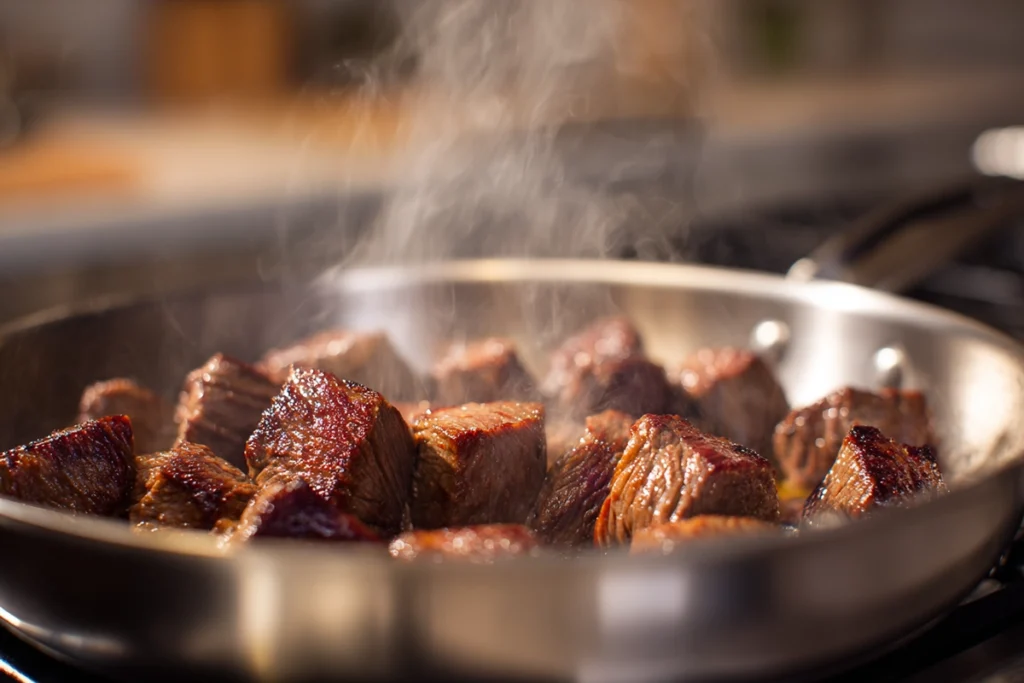
This stew is won or lost before it ever starts simmering. When the beef hits the hot oil, it should sizzle loudly and immediately—if you hear a wet hiss, the pot isn’t hot enough or it’s too crowded. The meat needs to darken on the outside, not turn gray; look for deep brown patches and edges that look almost crusted. As the garlic and tomato paste go in, the smell should shift from raw and sharp to warm and savory, like toasted bread and browned butter, without any scorched notes.
The Long Simmer Isn’t About Time — It’s About Collagen
Once the broth and vegetables are in, the stew should come up to a gentle boil, then settle into the quietest simmer you can manage. You’re not looking for bubbles racing across the surface—just the occasional lazy rise along the edges. As it cooks, the broth will turn slightly opaque and glossy, and the beef will go from firm and springy to relaxed and yielding. This slow-cooked beef stage is when collagen melts into the liquid, giving the stew body without heaviness.
Thickening Without Killing the Broth
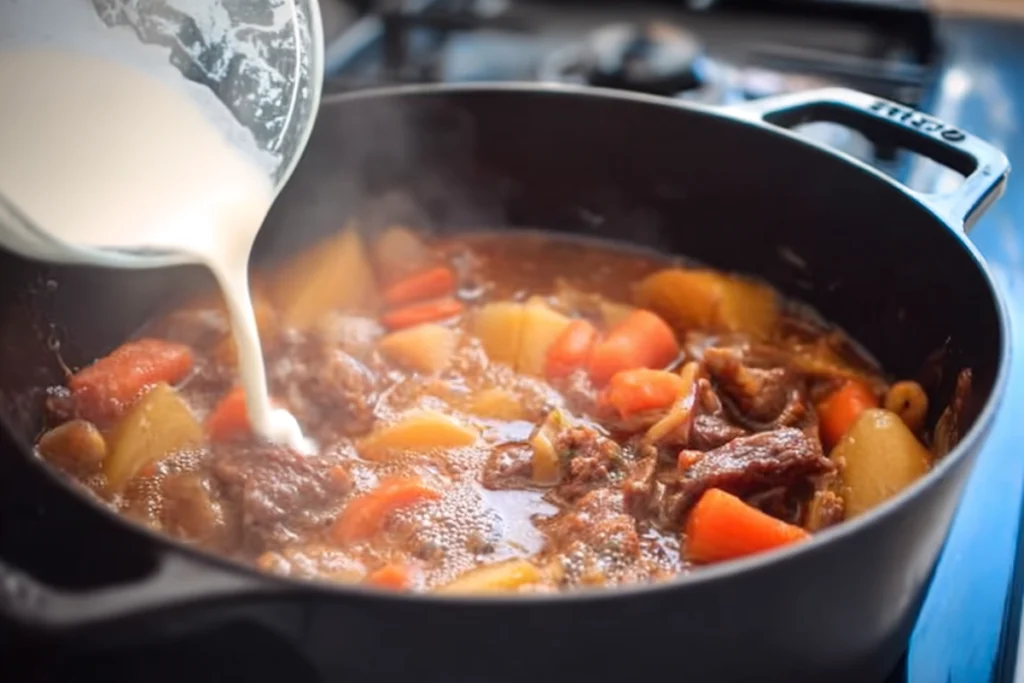
Thickening comes last, when the stew already tastes finished. The cornstarch slurry should be poured in slowly while the pot is gently bubbling, not boiling hard. As you stir, watch the broth change from loose to spoon-coating within a minute or two, taking on a silky look rather than a gelled one. If it thickens unevenly, lower the heat and keep stirring—the goal is a beef stew that clings lightly to the spoon, not one that sets up like gravy.
Small Changes That Don’t Break the Stew
This stew is forgiving, but not everything swaps cleanly. If you don’t have pearl onions, a single yellow onion cut into large wedges will work—add it with the vegetables so it softens slowly instead of dissolving. No Worcestershire on hand? A mix of soy sauce and a splash of apple cider vinegar can stand in, but keep it restrained so the broth stays balanced. Beef broth can be replaced with homemade stock if you have it; just taste before adding salt, since some stocks reduce more aggressively.
What doesn’t work well is rushing the protein. Lean cuts like sirloin will cook through, but they won’t relax the way chuck does, and the stew will lack that silky, slow-cooked beef texture. Likewise, skipping the cornstarch dusting at the start removes part of what gives this stew its body later on. Those steps aren’t decorative—they’re structural.
How This Stew Fits Into Real Meals
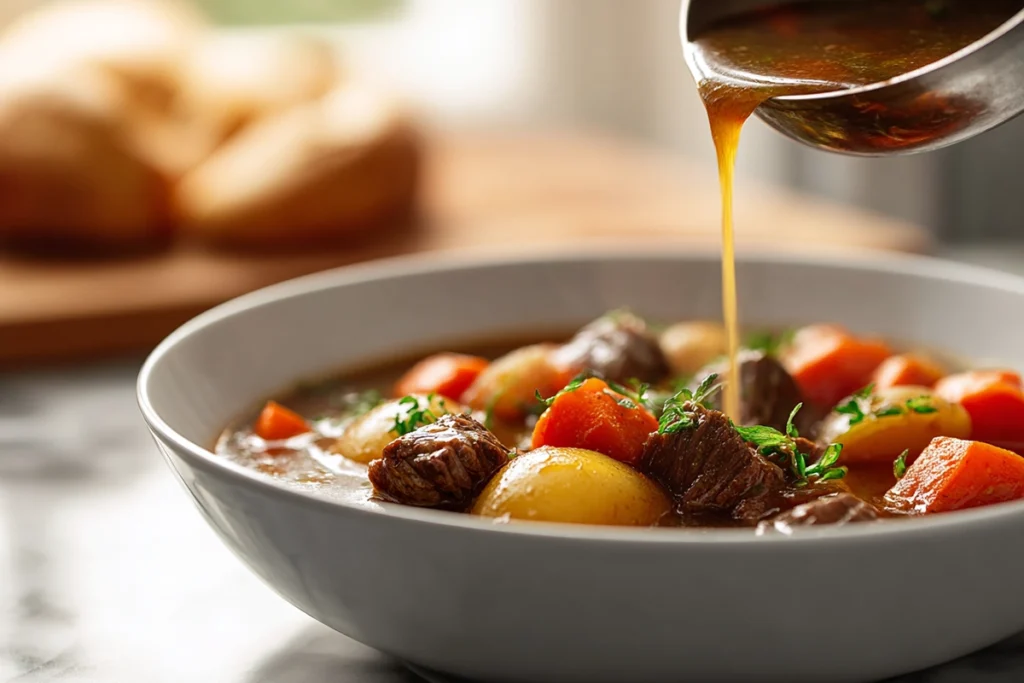
This is a bowl-first meal. Serve it hot, with the broth still clinging to the beef, and give it something simple on the side. A slice of crusty bread or a soft dinner roll works to catch the sauce without competing with it. If you want something fresh to cut the richness, a lightly dressed green salad or steamed green beans do the job better than anything creamy. For leftovers, this stew reheats gently over low heat and holds its shape, making it a dependable next-day dinner or a make-ahead option for busy nights.
A Few Final Things Worth Knowing
If the stew tastes thin at the end, it usually means it needed either more simmer time or a touch more salt—not more thickener. If the vegetables feel soft but the beef is still tight, the heat was likely too high early on. Turn it down, give it time, and let the collagen do its work.
This Old Fashioned Beef Stew is the kind of recipe that earns its place in rotation. It doesn’t rely on tricks, just attention and patience, and it gives you back a pot of food that feels steady and familiar. Make it once, make it again, and it starts to feel like something you know by heart.
Get inspired with more mouthwatering recipes! Follow me on Facebook and Pinterest for new cooking ideas every week.
FAQ
Why is my beef stew still tough after two hours?
Tough beef usually means the stew hasn’t simmered long enough or the heat was a little too high early on. Chuck roast needs gentle, steady heat so the collagen can fully break down. Lower the heat and keep simmering until the beef feels soft when pressed with a spoon.
Can I make Old Fashioned Beef Stew ahead of time?
Yes, this is one of those recipes that actually improves with time. As it rests, the flavors settle and the broth becomes more cohesive. Reheat it slowly over low heat so the beef stays tender and the vegetables don’t fall apart.
Why did my stew turn out too thin?
A thin stew usually means it needed either more simmering time or the cornstarch slurry wasn’t added at the right moment. The broth should already taste finished before thickening. If it’s still loose, let it simmer uncovered for a few minutes, then adjust carefully.
What’s the best cut of beef for classic beef stew?
Chuck roast is the best choice because it has enough fat and connective tissue to become tender during a long simmer. Leaner cuts cook faster but won’t give you the same soft texture or rich broth. That slow-cooked beef quality is what defines a good stew.
Print
Old Fashioned Beef Stew
- Total Time: 1 hour 45 minutes
- Yield: 6 servings 1x
- Diet: N/A
Description
Old Fashioned Beef Stew with spoon-tender beef, hearty vegetables, and a rich, slow-simmered broth that thickens naturally. Built for comfort, consistency, and real home kitchens.
Ingredients
- 2 pounds beef stew meat (cubed chuck roast)
- 4 tablespoons cornstarch, divided
- 1 teaspoon salt
- 1/4 teaspoon black pepper
- 2 tablespoons olive oil
- 2 cloves garlic, minced
- 2 tablespoons tomato paste
- 4 cups beef broth
- 1/4 cup Worcestershire sauce
- 1 1/2 pounds red potatoes, cut into bite-sized chunks
- 10 ounces pearl onions
- 4 medium carrots, sliced
- 4 medium celery ribs, sliced
- 1 teaspoon granulated sugar
- 1/2 teaspoon dried basil
- 1/2 teaspoon dried oregano
- 1/2 teaspoon dried parsley
- 1/2 teaspoon paprika
- 1/4 teaspoon ground allspice
- 1/4 cup cold water
Instructions
- Dust the beef with half of the cornstarch, salt, and black pepper.
- Heat olive oil in a large Dutch oven and sear the beef until deeply browned on all sides.
- Stir in the garlic and tomato paste and cook until fragrant and darkened slightly.
- Deglaze the pot with beef broth and Worcestershire sauce, scraping up browned bits.
- Add potatoes, pearl onions, carrots, celery, sugar, dried herbs, paprika, and allspice.
- Bring to a gentle boil, then reduce heat and simmer until beef is tender.
- Mix remaining cornstarch with cold water and stir into the stew to thicken.
- Simmer briefly until the broth coats the spoon, then adjust seasoning and serve.
Notes
- Chuck roast works best for tenderness and flavor.
- Keep the simmer gentle to avoid tough beef.
- The stew tastes even better the next day after resting.
- Prep Time: 15 minutes
- Cook Time: 1 hour 30 minutes
- Category: Dinner
- Method: Stovetop
- Cuisine: American
Nutrition
- Serving Size: 1 bowl
- Calories: 0
- Sugar: 0
- Sodium: 0
- Fat: 0
- Saturated Fat: 0
- Unsaturated Fat: 0
- Trans Fat: 0
- Carbohydrates: 0
- Fiber: 0
- Protein: 0
- Cholesterol: 0