Philly Cheesesteak Skillet: All the Savory, Melty Comfort—No Soggy Roll

The problem with most Philly cheesesteaks at home isn’t flavor—it’s timing. The steak cooks faster than the peppers soften. The onions burn while you’re chasing melt on the cheese. By the time everything comes together, the bread is either soaked through or the meat has gone dry. You end up with a sandwich that tastes like effort instead of comfort. This skillet fixes that.
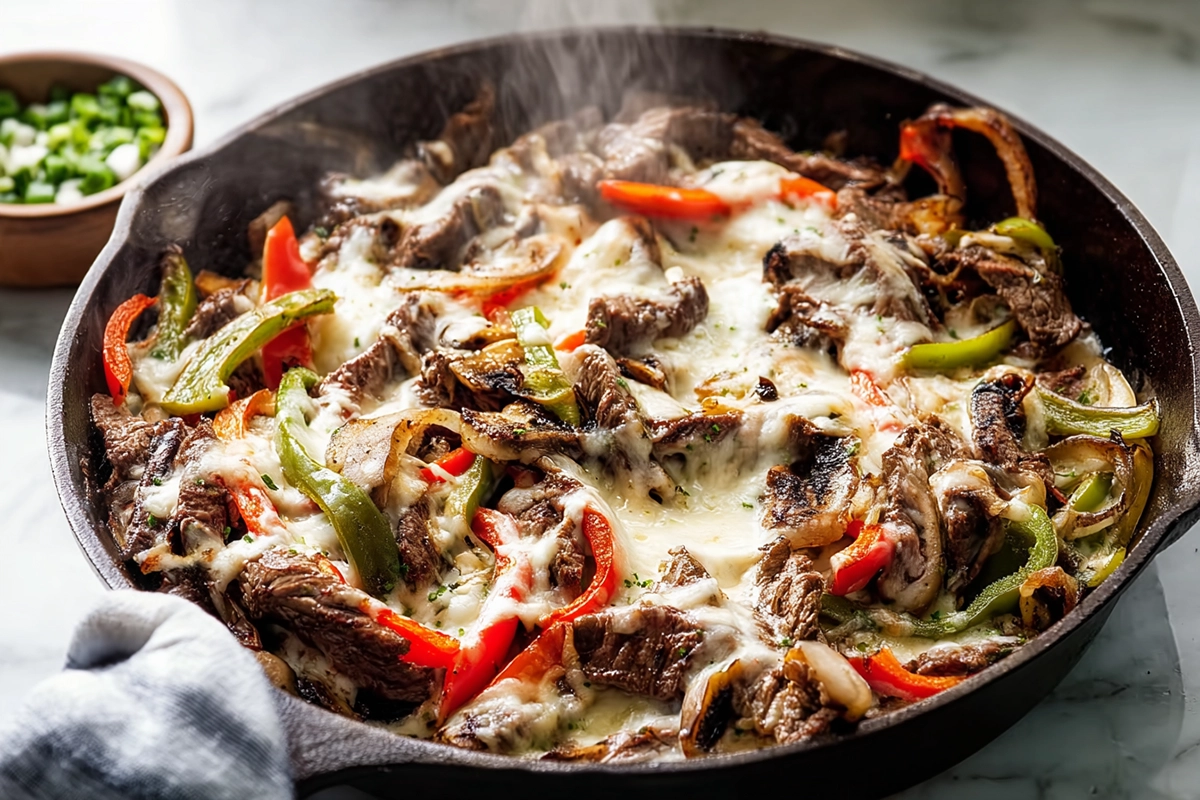
This Philly cheesesteak skillet pulls the whole thing back to what actually matters: deeply browned beef, sweet peppers and onions, and a blanket of cheese that melts instead of separating. Everything cooks in deliberate stages, in one pan, so nothing steams when it should sear or burns when it should soften. Mushrooms go in first to shed their moisture and pick up color. The steak hits screaming-hot oil in batches, just long enough to brown without tightening up. Garlic gets its moment—fragrant, not scorched—before everything comes back together under a layer of mozzarella and Parmesan that bubbles and blisters under the broiler.
The result is rich and savory, with stretchy cheese pulling away from the pan and beef that stays tender instead of chewy. You can scoop it straight from the skillet and call it dinner, or pile it into toasted hoagie rolls without losing structure. Either way, it eats like a classic cheesesteak without the mess or the juggling act.
You don’t need a griddle or special equipment for this—just a solid skillet, high heat, and the patience to let each component do its job. Once you understand that rhythm, the rest of the recipe practically cooks itself.
Steak Choice Isn’t Fussy—But the Slice Is Non-Negotiable
The backbone of this dish is beef that cooks fast and stays tender under high heat. That’s why this recipe allows flexibility in cut but draws a hard line on thickness. Ribeye brings rich fat that bastes itself as it sears. Skirt and flank lean a little tougher, but when sliced thin enough, they cook before the muscle fibers have time to tighten. Flat iron lands comfortably in the middle, offering tenderness without excess fat. What matters most is slicing across the grain, paper-thin. Thick strips won’t just take longer—they’ll steam, then toughen, robbing the Philly cheesesteak skillet of its signature bite.
Vegetables here aren’t filler; they’re structural. Onions and bell peppers add sweetness and moisture, but only if they’re cooked separately and briefly. Mushrooms go first for a reason: they dump water. Letting them brown early builds umami instead of watering down the pan later. Garlic is used generously, but briefly—it’s there to perfume the oil, not dominate the dish.
The cheese combination is intentional. Mozzarella melts into long, stretchy strands that coat the beef, while Parmesan adds salinity and depth. Swapping mozzarella for a harder cheese will cost you melt. Swapping Parmesan for more mozzarella will cost you flavor.
- Thinly sliced steak (ribeye, skirt, flank, or flat iron): Slice very thin, ideally while partially chilled, so it browns instead of stewing.
- Bell peppers and yellow onion: Thin slices cook quickly and stay sweet; thick cuts turn limp before they soften.
- Mushrooms: Brown first to concentrate flavor and prevent excess moisture later.
- Garlic: Added late to avoid bitterness from scorching.
- Mozzarella & Parmesan: One melts, one seasons—both are doing different jobs.
- Olive oil, salt, black pepper: Simple fats and seasoning let the beef and cheese lead.

Why This Philly Cheesesteak Skillet Works Without a Hoagie
The classic cheesesteak is a balancing act—bread soaking up juices, meat staying tender, cheese melting at the right moment. Remove the roll, and the equation actually gets easier. This Philly cheesesteak skillet leans into controlled sequencing instead of assembly-line cooking. Each component gets its own heat window: vegetables soften without burning, steak sears without steaming, garlic blooms without bitterness.
Cooking in a single skillet doesn’t mean cooking everything at once. The strategy is separation, then reunion. Pulling ingredients out as they hit their peak prevents the pan from flooding with moisture and dropping temperature. When everything returns at the end, the skillet is already hot, seasoned, and ready to finish strong under the broiler.
Broiling isn’t just about melting cheese—it’s about locking everything together. The top heat melts mozzarella quickly while lightly blistering the surface, creating texture without overcooking the beef underneath. What you end up with is the essence of a cheesesteak—savory meat, sweet vegetables, molten cheese—without the structural problems bread introduces. It’s faster, more forgiving, and frankly, more indulgent.
The Real Make-or-Break Step: High-Heat Searing in Batches
This Philly cheesesteak skillet lives or dies by heat management. Start with a dry, hot skillet and drop in the mushrooms first. They’ll squeak and release moisture, then go quiet—that’s your cue they’re finally browning. You’re looking for deep golden edges and a nutty, savory smell, not pale slices swimming in liquid.
Once the pan is hot again and the oil shimmers like it’s about to ripple, the onions and peppers go in. They should sizzle immediately. Stir just enough to keep them from scorching, then pull them when they’re softened but still holding shape—bright, glossy, and smelling faintly sweet. Leaving them in too long turns them limp and dull, and they won’t recover.
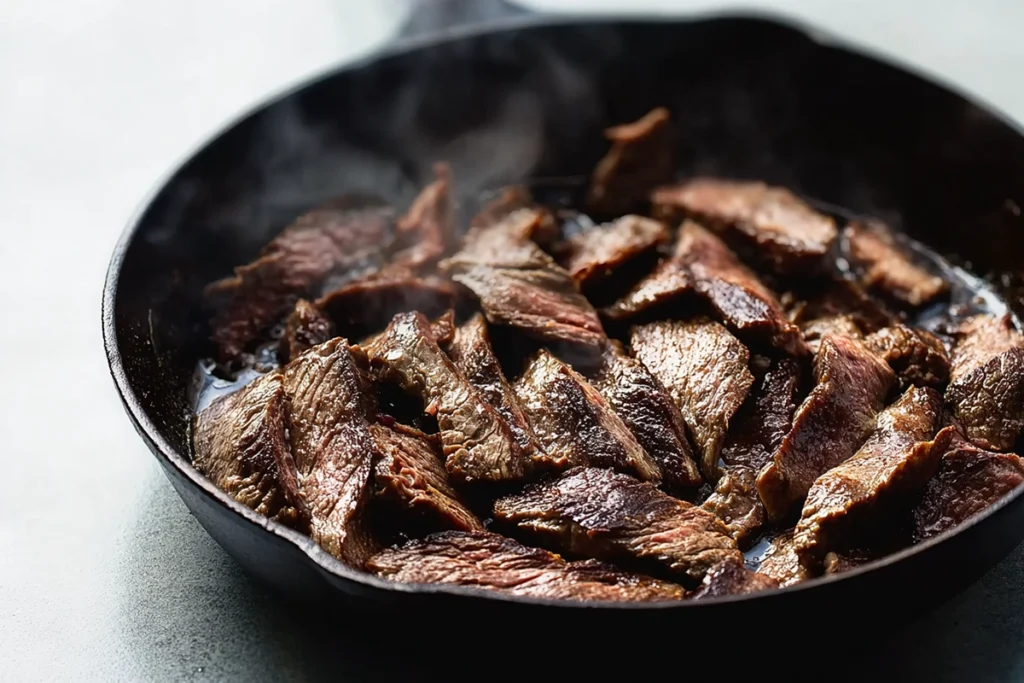
Now the steak. Add it in small batches so the pan crackles loudly instead of sighing. You want an aggressive sizzle and fast browning—edges turning brown in under a minute, meat still supple when you press it with tongs. If it starts to steam, the pan’s too crowded. Pull the steak as soon as it’s browned; overcooking here means toughness later.
Bringing It All Back Together
Lower the heat slightly before adding the garlic. It should hit the oil and release a sharp, toasted aroma within seconds—fragrant, not acrid. As soon as you smell it, everything goes back into the pan: vegetables, steak, and any juices they’ve released. Stir gently, just enough to coat and warm everything through. The skillet should look full but not wet, glossy with oil rather than pooled with liquid.
The Broiler Finish That Seals the Deal
Scatter the mozzarella and Parmesan evenly over the surface and slide the skillet under the broiler. Watch closely. The cheese should melt into a unified layer, bubbling at the edges and blistering lightly on top. You’ll smell dairy and browned beef mingling—that’s your finish line. Pull it while the cheese is stretchy and molten, not split or oily.
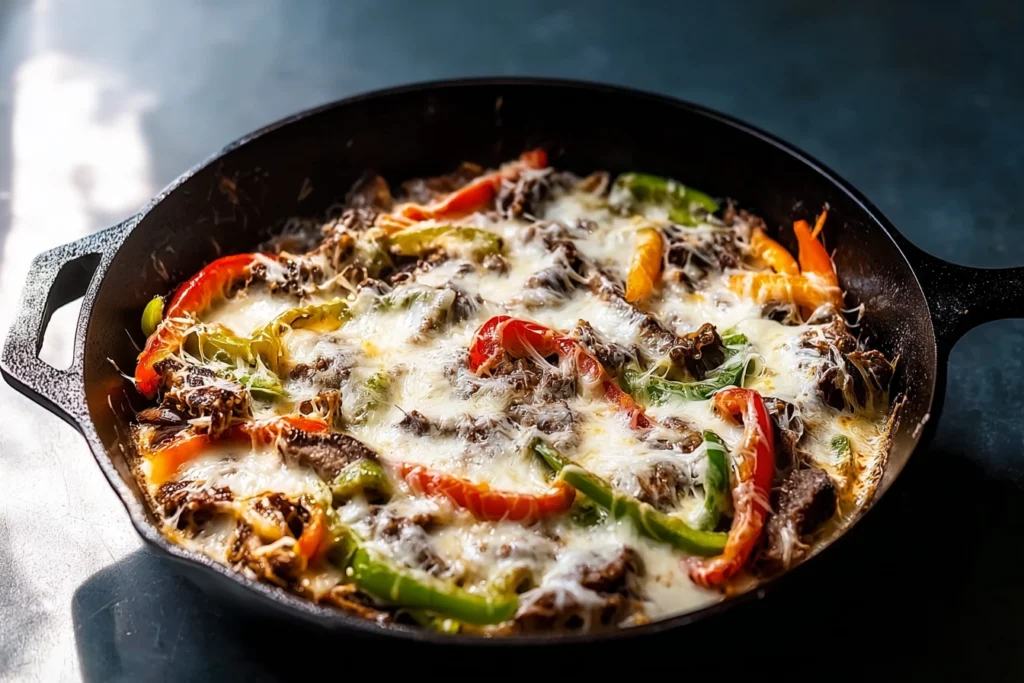
At this point, the Philly cheesesteak skillet is done cooking and ready to serve. The steak stays tender, the vegetables stay sweet, and the cheese binds everything together instead of drowning it.
Swaps That Actually Work (and One That Doesn’t)
If you’re short on steak, leftover cooked beef can step in—but only if you treat it gently. Slice it thin cold, then fold it in right before the cheese goes on so it warms without tightening. Rotisserie chicken works the same way if you’re aiming for a different protein night; shred it cold and keep it out of the high-heat sear entirely.
Cheese swaps need restraint. Provolone can replace mozzarella if you want a sharper, more traditional edge, but keep the Parmesan for depth. What doesn’t work is piling on pre-shredded “cheese blends.” They melt unevenly and leave the Philly cheesesteak skillet greasy instead of luscious.
As for vegetables, skipping mushrooms is fine if you hate them—but don’t add watery extras like zucchini. They release too much moisture and undo all that careful browning.
How to Serve It in the Real World
This is rich, savory food, so serve it with intention. Spoon the Philly cheesesteak skillet straight into toasted hoagie rolls if you want the full sandwich experience—toast matters here, or the bread collapses fast. For a no-bread option, serve it alongside a crisp green salad with a sharp vinaigrette to cut the cheese and beef.
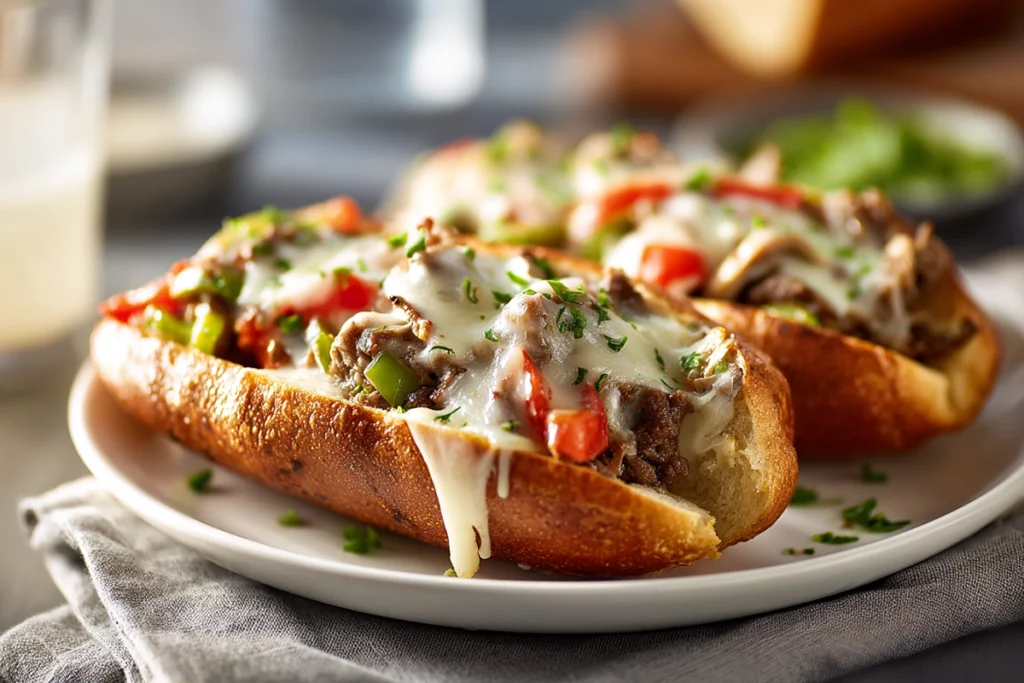
If you’re feeding a crowd, roasted potatoes or oven fries make sense—they soak up stray cheese without competing for attention. Avoid heavy sides like mac and cheese; this dish already carries enough weight on its own.
Last Tip Before You Start
Have everything sliced and ready before the pan heats up. Once the skillet is hot, this recipe moves fast, and stopping to prep mid-cook is how garlic burns and steak overcooks.
This Philly cheesesteak skillet rewards attention, not perfection. Cook it once, notice how the pan sounds and smells at each stage, and the next time it’ll feel automatic. That’s when it becomes an easy weeknight staple instead of just another recipe you tried once.
Common Questions About Philly Cheesesteak Skillet
Can I make this ahead without the steak drying out?
This dish is best cooked close to serving because steak tightens as it cools and reheats. If you need a head start, prep the vegetables and slice the steak up to a day ahead, then keep them separate and well covered in the fridge. Cook everything fresh when you’re ready to eat; that’s the only way the Philly cheesesteak skillet keeps its tender texture and glossy finish.
What’s the best pan if I don’t have an oven-safe skillet?
Use your heaviest stovetop skillet to cook everything, then transfer the mixture to a shallow baking dish before adding the cheese. Broil it there until melted and bubbling. Don’t try to melt the cheese fully on the stovetop instead—the bottom will overcook before the top finishes.
Can I use pre-sliced beef from the store?
You can, but check it carefully. If the slices are thicker than paper-thin, cut them down further before cooking. Thick pre-sliced beef steams instead of sears, which costs you flavor and tenderness. The Philly cheesesteak skillet depends on fast browning, not long cooking.
How do I keep the cheese from separating under the broiler?
Pull the skillet as soon as the cheese melts and bubbles. If you leave it too long, the fat breaks out and turns greasy. Using whole-milk mozzarella (not low-fat or pre-shredded blends) also matters—it melts smoothly instead of splitting.
Is this freezer-friendly, or is it better fresh?
This recipe is much better fresh. Freezing changes the texture of both the steak and the melted cheese, making them grainy when reheated. If you’re cooking for future meals, refrigerate leftovers for up to three days and reheat gently on the stovetop instead of freezing.
Print
Philly Cheesesteak Skillet
- Total Time: 40 minutes
- Yield: 6 servings 1x
Description
This Philly Cheesesteak Skillet delivers everything you love about a classic cheesesteak—tender seared steak, sweet peppers and onions, and melty cheese—without the sandwich juggling. Cooked in one pan with smart timing, it’s a rich, comforting dinner ready in about 30 minutes.
Ingredients
- 2 pounds rib eye, skirt, flank, or flat iron steak, very thinly sliced
- 1 1/2 teaspoons kosher salt
- 1/2 teaspoon freshly cracked black pepper
- 1/2 pound mushrooms, quartered
- 3 tablespoons extra-virgin olive oil
- 1 medium yellow onion, thinly sliced
- 1 green bell pepper, thinly sliced
- 1 red bell pepper, thinly sliced
- 6 garlic cloves, minced
- 2 cups shredded mozzarella cheese
- 1/2 cup grated Parmesan cheese
- 4 thinly sliced green onions (optional)
- 6 hoagie rolls, toasted (optional)
Instructions
- Season the thinly sliced steak evenly with 1 teaspoon of the salt and the black pepper.
- Heat a medium oven-safe skillet over medium-high heat and add the mushrooms to the dry pan. Sprinkle with the remaining salt and cook until they release moisture and turn golden brown, about 5 minutes.
- Increase the heat to high, add 2 tablespoons of olive oil, then add the onions and bell peppers. Cook, stirring occasionally, until just softened and lightly browned, about 3 to 5 minutes. Transfer vegetables to a plate.
- Add the remaining tablespoon of olive oil to the skillet over high heat. Add the steak in small batches, cooking 1 to 2 minutes per side until browned. Transfer cooked steak to a plate and repeat with remaining steak.
- Reduce heat to medium, add the garlic, and cook until fragrant, about 1 minute.
- Return the steak, vegetables, and any collected juices to the skillet and stir to combine.
- Top evenly with mozzarella and Parmesan. Broil with the rack in the center position until the cheese is melted and bubbling.
- Sprinkle with green onions if using and serve warm, with toasted hoagie rolls if desired.
Notes
- Slice the steak very thin and across the grain for the most tender result.
- Cook the steak in batches to avoid steaming and ensure proper browning.
- Pull the skillet from the broiler as soon as the cheese melts to prevent greasiness.
- Prep Time: 10 minutes
- Cook Time: 30 minutes
- Category: Dinner
- Method: Skillet
- Cuisine: American
Nutrition
- Serving Size: 1 serving
- Calories: 500
- Sugar: 6
- Sodium: 950
- Fat: 34
- Saturated Fat: 15
- Unsaturated Fat: 17
- Trans Fat: 1
- Carbohydrates: 18
- Fiber: 3
- Protein: 38
- Cholesterol: 120