
Slow Cooker Pot Roast: Deeply Tender Beef with Built-In Comfort
There’s a point in the day when the house stops feeling busy and starts feeling settled. It usually happens when the air smells faintly of browned beef, softened onions, and herbs that have been warming for hours instead of minutes. That’s the promise of a slow cooker pot roast—not speed, not flair, but the quiet reassurance that dinner has already handled itself.
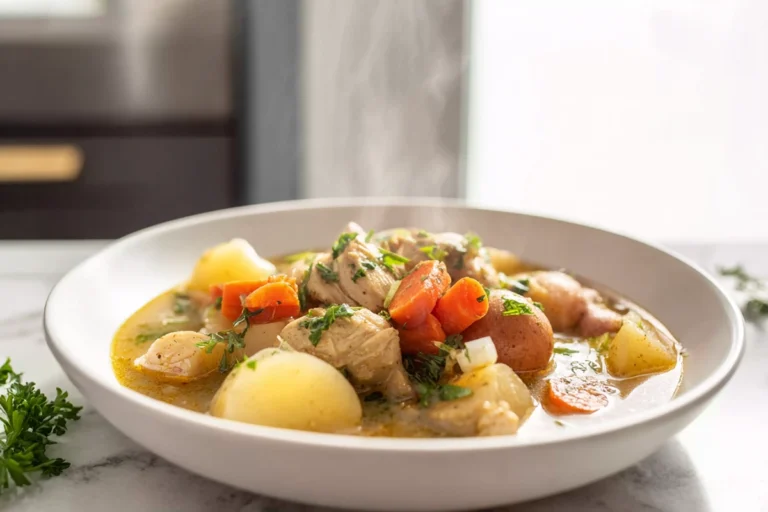
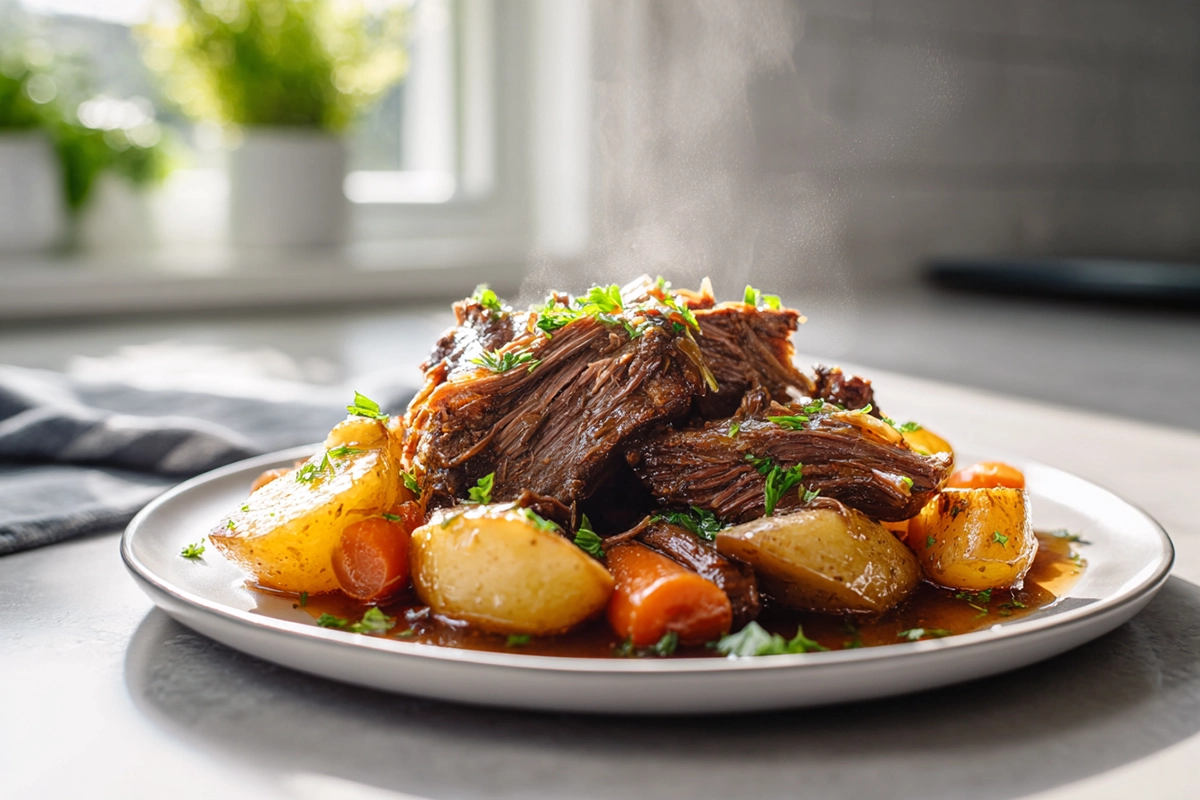
This is the kind of meal that earns its place on repeat. A chuck roast that’s been properly browned, tucked in with whole Yukon gold potatoes and thick carrots, and left alone long enough to relax into itself. The broth isn’t flashy, but it’s layered—beefy, lightly herbal, rounded out with Worcestershire and the flavor pulled straight from the pan where the meat first hit the heat. Nothing here is accidental, and nothing is wasted.
What matters most is restraint. This recipe works because each step does just enough and then stops. The sear is deep but not rushed. The vegetables are cut for survival, not looks. The liquid level is right where it needs to be—enough to braise, not drown. By the time the lid comes off, the roast gives way with a fork, the potatoes hold their shape, and the cooking liquid tastes like it’s been thinking about its job all day.
This slow cooker pot roast isn’t about checking boxes or following a script. It’s about understanding why a few deliberate choices—heat first, patience later—turn basic ingredients into a meal that feels finished before it ever reaches the table.
Table of Contents
Why Chuck Roast and Whole Potatoes Do the Heavy Lifting
A slow cooker pot roast only works as well as the ingredients that can survive long heat without falling apart. Chuck roast is built for this job. It has enough connective tissue to break down slowly, turning firm beef into something you can pull apart with a fork instead of slice with a knife. Leaner cuts dry out before they ever get tender, which is why they never quite deliver that “finished” feeling.
The vegetables matter just as much. Yukon gold potatoes stay intact because of their waxy structure, especially when left whole. Cutting them too small early on turns them into thickener instead of part of the meal. Carrots need to be thick-cut for the same reason—thin slices soften long before the beef does and disappear into the broth.
- Chuck roast (about 3 lb): Marbled enough to become tender over hours; lean cuts won’t break down properly.
- Yukon gold potatoes: Left whole so they hold their shape after a long cook.
- Carrots (thick-cut): Thicker pieces resist turning soft and keep their texture.
If you only have russet potatoes, they’ll work in a pinch, but expect a softer result. In that case, cutting them into larger chunks helps slow the breakdown.
Building Flavor in Layers, Not All at Once
This recipe relies on restraint rather than shortcuts. Flavor is built in stages, starting with fat and heat and ending with time. Olive oil is used sparingly—just enough to brown the beef and soften the onions without turning greasy. That initial browning creates the foundation for everything that follows, especially the gravy.
Onions and garlic aren’t meant to dominate. They soften first so their sharpness fades into sweetness. Beef broth carries the flavor forward, while Worcestershire adds depth without announcing itself. Fresh thyme and rosemary are used deliberately; dried herbs can turn muddy after eight hours.
- Olive oil: Used in two stages—first for browning, then for softening aromatics.
- Yellow onion & garlic: Provide sweetness and structure once softened.
- Beef broth: Forms the base of the cooking liquid and later becomes gravy.
- Worcestershire sauce: Adds umami without overpowering the beef.
- Fresh thyme & rosemary: Infuse slowly; dried versions can become bitter.
If you’re low on broth, water can fill the gap, but expect a lighter gravy. Salt and pepper should be added thoughtfully here—enough to season the liquid, knowing it will concentrate slightly as the roast cooks.
These ingredients don’t compete with each other. They settle in, do their work quietly, and let time handle the rest.

The One Step That Makes or Breaks Slow Cooker Pot Roast
This recipe earns its flavor before the slow cooker ever gets turned on. When the chuck roast hits hot olive oil, it should sizzle loudly, not steam. The surface needs to darken into a deep brown crust, especially around the edges, and the smell should be unmistakably beefy with a hint of toasted fat. If the pan looks dry and quiet, the heat isn’t high enough.
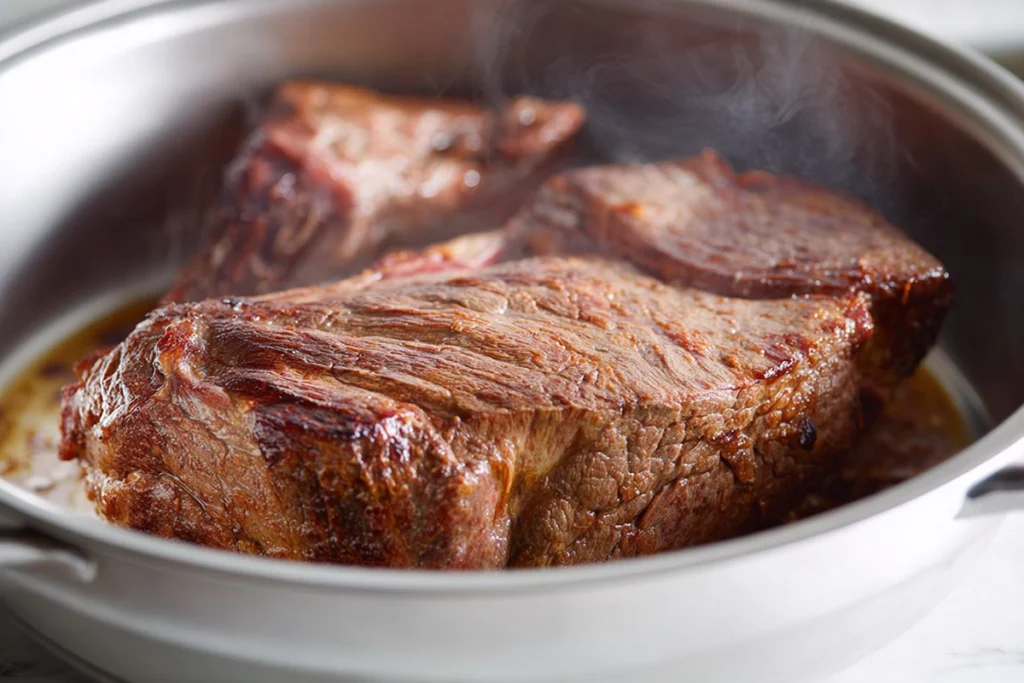
Once the roast is moved aside, the onions go into that same pan while it’s still hot. They should soften quickly, picking up the browned bits left behind, and smell sweet rather than sharp. When the garlic goes in, it only needs seconds—just until you smell it bloom. Anything longer and it turns bitter, which you’ll taste hours later.
This is the foundation of the entire dish. Without it, even a well-timed easy slow cooker dinner can taste flat.
The Long Cook: What Should (and Shouldn’t) Be Happening at Hour Six
After everything is layered into the slow cooker, the work shifts from action to patience. The liquid should barely move during cooking—no bubbling, no rolling boil. If you listen closely, there should be silence. That’s how collagen breaks down slowly instead of tightening.
Around the six-hour mark, the kitchen smells fuller and rounder, not sharper. The roast should feel tender when pressed with a fork but still hold together. Potatoes should slide in easily with the fork tip while staying intact, and carrots should resist just slightly when pierced.
Opening the lid releases heat and resets the environment. Trust that the slow cooker is doing exactly what it’s supposed to do with this roasted beef dinner, even though no oven is involved.
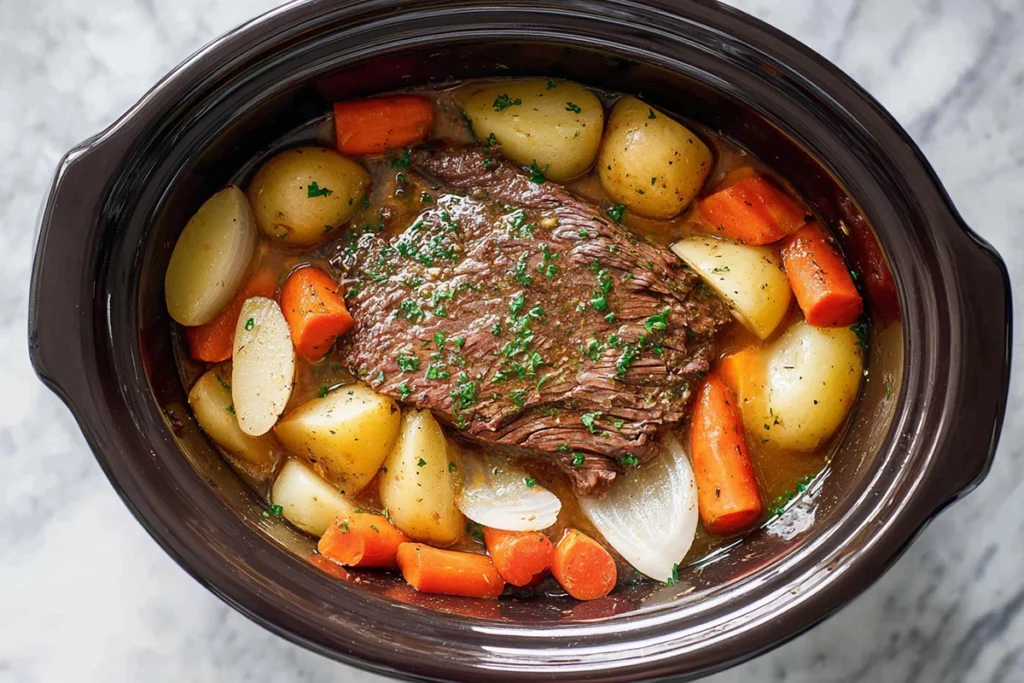
Turning the Cooking Liquid Into Real Gravy, Not Just Sauce
When the roast and vegetables come out, the liquid left behind is already flavorful—it just needs structure. Straining removes softened onions and excess fat, leaving behind a broth that smells deeply savory. When heated on the stove, it should steam gently, not boil aggressively.
As the cornstarch slurry goes in, whisk constantly. You’ll feel the change before you see it—the liquid thickens just enough to coat the back of a spoon. The aroma becomes richer, almost meaty-sweet, and the gravy settles into something that belongs on the plate, not pooled beneath it.
This final step ties everything together, turning slow-cooked beef and vegetables into a complete, finished meal rather than just a pot of components.
Practical Adjustments That Don’t Break the Dish
This is a forgiving recipe, but only within reason. If you’re short on fresh herbs, you can substitute dried thyme and rosemary, but cut the amount back by at least half. Dried herbs concentrate over long cooking times and can turn the broth muddy if overused. If your pantry only has salted beef broth, reduce the added salt at the start and adjust at the end instead—once the liquid concentrates, there’s no easy way back.
Potatoes are the one place to be careful. Yukon golds are ideal, but if all you have are russets, keep them in large chunks and accept that they’ll soften more. Red potatoes can work too, though they stay firmer and won’t absorb quite as much flavor. Avoid baby carrots here; they soften too quickly and lose their structure long before the roast is ready.
As for thickening, cornstarch is optional. If you prefer a looser, broth-style finish, skip it entirely. Flour isn’t a good substitute at this stage—it needs longer cooking to lose its raw taste and can leave the gravy cloudy.
How This Pot Roast Gets Served at the Table
A slow cooker pot roast is best served family-style, where the beef can be shredded into large pieces and the vegetables stay generous and unfussy. Spoon the gravy over everything just before it hits the table so it coats instead of pooling. This is a hearty, stick-to-your-ribs meal, so keep the sides simple.
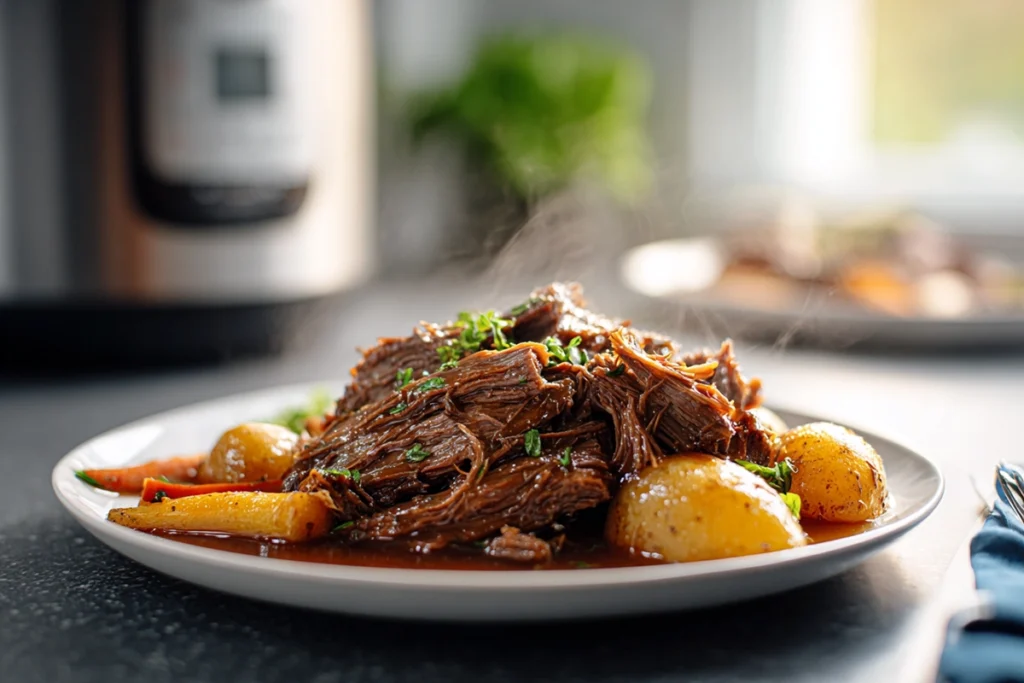
A loaf of crusty bread earns its place here—not as decoration, but as a tool for catching gravy. Buttered egg noodles work well if you’re feeding extra people and want to stretch the meal without diluting it. If you want something fresh on the side, a simple green salad with a sharp vinaigrette cuts through the richness without competing.
Leftovers reheat beautifully and often taste better the next day. The flavors settle, the gravy thickens slightly, and the beef stays tender.
A Few Final Notes Before You Make It Again
If the roast feels tough at the end of cooking, it isn’t overdone—it’s undercooked. Chuck roast only becomes tender after enough time has passed, so give it another hour and check again. Rushing this dish is the quickest way to miss what makes it work.
Skimming excess fat from the cooking liquid before making gravy is worth the minute it takes. The result is cleaner, richer, and easier to spoon.
This is the kind of recipe that earns trust. Once you’ve made it a few times, it stops feeling like a special occasion dish and starts becoming part of your rhythm. A slow cooker pot roast like this doesn’t ask for much—just a little attention at the start, patience in the middle, and a table ready when it’s done.
Get inspired with more mouthwatering recipes! Follow me on Facebook and Pinterest for new cooking ideas every week.
FAQ
Can I skip browning the roast before putting it in the slow cooker?
You technically can, but the flavor won’t be the same. Browning creates deep, savory notes that the slow cooker alone can’t replicate. If you skip it, the beef will still be tender, but the overall taste will be flatter.
Why is my pot roast still tough after hours in the slow cooker?
This usually means it needs more time, not less. Chuck roast becomes tender only after the connective tissue fully breaks down, which can take longer depending on size and slow cooker temperature. Give it another 45–60 minutes and check again.
Should the beef be fully covered with liquid?
No, it shouldn’t be submerged. The liquid should come partway up the roast so it braises rather than boils. Too much liquid can dilute the flavor and keep the meat from developing the right texture.
Can I cook this slow cooker pot roast on high instead of low?
Cooking on high can work in a pinch, but the texture won’t be quite as relaxed and tender. Low heat gives the collagen time to break down properly, which is what makes the beef fork-tender. If using high, expect a slightly firmer result.
Why did my vegetables turn too soft?
Vegetables usually get too soft if they’re cut too small or placed too close to the bottom. Keeping potatoes whole and carrots in large chunks helps them hold their shape during long cooking. The slow cooker heat is gentle, but time still matters.
Print
Pot Roast Slow Cooker Recipe
- Total Time: 8 hours 25 minutes
- Yield: 6 servings 1x
- Diet: Halal
Description
A classic slow cooker pot roast with fork-tender chuck beef, whole Yukon gold potatoes, carrots, and a rich homemade gravy. Reliable, hearty comfort food made for real kitchens.
Ingredients
- 1 1/2 tablespoons olive oil
- 1 (3 pound) chuck roast
- Salt
- Freshly ground black pepper
- 1 medium yellow onion, halved and sliced thick
- 5 garlic cloves, minced
- 1 1/4 cups beef broth
- 2 teaspoons Worcestershire sauce
- 1 tablespoon fresh thyme, minced
- 1 tablespoon fresh rosemary, minced
- 2 1/2 pounds Yukon gold potatoes, whole
- 5 medium carrots, cut into large chunks
- 2 1/2 tablespoons cornstarch (optional, for gravy)
- 3 tablespoons beef broth (for slurry)
- 2 tablespoons fresh parsley, chopped
Instructions
- Pat the chuck roast dry and season generously with salt and black pepper.
- Heat olive oil in a heavy pan until hot and sear the roast until deeply browned on both sides.
- Transfer the roast to the slow cooker.
- In the same pan, sauté the onion until softened, then add garlic and cook briefly until fragrant.
- Deglaze the pan with beef broth, Worcestershire sauce, thyme, and rosemary, scraping up browned bits.
- Layer potatoes and carrots over the roast and pour the broth mixture evenly on top.
- Cover and cook on low until the beef is fork-tender and vegetables are cooked through.
- Remove the roast and vegetables and shred the beef.
- Strain the cooking liquid and simmer with cornstarch slurry if making gravy.
- Serve the roast and vegetables with gravy spooned over and garnish with parsley.
Notes
- Chuck roast becomes tender only after enough time has passed; if it feels tough, continue cooking.
- Keep potatoes whole or in large chunks so they hold their shape.
- Skim excess fat from the cooking liquid before making gravy for best texture.
- Prep Time: 25 minutes
- Cook Time: 8 hours
- Category: Dinner
- Method: Slow Cooker
- Cuisine: American
Nutrition
- Serving Size: 1 plate
- Calories: 550
- Sugar: 6
- Sodium: 780
- Fat: 32
- Saturated Fat: 12
- Unsaturated Fat: 18
- Trans Fat: 0
- Carbohydrates: 28
- Fiber: 4
- Protein: 42
- Cholesterol: 135
What Are Our Readers Saying?
There are no reviews yet. Be the first one to write one.