Vegetable Fritters That Turn Simple Veggies Into Pure Comfort

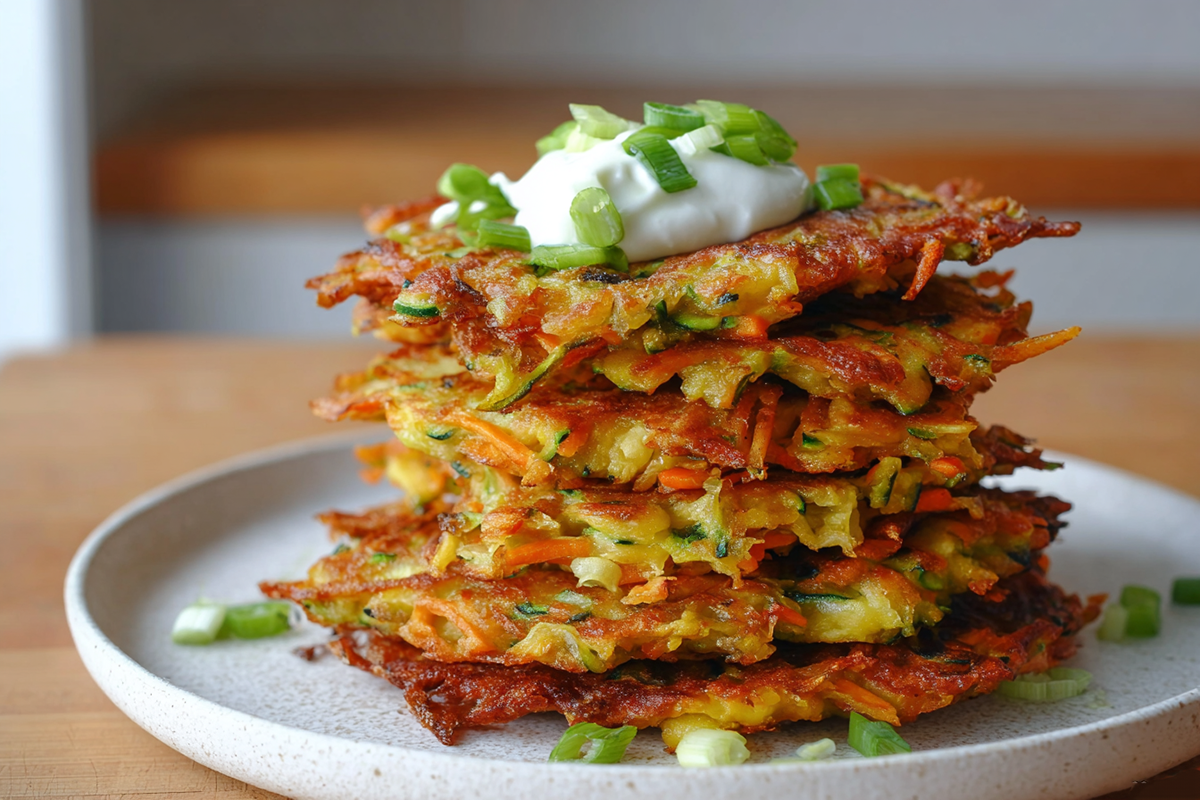
Some nights, you just want something warm and satisfying without pulling out every pot in the kitchen. Maybe you’ve got a couple of vegetables sitting in the fridge, a skillet on the stove, and not much patience for a complicated recipe. That’s exactly where these vegetable fritters shine. They’re crisp around the edges, tender in the middle, and come together fast enough for a weeknight—yet feel special enough to linger over at the table.
If you’ve ever struggled to get veggies on the plate in a way everyone actually enjoys, this recipe might become one of those quiet kitchen wins you come back to again and again.
What Makes These Vegetable Fritters Actually Work
At their heart, good fritters are all about balance. You want enough moisture to keep them soft, but not so much that they turn soggy. You want structure without heaviness. Over the years, I’ve learned that the real magic isn’t in adding more ingredients—it’s in how you treat the vegetables and how you cook them.
Squeezing out excess liquid, keeping the batter simple, and letting the oil get properly hot before cooking makes all the difference. These small steps are what turn a pile of shredded vegetables into crispy veggie fritters you’ll be proud to serve.
Ingredients You’ll Need (And Why Each One Matters)
Here’s what goes into these fritters, along with a little insight into why each ingredient earns its place.
- 2 cups shredded zucchini
- 2 cups shredded carrots
- 2 cloves garlic, minced
- 2/3 cup all-purpose flour
- 2 large eggs, lightly beaten
- 1/3 cup sliced scallions (green and white parts)
- 2 tablespoons olive oil, plus more as needed for the pan
- Salt and black pepper, to taste
- Sour cream or plain yogurt, for serving
Zucchini brings moisture and tenderness, while carrots add a subtle sweetness and color. The eggs and flour work together to bind everything without weighing the fritters down. Garlic and scallions keep the flavor savory but gentle, letting the vegetables stay front and center.

Preparing the Vegetables the Right Way
Managing Moisture (The Step Most Recipes Rush)
Zucchini holds a surprising amount of water, and if you skip this step, your fritters will never crisp properly. After shredding the zucchini, place it in a colander and sprinkle it lightly with salt. Let it sit for about 10 minutes. You’ll notice moisture pooling underneath—that’s exactly what you want.
Using your hands, grab small handfuls and squeeze firmly until no more liquid drips out. The zucchini should feel noticeably drier and slightly compacted. This step alone can be the difference between soggy fritters and ones that hold together beautifully.
Mixing Without Overworking
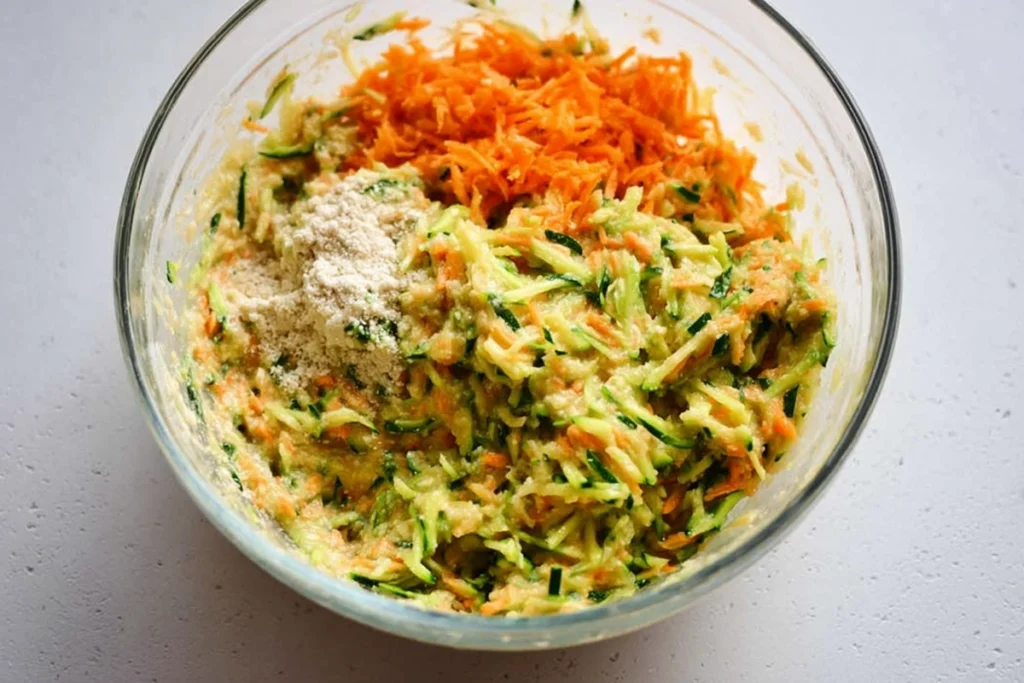
Transfer the squeezed zucchini to a large bowl and add the shredded carrots, garlic, flour, eggs, scallions, salt, and pepper. Stir just until everything is combined. The mixture should look thick and scoopable, not runny. Overmixing can make fritters dense, so once everything comes together, it’s time to cook.
Cooking Method: Pan-Frying for Crispy Edges and Tender Centers
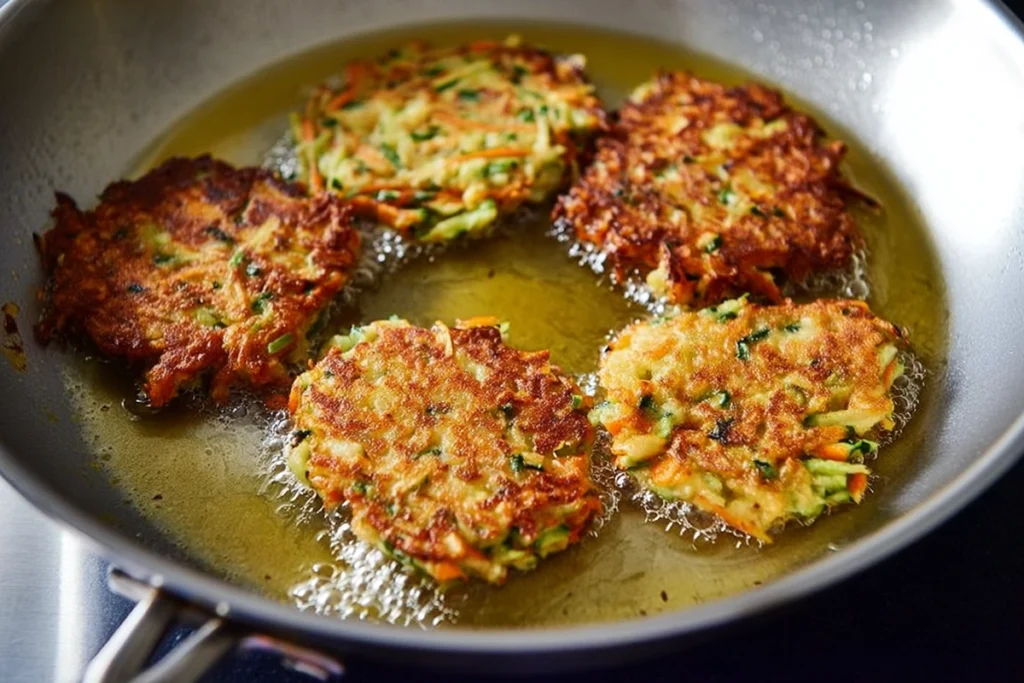
Set a large skillet over medium-high heat and add enough olive oil to lightly coat the bottom. When the oil begins to shimmer, it’s ready. If the oil isn’t hot enough, the fritters will absorb it instead of crisping.
Scoop about 3 tablespoons of the vegetable mixture into the pan, gently flattening each mound with the back of the spoon. Leave space between them so they cook evenly. You should hear a soft sizzle when they hit the pan.
Let the fritters cook undisturbed for 2 to 3 minutes. This gives them time to form a golden crust. Flip them carefully and cook for another 1 to 2 minutes until both sides are crisp and deeply golden. Transfer them to a paper towel–lined plate and season lightly with salt while they’re hot.
Doneness, Texture, and Common Fixes
This is where many pan fried fritters go wrong, so trust your senses. A properly cooked fritter should feel firm when gently pressed and hold together easily. The edges will be crisp, and the center will be tender but not wet.
If your fritters are browning too quickly, lower the heat slightly. If they seem soft or greasy, the oil likely wasn’t hot enough. Should the mixture feel loose as you cook, a tablespoon of flour stirred into the remaining batter can help tighten things up.
Cooking in batches and adjusting the heat as needed keeps every fritter consistent from first to last.
Easy Variations That Still Respect the Recipe
One of the joys of this quick veggie recipe is how adaptable it is. You can swap in yellow squash for zucchini, or use shredded sweet potato for a slightly heartier version. Corn kernels add little pops of sweetness, especially in summer.
Fresh herbs like parsley or dill work well, and a pinch of smoked paprika or cumin can add warmth without overwhelming the vegetables. If you add cheese, keep it modest—too much can make the fritters heavy and less crisp.
Serving Ideas for Any Time of Day
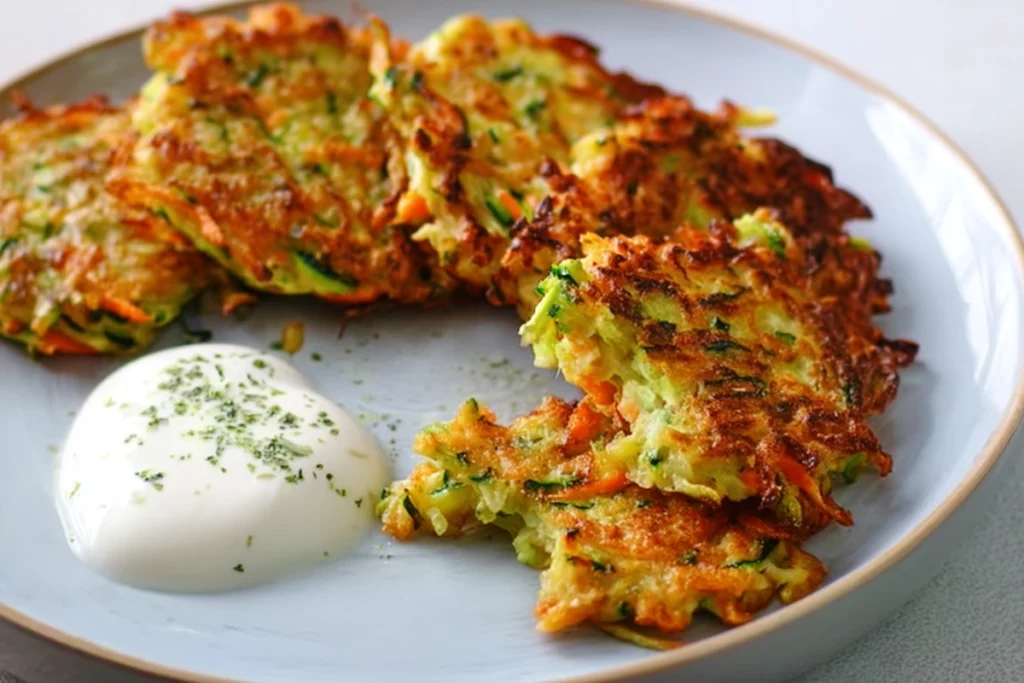
These easy vegetable fritters are wonderfully flexible. Serve them hot with sour cream or yogurt for dipping, or alongside a simple salad for a light lunch. They make a comforting side dish for roasted chicken or grilled fish, and they’re even lovely topped with a poached egg for breakfast or brunch.
No matter how you serve them, they tend to disappear quickly—so making a double batch is rarely a bad idea.
Storage, Reheating, and Make-Ahead Tips
Leftover fritters can be stored in an airtight container in the refrigerator for up to three days. To reheat, place them in a skillet over medium heat or in a 375°F oven until warmed through and crisp again. The microwave will soften them, so it’s best avoided if you can.
You can prep the vegetables ahead of time, but wait to mix and cook until just before serving. That keeps the texture right where you want it.
There’s something deeply comforting about a recipe like this—simple, reliable, and made with ingredients you probably already have. These vegetable fritters are the kind of dish that fits quietly into real life, offering warmth and ease without fuss. Once you make them, you’ll likely find yourself reaching for the skillet again the next time you need a little comfort on the table.
FAQ
Why are my vegetable fritters soggy instead of crispy?
This usually happens when the vegetables hold too much moisture or the oil isn’t hot enough. Make sure you squeeze the zucchini very well before mixing, and wait until the oil is shimmering before adding the batter. Crispy fritters need both dry vegetables and proper heat.
Can I bake vegetable fritters instead of frying them?
You can bake them, but the texture will be softer and less crisp. Baking works best if you lightly oil a baking sheet and flip the fritters halfway through. Just keep in mind they won’t have the same golden crust as pan-fried fritters.
Why do my fritters fall apart when flipping?
If fritters break, the batter may be too loose or they may not have cooked long enough on the first side. Let them cook until a firm crust forms before flipping, and avoid moving them too early. A slightly thicker batter also helps them hold together.
Can I make vegetable fritters ahead of time?
Vegetable fritters are best fresh, but you can cook them ahead and reheat later. Rewarm them in a skillet or oven to bring back some crispness. Avoid microwaving if you want to keep the texture pleasant.
What’s the best oil to use for pan-fried fritters?
Olive oil works well and adds good flavor, but any neutral oil with a moderate smoke point will also work. The key is using enough oil to coat the pan and keeping it hot throughout cooking. That’s what helps the fritters brown evenly.
Print
Vegetable Fritters
- Total Time: 25 minutes
- Yield: 12 fritters 1x
- Diet: Vegetarian
Description
Crispy vegetable fritters made with zucchini and carrots, pan-fried until golden and tender inside. A simple, comforting recipe that works for weeknight meals, light lunches, or an easy side dish.
Ingredients
- 2 cups shredded zucchini
- 2 cups shredded carrots
- 2 cloves garlic, minced
- 2/3 cup all-purpose flour
- 2 large eggs, lightly beaten
- 1/3 cup sliced scallions (green and white parts)
- 2 tablespoons olive oil, plus more for pan frying
- Salt, to taste
- Black pepper, to taste
- Sour cream or plain yogurt, for serving
Instructions
- Place the shredded zucchini in a colander, sprinkle lightly with salt, and let sit for 10 minutes. Squeeze out as much liquid as possible.
- Transfer the zucchini to a large bowl and add the carrots, garlic, flour, eggs, scallions, salt, and pepper. Stir until just combined.
- Heat olive oil in a large skillet over medium-high heat until shimmering.
- Scoop about 3 tablespoons of batter into the pan for each fritter and flatten slightly.
- Cook for 2 to 3 minutes until golden on the bottom, then flip and cook another 1 to 2 minutes until crisp and cooked through.
- Transfer to a paper towel-lined plate, season lightly with salt, and repeat with remaining batter.
- Serve warm with sour cream or yogurt.
Notes
- Be sure to squeeze the zucchini very well to avoid soggy fritters.
- Keep the oil hot but not smoking for the best crisp texture.
- Fritters are best served fresh but can be reheated in a skillet or oven.
- Prep Time: 20 minutes
- Cook Time: 5 minutes
- Category: Side Dish
- Method: Pan-fried
- Cuisine: American
Nutrition
- Serving Size: 1 fritter
- Calories: 90
- Sugar: 2 g
- Sodium: 180 mg
- Fat: 6 g
- Saturated Fat: 1 g
- Unsaturated Fat: 5 g
- Trans Fat: 0 g
- Carbohydrates: 8 g
- Fiber: 1 g
- Protein: 3 g
- Cholesterol: 35 mg