Raspberry Truffles: A Crisp Chocolate Shell With a Soft, Bright Center

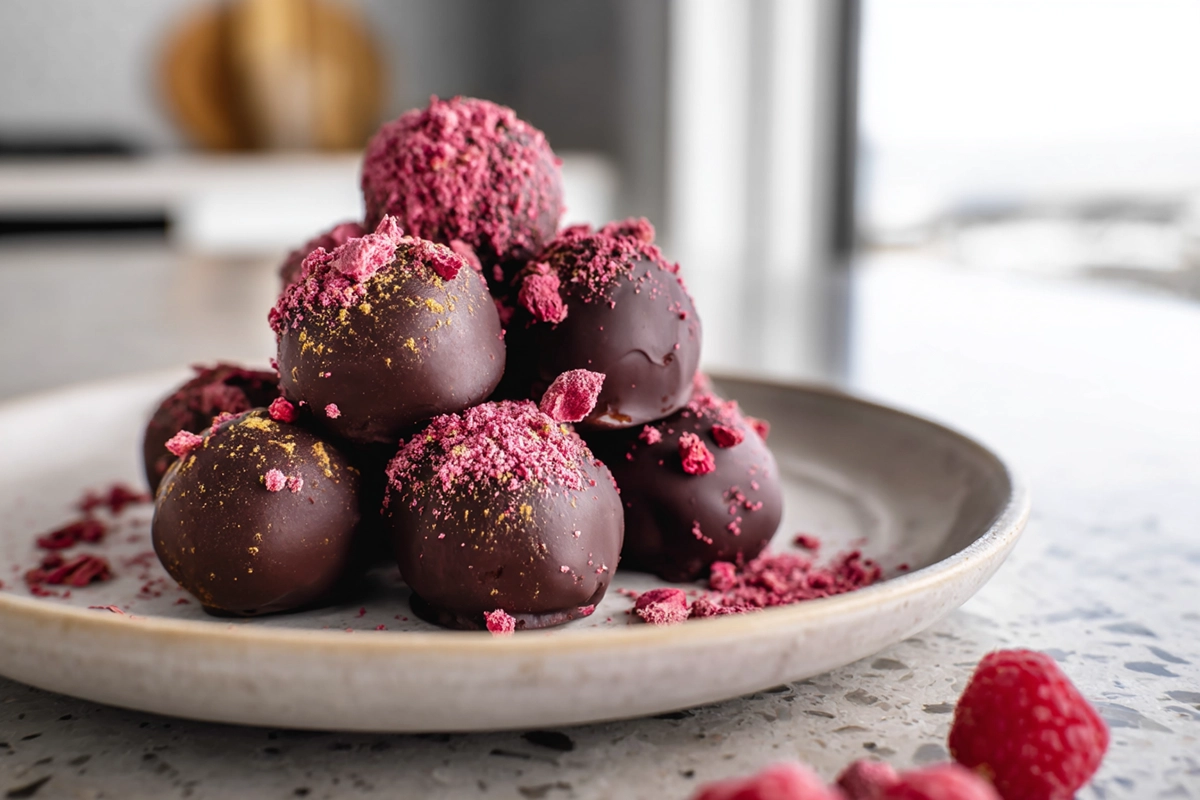
There’s a specific moment these truffles are built around. The chocolate coating sets just enough to give a quiet snap, then gives way to a center that’s cool, creamy, and sharply scented with raspberries. It’s not a sugar rush kind of sweet. It’s balanced, deliberate, and a little indulgent in a way that feels earned. The kind of dessert you serve in small portions, because anything more would miss the point.
What makes Raspberry Truffles work is restraint. No oven. No complicated shaping. No guessing when something is “done.” The flavor comes from freeze-dried raspberries, not juice or purée, which means you get brightness without moisture interfering with the chocolate. White chocolate forms the base, softened with butter and cream so it melts instead of crumbles. The bittersweet coating isn’t decoration — it’s there to keep the sweetness in check.
This is the sort of recipe that rewards paying attention to the quiet steps. Heating cream gently instead of boiling it. Letting the chocolate sit before stirring. Chilling until the texture tells you it’s ready, not the clock. Skip those details, and the truffles still look fine, but they won’t feel right when you bite into them.
Before anything gets rolled or dipped, the focus is on building the filling properly. Once that center is right — smooth, fragrant, and firm enough to hold its shape — the rest of the process becomes steady and predictable. That’s where this recipe starts to feel comfortable, even elegant, without ever becoming precious.
Table of Contents
Freeze-Dried Raspberries: Sharp Flavor Without the Juice Problem
The backbone of these Raspberry Truffles is raspberry flavor that’s clean and focused, not jammy or wet. That’s why freeze-dried raspberries matter so much here. Fresh berries or purée introduce water, and water is what makes chocolate seize, split, or turn grainy. Freeze-dried raspberries solve that problem completely. They bring acidity, color, and aroma without disrupting the structure of the filling.
Pulverizing them into a fine powder — and then taking the extra minute to sift out the seeds — is what keeps the center smooth instead of sandy. The powder also gives you control. You can taste the ganache before chilling and adjust the intensity instead of locking yourself into whatever the fruit decides to do. That control is what separates a dependable truffle from a pretty one that eats poorly.
- Freeze-dried raspberries: Concentrated flavor without moisture; always sift to remove seeds for a clean texture.
What Actually Goes Into Raspberry Truffles (And Why Each Part Earns Its Place)
This is a short ingredient list, but every component is doing real work. The center is built on white chocolate, which provides sweetness and structure, not just flavor. It needs fat and cream to soften it, it sets too hard and loses that melt-in-the-mouth quality that defines a good white chocolate raspberry truffle.
Butter rounds the edges. It’s subtle, but without it the filling tastes sharp instead of creamy. Heavy cream creates a true ganache rather than a fudge-like paste, which is what allows the truffles to stay tender even after chilling.
The outer coating is just as intentional. Bittersweet chocolate isn’t there for contrast alone — it reins in the sweetness and gives the truffle a clean snap when you bite in. Milk chocolate works, but it pushes the balance too far toward sweet and flattens the raspberry note.
- White chocolate: Forms the base of the filling; lower-quality chips won’t melt smoothly.
- Unsalted butter: Softens the set and smooths the mouthfeel.
- Heavy cream: Creates a stable ganache instead of a stiff candy center.
- Bittersweet chocolate: Balances sweetness and gives structure to the coating.
Substitution note: If you only have salted butter, it will work, but expect a slightly sharper finish. Avoid swapping the cream for milk — the fat content is what keeps the filling cohesive.
Together, these choices are what make chocolate raspberry truffles feel indulgent but controlled, elegant without being fragile, and repeatable enough to trust for gifting or entertaining.

The Make-or-Break Moment Happens Before You Ever Roll a Ball
The process starts quietly, and that’s where most people rush. The cream should be heated just until you see faint steam and the surface tremble — no bubbling, no rolling boil. When it’s poured over the white chocolate and butter, the bowl should go still for a few minutes. That pause matters. You’ll notice the chocolate softening on its own, edges losing their shape, the smell turning creamy instead of sugary.
When you stir, do it slowly and deliberately. The mixture should come together glossy and smooth, with no streaks or graininess. This is where the raspberry powder goes in, a little at a time, until the flavor smells bright and slightly sharp — like opening a bag of fresh berries. Once covered and chilled, the ganache should feel firm but pliable, similar to softened butter straight from the fridge.
Rolling, Chilling, and Dipping Without Losing Your Patience
When the mixture is ready, it shouldn’t cling aggressively to your fingers. If it does, it needs more time in the refrigerator. Properly chilled, it rolls cleanly into smooth balls that hold their shape without cracking. The surface should feel cool and dry, not sticky or soft.
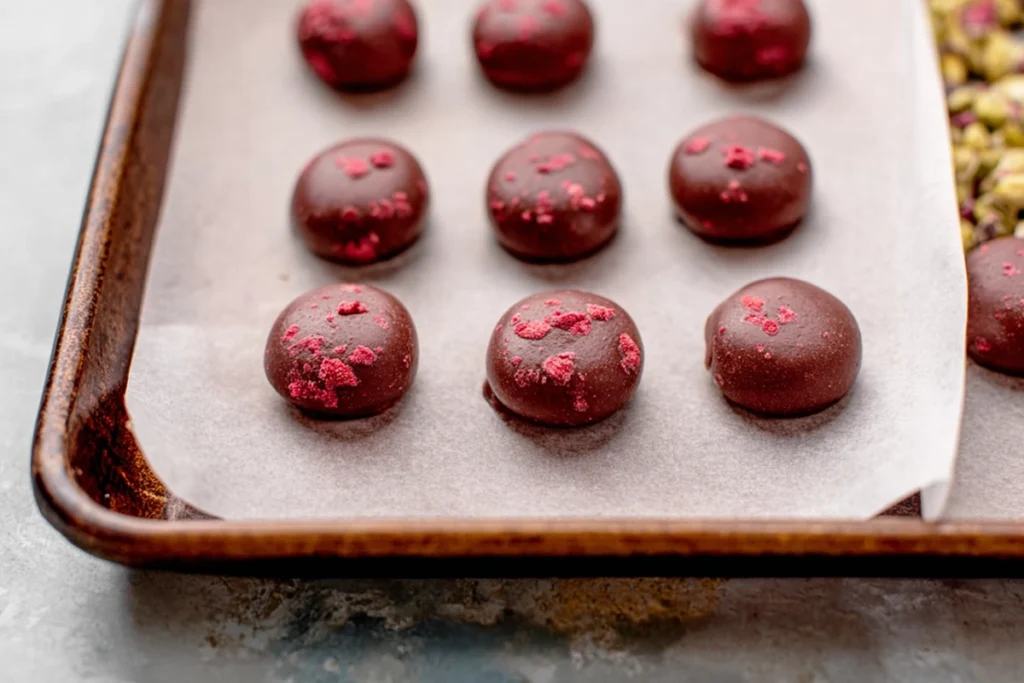
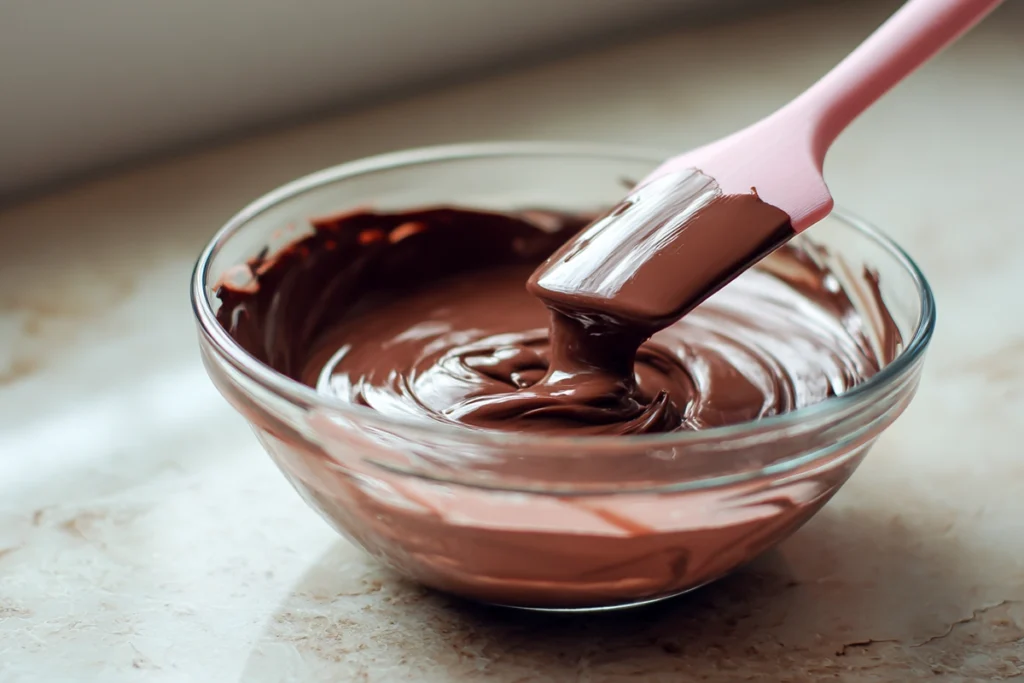
After a short second chill, the truffles are ready for coating. Melt the bittersweet chocolate gently until it’s fluid and glossy, thick enough to cling but loose enough to drip cleanly. As each truffle is dipped, you should hear a faint tap as excess chocolate falls back into the bowl. Set them down and resist touching — the coating firms quickly, setting into a thin shell that gives white chocolate raspberry truffle centers their signature snap.
Knowing When Raspberry Truffles Are Actually Finished
Freshly dipped truffles don’t look finished right away. The chocolate dulls slightly as it sets, losing its shine and turning satin-smooth. When you lift one, it should feel solid and cool, not soft or tacky underneath.
At room temperature, chocolate raspberry truffles should yield gently when bitten, the shell cracking cleanly before the center melts. If the coating smears instead of snapping, the chocolate was too warm. If the center feels crumbly, it was over-chilled. When both are right, the texture tells you everything before the flavor ever does.
When to Tweak These Truffles (And When Not To)
There’s room to adjust these, but only in ways that respect how chocolate behaves. Swapping the bittersweet coating for semisweet chocolate works if you prefer a softer contrast, though the finished truffles will taste noticeably sweeter and less sharp. Milk chocolate is possible, but it pushes the balance far enough that the raspberry flavor starts to fade instead of standing out.
The raspberry itself can be nudged without changing the structure. Adding more freeze-dried raspberry powder deepens the flavor without affecting texture, as long as it’s mixed in before chilling. What doesn’t work well is liquid flavoring — raspberry extract or purée introduces moisture and dulls the clean finish of the center. If you’re tempted, it’s better to stop than to “fix” a batch that was already on track.
How Raspberry Truffles Are Best Served
These are meant to be served in small numbers, at a cool room temperature, where the shell snaps cleanly, and the center softens on contact. Two per person is usually enough. More than that, the richness starts to compete with itself.
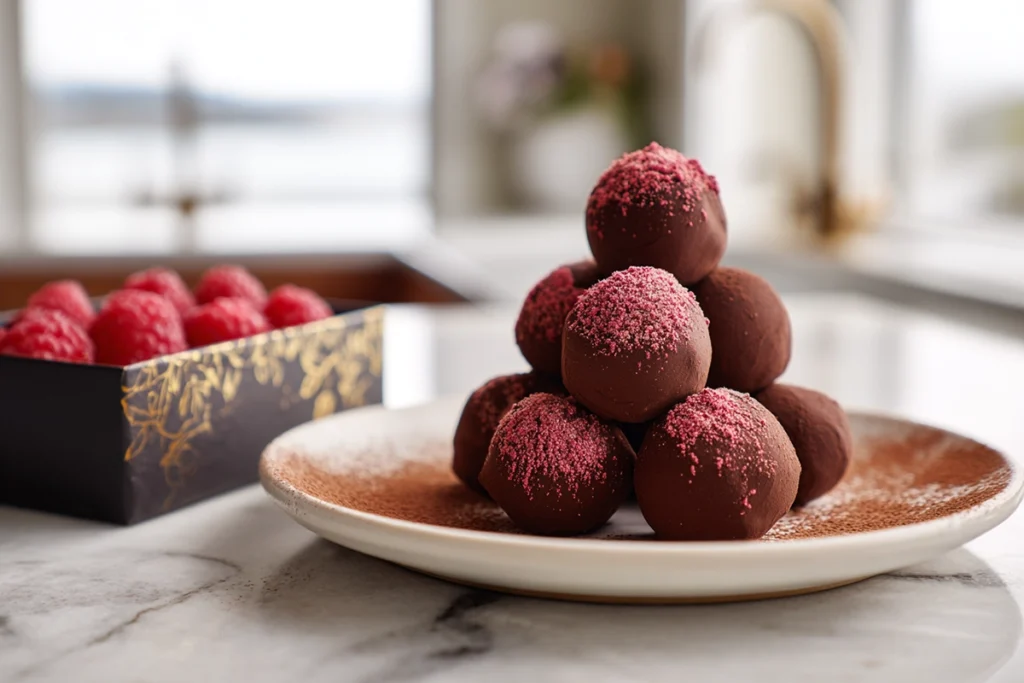
Raspberry Truffles shine alongside something bitter or dry. Coffee and espresso pull out the cocoa notes in the coating. A dry sparkling wine cuts through the sweetness and keeps the finish light. On a dessert table, they work best after a simple meal — roast chicken, baked pasta, or anything comforting that doesn’t already lean sweet.
For gifting, let the chocolate fully set before packing. Layer them in a shallow container so the coating stays intact, and keep them cool but not cold.
A Few Last Things That Make These Better Every Time
Chocolate remembers how it was treated. Gentle heat, patience during chilling, and minimal handling all show up in the final texture. If something feels off while you’re working — too soft, too sticky, too warm — stopping and waiting almost always fixes it.
Once you’ve made them once, Raspberry Truffles stop feeling fancy and start feeling familiar. That’s when they become reliable — the kind of dessert you keep in mind for birthdays, holidays, or quiet evenings when you want something small, deliberate, and made with care.
Get inspired with more mouthwatering recipes! Follow me on Facebook and Pinterest for new cooking ideas every week.
FAQ
Why did my truffle centers turn grainy instead of smooth?
This usually happens when the cream was too hot or the chocolate was stirred too aggressively. White chocolate is sensitive, so gentle heat and slow stirring matter more than speed. The texture should look glossy and fluid before chilling, not thick or dull.
Can I make Raspberry Truffles ahead of time?
Yes, these truffles are well-suited for making ahead. Once coated and fully set, they keep their texture best when stored in an airtight container in the refrigerator for up to a week. Bring them to cool room temperature before serving so the center softens properly.
Is it normal for the mixture to feel very soft before chilling?
That’s completely normal. The filling should look loose and creamy right after mixing, almost like a thick sauce. It firms up as it chills, and forcing it too early usually leads to misshapen truffles.
Can I use milk chocolate instead of bittersweet for the coating?
You can, but the finished truffles will be noticeably sweeter and less balanced. Bittersweet chocolate helps offset the white chocolate center and keeps the raspberry flavor from getting lost. If you prefer milk chocolate, expect a softer contrast.
Why are my truffles sweating after I take them out of the fridge?
Condensation happens when cold truffles are exposed to warm air too quickly. Let them sit uncovered for a few minutes in a cool spot so the temperature adjusts gradually. This helps keep the chocolate coating smooth and dry.
Print
Raspberry Truffles
- Total Time: 3 hours
- Yield: 24 truffles 1x
Description
Elegant no-bake raspberry truffles with a crisp chocolate shell and a smooth, bright white chocolate raspberry center.
Ingredients
- 2 cups freeze-dried raspberries (about 1.6 ounces)
- 14 ounces white chocolate chips or finely chopped white chocolate
- 2 tablespoons unsalted butter, room temperature
- 3/4 cup heavy cream
- 14 ounces bittersweet chocolate chips or finely chopped bittersweet chocolate
Instructions
- Pulse the freeze-dried raspberries in a food processor until a fine powder forms, then sift to remove seeds.
- Combine the white chocolate and butter in a heatproof bowl.
- Heat the heavy cream gently until it simmers, then pour over the chocolate and let sit for 5 minutes.
- Stir slowly until smooth, then mix in raspberry powder to taste.
- Cover and refrigerate until firm enough to roll.
- Scoop and roll the mixture into balls and chill again until firm.
- Melt the bittersweet chocolate gently.
- Dip each truffle into the melted chocolate, tap off excess, and let set.
Notes
- Store truffles in an airtight container.
- Keep at room temperature for up to 3 days or refrigerate for up to 1 week.
- Bring to cool room temperature before serving for best texture.
- Prep Time: 30 minutes
- Category: Dessert
- Method: No-Bake
- Cuisine: American
Nutrition
- Serving Size: 1 truffle
- Calories: 289
- Sugar: 29
- Sodium: 35
- Fat: 14
- Saturated Fat: 10
- Unsaturated Fat: 3.4
- Trans Fat: 0.04
- Carbohydrates: 37
- Fiber: 3
- Protein: 3
- Cholesterol: 15