Reuben Sliders: Crisp Tops, Juicy Middles, Zero Sog

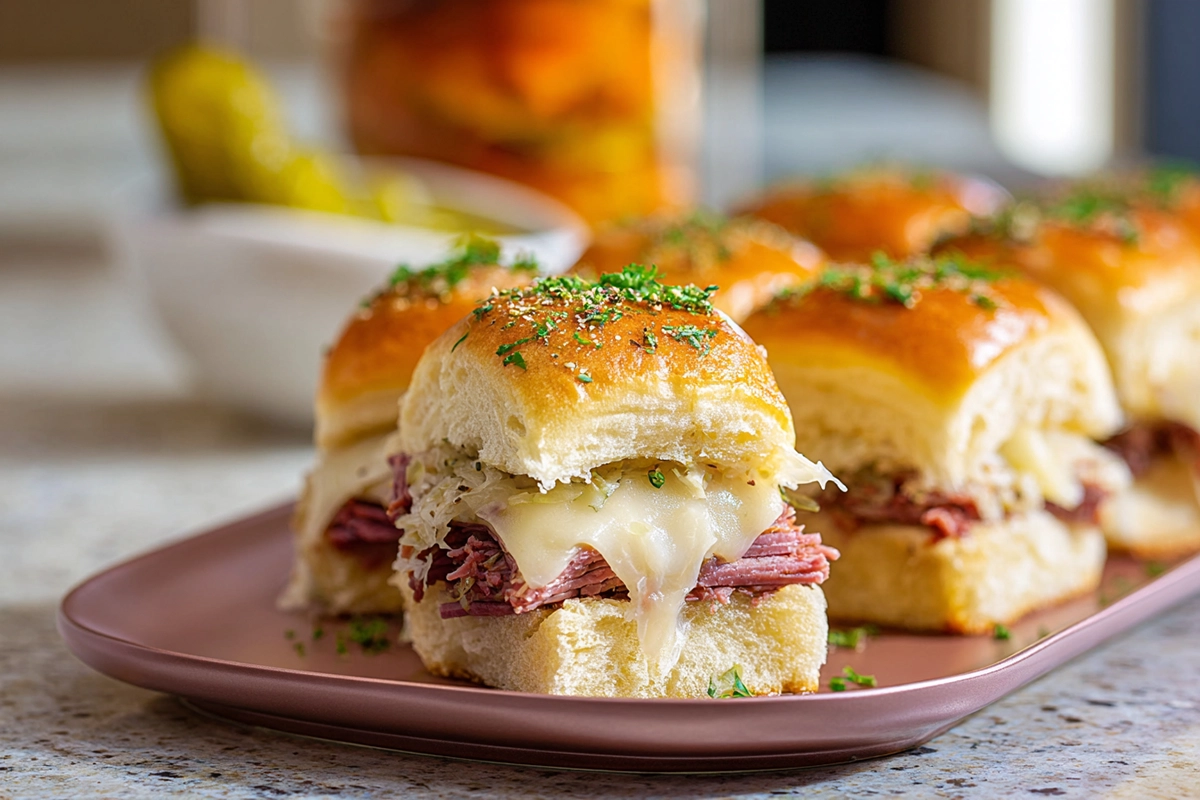
The problem with most Reuben sliders is predictable: soggy bottoms, dry meat, and a sad puddle of sauerkraut soaking into bread that never had a chance. You bite in expecting sharp, savory bliss and get steamed sandwich regret instead. This recipe fixes that. The payoff is immediate—golden tops crackle under your fingers, the inside stays hot and juicy, and the whole kitchen smells like melted butter, toasted garlic, and something faintly tangy you can’t quite name until you’re already reaching for a second one.
The fix isn’t fancy, and it isn’t precious. It’s about control. The sauerkraut gets squeezed until it behaves. The Swiss is layered so it melts inward, not outward. The rolls—yes, Hawaiian—pull their weight by soaking up flavor without collapsing. Then comes the move most people rush: a butter wash spiked with Worcestershire, dried onion, and garlic, brushed into every nook so the tops bake into something closer to a pretzel lid than a dinner roll. Foil traps heat long enough to warm the center, then steps aside so the tops brown instead of steam.
You don’t need special equipment or a deli slicer. A baking dish, a pastry brush, and a little patience do the job. What you get is the full Reuben experience—salty meat, tangy dressing, mellow cheese—compressed into something you can serve to a crowd without standing over a stove. If you’ve been burned by limp sliders before, this is where it turns around.
Table of Contents
Why These Reuben Sliders Don’t Turn Soggy
The entire logic of these Reuben sliders is moisture control. Every ingredient is chosen—or handled—to keep liquid where it belongs and flavor where you actually taste it. Bread that collapses, meat that dries, and sauerkraut that leaks are not accidents; they’re chemistry problems. This recipe solves them on purpose.
The rolls matter more than people think. King’s Hawaiian rolls aren’t just sweet; they’re enriched with fat and sugar, which slows down moisture absorption. That gives you a buffer when you’re stacking warm meat, dressing, and sauerkraut. Rye slider buns can work, but they’re drier and less forgiving—if you use them, you’ll need to be even stricter about draining and layering.
The dressing is spread thin on both sides for a reason. Thousand Island (or Russian) dressing acts as a fat barrier between bread and filling, slowing sogginess while carrying acidity across every bite. Too much, though, and you defeat the purpose. This is lubrication, not soup.
- King’s Hawaiian Rolls: Soft but structured; they absorb butter without disintegrating.
- Thousand Island or Russian Dressing: Fat + acid = moisture control and balance. Use restraint.
- Sauerkraut (well-drained): Flavor without free liquid. Squeezing it dry is non-negotiable.

Swiss, Sauerkraut, and the Meat Question (This Matters More Than You Think)
Swiss cheese is doing quiet structural work here. It melts smoothly at oven temperatures and firms back up as it cools, which helps hold the layers together when you cut the sliders. Sharper cheeses break and oil out; Swiss stays cooperative. Nine slices may sound arbitrary, but it’s calibrated to cover without flooding.
The meat choice shifts the entire personality of the sliders. Pastrami brings smoke and spice but also more surface fat, which helps keep things juicy. Corned beef is saltier and denser; it benefits from thinner slicing so it warms through before drying out. Roast beef is milder and leaner—still workable, but it leans harder on the dressing and butter for richness.
Sauerkraut is there for contrast, not volume. Its acidity cuts the butter and cheese, but only if it’s dry enough to concentrate its flavor. Wet kraut dulls everything around it.
- Swiss Cheese: Predictable melt, mild flavor, structural glue.
- Pastrami / Corned Beef / Roast Beef: Each changes salt, fat, and chew—slice thin and adjust expectations.
- Pickles (optional): Extra crunch and acid if you want sharper contrast.
The Butter Brush Is the Make-or-Break Moment
Once the sliders are stacked and capped, pause. This is where Reuben sliders go from decent to memorable. When you melt the butter and stir in the Worcestershire, onion, garlic, and poppy seeds, smell it before you touch a brush. It should hit you with savory warmth—garlic first, then something deeper and almost meaty from the Worcestershire. If it smells flat, it needs another stir, not more ingredients.
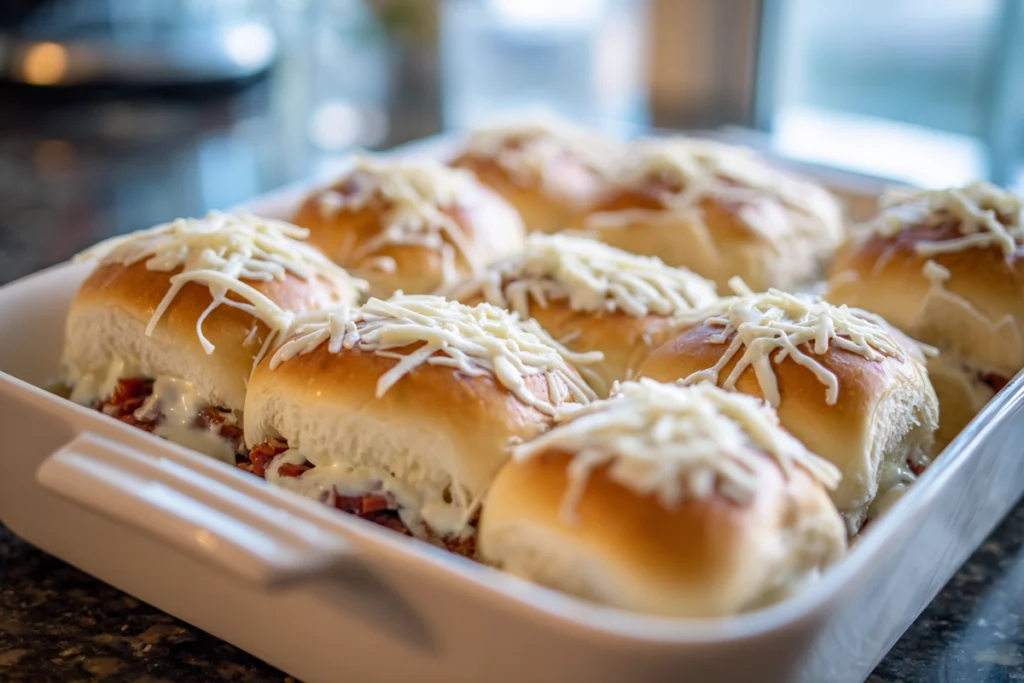
Brush generously, but don’t flood. You’re painting the tops, not drowning them. Watch how the butter slips into the seams between rolls—that’s where flavor hides. When it hits the bread, the surface should darken slightly and look glossy, not soaked. That sheen is your insurance policy against dry tops.
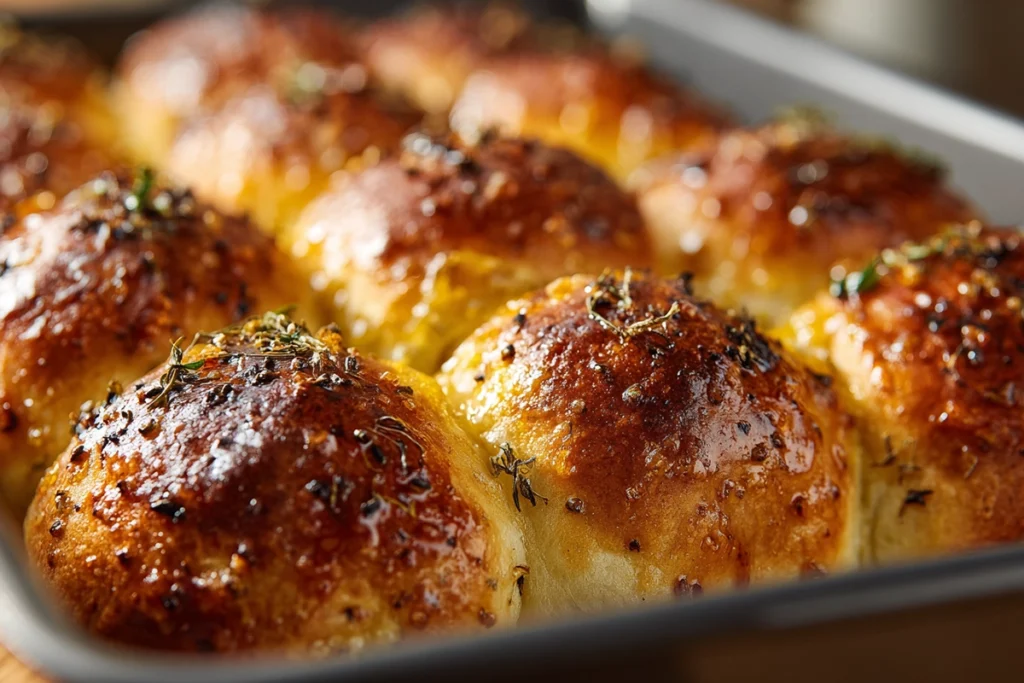
Covering the sliders with foil isn’t about speeding things up; it’s about control. In the oven, you shouldn’t hear loud sizzling yet—just a soft, steady murmur as the heat warms the centers. When you peel back the foil near the end, listen for the change. The sound sharpens, the butter starts to sizzle, and the tops take on a deeper golden color. That’s when you know you’re finishing, not just baking.
Things That Go Wrong (and How Grandma Would Fix Them)
If the cheese starts escaping the sides, it’s telling you it’s too hot, too fast. Slide the pan down a rack and let the heat even out. The Swiss should melt inward, not sprint for the edge.
If the bottoms feel damp when you lift one, the sauerkraut wasn’t dry enough—or the sliders were cut too soon. Let them rest a minute. The bread firms as steam settles, and the layers hold together instead of sliding apart.
When everything is right, the tops feel lightly crisp under your fingers, the middle yields with gentle pressure, and the smell is unmistakable: toasted butter, warm bread, tangy dressing, and meat that smells richer than it did going in. That’s the moment to cut. Not before.
Swaps That Actually Work (and One That Doesn’t)
If you’re working with what’s in the fridge, there’s some flexibility here—but not unlimited freedom. Pastrami, corned beef, and roast beef are all fair game, as long as they’re sliced thin and layered evenly. If the meat feels thick or stiff straight from the fridge, let it sit out for a few minutes; cold, dense meat is how you end up with hot bread and a lukewarm center.
Rye slider buns can stand in for Hawaiian rolls if you want a more traditional Reuben flavor. Just know they’re less forgiving. They don’t absorb butter the same way, so go lighter on the dressing and be extra diligent about drying the sauerkraut. Swiss cheese is non-negotiable if you want clean melts—provolone will slide out, cheddar will oil off, and mozzarella turns the whole thing into something else entirely.
One thing that does not work: skipping the foil because you want “extra crispy” sliders. You’ll get browned tops and cold middles. Crisp comes at the end, not the beginning.
When to Serve These and What to Put Next to Them
These Reuben sliders shine when people are milling around—game days, holiday afternoons, or that awkward hour between lunch and dinner. They’re rich and salty, so pair them with something sharp or crunchy. Dill pickles aren’t garnish; they’re balance. A simple vinegar-based coleslaw works better than anything creamy, cutting through the butter and cheese instead of adding to it.
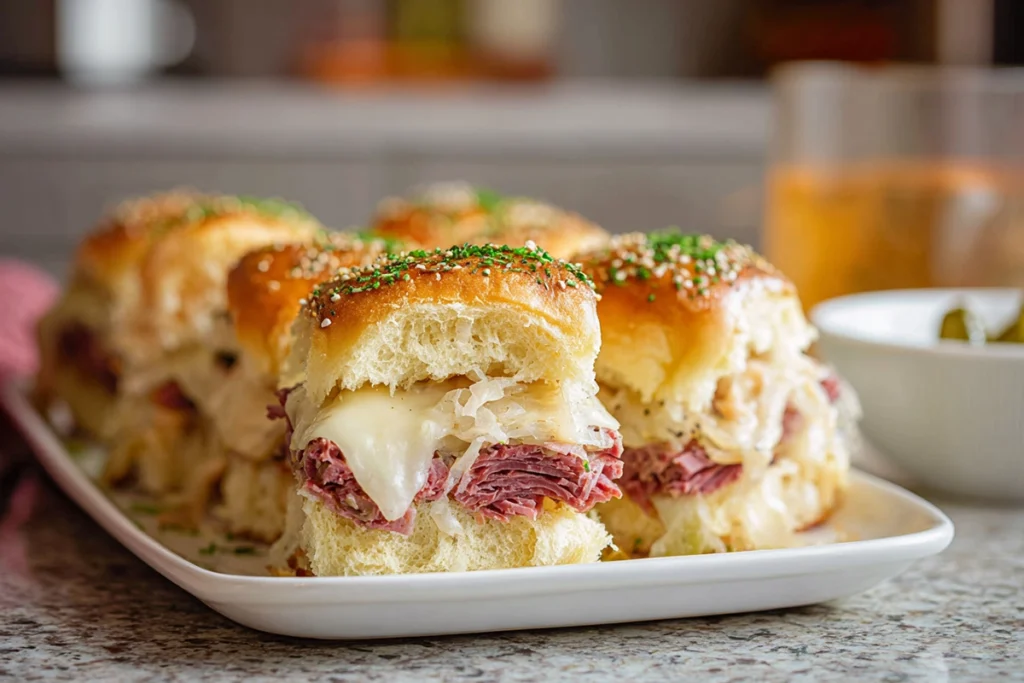
If you want something warm on the side, keep it plain. Oven fries or kettle chips do the job without competing. This isn’t the place for loaded sides or heavy casseroles. Let the sliders carry the weight.
They also reheat better than you’d expect. Wrap leftovers in foil and warm them gently in the oven until the centers loosen and the tops regain their sheen. The microwave will undo all your good work.
These are the kind of sliders that disappear faster than planned, even when people insist they’ll “just have one.” They’re familiar, satisfying, and just controlled enough to feel intentional. Make them once, and you’ll understand why this is the version worth keeping.
Get inspired with more mouthwatering recipes! Follow me on Facebook and Pinterest for new cooking ideas every week.
Common Questions About Reuben Sliders
Can I make Reuben sliders ahead of time without ruining the texture?
You can assemble the sliders a few hours ahead, but stop before brushing on the butter. Cover the pan tightly and refrigerate so the bread doesn’t start absorbing moisture too early. When you’re ready to bake, let the pan sit at room temperature for about 15 minutes, then brush with the seasoned butter and bake as written. This keeps the centers warm and the tops crisp instead of soggy.
What’s the best substitute if I don’t like sauerkraut?
Use thinly sliced dill pickles or well-drained coleslaw mix tossed lightly with a splash of pickle juice. You’re replacing acidity and crunch, not bulk. Avoid sweet slaws or anything creamy—the dressing already fills that role, and doubling it will mute the flavor instead of balancing it.
Can these be made on rye slider buns instead of Hawaiian rolls?
Yes, but you have to adjust your expectations and technique. Rye slider buns are drier and less enriched, so they don’t tolerate excess moisture. Go lighter on the dressing, be meticulous about squeezing the sauerkraut dry, and don’t skip the foil phase in the oven. Done right, you’ll get a more traditional deli-style Reuben slider with less softness and more chew.
How do I reheat leftovers without drying them out?
Wrap the sliders tightly in foil and reheat them in a 325°F oven until the centers are warm and the cheese relaxes again. This gentle heat brings the bread back to life without scorching the tops. Avoid the microwave—it turns the bread rubbery and separates the layers, undoing what made the Reuben sliders work in the first place.
Are Reuben sliders better baked or warmed in an air fryer?
They are better baked, full stop. Baking allows the centers to heat through while the tops brown gradually under the butter glaze. An air fryer blasts the exterior too fast, leaving you with hot crusts and cold middles. If you’re reheating one or two sliders, the air fryer can work at a low temperature, but for cooking them initially, the oven is the right tool.
Print
Reuben Sliders
- Total Time: 45 minutes
- Yield: 12 sliders 1x
- Diet: Dairy-Free
Description
These Reuben sliders deliver crisp, buttery tops and juicy centers without soggy bread. Built with Swiss cheese, pastrami or corned beef, well-drained sauerkraut, and a smart oven method that keeps everything balanced and flavorful.
Ingredients
- 1 package King’s Hawaiian rolls (12 count)
- 1/2 cup Thousand Island or Russian dressing
- 3/4 pound pastrami, corned beef, or roast beef, thinly sliced
- 1 cup sauerkraut, drained and squeezed dry
- 9 slices Swiss cheese
- 1/4 cup butter, melted
- 1 teaspoon Worcestershire sauce
- 1 teaspoon dried minced onion
- 1 garlic clove, crushed
- 1 teaspoon poppy seeds (optional)
- 2 teaspoons fresh parsley, minced (optional)
- 12 pickle slices (optional)
Instructions
- Preheat the oven to 350°F and position a rack in the middle.
- Drain the sauerkraut thoroughly and squeeze out excess moisture with paper towels.
- Slice the Hawaiian rolls horizontally and spread dressing lightly on both cut sides.
- Place the bottom half of the rolls in a baking dish and layer with meat, sauerkraut, and Swiss cheese.
- Replace the top buns.
- Mix melted butter with Worcestershire sauce, dried onion, garlic, poppy seeds, and parsley.
- Brush the butter mixture generously over the tops of the rolls.
- Cover tightly with foil and bake until the centers are hot and the cheese is melted.
- Remove foil and continue baking until the tops are golden and glossy.
- Rest briefly, slice into individual sliders, and serve with pickles if desired.
Notes
- Squeeze the sauerkraut very dry to prevent soggy sliders.
- Use thinly sliced meat so the centers heat evenly.
- Covering with foil first ensures warm middles before browning the tops.
- Reheat leftovers wrapped in foil in a low oven for best texture.
- Prep Time: 15 minutes
- Cook Time: 30 minutes
- Category: Appetizer
- Method: Baking
- Cuisine: American
Nutrition
- Serving Size: 1 slider
- Calories: 320
- Sugar: 6 g
- Sodium: 720 mg
- Fat: 18 g
- Saturated Fat: 9 g
- Unsaturated Fat: 8 g
- Trans Fat: 0 g
- Carbohydrates: 26 g
- Fiber: 2 g
- Protein: 14 g
- Cholesterol: 55 mg