
Perfect Rib Eye Steak: How to Cook a Juicy, Flavor-Packed Classic Every Time
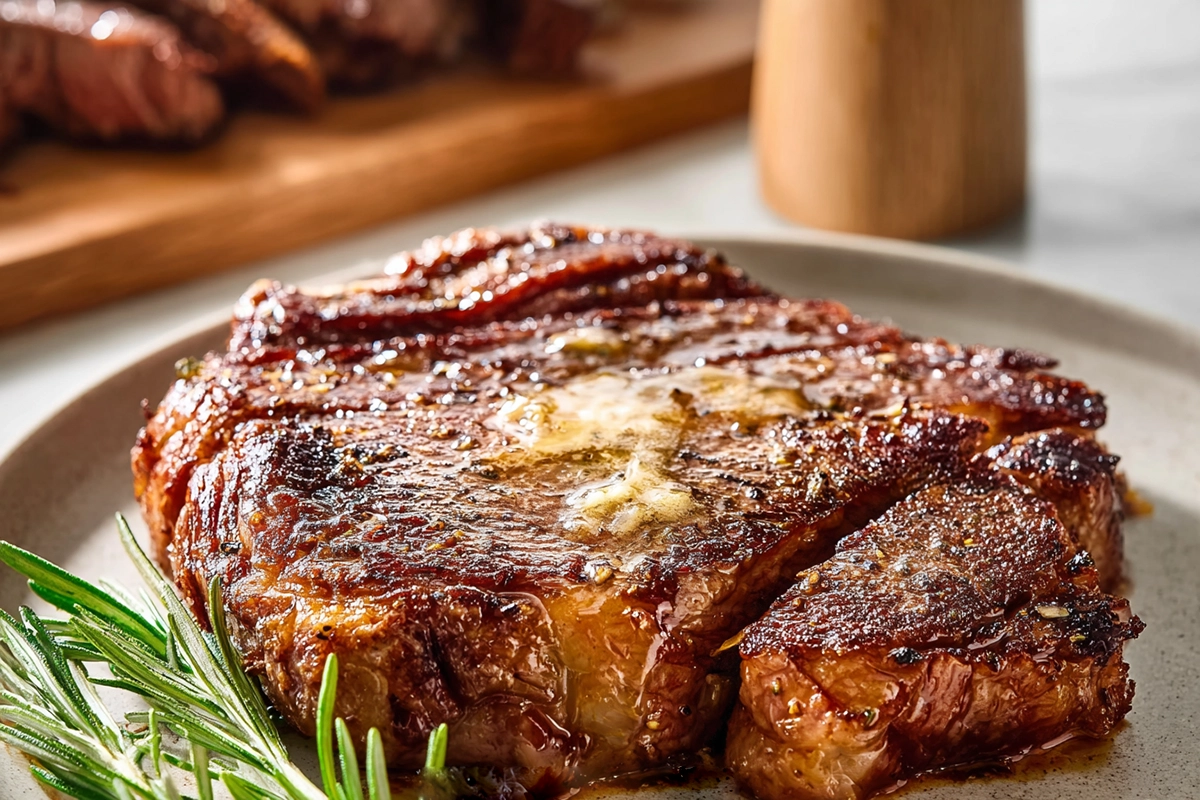
There’s something deeply satisfying about hearing that first sizzle when a thick rib eye steak hits a hot pan. Maybe it’s the smell of the butter mingling with the meat, or that comforting sound that promises a hearty, restaurant-quality dinner right in your own kitchen. Whatever it is, cooking steak at home feels powerful — a moment of confidence where you control the sear, the flavor, and the finish.
If you’ve ever wondered how steakhouses manage to get that golden crust with a tender, melt-in-your-mouth center, the secret isn’t just in fancy equipment. It’s all about patience, heat control, and understanding your cut of meat. The rib eye steak happens to be one of the most forgiving and rewarding cuts to master — rich, marbled, and flavorful enough to stand on its own with just salt and pepper.
Table of Contents
What Is a Rib Eye Steak & Why It’s So Loved
A rib eye steak comes from the rib section of the cow, typically between ribs six and twelve. It’s known for its exceptional marbling — those beautiful streaks of fat running through the meat that render down as it cooks, keeping the steak juicy and tender.
You’ll find two main styles: bone-in (often called cowboy or tomahawk) and boneless. The bone-in version tends to have a slightly deeper flavor and dramatic presentation, while the boneless option cooks a bit faster and evenly on a skillet or grill.
What really makes the rib eye special is its balance of tenderness and bold, beefy flavor. When you cut into it, you get that buttery texture of a filet combined with the deep savoriness of a sirloin. It’s a steak that doesn’t need much dressing up — a simple sear and a touch of butter are enough to make it shine.
How to Select & Prep Your Rib Eye Steak for Best Results
Choosing the Right Cut
When shopping, look for USDA Choice or Prime grades with plenty of marbling. The more white flecks you see, the richer the flavor. Aim for steaks that are at least 1¼ to 1½ inches thick — thinner cuts cook too quickly, leaving less room for that golden crust to form without overcooking the inside.
Preparing Your Steak
Before cooking, let your steak sit at room temperature for 30–45 minutes. This helps it cook evenly. Pat it dry with paper towels to remove moisture, since water creates steam and prevents proper searing. Season both sides generously with kosher salt and freshly cracked black pepper — or, if you like, a simple steak rub made with garlic powder, smoked paprika, and a pinch of cayenne for warmth.
A quick trick many pros swear by: dry-brine your steak by salting it a few hours before cooking and letting it rest uncovered in the fridge. This enhances flavor and ensures that perfect crust.

Must-Have Tools
A cast-iron skillet or heavy stainless-steel pan is key for indoor cooking. If you prefer the grill, make sure it’s blazing hot before your steak touches the grates. A meat thermometer will also be your best friend for consistent doneness — no guesswork required.
A Step-By-Step Cooking Guide (Pan, Grill & Reverse-Sear Methods)
Pan-Seared Rib Eye
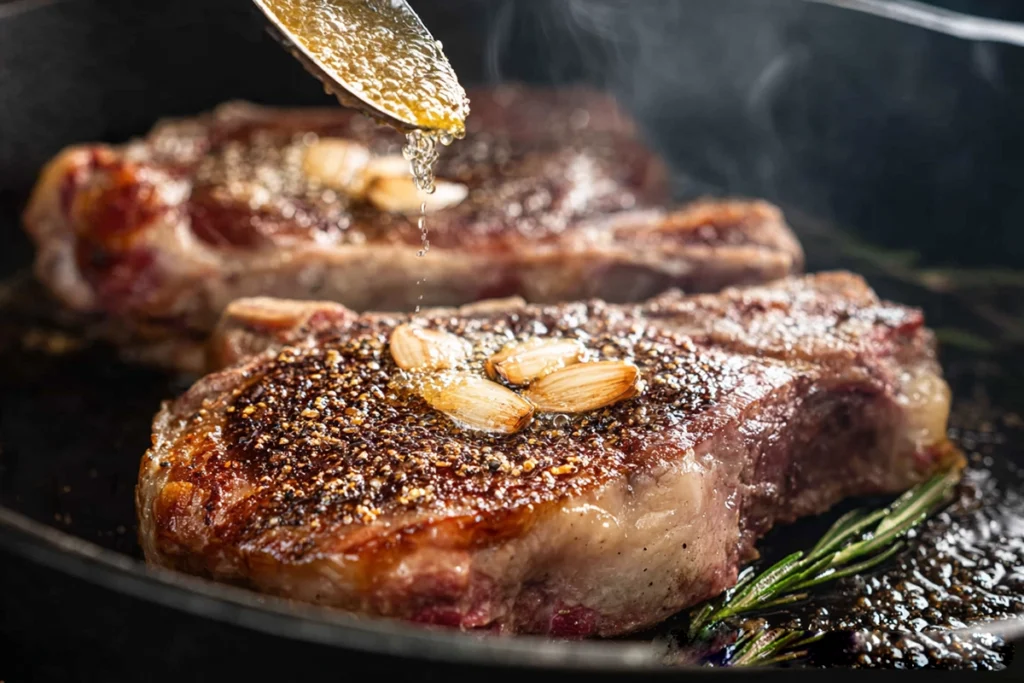
Heat your skillet until it’s nearly smoking. Add a tablespoon of oil with a high smoke point, like avocado or canola oil. Lay the steak down gently and don’t move it for 2–3 minutes — this is where the magic crust forms. Flip it and cook another 2–3 minutes. Add a knob of butter, a smashed garlic clove, and fresh thyme or rosemary, then tilt the pan and spoon the melted butter over the steak for a rich, aromatic finish.
Cook until your thermometer reads 130°F for medium-rare or 140°F for medium. Let it rest for at least 5 minutes before slicing.
Grilled Rib Eye
For a classic backyard flavor, preheat your grill to 450–500°F. Sear each side over direct heat for about 2 minutes, then move the steak to indirect heat to finish cooking. The grill marks add visual appeal and a smoky touch you can’t get indoors.
Reverse Sear Method
If you’re after steakhouse precision, this method is unbeatable. Cook your steak in a 275°F oven until it reaches 120°F internal temp, then sear it in a hot skillet for 60–90 seconds per side. The result? A perfectly even doneness from edge to edge with a crisp, caramelized crust.
Serving Suggestions, Side Dishes & Flavor Boosters
A good rib eye steak deserves sides that complement its richness. Think garlic mashed potatoes, buttery asparagus, or creamy mac and cheese. A crisp Caesar salad adds freshness, while roasted vegetables balance out the indulgence.
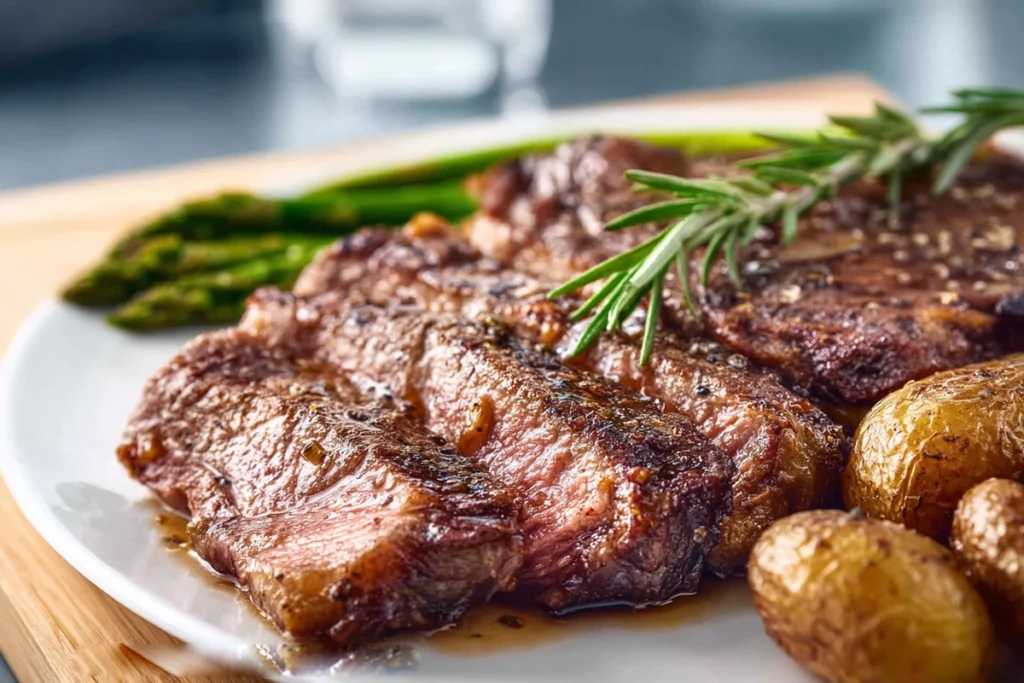
For flavor upgrades, try melting a garlic-herb compound butter on top just before serving. Want a steakhouse twist? Spoon over a quick red wine reduction or tangy chimichurri sauce.
Presentation also matters — slice your steak against the grain to maximize tenderness and let those juices glisten across the plate. Pair it with a bold cabernet or malbec for the full restaurant experience.
Dietary Variations & Ingredient Substitutions
Gluten-Free
A rib eye steak is naturally gluten-free, but double-check your seasonings and sauces. Some spice blends and marinades sneak in wheat-based thickeners. Stick to simple, whole ingredients and you’re safe.
Low-Calorie or Low-Fat
If you’re watching calories, trim excess fat before cooking or choose a leaner sirloin while following the same searing method. Use a light oil spray instead of butter for basting, and serve it with roasted veggies or a fresh salad instead of starchy sides.
Halal
Opt for halal-certified beef and season it traditionally or with Middle Eastern flair — garlic, sumac, cumin, and olive oil work beautifully. Grill it over charcoal for a smoky depth that’s hard to beat.
Vegetarian/Vegan Alternative
For plant-based eaters, try a portobello mushroom steak or a soy-based plant steak. Marinate it in balsamic, olive oil, and garlic, then sear until crisp on the outside. The texture won’t match beef, but the flavors can be just as satisfying.
Storage, Reheating & Leftover Ideas
If you happen to have leftovers, store them in an airtight container in the fridge for up to 3 days. For longer storage, wrap tightly and freeze for 2–3 months.
To reheat, skip the microwave — it tends to dry out the meat. Instead, warm the steak slowly in a 250°F oven until heated through, then give it a quick sear in a hot pan to revive that crust.
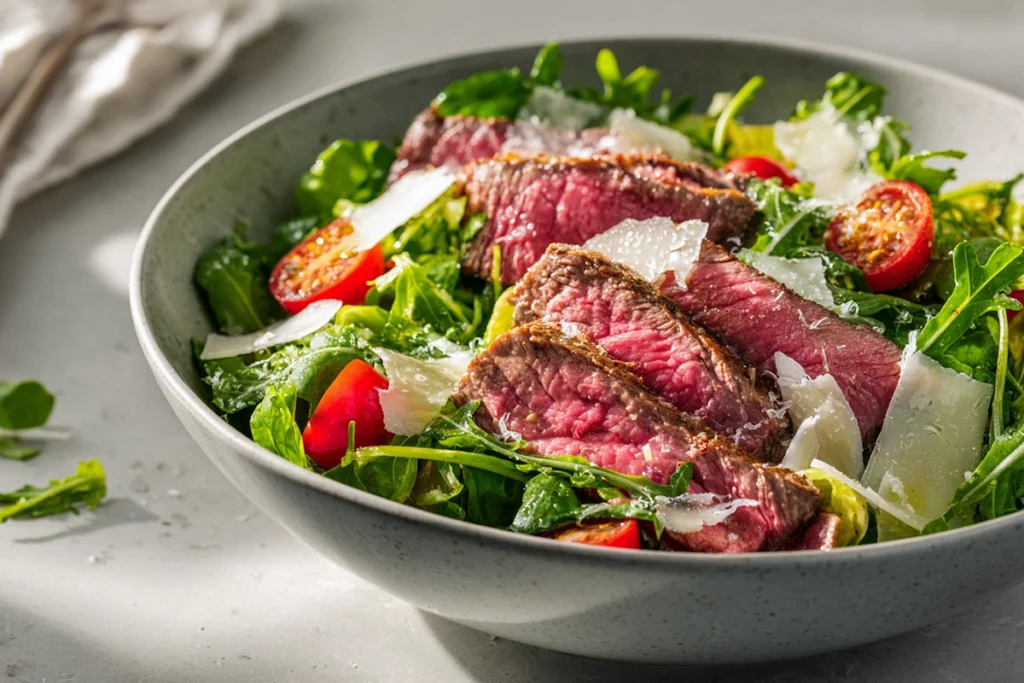
Leftover steak makes incredible sandwiches, breakfast hash, or even a quick steak salad with blue cheese and arugula. It’s one of those rare dishes that tastes just as good the next day, if not better.
When you cook a rib eye steak right, you’re not just making dinner — you’re creating a moment. The crackle of the sear, the aroma of butter and garlic filling the air, that first juicy bite — it’s pure satisfaction. Whether you’re cooking for someone special or just treating yourself after a long day, this steak reminds you why simple food done well never goes out of style.
FAQ
How long should I cook a rib eye steak to medium-rare?
For a medium-rare rib eye steak, aim for an internal temperature of about 130 °F (54 °C). Once the steak reaches this temperature, remove it from heat and let it rest for 5–10 minutes before slicing — this resting lets the juices redistribute and avoids overcooking.
Do I need to marinate the rib eye steak, or is seasoning enough?
You don’t necessarily need a long marinade. Because a rib eye steak is so richly marbled and flavorful, a simple seasoning of kosher salt and freshly ground black pepper is often enough. If you prefer extra flavour, you can add garlic, herbs or a light rub — just avoid heavy sauces that mask the beef’s natural taste.
What’s the best way to reheat leftover rib eye steak without drying it out?
To preserve juiciness, reheat leftovers by placing the steak in a 250 °F oven until warmed through, then give it a quick 60-second sear in a hot skillet to refresh the crust. This method keeps the steak tender and maintains its flavour better than a microwave.
Is bone-in significantly better than boneless rib eye steak for flavour?
A bone-in rib eye steak often has a slight flavour advantage because the bone can help conduct heat differently and deliver extra taste during cooking. That said, a well-prepared boneless rib eye steak can be just as tender and delicious. Choose the one that suits your cooking setup and budget.
Get inspired with more mouthwatering recipes! Follow me on Facebook, Pinterest, and subscribe to YouTube for new cooking ideas every week.
Print
Perfect Rib Eye Steak
- Total Time: 25 minutes
- Yield: 2 servings 1x
- Diet: Halal
Description
A perfectly seared, juicy rib eye steak cooked to perfection with garlic-herb butter, capturing that steakhouse flavor right in your kitchen.
Ingredients
- 2 rib eye steaks (1 ½ inches thick)
- 2 tbsp olive oil
- 1 tbsp butter
- 3 cloves garlic, smashed
- 2 sprigs fresh rosemary
- Salt and black pepper, to taste
Instructions
- Let the rib eye steaks rest at room temperature for 30 minutes.
- Pat dry and season both sides generously with salt and black pepper.
- Heat olive oil in a cast-iron skillet over high heat until shimmering.
- Place steaks in the skillet and sear for 2–3 minutes per side until golden brown.
- Add butter, garlic, and rosemary, then baste the steaks with melted butter for 1–2 minutes.
- Check internal temperature for doneness (130°F for medium-rare).
- Remove steaks and rest for 5–10 minutes before slicing.
Notes
- Use a meat thermometer for consistent doneness.
- Always rest the steak before slicing to preserve juices.
- Prep Time: 15 minutes
- Cook Time: 10 minutes
- Category: Main Course
- Method: Pan-Seared
- Cuisine: American
Nutrition
- Serving Size: 1 steak
- Calories: 680
- Sugar: 0
- Sodium: 540
- Fat: 54
- Saturated Fat: 22
- Unsaturated Fat: 28
- Trans Fat: 0
- Carbohydrates: 0
- Fiber: 0
- Protein: 52
- Cholesterol: 180
What Are Our Readers Saying?
There are no reviews yet. Be the first one to write one.