Rotel Dip: Creamy, Meaty, and Gone Before Halftime

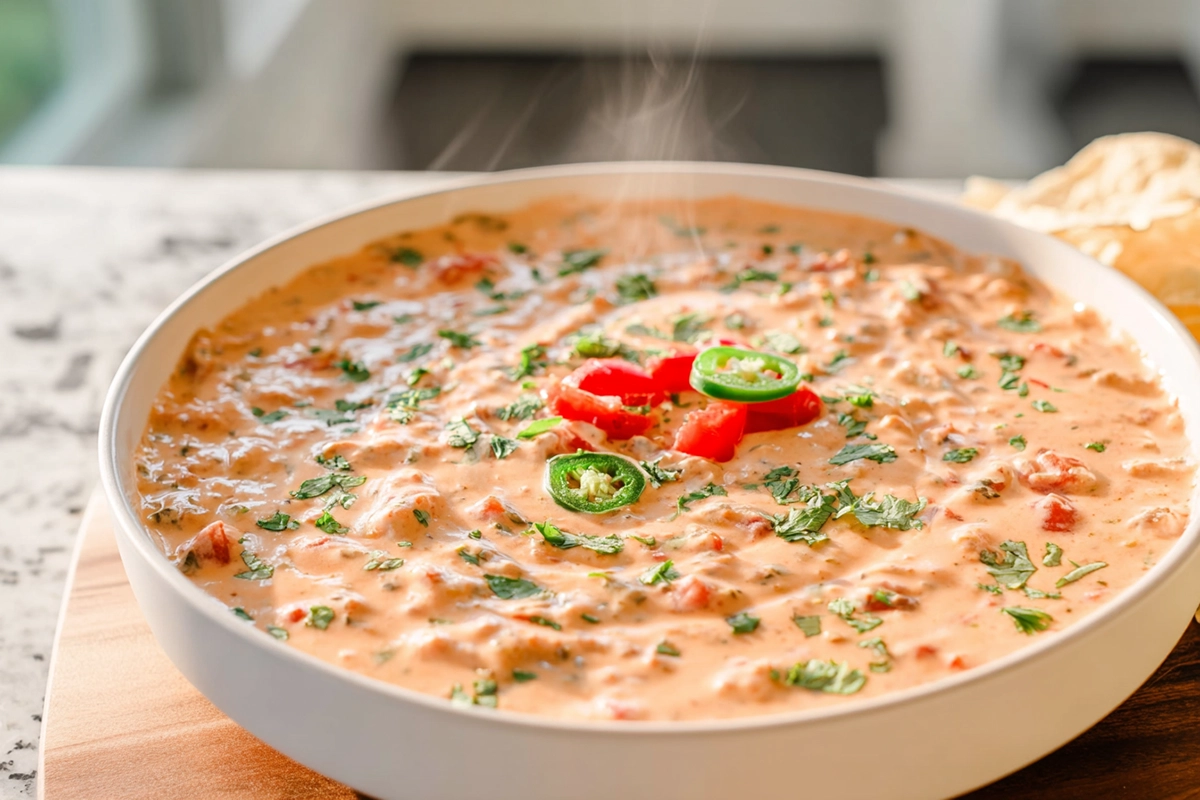
Some foods don’t announce themselves — they just start pulling people into the kitchen. Rotel Dip does that quietly. It begins with the sound of ground meat hitting a hot skillet, then shifts as cubes of processed cheese soften and collapse into something smooth and glossy. The tomatoes and chilies release a sharp, savory steam that cuts through the richness. Before long, chips appear on the counter without anyone asking. That’s usually the sign it worked.
This is one of those recipes that earns its place at gatherings because it behaves. It melts the same way every time. It holds together on a chip instead of sliding off. It stays warm and scoopable long enough for seconds — and thirds — without demanding constant attention. There’s no layering, no baking, no garnish to fuss over. Just a short sequence of steps that rewards you with a dip people hover over instead of politely sampling.
What makes Rotel Dip reliable isn’t complexity; it’s order and restraint. The meat is cooked first and properly drained so the cheese doesn’t turn heavy. The heat is lowered before anything melts so the texture stays smooth. The tomatoes go in with their juices because that moisture is part of the structure, not an accident. Miss one of those details and the dip still exists — it just doesn’t disappear the way it should.
In the sections ahead, the focus stays on those small decisions: when to add what, how to keep it warm without breaking it, and how to adjust thickness without losing the character of the dip. This is practical cooking meant for real kitchens, crowded counters, and people waiting nearby with chips in hand.
Table of Contents
Let’s Talk About the Cheese (Because That’s the Whole Point)
Rotel Dip lives or dies by how the cheese behaves under heat. This isn’t about chasing depth or complexity — it’s about predictable melt and stable texture. A processed cheese loaf is engineered to soften smoothly without separating, which is exactly what this dip needs. It creates that glossy, cohesive base that clings to a chip instead of breaking into grease and solids. This is one of those cases where reliability matters more than purity.
Cream cheese can work, but it changes the personality of the dip. It firms up faster as it cools and brings a tang that shifts the balance. If you go that route, pairing it with sharp cheddar helps restore some of the richness and stretch, but you’re trading silkiness for body. That’s not wrong — just different. The point is to know what texture you’re aiming for before you start melting anything.
- Processed cheese loaf (such as Velveeta): Chosen for smooth, stable melting and a pourable finish
- Cream cheese (optional substitute): Thicker and tangier; benefits from added cheddar to balance
Meat First, Always — And Here’s Why
The meat isn’t filler here; it’s the backbone. Cooking it first builds flavor and, just as importantly, lets you control the fat before the cheese ever enters the pan. Excess grease is what makes some versions of Rotel Dip feel heavy or slick on the surface. Draining isn’t optional — it’s what keeps the finished dip rich without being oily.
Ground beef keeps the flavor clean and lets the cheese and tomatoes lead. Sausage brings seasoning and heat, which can be a good thing if you want the dip to announce itself a little louder. Either works, but the choice affects how assertive the final bite feels. Chili powder is optional, and restraint is key; it should round things out, not compete with the tomatoes and chilies.
- Lean ground beef or sausage: Beef for balance, sausage for built-in seasoning
- Chili powder (optional): A light touch adds warmth without overpowering
Why Rotel (or Salsa) Changes the Entire Personality of the Dip
The canned tomatoes with chilies aren’t just flavor — they’re structure. The juices provide moisture that helps the cheese melt evenly and keeps the dip fluid as it sits. Draining them might seem tidy, but it throws off the balance and leads to a thicker, duller result. The acidity also cuts through the richness, which is why this dip doesn’t feel flat after a few bites.
Salsa is a workable substitute, but it shifts the texture and sweetness depending on the brand. Chunkier salsas add body; smoother ones blend in more quietly. Either way, you’re changing the rhythm of the dip. With Rotel Dip, that balance of cheese, meat, and tomato heat is what makes it so dependable at parties.
- Canned diced tomatoes with chilies (Rotel): Provides heat, acid, and essential moisture
- Salsa (substitute): Alters thickness and sweetness depending on style
These ingredients aren’t complicated, but each one has a job. Understanding why they’re here is what makes this dip repeatable — the kind of recipe you can throw together confidently when people are already reaching for chips.

The Only Step That Can Actually Ruin Rotel Dip
Everything starts in a hot skillet, and you’ll hear it before you see it. The ground meat should hit the pan with a confident sizzle, not a timid hiss. As it cooks, the color shifts from pink to deep brown, and the smell turns savory and full — that’s when you know real flavor is being built. Once the meat is cooked through, pause and drain the fat completely; the pan should look coated, not pooled.
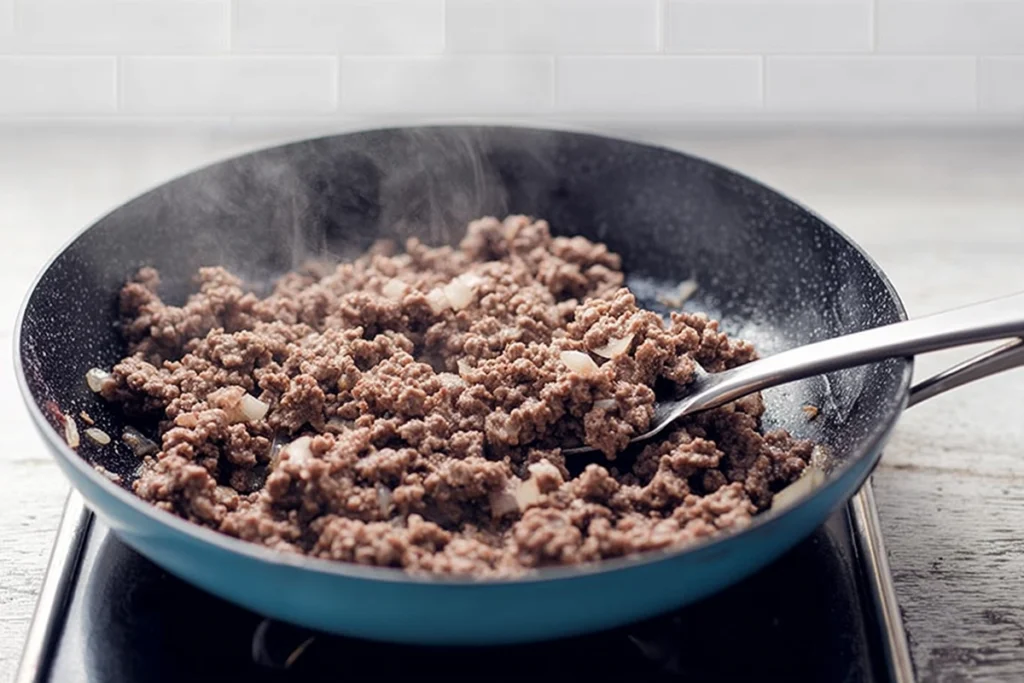
Lower the heat before anything else goes in. This matters more than people think. Cheese added over high heat doesn’t melt — it breaks. You’re looking for a steady, gentle warmth that allows the cubes of cheese to soften slowly. When stirred, they should slump and smear, not seize or sweat oil around the edges. This single adjustment is what keeps Rotel Dip smooth instead of greasy.
Where Melting Turns Into Texture
When the cheese begins to collapse into the meat, the sound in the pan quiets. The aggressive sizzle fades into a soft, thick bubbling — that’s your cue to add the tomatoes with chilies, juices and all. The smell sharpens slightly as the acidity hits the heat, cutting through the richness and loosening the mixture. Stir slowly, scraping the bottom, until everything blends into a unified, glossy dip.
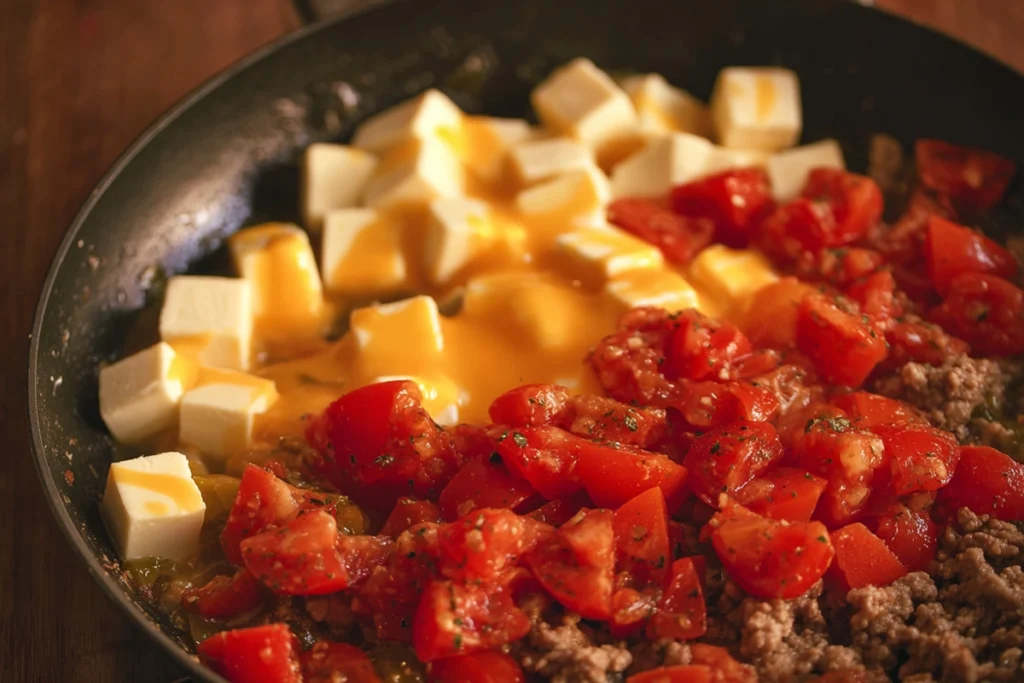
At this stage, touch matters. Drag a spoon through the pan and watch how the dip moves. It should flow back into place but not run like soup. If it tightens too quickly, a splash of milk brings it back without dulling the flavor. This is where a good cheesy party dip earns its reputation — controlled heat, patient stirring, and stopping as soon as it looks right.
Keeping the Dip Right Once It Leaves the Stove
Rotel Dip behaves differently off heat, especially in a busy kitchen or during a game day spread. As it cools, it thickens, and you’ll notice the surface lose some shine. Keeping it warm over low heat or in a small slow cooker preserves the texture without cooking it further. If you hear bubbling again, it’s too hot.
Stir occasionally and trust your senses. When the dip smells mellow and savory, moves easily under a spoon, and coats a chip without dripping, it’s ready to serve — and stay that way. That balance is what makes this kind of game day dip dependable, the sort people come back to without asking what’s in it.
Why Rotel (or Salsa) Changes the Entire Personality of the Dip
There’s room to adjust this dip, but only in ways that respect how it melts and holds together. Swapping Rotel for salsa works best when the salsa is smooth and not overly sweet. Chunky or fruit-heavy salsas tend to overpower the cheese and throw off the balance. If you go this route, keep the amount the same and resist the urge to drain it — the liquid matters.
Cream cheese is the most common substitution for the processed cheese loaf, and it does work with a caveat. It firms up quickly as it cools, so pairing it with shredded sharp cheddar helps restore some softness and stretch. This version is thicker and tangier, better for scooping than pouring. Reducing the total cheese makes a sturdier dip, while increasing it creates something looser and more indulgent. What doesn’t work well is skipping the cheese structure entirely — baking this or trying to “lighten it up” usually results in separation and a dull finish.
Where This Dip Actually Shines (And Where It Doesn’t)
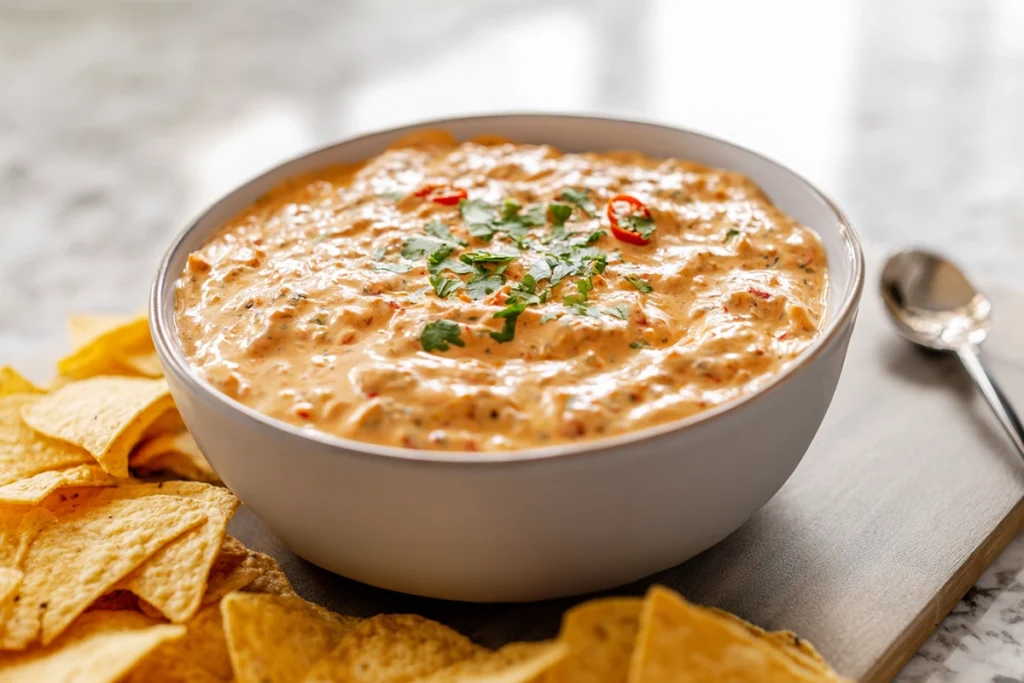
Rotel Dip earns its keep when it’s served warm and surrounded by something sturdy enough to handle it. Thick tortilla chips are the obvious choice, but it’s equally good spooned over nachos, tucked into soft tortillas, or used as a topping for baked potatoes when you want something comforting without extra effort. It also works well alongside grilled meats, where the acidity from the tomatoes cuts through smoky richness.
This isn’t a dip that improves with chilling or sitting out too long. Cold, it tightens and loses its shine. If it’s part of a larger spread, keeping it warm in a small slow cooker or over very low heat keeps it inviting. This is party food meant to be shared immediately, not saved for later.
Keeping Rotel Dip Dippable Past the First Round
The most common issue shows up after the first few scoops: the dip thickens and stops flowing. That’s normal. Gentle heat and an occasional stir usually bring it back. If it still feels tight, a small splash of milk loosens it without dulling the flavor. What you don’t want is aggressive reheating — bubbling means the cheese is breaking again.
Another mistake is skipping the drain after browning the meat. Even a little extra fat can rise to the surface later, making the dip feel greasy instead of rich. Paying attention early saves you from fixing things later.
Rotel Dip is the kind of recipe that earns trust because it behaves the same way every time when you respect its limits. It doesn’t ask for fancy tools or careful plating — just a pan, steady heat, and a sense of when to stop. Make it once with intention, and it quickly becomes one of those dishes people expect to see when everyone gathers around the table.
Get inspired with more mouthwatering recipes! Follow me on Facebook and Pinterest for new cooking ideas every week.
FAQ
Can I make Rotel Dip ahead of time?
You can cook Rotel Dip ahead of time, but it’s best reheated gently before serving. As it cools, the cheese will firm up, which is normal. Warm it over low heat or in a slow cooker and stir until it loosens back up.
Why did my Rotel Dip turn greasy or separate?
This usually happens when the heat is too high or the meat wasn’t drained well enough. Cheese needs gentle heat to melt smoothly, not boil. Lower heat and steady stirring make a big difference.
Can I make Rotel Dip without Velveeta?
Yes, but the texture will change. Cream cheese combined with shredded cheddar works, though it will be thicker and set up faster as it cools. It won’t be as smooth or glossy, but it’s still a solid option.
Is it normal for Rotel Dip to thicken as it sits?
Yes, that’s completely normal. As the dip cools, the cheese tightens. A small splash of milk and gentle heat will bring it back to a dippable consistency.
Can I use ground turkey instead of beef or sausage?
You can, but the flavor will be milder and the dip less rich. If you do, season the meat well and avoid overcooking it, since lean turkey can dry out quickly.
Print
Rotel Dip
- Total Time: 20 minutes
- Yield: 12 servings 1x
Description
A smooth, creamy Rotel Dip made with ground beef, melted cheese, and tomatoes with chilies. This dependable party dip stays rich and scoopable when cooked gently and served warm.
Ingredients
- 1 pound lean ground beef or mild sausage
- 16 ounces processed cheese loaf, cubed
- 10 ounces canned diced tomatoes with chilies, with juices
- 1/2 teaspoon chili powder (optional)
Instructions
- Brown the ground beef or sausage in a skillet over medium-high heat until fully cooked, then drain excess fat.
- Reduce the heat to medium and add the cubed cheese to the skillet.
- Add the diced tomatoes with chilies and any chili powder.
- Stir gently until the cheese melts and the mixture becomes smooth and glossy.
- Serve warm with tortilla chips.
Notes
- Drain the cooked meat well to prevent a greasy dip.
- Keep heat gentle when melting cheese to avoid separation.
- If the dip thickens as it cools, stir in a small splash of milk while reheating.
- Keep warm in a slow cooker set to low for serving.
- Prep Time: 5 minutes
- Cook Time: 15 minutes
- Category: Appetizer
- Method: Stovetop
- Cuisine: American
Nutrition
- Serving Size: 1/12 of recipe
- Calories: 130
- Sugar: 2
- Sodium: 350
- Fat: 8
- Saturated Fat: 4
- Unsaturated Fat: 3
- Trans Fat: 0
- Carbohydrates: 2
- Fiber: 0
- Protein: 11
- Cholesterol: 40