Classic Salisbury Steak with Mushroom Gravy – The Ultimate Comfort Dinner

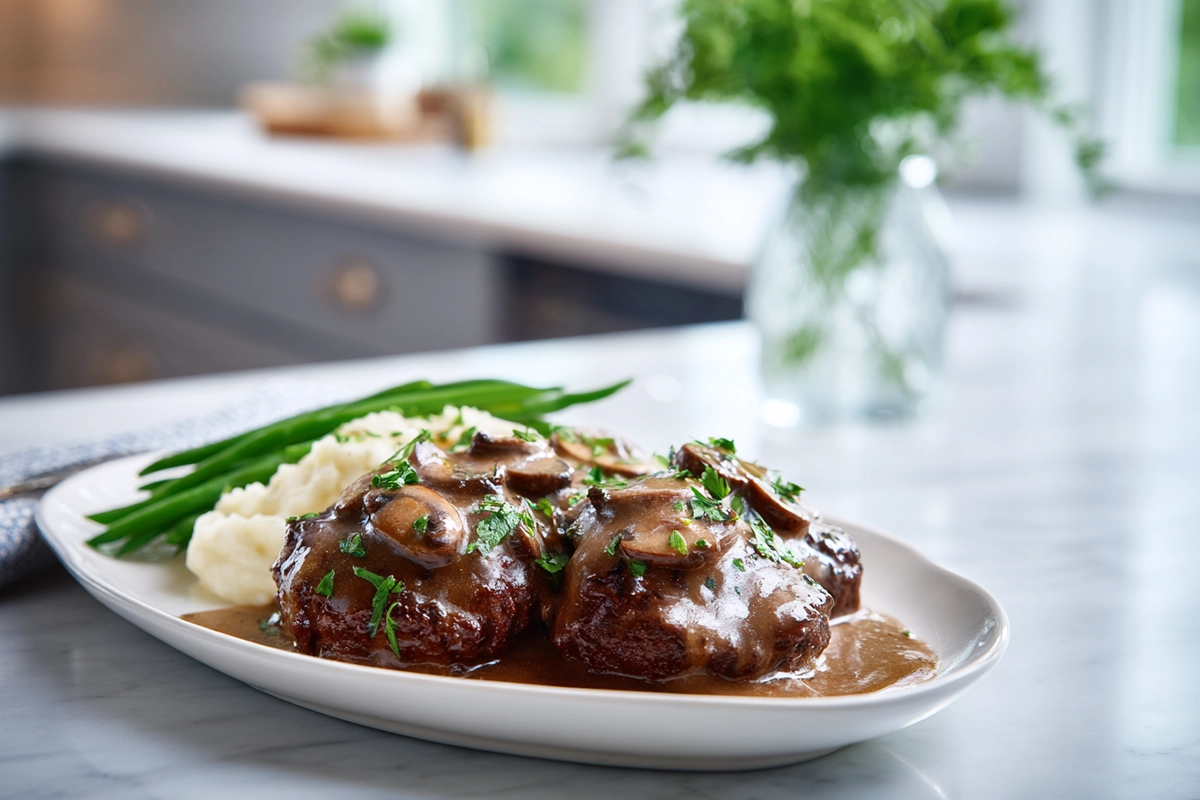
There’s something incredibly nostalgic about a Salisbury Steak dinner. Maybe it’s the rich brown gravy bubbling over tender beef patties, or the way it instantly reminds you of home-cooked meals that warm both the heart and the belly. If you’ve ever sat down to a plate of creamy mashed potatoes next to a juicy Salisbury Steak, you know exactly what comfort tastes like.
This dish might sound fancy, but at its core, it’s simple, affordable, and deeply satisfying. The best part? You can make it right in your kitchen with ingredients you probably already have. Whether you’re feeding a family or just craving something hearty after a long day, this old-school favorite deserves a permanent spot in your dinner rotation.
What Is Salisbury Steak?
If you’ve ever wondered what exactly a Salisbury Steak is, you’re not alone. It’s often confused with a hamburger steak, but the difference is all in the details. Salisbury Steak is made with ground beef blended with seasonings, binders, and sometimes breadcrumbs or eggs to hold everything together. It’s then shaped into oval patties and simmered in a savory brown or mushroom gravy.
This dish dates back to the late 1800s when Dr. James Salisbury promoted a high-protein “meat-centered diet.” Over time, it evolved into a beloved comfort food classic served in diners, cafeterias, and kitchens all across America. Think of it as the cozy cousin of meatloaf — rich, flavorful, and drenched in silky gravy.
Print
Classic Salisbury Steak
- Total Time: 40 minutes
- Yield: 4 servings 1x
Description
A comforting and flavorful Salisbury Steak recipe featuring juicy ground beef patties simmered in rich mushroom gravy. This classic American dinner is easy to make, deeply satisfying, and perfect for weeknights or family gatherings.
Ingredients
For the patties:
- 1 lb ground beef (80% lean)
- ½ cup breadcrumbs
- 1 large egg
- 1 small onion, finely chopped
- 1 tsp Worcestershire sauce
- 1 tsp Dijon mustard
- ½ tsp garlic powder
- Salt and black pepper, to taste
For the gravy:
- 2 tbsp unsalted butter
- 1 small onion, sliced
- 1 cup mushrooms, sliced
- 2 tbsp all-purpose flour
- 2 cups beef broth
- 1 tbsp ketchup
- 1 tsp soy sauce
- ½ tsp thyme (optional)
- Salt and pepper, to taste
Instructions
-
Combine ground beef, breadcrumbs, egg, onion, Worcestershire sauce, mustard, garlic powder, salt, and pepper. Mix gently until combined.
-
Shape the mixture into oval patties about ¾ inch thick.
-
Heat oil in a large skillet over medium-high heat and sear patties for 3–4 minutes per side until golden brown. Remove and set aside.
-
In the same pan, melt butter and sauté onions until softened. Add mushrooms and cook until golden.
-
Sprinkle in flour and stir for one minute to make a roux. Gradually whisk in beef broth, ketchup, and soy sauce until smooth.
-
Return patties to the skillet, spoon gravy over them, and simmer for 10–12 minutes until the sauce thickens and the patties are fully cooked.
-
Serve hot with mashed potatoes, noodles, or rice, topped with fresh parsley if desired.
Notes
- Avoid overmixing the meat mixture to keep the patties tender.
- For a richer flavor, use a splash of red wine in the gravy.
- The dish reheats well and can be frozen for up to two months.
- Prep Time: 15 minutes
- Cook Time: 25 minutes
- Category: Main Course
- Method: Pan-fried and simmered
- Cuisine: American
Nutrition
- Serving Size: 1 steak with gravy (approx. 220 g)
- Calories: 420 kcal
- Sugar: 4 g
- Sodium: 780 mg
- Fat: 27 g
- Saturated Fat: 10 g
- Unsaturated Fat: 14 g
- Trans Fat: 0.5 g
- Carbohydrates: 16 g
- Fiber: 1 g
- Protein: 30 g
- Cholesterol: 135 mg
Ingredients & Key Techniques for a Great Salisbury Steak
Making a truly delicious Salisbury Steak starts with good ingredients and a few simple techniques that elevate it from average to unforgettable.
Ingredients
For the patties:
- 1 lb ground beef (80% lean for best flavor)
- ½ cup breadcrumbs
- 1 large egg
- 1 small onion, finely chopped
- 1 tsp Worcestershire sauce
- 1 tsp Dijon mustard
- ½ tsp garlic powder
- Salt and black pepper, to taste
For the gravy:
- 2 tbsp unsalted butter
- 1 small onion, sliced
- 1 cup mushrooms, sliced
- 2 tbsp all-purpose flour
- 2 cups beef broth
- 1 tbsp ketchup
- 1 tsp soy sauce
- ½ tsp thyme (optional)
- Salt and pepper, to taste
Technique Tips
Mix gently. Overmixing your beef mixture can lead to tough patties. Use your hands lightly to combine everything.
Sear before simmering. Browning the patties in a skillet first locks in flavor and gives that irresistible crust. Don’t skip this step—it’s where the magic begins.
Build your gravy in the same pan. Those brown bits left after searing? That’s liquid gold. Deglaze with a bit of broth to release all that flavor, then whisk in your flour for a velvety base.

Step-by-Step Cooking Instructions
1. Form and Sear the Patties
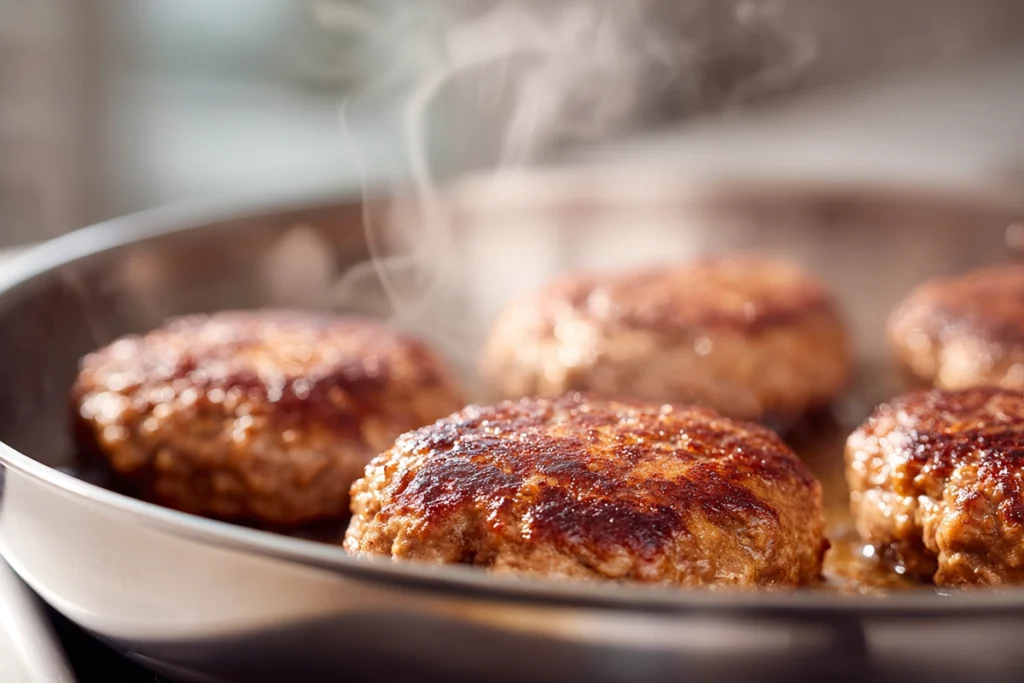
Shape your beef mixture into oval patties, about ¾ inch thick. Heat a bit of oil in a large skillet over medium-high heat and sear each side for 3–4 minutes until golden brown. Don’t worry if they’re not fully cooked—they’ll finish in the gravy. Remove and set aside.
2. Make the Mushroom Gravy
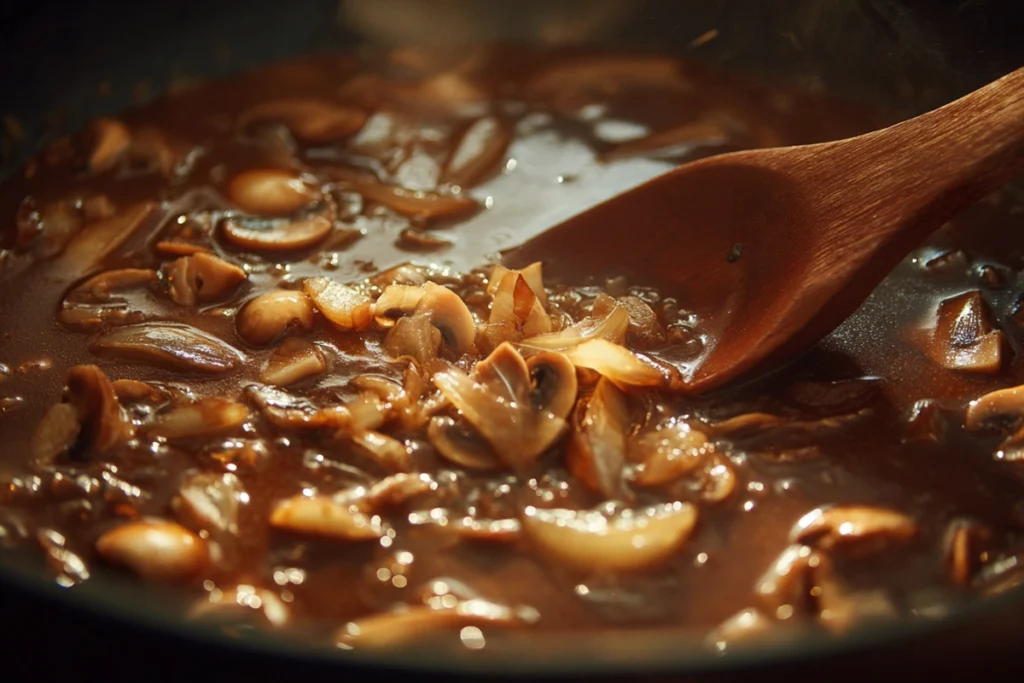
In the same pan, melt butter and sauté onions until soft and slightly caramelized. Add the mushrooms and cook until they release their moisture and turn golden. Sprinkle in the flour and stir for a minute to create a roux. Gradually whisk in the beef broth, ketchup, and soy sauce until smooth.
3. Simmer and Serve
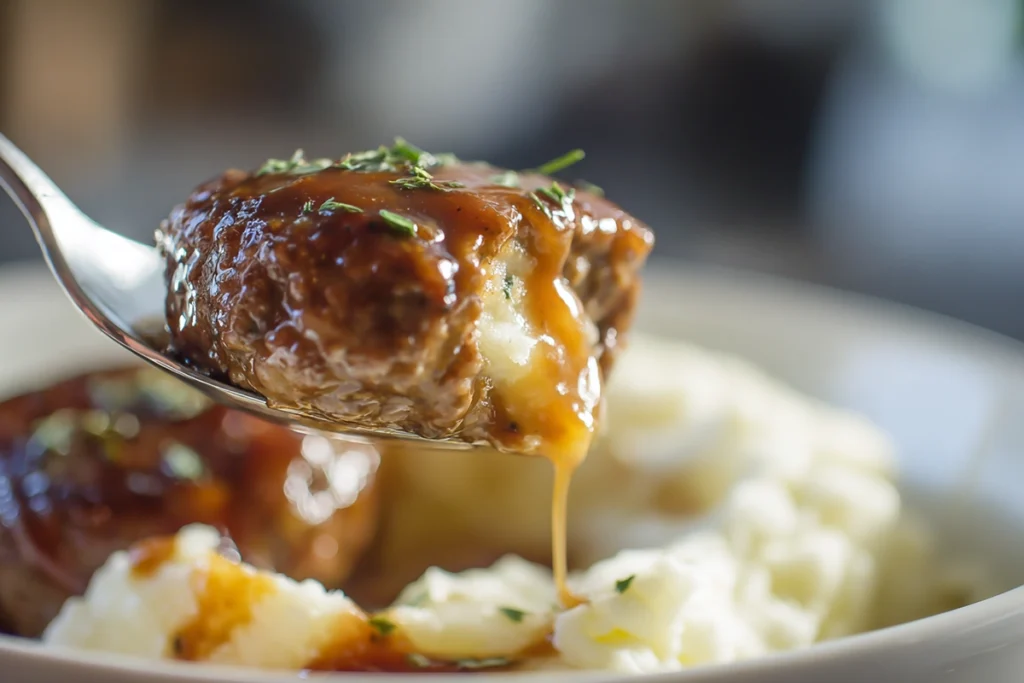
Nestle the patties back into the pan, spooning gravy over the top. Reduce the heat and let everything simmer gently for 10–12 minutes, or until the steaks are cooked through and the gravy has thickened. Serve warm with mashed potatoes or buttered noodles, and don’t forget that extra drizzle of gravy—it’s the best part.
Serving & Side Dish Pairings
Salisbury Steak is all about the combination of textures and flavors, so choosing the right sides makes all the difference.
- Classic Comfort: Serve with creamy mashed potatoes or buttered egg noodles to soak up every drop of that delicious gravy.
- Lighter Options: Try cauliflower mash, roasted broccoli, or a crisp green salad with tangy vinaigrette for balance.
- Southern Twist: Pair it with cheesy grits or buttermilk biscuits for an old-fashioned Southern-style supper.
A sprinkle of fresh parsley and a side of sautéed green beans turn this into a plate that feels like Sunday dinner, even on a weeknight.
Storage, Reheating & Meal Prep Tips
One of the best things aboutSalisbury Steak is how well it holds up for future meals. If you’re planning, you’re in luck.
- Refrigerate: Store leftovers in an airtight container for up to 4 days. Reheat gently on the stovetop or in the microwave, adding a splash of broth if the gravy thickens too much.
- Freeze: For long-term storage, freeze the patties and gravy separately in airtight containers for up to 2 months. Thaw overnight in the fridge before reheating.
- Meal Prep Tip: Make a double batch and portion it into individual meal containers with mashed potatoes or rice—it reheats beautifully for weekday lunches.
Few dishes capture old-fashioned comfort quite like a plate of Salisbury Steak covered in rich mushroom gravy. It’s hearty, satisfying, and surprisingly simple to make. Whether you’re cooking it for nostalgia’s sake or just need a no-fuss dinner that delivers big flavor, this dish will always hit the spot. Every bite is a reminder that sometimes, the best meals are the ones that feel like coming home.
FAQ
What’s the difference between Salisbury steak and hamburger steak?
They’re similar, but Salisbury steak is made with breadcrumbs, egg, and seasonings mixed into the beef, then simmered in gravy. Hamburger steak, on the other hand, is usually just seasoned beef served plain or topped with onions.
Can I make Salisbury steak ahead of time?
Absolutely! You can shape and brown the patties a day in advance, then store them in the fridge. When you’re ready to eat, simply warm them in the mushroom gravy for an easy dinner.
Can I use ground turkey instead of beef?
Yes, ground turkey works great for a lighter version. Just make sure to add a bit more seasoning or a splash of Worcestershire sauce for extra flavor since turkey is milder than beef.
What’s the best side dish for Salisbury steak?
Mashed potatoes are the classic choice because they soak up the rich gravy perfectly. You can also try buttered noodles, white rice, or roasted veggies for a complete comfort meal.
Can Salisbury steak be frozen?
Definitely. Let the cooked patties and gravy cool completely, then store them in airtight containers or freezer bags for up to two months. Reheat gently on the stove for the best texture.