Japanese Cheesecake with a Light, Jiggly Texture

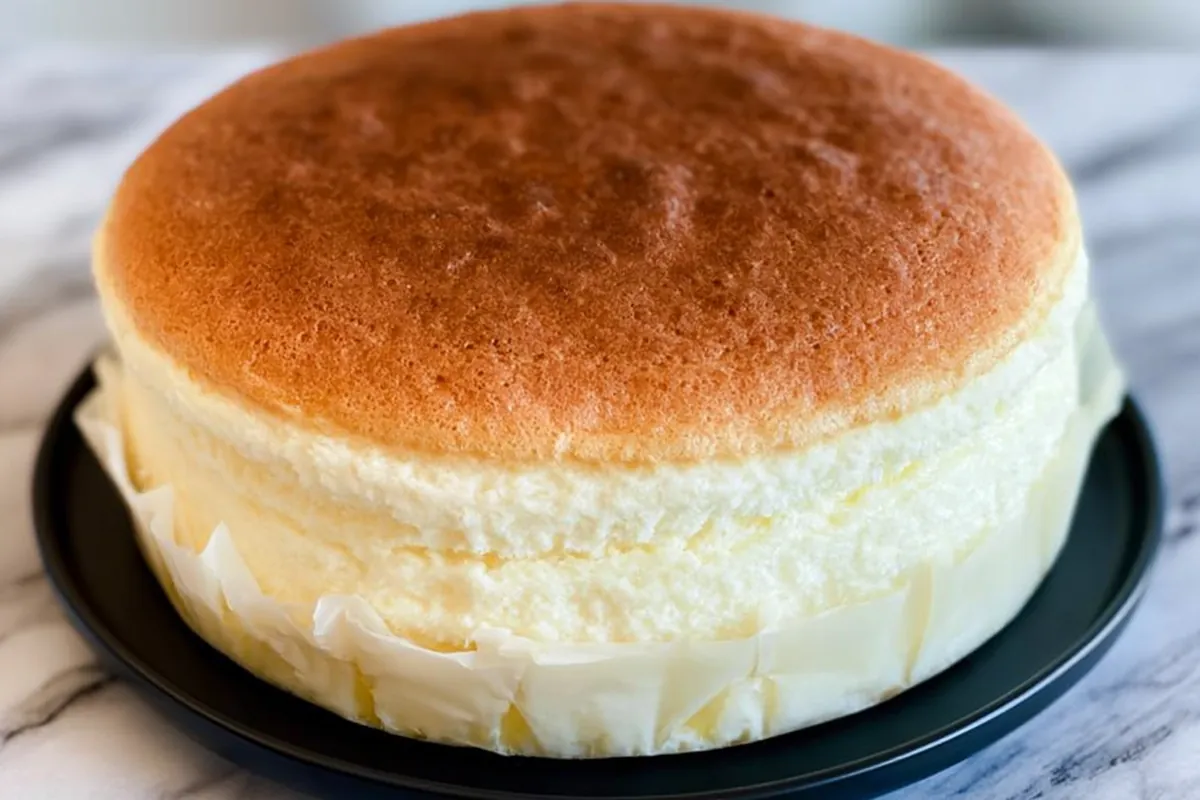
A warm Japanese cheesecake moves when the serving plate is nudged. Its top is lightly browned, the middle feels airy, and each slice compresses gently before springing back.
That texture comes from whipped egg whites rather than a heavy cream cheese filling. This version uses a smooth yolk batter, carefully folded meringue, a water bath, and two baking temperatures. None of the steps is complicated, though the folding and oven timing need close attention.
The Story Behind Japanese Cheesecake
Japanese cheesecake is often traced to the 1960s, when chef Tomotaro Kuzuno encountered a lighter German-style cheesecake and brought the idea back to Japan. The version that developed there combined the mild richness of cheesecake with the airy structure of a sponge cake.
It’s noticeably different from a dense American cheesecake. Only 8 ounces of cream cheese are used here, while five separated eggs provide much of the height. The result is soft and delicate rather than creamy and compact. Served warm, it has the familiar wobble people associate with Japanese cheesecake. After refrigeration, the crumb settles and becomes firmer.
Japanese Cheesecake Baker’s Notes
Making a Smooth Cream Cheese Batter
Start over low heat. Place the cream cheese, butter, and 1/4 cup fine sugar in a pot, then stir until the mixture looks smooth and no pieces of cream cheese remain. High heat can make the fat separate, so there’s no need to rush this part.
Remove the pot from the stove before mixing in the five egg yolks. Add the flour and cornstarch next, stirring gently until the small clumps disappear. The milk loosens the batter into a thin, pourable consistency. Vanilla is optional; I prefer a small amount when I want a sweeter aroma without changing the cake’s texture.
Beating and Folding the Egg Whites
The mixer bowl should be clean and free from grease. Even a little yolk in the whites can make them harder to whip.
Beat the five egg whites while gradually adding the remaining 1/4 cup sugar. Stop when the meringue holds stiff peaks and the tip stays upright when the whisk is lifted. Dry, grainy-looking whites have gone a little too far.
Mix a portion of the meringue into the cream cheese batter, then repeat twice. This loosens the base before the final fold. Pour the batter into the remaining egg whites and fold from the bottom upward, turning the bowl as you work. The mixture should look evenly pale with no large white streaks.
Too much folding knocks out the air and reduces the rise. Too little can leave a foamy meringue layer on top and a dense cheesecake underneath.
Managing the Water Bath and Oven Temperature
Line one 8-inch pan or two 6-inch pans with parchment on the bottom and sides. Set the pan inside a deep baking dish containing hot water. The water bath softens the heat around the cake and helps the center cook gradually.
Bake at 330°F for about 25 minutes. By then, the cake should have risen. When it hasn’t, the oven may be running cooler than its display suggests; increasing the heat by about 10 degrees can help.
Once the cake has risen, open the oven door slightly for roughly 10 seconds. Lower the temperature to 245–265°F and continue baking for about 45 minutes. A top that colors or cracks quickly usually signals too much heat during this second stage.
Resting, Unmolding, and Serving
Leave the finished cake inside the switched-off oven for around 10 minutes. The gradual temperature change gives its delicate structure time to settle.
To unmold it, cover the top with parchment and a plate, then carefully invert the pan. Remove the wet lining paper and replace the bottom parchment if needed. Set the serving plate against the base and flip the cake upright again.
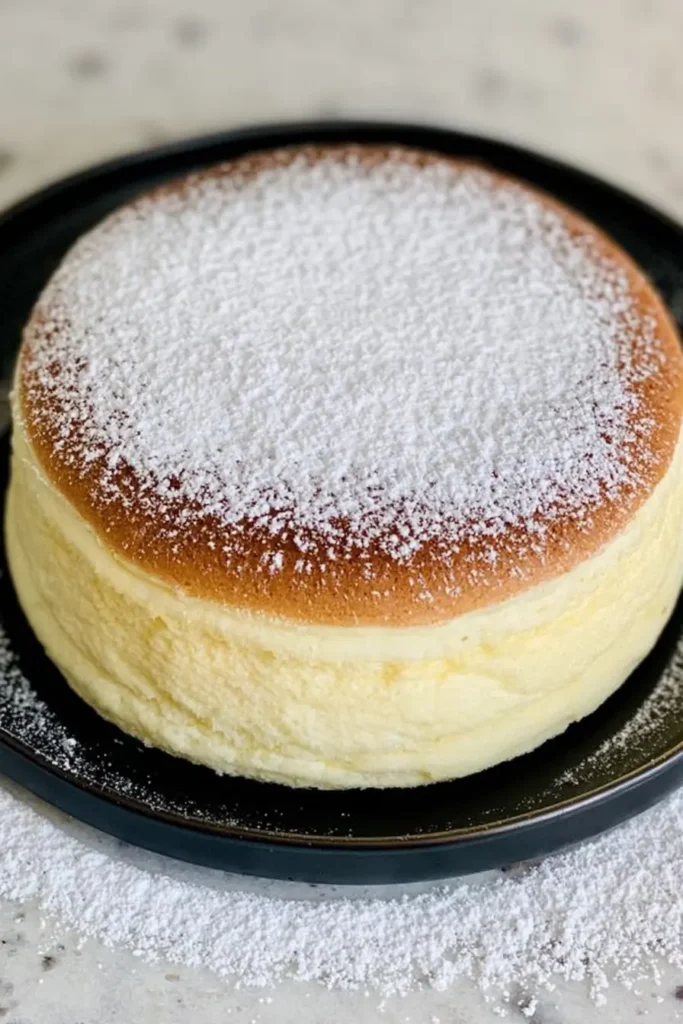
Warm Japanese cheesecake is at its lightest and most jiggly. Chilling changes it. The cake becomes firmer, less bouncy, and slightly richer in texture, so serve it according to the result you prefer.
Japanese Cheesecake Troubleshooting FAQ
Why did my Japanese cheesecake crack?
Cracking usually means the oven stayed too hot after the cake rose. Once the first 25 minutes at 330°F are complete, briefly crack the oven door and reduce the temperature to about 245–265°F. If the top is browning rapidly, use the lower end of that range.
Why did my Japanese cheesecake fail to rise?
The oven may be too cool, the egg whites may not have reached stiff peaks, or too much air may have been lost during folding. The cake should begin rising during the first 25 minutes at 330°F. When it remains flat, increase the oven setting by about 10 degrees and give it more time.
Why did the cheesecake deflate after baking?
A small amount of settling is normal, though a sudden collapse can follow an abrupt temperature change. Let the cake rest in the switched-off oven for about 10 minutes before removing it. Avoid opening the door repeatedly during baking because cool air can weaken the rising structure.
Why is the bottom dense while the top looks like meringue?
The batter and whipped egg whites were probably not combined evenly. Fold from the bottom of the bowl upward until no large white streaks remain. Stop once the color and texture look uniform, since continued mixing can remove the air needed for a light crumb.
How can I control the browning on top?
Every oven transfers heat differently. Begin checking the surface during the lower-temperature stage. If it darkens too early, reduce the setting toward 245°F. If the cake stays very pale and wet, move closer to 265°F rather than making a large temperature jump.
Serve It While It Still Wobbles
The most useful cue isn’t the clock alone. Watch for a steady rise during the first baking stage, then lower the heat before the surface becomes dark or tight.
Give the cake its 10-minute oven rest, unmold it gently, and try the first slice while it’s still warm. That’s when its soft crumb and familiar jiggle are easiest to enjoy.
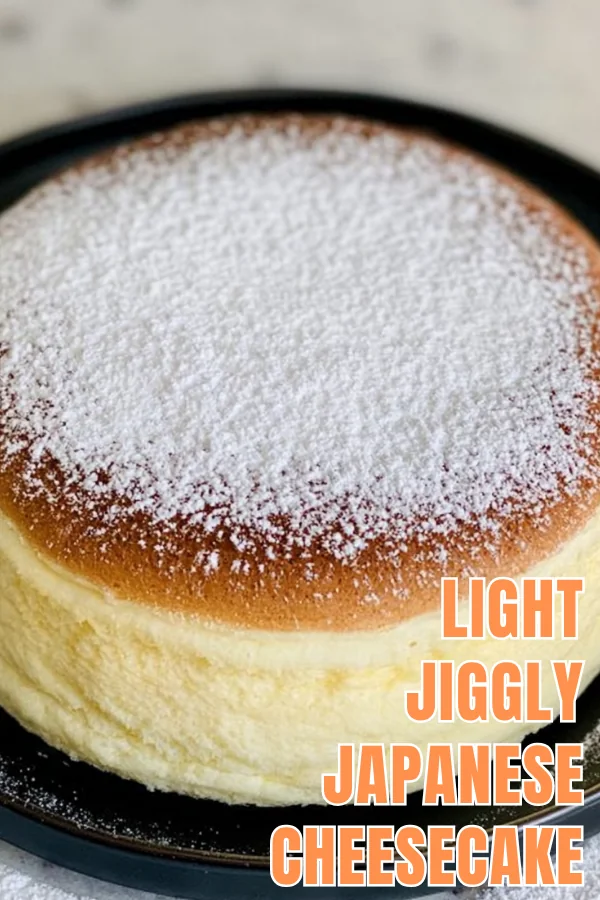
Japanese Cheesecake
Ingredients
Equipment
Method
- Separate the five eggs, placing the yolks in a medium bowl and the whites in a clean mixer bowl.
- Place the cream cheese, butter, and 1/4 cup fine sugar in a saucepan over low heat and stir until completely melted and smooth.
- Remove the saucepan from the heat, add the egg yolks, and mix gently until evenly combined.
- Add the cornstarch and flour, then whisk gently until the batter is smooth and no visible clumps remain.
- Stir in the milk and optional vanilla extract until the batter is thin, smooth, and pourable, then set it aside.
- Preheat the oven to 330°F and place a deep rectangular baking pan containing hot water inside to prepare the water bath.
- Line the bottom and sides of one 8-inch round cake pan with parchment paper.
- Beat the egg whites while gradually adding the remaining 1/4 cup fine sugar until the meringue holds stiff, glossy peaks.
- Mix one portion of the whipped egg whites into the cream cheese batter, then repeat twice to gradually lighten the mixture.
- Pour the lightened batter into the remaining egg whites and fold gently from the bottom upward until no large white streaks remain.
- Pour the batter into the prepared cake pan and place the pan inside the preheated water bath.
- Bake at 330°F for about 25 minutes, or until the cheesecake has risen noticeably.
- Open the oven door slightly for about 10 seconds, lower the temperature to between 245°F and 265°F, and bake for another 45 minutes.
- Turn off the oven and allow the cheesecake to rest inside for 10 minutes so the structure can settle gradually.
- Cover the top of the cake with parchment paper and a plate, then carefully invert it and remove the pan and wet parchment.
- Place the serving plate against the bottom of the cheesecake and flip it upright again.
- Serve the Japanese cheesecake warm for the lightest and most jiggly texture, or refrigerate it for a firmer consistency.
Notes
- Use a completely clean mixer bowl because grease or traces of egg yolk can prevent the whites from whipping properly.
- Stop beating when the meringue forms stiff, glossy peaks; dry or grainy egg whites have been overbeaten.
- Fold only until the batter is evenly combined. Overmixing removes the air, while undermixing can create a foamy top and dense bottom.
- If the cake has not risen after 25 minutes, the oven may be running cool; increase the temperature by about 10°F.
- Reduce the temperature after the cake rises to lower the risk of cracking or excessive browning.
- The cheesecake is softest and most jiggly when served warm. Refrigeration creates a firmer, less bouncy texture.