Sheet Pan Chicken Beans and Potatoes: Honeyed Garlic, Crisp Edges, Zero Babysitting

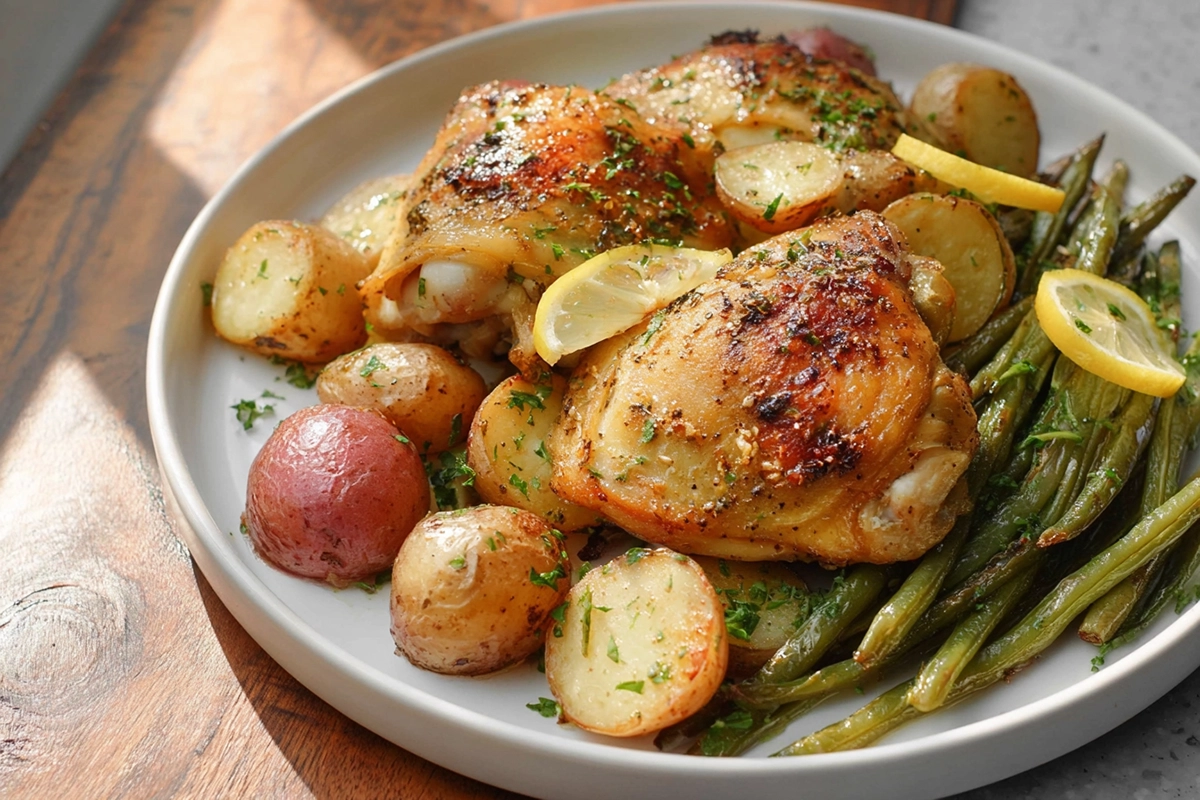
Dry chicken is the crime scene. Pale potatoes are the accomplice. And soggy green beans are what happens when dinner asks for more attention than you have. This recipe exists to fix all of that in one loud, aromatic swoop. The payoff isn’t subtle: chicken that stays juicy under a lacquer of honeyed garlic, potatoes that blister and bronze against hot metal, and green beans that come out snappy—not sad—because they actually met real heat.
Here’s the quiet trick. Everything cooks together, but not everything cooks the same way. The chicken gets flattened just enough to behave, the potatoes shoulder the heat like shields, and the sauce—butter, honey, garlic—waits its turn so it browns instead of burns. Smoked paprika shows up not to add spice, but to whisper campfire and depth. Parmesan doesn’t melt into oblivion; it lands at the end, salty and sharp, where it belongs. This isn’t a dump-and-hope sheet pan. It’s a controlled burn.
You don’t need special tools or a sink full of bowls. You need one rimmed pan, a hot oven, and the discipline to give everything space. Oil, salt, pepper, a measured hand with seasoning, and patience for 25 minutes while the kitchen fills with toasted garlic and caramelized honey. The result looks like effort and tastes like you planned ahead—even if you didn’t.
Table of Contents
Smoked Paprika, Honey Butter, and the Seasoning Line You Don’t Cross
This recipe looks simple because it is—but the flavor depends on restraint and a few very specific choices. The seasoning here isn’t layered for drama; it’s layered for balance. Smoked paprika is doing quiet background work, adding warmth and a faint campfire note without tipping into heat. Swap it for sweet paprika and the dish goes flat; use hot paprika and it hijacks everything. This is a supporting actor, not the lead.
The honey butter sauce is not dessert pretending to be dinner. Honey brings viscosity and browning power, butter brings fat-soluble flavor, and garlic brings volatility. Melted together and briefly simmered, they form a sauce that clings instead of pooling. If you only have salted butter, skip adding extra salt later—this sauce amplifies seasoning fast once it hits the oven.
Italian seasoning shows up in a controlled dose because dried herbs burn easily at 400°F. The blend adds familiarity without turning bitter, especially when paired with garlic powder rather than fresh garlic in the spice mix. Fresh garlic goes in the sauce, where moisture protects it.
- Boneless, skinless chicken breasts: Lean and quick-cooking; pounding them evens thickness so they finish with the vegetables, not before.
- Baby gold potatoes: Waxy enough to hold shape, starchy enough to brown; russets will dry out here.
- Green beans: Added raw for snap; frozen beans release water and steam instead of roasting.
- Smoked paprika: Adds depth without heat; don’t substitute hot paprika.
- Honey & butter: Browning and richness in tandem; salted butter means less added salt.
- Parmesan cheese: Finishing move only—early application causes scorching, not savoriness.

Why This Sheet Pan Chicken Beans and Potatoes Combo Actually Works
The strength of this sheet pan chicken beans and potatoes recipe is thermal strategy. Everything shares one pan, but not one role. Potatoes act as heat buffers, absorbing and redistributing oven energy so the chicken doesn’t dry out before they’re tender. Green beans roast in open air, which lets moisture escape quickly instead of turning them limp.
Fat distribution matters. Oil goes on the vegetables to encourage surface browning, while the honey butter sauce is reserved for the chicken, where it bastes and protects. This separation keeps sugars from burning on the pan while still delivering caramelization where it counts.
The seasoning balance is intentional. Salt and pepper go on everything early to penetrate, but cheese waits until the end so it sharpens instead of disappearing. High heat does the heavy lifting—no parboiling, no searing, no extra pans. The result is a dish that tastes layered and deliberate, even though it’s built on a single, well-managed roast.
The Only Part You Can Mess Up (And How to Avoid It)
Start before the oven even matters. Lay the chicken breasts between parchment or plastic and pound them just until they’re an even thickness—not paper-thin, just uniform. When you pick them up, they should feel relaxed and flexible, not stiff in the center. This is what keeps the sheet pan chicken beans and potatoes from finishing in three different timelines.
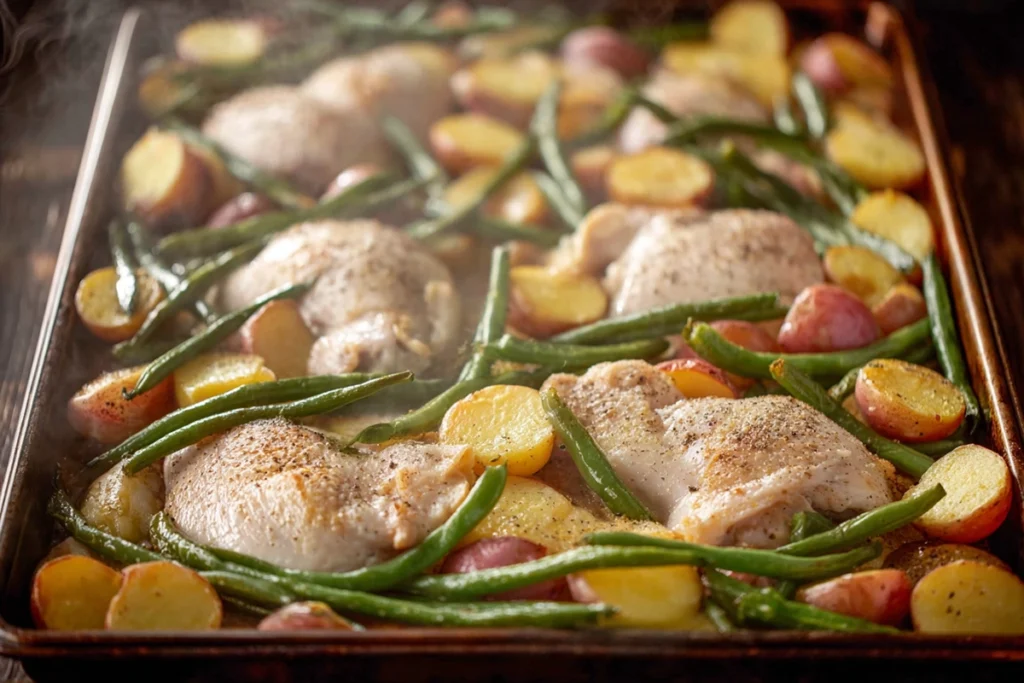
When the honey butter sauce hits the stovetop, pay attention. Butter melts quietly, honey loosens, and then the garlic wakes up—sharp and fragrant, not browned. As soon as you smell toasted garlic and warm caramel, pull it off the heat. If it smells nutty or dark, you’ve gone too far, and the oven will finish the burning for you.
On the pan, spacing is non-negotiable. Potatoes need direct contact with metal to brown, so give them room. Green beans should look lightly coated, not slick. The chicken goes down last, topped with the sauce, where it will sizzle softly as it hits the hot pan—not aggressively, but with confidence.
Timing, Pan Heat, and Knowing When to Stop
Slide the pan into a fully heated oven and listen. Within minutes, you should hear an active sizzle, not a wet hiss. That sound tells you moisture is evaporating instead of steaming. Visually, the potatoes will start to dull, then slowly take on golden edges; the green beans will wrinkle slightly and deepen in color.
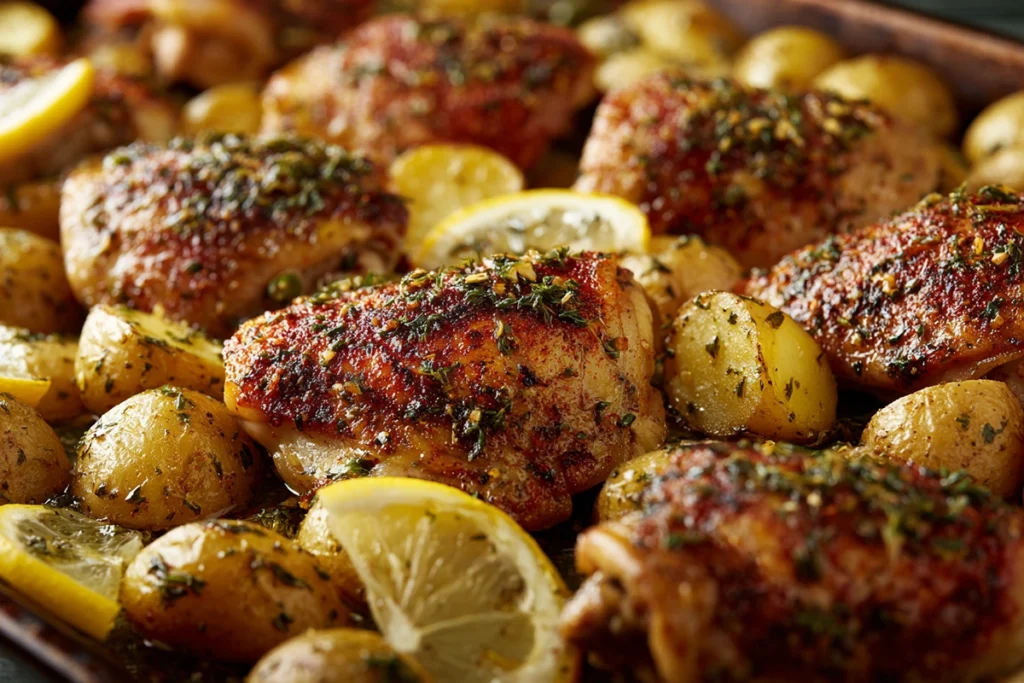
Halfway through, resist the urge to stir everything together. This isn’t a toss—it’s a roast. Let the surfaces stay put so they can brown. When the chicken is done, it should feel firm when pressed, like the base of your thumb, and the sauce on top will look glossy, not watery.
Right at the end, scatter the parmesan over the hot vegetables. You’ll smell sharp, salty cheese bloom instantly. That’s your cue to pull the pan—one breath later and it goes from savory to scorched.
Swaps That Actually Work (and One That Doesn’t)
If chicken breasts aren’t your thing, boneless skinless chicken thighs are the cleanest swap. They’re more forgiving, stay juicy, and can handle the honey butter without drying out—but expect a little more rendered fat on the pan. What doesn’t work is bone-in chicken. The timing falls apart, and by the time the meat is done, the vegetables have gone soft and sad.
Out of green beans? Broccoli florets can step in, but cut them on the larger side so they don’t burn before the potatoes finish. Brussels sprouts also work if halved, cut side down, and given space. Skip asparagus here—it cooks too fast and turns limp under this timing.
Potatoes matter. Baby golds are ideal, but red potatoes can substitute if cut evenly. Sweet potatoes sound tempting, but paired with the honey butter they push the dish into cloying territory. This is one of those ideas that sounds better than it tastes.
How to Serve This Without Overthinking It
This is a full meal on its own, especially straight off the pan when everything is at peak texture. If you want something alongside it, think contrast. A sharp green salad with lemon vinaigrette cuts through the honeyed richness. A spoonful of Dijon on the side does the same job quietly.
For leftovers, keep everything together and reheat on a sheet pan, not the microwave. The oven brings back the edges and keeps the chicken from turning rubbery. Tucked into a lunch container, this sheet pan chicken beans and potatoes holds up better than most “healthy” dinners ever do.
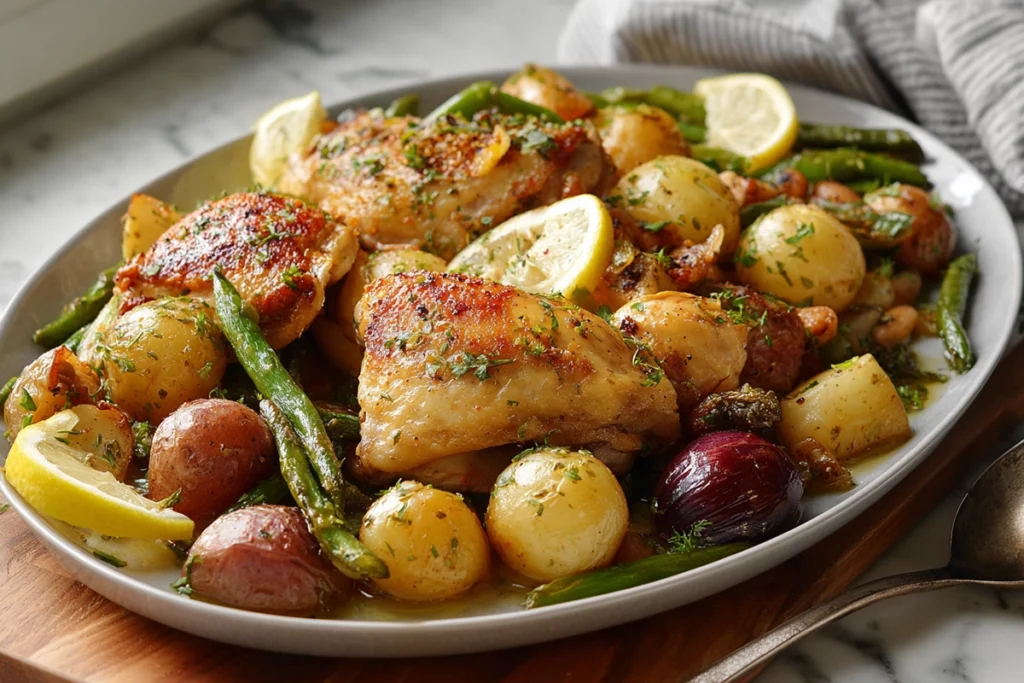
Last Thing Before You Call It Dinner
If you’re tempted to drizzle balsamic glaze, do it sparingly and only at the table. It’s a finish, not a sauce replacement. Too much and you lose the balance you just worked for.
This is the kind of recipe that earns a spot in rotation because it behaves. One pan, familiar ingredients, and results that feel deliberate instead of accidental. Make it once, pay attention, and the next time you won’t need to think about it at all—which is exactly the point.
Get inspired with more mouthwatering recipes! Follow me on Facebook and Pinterest for new cooking ideas every week.
Common Questions About Sheet Pan Chicken Beans and Potatoes
Can I use chicken thighs instead of breasts—and what changes if I do?
Yes, boneless skinless chicken thighs work very well here and are actually more forgiving. They stay juicy even if you slightly overcook them, and they handle the honey butter sauce without drying out. Expect a bit more rendered fat on the pan, which can help the potatoes brown even better. Keep the oven temperature and timing the same, but judge doneness by touch—the meat should feel springy, not soft.
Why are my potatoes soft but not browned?
This almost always comes down to crowding or moisture. If the potatoes are touching or piled, they steam instead of roast. Spread them in a single layer with cut sides down where possible, and make sure they’re coated lightly in oil—not swimming. A fully preheated 400°F oven matters here; lukewarm ovens delay browning and guarantee pale potatoes.
Can I prep this ahead without ruining the texture?
You can prep smart, but you can’t fully assemble it early. Cut the potatoes and store them submerged in cold water to prevent browning, then dry them thoroughly before cooking. Trim the green beans and make the honey butter sauce ahead, but keep everything separate. Once combined, this dish should go straight into the oven for best texture.
What other vegetables actually work at this temperature?
Broccoli florets and halved Brussels sprouts work well because they can handle high heat without collapsing. Cut broccoli on the larger side and place sprouts cut-side down. Avoid asparagus or zucchini—they release water too quickly and turn limp before the chicken is done in this sheet pan chicken beans and potatoes recipe.
Is the honey sauce optional, or does it do more than add sweetness?
The honey butter sauce isn’t just for sweetness—it protects the chicken and helps it brown evenly. Honey caramelizes at oven temperature, while butter carries flavor and prevents dryness. Skipping it leaves you with seasoned but flat-tasting chicken. If sweetness worries you, drizzle lightly; don’t remove it entirely.
Print
sheet pan chicken beans and potatoes
- Total Time: 35 minutes
- Yield: 4 servings 1x
- Diet: Gluten Free
Description
Golden chicken glazed with honey butter, crisp baby potatoes, and roasted green beans come together on one pan for a hearty, no-fuss dinner with big flavor and minimal cleanup.
Ingredients
- 4 boneless skinless chicken breasts
- 2 pounds baby gold potatoes, quartered
- 1 pound green beans
- 3 tablespoons oil
- 1 teaspoon salt
- 1/2 teaspoon black pepper
- 1 teaspoon Italian seasoning
- 1 teaspoon garlic powder
- 1/4 teaspoon smoked paprika
- 1 tablespoon grated parmesan cheese
- 3 tablespoons butter
- 1/2 cup honey
- 2 teaspoons minced garlic
Instructions
- Preheat the oven to 400°F and place a large rimmed sheet pan inside to heat.
- Melt the butter in a small saucepan, stir in the honey, garlic, salt, and pepper, bring to a gentle boil, then remove from heat.
- Pound the chicken breasts to an even thickness.
- Arrange potatoes, green beans, and chicken on the hot sheet pan, spacing everything evenly.
- Drizzle vegetables with oil and season with salt and pepper.
- Mix Italian seasoning, garlic powder, and smoked paprika, then sprinkle over the chicken and vegetables.
- Pour the honey butter sauce over the chicken.
- Roast until the potatoes are golden, vegetables are tender, and chicken is cooked through.
- Finish with parmesan cheese over the vegetables and serve hot.
Notes
- Serve with a light drizzle of balsamic glaze if desired.
- Reheat leftovers on a sheet pan in the oven to restore crisp edges.
- Prep Time: 10 minutes
- Cook Time: 25 minutes
- Category: Dinner
- Method: Roasting
- Cuisine: American
Nutrition
- Serving Size: 1 serving
- Calories: 578
- Sugar: 41
- Sodium: 912
- Fat: 15
- Saturated Fat: 2
- Unsaturated Fat: 11
- Trans Fat: 1
- Carbohydrates: 84
- Fiber: 8
- Protein: 32
- Cholesterol: 75