Smothered Chicken and Rice: Creamy Comfort From One Calm Skillet

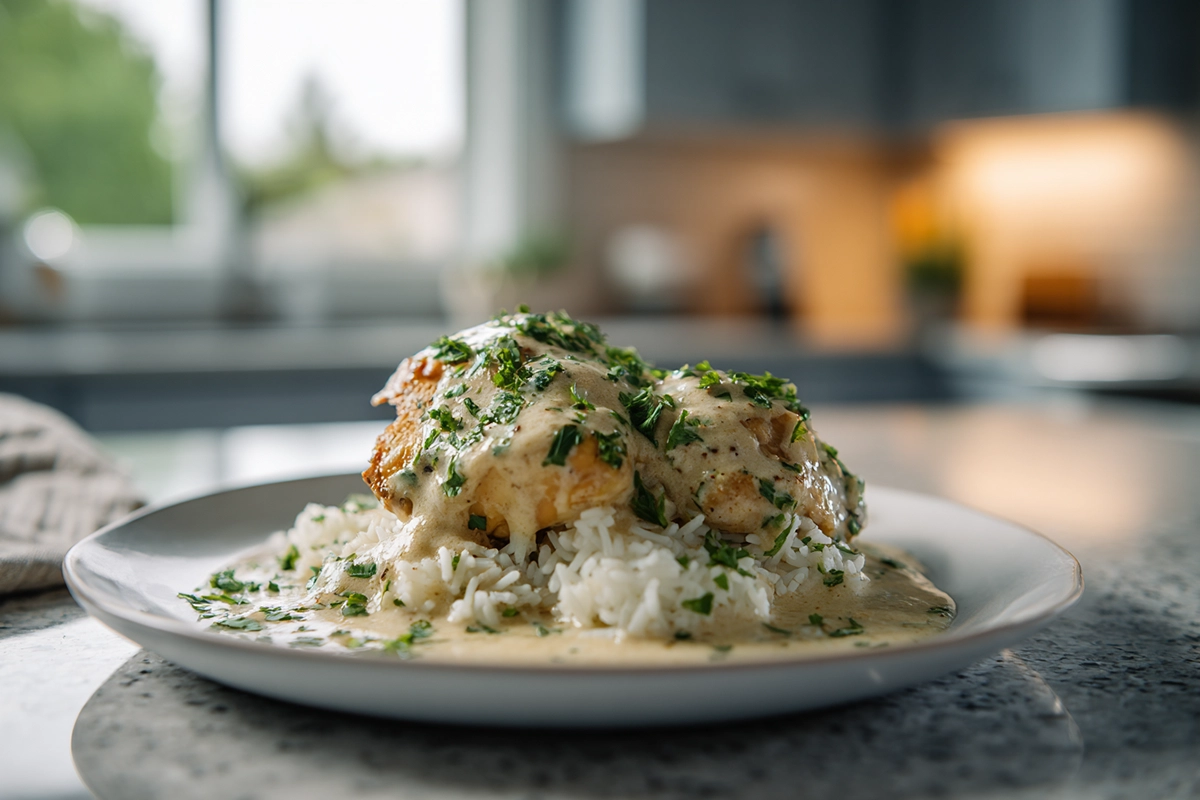
There’s a point in this dish where the kitchen settles down. The onions have softened into butter, the garlic has turned sweet, and the rice is coated in fat and spice before any liquid ever touches it. The sound is a steady, confident sizzle, not a rush. That’s when you know dinner is going to land where it should — creamy, filling, and familiar in a way that doesn’t try too hard.
Smothered Chicken and Rice works because it respects timing. The chicken is given heat early so it stays tender later. The rice is warmed and seasoned before it simmers, so it absorbs flavor instead of just liquid. Milk and broth come together slowly, thickened just enough to coat the grains without turning heavy. Even the cheese waits its turn, melting in at the end so the sauce stays smooth instead of tight.
This is the kind of meal that fits real evenings. One skillet. Ingredients you already recognize. A process that rewards patience more than precision. It’s rich without being overwhelming and comforting without feeling sloppy. The resting time matters as much as the cooking, and once you’ve made it this way, you’ll understand why rushing is the only real mistake.
What follows isn’t a race through steps, but a steady walk through the moments that matter — how to build flavor early, how to keep the rice creamy, and how to finish Smothered Chicken and Rice so it feels calm, dependable, and worth coming back to again.
Table of Contents
What Each Ingredient Is Actually Doing in the Skillet
Smothered Chicken and Rice depends less on variety and more on balance. Every ingredient here has a job tied directly to texture and timing, not decoration. The goal is a skillet that finishes creamy but calm, where the rice stays intact and the chicken remains tender instead of tightening up as it sits.
The fat combination sets the foundation. Butter brings flavor and softness, while olive oil keeps it stable over higher heat. Onion is not filler in this recipe — cooking it until properly golden creates the base note that carries through the entire dish. Garlic is added later so it smells toasted and sweet, never sharp.
Chicken thighs are chosen for how they behave, not just taste. They tolerate early heat and gentle simmering without drying out, which matters in a creamy chicken and rice skillet. Flour is used sparingly and late, not to create gravy but to lightly bind milk and broth so the rice cooks in something silky instead of thin. Basmati rice is key here; it absorbs flavor while staying separate, which keeps the final texture from drifting toward mush.
Cheese and optional cream come at the end for a reason. They round off the dish without interfering with how the rice cooks. This order is what keeps Smothered Chicken and Rice rich without becoming heavy halfway through the bowl.
- Unsalted butter: Adds richness without locking in salt too early.
- Olive oil: Protects the butter from burning during the initial high heat.
- Yellow onion: Builds sweetness and depth once fully softened and golden.
- Garlic cloves: Added with the chicken so the flavor stays mellow.
- Boneless chicken thighs: Stay tender and forgiving through simmering.
- All-purpose flour: Lightly thickens the liquid; more would make it pasty.
- Whole milk and chicken broth: Creaminess balanced with savory structure.
- Basmati rice: Absorbs liquid cleanly and holds its shape.
- Sharp cheddar cheese: Finishes the sauce without dulling the flavors.
If you only have salted butter, reduce the added salt later — the structure stays the same. Long-grain white rice can work, but it cooks softer and changes the final texture slightly. Other rice varieties don’t behave predictably here and tend to break the balance.

Why This Balance Keeps the Rice Creamy, Not Mushy
The biggest risk in any one-pan chicken and rice recipe is losing control of starch. Too much released too quickly and the dish turns heavy; too little and it feels thin. This recipe avoids that by letting the rice toast briefly in fat and seasoning before liquid is introduced. That short step firms the grains and slows how fast they release starch later.
Milk alone would cook unevenly, and broth alone would lack body. Together, they create a controlled environment where the rice absorbs flavor gradually. Flour acts as a quiet bridge, coating the grains just enough to support the sauce without trapping them. The seasoning blend — garlic powder, onion powder, thyme, paprika, and optional cayenne — spreads flavor evenly so no single bite spikes or falls flat.
Cheese waits until the rice has finished its work. Added too early, it interferes with absorption and tightens the sauce. Added at the end, it melts smoothly and finishes the dish without taking over. This is why resting time matters just as much as heat — the rice finishes absorbing off the burner, not while boiling.
This ingredient logic is what makes Smothered Chicken and Rice dependable. Nothing flashy, nothing wasted — just a calm system that delivers creamy rice, tender chicken, and a skillet that feels settled instead of stressed.
The Make-or-Break Step Most People Rush
The skillet needs to be properly hot before anything goes in. When the butter melts and foams quickly instead of pooling, you’re there. Add the onion and listen for a steady, confident sizzle — not silence, not sharp popping — and let it cook until the edges turn golden and the smell shifts from raw and sharp to sweet and buttery.
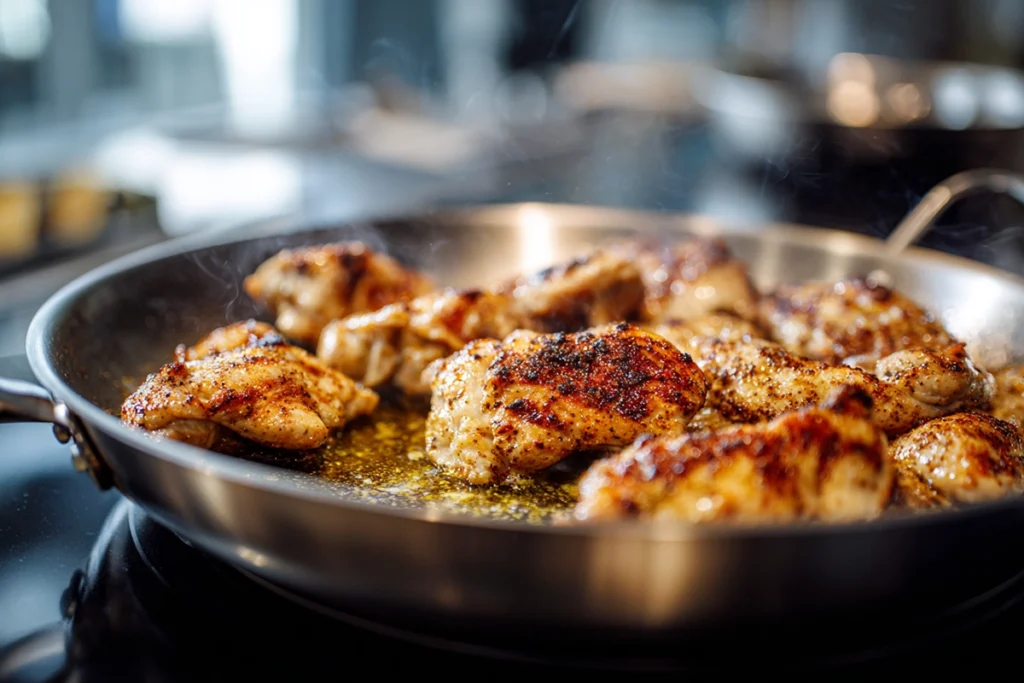
If you’re using mushrooms, they’ll tell you when they’re done. At first they hiss and release moisture, then the sound quiets and the pan looks almost dry again. That’s your cue. When the chicken goes in, spread it out and leave it alone long enough to sear lightly; it should sizzle firmly and turn opaque on the outside while still feeling soft and springy when pressed.
When the rice and seasonings hit the pan, everything tightens up. Stir constantly here. The grains should look glossy, lightly toasted, and coated in fat, and the smell will deepen into paprika, thyme, and garlic blooming together. This short phase is what keeps a creamy chicken and rice skillet from collapsing later.
Building the Sauce Without Breaking It
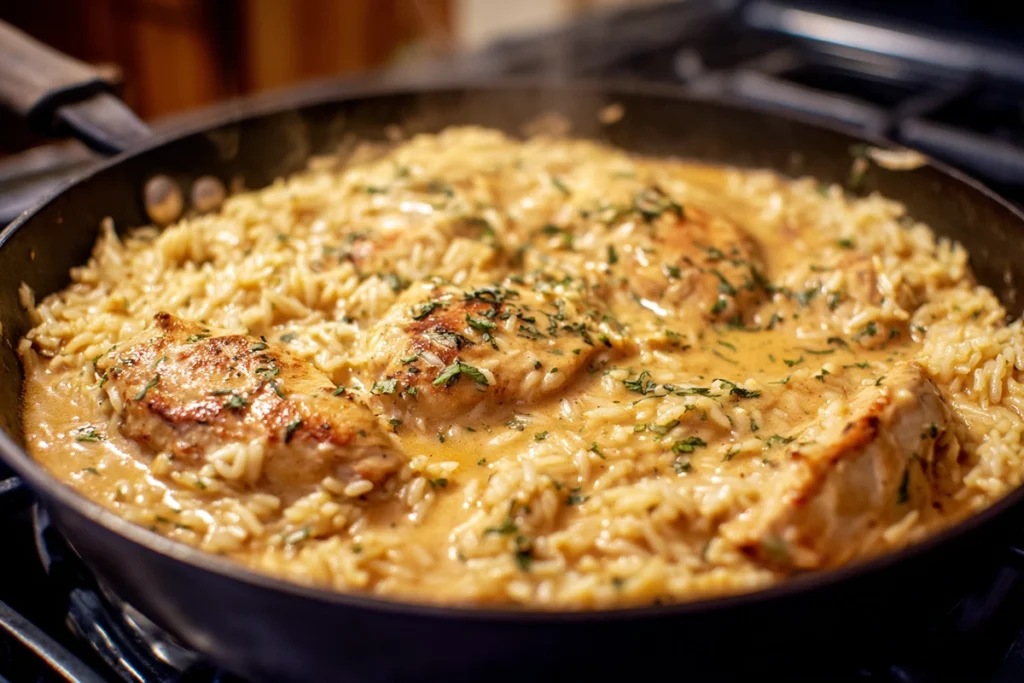
Lowering the heat is not optional at this point. Flour needs gentle warmth, not aggression — just enough to lose its raw smell without darkening. When the milk goes in, add it gradually and watch the texture; it should thicken smoothly and coat the spoon without clinging to it. Loud bubbling or clumps mean the heat crept too high.
The broth loosens everything back up, and once the skillet reaches a gentle simmer, the sound should be soft blips rather than a rolling boil. Covering the pan traps steam and controls how the rice absorbs liquid. Peek only if you must — the surface should look swollen and creamy, with small pockets of liquid still visible around the grains.
After cooking, the rest off heat is where the dish settles. The skillet goes quiet, and the rice finishes absorbing without breaking down. When the cheese is stirred in at the end, it should melt cleanly into the sauce, leaving Smothered Chicken and Rice creamy, calm, and spoonable — never tight, never soupy.
Small Adjustments That Still Respect the Dish
This recipe leaves room for a few practical swaps, as long as they respect how the rice cooks and how the sauce sets. If you have leftover rotisserie chicken, shred it while it’s cold and stir it in after the rice has finished cooking and resting. Adding it earlier will dry it out and throw off the texture. Chicken breasts can be used, but they’re best cooked separately and folded in near the end, since they tighten faster than thighs.
Long-grain white rice works if that’s what you have, but expect a softer, more casserole-like finish. Basmati rice holds its shape better and keeps the skillet calm. Avoid quick-cook or parboiled rice here — they absorb liquid too fast and turn the sauce pasty before the dish has time to settle. If you want a little heat, cayenne works quietly in the background; adding more cheese instead will weigh the dish down, not deepen it.
How I Like to Serve Smothered Chicken and Rice
Smothered Chicken and Rice is at its best served straight from the skillet while the sauce is relaxed and spoonable. It doesn’t need much alongside it, but something crisp and acidic helps balance the richness. A simple green salad with a sharp vinaigrette, quick-pickled green beans, or vinegar-dressed collard greens all do the job without stealing attention.
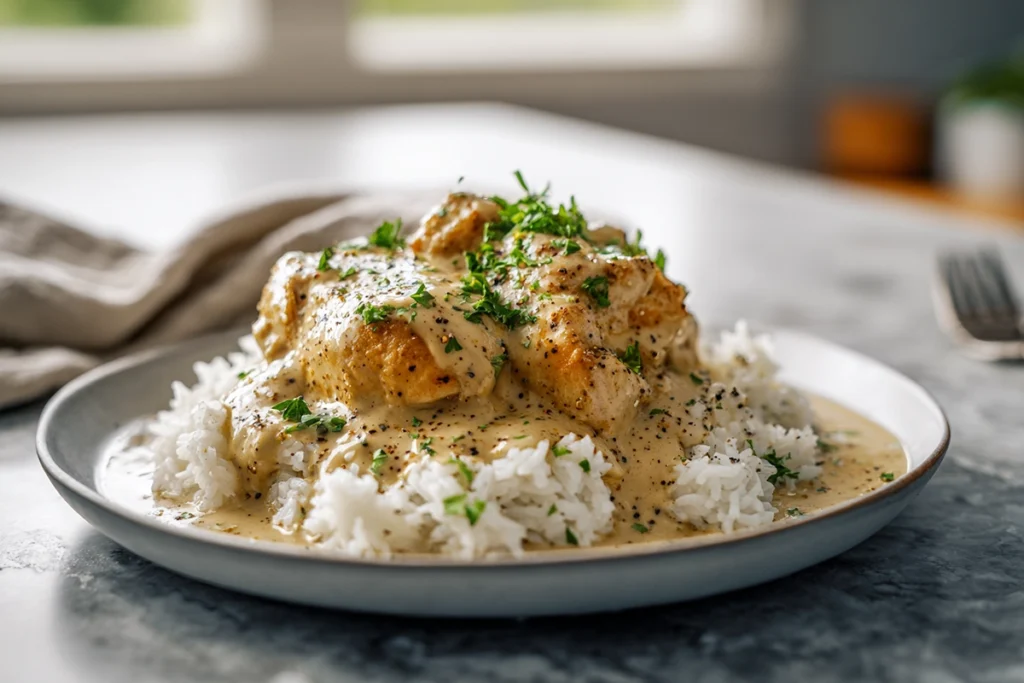
For family dinners, I keep it simple and let everyone serve themselves. For guests, a light finish makes a difference — a sprinkle of parsley and a small spoon of sour cream on top, not mixed in. This is a creamy chicken and rice dinner that fills the bowl and the room, so bread is optional, not required.
A Few Last Things Worth Knowing
If the dish looks slightly loose when you turn off the heat, don’t fix it. That’s exactly where it should be. The resting time does quiet work, and rushing it is the fastest way to turn a good skillet into a heavy one. Reheating leftovers gently with a splash of milk or broth brings it back without tightening the rice.
Smothered Chicken and Rice is the kind of meal that doesn’t ask for perfection, just attention. When you give it steady heat, the right order, and a little patience at the end, it rewards you with something dependable — a dinner that feels settled, comforting, and worth making again the next time you need the kitchen to feel like home.
Get inspired with more mouthwatering recipes! Follow me on Facebook and Pinterest for new cooking ideas every week.
FAQ
Why does Smothered Chicken and Rice look a little loose when it’s done cooking?
That’s expected and actually a good sign. The rice continues to absorb liquid while it rests off the heat, which is what gives the final dish its creamy but settled texture. If it looks slightly saucy before resting, it will tighten up naturally.
Can I use chicken breasts instead of chicken thighs?
You can, but the result will be less forgiving. Chicken breasts cook faster and tend to dry out, so they’re best cooked separately and folded in near the end. Thighs hold moisture better and work more smoothly in a creamy chicken and rice skillet.
What’s the best rice to use for this recipe?
Basmati rice works best because it stays fluffy and separate while absorbing flavor. Long-grain white rice can be used, but the final texture will be softer. Quick-cooking or parboiled rice isn’t recommended because it absorbs liquid too fast.
Can I make Smothered Chicken and Rice ahead of time?
Yes, but it’s best enjoyed fresh. If making ahead, let it cool completely before refrigerating, then reheat gently with a splash of milk or broth. This helps restore the creamy texture without overcooking the rice.
Why shouldn’t I skip the resting time?
The resting time allows the rice to finish absorbing liquid without boiling. Skipping it often leads to either soupy rice or a heavy texture once the dish cools. Those few minutes make a noticeable difference.
Print
Smothered Chicken and Rice
- Total Time: 40 minutes
- Yield: 6 servings 1x
- Diet: Halal
Description
Smothered Chicken and Rice is a cozy one-skillet dinner made with tender chicken thighs, fluffy rice, and a creamy, savory sauce finished with cheddar cheese. It’s dependable comfort food designed for real home kitchens.
Ingredients
- 2 tablespoons unsalted butter
- 1 tablespoon olive oil
- 1 large yellow onion, finely chopped
- 2 large garlic cloves, minced
- 1 cup sliced mushrooms (optional)
- 1 pound boneless skinless chicken thighs, cut into bite-size pieces
- 2½ tablespoons all-purpose flour
- 2 cups whole milk
- 2 cups chicken broth
- 1¼ cups uncooked basmati rice
- Salt and black pepper, to taste
- 1 cup freshly shredded sharp Cheddar cheese
- ¼ cup chopped parsley (optional)
- ½ cup heavy cream (optional)
- ½ cup sour cream (optional)
- 1 teaspoon garlic powder
- 1 teaspoon onion powder
- 1 teaspoon dried thyme
- 1 teaspoon paprika
- ¼ teaspoon cayenne pepper (optional)
Instructions
- Melt the butter with olive oil in a large skillet over high heat.
- Add the chopped onion and cook until golden and fragrant.
- Add mushrooms if using and cook until their moisture releases.
- Stir in the chicken and garlic, seasoning lightly with salt and pepper, and cook until the chicken turns white on the outside.
- Stir in the rice and all seasonings, cooking until the grains look glossy and lightly toasted.
- Reduce the heat, sprinkle in the flour, and stir briefly to remove the raw taste.
- Gradually whisk in the milk until smooth, then add the chicken broth.
- Bring to a gentle simmer, cover, and cook until the rice is tender.
- Remove from heat and let rest, covered, so the rice finishes absorbing liquid.
- Stir in half the cheese, then top with the remaining cheese and cover until melted.
- Finish with parsley and optional cream or sour cream before serving.
Notes
- Do not skip the resting time; it allows the rice to finish absorbing liquid.
- If the rice is still firm, add a splash of broth and cook a few minutes longer.
- Chicken breasts can be used, but should be cooked separately and added near the end.
- Store leftovers in an airtight container in the refrigerator for up to 4 days.
- Reheat gently with a splash of milk or broth to restore creaminess.
- Prep Time: 20 minutes
- Cook Time: 10 minutes
- Category: Dinner
- Method: Skillet
- Cuisine: American
Nutrition
- Serving Size: 1 serving
- Calories: 630
- Sugar: 7
- Sodium: 518
- Fat: 34
- Saturated Fat: 16
- Unsaturated Fat: 13
- Trans Fat: 1
- Carbohydrates: 45
- Fiber: 1
- Protein: 32
- Cholesterol: 141