Spicy Korean Chicken Katsu: Ultra-Crispy Cutlets with Glossy Gochujang Heat

The first time I made this, I rushed the oil. I was impatient, hungry, and convinced the chicken would “figure itself out.” It didn’t. The crust slid right off the first piece and floated around the pan like a breadcrumb island. I turned the heat down, let the oil actually get hot, and tried again. That second batch? Golden. Crisp. The kind of crunch you can hear before you even take a bite.
What makes this Spicy Korean Chicken Katsu special isn’t just the fry—it’s that lacquered red sauce. When soy sauce, honey, sugar, rice vinegar, garlic, ginger, and gochujang hit the heat together, the kitchen smells sharp, sweet, and a little smoky. The sauce thickens in barely a minute, turning glossy and bold. The first time I tasted it, I added a splash more rice vinegar because I wanted that sweet heat to snap a little brighter against the crispy crust. That balance is everything.
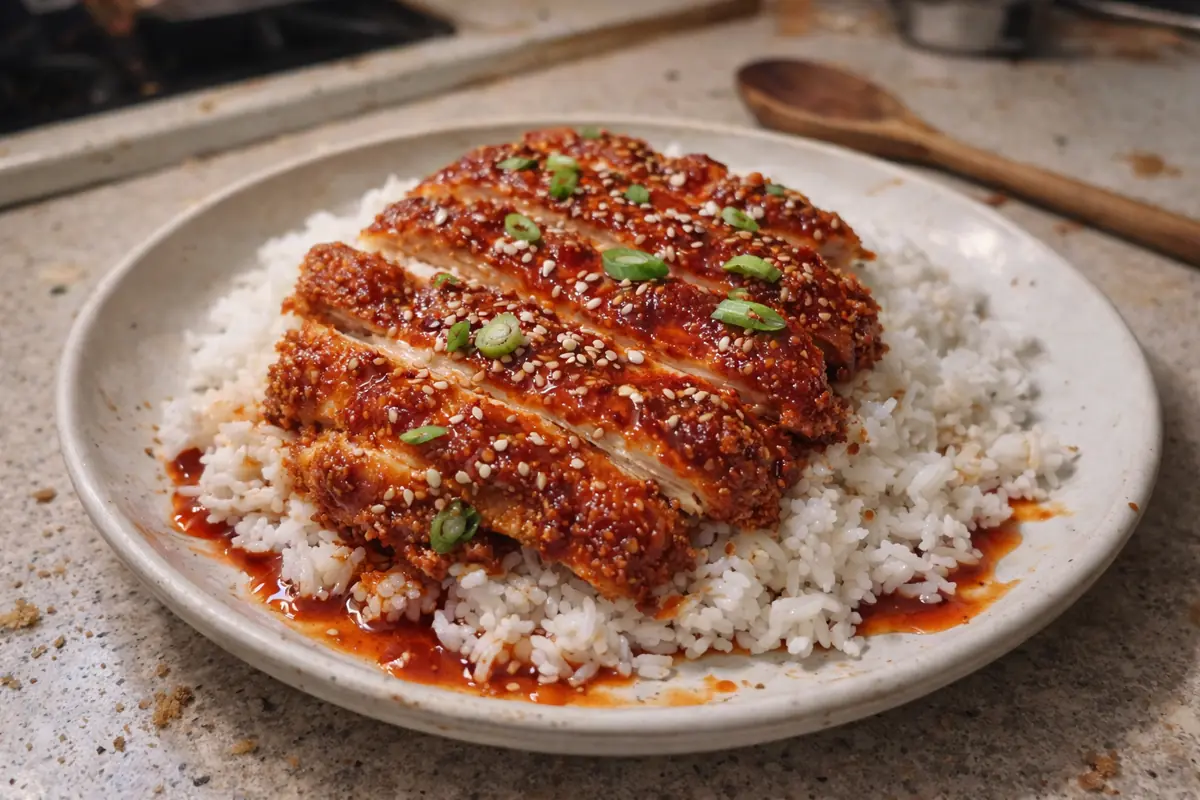
This isn’t deep-fried fast food. It’s a controlled shallow fry, thinly sliced chicken breasts, properly coated in flour, egg, and panko, then dipped right before serving so the crust stays proud and crisp. Slice it on the diagonal, spoon it over rice, sprinkle sesame seeds and green onion—and you’ve got something that feels modern, a little dramatic, but completely doable in a regular home kitchen.
Why This Spicy Korean Chicken Katsu Works (And Why Gochujang Is Non-Negotiable)
The backbone of Spicy Korean Chicken Katsu isn’t the fry—it’s the balance. You’ve got crisp, golden chicken on one side and a bold, glossy red glaze on the other. The sauce has to be layered: salty, sweet, acidic, and just enough heat to wake everything up without overpowering it. That’s why certain ingredients here aren’t optional upgrades—they’re structural.
Gochujang is the anchor. It brings fermented depth that regular hot sauce simply can’t replicate. It’s not just spicy; it’s savory and slightly sweet, with that slow-building warmth you expect from real Korean chicken dishes. The rice vinegar sharpens the sweetness from both honey and sugar, keeping the glaze from tasting heavy. Fresh garlic and ginger melt into the sauce when finely minced, giving it a clean aromatic base instead of sharp, raw bites.
On the chicken side, thinly sliced breasts create the ideal ratio of crust to meat. This is what gives you that modern, restaurant-style cutlet texture without deep frying. Panko breadcrumbs are what make this feel like true Asian-inspired comfort food—lighter, airier, and dramatically crisp compared to standard breadcrumbs.
- Soy Sauce: Builds the salty base; use regular, not dark soy, to avoid overpowering color and flavor.
- Rice Vinegar: Adds brightness; white vinegar works in a pinch, but rice vinegar keeps it smoother and less harsh.
- Sugar + Honey: Dual sweetness creates shine and body in the glaze.
- Gochujang: Essential for authentic flavor and balanced heat—do not substitute with sriracha.
- Fresh Garlic & Ginger: Must be finely minced so they dissolve into the sauce.
- Chicken Breasts: Slice horizontally for even cooking and better crust coverage.
- All-Purpose Flour: Creates the first dry layer; bread flour would make the coating too dense.
- Eggs: The glue that locks the crust in place.
- Panko or Golden Breadcrumbs: Panko delivers maximum crunch; regular crumbs are acceptable but less airy.
- Neutral Oil: Use vegetable, canola, or avocado oil—something with a high smoke point for shallow frying.

If you want to use chicken thighs instead of breasts, you absolutely can. They’re slightly richer and more forgiving, but trim excess fat and keep the thickness even. And if you’re tempted to skip pounding the chicken for uniform thickness, don’t. Even thickness means even frying, which means that the crisp shell stays intact instead of separating in the pan.
The Red Sauce: A One-Minute Boil That Changes Everything
This sauce is built for efficiency. Everything goes into the pan at once—no layering, no staging. It comes to a boil quickly, thickens slightly, and that’s it. The magic happens in that brief simmer. Too short and it tastes raw. Too long and it turns sticky and overly reduced.
The key is texture. You’re not making syrup. You’re building a glossy coating that clings to each cutlet without drowning the crunch. That’s what separates a good katsu from one that feels soggy.
- Balanced Sweetness: The combination of sugar and honey gives shine and body.
- Controlled Acid: Rice vinegar keeps the glaze sharp but not sour.
- Moderate Heat: Gochujang provides warmth rather than aggressive spice.
If the sauce thickens too much after sitting, a teaspoon of warm water will loosen it without diluting the flavor. And if you prefer more kick, increase the gochujang slightly—but keep the sweet-acid balance intact. That harmony is what makes this feel chic instead of chaotic.
The Make-or-Break Move: Frying Thin, Not Fragile
Start with the chicken. Slice each breast horizontally so you end up with thinner cutlets—about ½ inch thick. If one side feels noticeably thicker than the other, lay a piece of wax paper over it and gently pound it until it feels even under your palm. You’re not trying to flatten it into paper; you just want uniform thickness so it cooks at the same speed.
Set up your three-plate system: seasoned flour, whisked eggs, and panko. Press the breadcrumbs onto the chicken instead of just tossing it around. You want the coating to cling. When it hits the oil, it should sizzle confidently—sharp and steady—not quietly hiss. If there’s barely any sound, the oil isn’t ready.
Keep the heat at medium to medium-high. You’re shallow frying, not deep frying. The edges should turn golden brown before you even think about flipping. If you flip too early, the crust will separate and drift in the oil. Reality check: the first piece is usually your test piece. If it browns too fast, lower the heat slightly. If it’s pale after a few minutes, raise it just a touch.
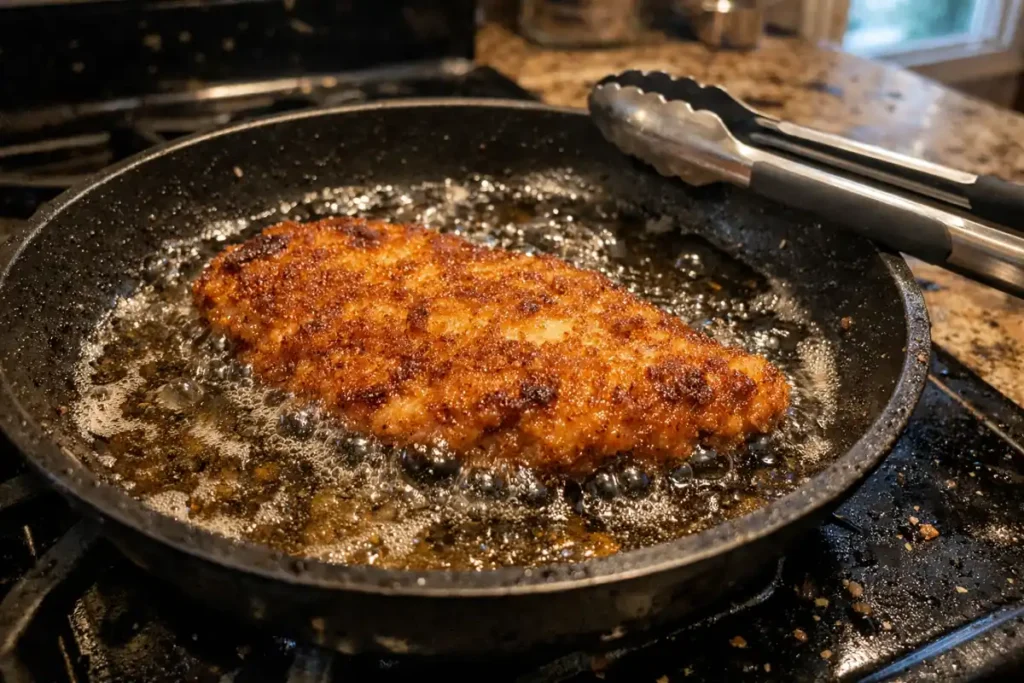
When done, the crust will look deeply golden and feel crisp when tapped with tongs. Transfer to paper towels immediately so it doesn’t sit in oil and soften.
The Red Sauce: A One-Minute Boil That Changes Everything
While the chicken rests, turn to the sauce. Add soy sauce, rice vinegar, sugar, honey, gochujang, garlic, and ginger to a frying pan. As it heats, you’ll smell garlic and ginger bloom first, followed by that slightly sweet, fermented aroma from the gochujang. Bring it to a quick boil—this should happen fast.
Let it bubble for about a minute. You’ll see it shift from thin and watery to slightly glossy. It should coat the back of a spoon lightly, not drip like water, and not cling like syrup. If it thickens too much, whisk in a teaspoon of warm water. If it’s still thin, give it another 20–30 seconds.
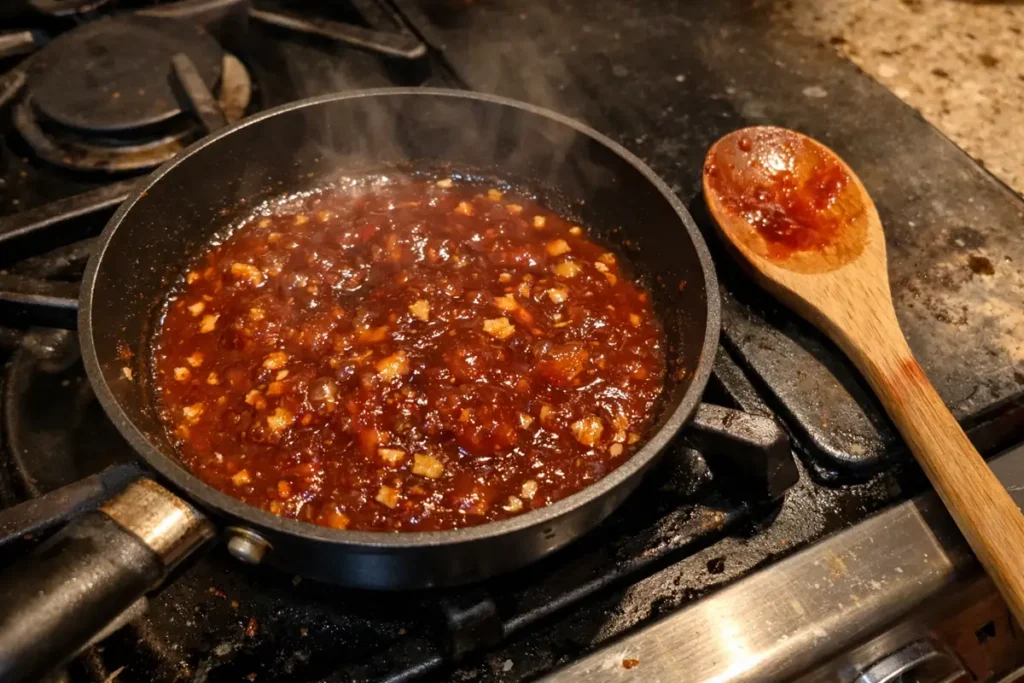
Right before serving your Asian-inspired comfort food masterpiece, dip each cutlet into the warm sauce. Turn it so the red glaze clings to every ridge. Don’t let it sit too long—this is where texture matters. The beauty of this Korean chicken technique is the contrast: ultra-crisp crust meeting sticky, spicy heat.
Smart Swaps That Won’t Ruin the Crunch
If you prefer chicken thighs over breasts, this recipe handles them beautifully. Thighs bring a slightly richer flavor and stay juicy even if you cook them a minute longer than planned. Just trim excess fat and pound them to even thickness so they fry evenly.
If you don’t have rice vinegar, white vinegar works—but use a light hand. White vinegar is sharper and more aggressive, so start with slightly less and adjust after tasting the sauce. The goal is balance, not bite.
Panko is strongly recommended for that signature airy crunch. Regular breadcrumbs will work, but the coating will be denser and less dramatic. And while baking might sound tempting for convenience, it won’t deliver the same crisp shell. If you try it, expect a lighter crunch and consider spraying the breaded chicken lightly with oil before baking at high heat.
As for spice levels, you can slightly increase the gochujang for more heat, but don’t double it without adjusting the sweetness. The sauce in this Spicy Korean Chicken Katsu relies on sweet-salty-acid harmony. If one element overpowers the rest, it loses that polished, modern feel.
How to Plate It Like a Modern & Chic Dinner
Serve this Korean chicken over hot, freshly steamed jasmine rice. The rice acts like a sponge, soaking up any extra red glaze without making the crust soggy. Slice the cutlet on a diagonal into thin strips and reassemble it over the rice so it still looks like a whole piece—this small detail makes it feel restaurant-worthy.
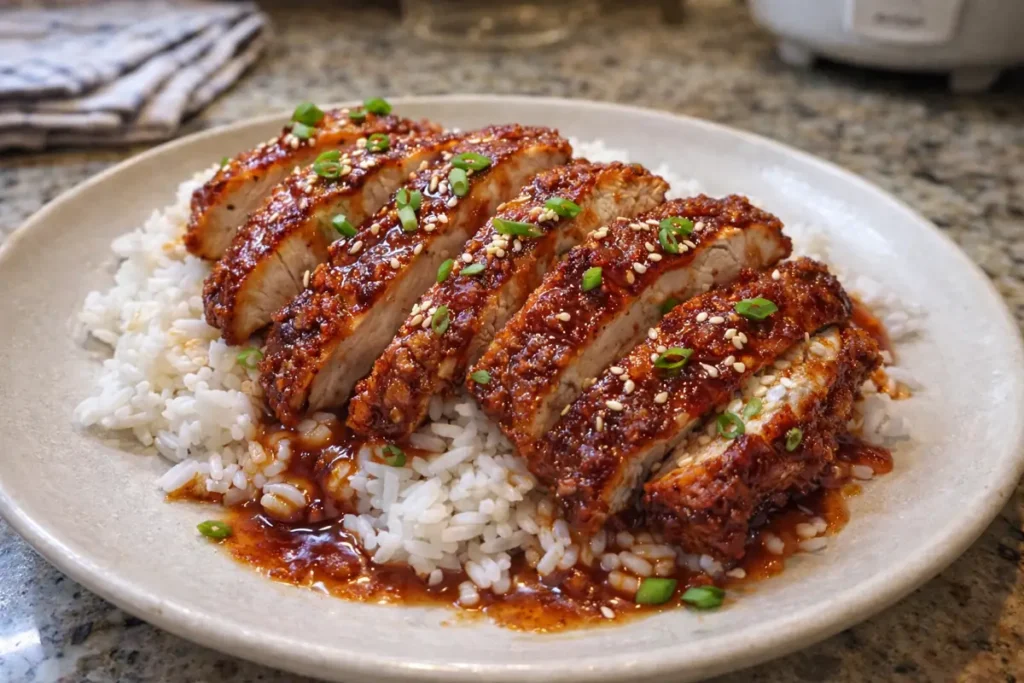
For contrast, pair it with something cool and crisp. A quick cucumber salad dressed with a splash of rice vinegar and a pinch of sugar cuts through the sweet heat beautifully. Lightly sautéed bok choy or simple shredded cabbage also works well if you want something warm but fresh.
If you’re leaning into that Asian-inspired comfort food vibe, sprinkle sesame seeds and thinly sliced green onions over the top right before serving. The sesame adds a nutty aroma, and the green onions bring a fresh snap that keeps the dish from feeling heavy.
The Small Details That Separate Good from Great
Don’t sauce the chicken too early. If it sits coated for too long, the crust softens. Dip or brush the glaze right before serving to keep that crisp edge intact.
Keep your oil temperature steady. If the oil cools down too much between batches, the crust absorbs oil instead of crisping. If it’s too hot, the outside browns before the inside cooks through. Listen for a steady, confident sizzle—that’s your guide.
And don’t overcrowd the pan. When pieces touch, they steam instead of frying. Give them space so each cutlet develops that even golden shell.
Spicy Korean Chicken Katsu is one of those meals that feels bold and slightly dramatic but is completely achievable in a regular kitchen. It’s crisp, glossy, sweet, and fiery all at once. Make it once, adjust it to your taste, and it just might become one of those repeat recipes your family asks for again before the plates are even cleared.
FAQ
Can I bake Spicy Korean Chicken Katsu instead of frying it?
You can bake it, but the texture will be different. The crust won’t be as deeply crisp and airy as when it’s shallow-fried. If you do bake it, place the breaded chicken on a wire rack, spray lightly with oil, and cook at a high temperature so the coating has a chance to brown properly.
Why is my breading falling off the chicken?
This usually happens if the oil isn’t hot enough or if you flip the chicken too early. The crust needs time to set and turn golden before you move it. Pressing the panko firmly onto the chicken and letting the coated pieces rest for a few minutes before frying also helps everything stick better.
Is gochujang very spicy?
Gochujang has warmth, but it’s not overwhelmingly hot. It’s more of a sweet, savory heat with depth from fermentation. If you’re sensitive to spice, you can slightly reduce the amount, but keep in mind that the balance of sweet and salty flavors is what makes the sauce work.
Can I make the sauce ahead of time?
Yes, the spicy red sauce can be made in advance and stored in the refrigerator. It will thicken as it cools, so gently reheat it before dipping the chicken. If it feels too thick, stir in a small splash of warm water until it loosens to a glossy consistency again.
Print
Spicy Korean Chicken Katsu
- Total Time: 35 minutes
- Yield: 4 servings 1x
Description
Crispy breaded chicken katsu dipped in a glossy, sweet and spicy gochujang sauce. Bold Korean-inspired flavor with serious crunch, perfect for a modern weeknight dinner at home.
Ingredients
- 1/4 cup soy sauce
- 1 tablespoon rice vinegar
- 1/8 cup plus 1 tablespoon sugar
- 1/8 cup honey
- 1/8 cup gochujang
- 2 cloves garlic, finely minced
- 1 teaspoon fresh ginger, minced
- 2 chicken breasts, sliced horizontally into 4 thin cutlets
- 1 cup all-purpose flour
- 1 teaspoon garlic powder
- 1/2 teaspoon salt
- 1/8 teaspoon black pepper
- 2 large eggs
- 1 cup panko breadcrumbs
- 1/4 to 1/2 cup neutral oil for shallow frying
Instructions
- In a medium frying pan, combine soy sauce, rice vinegar, sugar, honey, gochujang, garlic, and ginger. Bring to a boil over medium-high heat, then reduce slightly and simmer for 1 minute until glossy. Remove from heat and set aside.
- Slice chicken breasts horizontally into thin cutlets about 1/2 inch thick. Pound lightly if needed for even thickness.
- Set up three plates: flour mixed with garlic powder, salt, and pepper; beaten eggs; and panko breadcrumbs.
- Dredge each chicken piece in flour, dip in egg, then coat firmly in panko. Let rest briefly.
- Heat oil in a frying pan over medium to medium-high heat. Fry chicken until golden brown on one side, then flip and cook until fully cooked and crisp.
- Transfer to paper towels to drain excess oil.
- Reheat sauce gently if needed. Dip each cutlet into the warm sauce to coat evenly.
- Slice diagonally and serve over steamed rice. Garnish with sesame seeds and sliced green onions if desired.
Notes
- Maintain steady oil temperature for best crisp texture.
- Do not overcrowd the pan; fry in batches if needed.
- Sauce the chicken right before serving to preserve crunch.
- If sauce thickens too much, stir in a small splash of warm water.
- Prep Time: 20 minutes
- Cook Time: 15 minutes
- Category: Main Dish
- Method: Shallow Fry
- Cuisine: Asian
Nutrition
- Serving Size: 1 cutlet
- Calories: 620
- Sugar: 22
- Sodium: 1250
- Fat: 32
- Saturated Fat: 6
- Unsaturated Fat: 22
- Trans Fat: 0
- Carbohydrates: 55
- Fiber: 2
- Protein: 38
- Cholesterol: 170