Spicy Shrimp Soup: Bright Heat with a Clean, Garlicky Broth

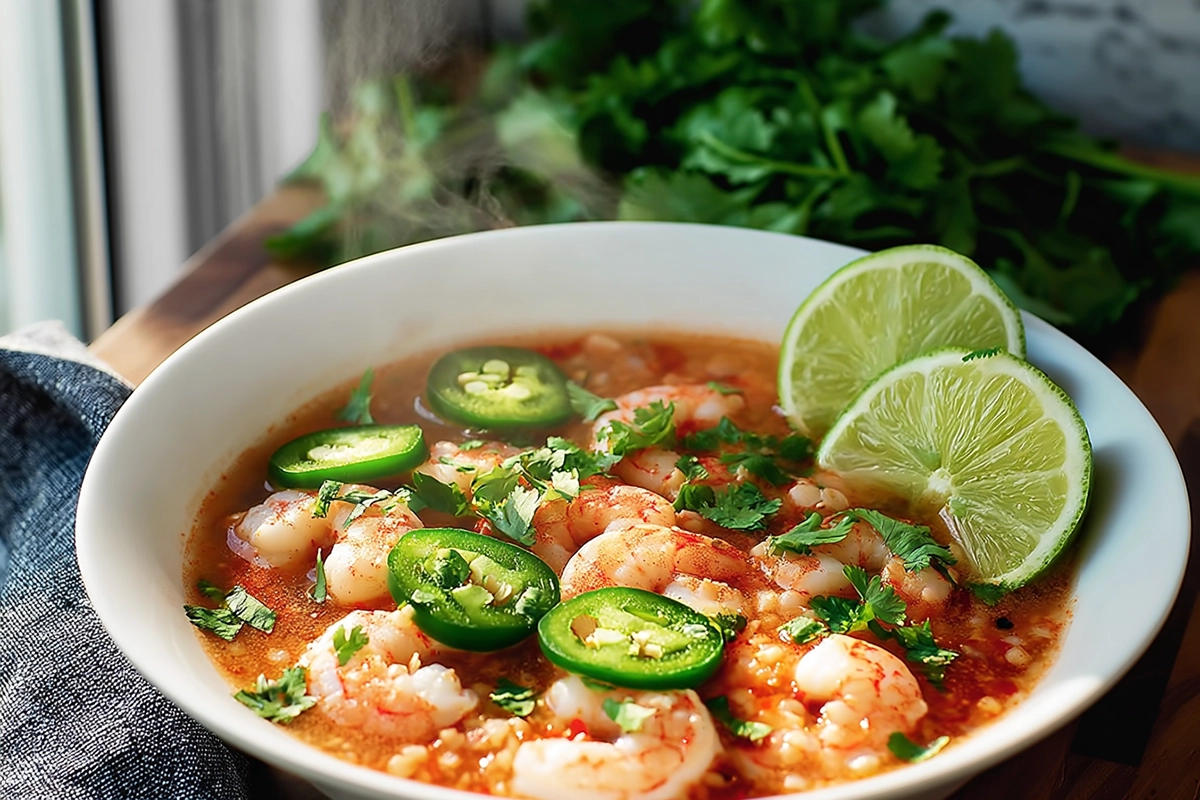
The first thing you notice is the garlic hitting warm butter—nutty, round, and just shy of browning. Then comes tomato, bay, and a gentle simmer that smells savory rather than sharp. This is the kind of soup that fills the kitchen without shouting. It carries heat, but it’s controlled. The broth stays clear and glossy, not heavy, and the shrimp keep their snap instead of turning tight and chalky. The payoff is a bowl that feels warming and fresh at the same time—something you want to finish, not pick at.
What makes this soup work isn’t one bold move, but a series of small decisions that add up. Two stocks instead of one, so the broth has backbone without tasting fishy. Jalapeño handled in layers—one mellowed by heat, one left crisp and bright. Lime held back until the end, so it lifts the garlic and chili instead of flattening them. Even the rice stays out of the pot, added to the bowl on purpose, so the soup keeps its balance and reheats cleanly.
This spicy shrimp soup rewards attention more than speed. The shrimp go in only after the broth has settled into itself. The butter and flour are cooked just long enough to smooth the texture without weighing it down. Nothing here is complicated, but the order matters. Once you understand why each step exists, the process feels calm and repeatable—the kind of cooking that fits real kitchens and busy nights, and still feels special when it hits the table.
Table of Contents
Why Two Stocks Make This Taste Like a Restaurant Soup
This spicy shrimp soup doesn’t rely on cream or long reduction for depth. The body comes from using two different stocks, each doing a separate job. Chicken stock brings familiarity and roundness—the kind of savory backbone most home cooks recognize. Seafood stock adds salinity and quiet complexity without pushing the soup into fish stew territory. Used together, they create a broth that tastes finished and balanced instead of thin or aggressively briny.
If you only use seafood stock, the soup can taste sharp and one-note. If you only use chicken stock, the shrimp feel disconnected from the broth. The combination solves both problems in a very practical way.
- Chicken stock: Adds body and a neutral savory base that carries garlic and tomato.
- Seafood stock: Brings subtle ocean sweetness that reinforces the shrimp instead of overpowering it.

The Butter–Flour Base That Sets the Texture (Without Turning Heavy
This soup doesn’t thicken by accident. A small amount of butter and gluten-free flour is cooked gently with the aromatics to create a light base—just enough to give the broth a silky finish. The goal isn’t richness; it’s cohesion. You want the tomato, stock, and spice to stay married instead of separating as they simmer.
The butter should melt and foam softly, not brown aggressively. Once the flour goes in, it needs a full minute to lose its raw edge. Rush this, and the soup will taste chalky. Push it too far, and the base turns nutty and heavy, which works against the fresh, sunny profile.
- Butter: Builds flavor and mouthfeel; keep the heat moderate so it doesn’t brown.
- Gluten-free flour: Thickens gently; regular all-purpose flour works the same here if that’s what you use.
Building Heat in Layers, Not All at Once
Heat in this soup is deliberate. One jalapeño simmers in the broth with its seeds removed, lending warmth and aroma without sharpness. The second is sliced fresh and added at the end, bringing brightness and a clean, green bite. This layered approach keeps the soup spicy but readable—you taste garlic, tomato, shrimp, and citrus instead of just heat.
If you want more fire, the adjustment happens here, not later. Leaving seeds on the simmered jalapeño deepens the heat. Adding more raw slices sharpens it.
- Jalapeños: One seeded for simmering, one fresh for serving—two different kinds of heat.
- White pepper: Adds warmth without the harsh bite of black pepper.
Rice in the Bowl, Not the Pot (There’s a Reason)
The rice isn’t there to bulk up the soup; it’s there to anchor it. Adding cooked white rice directly to the bowl keeps the broth clean and prevents it from turning starchy or muddy as it sits. It also makes leftovers better—the soup reheats like soup, not porridge.
This small choice keeps the texture controlled and the flavors clear, especially important in a shrimp soup where delicacy matters.
- Cooked white rice: Neutral, soft, and added per bowl to protect the broth.
Lime, Tomato, and the Balance Point
Tomato sauce gives the soup its color and gentle acidity, but the final balance comes from lime added at the very end. Acid wakes up garlic and chili, and it tightens the broth so it tastes clean instead of flat. Lime is added gradually because once it’s in, there’s no pulling it back.
This is where the soup shifts from good to craveable.
- Tomato sauce: Provides sweetness and body without overwhelming the broth.
- Fresh lime: Added to taste at the end to sharpen and brighten everything.
The Moment This Soup Comes Together (And When It Can Fall Apart)
This is a soup built on restraint, especially early on. When the butter melts in the pot, it should foam quietly and smell sweet, not browned. The shallot and garlic go in together, and the sound you want is a gentle sizzle—active, but calm. If the garlic starts snapping or turning dark at the edges, the heat is too high, and the base will taste sharp instead of rounded.
Once the flour is stirred in, the mixture should look glossy and slightly thick, clinging to the bottom of the pot. After about a minute, the raw smell disappears and is replaced by something warm and neutral. That’s the window. Miss it, and the texture of the shrimp soup never quite recovers.

Building the Broth Without Rushing It
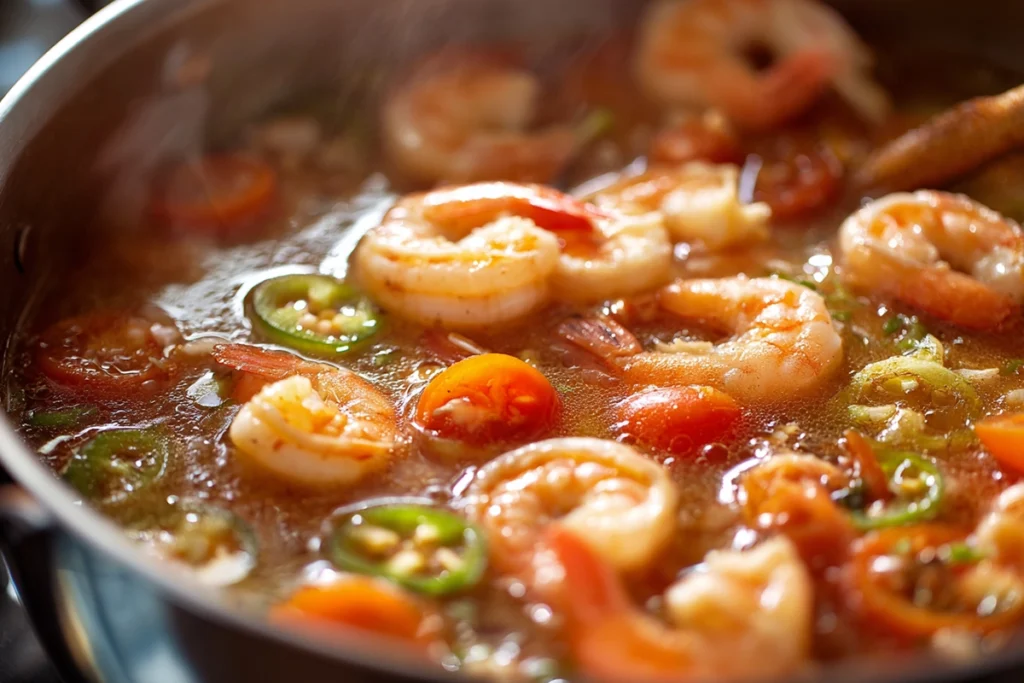
When the tomato sauce and stocks hit the pot, everything loosens and settles. The broth should come to a light simmer, not a rolling boil. You’ll see small bubbles breaking the surface and hear a steady, quiet burble. This is where the bay leaves, oregano, thyme, and jalapeño start working together, softening into the liquid instead of sitting on top of it.
As it simmers, the color deepens slightly and the smell shifts from tomato-forward to savory and garlicky. That’s your cue that the soup is developing, not just heating. Cover the pot partially and let it do its thing—this is not the moment to stir constantly.
Layering Heat So It Tastes Clean, Not Loud
The simmered jalapeño should be present but gentle, giving warmth without edge. You’ll know it’s right when the broth tastes rounded instead of sharp. Pull the pepper and bay leaves before moving forward; their job is done. At this point, the soup should taste balanced but slightly incomplete, which is exactly where you want it.
Fresh jalapeño added later brings snap and brightness. It shouldn’t melt into the soup—it should stay crisp, almost grassy, cutting through the richness of the butter and stock.
Cooking Shrimp in a Way That Keeps Them Tender
Shrimp are added only after the broth has fully settled. Bring the soup back to a lively simmer, then drop them in and watch closely. They’ll curl and turn opaque quickly, usually in a minute or two. When they feel firm but still springy—like pressing the base of your thumb—they’re done.
Any longer, and they tighten. Any sooner, and they’re undercooked. This is the make-or-break moment for spicy shrimp soup, and it rewards attention more than timing charts ever could.
The Last Adjustments That Make It Taste Finished
Lime juice goes in off the heat. The smell should lift immediately—brighter, cleaner, sharper at the edges. Stir, taste, and stop when the broth tastes awake but not sour. Salt is adjusted here too, in small pinches, because acid changes how salt reads on the tongue.
The rice goes into the bowl, not the pot. Ladle the soup over it, listening for the quiet splash and watching the broth stay clear instead of cloudy. That’s how you know the balance held all the way to the end.
Small Adjustments That Still Respect the Soup
This soup is fairly specific in how it comes together, but there’s room to adjust without losing what makes it work. If you don’t have seafood stock, using all chicken stock is acceptable, but expect a milder broth. In that case, lean a little harder on the lime at the end to sharpen things back up. Vegetable stock is not a good substitute here—it flattens the shrimp and muddies the tomato.
For heat, the safest way to change the spice level is through the jalapeños, not extra pepper. Leaving the seeds on the simmered jalapeño deepens the warmth throughout the soup. Adding more raw jalapeño at serving keeps the heat bright and clean. Avoid adding dried chili flakes during simmering—they overwhelm the garlic and fight the bay and oregano.
If you’re working with smaller shrimp, add them even later than suggested and pull the pot off the heat as soon as they turn opaque. Overcooked shrimp are the fastest way to undo an otherwise careful pot of soup.
How to Serve This So It Eats Like a Meal
This soup is meant to be served hot and immediately, while the shrimp are still tender and the broth is lively. Spoon cooked white rice into the bowl first, then ladle the soup over the top so the grains soak up flavor without stealing body from the broth. Fresh cilantro adds a clean finish, and extra lime wedges let everyone tune the brightness to their own taste.

This spicy shrimp soup pairs best with something crisp and simple. A sliced avocado with salt and lime works well on the side, as does a light cucumber salad if you want contrast. Skip bread that’s too crusty—it distracts from the broth instead of complementing it.
A Few Last Things Worth Remembering
Resist the urge to over-stir once the soup is simmering. Let the flavors settle on their own. Trust your nose more than the clock—when it smells rounded and savory instead of sharp, it’s ready for shrimp. And always adjust acid and salt at the very end, together.
This is the kind of soup that rewards calm cooking and attention, not speed.
There’s something grounding about making a pot of spicy shrimp soup that asks you to slow down just enough to notice what’s happening in the pot. When the shrimp are tender, the broth is bright, and the heat feels clean instead of loud, you end up with a meal that feels finished and comforting in the same way good home cooking always does—the kind you remember, and come back to, without needing a reason.
Get inspired with more mouthwatering recipes! Follow me on Facebook and Pinterest for new cooking ideas every week.
FAQ
Can I make this spicy shrimp soup ahead of time?
You can prepare the broth a day ahead and refrigerate it, but wait to add the shrimp until just before serving. Shrimp cook very quickly and tend to turn firm if reheated. Bringing the broth back to a simmer and adding the shrimp fresh keeps the texture tender and clean.
Why did my shrimp turn rubbery?
Shrimp become rubbery when they cook too long or sit in hot liquid after they’re done. In this soup, they only need a minute or two once added. As soon as they turn opaque and curl gently, they’re ready, and the heat should be lowered or turned off.
Is this soup supposed to be spicy or just warm?
This spicy shrimp soup is meant to have noticeable heat, but it shouldn’t overwhelm the garlic, tomato, or lime. If it tastes aggressively spicy, too much heat was added early on. The best balance comes from simmered jalapeño for warmth and fresh jalapeño at the end for brightness.
Can I freeze spicy shrimp soup?
Freezing isn’t ideal once the shrimp are added, as their texture suffers when thawed. If you want to freeze it, freeze only the broth portion and add fresh shrimp when reheating. The broth freezes well and keeps its flavor.
Why is the rice added to the bowl instead of the pot?
Adding rice directly to the pot causes it to absorb too much liquid and thicken the soup over time. Placing rice in the bowl keeps the broth clear and balanced, especially for leftovers. It also lets each serving stay consistent from the first bowl to the last.
Print
Spicy Shrimp Soup
- Total Time: 50 minutes
- Yield: 4 servings 1x
- Diet: Gluten Free
Description
Bright, garlicky spicy shrimp soup with clean heat and a balanced broth. Made with shrimp, tomato, jalapeño, lime, and served over rice for a comforting but fresh meal.
Ingredients
- 1/4 cup butter
- 1 large shallot, finely chopped
- 5 cloves garlic, minced
- 1 tablespoon gluten free flour
- 3 cups chicken stock
- 2 cups seafood stock
- 1 cup tomato sauce
- 2 jalapeños, divided
- 3 small bay leaves
- 1/2 teaspoon dried oregano
- 1/2 teaspoon salt
- 1/4 teaspoon dried thyme
- 1/4 teaspoon white pepper
- 3/4 lb jumbo shrimp, peeled and deveined
- 2 limes
- Cooked white rice, for serving
- Fresh cilantro, chopped
Instructions
- Melt the butter in a large Dutch oven over medium heat until softly foaming.
- Add the shallot and garlic and cook gently until tender and lightly golden.
- Stir in the flour and cook briefly until glossy and smooth.
- Add tomato sauce, chicken stock, seafood stock, one seeded jalapeño, bay leaves, and spices, then bring to a gentle simmer.
- Simmer partially covered until the broth is savory and well developed.
- Remove bay leaves and jalapeño, then add lime juice to taste.
- Bring the soup back to a simmer and add shrimp, cooking just until opaque.
- Serve hot over cooked rice and garnish with fresh jalapeño slices, cilantro, and lime wedges.
Notes
- Do not overcook the shrimp, as they will turn rubbery.
- For extra heat, leave seeds on the simmered jalapeño.
- Add rice to the bowl, not the pot, to keep the broth clear.
- Prep Time: 10 minutes
- Cook Time: 40 minutes
- Category: Soup
- Method: Simmering
- Cuisine: American
Nutrition
- Serving Size: 1 bowl
- Calories: 289
- Sugar: 7
- Sodium: 1800
- Fat: 15
- Saturated Fat: 8
- Unsaturated Fat: 5
- Trans Fat: 0.5
- Carbohydrates: 19
- Fiber: 3
- Protein: 20
- Cholesterol: 143