Squid Ink Pasta That Looks Bold but Cooks Like Comfort Food

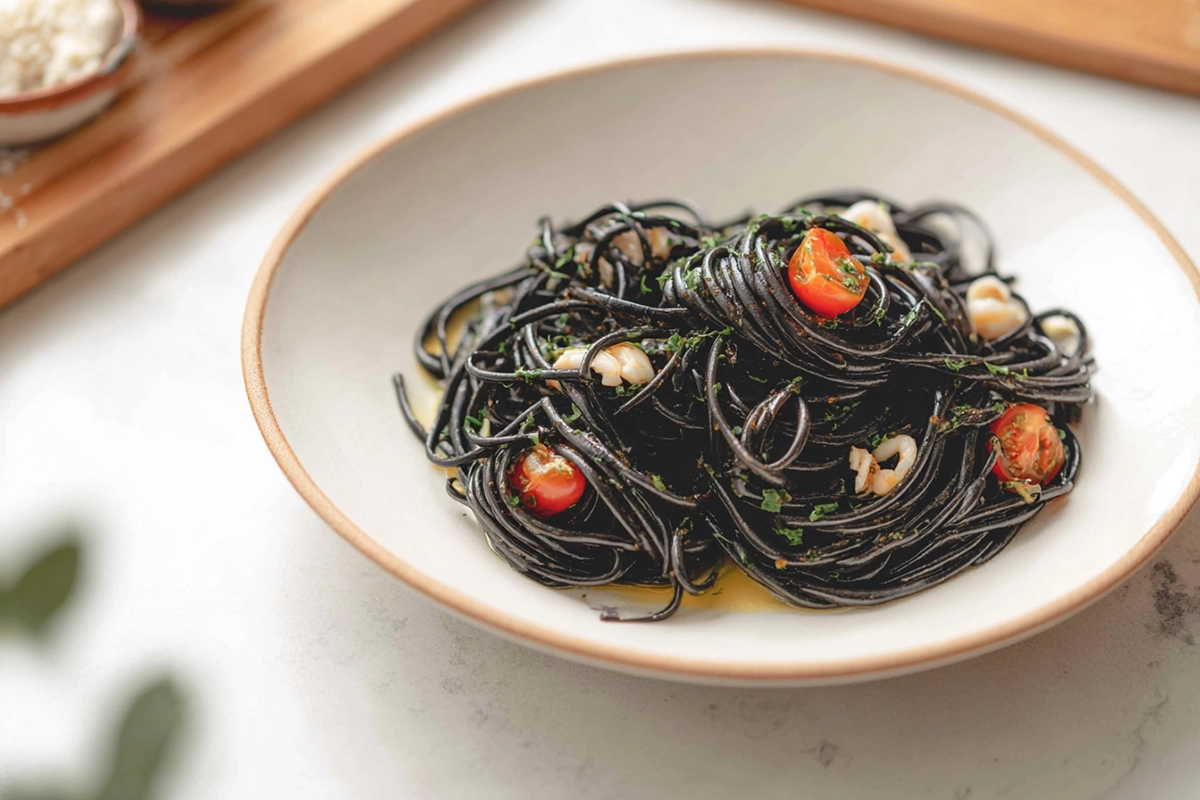
The first time you make squid ink pasta, it feels a little dramatic. The dough turns inky black, your counter looks like it belongs in an art studio, and you wonder if this is one of those recipes that’s more impressive than practical. But once you get your hands into the dough, everything settles down. It’s just flour and eggs, kneaded together like so many pastas before it, only with a deeper color and a quiet ocean note that makes the whole dish feel special.
This is the kind of recipe that surprises you in the best way. It looks restaurant-fancy, yet it behaves like a familiar homemade pasta. And once it hits the pot and meets a simple sauce, squid ink pasta proves it belongs just as much in a real American kitchen as it does on an Italian menu.
Why This Pasta Always Feels Special in My Kitchen
I still remember the first time I made black pasta at home. I was convinced it would be messy, finicky, and somehow fragile. Instead, it turned out calm and cooperative, like it knew exactly what it was doing. The color alone makes you slow down and pay attention, but the process itself is grounding in the same way all pasta-making is.
What I love most is that squid ink pasta feels celebratory without being complicated. You don’t need fancy fillings or heavy sauces. The dough itself carries enough character to make dinner feel intentional, even on a quiet night. Once you’ve made it once, the intimidation disappears, and it becomes just another comforting recipe you trust.
Ingredients That Matter (and Why They’re Simple on Purpose)
This dough stays intentionally minimal. With fewer ingredients, each one has a clear role, and there’s less room for things to go wrong.
Ingredients
- 2 large eggs
- 1 teaspoon squid ink or cuttlefish ink
- 1 ½ cups all-purpose flour, plus more for dusting
That’s it. The eggs provide richness and structure. The flour builds the dough. The squid ink brings color and a gentle briny depth that’s more savory than seafood-forward.
Squid ink doesn’t taste fishy. Think of it as adding umami, not seafood flavor. If you can find cuttlefish ink instead, it works the same way. Most American cooks source it online or from specialty Italian markets, and a small jar lasts a long time since you only need a teaspoon at a time.

The Dough: What You’re Looking For Before You Roll
Mixing Without Overworking
Start by combining the eggs and squid ink until they’re fully blended but not whipped. You want a smooth, dark mixture without bubbles. Overmixing introduces air, which can weaken the dough later.
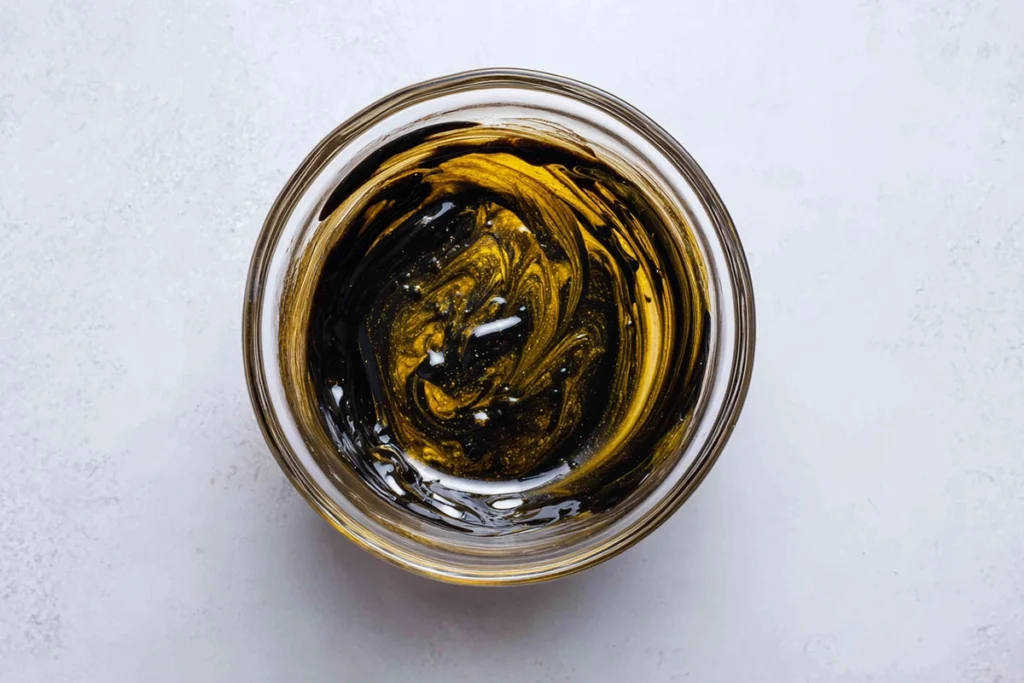
Once the flour goes in, pulse or mix just until everything comes together in soft clumps. At this stage, the dough might look a little rough, and that’s exactly right. Pasta dough develops strength through kneading, not mixing.
Kneading and Resting Signals
Turn the dough out onto a lightly floured surface and bring it together with your hands. Knead gently for a minute or two until it feels smooth and supple. The dough should be soft but not sticky. If it clings to your fingers, dust in a little more flour as you go.
When it’s ready, wrap the dough tightly and let it rest at room temperature for about 30 minutes. This rest allows the gluten to relax, making the dough easier to roll and giving you smoother pasta sheets later. You can refrigerate the dough for up to two days, but always let it come back to room temperature before rolling.
Rolling and Cutting: Thickness, Shape, and Control
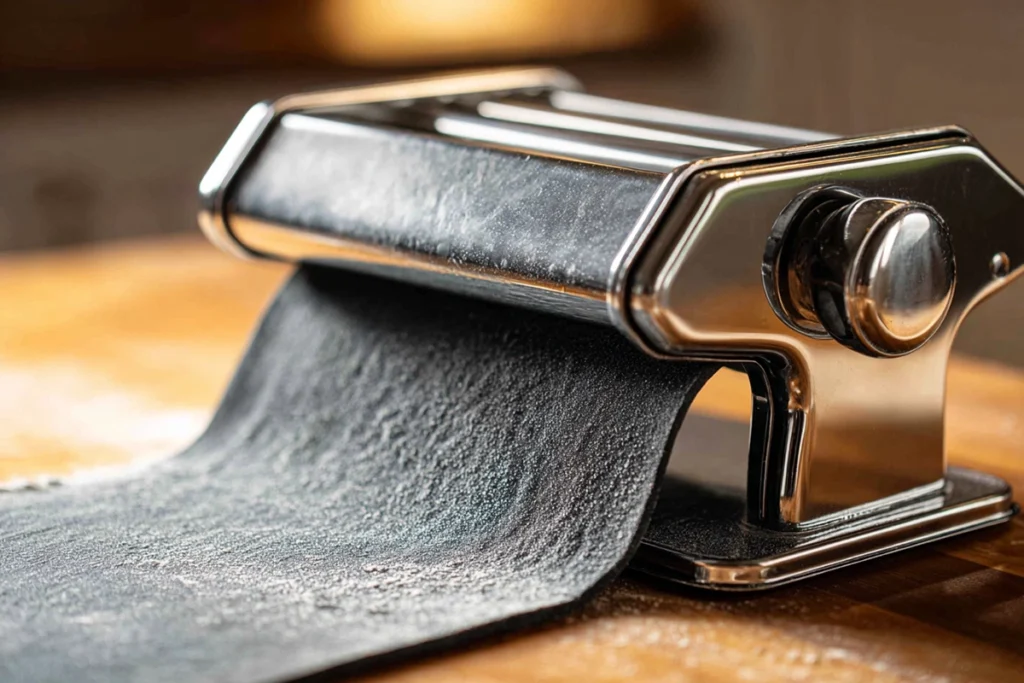
Cut off a portion of the dough and keep the rest wrapped so it doesn’t dry out. Flatten the piece slightly, dust it with flour, and run it through your pasta roller on the widest setting a few times. You’ll notice the dough becoming more even and elastic with each pass.
Gradually work down to thinner settings, dusting lightly with flour as needed. Squid ink dough tends to be softer than plain pasta dough, so don’t be shy about flour if it starts to stick. For most shapes, a medium thickness works beautifully. Thin enough to be tender, but sturdy enough to carry sauce.
Once rolled, cut the sheets into linguine or fettuccine, or leave them whole for ravioli. The dramatic black color really shines in long ribbons, but this dough is versatile enough for nearly any shape.
Cooking It Right: Timing, Texture, and Visual Cues
Fresh squid ink pasta cooks quickly. Bring a pot of well-salted water to a full boil, then add the pasta in small batches so the strands don’t clump.
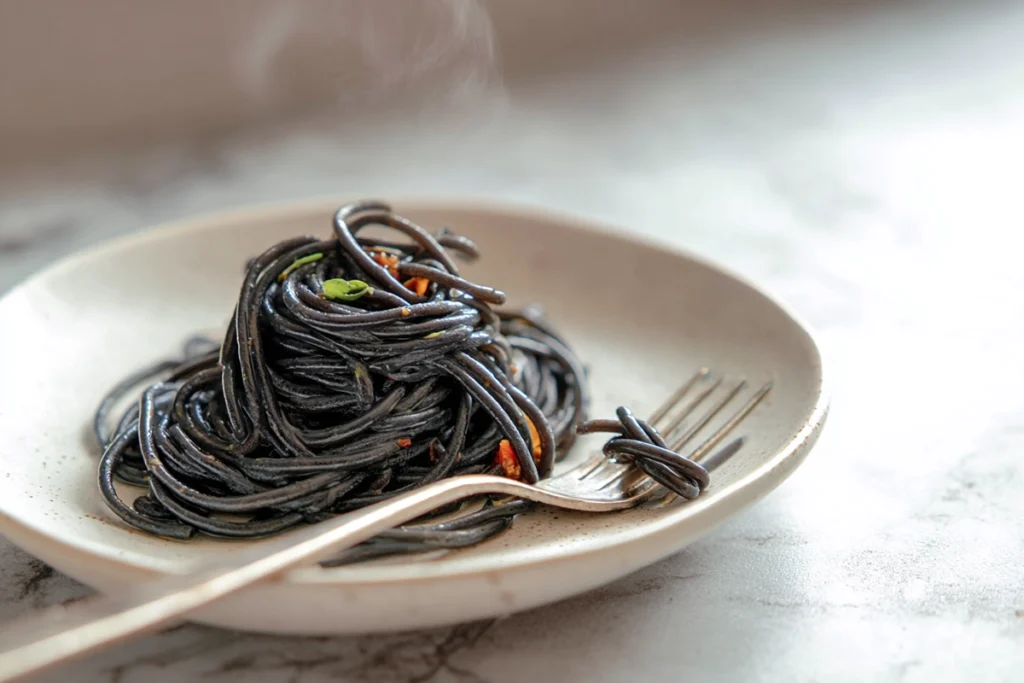
Because the pasta is black, you can’t rely on color changes to judge doneness. Instead, watch how it moves. When the strands float freely and soften into gentle curves, they’re close. Taste after two minutes. You’re looking for tender pasta with just a slight bite in the center.
Once cooked, drain quickly and transfer directly to your sauce. Fresh pasta doesn’t like to sit, and squid ink pasta is at its best when it goes straight from water to pan.
Sauces That Let Squid Ink Pasta Shine
The beauty of squid ink pasta is its balance. It doesn’t need heavy cream or overpowering flavors. Lighter sauces let the pasta’s subtle brininess come through.
Olive oil with garlic and red pepper flakes is a classic choice. A simple butter sauce with lemon zest works beautifully too. If you want seafood, think shrimp, scallops, or clams, added gently so they complement rather than dominate.
Avoid thick, heavily spiced sauces. They tend to mask the pasta’s personality instead of highlighting it. This is one of those dishes where restraint pays off.
Variations That Actually Make Sense
You can add small touches without changing the soul of the dish. A pinch of chili flakes adds warmth. Fresh herbs like parsley or chives brighten the plate. For stuffed pasta, roll the dough a bit thinner so it seals cleanly around fillings.
If you want to turn this into a more filling main dish, pair it with a light seafood protein or a side salad instead of loading it up with extras. The pasta should always stay center stage.
Storage, Make-Ahead, and Leftovers
Fresh squid ink pasta can be made ahead and kept lightly floured in the refrigerator for up to a day. You can also freeze it in loose nests on a tray, then transfer to a freezer bag once solid. Cook straight from frozen, adding about a minute to the cook time.
Cooked pasta doesn’t reheat well, especially fresh pasta. If you have leftovers, gently warm them in a pan with a splash of water or oil, but know the texture will soften more than it did the first time.
Common Mistakes and How to Fix Them
If your dough feels sticky, it usually needs more flour or a longer rest. Add flour gradually and give the gluten time to relax.
If the pasta tears while rolling, it’s often rolled too thin too fast. Go back to a wider setting and work down more slowly.
If the flavor tastes flat, the sauce likely needs more salt or acidity. Squid ink pasta pairs especially well with lemon and good olive oil, which help bring out its depth.
Making squid ink pasta at home is one of those quiet kitchen victories. It looks bold, cooks gently, and rewards you with a dish that feels thoughtful without being showy. Once you’ve done it, the mystery fades, and what’s left is a comforting, reliable recipe you’ll come back to whenever you want dinner to feel just a little more special.
FAQ
What does squid ink pasta actually taste like?
Squid ink pasta has a mild, savory flavor with a subtle briny note, not a strong seafood taste. It’s more about depth and umami than fishiness, which is why it pairs so well with simple sauces. Most people are surprised by how gentle and balanced it is.
Is squid ink pasta safe to eat?
Yes, squid ink pasta is completely safe to eat when the ink is food-grade, which is what’s sold for cooking. Squid and cuttlefish ink have been used in Italian cooking for generations. A small amount goes a long way, both for color and flavor.
Why does my squid ink pasta dough feel sticky?
Squid ink pasta dough is naturally a bit softer than regular pasta dough because of the added liquid from the ink. If it feels sticky, dust in a little more flour as you knead or let it rest a bit longer before rolling. The dough should feel smooth and pliable, not wet.
Can I make squid ink pasta without a pasta machine?
You can, but it takes a little patience. Roll the dough as thin as possible with a rolling pin, turning it often and dusting with flour to prevent sticking. The pasta may be slightly thicker and more rustic, but it will still cook and taste great.
Can I substitute cuttlefish ink for squid ink?
Yes, cuttlefish ink works the same way and is often used interchangeably with squid ink. The flavor and color are very similar, so you won’t notice a meaningful difference in the finished pasta.
Print
Squid Ink Pasta
- Total Time: 55 minutes
- Yield: 2 servings 1x
Description
A striking yet comforting homemade squid ink pasta made with simple ingredients. This fresh black pasta has a subtle savory depth and tender texture, perfect for light sauces and everyday home cooking.
Ingredients
- 2 large eggs
- 1 teaspoon squid ink or cuttlefish ink
- 1 1/2 cups all-purpose flour, plus more for dusting
Instructions
- Combine the eggs and squid ink in a food processor or stand mixer and mix until fully blended but not aerated.
- Add the flour and mix on low speed or pulse until the dough comes together in small clumps.
- Turn the dough out onto a lightly floured surface and bring it into a ball, kneading briefly until smooth and soft.
- Wrap the dough and let it rest at room temperature for about 30 minutes before rolling.
- Divide the dough and roll each portion through a pasta machine, gradually reducing thickness until desired.
- Cut into linguine, fettuccine, or desired shape and place on a floured surface.
- Cook the fresh pasta in boiling salted water for 2 to 3 minutes until tender, then drain and toss with sauce.
Notes
- Squid ink pasta dough is naturally softer than regular pasta dough, so use extra flour as needed when rolling.
- You can mix the dough by hand if preferred by making a well in the flour and gradually incorporating the eggs and ink.
- The rested dough can be refrigerated for up to two days before rolling.
- Prep Time: 30 minutes
- Cook Time: 10 minutes
- Category: Main Course
- Method: Boiling
- Cuisine: Italian
Nutrition
- Serving Size: 1 serving
- Calories: 418
- Sugar: 1g
- Sodium: 65mg
- Fat: 5g
- Saturated Fat: 2g
- Unsaturated Fat: 3g
- Trans Fat: 0.01g
- Carbohydrates: 75g
- Fiber: 3g
- Protein: 16g
- Cholesterol: 164mg